I have never been particularly shy about admitting Jane Austen’s influence on my writing. In Kindle the Light of Liberty, my novel of Revolutionary-era Philadelphia, the echoes of Pride and Prejudice are there by design.
Rose Wachsman and Mr. Nathan Hirsch follow character arcs that owe something to Elizabeth Bennet and Mr. Darcy. Mr. Hirsch’s father possesses more than a little of Lady Catherine de Bourgh’s imperious nature. The historical Rebecca Franks serves as my Caroline Bingley, while my Mr. Montagu, though afforded considerably less page time than Mr. Wickham, shares that gentleman’s capacity for selfishness and callous disregard for others.
These parallels were intentional. I knew what I was borrowing, and I was perfectly happy to acknowledge it. What I had not fully appreciated, however, was another possible Austen connection hiding in plain sight. Charlotte Lucas.
Or, more precisely, Charlotte Lucas and my portrayal of Betsy Ross.
At first glance, they might seem an unlikely pair. Charlotte is a fictional woman of the English gentry, while Betsy Ross belongs to the history and mythology of America’s founding. One accepts a marriage that promises little romantic happiness but considerable practical security. The other, as I portray her in my novel, marries for love and pays a substantial social price for doing so. Yet perhaps the distance between them is precisely what makes the comparison worth considering.
The choice Charlotte makes
In Pride and Prejudice, Charlotte Lucas is twenty-seven, sensible, and acutely aware of her limited prospects. She is not a romantic fool, nor is she particularly interested in pretending that marriage is something it need not be. She understands the practical realities of a woman’s position in her society, and she acts accordingly.
When Charlotte accepts Mr. Collins, Elizabeth Bennet is dismayed. Elizabeth sees the absurdity of the match, the deficiencies of the man, and the likelihood that Charlotte will never know the kind of affection Elizabeth herself desires. Charlotte sees something else.
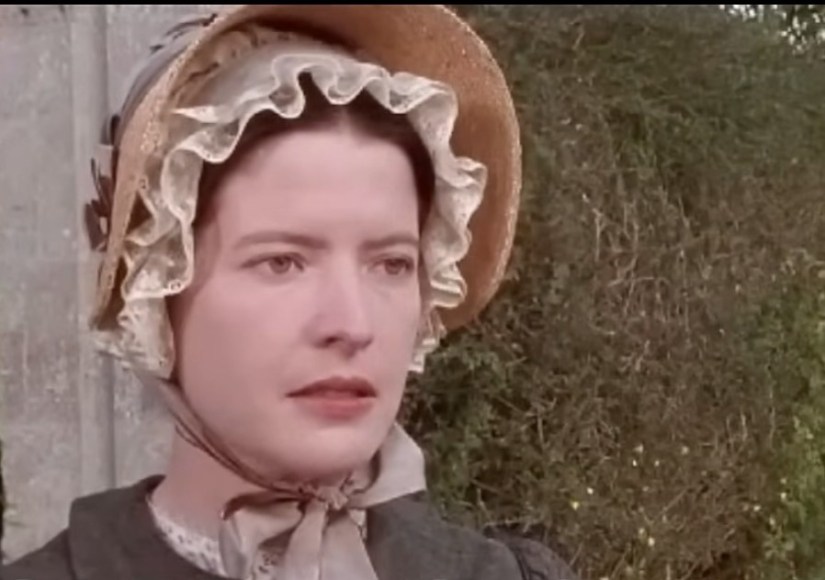
She sees a home. She sees financial stability. She sees a future that, given her circumstances, is considerably more secure than the alternatives available to her. Austen does not ask us to admire Mr. Collins, nor does she require us to believe that Charlotte has made a romantic choice. Instead, she invites us to consider the world in which such a choice makes sense. Charlotte is not necessarily choosing happiness as Elizabeth understands it. She is choosing the life she believes she can reasonably secure.
That distinction matters.
It is easy to condemn Charlotte if we imagine that she possesses the same freedom Elizabeth enjoys. But Charlotte is older, has a different temperament, and cannot count on inheriting a comfortable fortune. Her decision is not made in a vacuum. It is made within a society that leaves women with remarkably little room for financial independence. Charlotte understands her circumstances. She does not confuse prudence with romance, and she does not insist upon a grand passion that may never arrive. Whether we approve of her decision or not, we must at least acknowledge that she has made it with her eyes open.
Betsy Ross chooses differently
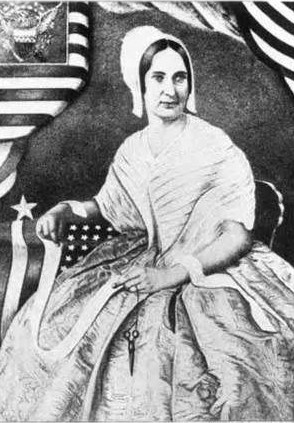
In Kindle the Light of Liberty, readers meet Elizabeth—though this Elizabeth is no Bennet. She is the historical figure Elizabeth Ross, née Griscom. During this tumultuous period in American history, Rose Wachsman befriends her neighbor and discovers that Betsy faces a dilemma of her own. Betsy and John Ross are young, industrious, and determined to build a life together. Their marriage, however, comes at a considerable cost. Because John is not a Quaker, Betsy’s decision to marry outside her faith results in her expulsion from the Quaker community. She loses more than a place of worship. She loses the familiar structures of belonging: the people who have known her all her life, the customs that have shaped her, and the community that once offered her a place within its boundaries.
When Betsy tells Rose Wachsman that she has been publicly read out of the meeting, her words carry a weight Rose understands.
Exile, Rose knows, does not always require an ocean.
Her own mother has surrendered family and consequence for a marriage considered unsuitable and beneath her station. Rose recognizes that a community can enforce its judgments without walls, guards, or even a formal sentence. Sometimes all it takes is a closed door, an averted glance, or the sudden discovery that those who once welcomed you no longer wish to be seen with you. Betsy has chosen love, but her choice has not come without consequences. She does not pretend otherwise. Nor does she speak with bitterness. She works, laughs, builds a life with her husband, and finds her place in a world beyond the one she left behind. Her words to Rose seem particularly important:
“But what is familiar is not always what is best, however much we may miss it.”
I suspect Charlotte Lucas might understand the sentiment, even if she arrived at a different conclusion.
The choices women are given
Austen reminds us that not every woman can afford to wait for love, and not every woman believes she can make her way independently. A decision that looks incomprehensible from one woman’s circumstances may look entirely sensible from another’s. That is the fascinating thing about choice: we tend to discuss it as though everyone begins from the same position, with the same opportunities and the same freedom to accept or reject what is offered.
“Happiness in marriage is entirely a matter of chance. If the dispositions of the parties are ever so well known to each other, or ever so similar beforehand, it does not advance their felicity in the least. They always continue to grow sufficiently unlike afterwards to have their share of vexation; and it is better to know as little as possible of the defects of the person with whom you are to pass your life.” Charlotte Lucas~ Pride and Prejudice
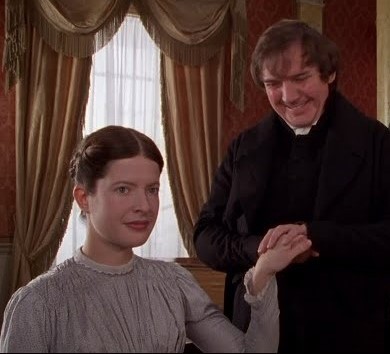
Charlotte’s circumstances constrain her. She chooses the security of marriage because she understands how precarious her future might otherwise be. Betsy, as I imagine her, makes a different calculation. She accepts the loss of communal belonging rather than relinquish the marriage she has chosen. Neither woman escapes the consequences of her decision. Neither has unlimited freedom. Yet each exercises what autonomy she possesses.
Betsy offers another reminder, too: security purchased at the cost of one’s deepest convictions may not always be the security one truly needs. This is where I find myself returning to Charlotte. It would be easy to cast her as the woman who settled, while celebrating Betsy as the woman who dared to choose love. But that would be too simple, and rather unfair to both of them. Charlotte’s choice is not necessarily a failure of courage. Betsy’s is not necessarily a guarantee of happiness. Betsy chooses John for love, only to lose him while she is still a young woman. Widowhood brings its own uncertainties, and she must eventually consider marriage again. The future she imagined when she married John is not the future that unfolds.
The characters we almost overlook
When I began writing Kindle the Light of Liberty, I was quite conscious of the ways in which Austen had influenced my characters. I knew I was borrowing from the architecture of Pride and Prejudice: its misunderstandings, its social judgments, its flawed first impressions, and its insistence that love requires more than attraction. What I had not considered quite so carefully was how Austen’s questions might emerge in a character whose story belonged to another time and another place.
Perhaps this is one of the pleasures of writing historical fiction. A character begins as one thing, and in the process of telling her story, she becomes something more. A historical figure whose role initially seems straightforward begins to illuminate a question that has occupied readers for more than two centuries.
I did not set out to make Betsy Ross my Charlotte Lucas. In fact, I was so focused on Rose and Nathan, so determined to complete their story in time to celebrate America’s Independence Day, that I may not have been as attuned to my minor players as I ought to have been. Having set out to emulate Austen, perhaps I should have been more circumspect. I now wonder whether I missed an opportunity for a rather interesting conversation between Rose and Betsy—two women who, on the surface, have very little in common.
Charlotte and Betsy, in many respects, are also women who have little in common. But perhaps they are connected by something more enduring than the circumstances of their marriages. Both women know that the life they choose will demand something of them. Both must reckon with the expectations of the communities to which they belong. And both remind us that it is one thing to judge another woman’s decision from a comfortable distance and quite another to live with the alternatives she was given.
Perhaps I didn’t overlook Charlotte Lucas so much as overlook the question she might have prompted me to ask of Betsy Ross. It is a question worth carrying into any story about women, love, and the societies that seek to shape them. The interesting matter, as Austen knew so well, is not merely what a woman chooses. It is what she has been permitted to choose in the first place.
I look forward to reading your thoughts on the matter.
With love,