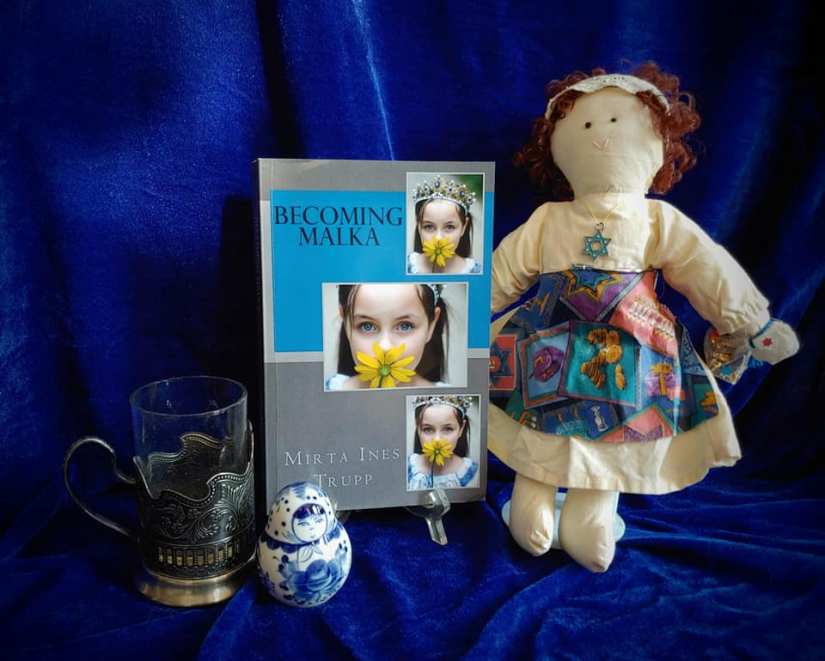
How many of you have seen the film, My Big Fat Greek Wedding? Swap out “Greek” and insert “Argentine” and you would have a clear picture of my family. Every character reminded me of a relative; every embarrassing scenario was relatable and every corny saying sounded familiar. The movie had my family in stitches. We laughed, we cried, and we pointed fingers at each other, saying: That is so you! This movie, in fact, was one of three impactful works that played a part in my writing (the other two were I Remember Mama and Fiddler on the Roof). I aspired to accomplish something in that same vein and wrote my first book, With Love, The Argentina Family~ Memories of Tango and Kugel, Mate with Knishes.
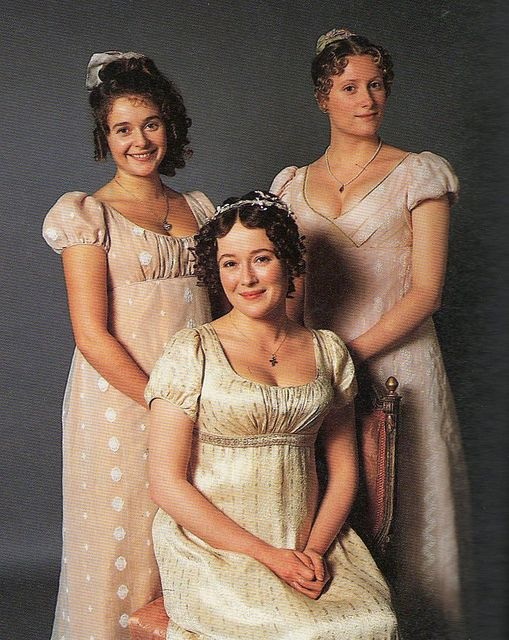
Interestingly enough, I came across a blog post that spoke of the similarities in between Pride andPrejudice and Fiddler on the Roof. Both stories feature five daughters, three of which are married by the end of the piece.
Both showcase awkward scenes of rejected marriage proposals. The mother and father relationship in Fiddler shares similar characteristics with those in P & P. Both stories have forbidden love and worries of losing one’s home. In short, this author spoke to my love of meshing the world of Period Dramas and Jewish Historical Fiction.
In all fairness to the original post, I encourage you to take a peek at it here: Read it and tell me if you don’t agree. An Anglican woman in England and a Jewish man in Imperial Russia wrote two very different stories that are remarkably the same, and remarkably relatable to a wide and diverse audience.
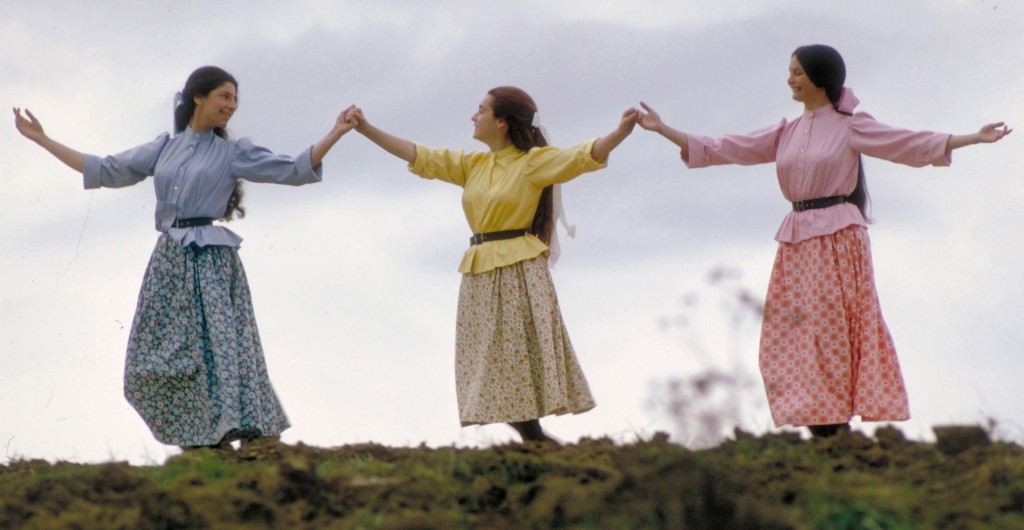
Last week, I binged on the third season of Shtisel. Have you heard about it? It is a hit show on Netflix. I devoured the entire season in two days. No doubt, you’re wondering why I’m writing about a modern-day series that evolves around a Haredi family living in Israel. You’re rolling your eyes at this point thinking: I signed up for a historical fiction blog—why is she writing about Shtisel-mania? Good question; but before I answer, I have a question for you…
How many Jane Austen variations are there in the Fan Fiction world? I couldn’t even begin to tell you, but I know this: Keep her storyline and exchange the Anglican family with a Hindu family, a Black family, a Jewish family; or even a family of Zombies, you still get an Austenesque novel. Austen’s work centered around her commentary about the human condition. She used humor and irony to make her point. She wrote about heartaches, financial concerns, and dysfunctional families. Her stories are still relevant to millions of people around the world who are not necessarily English, Anglican, or actually living in the Regency era. 😉
Shtisel has taken the world by storm and it has many people scratching their heads in wonder. How is it possible that in today’s society, where everything goes and everything is permissible, a story about an ultra-orthodox Jewish family is a Number One hit? They dress modestly. They have strict dietary restrictions. The roles for women and men are clearly defined. But, take away all the trappings, the clothes, the language, the seemingly archaic rules, and exchange them with any other culture or religion and you still get the very essence of the show. The humanity remains. The power of the emotions expressed and experienced by these characters are universal.
Three or four families in a country village is the very thing to work on. Those three or four families are the mind we knew intimately – the landed gentry, the upper classes, the lower classes, not only the industrial masses, but also the agricultural laborers.”
Jane Austen- in a letter to her niece
Jane Austen’s trademark was her knack for realism. She didn’t write about the Napoleonic Wars or earth-shattering catastrophes. She wrote about the world around her, knowing that life’s every-day “little dramas” were sufficient fodder to get her point across. Her writings have been inspirational and Shtisel is working the same magic. Its triumph is in sharing a common story, focusing on Universal Truths to which we all can relate. How could I not aspire to do the same?
This is a monthly event, bringing together those who cover Jewish literature online to “meet, read, and comment on each other’s posts.” Organized by the Association of Jewish Libraries (AJL), the Carnival is hosted by a different participant’s site on the 15th of every month.
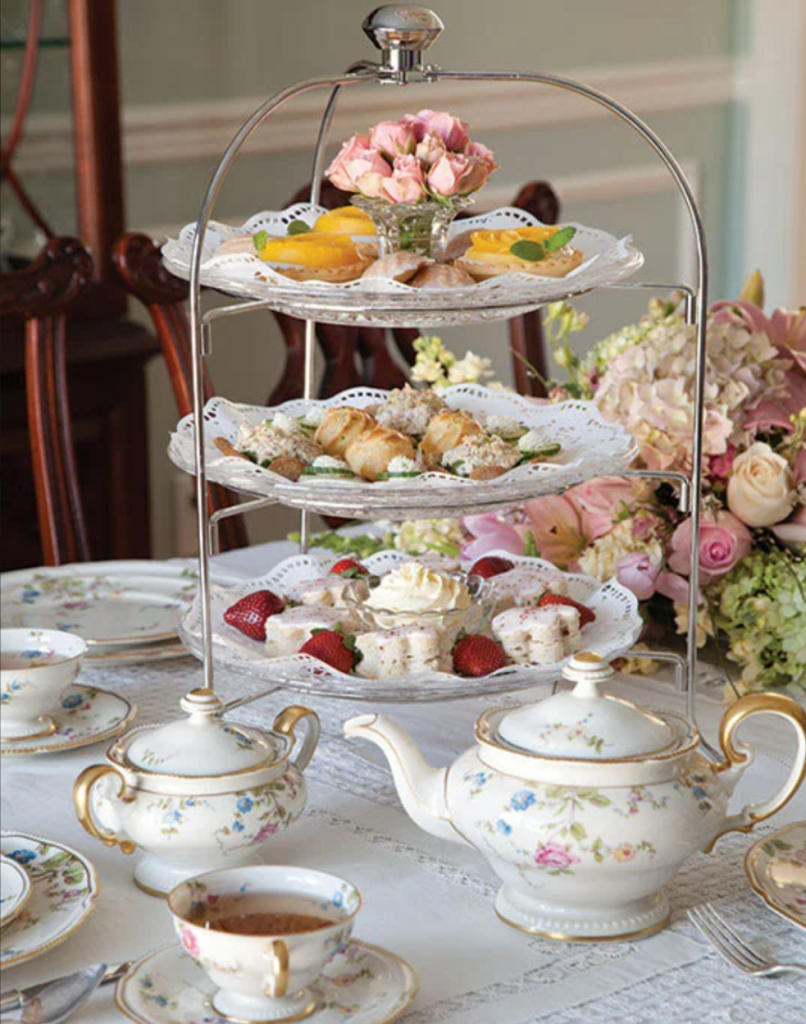
As you can see, I have prepared a lovely tea to celebrate the occasion. Join me, won’t you?
This month on gilagreenwrites, Gila interviews author Sharon Kirsch on her new book The Smallest Objective. According to Kirsch, the book is categorized as a memoir but it is a “hybrid of genres.”
Deborah Kalb interviews a variety of authors on her website, Book Q&As with Deborah Kalb. Here’s a recent interview she did with Jacqueline Jules about her new poetry collection, Manna in the Morning.
On Heidi Rabinowitz’s Book of Life blog, read a double interview with authors Ruth Behar (Letters from Cuba) and Barbara Krasner (37 Days at Sea) to learn about the relationship between Jews and Cuba.https://jewishbooks.blogspot.com/2021/04/cuba-and-jews.html
And join me in revisiting a most interesting interview with Israeli author, Sara Aharoni as we discuss The First Mrs. Rothschild and Jewish Historical Fiction:
The last few months have been awfully busy. Having recently finished a rough draft of my next novel, I’ve been focused on working with my alpha readers and trying to revise, restructure and basically reinvent my ever-evolving storyline. All this is done in stolen moments in between a 10-hour work day and household responsibilities… laundry, grocery shopping, etc. Life seems but a quick succession of busy nothings when all I want to do is write. And before I knew it, Passover was upon us and I was not prepared.
Being empty-nesters, the holidays are just not the same any more, especially because my children, and family in general, are spread out across the world. But I still wanted to celebrate the occasion and preserve the traditions, so out came the cookbooks and beloved recipes. I’m not a particularly talented cook, nor am I overly ambitious. And as our diets are restricted throughout the week, I sometimes am at a loss to create things without the prohibited chometz. Or as our family haggadah indicates, we are to avoid anything that “puffs up.” As a side note—or maybe not—I think this haggadah is spot on with regard to a spiritual cleansing of pride and self-importance. Leavened breads, cakes and other yeast or flour products inflate and thicken our bodies. All year long, we are full of chometz, full of ourselves, with no room for God or anything else. For one week, we are told to eat matzah, which is flat and bland, and contemplate our lives and our freedoms. It is the complete opposite of haughtiness and puffiness.
OK, if I haven’t lost you yet, let me get back to my post…
In looking at the family favorites, I noticed how I have tweaked recipes here and there. Ingredients have been swapped out, preparations have been revised. In other words, the recipes evolved, much like my latest novel, depending on whose voice had taken the lead. Depending on which grandmother, aunt, or cousin passed it along, or from which country, culture and timeframe, the difference was notable.
Are you still with me?
I had previously written about Lady Judith Montefiore, and the impact of her cookbook on Anglo-Jewry, but started to think about food in relation to our identity. I am ethnically a Russian Jew who was born in Argentina. But I am also a (proud) naturalized citizen of the United States of America and have been highly influenced by the culture in my adopted land.
“Tell me what you eat: I will tell you what you are.”
That statement was published by Jean-Anthelme Brillat-Savarin in 1825; and I think, it still holds true! Celebrity chef Jamie Oliver recently stated that “Dishes evolve, impacted by trade, war, famine and a hundred other forces.” I find it all fascinating and here is just one example of how recipes evolve and cultures intermingle.
Almond sweets were all the rage in Sicily; but by 1552, they had gained popularity and became known to the rest of modern-day Italy, Spain, France, and England. And across the pond, in a hand-written cookbook published by the first lady, Martha Washington’s Booke of Cookery contained a recipe for almond cookies. So, by the 17th century, we have the word macaron in French or macaroon in English. At this time, the world was also introduced to the Sicilian word maccarruni. In English, of course, we know it as macaroni.
To complicate things a bit, a fad developed in the United States in the late 1800s with the importation of coconut from India. Coconut cream pies, ambrosia and custards were very popular— as was the coconut macaroon, which suddenly began appearing in Jewish cookbooks. In 1871, Esther Levy’s Jewish Cookery Book included a recipe for this new dessert; and because they didn’t contain flour, they soon became an American Passover tradition.
Never let it be said that the French were left behind in the world of baking! Soon after coconut macaroons first appeared, bakers Gerbet and Desfontaines created a sandwich cookie by putting almond paste or ganache between two individual macarons. The new cookie was called “le macaron Parisien.” In the United States, the word macaron now referred to the French ganache cookie, leaving macaroon to describe the coconut confection we eat all throughout this holiday week.
Don’t forget the word macaroni. We think of it as elbow pasta. Right? Au contraire! In 18th century England, macaroni had an altogether different meaning. Wealthy gentlemen, who sported outlandish hairstyles and pretentious fashions, were called Macaronis. Why? Because while they did the Grand Tour across the Continent, they acquired a taste for Italian pasta, which was considered an exotic food sensation. For those of us who grew up singing “Yankee Doodle,” this explanation helps to make sense of the song. The chorus makes fun of a disheveled Yankee soldier who attempts to look fashionable. Remember? “…stuck a feather in his cap and called it macaroni.”
At this point, you may be asking yourself: How is she going to tie all these ponderings together? Don’t worry. I’ll tell you.
This year for Passover, I couldn’t find a nice brisket in my grocery store, so I chose to make an American-style pot roast. And because my husband doesn’t care for chicken soup, we ate our kneidalach (matzah balls) in Argentine-style tuco (similar to a Pomodoro sauce). I wonder what Lady Judith might have opined of my international Pesach menu. And what of our beloved, Jane Austen? Did she have an interest in food? In one of her many letters to her sister, Cassandra, she wrote:
“My mother desires me to tell you that I am a very good housekeeper, which I have no reluctance in doing, because I really think it my peculiar excellence, and for this reason – I always take care to provide such things as please my own appetite, which I consider as the chief merit in housekeeping. I have had some ragout veal, and I mean to have some haricot mutton to-morrow.”
Both of these entrées stem from French cuisine. I wonder if Jane ever dined on anything quite so exotic as pasta? I know for a fact she was acquainted with a few Macaronis—at the very least she wrote about them! I can think of a few Austen dandies, can’t you? But then again, our Miss Jane was never at a loss for words about pride…
“Vanity and pride are different things, though the words are often used synonymously. A person may be proud without being vain. Pride relates more to our opinion of ourselves; vanity, to what we would have others think of us.”
I wonder what she would have to say about Pharaoh? Talk about being “puffed up”!
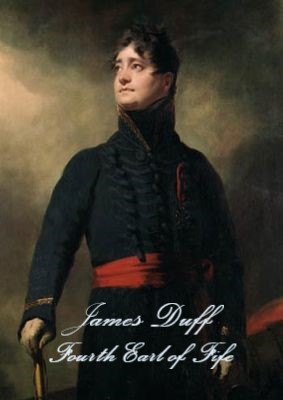
After nearly a year, I am happy to announce I’ve completed the first draft of my latest novel. Of course, that only opens the door for the various re-writes, alpha reads, beta reads, etc. In other words, the hard part is yet to come! In the meantime, I want to share the inspiration for this novel. The book is currently entitled, Celestial Persuasion and I hope it can be accepted as a prequel to Persuasion in the hearts and minds of my fellow “Janeites.” But it is much more than that! Allow me then to introduce a few key historical figures that were the impetus for my novel.
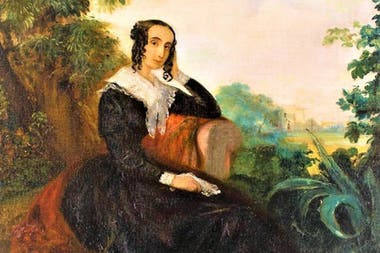
Lord Fife ~ Jose San Martin ~ Mariquita Sanchez de Thompson
It is interesting to note, England was at war almost continually throughout Jane Austen’s lifetime. Most Regency fans are familiar with the Napoleonic Wars and the impact on the Austen family and to her fictional characters. For the most part, these battles and engagements remained on the Continent, with brief mentions of the West Indies and the Caribbean. I’m going to take you further south, all the way to South America; and in particular, to the Viceroyalty of Río de la Plata. Today, it’s known as the Republic of Argentina.
Though it was a Spanish colony, the English were very much a part of the area’s growth. From whalers and farmers, to engineers, bankers, and second sons, they journeyed to the Viceroyalty to make their fortunes on the pampas. Things got a little heated, however, when in 1806 and again in 1807, the English decided to invade the territory. Remember, England’s resources had been spread thin, what with those pesky American colonists, not to mention the French. They needed to expand their reach to fill the Crown’s emptying coffers. In the Viceroyalty, the criollos (those born in the New World but of European ancestry) were contemplating their freedom—much like their brethren up north had done—when the English decided to attack. Needless to say, the Redcoats were not successful, having been repulsed by a ragtag colonial militia. The criollos’ victory against a great European power only helped to increase their confidence, and sparked a wave of patriotism and pride.
Now, across the pond, the officers suffered tremendous embarrassment for not being able to hold the line. Sir Home Popham, for example, had captured Buenos Aires and tried to impose an oath of loyalty, but the citizens refused to obey. They locals fought and took back their city and General Beresford had to surrender. A few months later, more troops were sent to engage the Spanish colony, but found themselves fighting in the streets and having to negotiate an evacuation! Their shame was complete. Jane Austen, however, had compassion for their efforts and in a letter dated 1807, we find a poem penned by her own hand.
ON SIR HOME POPHAM’S SENTENCE, APRIL 1807
Of a Ministry pitiful, angry, mean,
A gallant commander the victim is seen.
For promptitude, vigour, success, does he stand,
Condemn’d to receive a severe reprimand!
To his foes I could wish a resemblance in fate:
That they, too, may suffer themselves, soon or late,
It is understandable that Austen would be sympathetic to the officer; she had two brothers in the Navy and would, naturally, support the cause. Nonetheless, there was a large population of English living in the Viceroyalty, many of them had married and had raised their families in the New World. They did not support the English invasion, nor did they support the Spanish crown. In 1807, Napoleon had invaded Spain and the king had been removed from power. The criollos, living an ocean away, believed they had the right to govern themselves until the lawful king was restored to the throne. In January 1809, Napoleon crowned his brother, Joseph, as King of Spain. This act was the perfect excuse for secession and here enter our players: Jose San Martín, Lord Fife and Mariquita Sanchez de Thompson.
If you have read this far, I thank you! I realize that I am passionate about things that put most people to sleep; but once I realized that San Martín was in England, collaborating with Lord Fife, Sir Charles Stuart and host of other aristocrats, I couldn’t get this idea out of my head. And when I discovered Mariquita Sanchez, I knew I had the makings of a wonderful story. Captain Wentworth was an easy choice and I proceeded to create the characters of Abigail and Jonathan Isaacs to bond the entire project together.
I decided to place my fictional family in the town of Exeter, located in the historic county of Devon. Exeter worked well with my storyline because it is adjacent to Austen’s fictional Barton Cottage, as well as the Great House of Uppercross (if you’re a Janeite, you’ll understand). And more importantly, I wanted to place my fictional country doctor and his family among a small Jewish community in Southwestern England. Did you know there has been such a community in Exeter since medieval times? They were expelled in 1290, but were allowed to return and rebuild by the mid-1700s. The synagogue, built in 1763, is the third oldest existing synagogue in the United Kingdom and the second oldest Ashkenazi Synagogue in the English-speaking world (Plymouth Synagogue was built in 1762). Rabbi Moses Horwitz was the leader of the community from 1792-1837. One of the town’s more renown citizens, and founder of the Jewish congregation, was Abraham Ezekiel. He was described as a silversmith, engraver in general, optician, goldsmith and print-seller; and “for fifty years and upwards, a respectable tradesman of Exeter.” By 1796, five other Jewish citizens had shops in the fashionable shopping area of town, sufficiently well established as to warrant inclusion in the Exeter Pocket Journal. And so, I placed Doctor Simon Isaacs, widower, in this charming locality along with his children, Jonathan and Abigail Isaacs.
I will sign off with an excerpt from the W.I.P. (Work in Progress) in the hopes that it will tempt you!
Captain Wentworth returned to his ship, and nary a crewman offered more than a silent salute as the ship’s commander stormed to his quarters. Every man, from first lieutenant to cabin boy and everyone in between, had seen that look of their captain’s face before. They knew better than to engage him when he was clearly consumed with a task that required his full attention. He crossed the upper deck and descended the companionway before briefly saluting the marine sentry posted at his door. Cursing, he threw his hat across the room and roughly removed his coat. Normally controlled and reserved, the captain allowed himself a moment to release his frustration. Truth be told, he was more than frustrated. He was angry. Angry with Captain Lawrence for his abject abuse of power. Angry with the Admiralty for turning a blind eye to rogue and lawless officers. Angry with the helpless situations in which young women found themselves when their menfolk failed to respect their intellect and resolve. He could not help himself and thought of Anne again. Would the pain ever subside? Would he be able to set aside the rejection and rally again?
Throwing himself into his chair, uncharacteristically without ceremony or care, Captain Wentworth grimaced at the task before him. He must write to Isaacs’ sister. He—of all men—would have to lay out a new trajectory and pray she would comply. The captain reached for a nearby bottle of claret and poured the ruby liquid into a crystal glass. He swilled the contents down in one gulp, feeling only the burning sensation as it glided down his throat. The feeling was welcome. Considering what was required of him now left a worse taste in his mouth than the fiery wine. Captain Wentworth could not scruple that he was now in the position of having to persuade a young lady in the course of her life. Of all things, he despised the thought of manipulating someone by playing on their respect of his rank and command. And again, he thought of Anne. She too had been young and naïve of the ways of the world, and allowed someone she trusted to guide her. To guide her in such a way as to lead her away from him.
He took another swallow of courage and thought now of Miss Abigail Isaacs. Throughout their friendship and time at sea, Jonathan had provided some of the essentials—she seemed quite unlike other young ladies. But, then again, were not all young ladies easily persuaded?
12th of August, 1811
Gibraltar
Madam,
I take pen in hand to inform you that I am in receipt of your letters, both the one you had so wisely addressed to my attention and the one intended for your brother. It grieves me to relay this information. It is a task no commander ever wishes to undertake; and knowing that you have recently lost your father, this will be a harder blow than any young lady should have to bear. With all my heart and soul, I would wish to spare you this intelligence; however, Isaacs—that is to say, Jonathan—always spoke so highly of his sister, that I take courage in knowing your strength will allow you to rally. Your dear brother, and my good friend, will not be returning home. He has completed his service to the Crown and distinguished himself with great honor. You may hold your head high. Jonathan Isaacs is, and will always be, thought of as the best of men. These are trying times, Miss Isaacs. Wars seem to be never ending, and a grateful nation asks much of the families that are left behind to wonder, to pray, and to grieve. I hope that you have family and friends to help you through these dark and troubled waters; but until you find yourself tranquil once more, pray allow me to guide you to a safe harbor. Your brother charged me to relay some instructions, and I am only too honored to fulfill my promise expeditiously and with great care.
It was your brother’s greatest wish that you meet Lord Fife. You may be unaware of the relationship, but your father and his lordship were friends and business partners. At your father’s bidding, Jonathan was introduced to the earl when he was at university at Edinburgh. Please make whatever arrangements are necessary to travel to London at once. You are expected, Miss Isaacs, and can rest assured that accommodations will be at your disposal with the earl’s compliments. His lordship is making his townhouse available to you and will, naturally, stay at his club for the duration of your visit. I cannot say this more succinctly, madam: Jonathan was most adamant in his declaration and has entrusted your wellbeing to Lord Fife.
I can well imagine your present state of mind. Please forgive my impertinence, but having learned much of your homelife, I feel quite part of the family. The Bible tells us to build our lives upon the stable rock that is God’s love, wisdom, and salvation. I would humbly add to that. My own brother, the Reverend Edward Wentworth, has been the rock in my life. I know what Jonathan has meant to you, as he has told me much of your childhood together. To be sure, I know you are a talented mathematician and astronomer, and that these accomplishments were brought about by hours and hours of your brother’s loving dedication to the betterment of your brilliant mind. I know, too, that you were quite put out and displayed righteous indignation when you were prohibited—at the age of nine or ten— to accompany your brother to university. Pray, do not be vexed with Jonathan for relaying this intelligence. It was one of his cherished memories of his most beloved sister. Jonathan treasured this time spent together, learning and discovering all matter of things. He also spoke of the influences of many of your sex, giants in their fields of expertise. I, myself, had no knowledge of their greatness and readily admitted my ignorance of such feminine luminaries.
Because of these intimate conversations with your brother, I feel that I have been given leave to speak to you thusly. These brilliant women, of whom Jonathan spoke, had shown great courage in forging ahead in worlds that denied their very existence. I am now obligated to help you navigate the trajectory that the stars have so clearly outlined. As the Bible tells us, Miss Isaacs: Be strong and of good courage! I entreat you to make haste and communicate with Lord Fife as soon as you are able.
Your servant,
Captain Frederick Wentworth
I hope you enjoyed the post. I am currently seeking one or two alpha-readers; so if you are interested, please let me know!
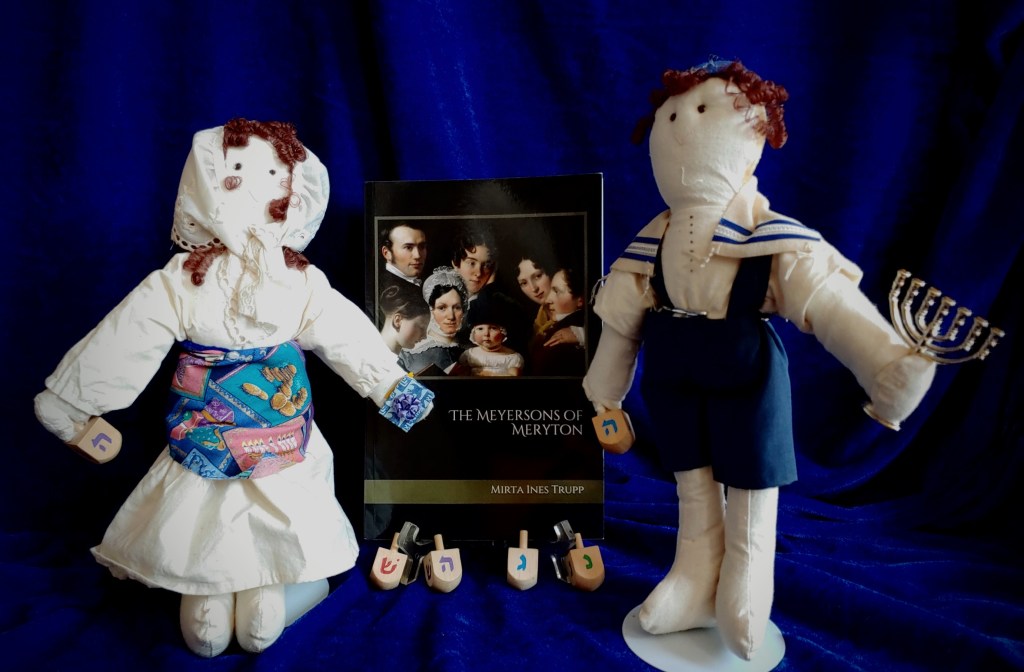
If you have been following the series of author interviews on this blog, you might have noticed a particular question that I often pose. Are you a panster or a plotter? I am most definitely a plotter, needing an outline and a spreadsheet with dates, names and personality traits. That being said, there comes a point, while one is furiously typing away, that the characters take over. Their own unique voice will be heard, even if that means deleting the last chapter and rewriting the trajectory for the entire story. Mrs. Meyerson is one such character in The Meyersons of Meryton. But rather than telling you about the rebbetzin, allow me to introduce you to the lady, as I conduct a brief interview with Hertfordshire’s newest arrival.
Host: Greetings, Mrs. Meyerson and welcome to my blog.
Guest: Thank you, my dear. Pray forgive my ignorance. I am not at all familiar with your modern-day colloquialisms.
Host: I do apologize, madam. A blog is a—well, the arrangement is of little consequence. Suffice it to say, you are joining us today to discuss your arrival to Meryton. Tell me, what was your first impression of that small market town?
Guest: It certainly was vastly different from London, nonetheless, we were greeted graciously by the Bennet family of Longbourn on our first night. I was later pleasantly surprised when we met the congregants of the little synagogue, and understood straight away, the importance of my husband’s presence in that village.
Host: Vastly different from London, you say? What was it that you missed the most? The routs? The balls? The fashionable society?
Guest: Oh no, my dear! We lived in Cheapside—not quite the center of fashionable society. Do not misunderstand me. We had our share of good society. My cousin—rather distant, needless to say—is Moses Montefiore. He and his lovely new bride, Judith, are related to Nathan Rothschild by marriage. I have had the privilege of collaborating with Mrs. Montefiore in doing charitable works within the Jewish community. As to your question, I miss my family naturally. I miss my many acquaintances. And I miss the good work, the tzedakah, I was privileged to undertake. But God is good! Baruch Hashem! I have made new friends in Meryton and have been kept busy with… perhaps, it is best, my dear, if I do not delve into matters that might be too delicate in nature.
Host: Let’s change the subject then. Tell me of your new friends, the Bennets. As a mother of five yourself, what did you think of their daughters?
Guest: Oh! The Bennets! What a delightful family! They were a God-send to us. Jane is an angel, a sweet angel. What more can I say? Mary reminds me of a beautiful, but untended, flower. A bit of attention and some loving kindness is all she needs. Lydia, poor dear, was a whirling dervish when I met her—a Chanukah dreidel spinning out of control! Kitty, or Catherine as I prefer to call her, has been like a daughter to me. In some ways, she has also been my teacher. As the rebbetzin, I am called to lead the women of my husband’s congregation. I am supposed to be learned in the ways of our culture. I am expected to be a good example for the women of my faith. But Catherine reminded me of something very important, when I lost my way, and I am truly grateful.
Host: But you have only mentioned four, Mrs. Meyerson. I believe you forgot someone.
Guest: Heaven’s no! I left Elizabeth for last. Elizabeth is a true Eishet Chayil—a Woman of Valor. I realize that the proverb usually is sung to honor the mother, or the matriarch of the house; nonetheless, Elizabeth has earned this title in my eyes. She exudes the qualities which are attributed to such a woman: Feminine strength, intelligence, wit, and compassion. Even so, I witnessed how she struggled, how she fought to overcome her less than admirable traits, and this made her even more estimable in my eyes. Her worth is far beyond that of rubies, as I am certain Mr. Darcy would agree.
Host: I have no doubt! Now, in order to entice my audience further, what do you say to my sharing a snippet of the story?
Guest: I can only repeat that which someone else wiser, and more clever than I, once wrote: “I declare after all there is no enjoyment like reading!” By all means, my dear, lead on.
It was many hours later, in the darkest part of night, when a series of harried knocks were heard upon the door that caused the Bennet family to stir in alarm.
“What is it, Mr. Bennet? Who is at the door?” cried Mrs. Bennet pulling the bedclothes under her chin.
“I have not a clue, but I doubt we will learn the meaning of this rude interruption by hiding under the linens!” Mr. Bennet declared in a huff as he pulled on his dressing gown and stuffed his feet into his slippers. Carefully managing the staircase as he held a flickering chamberstick in one hand and wiped the sleep out of his eyes with the other, the master found himself at his front door just as Hill came from behind with a few coins from the household funds at the ready.
“For the runner, sir,” she said with a shaky curtsey.
“Thank you, Hill,” he replied gratefully, for he had not thought of compensating the errant messenger.
Mrs. Hill bobbed once more and stumbled back to her quarters as the master made quick work of opening the door. The messenger grinned an apology at the lateness of his arrival. Handing over the missive, he touched his cap and bounded off into the night. Mr. Bennet, now fully awake and justifiably curious, held his hand high and allowed the candle to illuminate a path to his library. Once there, he quietly shut the door, sat down in his familiar welcoming chair and was adjusting his spectacles when Mrs. Bennet came rushing in, followed by his two eldest daughters.
“How cozy you are, Mr. Bennet!” cried she. “With no consideration to my poor nerves, you have sequestered yourself without further thought of your wife or children who lay trembling in their beds. What has happened?” she beseeched. “Is it from Lydia?”
As he unfolded the object in question, Mr. Bennet peered over his spectacles and looked at his girls. “Jane? Lizzy? Were you all a tremble?”
“No indeed, sir, but we are anxious to know what news comes at this hour,” Elizabeth replied, taking hold of her sister’s hand.
The women gathered in front of Mr. Bennet as he silently read through the brief message. Satisfied that he was at liberty to share the contents, he cleared his throat and turned to his fretful wife.
“I trust you have ordered a good dinner for tomorrow evening, my dear, for I have just been informed we may expect an addition to our family party.”
“Pray, who would be so indelicate as to awaken us in the middle of the night for such a matter? Who, may I ask, wishes to trespass on our hospitality without so much as a by your leave?”
“‘Tis your brother who has written…”
“Edward? Whatever is he about?”
“If you would but calm yourself and allow me to read the letter, all will be explained.”
Jane gently guided her mother to a seat, as Elizabeth lit the candles on the mantelpiece to better illuminate their surroundings. Mr. Bennet hemmed and hawed before commencing:
Gracechurch Street, London
Dear brother, I know you will understand when I say things are well in hand here in town. I have met with Mr. Moses Montefiore and found him to be the best of men, brilliant as he is honorable! Upon his expert understanding of the current situation, Mr. Montefiore conveys the Meyersons to your good care. This letter is to be accepted as means of an introduction for the rabbi and his family into Meryton society. You can expect a party of three—husband, wife and child—to arrive by four o’clock on Wednesday. I have assured them of my sister’s fine hospitality, but tell Fanny not to fuss for their accommodations; they will only be staying the night. Montefiore has made arrangements for a living to be had in town. Fanny, I have no doubt, will be happy to know the Meyersons have need to be settled in that establishment by Friday afternoon! Now, with regards to…
Mr. Bennet stopped at this juncture, folding and placing the letter most purposefully in his pocket.
“I believe therein lies the crux of the matter. The rest involves business that I will need to attend in the coming weeks.”
“How extraordinary!” exclaimed Jane. “Whatever does my uncle mean by ‘things are well in hand in town’?”
“Are you at liberty to divulge anything further on these people and their business in Meryton?” Elizabeth asked, covering a yawn with the back of her hand. “Who is this Montefiore? Can he be a sensible man, ushering these people to us in this manner?”
Mrs. Bennet had more pressing matters to discuss and would not be silenced. “We are in the midst of planning our daughters’ weddings! My poor nerves cannot take much more agitation, Mr. Bennet. What does my brother mean by sending strangers to our home? And what, pray tell, is a rabbi?”
The hour being late and with no desire to entertain any further debate, Mr. Bennet stood and waved his hand, signaling towards the door. “Off with the lot of you. Tomorrow is another day and it will come soon enough. I am to bed and will brook no argument, Mrs. Bennet. Good night, Jane. Good night, Lizzy,” he said, with a kiss to each daughter’s brow.
Elizabeth blew out the candles and followed her father and sister as they wearily climbed towards their warm and welcoming beds. Mrs. Bennet, alone in the darkened room, sat down on Mr. Bennet’s favorite chair and indulged in a good cry, presumably relieving her poor nerves.
THE MEYERSONS OF MERYTON is FREE today on Kindle Unlimited!
Argentina—the word conjures up images of fiery gauchos and romantic tangueros…or is it romantic gauchos and fiery tangueros? If your travel agent suggested this country as your next vacation destination, what would come to mind? Based on my experiences, most people respond with the Broadway song, Don’t Cry for Me Argentina. They think of crazed soccer players, or worse yet, they imagine a country overrun by escaped Nazis. I have another image; but mine is painted by a refined hand, a landscape of multiple layers of color, shadows, and dimension. You see, although Argentina is my native country; it is not my ancestral home. I’m the granddaughter of Russian immigrants—Jews fleeing the pogroms and chaos prior to the Revolution.
My Argentine travel blog would not showcase the exquisite architecture inspired by the French. Museums, theaters, cultural and government centers abound. There’s no particular need for me to point them out. I wouldn’t speak of the British influence on such things as finger sandwiches, polo or afternoon tea. Neither would I speak of how the Brits constructed the nation’s first railroad system. I wouldn’t ramble on about the grass-fed cattle or the mouthwatering cuisine heavily influenced by the Italians. I wouldn’t point out that you could visit prairies, jungles, deserts, glaciers or the majestic Iguazú Falls—larger and wider than Niagara and far more breathtaking. I understand…you want to know about all these things. You want to know about gauchos and hear about the Paris of South America, with its sensual nights of dancing tango and drinking Malbec; but in my world; Argentina is about drinking maté and eating potato knishes in my bobe’s house. Yes, I said my bobe’s house (not bubbe).
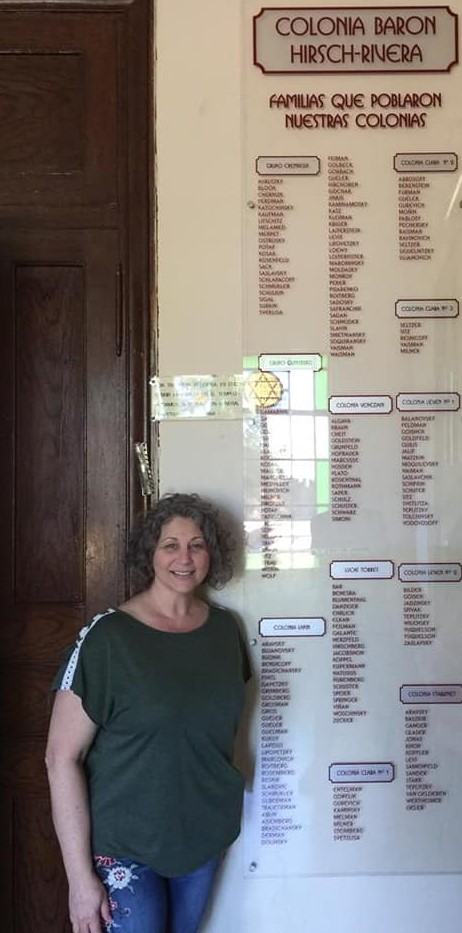
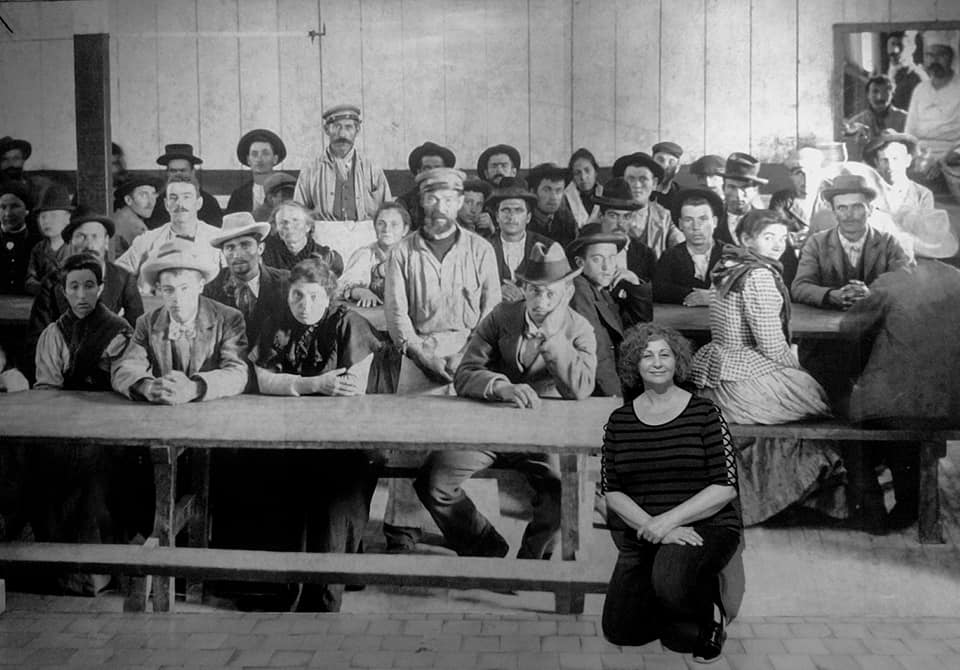
Jews in Argentina? They went there during WWII, right? No! Although there has been a Jewish community in South America since the time of Cristobal Colon (that’s Christopher Columbus), significant number of Jews began arriving towards the end of the 19th century. You are familiar with the exodus from Eastern Europe into the United States, but did you know that thousands upon thousands found their “New Jerusalem” in Argentina? Facilitated by Baron Maurice de Hirsch, the Jewish Colonization Association was created on September 11, 1891 with the intention of evacuating persecuted Jews from Imperial Russia. The J.C.A. worked in collaboration with the Argentine government by placing the immigrants in agricultural colonies throughout the rich, untapped land of the newly founded nation.
In Entre Ríos, there were over seventeen colonies, including Basavilbaso (Lucienville), Clara, Pedernal, and Villa Domínguez. In the province of Buenos Aires, there was Colonia Lapin, Carlos Casares and Rivera to name a few. Santa Fe was home of the most famous colony Moises Ville. Bernasconi (Narcisse Levin) was located in the province of La Pampa; and in the northern tip of the country, was Colonia Dora in Santiago del Estero.
Sembramos trigo y cosechamos doctores
We sow wheat and we reap doctors—that was the famous saying among the pioneers who toiled on the pampas, but birthed a new and hopeful generation of engineers, scientists, teachers and entrepreneurs.
La colectividad—the Jewish community in Argentina—is second only to the United States and it thanks to these unsung heroes, these Jewish gauchos. The colonists organized agricultural co-operatives. They built libraries, hospital, and charitable organizations. They built schools for their children to study both secular and religious programs. They built athletic organizations and impressive country clubs where families met for networking and socializing, challenging the most popular clubs of the American Borscht Belt. Their aspirations and achievements need to be heralded. Oh, and by the way, you would be remiss to think that these immigrants were all illiterate, wretched and downtrodden. Among their numbers were people of means and consequence who contributed not only their knowledge and funds, but a hearty spirit of perseverance and hope!
Not wanting to be accused of having a revisionist view of history, I can’t neglect to mention the hardships, the anti-Semitism and outright evil that Argentine Jews faced. And sometimes, it was at the hands of their own people.
A Polish organized crime group, the Zwi Migdal, established a holding in Buenos Aires as early as 1860. Their sole purpose was the trafficking of Central European Jewish women into forced prostitution. The organization was legally registered as the Warsaw Jewish Mutual Aid Society and they lured the women from their homes and families by promising a fresh start in a new country, away from economic strife and persecution. Desperate and hopeless, parents would send their daughters away thinking that they would be settled in proper Jewish homes as servants or taught some useful skill in a country that was at the cusp of becoming a leading nation. Often times, the harsh realities of their new lives began as soon as they boarded the ship.
In January 1919, for the duration of an entire “tragic week” (Semana Trágica), the Jewish community in Buenos Aires experienced a pogrom—physical violence and destruction of property on par with what many had experienced in the old country. At the time, the United States embassy reported that 1,500 people were killed, “mostly Russians and generally Jews.”
During the “Dirty War” era of 1976-1983, disproportionate numbers of Jewish students and professionals were victimized, kidnapped, tortured, or were simply made to “disappear” as a hard-right military regime attempted to control left-wing extremists fighting to create a Marxist stronghold.
In the 1990’s, both the Israeli embassy and the A.M.I.A. (Asociación Mutual Israelita Argentina) buildings were bombed—allegedly by Hezbollah.
When I would ask my grandparents about the anti-Semitism they would say, “Yes, it exists, but we don’t allow it to define us.” Argentine Jews faced stifling and horrific events—comparable to what was experienced in Russia and throughout Eastern Europe—nonetheless in many, important ways, their adopted country did indeed prove to be their “New Jerusalem.” There was heartache and hardship, of course, but my grandparents impressed upon me that there was no time to cry. They were too busy getting on with the business of living!
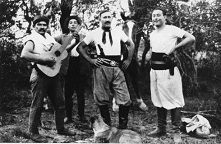
Admit it…you know the song. You’ve seen the play. Eva Peron is standing on the balcony of the Casa Rosada, arms stretched out—aching to embrace her enamored, spell-bound followers. But Argentina is more than the infamous—villainous—Perons. Argentina is more than futbol and Messi. Argentina is more than the guerilla leader, Ernesto “Che” Guevara. To me, Argentina is where my ancestors found their refuge. It is where knishes and empanadas shared a table. It is where the sweet sounds of the klezmer’s clarinet combined with the gaucho’s guitar; and later, the tanguero’s bandoneón. That is my Argentina and I want to share it with you.
Too often, we think of Russian Jews and imagine Tevye and his cohorts in Anetevka. There is nothing wrong with that—Sholem Aleichem was a beloved and brilliant teller of tales. I simply want to add to that narrative. Take the story of the Jewish gaucho and that romantic tanguero into your heart. Set them alongside the stories of Tevye and yourown ancestors, but remember: Do not cry!
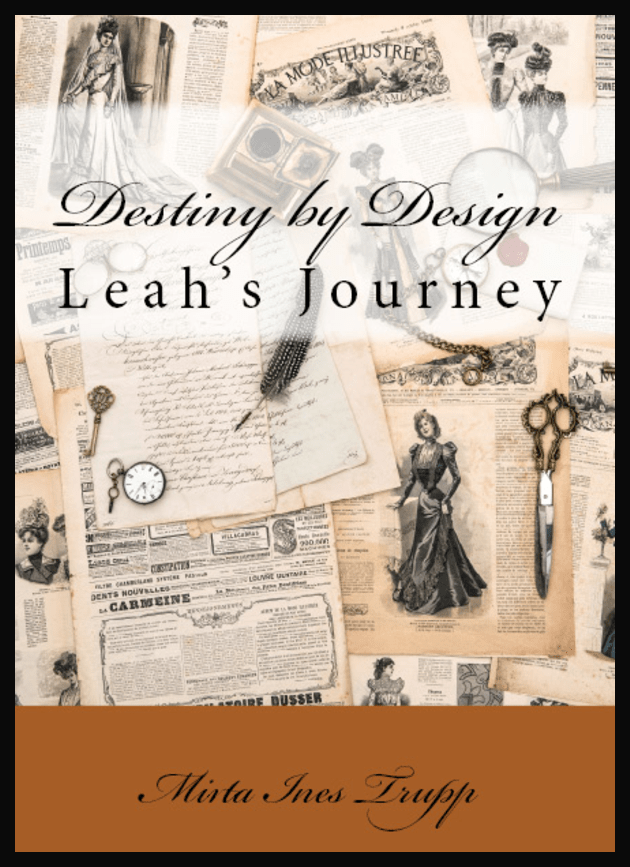
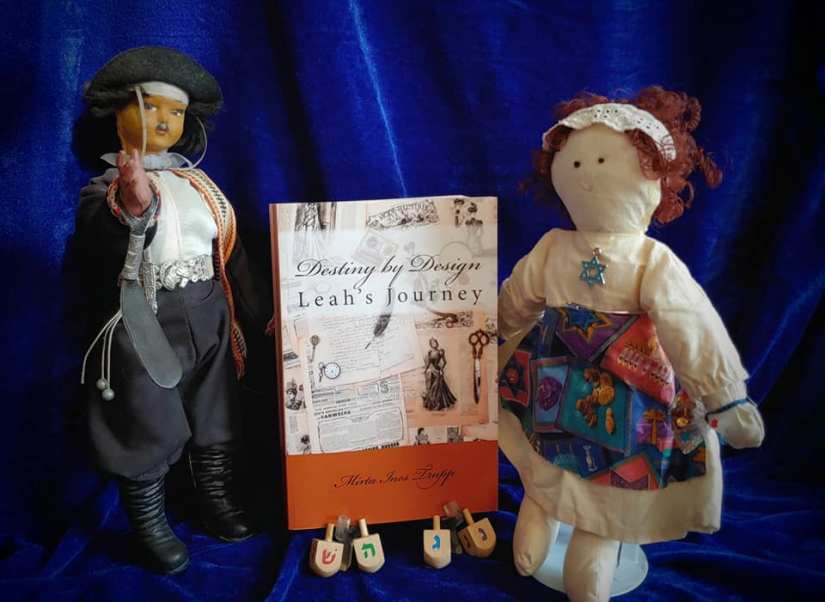
An excerpt from Destiny by Design~ Leah’s Journey
Having traveled several miles deep in her own thoughts, Leah suddenly realized that the chatter and excitement, stemming from both the children and the adults, had decreased significantly. Turning her head ever so slightly to the right and then to the left, Leah witnessed the cause for the abrupt change in her family’s emotions. Lonely homesteads spotted the terrain. Farmland and open range was all one could see.
As if he could read their minds, Yosef called out from the head wagon. Cupping his hands around his lips, so that his voice would travel down the line he exclaimed, “Remember—we are free to come and go as we please. This is not the Pale of Settlement and there are no inspectors, revizors, or Okhrana!”
At that precise moment, Leah found Yosef’s astute observation very small comfort, indeed. Slow and steady, the oxen ambled on for what seemed an eternity before señor Lipinsky held up his hand, signaling the drivers to come to a stop. They had arrived.
The Abramovitz men jumped off the wagons and handed down the women and children. Dismayed, they stood solemnly in place and quietly took in their surroundings. A dilapidated wooden fence, in dire need of sanding and a new coat of paint, marked the property. As señor Lipinsky had promised, the lot and the dwelling appeared somewhat larger than those seen on the previous homesteads. León Goldfarb had mentioned that they would most likely have a cabin or a cottage, depending on their luck, along with a small barn and granary. His assumption had been correct.
“I cannot believe that we trekked across Mother Russia through Europe and across the Atlantic Ocean to end up here—to live like krepostnyye!” Naftali bellowed.
“We are not serfs, Brother. We will work the land for our own benefit—not for some nobleman,” replied Yosef. “And we will live in peace.”
“We might as well have gone to Siberia,” was Yaacov’s grim reply. “We are in the middle of nowhere.”
“‘If only we had died by the hand of the Lord in the land of Egypt, when we sat by pots of meat, when we ate bread to our fill!’” Ysroel recited. “‘For you have brought us out into this desert, to starve this entire congregation to death’—does that sound familiar? We have not yet been here one full day!” exclaimed the pious brother. “Where is your faith?”
Malka nodded her agreement. “It is quite fitting that you quote Exodus, my son, for are we not the epitome of Israelites wandering in the desert? But the Lord will provide—of that I am sure!”
Señor Lipinsky cleared his throat and the men turned towards the agent. Aware that the Abramovitz family had begun their odyssey with a different plan in mind, he did not begrudge them their displeasure. He could only imagine the life they had led in Odessa in the upper stratums of Jewish society. It was quite a different scenario than the vast majority of colonists, but not completely unheard of. The agronomic engineer, Miguel Sajaroff and his brother-in-law, Doctor Noé Yarcho, were both learned men of means—certainly known and admired among the colonists. They, too, had come from rather illustrious origins.
Señor Lipinsky gently reminded the family that they were on the outskirts of town but, there wasindeed a thriving town–a Jewish town. The children would be required to attend public school in the morning; but the town was proud to boast of their own cheder, where Yiddish and religious studies were taught in the afternoons. The community had shops, a synagogue, a cemetery and a social hall. They would soon meet their neighbors and establish friendships with the criollos and the yiden alike.
“We—the Argentines and the Jews—live together in peace,” he said. “God has made it possible for us to make a good life here.”
“Of course, señor Lipinsky and we will do the same—may it be Hashem’s will,” replied Malka, as she turned and took in the full view of their new land. “Are these fruit trees? The orchard seems to have been abandoned, but with some work, we will have a bountiful harvest next year. This reminds me of when I was a child. It will be good for the kinder to get their hands into the dirt.”
“You most likely will find peach and plum trees. At home, we also have mango,” the land agent boasted.
“What is a mango?” Duvid asked. “May I try one?”
Señor Lipinsky laughed. “Yes, of course boychik! When you taste it, you will think it is a slice of heaven. Sweet and tangy, it is like biting into a peach and an orange at the same time.”
“Come now, children,” Malka said, as she marched to the door. “Let us enter our new home with uplifted spirits and gratitude in our hearts.”
With their mother and señor Lipinsky leading the way, the Abramovitz clan followed suit. Leah trailed behind. She willed herself not to turn around, but curiosity overruled. The gauchos were still there—hewas still there.
From atop his steed, El Moro removed his hat once more, and placed it over his heart. Knowing she owed him apology, she sunk into a deep curtsey, as if he were the Tsar himself. He laughed, not in a disparaging fashion, but with full appreciation of her good sportsmanship. He let out a triumphant holler, as the men turned their horses and raced away. Feeling herself blush, Leah laughed as well and quickly caught up with the family now entering their new lodgings.
Her mother, having removed her hat and gloves, was inspecting the building, which could not be compared to anything but the gardener’s cabin back home. Leah could see her mamá’s mind at work. She could only imagine the list of duties that soon would be imparted to each and every one. When she heard her mother speaking of chemical compounds, Leah began to understand the true magnitude of the undertaking.
“I will need a fair amount of the product, if we are to paint these walls and the fruit trees,” Malka informed the J.C.A. agent.
“Yes, of course,” Lipinsky replied, agreeing with the fine lady’s assessment. Many of the colonists applied whitewash to the trees in order to prevent sun scorching.
“My father was known to paint the entire tree trunk, not just the bottom portion, as he insisted that it kept the tree from blooming prematurely.”
“We are going to paint the trees?” Duvid asked.
“Yes, as well as the house,” said Malka. “If we can purchase a bit of blue dye—perhaps a local laundress might have a decent supply—we can color the calcimine and end up with a lovely shade of pale blue.”
“Lovely. It will be our very own Winter Palace,” added Leah in jest. Having only known the luxury of living on a grand estate, she hadn’t a clue of the benefits of whitewashing; and although she had enjoyed her lessons with watercolors, the idea of washing the grimy stone walls sounded exhausting. Noting the sarcasm in her own voice, Leah winced and waited for the certain rebuke. When none came, she decided it was in her best interest to pay attention to her mamá.
“We will cover the walls with this compound several times a year, my dears, for the coating has hygienic properties. Once we have added successive applications, layers of scale will build up on the roughhewn walls, and the flakes will fall off. Then it is simply a matter of sweeping away any remaining debris,” she said, running her finger along the wainscoting. You shall see…with fresh, clean paint, colorful curtains, and cheerful wildflowers on the table, we will feel quite at home.”
“It will be like visiting the country house!” shouted Duvid with delight.
“It will be better than visiting our dacha—we will be home.” replied Yosef.
In the upcoming months, I will be participating (via Zoom) in two separate book club meetings. Both groups have decided to read and discuss my novel, Destiny by Design~ Leah’s Journey.
To say that I am humbled, delighted, and encouraged doesn’t even begin to describe what I’m feeling. The book was published in 2017; and as an indie author, it goes without saying, the continued show of interest is invaluable. However, for this book in particular, I should not be surprised. Just about a year after its publication, I embarked on a journey of my own. As cliché as it sounds, I was touched by a fairy godmother all of my own. Talk about a show of interest…
I received an email via Goodreads.com. The note was from a woman who had read and enjoyed, Destiny by Design~ Leah’s Journey. She went on to explain that a group from the Jewish Federation of Palm Beach County were in the midst of planning a trip, their so-called “VIP Mission to Argentina.” Stacey Levy introduced herself as the lead chair of the mission and explained that her team of organizers were preparing an exclusive itinerary in this hub of South American Jewish life. They were planning on visiting synagogues and Jewish schools, and meeting with dignitaries and officials to discuss the needs and the experiences of Jewish Argentines. She also wanted to schedule an afternoon Meet & Greet with a Jewish Argentine author.
“Do you happen to know of anyone who’d be interested to meet with us?”
In my naiveté, I wrote back, graciously thanking her for her kind words regarding my book. I offered to contact my relatives in Argentina, in the hopes of finding someone to work with her organization. That is to say, an Argentine author of Jewish fiction, who—by the way— spoke English. Several emails later (Yes! I am that slow), my fairy godmother nearly had to slap me with the plane ticket.
“Your book was hand selected. I am inviting you to come speak to the group.”
To say that I was honored doesn’t even come close. Naturally, I accepted the invitation, but how would I explain it all to my family? A complete stranger was inviting me to go to Argentina. My kids were astounded. Hadn’t I always preached the need for safety and precaution when interacting with people on the internet? Admittedly, I did some research and found that I was dealing with a legitimate person from a well-known organization.
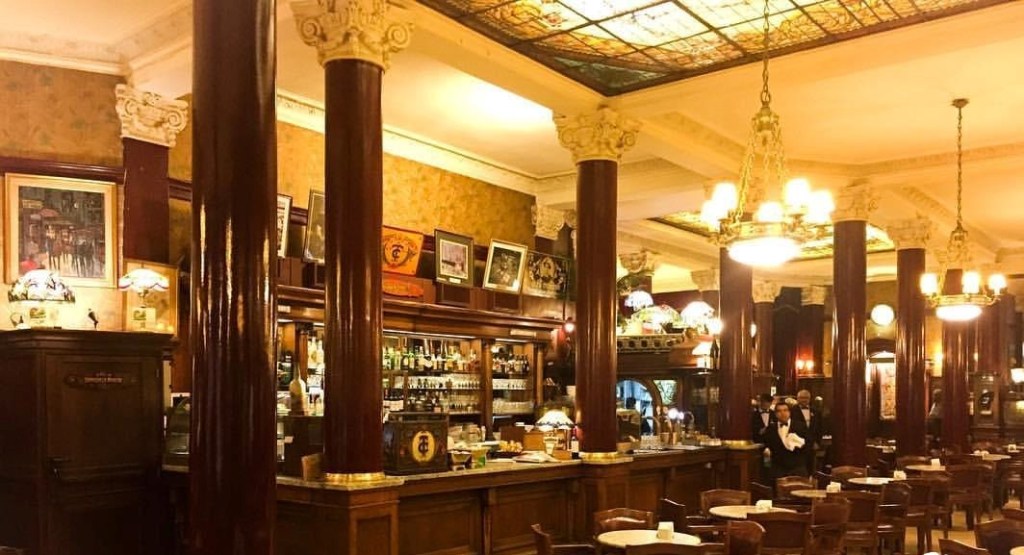
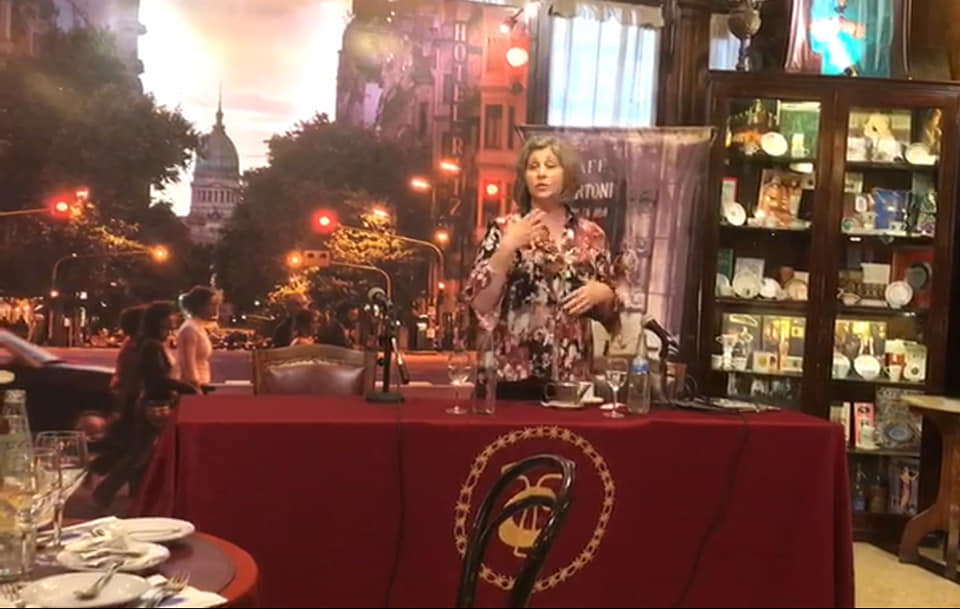
There were a flurry of emails and phone calls to organize the event. I was given the opportunity to suggest a venue, and I immediately proposed meeting in Las Violetas, an iconic café in Buenos Aires. The location is even mentioned in my novel. But the café could not accommodate a group of fifty people, so I suggested Café Tortoni. This legendary establishment has been home to Argentina’s most famous artists, literary giants, journalists and politicians. And I, an unknown indie author, would now be joining in their ranks.
Each participant of the trip would receive a signed copy of my historical fiction. As Stacey said, it would “help provide invaluable insight to Jewish Argentina in a substantive, yet entertaining manner.”
The day of the event finally arrived. I was met at the door by the manager of the café and escorted to a private room. I walked by famous works of art and stained glass, noting the lovely display of treats that had been set out. An Argentine afternoon tea closely resembles what one might expect to find in any British setting. Finger sandwiches and fine, elaborated pastries were presented upon intricate silver trays and delicate china. Of course, there were cookies filled with Dulce de Leche, but I couldn’t touch a bite. I took a seat, next to a life-sized picture of world-renown author, Jorge Borges, and sipped my tea in anticipation. I had yet to meet Stacey in person!
At last, the group arrived. They had completed a tour of Teatro Colon; and after my presentation, they would have just enough time to change before dining with one of the city’s officials. Again, I was taken aback at the magnitude of what was transpiring. The entire episode was surreal. With not a moment to waste, Stacey and I embraced— as if we had known each other our entire lives— and she proceeded with the introductions.
Taking the floor, I was overcome with a sense of calm. The nerves were gone and I was “in the zone.” This moment in time was the exact reason I had written Becoming Malka and Destiny by Design~ Leah’s Journey. I was given this opportunity, not to gloat or to promote my work, but to elaborate on my own family’s history and Jewish Argentina.
Many participants had had the opportunity to read the novel, but there were others who had not. I explained that my book focuses on the experiences of Jewish immigrants at the end of the nineteenth century and speaks to their struggles and their tremendous achievements. It is thanks in part to these unsung heroes, and the Jewish Colonization Association established by Baron Maurice Hirsch, that the community—la colectividad— flourished. Of course, being an enthusiast of novels set in the Regency, Victorian and Edwardian period, I readily admitted that my story had an Austenesque flair. Nevertheless, it was important for my audience to understand the book’s true purpose. Destiny by Design-Leah’s Journey intentionally pays homage to this particular era and to the immigrant merchants, teachers, tailors, and farmers, who became Jewish gauchos. Afterwards, I was approached by members of the group who eagerly shared their thoughts.
“I loved your presentation!”
“I felt connected with the Jewish gauchos and their descendants after reading your book; more so, than after visiting the synagogues and museums.”
“You painted such a vivid picture—I was right there with you and Leah!”
In a moment that could only be described as supernatural, I felt surrounded by all my ancestors. The bobes and zeides were kvelling. I felt. I knew it. Their voices had been calling out to me. They had carved out a path for us and showed us the true meaning of courage, faith and determination. My books are solely a vehicle to illuminate their work. In preparation for my upcoming events, I will continue to focus on that point.
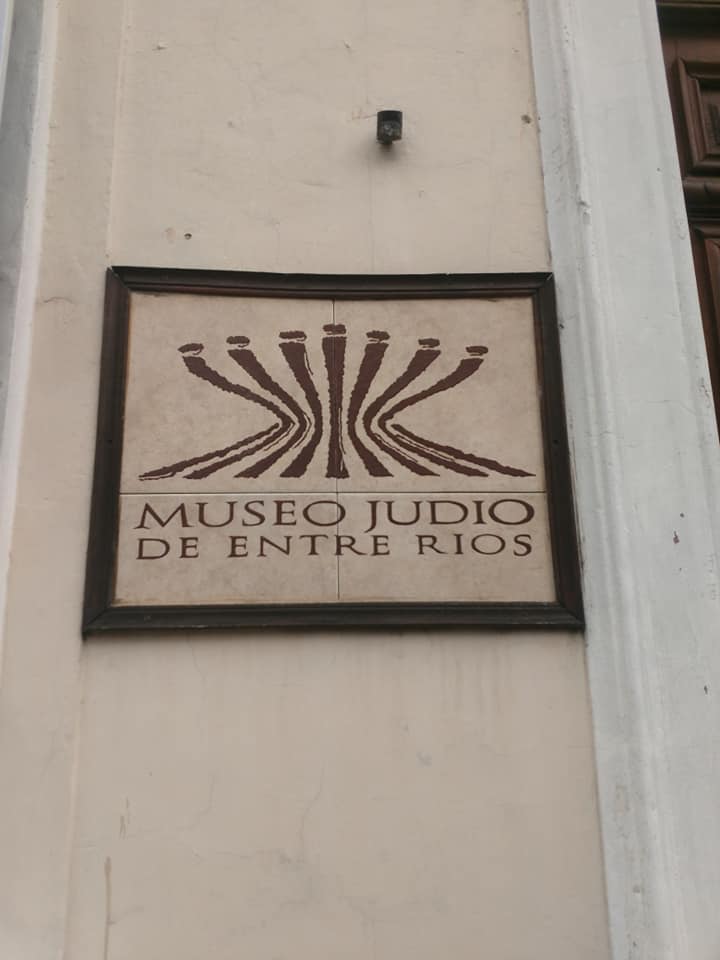
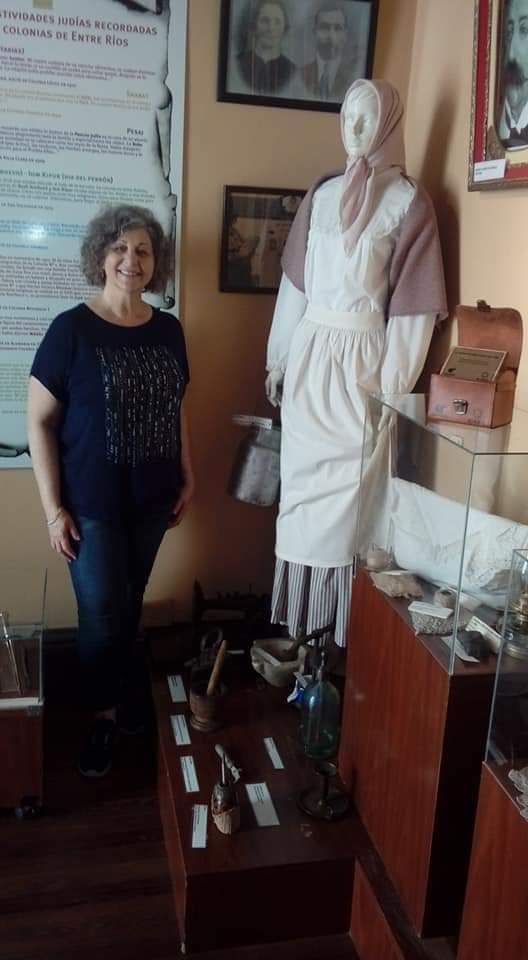
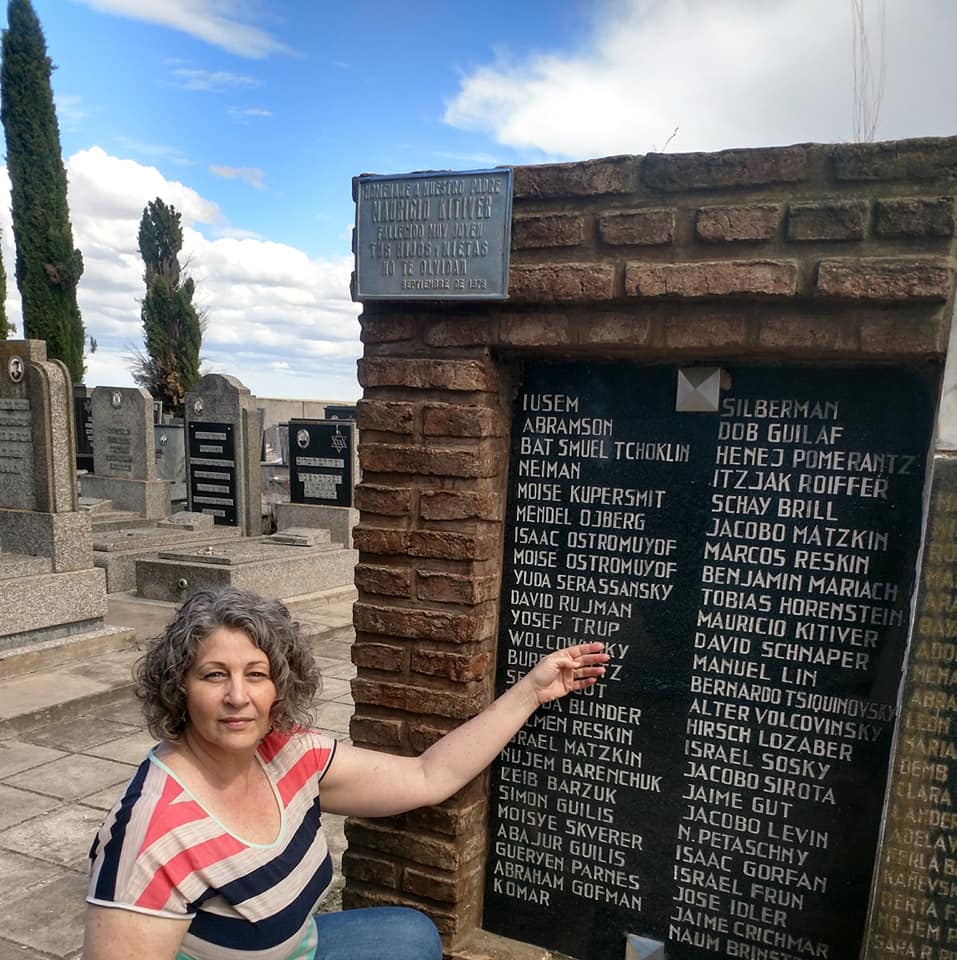
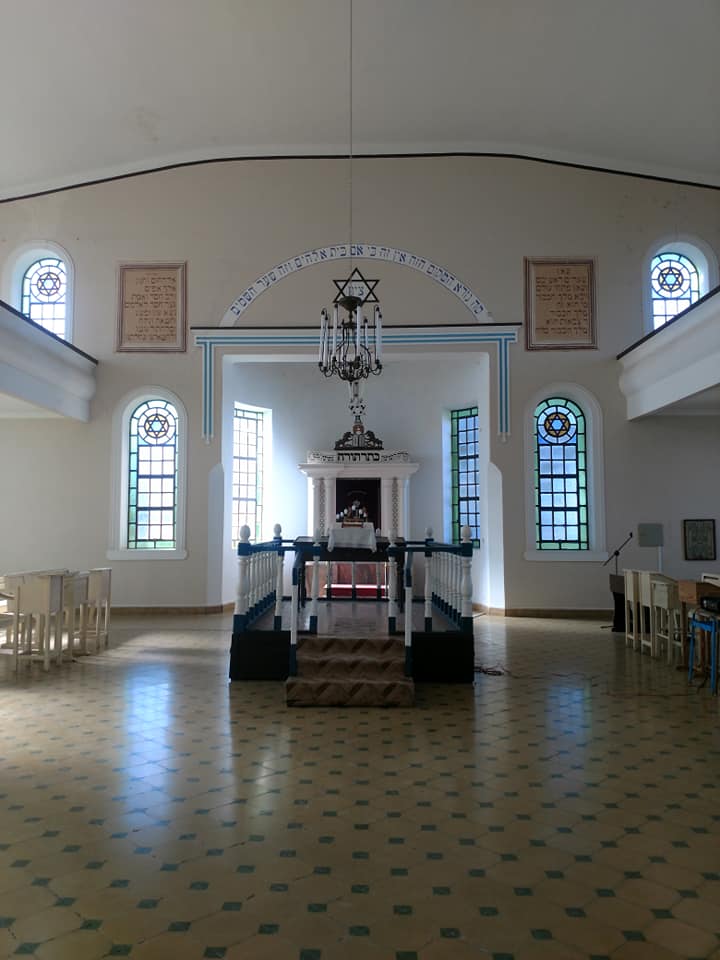
My trip to Argentina was a once-in-a-lifetime event. Of course, I have been back on numerous occasions (that’s a subject for another book), but this trip was unique. I traveled alone and with a specific agenda. My roots were in the provinces; my ancestors were the founding pioneers of several Jewish colonies. I had the opportunity of visiting these places, of placing stones on graves, of touring their rural synagogues and schools, of meeting people who knew my grandparents in their early days. Every time I am invited to speak, it is an opportunity to honor their memory. It is an opportunity to underscore the importance of what took place in that “New Jerusalem.” I hope my readers enjoy the experience and come away with a new understanding of Jewish Argentina.
Whichever way you spell it, the holiday is here! Give them a book this year. Everyone wins!
A different take on Jane Austen’s Pride and Prejudice. This novel introduces Jewish characters to this beloved novel. Mr. Darcy and Elizabeth are days away from saying their vows when Rabbi Meyerson arrives to Meryton.
With a definite nod to Jane Austen, this novel begins in Imperial Russia and follows the Abramovitz family to the shores of Argentina. Leah is faced with life-altering decisions. Where will this journey lead?
A coming of age fantasy, this novel will take the reader back in time to Imperial Russia in the early 1900s. An accident reading of an ancient incantation, allows Molly Abramovitz to meet her great-great grandmother, Malka.
These Jewish Historical Fictions novels are clean reads and set outside of Europe. I hope you enjoy!
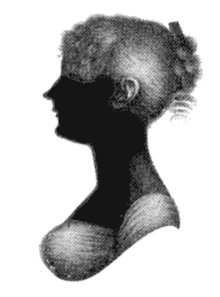
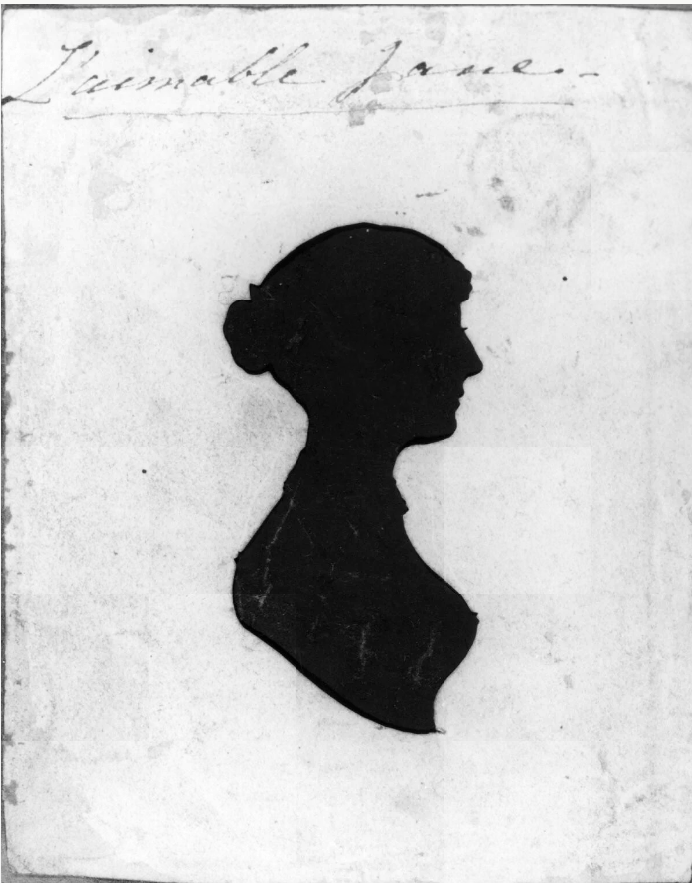
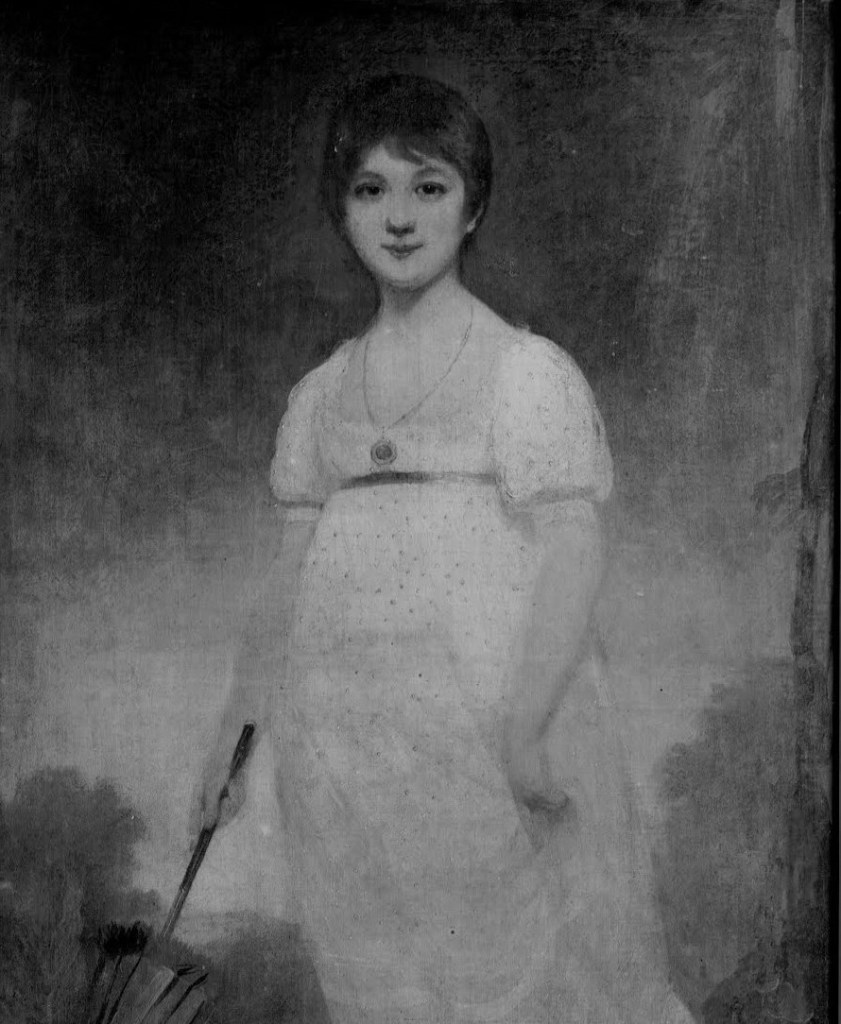
Have there ever been two siblings more connected than the Austen sisters?
Their mother was known to have said, ““If Cassandra were to have her head cut off, Jane would insist on sharing her same fate.”
Rabbit Hole Number One: Sisters…
Cassandra Austen
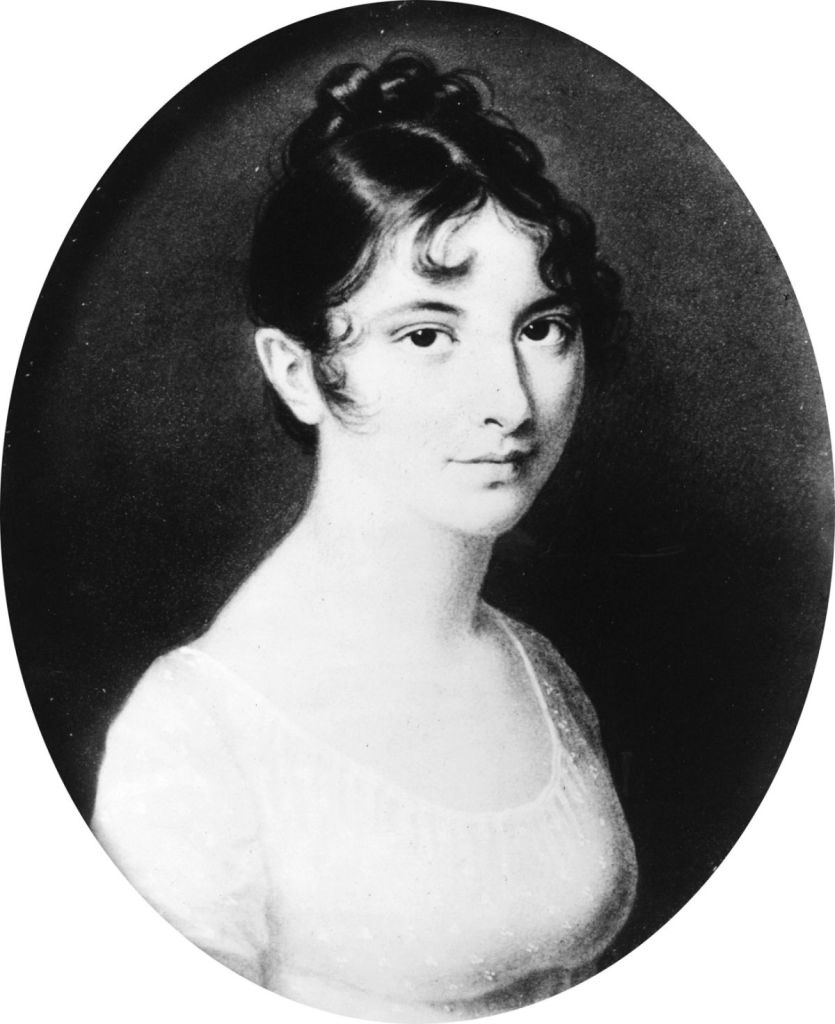
“Possibly” Jane Austen
I am forever delving into history books and Internet sites, going down the proverbial rabbit’s hole in search of enchanting stories of elegant ladies and gentlemen of days gone by…who just so happen to be of the Jewish faith. I surround myself with Austen’s novels, Regency knickknacks, and Judaic memorabilia in the attempt to weave something Austenesque with a touch of Yiddishkeit. I strive to become, in some small way, a soul sister to our beloved author.
Follow me, if you can, as I go through this process of finding commonality and concurrence.
Rabbit Hole Number Two: What is a soul sister? An Internet search provided the following information: Soul sisters have a strong emotional bond with one another. They have common dreams and aspirations and share fundamental life philosophies— despite having no blood relation.
Rabbit Hole Number Three: Who could be considered Jane Austen’s soul sister? I looked for a contemporary— someone who might find herself featured in one of my J.A.F.F. stories. Someone who was like Jane in most every way, but one. After countless hours of research, and untold cups of tea, I found her: Rebecca Gratz.
Are you ready? Here we go…
Rebecca Gratz was born in Philadelphia, Pennsylvania, on March 4, 1781, a middle child among twelve children.
Jane Austen was born in Steventon, Hampshire, on December 16, 1775, the seventh of eight children.
Gratz, a fervent patriot the whole of her life, was accustomed to the highly political atmosphere of a post-revolutionary America.
Austen, accustomed to having her country at war for most of her life, had three brothers serving in the navy and militia.
Gratz abandoned her early poetry and put her literary talent to work supporting both women’s roles and Judaism in America.
Austen began her career as an epistolary novelist. Her work has been a lasting influence on British literature; her stories underscored the realities of women’s’ lives.
Well-educated for her day, Gratz attended women’s academies and read her father’s extensive library stocked with literature, histories, and popular science.
Austen attend schools for girls. She was, however, allowed to use “some of the same school books as the boys” and had “unfettered access” to her father’s library.
Rebecca Gratz fell deeply in love with Samuel Ewing, a non-Jewish lawyer and son of the provost of the University of Pennsylvania. Nothing came of it, however, possibly because intermarriage was one step she could not take. When he died decades later, Gratz visited the room where his body lay, leaving three white roses and her miniature on his heart. Gratz would argue that, from what she saw of marriage, it was a state that brought little happiness. “Better to wander alone through the neglected path of single life,” she wrote, “than with an ungenial companion.”
Jane Austen was twenty when she met Tom Lefroy, a young man studying to become a barrister. The Lefroy family intervened and separated the pair. She never saw him again; however, in a letter to her sister, Austen related that she had had tea with one of his relatives, “and wanted desperately to ask about him, but could not bring herself to raise the subject.” In 1814, Austen replied to her niece’s request for advice regarding a possible suitor. “Anything is to be preferred,” she said, “or endured rather than marrying without affection.”
Rebecca Gratz was a visionary. She became the founder of the American-style “Hebrew school” and developed the prototype for many women’s charitable organizations. She died on August 27, 1869 in Philadelphia, Pennsylvania and was buried at Mikveh Israel Cemetery. Shortly after, her brother, Hyman founded and financed Gratz College, a teachers’ college in Philadelphia in her memory.
Jane Austen was a visionary. Lauded as being the first woman to write great “comic” novels, she used humor to explore the individualism of women’s lives. Austen died on July 18, 1817. Her brother, Henry, saw to her burial at Winchester Cathedral. He arranged for the publication of Persuasion and Northanger Abbey and contributed a note, which for the first time, identified his sister as the author of the novels.
Rabbit Hole Number Four: I put it to you. Are these two ladies, one Anglican and one Jew, not the very personification of soul sisters? Enquiring minds want to know!
Here in the United States of America, we are getting ready to celebrate Thanksgiving Day. I just wanted to take a moment to say thank you for your support. Lots of fun and interesting posts are coming soon. This Sunday, I will be hosting another Author’s Interview! Stay tuned. Thanks again and be blessed.