When I first connected with Dr. Leah Grisham, it was through a shared affection for Jane Austen and a passion for Jewish storytelling. That led to a conversation on her blog about my latest book, Kindle the Light of Liberty: A Jewish Colonial Love Story of the American Revolution. It came as no surprise when that conversation quickly broadened into something much larger: the enduring question of what it means to resist unjust systems while remaining faithful to one’s conscience.
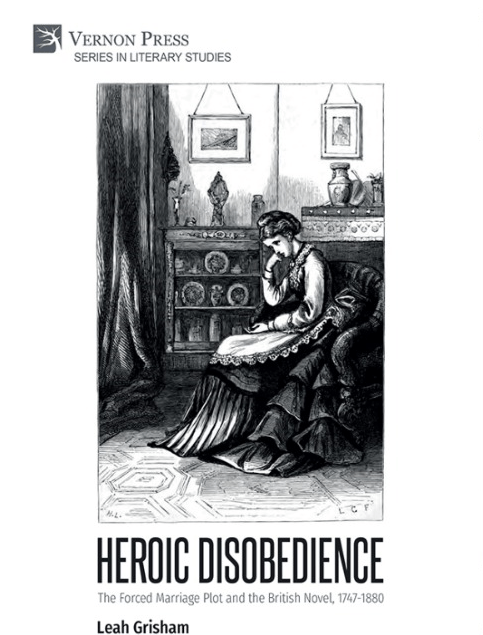
Dr. Grisham is a Cleveland, Ohio–based writer whose work explores literature, feminism, and Jewish life. Her first book, Heroic Disobedience: The Forced Marriage Plot in British Novels, 1747–1880 (Vernon Press, 2023), grew out of her doctoral dissertation and examines how the rise of capitalism in Britain depended upon the oppression of women—and how novelists such as Jane Austen and Charles Dickens used fiction to celebrate heroines who refused to surrender their moral agency. Dr. Grisham—Leah, as I now have the pleasure of calling her—is also a regular contributor to Kveller, the Jewish Book Council, Lilith Magazine, and Publishers Weekly, where she writes about literature, Jewish history, and contemporary Jewish life.
I have found that her work reinforces my belief that both traditions—Austen’s novels and Jewish storytelling—grapple with questions of societal expectations and confront difficult moral questions. I was struck by how many of the themes Leah explores—inequality, limited choices, conscience, and quiet acts of resistance—extend far beyond the English novel, echoing enduring concerns found throughout Jewish literature and history.

I am thrilled to have Dr. Leah Grisham on the blog today! Our conversation ranges from Jane Austen’s heroines and Victorian literature to Gothic fiction, antisemitism in the literary canon, and the ways modern readers understand courage and resistance. It concludes with Leah’s forthcoming work on Holocaust-era Poland, where the questions she first explored through fiction become matters of historical survival.
I hope you’ll enjoy our conversation as much as I did.
HOST: Leah, you and I connected as “Jewish Janeites,” a phrase I absolutely love. Has your Jewish background shaped the way you read Jane Austen, and if so, in what ways?
GUEST: Hi Mirta! Thanks so much for this conversation – it is always fun to connect with other Jewish writers – and Jewish Janeites!
I’ve loved Jane Austen for decades, and even spent a lot of time reading and writing about her novels in my PhD program. I’ve always been interested in the ways that authors portray minority groups (an oversimplified term, but you know what I mean), especially when these groups are portrayed in ways that challenge the stigmas that their cultures placed on them. So, while there may not be a wealth of Jewish characters in Austen’s ouvre, she had a lot to say about the treatment of women (especially poor women) and enslaved people that I think invites similar types of discussion.
HOST: And that’s why, I suppose, the themes in Heroic Disobedience reach beyond the English novel. They reminded me of Jewish writers—from Amy Levy to Sholem Aleichem—who also explored women resisting the constraints of family, economics, and society. Whether those parallels are direct or simply part of a larger literary conversation, they led me to wonder about another shared characteristic of both Jewish and Austen’s storytelling: the willingness to question and wrestle with difficult moral questions. Do you see a similar impulse in Austen’s novels, where heroines respectfully—but firmly—challenge the expectations placed upon them?
GUEST: 100% — and I think that is a big part of what has led to her enduring popularity for so many centuries. Obviously, her prose is so engaging, as is the world she creates, but what really sticks out to me are the characters who defy the expectations that have been hoisted upon them without their consent. The obvious example that most people will identify is Lizzy Bennet and Mr. Collins. He is such an obnoxious bore, and her refusal to marry him is such a highlight of that novel. However, I also love that in Pride and Prejudice, Austen doesn’t just leave it at that. Charlotte Lucas does agree to marry him, and her conversations with Lizzy really lay out the lack of options that women had in the early nineteenth century – especially those who were not wealthy. Austen’s novels constantly challenge readers to question their world while pointing out injustices.
HOST: And speaking of injustices, I know I’m not the only one who struggles with the casual antisemitism found in some Victorian fiction. Anthony Trollope, for example, critiques the marriage market in The Way We Live Now while also relying on harmful Jewish stereotypes. George Eliot’s Daniel Deronda offers both a critique of marriage and a remarkably sympathetic portrayal of Jewish identity. How do you think readers should navigate this tension—acknowledging an author’s literary merit while honestly confronting the prejudices embedded in the work?
GUEST: This is such a hard question, and one that I’ve wrestled with a lot. It makes me think of Dara Horn’s amazing book People Love Dead Jews (which, by the way, I think everyone should read)! In one of the chapters, she writes about listening to Shakespeare’s plays in the car with her son, and how she wanted to skip The Merchant of Venice because of the deep anti-Jewish stereotypes that are so important to the play. Her son challenges this, and encourages her to change her mind and listen to it. What follows is a really excellent reading of the play, and also some really insightful discussion about the questions you’ve posed here.
As someone who loves Dickens, Trollope, and Eliot, there is a big part of me that wants to say, “WAIT! We have to take these examples one at a time!” I want to argue against treating these characters and authors with broad strokes, and say that their treatment of Jewish characters is more complicated than meets the eye. I don’t think this is wrong at all (and, in fact, can help us understand the ways that these cultures understood Jewishness/treated Jews), but – as Horn comes to conclude – sometimes you just have to call a spade a spade. Many canonical authors engaged in antisemitic portrayals of Jews, and it is still these authors who are studied in literature classes instead of actual Jewish counterparts. Calling it out is the first step, I guess.
The American/British literary canon has such a problem with reading historically marginalized groups through the lens of white authors. The last decade or so has seen an influx of work that challenges that, but – for a lot of reasons – it’s still very much a work in progress.
HOST: The Tanakh is filled with figures who disobey human authority because they are obeying a higher moral law: Shifrah and Puah, the midwives in Exodus, Esther standing before King Ahasuerus, Michal defying her father, King Saul, and many others. Their heroism lies not in rejecting obligation, but in discerning which obligation is paramount. Our conversation, Leah, keeps returning to the tension between obedience and resistance, doesn’t it? Austen’s heroines are often celebrated for defying convention, yet as a Jewish reader, I’m less interested in the act of resistance itself than in how they discern the moral course of action. What obligations do they owe their families? Their own consciences?
Your research suggests that novelists of the 18th and 19th centuries gave these same ethical struggles a more dramatic form, embodying coercion and systemic oppression in the figure of the Gothic monster. Authors used these creatures to illustrate the horrors of systemic dependence and forced marriages. Historical fiction readers continue to be fascinated by these tropes. Why do you think modern readers are still so captivated by these dark, high-stakes relationship dynamics?
GUEST: Oy vey – such a good question! I think that these evil, patriarchal gothic figures endure because, frankly, the systems of power that they represent are still in place, actively harming women today. They are at once so simple – easy to identify as evil – yet authors can also map very specific power dynamics onto them that speak to their current historical moment.
HOST: Throughout our conversation, I found myself thinking about how each generation redefines heroism. Modern adaptations like The Other Bennet Sister often ask whether fulfillment comes from personal freedom or from discovering one’s deeper moral purpose. At the same time, recent events have reminded many Jewish readers what it means to live as a minority culture negotiating questions of belonging, conscience, and resistance. Those ideas made me especially curious about your transition from literary heroines to documenting the lived experiences of Holocaust survivors.
Your upcoming book, The World Has Caught Fire: Life and Death in Holocaust-Era Poland, shifts focus from the systemic constraints of 19th-century British women to the existential horrors faced by Polish Jews under Nazi rule. In Heroic Disobedience, you explore characters whose resistance is quiet, internal, and guided by personal conscience. How did analyzing those literary forms of defiance shape how you approached the factual stories of Jewish resistance, agency, and survival during the Holocaust?
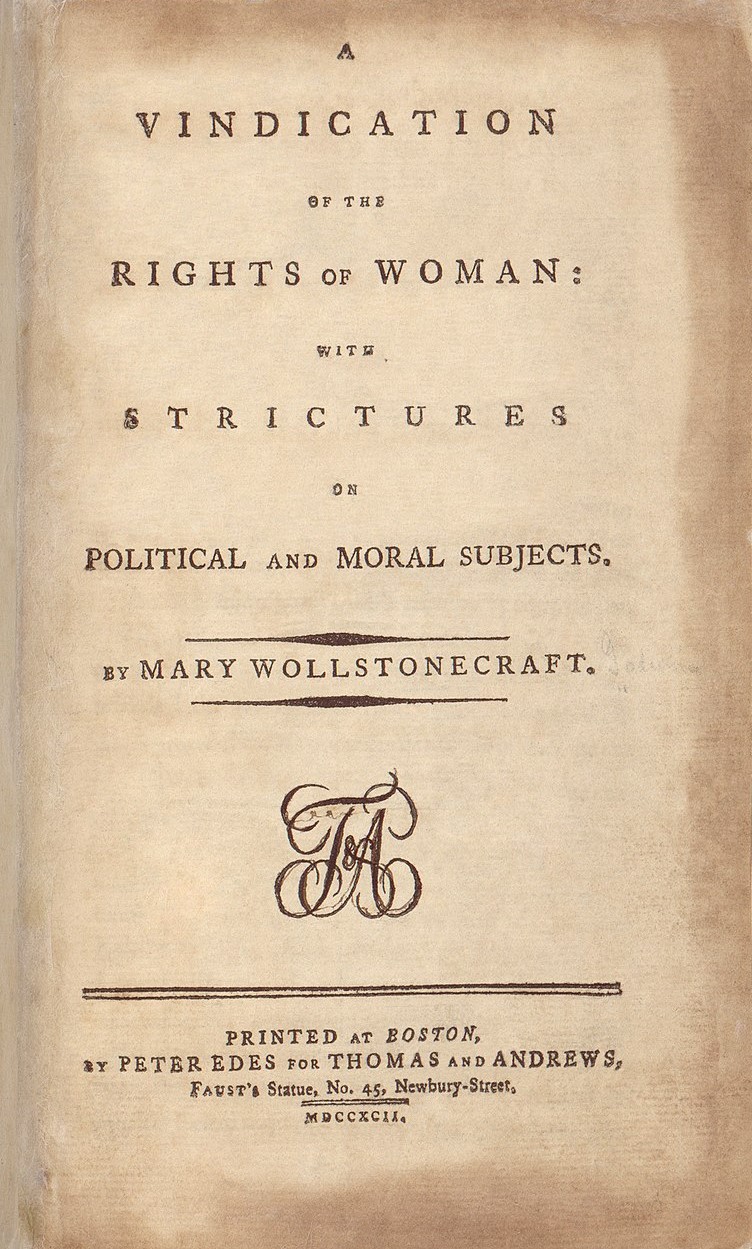
GUEST: Like I mentioned above, I spent many years of my graduate studies analyzing literature that up-ends dominant power structures. I find there to be something so rebellious and triumphant about these types of stories – I truly just love them. Throughout my dissertation work and writing Heroic Disobedience, I had the words of Mary Wollstonecraft ringing in my ears: “If the degeneracy of the higher orders of society be such, that no remedy less fraught with horrour [sic] can effect a radical cure; and if enjoying the fruits of usurpation, they domineer over the weak, and check by all the means in their power every humane effort, to draw man out of the state of degradation, into which the inequality of fortune has sunk him; the people are justified in having recourse to coercion, to repel coercion.” Here and elsewhere in her work, she is defending the right of oppressed people to use violence to overthrow corruption when they have been left no other choice. In this instance, she is talking about the French Revolution, but it’s a principle that is threaded throughout her work.
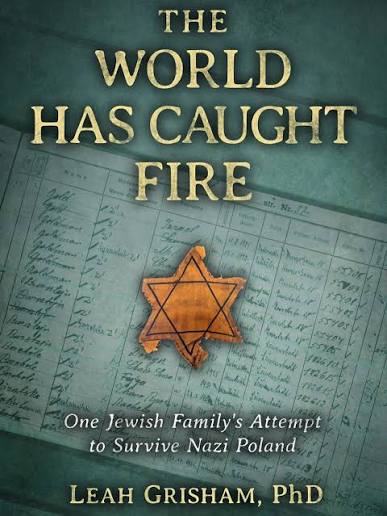
When it came to my new book, though, I had to unlearn a little bit of that kind of thinking. Or, at least, re-frame how I thought about resistance, rebellion, and armed violence. (And, again, People Love Dead Jews was integral to this process for me). For instance, there were a million ways big and small that Jews tried to resist the Nazis, but this resistance looked different than the type of resistance that Wollstonecraft was writing about: in many instances, sadly, the Nazi military was just too powerful. When researching my book, I spent countless hours with firsthand testimony, both recorded and written (and many of the written accounts, like journals, were written by Jews who did not survive). A few things that come up over and over again is the desperation of the doomed to be remembered, and their anger – desire for revenge – toward the Nazis and their collaborators. These feelings don’t always make it into the holocaust narratives that become popular, but, to me, they are crucial for historical accuracy. The average European Jew might not have participated in a violent uprising, like the Warsaw Ghetto Uprising, but remembering them in a historically accurate manner is, I think, its own kind of resistance.
In The World Has Caught Fire, for instance, in addition to telling Dora’s survival story, I also trace the fates of her family members who didn’t survive. Ninety percent of Polish Jews perished in the Shoah, and telling their stories in addition to the glorious survival stories makes the Nazi’s mission – eradicating all of Europe’s Jews – impossible.
HOST: And maybe that’s the point. We must keep our stories alive by sharing Jewish experiences, accolades, hardships overcome, and most importantly, Jewish joy! Because, in my opinion, that is what we should be focusing on—not the tragedy, not the horrors that befell us. Like Austen wrote in Pride and Prejudice, “Think only of the past as its remembrance gives you pleasure.” I don’t think she meant that we should forget about our sorrows or disregard our pain. I think she meant that we should focus on our purpose. We should remember the good things, our achievements and success. We should recall those memories that propel us forward. And so I thank you for joining me today and for sharing a bit of your work.
Look for Leah’s book on Amazon and check out her blog for articles, book reviews and more!
With love,