Months ago—after having the honor and the delight of being interviewed by author and journalist for the Argentine newspaper La Nación, Juana Libedinsky—I began planning today’s blog. Our discussion was not about Columbus Day or the Anusim (crypto or converso Jews) but rather about Jane Austen—naturally.

However, Juana posed a question that stirred my curiosity to previously unexplored heights. I wanted to write about my discoveries here today. Needless to say, no one could have predicted that we’d be on the verge of seeing our beloved meshpucha home once more.
The hostages are said to be released within the next several hours.
Uploading a blog post today of all days seemed a bit…indifferent and self-serving. But, upon further thought and introspection, I found some interesting connections between today’s news headlines. At least, it was interesting to me—I hope you’ll let me know your thoughts in the comments section below.
The Hebrew word “anusim” (אֲנוּסִים), is derived from the root א-נ-ס (Aleph-Nun-Samekh). The etymology of the word meaning crypto or converso Jew, suggests the concept of being forced or coerced. The Hebrew word “asurim” (אסורים), refers to one who is physically restrained, held captive or hostage.
The Asurim we have long prayed for, and are anxiously awaiting, are a living reminder of “coerced vulnerability, of innocence bound.” If we reflect on the descendants of the Anusim (those forcibly converted in Spain, Portugal, etc.), it is hard not to see the correlation between the trauma of stolen individuality and the loss of the sacred, of innocence, and of peace of mind.
According to our tradition, we—as a community, as a family—bear the duty to remember, redeem, and restore. Freedom—whether of the body or soul—is an act of redemption. I learned this today while contemplating whether or not I should upload this post—a post about Christopher Columbus, about the Spanish Inquisition, about members of Klal Israel who were lost to us because they were coerced and held spiritually captive.
When I was a child, October 12th was celebrated as Columbus Day. Today—well, not so much. The day is now acknowledged as Día de la Raza (Day of the Race) or Día de la Hispanidad (Day of Hispanicity). Some communities prefer to acknowledge the day with celebrations of Indigenous Peoples’ Day or even Discoverers’ Day. In other words, we have gone from a Day of Observance, where President Franklin Delano Roosevelt invited “the people of the United States to observe Columbus Day, in schools and churches, or other suitable places, with appropriate ceremonies that express the public sentiment befitting the anniversary of the discovery of America” to outright disregard, disdain, and disrespect.
Christopher Columbus—Cristoforo Colombo or Cristóbal Colón— was the son of Domingo Colón y Susana Fontanarossa. There has been an ongoing debate about the family being cryptic or converso Jews. There hasn’t been any concrete evidence to prove that point, but it is interesting to note that Columbus had close ties with Sephardic Jews, and conversos, and his famous voyage in August 1492 coincided with the Jewish community’s final expulsion from Spain.
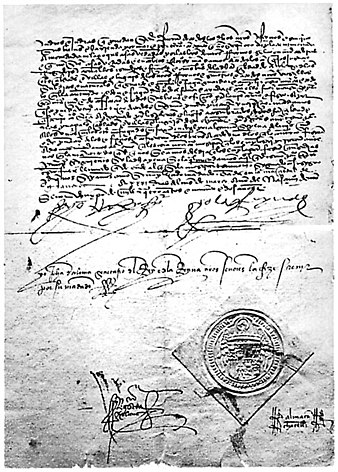
Coincidence? You tell me. And also ponder this interesting tidbit: Columbus used Hebraic or Kabbalistic notations on his documents and diaries. Why?
There are thirteen surviving personal letters written by Columbus to his son Diego. With dates ranging from November 1504 to February 1505, twelve of these letters display the Hebrew letters ב״ה, which are understood to be shorthand for Baruch Hashem (Blessed be He or With God’s help). And when he was and his crew were stranded in Jamaica among the Taíno peoples, Columbus used his knowledge of Jewish astronomy in order to save the day.
Columbus and his crew were running short of supplies. Relations with the Taíno were…stressed. By consulting the Ephemerides of Abraham Zacuto, a renowned Jewish astronomer, Columbus noted that a lunar eclipse was due on February 29, 1504. In order to secure food and shelter, Columbus told the Taíno that his God was angry at their refusal to help, and that His wrath would be made known with the disappearance of the Moon. As this “magical” phenomenon began to unfold, the Taíno, naturally, were terrified. Columbus “promised” to intercede with his God on their behalf; and, when the Moon reappeared, the matter was quickly resolved to everyone’s satisfaction. Yes, Columbus manipulated an indigenous people to his own benefit. My point, however, is this event showed yet another connection to Judaic practice and knowledge.
Why would Columbus have known the works of a Spanish Jew?
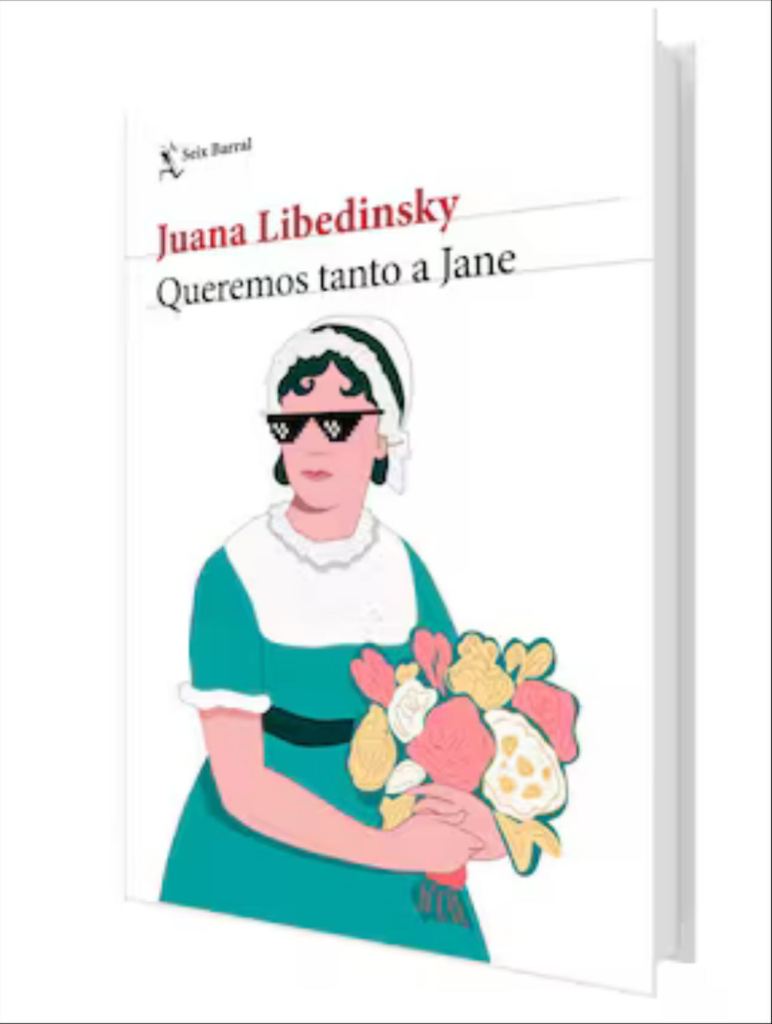
Juana Libedinsky was in the midst of writing her upcoming book, Queremos tanto a Jane (scheduled to be published in November 2025) when she called me to talk about my fascination with Jane Austen. To say that I am honored to have a small part in her latest project would be an understatement! We discussed my novel, Celestial Persuasion, that takes place in the Viceroyalty of Río de la Plata—otherwise known as Argentina—and how I incorporated a Jewish storyline into Jane Austen Fan Fiction. Juana touched upon one of my recurring pet peeves: Why don’t we ever read about Jews in historical fiction outside of the Inquisition or the Holocaust? Why are Jewish fictional characters always portrayed in a demeaning light, money lenders and rag peddlers? Naturally, the question about Jews in Argentina was posed.
Juana asked if I could substantiate my suggestion that Jewish people have been in that country since the famous voyage of 1492. At the moment, unfortunately, I could only rely on conjecture based on family anécdotas—anecdotes—and Argentine history. I promised Juana that I’d look further into the matter. When I wrote Celestial Persuasion, I completed hours and hours of research on the internet. But, now, I had another resource: ChatGPT. In truth, I am not a fan of AI—much like the Taíno, this “magic” terrifies me. That being said, I couldn’t resist trying to find out more on the subject of early Jewish immigration to the New World.
This is only the tip of the iceberg:
Conversos, Hidden-Jews, New Christians, or Those with Unknown Heritage:
Juan Cardoso Pardo
- Born in Lisbon, possibly one of the first conversos to arrive in the Río de la Plata
- On April 16, 1614, the (Roman Catholic) Buenos Aires City Council imprisoned the 22-year-old teacher. He was accused of not teaching the Apostles’ Creed and not praying with his students
Diego Núñez
- Born in Córdoba del Tucumán, Diego was the son of a Portuguese converso. Like his father, Diego was a physician; unlike his father, Diego was suspected of being unfaithful to Catholicism.
- While in prison, Diego circumcised himself, and urged others accused of Judaizing to maintain their faith at all costs
- Subjected to torture and starvation for twelve years, he later was burned at the stake in 1639
Diego de León Pinelo
- Born in Córdoba del Tucumán in 1608. His father, Diego López de Lisboa y León, and mother, Catalina de Esperanza Pinelo, were conversos who fled the Inquisition
- The family was often under suspicion and harassed by colonial authorities; however Diego went on to be Argentina’s first literary figure
Ensign Juan Rodríguez Estela
- A wealthy Portuguese rancher, he married a daughter from a family of conquistadors.
- He was suspected of Judaizing and sent to prison, where he was tortured to confess, and later burned at the stake
Manuel de Lucena
- Lived in Buenos Aires in the mid-to-late 1600s
- Accused of practicing Judaism by the Inquisition of Lima
- Secretly observing Shabbat, avoiding pork, and Catholic rites
- The outcome of his trial is unclear in surviving records, but his arrest is well documented, one of the few documented instances of a converso persecuted in Buenos Aires
Domingo Faustino Sarmiento (President of Argentina from 1868 to 1874)
- Born in San Juan, Argentina, 1811 to Paula Zoila Albarracín y Irrázabal, a descendant from the Acosta family.
- Sarmiento’s maternal grandmother, María Jesús de Irrázabal y Acosta, was the daughter of Miguel de Acosta.
- Miguel descended from Gaspar de Acosta, a Portuguese settler in colonial Chile/Argentina.
- Through the Acosta line, Sarmiento also descends from the Antúnez and Gómez/González families. These families are documented in early colonial Chile and Cuyo (today western Argentina), where many Portuguese conversos settled during the 17th century
- This is supported by Inquisition trial records in Lima and Cartagena and archival documents showing New Christian status in colonial Chile and Argentina.
Juan Manuel de Rosas aka Juan Manuel José Domingo Ortiz de Rosas y López de Osornio (Nicknamed “Restorer of the Laws”, was an Argentine politician and army officer who ruled Buenos Aires Province and briefly the Argentine Confederation)
- Born in Buenos Aires 1793 to Agustina López de Osornio, who was connected to the Machado family
- María Antonia de la Trinidad de Azcuénaga y Basavilbaso (the daughter of María Rosa de Basavilbaso y Urtubia, daughter of Domingo de Basavilbaso) and/or María López de Osornio are the descendants of Ana de Machado, a 17th-century member of the Portuguese Machado family in Buenos Aires
Carlos María de Alvear (A soldier and statesman, Supreme Director of the United Provinces of the Río de la Plata in 1815)
- Born in Santo Ángel, Misiones Orientales (now Brazil) in 1789 to María Balbina de Sáenz de la Quintanilla y de la Cámara. She was from a noble Spanish family, but her ancestry includes names such as Fonseca and Cámara. Both were associated with Portuguese conversos
- His father, Diego de Alvear y Ponce de León was born in Montilla, Córdoba, Spain, of Andalusian and Portuguese origin.
- The Portuguese surname “Alvear” is documented among New Christian families in Porto, Lisbon, and Seville. The Alvear family in Iberia included notaries, merchants, and soldiers, professions frequently held by New Christians.
- Members in the Alvear lineage appear in Portuguese and Spanish Inquisition records accused of Judaizing.
José Hernández (One of Argentina’s most important literary and political figures of the 19th century, best known for his epic poem, Martín Fierro)
- Born in San Martín, Buenos Aires in 1834 to Isabel Pueyrredón whose ancestry includes: the Sosa, Rojas, and Alcaraz families.
- The surname Sosa is of Portuguese origin, and appears frequently in Inquisition records in Brazil and Peru. Several New Christian families named Sosa fled from Portugal to Brazil and the Río de la Plata in the 16th–17th centuries.
- The Sosa family of Corrientes and Santa Fe, were active in trade and law in the 17th century, had crypto-Jewish connections
Mariquita Sanchez de Thompson aka María Josefa Petrona de Todos los Santos Sánchez de Velasco y Trillo ( A founding mother and patriot)
- Born in 1786 to Petrona Trillo y Cárdenas, a descendant from the Trillo, Cárdenas, and del Valle families.
- The Trillo surname appears in Portuguese Jewish naming patterns in Seville and Lisbon in the 16th century
- There are Inquisition records from Peru and Brazil in which individuals named Trillo were tried for Judaizing
- In Buenos Aires, Trillo family members were involved in trade, a common profession of New Christians
- The Trillo surname appears in Portuguese Jewish naming patterns in Seville and Lisbon in the 16th century
- Father, Don Tomás Antonio Sánchez de Velasco y Pérez, belonged to the Sánchez de Velasco family—an established Castilian-Creole family in Buenos Aires
- The del Valle surname is found in Inquisition records across the Iberian world.
- Juan del Valle and other family members were tried in Cartagena and Lima for Judaizing
- Families named del Valle were sometimes of Sephardic origin, and migrated to the Americas under false Christian identities
- The del Valle surname is found in Inquisition records across the Iberian world.
- The Cárdenas, Trillo, and possibly Velasco lines include individuals involved in colonial trade, which was disproportionately managed by (Portuguese) New Christians
The last Jews left Spain on the 9th of Av or August 2, 1492. A member of a wealthy converso family, Luis de Santángel, loaned most of the money for Columbus’ voyage. Many speculate that it was Santángel’s “desire to help his persecuted brothers.” On his second voyage to the New World, Columbus set sail with 17 ships and approximately 1200 men. The expedition was paid entirely by the gold, and other valuables, confiscated by Spain from the expelled Jews. This also coincides with log entry written by Columbus which stated: “The object was to secure the property of the secret Jews for the state treasury … [and to] confiscate the property of those who openly professed to be Jews.”
Whatever else can be said about Christopher Columbus, I can’t help but think of the multitude of people who were saved from the Auto-da-Fé (a ritualized, public penance carried out by “relaxing’ or burning the Judaizer as a form of spiritual release or purification) because of his voyages. What does this have to do with Jane Austen Fan Fiction? Nothing—and everything. Everything because fan fiction is a medium that allows an author to incorporate his or her own culture, religion, and traditions into Austen’s beloved classics. Fan fiction allowed me to imagine a Jewish young woman journeying from England to the fledgling nation of Argentina—a country that would abolish the Inquisition laws from its constitution on March 23, 1813.
The Anusim, whether tradesmen, laborers, teachers, soldiers, entrepreneurs or statesmen, were born into Jewish families. Somewhere along the line, they were forced to convert, to flee and abandon their homes, their livelihoods, their faith and culture. Their descendants, for the most part, were lost to the people Israel. Kabbalistic and Hasidic sages viewed these conversions as a metaphor for exile. Their physical beings were coerced by outside forces, and they were trapped in a cultural assimilation. Their souls, too, were held captive by circumstance, and these souls yearned to return, for Teshuva.
According to an article on Chabad.org, it doesn’t matter if a Jew converts or if a Jew lives a secular lifestyle or if, God forbid, a Jew is held captive and is unable to fulfill the rites and responsibilities of his or her faith. That Jew remains “intimately bonded with the God of Abraham.” God “awaits the moment this precious soul will return.” Just as we await, with bated breath, for the release of the hostages; the Asurim, who have too long been bound in exile. May their physical, emotional, and spiritual souls find healing and Ge’ullah—redemption.
Today, when we witness the hostages restored to their families, we will recite:
Baruch Atah Adonai, Eloheinu Melech ha-olam, matir asurim
בָּרוּךְ אַתָּה יְיָ אֱלֹהֵינוּ מֶלֶךְ הָעוֹלָם, מַתִּיר אֲסוּרִים
“Blessed are You, Adonai, Ruler of the Universe, Who frees the captives.”
Amen.


 Mirta Ines Trupp~ Author
Thank you for an interesting and enlightening post. I’ve long been aware of the conversos in the US, but hadn’t thought about the rest of the world.
Hello Liz, I apologize for not responding sooner! I think with the advent of increasingly powerful technology, we non-academic types will begin to comprehend the true depths of this travesty and the far-reaching implications of the Inquisition. Countless families lost to Judaism, not only through physical torture, but the emotional and spiritual. A true holocaust.