Yeah! The day has arrived! Today is Publication Day! And because it is Publication Day…there have been a few hiccups.
Hopefully, Amazon will get it straightened out by tomorrow.
And because of those pesky algorithms…
Daily Journal for Jewish Women, Daily Journal for Jewish Women, Daily Journal for Jewish Women, Daily Journal for Jewish Women, Daily Journal for Jewish Women, Daily Journal for Jewish Women, Daily Journal for Jewish Women…
Just a little humor, folks. I guess I’ve had too much pumpkin pie…
I hope you check out the new book. I’m excited to hear what you think!
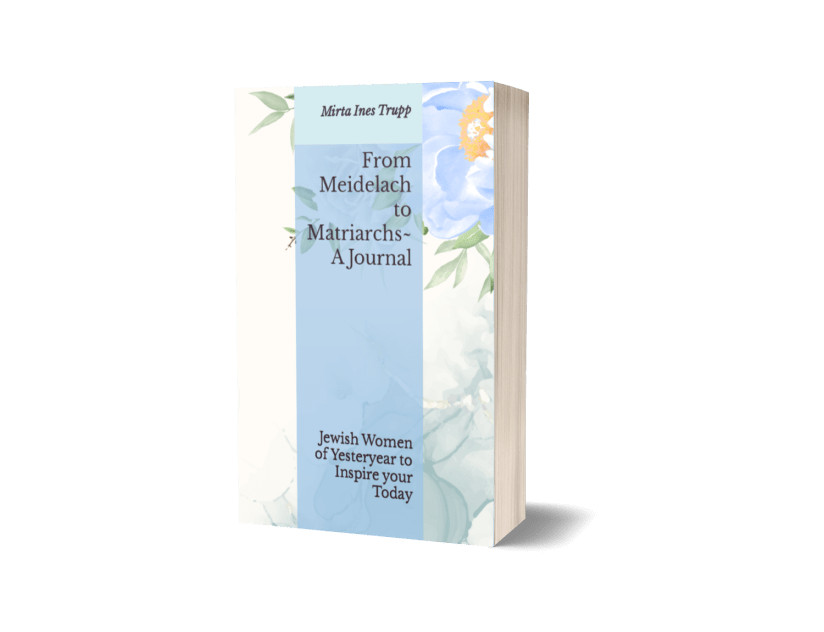
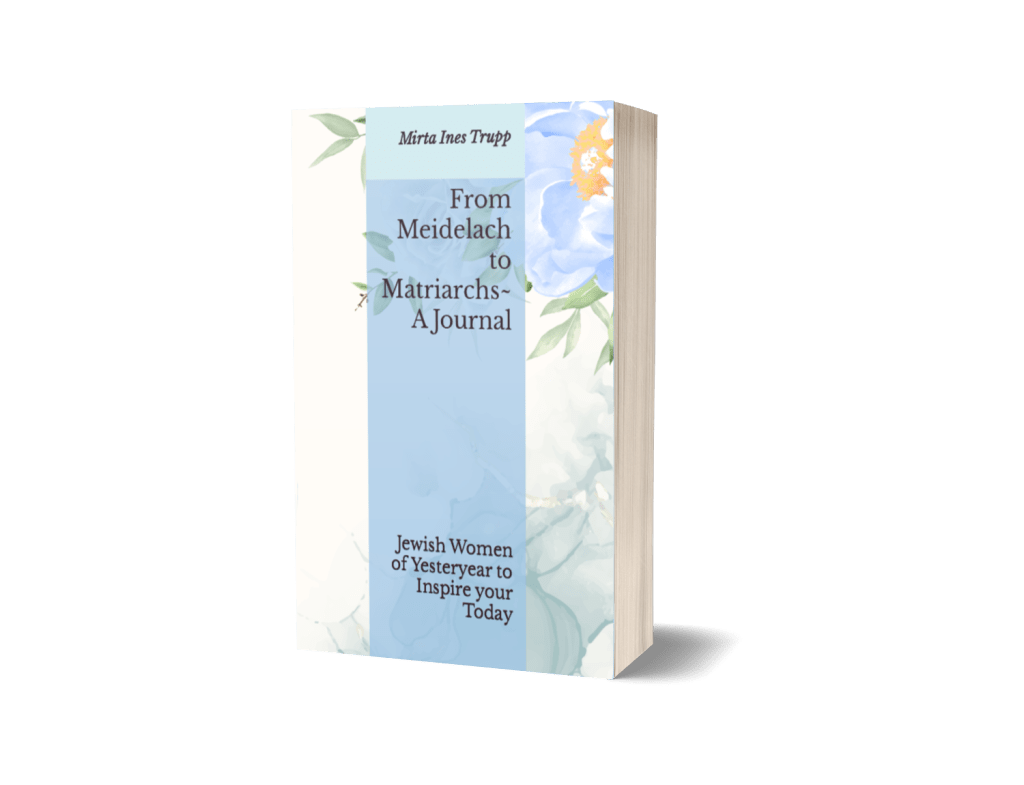
Publication Day is fast approaching! Do you know what to expect when you purchase a copy of “From Meidelach to Matriarchs: A Journal~ Jewish Women of Yesteryear to Inspire your Today” ?
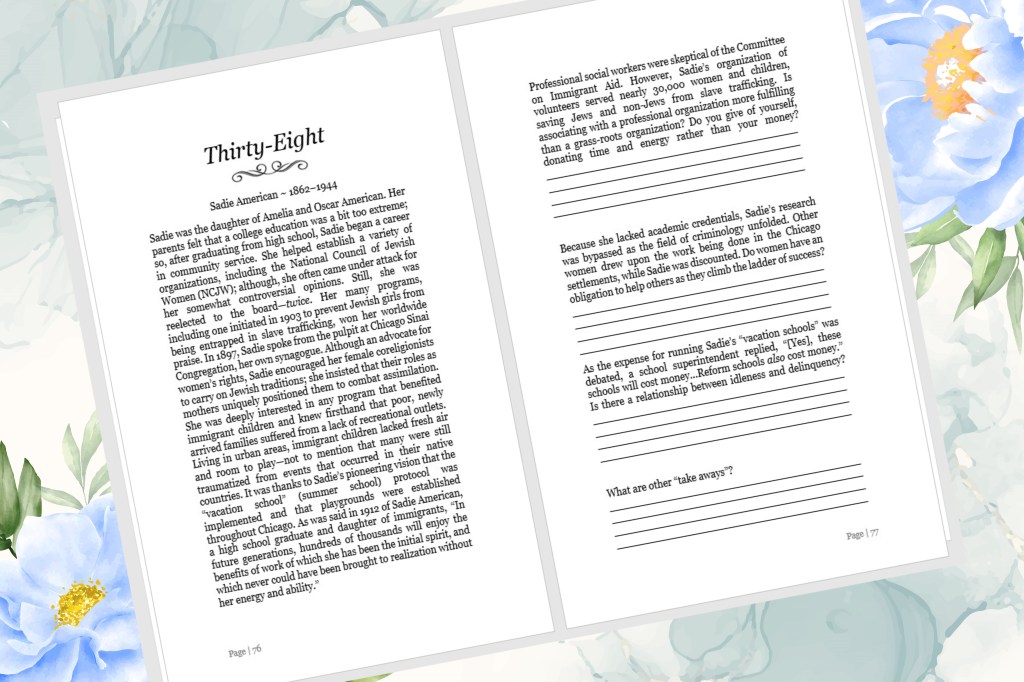
I’ll let you in on the little secret… This book will introduce you to one hundred amazing women. You will learn a bit of their story and then address some thought-provoking questions. Perhaps introduce is the wrong word—let’s just say that I didn’t know some of these ladies. Have you heard of: Sadie American, Tikvah Alper, Anita Brenner, Claudia Douek, Shamsi Hekmat, Miriam Michaelson, or Hannah Sen?
That’s the whole point of this book! Meet one hundred inspiring, courageous, trail-blazing women. Jewish women of our recent past. Jewish women who have opened doors for the rest of us. Jewish women who have spoken up. Jewish women who have put their foot down and said, “I’m not having it.”
Jewish women to reinforce our identity, our pride, our purpose.
Coming soon on Amazon. Look for the release on Thanksgiving Day! With love,
I’ve been writing about my upcoming release for a few weeks now. I’ve called it a Daily Journal, a Daily Devotional, even a Motivational Journal. I talked about expressive writing, introspection, and guidance for your spiritual journey. Are you asking yourself, “So, what is it exactly?”
With Publication Day fast approaching, I thought I’d share an example of just one of the ladies showcased in From Meidelach to Matriarchs: A Journal~ Jewish Women of Yesteryear to Inspire your Today.
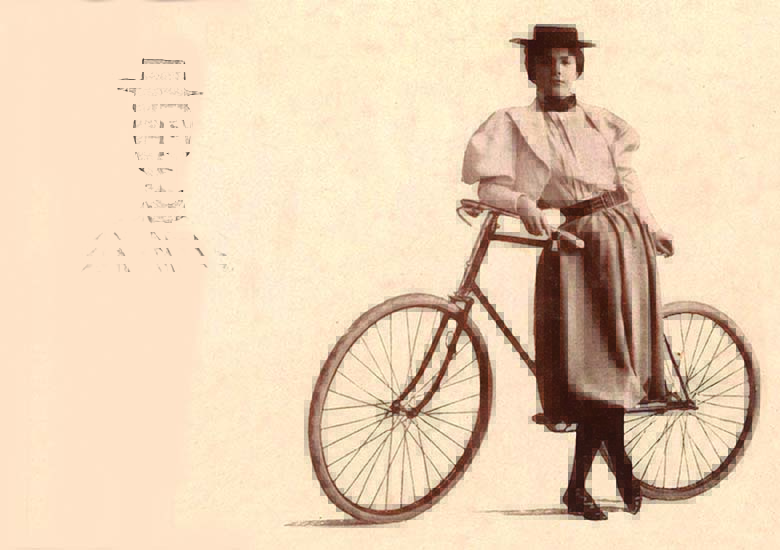
Let me introduce you to Annie “Londonderry” Kopchovsky ~ 1870-1947
Annie was born in Latvia to Beatrice and Levi Cohen. When she was five years old, her family immigrated and settled in Boston. At the age of eighteen, she married Simon Kopchovsky. She had three babies within four years, yet, indomitable Annie held down a job selling advertising space for Boston newspapers. In 1894, two men placed a bet on whether a woman could travel the world alone on a bicycle. Annie was quoted as saying, “I didn’t want to spend my life at home with a baby under my apron every year,” and she submitted her name for consideration.
The mother of three—Annie had no previous cycling experience—was accepted to take on the challenge. The rules required that the contestant finish her journey within fifteen months, start off penniless, and earn $5,000 along the way. Annie put her advertising skills to work. She hung a sign on her bike advertising the Londonderry Lithia Spring Water Company. That is how Annie “Londonderry” was officially born.
Although she sailed for large portions of her journey, she fulfilled the requirements and cycled alone with a pearl revolver for protection. She returned home just under the allotted time to collect the $10,000 prize. In 1895, Annie became the first woman cyclist to travel around the world. Soon after, the family moved to New York. She wrote an article for “New Woman” that stated, “I am a journalist and ‘a new woman,’ if that term means that I believe I can do anything that any man can do.”
Now, just as I have done in the journal, I will share some questions for you to ponder:
Question Number One:
“A Jew must know that when he goes from one place to another, he is not going on his own, but he is being directed from Above.” (The Baal Shem Tov) Was Annie on a mission for G-d? Do you feel the Hand of G-d directing you?
Question Number Two:
A Chabad post postulated that, like a bike, our lives are also made up of multiple parts—most importantly, two parents and G-d. We do are best in the balancing act we call Life. But while we’re enjoying the ride, we must keep in mind that it’s not all our own doing. We must always remember who sustained us, molded us, inspired us to keep on pedaling. Who’s riding in tandem with you?
Question Number Three:
What does Annie’s story teach us about breaking barriers?
Question Number Four:
What are other “take-aways”? In other words, are you inspired to jot down any other thoughts that have come to mind?
So there you have it! An example of what you can expect when you pick up your own copy.
I’ve provided you with one hundred fabulous women. We will meet the meidelach, young women just getting started and trying to figure things out, and the matriarchs who are shouldering the burdens of life and leading by example. I will share a brief snippet of their stories, one woman for the next one hundred days. One hundred opportunities to inspire your thoughts, your creativity, your philanthropy, your Jewish observance or your Jewish identity.
What do you think? Are you interested? Are you up for the challenge?
As a great fan of Jane Austen, it is not hard to imagine that I devour all sorts of material about the author and her life. Jane was the daughter of an Anglican clergyman. Her novels, as well as her personal correspondence highlight her connection to her faith. In reading fan-fiction, and following like-minded authors who are fans of Austen’s work, I’ve come across the practice of keeping a devotional. To be honest, I had to do some research on the subject. I thought it might just be a Christian practice. But, as I worked on my latest project, From Meidelach to Matriarchs: A Journal~ Jewish Women of Yesteryear to Inspire your Today, I found that I crafted something definitely Jew-ish.
Everyone likes to go their own way~ to choose their own time and manner of devotion.”
Jane Austen
Keeping a devotional journal is a way to reflect on your principles and what’ve you’ve gleaned from religious practice, readings, lessons, etc. It can help you focus on certain topics. It can help you track your progress while you set out on a spiritual journey.
Use it to:
Reflect, write down your thoughts, and applythe lessons
Write a prayerof your own
Set spiritual goals
Get creative
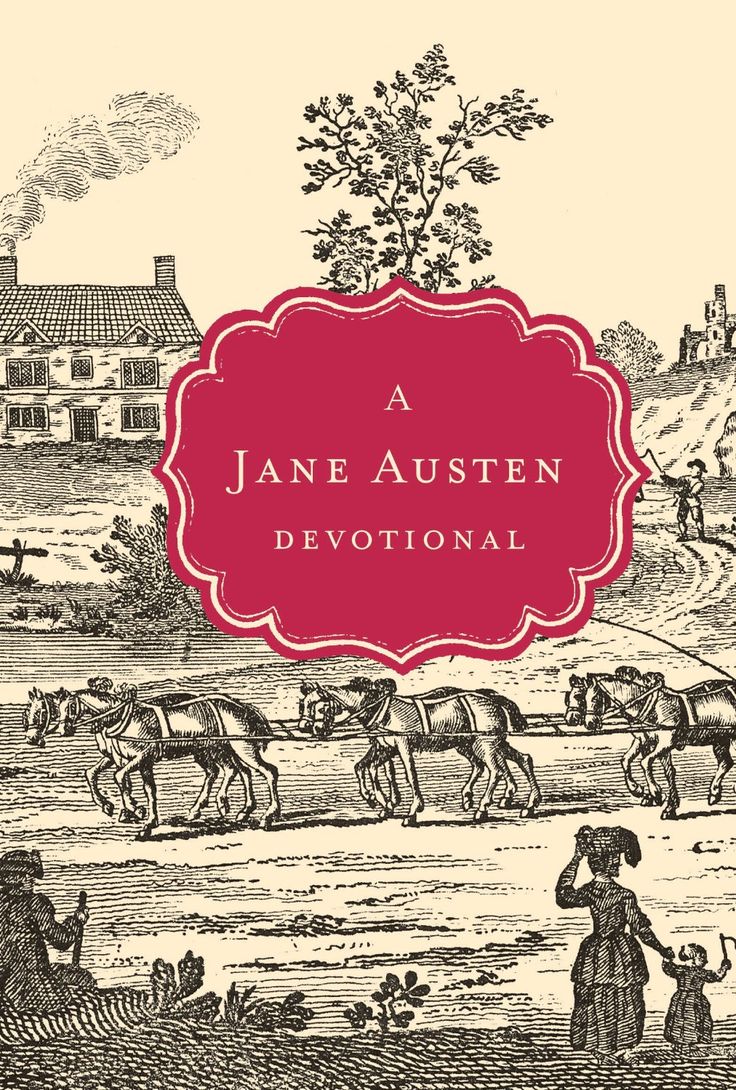
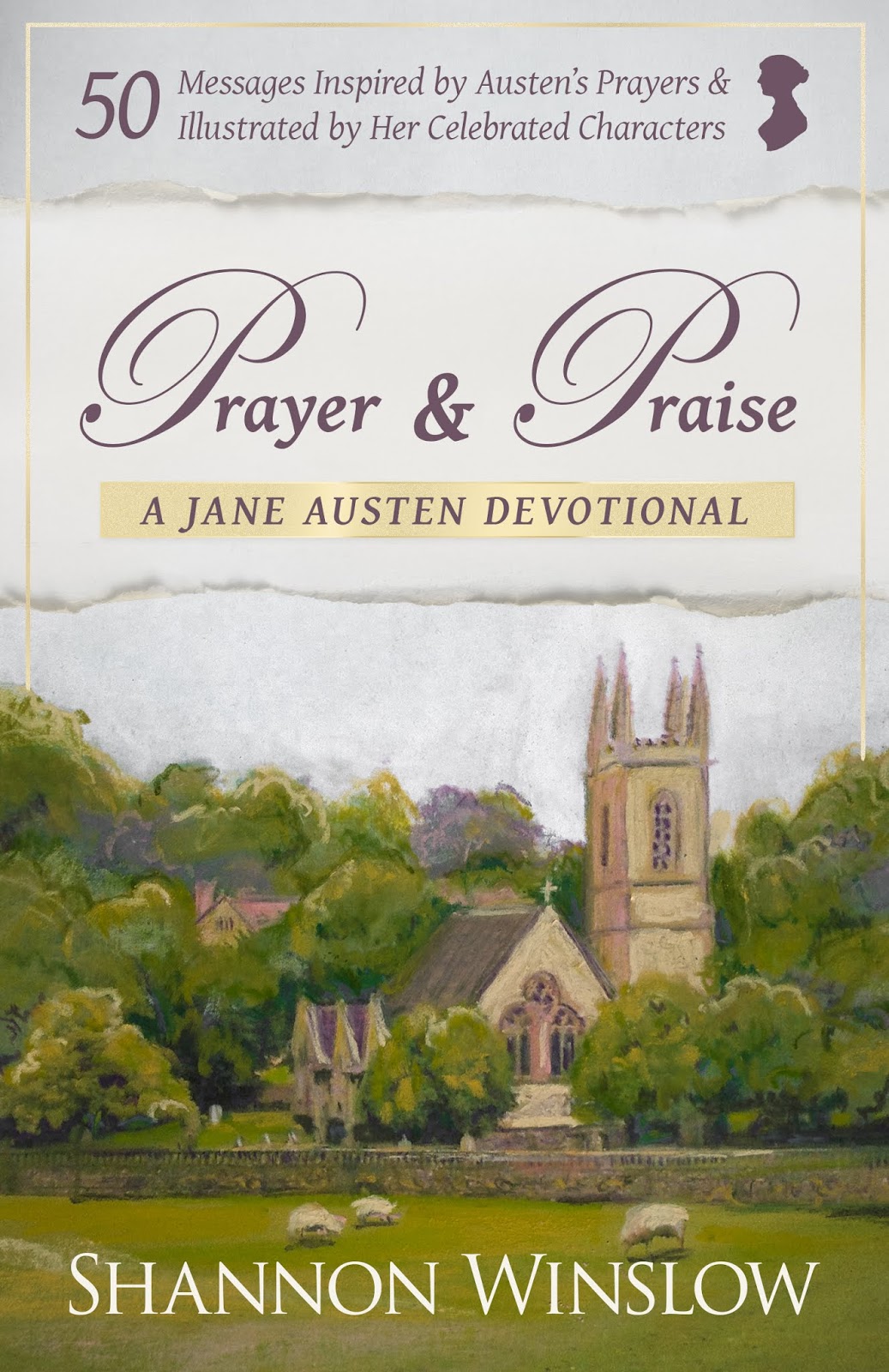
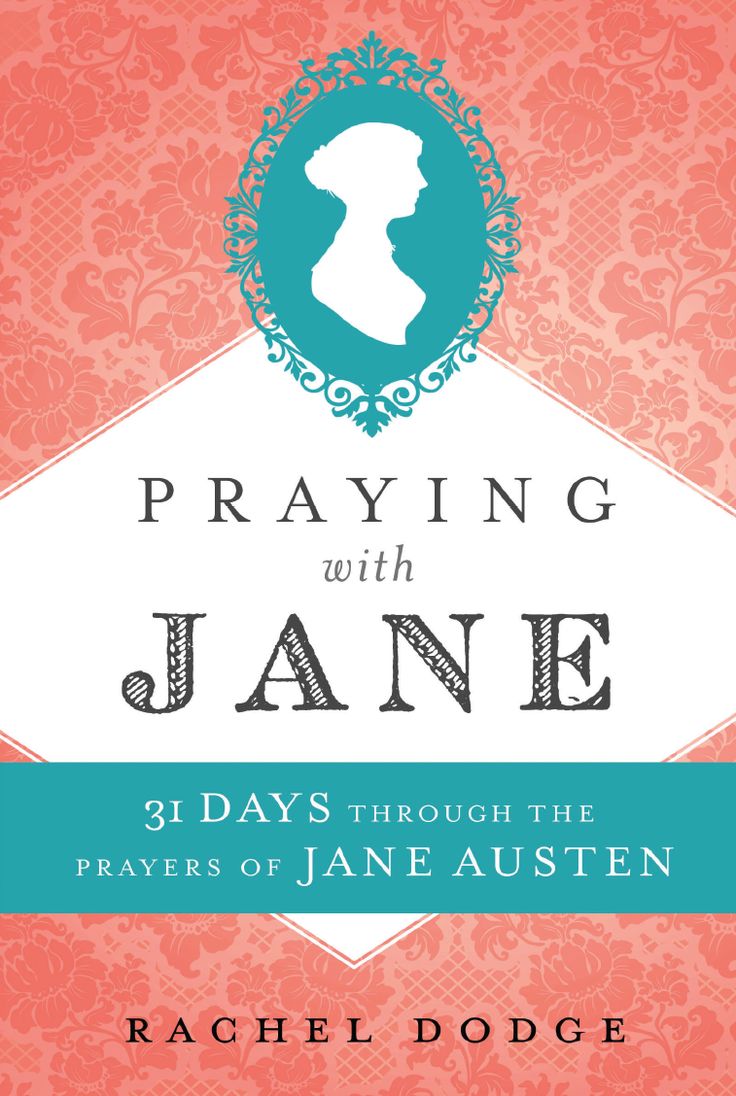
Here are three samples of non-Jewish authors who’ve done just that with their own Jane Austen devotional journals:
I know what you’re thinking. You’re already coming up with excuses.
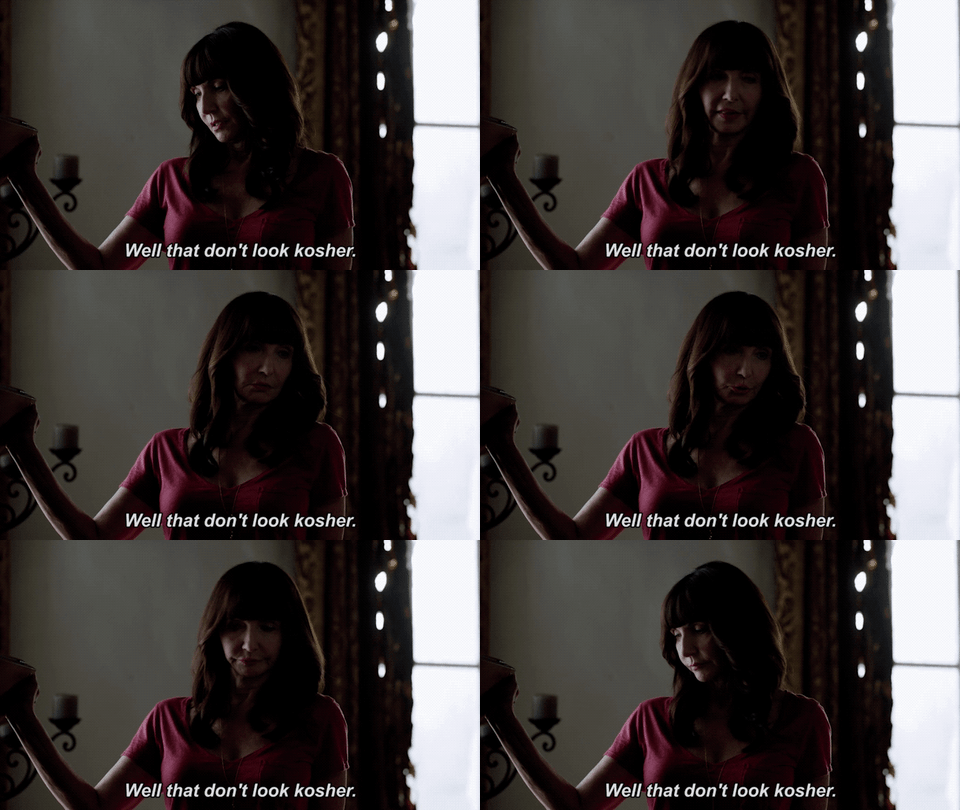
Excuse #1: It doesn’t sound quite… kosher.
Some people pray and recite psalms and proverbs on a daily basis. Others say the words that in their hearts and minds. Some people attend services every week. Others only go to synagogue during the High Holidays. As Jews, we have rituals such as our morning prayers, tefillin, and blessings of thanksgiving. We do charitable work. We light our Shabbes candles. A devotional journal can be another ritual or tool in our spiritual connection.
Excuse #2: Ugh! I’m not interested in Jane Austen.
News flash: This journal is actually not at all related to Jane Austen.
Excuse #3: You’re too busy for another commitment.
What if you change your mindset and think of this as a self-care moment—a special treat, like a mani-pedi or meeting a friend for tea? What if you choose to use this journal, not only for its entertainment value, but to nourish your neshama, your Jewish soul? Here are some suggestions that you might find helpful:
Make an Appointment~ This is your time to reconnect
Decide on a timeframe~ Set a realistic amount of time aside. 15 minutes?
Choose a Place~ Set up a cozy nook, have a pen, highlighter, etc. handy
Be flexible ~ Life happens! Be kind to yourselfand adjust as necessary
Publication day is fast approaching! Stay tuned and follow this page for release updates.
The last blog post discussed the concept of expressive writing and my hopes for publishing something unique and thought provoking. This project is not a historical fiction based in Russia or Argentina. It’s not a Regency Romance in keeping with my love for Jane Austen. My sixth publication is a daily journal about—and more importantly, for—Jewish women. It will provide a bit of structure and a comfortable environment to reflect upon historical accomplishments, religious identity, moral questions, life cycle events, and so much more.
If you were to search for a daily journal on Amazon, the results would be staggering. As a matter of fact, in recent years the market has been overwhelmed with these so-called low content publications. These books have minimal, or even, no content— just pages of empty lines waiting to be filled with the consumer’s own thoughts. The author provides a quote or a simple phrase as motivation, but that’s about it. I’ve crafted something a bit different.
Technically, my project is considered medium content. There is some repetition in that I have provided space for you, the consumer, to write. However, rather than offering a quote or prayer as inspiration, I have provide a brief synopsis for each of the one hundred women showcased in the journal. After each snippet of history, there are three thoughtfully constructed questions to help you navigate through your thoughts and strengthen your resolve, your point of view—your faith.
Another factor that differentiates my project from other journals is that it’s specifically geared towards Jewish women. Naturally, everyone is welcome to enjoy it and learn from it. I believe any person of faith would find the journal an enlightening and useful tool. That being said, the P.O.V. for this project (Point of View—that’s me trying to show off my author’s vocabulary) is unapologetically Jewish. Jennifer Wulff, Certified Spiritual Director, believes that, “Expressive journaling becomes a sacred and holy space, where you can explore your deepest questions and strengthen the connections between yourself and the Divine.” Now, more than ever, it is important to find our own voice. To look back with pride and to look forward without fear. To be comfortable in our own skin.
Shoyn! (as my bobe used to say) Enough already! I promised a cover reveal. So, here it is:
Nu? What do you think? Let me know in the comments below. Publishing Day is fast approaching! I look forward to hearing from you soon.
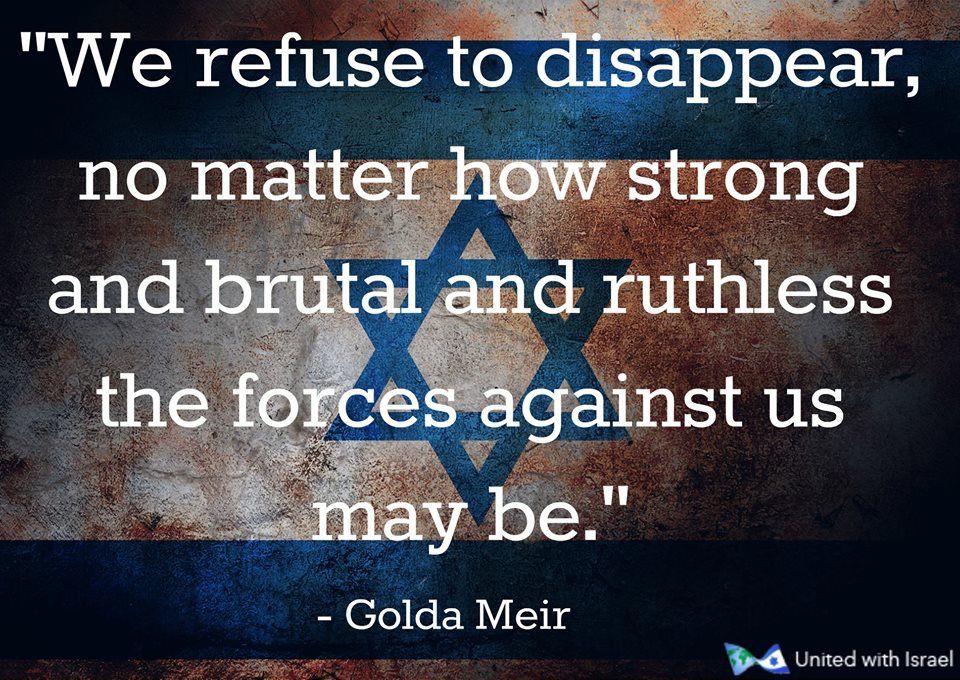
Last week, I was prepared to share some happy news with this audience. Last week, I wasgoing to reveal my latest project with all the enthusiasm and (anxious) hope typical of a would-be author. However, last week, we were trying to absorb the horrific news coming from Israel. We were trying to understand how these barbaric acts were taking place—after we Jews had pledged NEVER AGAIN. I typed the words “we Jews”— not the world. That was not a typographical error. That was intentional, because apparently “the world” hasn’t joined us in pledging NEVER AGAIN. The world doesn’t seem to understand the history of Eretz Israel (the Land of Israel).
I’ve decided to share some history today. I don’t consider myself an academic and I’m certainly not a professional historian. The information I’m sharing comes from various sites found on the Internet. I encourage you to do your own research, but this is what I believe to be true.
Nearly 3,000 years ago: The people known as the Philistines had become extinct. This Aegean (Cypriot) tribe had no connection to the modern-day Arabs that call themselves Palestinian. They have different ethnicities, different languages, different culture.
Around 1000 B.C.E: King David ruled the region known as Canaan.
Around 931 BCE: King Solomon built the first holy temple in Jerusalem. The kingdom was divided: Israel to the North, Judah in the South. “Ninety-two percent of the Bible place names are in the mountains of Israel in what the Bible calls Judea and Samaria and the world calls the West Bank.” ~B. Brim, scholar at Elon Moreh.
The Book of Genesis shows that Abraham entered Israel through Shechem, and that the hills of Judea and Samaria were the stomping grounds for his descendants through Isaac and Jacob.
Abraham, Isaac and Jacob were buried in Hebron, a bustling city in the Judean hills.
Joseph, who lived and died in Egypt, was buried in Shechem, in the hills of Samaria (Joshua 24:32)
The book of Exodus shows that the ark of the covenant, before being placed in the temple in Jerusalem, rested in the Samarian city of Shiloh
Around 722 BCE: The Assyrians invaded the region.
568 BCE: Babylonians conquered Jerusalem, destroying the first temple
132 CE: The Romans exiled Jews from their homeland; and, in an attempt to discourage patriotism, renamed the region Syria-Palaestina, combining the names of two ancient kingdoms long since dead: Assyria and Philistine.
Future conquerors (Persians, Greeks, Muslims, Arabs, Turks, Egyptians, etc.) would refer to the area by the name of Palestine (Philistia, Palestina, Filastin, Mandatory Palestine, etc.), but it always denoted a place and not a people.
1517-1917: The Ottoman Empire ruled the Holy Land.
1917: The British offered the “Balfour Declaration” in support of the establishment of a Jewish homeland. Over 80 % of the region’s population were Muslim/Arab. “Before the Balfour Promise, Palestine’s political borders as we know them today did not exist, and there was nothing called a Palestinian people with a political identity as we know today,” historian Abd Al-Ghani.
1918 (after WWI): The region becomes known as British Palestine.
1922: The League of Nations approved the Balfour Declaration. The Arabs who lived in the area opposed it. These people were from, or were descended from, Syria, Jordan, Egypt, etc. Very few Palestinian Arabs were indigenous. Most arrived with the Muslim conquests of the 7th century.
1937: The Peel Commission offered a plan for peace. The Arabs rejected it. “There is no such country as Palestine! ‘Palestine’ is a term the Zionists invented! Our country was for centuries part of Syria.”~ Arab leader, Auni Bey Abdul-Hadi.
1944: President Roosevelt opposed a pro-Zionist resolution in Congress in fear of provoking Arab nations. He had previously showed his disdain for Jewish refugees, referring to their pleas as “Jewish wailing” and “sob stuff.”
1947: The United Nations approved a two-state plan. The Arabs rejected it.
1948: Israel was officially declared an independent state. The following day, Egypt, Jordan, Iraq, Syria and Lebanon invaded. A temporary armistice agreement gave Judea and Samaria to Jordan (now called the West Bank) and the Gaza Strip to Egypt.
1967: Six-day War: Egypt, Jordan and Syria attack. Israel takes control of Gaza, the Sinai Peninsula, the West Bank and the Golan Heights.
“Why is it that on June 4th 1967, I was a Jordanian and overnight I became a Palestinian?”~Walid Shoebat, a former PLO terrorist
“The Palestinian people have no national identity. I, Yasser Arafat, man of destiny, will give them that identity through conflict with Israel.” ~ Yasser Arafat
“There is no such thing as a Palestinian people, there is no Palestinian entity, there is only Syria. You are an integral part of the Syrian people, Palestine is an integral part of Syria. Therefore it is we, the Syrian authorities, who are the true representatives of the Palestinian people.”~ Syrian President Hafez Assad
1973: Egypt and Syria attacked Israel on Yom Kippur.
1979: Militant Islam ousted the shah of Iran and the Pahlavi dynasty. The U.S. embassy and 52 American were held hostage for 444 days. President Carter’ s belated response ended in disaster. Since then, the Islamic regime has ruled Iran.
1979: President Carter set up the Camp David Accords with Egyptian President Anwar Sadat and Israeli Prime Minister Menachem Begin. Israel began to withdraw from Sinai. Sadat was assassinated by Islamic militants for working with the Israelis.
1981: Israel annexed the Golan Height. Although the area was deemed essential to security and national defense, the action was condemned internationally. The United Nations Security Council suggested that Israel withdraw from territories occupied during the Six-Day War, in exchange “of the termination of all states of belligerency and recognition of Israel as a sovereign state by the Arab states.”
1987: Hamas was established by members of the Muslim Brotherhood and factions of the PLO at the beginning of the intifada.
2000: President Clinton met with Prime Minister Ehud Barak and Palestinian Authority Yasser Arafat. The negotiations were rejected by the Arabs. In December of that same year, a proposal called The Clinton Parameters was presented to both parties. The document suggested, among other points, that a Palestinian state would be created, comprising between 94–96% of the West Bank and the entire Gaza Strip. Israel would annex land, including settlements. The PLO rejected the proposal.
2005: Israel disengaged from Gaza. They offered it to Egypt They did not want to accept responsibility. They offered it to Jordan. They did not want to accept responsibility. After the withdrawal, the “Palestinians” were given control over the territory, except for the borders, the airspace and territorial waters.
2006: President Carter published a disturbing and controversial book entitled, “Palestine: Peace not Apartheid.” Years later, Carter apologized for his views.
2006: Terrorists infiltrated the Israeli side of the border through a tunnel they dug near the Kerem Shalom land crossing. During the attack, tank commander, Lieutenant Hanan Barak, as well as Staff Sergeant Pavel Slutsker, were killed. Wounded, Gilad Shalit was taken hostage to Gaza. He would remain there until 2011.
2007: Hamas was elected as the Palestinian government. The population of Gaza is now under their control. Hamas began storing weapons, tunnels, etc. under homes, schools, hospitals, and mosques. Israel approved a series of sanctions that included power cuts, restricted imports, and border closures in self-defense.
2008: Prime Minister Ehud Olmert’s plan included placing Jerusalem’s Old City under international control and would cede almost 94% of the West Bank for the establishment of a Palestinian state. The Arabs reject it.
2008: The IDF began dropping leaflets, making phone calls, and commandeering local radio and TV stations. They called for civilians to evacuate buildings where weapons were stored and/or where tunnels have been dug. They were instructed to the center of towns and to not act as shields for Hamas. This was not the first, or the last, time the IDF would take these measures.
2009: President Obama met with Turkish Prime Minister Recep Erdogan. He embraced the hard line Islamist as a “friend” and “partner.” Obama traveled to Egypt and condemned Israeli “occupation” of the West Bank (Judea and Samaria). “The situation for the Palestinian people is intolerable.”
2011: President Obama formalized ties with Egypt’s once-outlawed Muslim Brotherhood.
2012: President Obama bypassed Congress and sent $1.5 billion to Egypt’s Muslim Brotherhood.
2014: Three Israeli teenagers disappeared in the “West Bank” (Judea and Samaria). Prime Minister Netanyahu accused Hamas. On June 30, 2014, the boys were found dead outside of Hebron.
2015: President Obama struck a deal with Iran. “We released seven terrorists who had helped Iran with their nuclear program, and we agreed not to prosecute another 14 terrorists for doing the same thing,” said Senator Ted Cruz. “That’s 21 terrorists helping Iran develop nuclear weapons that they intend to use to try to murder us.”
2016: On his last day in office, President Obama’s administration approved $221 million for the Palestinians.
2018: Protestors and supporters in the Gaza Strip attempted to cross the border into Israel, sending incendiary kites and balloons into the area.
2021: Tensions in Jerusalem boiled over and led to the greatest escalation of violence since 2014. After clashes between Israeli police and Palestinian protesters left hundreds injured, Hamas launched rockets into Jerusalem and southern and central Israel, prompting air strikes from Israel in response.
January 2023: A Jerusalem synagogue was attacked, leaving numerous dead.
April 2023: A woman and her two daughters were killed in a “West Bank” (Judea and Samaria) attack.
September 2023: President Biden sanctioned giving $6 billion to Iran. The following month, Deputy national security adviser Jon Finer would say, “that the United States believes Iran is “broadly complicit” in Hamas attacks in Israel.”
October 2023: Biden’s administration deleted the president’s post calling for restraint after Hamas viciously attacked Israel. The president later denounced the attacks, but American congressional representatives continued to put pressure on Israel, insinuating that they were to blame.
Democratic Rep. Ilhan Omar called Israel’s response to the attacks “war crimes.”
Democratic Rep. Rashida Tlaibsaid that U.S. aid to Israel was akin to “funding to support the apartheid government.”
Democratic Rep. Alexandria Ocasio-Cortez focused on the “oppression and occupation” more than the barbaric attacks of Hamas
Prime Minister Benjamin Netanyahu addressed Israelis and Jews around the world with decisiveness and with a clear vision. “The enemy will pay an unprecedented price. In the meantime, I call on the citizens of Israel to strictly adhere to the directives of the IDF and Home Front Command. We are at war and we will win it.”
I originally drafted this up a couple of weeks ago, but I couldn’t bring myself to share it due to the horrific situation in Israel. Reading enlightening work shared by other authors, and coming across requests for uplifting posts, I’ve decided to take make this a public piece.
In recent years, journal writing, or engaging in expressive writing, has been proven to have a positive impact on the participant. It helps us be more mindful, to be more grateful. It helps improve focus and alleviates stress. But studies have shown that simply writing onto a blank page doesn’t necessarily produce positive benefits. As with everything else, it’s the intention that matters. It’s about introspection and connection.
That’s where my new project comes in.
As many of you know, I am drawn to the success stories of days gone by. I’ve been working on creating a daily journal that will allow us to get acquainted—or reacquainted, as the case may be—with the women of yesteryear.
We’ll meet the meidelach, the young women who were just getting started and were trying to figure things out. We’ll meet the matriarchs who shouldered the burdens of life and led by example.
Here’s the plan: I will share a brief snippet of their stories, one woman for one hundred days. One hundred opportunities to inspire your thoughts, your creativity, your philanthropy, your Jewish observance or your Jewish identity. Let’s not focus on politics or other ideologies that may only serve to cause division. Let’s focus instead on the uniting factors.
There is an Eshet Chayil (a Woman of Valor) in every one of us.
My suggestion would be that the reader take a few minutes to learn about one woman each day—just one. Truly think about her, where she came from, what she accomplished. Reflect on the barriers she had to overcome. Does her experience resonate with you? Allow yourself to be inspired. There will be prompts to jot down your thoughts and additional space to scribble a few notes, ask G-d for guidance—put things into perspective. I will include a page where you can track your observations at the end of this journey. There is no pressure, no judgement. That’s the beauty of this journal. No one needs to know; it’s just between you and the Woman of Valor that lives inside you.
How does that sound? Does it appeal to you? I hope you will enjoy it and share it with your family, friends and loved ones. I can’t wait for Publication Day! This will be an enlightening resource or a lovely gift for all Jewish women. Here are a few suggestions:
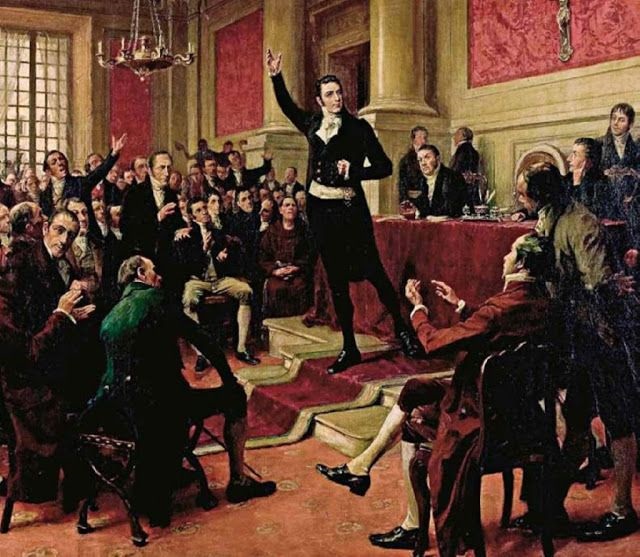
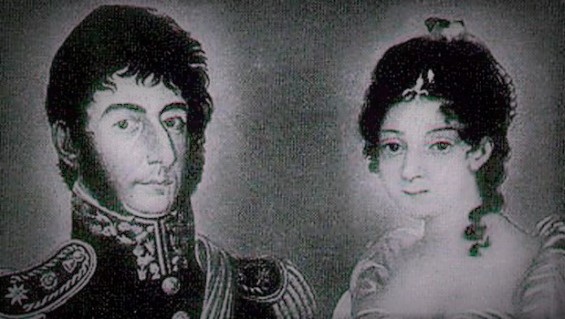
To commemorate Argentina’s celebration of the May Revolution (el 25 de Mayo), I’m sharing a few images and various snippets from Celestial Persuasion that highlight Jose de San Martin~ Liberator of South America. I hope you enjoy the post, and as my compatriots say, “Viva la Patria!”
Excerpt ***
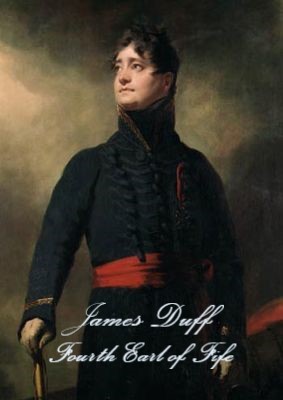
“Do allow me the honor, your lordship, to further expound on the matter,” said San Martín, his speech colored with a Spanish flair. “Madam, many of my companions were born in the Viceroyalty of Río de la Plata. At a very young age I was sent to Spain to complete my education and have pursued a military career as my father wished. I met Lord Fife and several other men of his acquaintance shortly after being discharged from duty. They spoke to me of a movement growing in my native land, of the struggle to gain independence from the mother country. With the earl’s aid and that of his friend, Sir Charles Stuart, I have come to England to meet other South American-born patriots who wish to free themselves from the Spanish crown and form individual republics.”
“Miss Isaacs, this man, who stands so humbly before you, was named an Adjunct General before his honorable discharge,” Lord Fife declared. “You must understand, San Martín is a South American by birth, a freedom fighter by instinct, and a republican by conviction.”
You will be what you must be, or else you will be nothing.”
Jose de San Martin
Excerpt ***
Lord Fife returned to his home, at length, with Mr. San Martín in his company. After a brief conference with Pearson, the earl was directed to his library and could not contain his amusement at the scene unfolding there. Mr. Gabay stood at the head of the desk, holding down a section of a large map, while Abigail immobilized the opposite corners. Mrs. Frankel, peering through a quizzing glass, leaned over the parchment; and, using an ornamental pen knife as a guide, delineated a path from England to the Southern Hemisphere.
“What have we here?” the earl quizzed. “Are we planning to invade at dawn?”
After the pleasantries and salutations had been completed, Abigail approached her host. “Pray forgive our intrusion into your sanctuary, my lord. I discovered this rather extraordinary atlas yesterday afternoon. I could speak of nothing else as we dined this evening; and as Mrs. Frankel showed an interest in studying its contents, I suggested we take a second look.”
“Indeed? May I ask why?”
Abigail raised her chin with not a little pride. “I have made my decision, my lord. I am determined to accept the proposal that has been put before me. I would, however, ask that Mrs. Frankel be permitted to accompany me on this adventure. We are as much as family as any blood relation, and I should like it of all things.”
“By all means. The arrangements will be made as you prescribe. I congratulate you on your resolve, Miss Isaacs.”
“May I impose further on your generosity, your lordship? May I count on your continued assistance whilst we prepare for such a monumental undertaking? Having no previous experience in the matter of travel or emigration, nor any connections in the society which I am about to enter, your guidance would be most welcome.”
“His lordship has graciously offered to supply me with letters of introduction,” said Mr. San Martín. “I have been away from home for many years and will need to move in certain circles if I wish to be of any use. Lord Fife will do no less on your behalf, of that I am certain.”
“Rest assured, madam. I will make all the necessary arrangements, and of course, Mr. Gabay and Mr. San Martín will escort you on your voyage. You needn’t fear on that score,” replied Lord Fife. Delighted and relieved with the young lady’s decision, he would have granted her anything in order to keep his word to Jonathan Isaacs.
Excerpt***
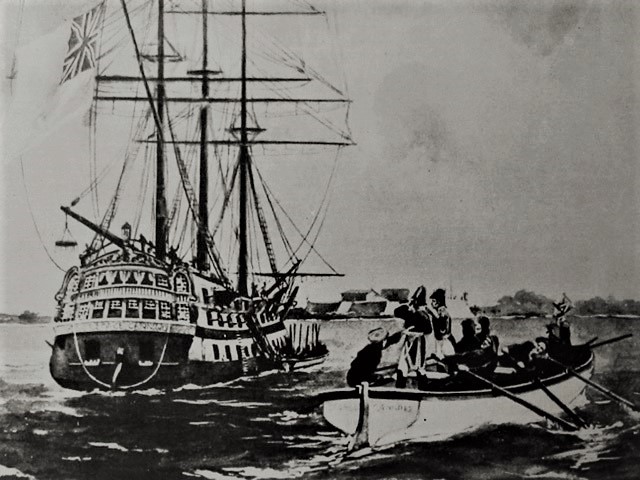
Mr. San Martín spotted Abigail and Mrs. Frankel as they made their way to disembark. Executing a crisp bow, he reached for Abigail’s gloved hand and brought it to his lips. “I fear I have been remiss in my duties, Miss Isaacs. Pray forgive my inattentiveness throughout the voyage, but I have been much engaged with matters of La Logia.”
“I understand completely, sir,” replied Abigail. “I wish you great success and hope that we meet again.”
“Of that, there can be no doubt, madam. The society of Buenos Aires is such that our paths will indubitably cross. Ah—good,” he said, upon espying Mr. Gabay’s person looming above the other passengers. “Your escort arrives.”
Abigail peered over her shoulder and saw the gentleman approaching. She had no wish to be escorted by Mr. Gabay; nonetheless, she would have to concede. It would not be reasonable, nor proper, for two women alone to roam about the foreign city.
The gentleman came up to the party and bowed his greeting; but before San Martín made mention of his plan, Mr. Gabay had his arrangements at the ready. “Miss Isaacs, when we were last at port, I took the liberty of dispatching a letter to your new staff at Casa Encantador. The majordomo, Bendoza, and your housekeeper, Señora Tavares, will be awaiting your arrival. I anticipate meeting your man on the docks once we have our papers reviewed and certified.”
Pursing her lips, Abigail allowed herself a moment to recognize the benefits to this design. She would have preferred to have been consulted, but there was no arguing the point at this time. It was very likely his lordship’s doing after all.
“Excellent,” said Mr. San Martín. “That will allow for Miss Isaacs to settle in to her new lodgings while you and I meet with the officials of the Triumvirate.”
Abigail nodded her acquiescence and watched as Mr. Gabay forged ahead of the line. Clapping his hand upon Mr. Alvera’s shoulder, he joined his friend and his wife as they left the ship. While Mrs. Frankel fretted about being lowered onto the awaiting boat, Abigail became aware of a group of men waiting upon the docks. They appeared eager to set upon the arriving passengers. Bringing a well-used spyglass to her eye, Abigail was able to observe that they held writing instruments and were diligently scribbling in their books.
When Mr. San Martín set foot on the dock, several of the men let out a cheer of welcome. The fanfare came as a bit of surprise, for Abigail had understood that the gentleman had been away from these shores for the vast majority of his life. She failed to take into account that San Martín’s heroics had inspired much enthusiasm in the hearts of the criollos, and his arrival merited the spirited reception.
More noise occurs from a single man shouting than a hundred thousand who remain silent.”
Jose de San Martin
Excerpt ***
Abigail followed Mr. Thompson’s gaze, as did his wife. Mr. San Martín appeared to be deep in conversation with another guest. This alone did not warrant much surprise; however, behind the elder gentleman sat a young lady of fourteen or fifteen. Abigail recognized the look in the girl’s eyes. She was besotted.
Mrs. Thompson did not scruple to show her amusement. “Come my friend.” She arose and looped her arm through Abigail’s. “It is time you met the others,” said she and they walked across to the other side of the room.
Feeling quite out of place, but wishing to complete her duties as duenna, Mrs. Frankel silently followed the pair. The threesome stopped short as they approached a grand lady who peered at them from over her fluttering fan.
“Toma,” said Mariquita, “if you are warm, why do you sit by the fire?”
“It is not the fire that has my blood boiling!” answered the lady, glaring at her daughter.
“Do calm yourself and allow me to introduce my new friend. Miss Isaacs has recently arrived from England.”
The woman bowed her head in recognition as Abigail and Mrs. Frankel curtsied.
“This is Señora Tomasa Francisca de Escalada,” the hostess supplied, “but I just call her Toma.”
“You may call me Señora Escalada,” the lady rejoined, looking pointedly at the newcomer. “Really, Mariquita! Though we are far from genteel society, we need not lose all sense of decorum.”
“It is my pleasure to meet you, Señora Escalada,” Abigail carefully replied. “May I introduce my companion and dear friend, Mrs. Frankel?”
The lady made a small gesture, but said no more on the subject. Her mind, and her keen eyes, were focused elsewhere. “Look at him. What is Antonio thinking, allowing María to be in such close proximity to a stranger?”
“Mr. San Martín is a guest in my home; and I can assure you, María is quite safe.”
Señora Escalada only plied her abanico with greater vigor. “Yes, but who is he to be introduced to my daughter?”
“Let me explain to Abigail, poor dear, for she is new to our society and does not realize her good fortune in sharing her tea with such a grand dame!” said Mariquita, laughing. “That young lady is María de los Remedios. Her father, Antonio José Escalada, is a prosperous merchant and was also Chancellor of the Royal Audience. The girl has only known the best of families, which is why her poor mama is having a fit of the vapors.”
Abigail nodded and said no more. What could she say? What would Señora Escalada think of her own pedigree? Would the lady be offended if she knew she was taking tea with the daughter of an insignificant country physician? Abigail’s thoughts were interrupted by her hostess’s conversation.
“San Martín has been well received by the members of the First Triumvirate,” said Mariquita. “The lieutenant-colonel’s experience in fighting against Napoleon’s armies will be of great benefit to our cause, or so I am told.”
“But who are his people? He is no peninsular, to be sure! And you forget, my dear. We have just celebrated María’s fiesta de quinceañera. That officer must be at least twenty years her senior!”
Excerpt ***
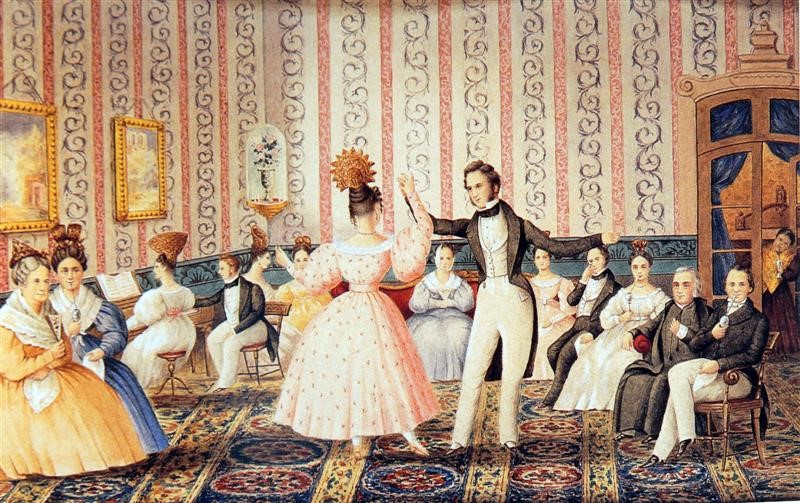
“It seems you are not without admirers, my dear. Mr. Gabay came round to look after my comfort; but to my mind, he only remained by my side to better observe you. I daresay he was none too pleased that the lieutenant claimed the first dance. In fact, I believe the good man was envious.”
“Mr. Gabay, who would laugh and torment me at my every turn, envious? Not he!”
“Naturally, you have much in common with the lieutenant…”
“Apparently not enough.” She laughed. “Frankie dear, Lieutenant Kaunitz is to be married. To Miss Mathilda Kendall.”
“Never say so! How did this come about?”
“It seems they were much together on the George Canning.”
Mrs. Frankel brought her cup to her lips but thought the better of it, and set it down once more. “But whatever do they have in common?”
“It seems the gentleman read to her whilst she was convalescing. I suppose Miss Mathilda’s penchant for flora and fauna increased exponentially with each tutorial.”
“Then it would appear the alteration from teacher to suitor was complete. Pray what alteration must Raphael undergo to be viewed as a suitor?”
“Raphael, is it?” Abigail sighed. “I ought to be ashamed of you, Frankie, but I will forgive this contravention of propriety as I believe you are reminded of another gentleman of our acquaintance. Someone whom we all admired and came to regret.”
“I cannot know of whom you speak, my dear.”
“Come now. You know very well I speak of Mr. Bloom. Aside from the physical differences between the two gentlemen, I fear, they are one and the same.”
“Your Mr. Bloom is the handsomest of men to be sure.”
“Please Frankie, lower your voice. I would not wish someone to overhear such nonsense. My Mr. Bloom indeed.”
Mrs. Frankel did not expand on her commentary and Abigail was entirely disinclined to pursue the matter. Mr. Gabay, who had just then been approaching their têtê-a-têtê with refreshments in hand, and did in fact overhear the comment, retreated undetected as the astonished assemblage observed Mr. San Martín lead a blushing María de los Remedios onto the dance floor.
“There now,” said Abigail. “If you must indulge your romantic sensibilities, pray turn your attention to that young couple. Judging by the reaction of the general assembly, theirs will be the stuff worthy of one of your novels.”
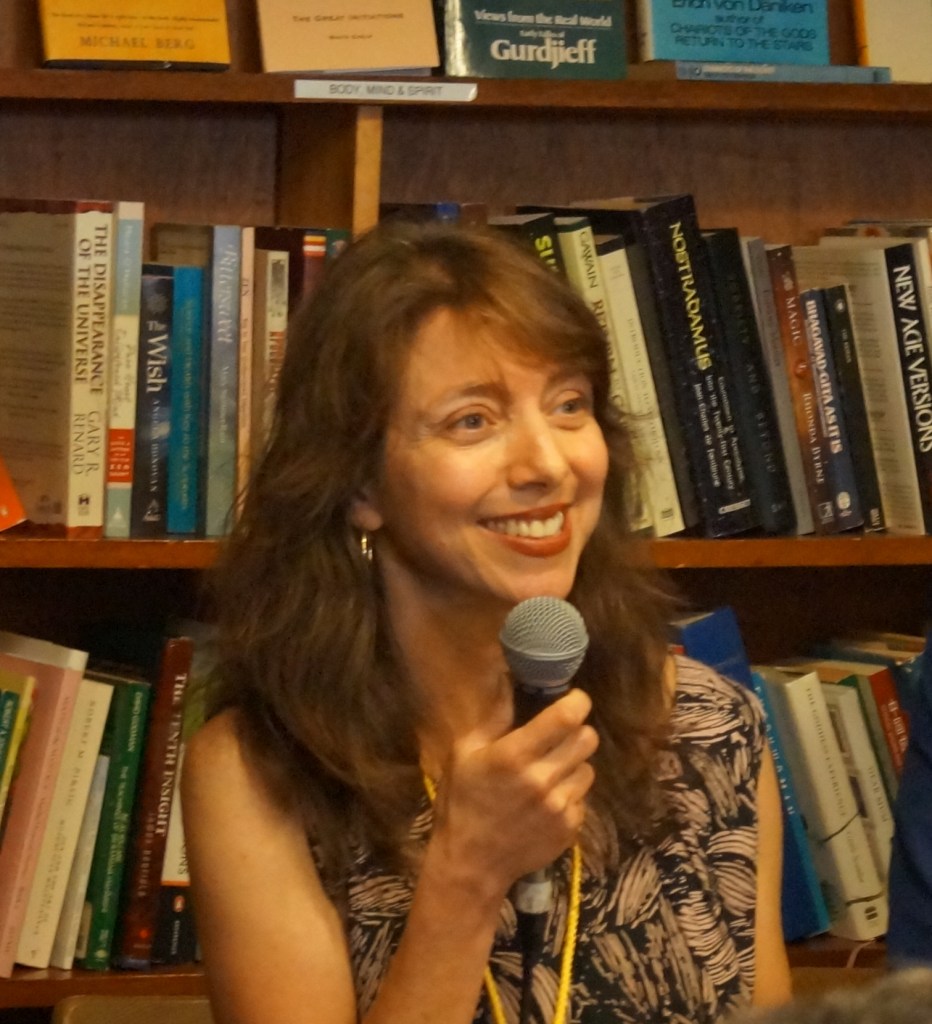
Joining me today on the blog is author, Magdalena Ball. Magdalena, or Maggie as I’ve taken the liberty to call her, is a novelist, poet, reviewer and interviewer who grew up on Lenape land (NY) in the US, and currently lives and writes on Awabakal land.
She is Managing Editor of Compulsive Reader, Vice President of Flying Island, and her work has been widely published in literary journals such as Meanjin, Cordite, and Westerly, along with many anthologies. She is the author of a number of fiction and poetry books published in Australia and overseas.
From Argentina to Israel, from across the pond to down under; what a thrill it is for me to host authors from around the world! Thank you for reaching out to me, Maggie. I was honored to receive your email and I know the audience will be delighted to learn more about you. Please tell us about your new book, Bobish.
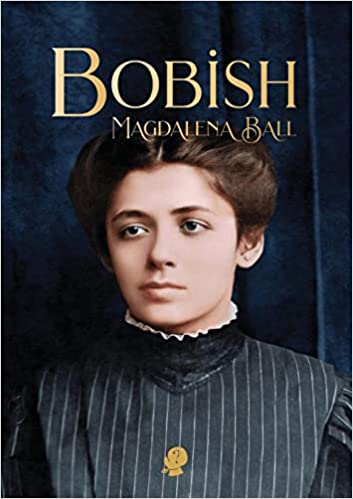
Guest: Hi Mirta, thanks so much for inviting me to talk with you! Bobish is the story of my great-grandmother, Rebecca Lieberman Samberg, who migrated from the Pale of Settlement to NYC on her own at the age of 14. I began researching Rebecca after finding an evocative photo of her (which is now the cover) among my mother’s photos and quite frankly I found her story fascinating. My daughter was studying the Russian revolution and began asking me questions about whether my grandparents were in Russia at the time of the revolution and when I started digging to find out what the correspondences were, I began to realise (as one often does when researching personal history) how linked my family story was with the broader historical waves that were happening through the twentieth century.
Rebecca’s story is the story of the Ashkenazim – who were ring-bound into that area of the western Russian Empire—modern day Belarus, Lithuania, Eastern Poland, Western Russia and Moldova known as the Pale of Settlement – the poor shtetls made famous by Fiddler on the Roof that existed only until 1917 outside which Jews were generally not allowed to live. Unfortunately as the power of Tsar Nicholas II began to wane and after his assassination and in the lead-up to the Russian revolution, life in the shtetls was also unlivable as waves of violence (the pogroms) began to sweep through the villages and the violence, particularly in place where Rebecca lived (Grodno, which is in modern day Belarus) and also Galicia in Poland, was becoming unbearable. I don’t know what she might have witnessed before she left so young, or why she went alone—I could not find those records, but it was enough for her to go, and her story begins with her arrival in NYC, her ship arriving at the Statue of Liberty.
From there it follows her life and the information I’ve been able to get from census records, interviews, landing papers, and anything else I could find along with more general historical research, as it unfolded in the new world where, among other things, she ended up working in the ill-fated Triangle Shirtwaist Factory (she was sick on the day it burnt down), told fortunes with tea-leaves, met my grandfather (who was, by all accounts, an unpleasant and unhappy man-again, who knows what atrocities he might have seen before he took his own journey), and raised three children who all became musicians.
Host: My own grandparents and great grandparents were immigrants from Imperial Russia. They found refuge in Argentina, thanks to Baron Maurice Hirsch and the Jewish Colonization Association. When I look at old family photographs and see the simchas, the weddings, the bar mitzvahs and ordinary birthday parties, I stop and offer a prayer of gratitude. Their very existence (and mine!) was due to their immigration. Had they remained in the Pale, it is very likely they would have died either at the hands of the Cossacks and their ilk, or from the Nazi onslaught. I don’t believe that we acknowledge that fact often enough these days; yet, it is that particular fact that was the impetus for my research. I began learning about my family’s history at an early age, encouraged by my father who was equally curious. What intrigued you about this time period?
Guest: To me, it seems like this point in history is the genesis of who my family is and what they’ve become (the art, the darkness, and the spirituality) but also the point of original trauma, so it is of great personal significance but also I felt that there was much literature about the Holocaust but not so much on the pogroms and that early diaspora was massive – some 2.8 million European Jews migrated to the US during that period, with 94% coming from Eastern Europe – so it was a critical period in time, and I felt very drawn to understand more about that and what it would have felt like.
Of course Rebecca lived through both world wars, and my book does touch briefly on how the news from those wars would have filtered through to her. For example, any family who survived the pogroms and WWI would have been killed for certain by Nazis—all surviving Jews in Grodno were rounded up and taken into the woods and shot. So I did feel the need to engage with that and how she would have been feeling through it.
Host: I wholeheartedly agree with your point on the Holocaust. It falls to us to write of other time periods and of other narratives that showcase the beauty of our faith and resilience of our people. As an independent author, I follow the age-old adage: write the book you’d like to read. As a fan of Austen, Gaskell and the Bronte sisters, I have tried to emulate that particular style while introducing Jewish characters and storylines in unique settings, such as the fictional town of Meryton or the Viceroyalty of Rio de la Plata (modern-day Argentina). How have you incorporated your facts and research with your creative side and personal preferences?
Guest: My book is a hybrid work that is both poetry and memoir. I would say that it’s historical non-fiction but I was really not able to get at everything so I used the poetic form for a number of reasons – firstly, because when you’re looking at history – it really is never simply a telling – you not only have to pick and choose what to include but there is always an element – even if you were there – of recreation. So I wanted to lean into that complexity in a way that poetry does well, but I also wanted to bring myself into the story – to point put myself in the frame as it were. One of the key things I wanted to do was to find that point of rupture – the migration and the pain and loss – all Rebecca had to leave behind, which in her case became mental illness, and then physical illness – she died quite young – and try, by the sunlight of empathy and compassion – to heal those dark places.
Host: Maggie, your work is truly unique and inspirational. I don’t think I’ve ever read anything like it, and yet, it is familiar. I can identify with those key factors of immigration, pain, and loss, because I myself am an immigrant. And I must say, you’ve hit the nail on the head. These nuanced and complex emotions must find an outlet; and more often than not, we see the manifestations in mental and physical illnesses. The immigrant experience is an important story to tell. As Jews, we certainly have sufficient material to draw from. Do you remember your first Jewish fiction that was non-Holocaust related?
Guest: Am I able to call Where the Wild Things Are Jewish fiction? Certainly Sendak was Jewish and his work does seem to reckon with the idea of being ‘different’, of being an outsider, and by all accounts the Wild creatures were modelled on Sendak’s immigrant relatives who would pinch his cheeks and tell him he was so cute they could eat him up. There is a reading of this work that suggests it is a counter to the Grimms styled fairytale tropes where the otherness is evil, and instead Sendak and Max leans into that wildness and calls it beautiful.
Host:That sounds interesting! It makes me think of two books I recently read. Rena Rossner’s The Sisters of the Winter Wood and Naomi Novik’s Spinning Silver both have the magic realism vibe and Jewish mysticism that I so enjoy. Both books lean heavily on the history of Jews in Imperial Russia. I do so appreciate authors who weave accurate history throughout the storyline. While doing your research, did anything affect or move you? Did anything come as a surprise?
Guest: I knew that my great-grandfather Simon Samberg (the “Fish Smoker” in the book – a reference to his profession) was not a nice man. He was known for his great rages, his drinking and gambling. Sometimes he would upend card tables and he was visibly cruel to Rebecca. My grandmother Eve, who is also in the book – Rebecca’s daughter – never spoke of him, but I was able to find out more about him through interviews and records that I found. He was, in many ways, an antagonist in the book, but what surprised me was how literate his was. He spoke some twelve languages, and apparently was an excellent nimble dancer. The shock for me was when I realised that the musicality of his children – a musicality that has been passed through the family, and a kind of dark intelligence, came from him. In many ways, though Rebecca is the focus of the book, what surprised me was how important it was for me to engage with him, and forgive him – to find empathy for what he would have also had to give up – to leave behind, and who he would never have seen again in the old country. I was surprised by how clearly I was able to feel the burden that weighed and broke him.
Host: That is the beauty of writing, I think. The process of fleshing out a character forces the author to delve into the inner workings of that person. You have to truly understand the whys. I myself have found peace and healing when writing, and those poignant passages have become very near and dear to me. Did you enjoy writing a particular scene? Are there any favorite sections in your book?
Guest:I’m not sure if favourite is the right word, but some of the poems that seem to cover a lot of ground and work really well in public readings are “Empire Erased” which goes through the process of an immigrant on arrival at that time – the motion through the line, the checks, the perception and “A Careless Cigarette” which works through the day in 1911 when the Triangle Shirtwaist Factory burned down – a day when Rebecca, who was known to read tea leaves and had a certain prescience, did not go to work (luckily for me)!
Host:Our families have lived through hellish times, but the key word is that they lived! It might not have always been pretty, but they always dreamt of a better tomorrow. When I write of my family’s experience, I focus on that particular strength, that daring—that audacity to believe that their children and their children’s children will have better days. Through dark days and moments of despair, we must fall back on our emunah. We must have faith. That is the lesson of the Festival of Lights we have just commemorated. That is also the lesson we must glean from our matriarchs and patriarchs. With your work, Maggie, you’ve honored your ancestors and ensured that this history is not forgotten. Is there anything else you’d like to add before we say good bye?
Guest: Thank you so much for the opportunity to engage with you in this way – it has been an absolute pleasure. Bobish is now available on Amazon and directly from the publisher. The book is available wherever good books are sold, and if you would like to read it but cannot afford to purchase, please just go ask at your local library – libraries are wonderful places and they will often just buy in a book if you want to read it so please just ask. I would be more than happy to send out personally autographed book plates to anyone who purchases the book and am also always happy to do book club visits – by Zoom if you’re not near me.
I am finding that poetry is very hot right now (!!) and that lots of readers and book clubs want to engage with it but aren’t quite sure how. Bobish is a really great place to start as it is memoir, and history but also poetry and so it’s pretty easy to engage with – there is a clear underlying narrative and story to follow but it also allows for that complexity and subtlety that poetry can encompass – which I think works particularly when in a memoir like this where there are gaps, and layers of experience that are in different times and places. I can be contacted via my website http://www.magdalenaball.com
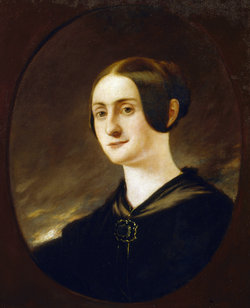
In my attempt to discover Jewish heroines, both real and fictional, I’ve come across Penina Moïse, a teacher, author and proponent of Judaism in early American history. She was born on April 23, 1797 in Charleston, South Carolina. Her parents, both immigrants, met and married on the island of St. Eustace. They arrived to Charleston in 1791 and set up a home for their nine children.
Although the family came from affluence, like many immigrants, they had to rebuild their lives upon setting foot on American soil. However, their path was not an easy one. Penina was only twelve years old when she lost her father. She was taken out of school to help manage the household and to support the family budget with her needlework. In addition, her mother was frequently ill and needed caring, as did her brother Isaac, who suffered from asthma.
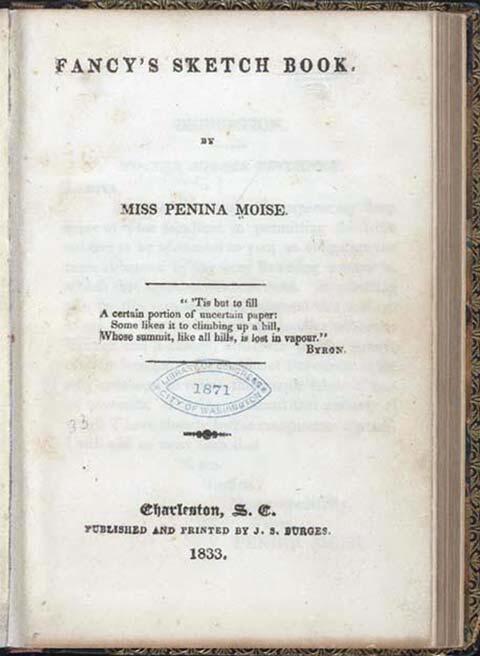
Still and all, Penina managed to continue to read and write—a beloved past time. Siblings, Rachel and Jacob encouraged this passion and great gift. No doubt, it was this enduring familial support that helped Penina see her first poem published in 1819. She began writing for newspapers and magazines throughout the country. Fancy’s Sketch Book, a collection of poems, was published in 1833—the first by a Jewish American woman. Her poetry covered diverse topics including local and current events, women’s interests, politics, and yes—Judaism.
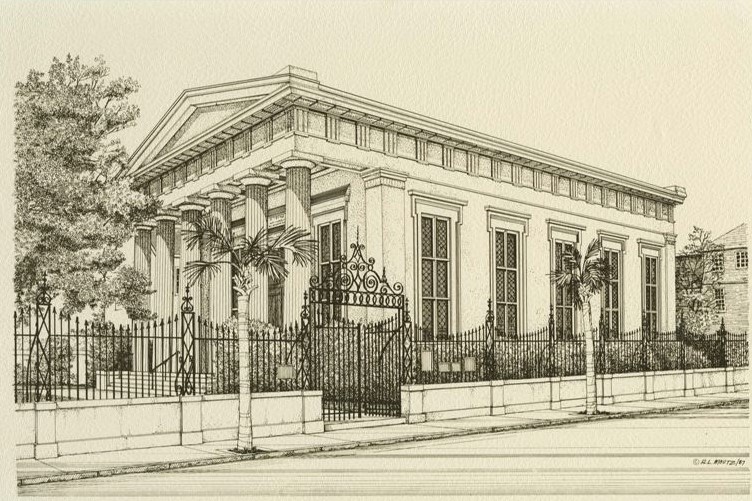
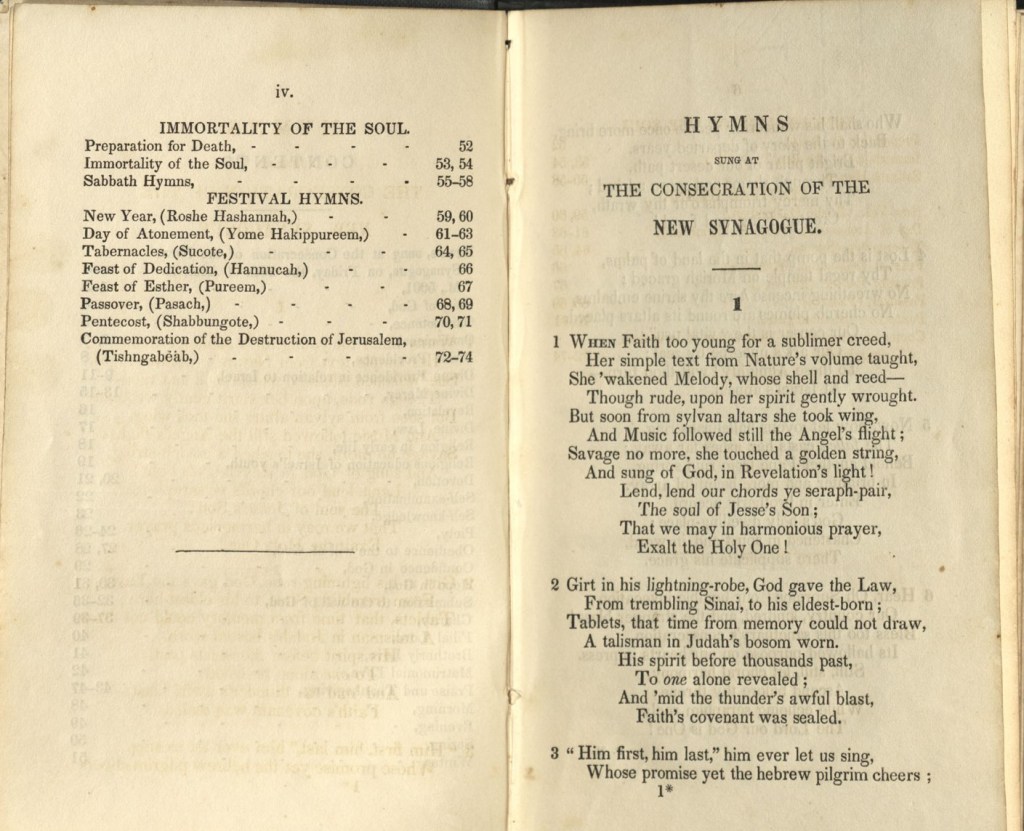
The Moïse family were founders of the Hebrew Orphan Society and active members of Charleston’s Kahal Kadosh Beth Elohim synagogue. By 1841, however, Penina’s brother, Abraham, began a campaign to introduce Reform Judaism to this staunch, traditional setting. His committee went so far as to commission Penina to write the new hymnal for the congregation. She took on this work, spirited on by the desire to encourage fidelity to Judaism and to promote the celebration of religious life. With their backing, she went on to compose most of the American Reform Jewish hymnal. This was no small feat for a woman or a Jew in the Protestant South.
It is estimated that there were less than 250,000 Jews in the entire country at this time. Basic items such as a prayer books, candles, or kosher foods were hard to find. And as such, commemorating holidays—let alone Shabbat—called for careful planning and commitment. Needless to say, following such events as Pesach, Sukkot, or Yom Kippur, Chanukah was a minor festival at best. It would have been easy to let the holiday slip by unnoticed, particularly amongst their evangelical Christian neighbors who actively encouraged the community to join their ranks—especially during the Christmastide.
At the behest of her brother and the leaders of the congregation, Penina composed a hymn entitled, “Feast of Lights” at the onset of a holiday season in 1842. As powerful reminder of the importance of remaining faithful despite the onslaught of challenges, the hymn extoled the ancient Israelites as they fought to recover and rededicate their temple. Great Arbiter of Human Fate! was written in a contemporary style and expressed a common feeling among many Jews living as a minority.
Penina’s words were meant to inspire pride amongst the congregation and she used every instrument in her toolbelt to make the holiday resplendent and noteworthy. In keeping with the formal style of the Old South and Charleston’s sense of refinement, she insisted that the first night of Chanukah be celebrated in grand style. The chanukkiah was to be lit with pomp and a choir was organized to sing new hymns. Chanukah, The Festival of Lights, become entrenched in Charleston’s holiday season. Penina Moïse, in many ways, became the “Mother of Chanukah.”
The Civil War forced Penina to leave her post as superintendent of the religious school. They sought refuge in Sumter, South Carolina until hostilities ceased. After the war, she returned to her home in what only can be termed reduced circumstances. She, along with her widowed sister and niece, conducted a Sunday school in order to support themselves. Penina never married nor had children of her own. She was a Southerner and a supporter of the Confederacy. However without this woman, American Jews—and very likely, the world at large—would not celebrate the Jewish holiday of Chanukah in the same light (pun intended). The festivities, the importance of family and community, the games, and other traditions all stem from this spinster who championed a cause near and dear to her heart.
Towards the end of her life, Penina’s poor eyesight began deteriorating and she suffered from debilitating headaches. However, during these trying times when she was confined at home, she wrote some of her best work, “rejoicing in God’s mercy and thanking him for his goodness.” Penina died on September 13, 1880 in Charleston. She was the first Jewish American woman to contribute to the worship service, writing 190 hymns for Congregation Beth Elohim. The Reform movement’s 1932 Union Hymnal still contained thirteen of her hymns.
Great Arbiter of human fate!
Whose glory ne’er decays;
To thee alone we dedicate,
The song and soul of praise.
Thy presence Judah’s host inspired,
On danger’s post to rush;
By thee the Maccabee was fired,
Idolatry to crush.
Amid the ruins of their land,
(In Salem’s sad decline,)
Stood forth a brave but scanty band,
To battle for their shrine.
In bitterness of soul they wept,
Without the temple-wall;
For weeds around its courts had crept,
And foes its priests inthral.
Not long to vain regrets they yield,
But for their cherished fane,
Nerved by true faith they take the field,
And victory obtain.
But whose the power, whose the hand,
Which thus to triumph led,
That slender but heroic band,
From which blasphemers fled?
‘Twas thine, oh everlasting king,
And universal Lord!
Whose wonder still thy servants sing,
Whose mercies they record.
The priest of God his robe resumed,
When Israel’s warlike guide
The sanctuary’s lamp relumed,
Its altar purified.
Oh! thus shall mercy’s hand delight
To cleanse the blemished heart;
Rekindle virtue’s waning light,
And peace and truth impart.
The courage and vision of these women never ceases to amaze me. Like Jane Austen, this brilliant writer composed poetry and other written material that spoke to the world around her. She used her wit and her intelligence to get her point across. She was an immigrant, like me. She was a Jew, like me. She was passionate and stubborn and loyal—like me. We may not have agreed on many points, but on this particular topic there can be no doubt. Am Israel Chai! The people of Israel live! And it is in no small part thanks to the wonderous deeds performed for our ancestors in days of old at this season. Chag Chanukah Sameach! Happy Chanukah! A Gut Yontif! Feliz Januca! ! חג חנוכה














 Mirta Ines Trupp~ Author