It all started—as these things often do—with a “what if…?” Over two years ago, a story plot came to mind for my least favorite Austen novel: Emma. I know I might ruffle some feathers, but I’m not alone in my feelings towards this novel.
I am going to take a heroine whom no one but myself will much like.” ~ Jane Austen
Miss Emma Woodhouse is said to be handsome, clever, and rich, with a comfortable home and happy disposition. She is twenty-one years of age and has lived with very little to distress or vex her. In other words, she comes across as a spoiled brat. She is a snob.
Emma is used to getting her own way, in particular with her father, her governess—actually, with everyone who acknowledges her station in life. She has too much time on her hands and becomes quite a “yachne“—a meddlesome, gossiping busybody (I know you’re thinking of the word “yente,” but that’s a misnomer).
In any event, Austen provides sufficient fodder for her character to evolve and grow. Like other Austenesque protagonists, Emma becomes relatable and, yes, even inspiring. But one question remains: Is Emma Woodhouse the true heroine in this story?
The “what if…?” I contemplated was complicated and required too much thought at a time when I was still fully engaged at my “day job.” Like they say nowadays: I didn’t have the bandwidth to handle another project, so I tucked away my idea for another day. The mind is a funny thing, however—at least, mine is!
Once the idea presents itself, I start visualizing how the story will unfold. I hear the dialogue, I imagine scenes and settings. Of course, this usually takes place at 3:00 in the morning when I’m trying to sleep. It’s exhausting. It’s unrelenting. It doesn’t stop until I start putting my thoughts down on paper.
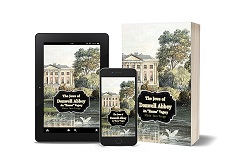
And so began this latest novel: The Jews of Donwell Abbey: An “Emma” Vagary.
Editorial reviews are hard to come by, especially for an indie author who self-publishes. I have been blessed by an army of beta-readers and volunteers, and by a few generous professionals who provided the following testimonials:
“A creative, heartwarming take on a beloved story, The Jews of Donwell finally gives Harriet Smith her due.” ~ Caroline Warfield, author of An Open Heart, The Entitled Gentlemen series, The Ashmead Heirs series, Children of the Empire series, et cetera
“Trupp has written a charming and entertaining novel with The Jews of Donwell Abbey. A captivating read!” ~ Meryl Ain, author of Shadows We Carry and The Takeaway Men
“Blending Emma with a Jewish story line is an ingenious idea! Fans of Austen, and those who crave Jewish Regency stories rich in Jewish content, will find The Jews of Donwell Abbey an extremely satisfying read. L’ chaim!” ~ Rabbi Jo David (aka Nola Saint James, author of Regency Romances)
“The Jews of Donwell Abbey introduces a colorful dimension of minority identities in Jane Austen’s Emma. Trupp’s orchestration of history and mystery enriches the ongoing collection of stimulating rewrites of classical novels. A gift to Austen fans, it will interest all readers curious about the hidden facets of “proper” social intercourse in Georgian England.” ~ Yael Halevi-Wise, author of Interactive Fictions: Scenes of Storytelling in the Novel, Professor ofJewish Studies and English Literature
“Who could have guessed that under the genteel veneer of Jane Austen’s Regency England lurked secrets beyond what could have been openly addressed at the time? In The Jews of Donwell Abbey, Trupp brings sidekick Harriet Smith to the forefront, her mysterious origins are explained, and her ultimate happy ending turned into a lesson about tolerance, acceptance, and the miracles hidden within mundane lives. The perfect companion piece!” ~ Alina Adams, author of The Fictitious Marquis, Romance Writers of America’s first #OwnVoices Jewish Regency Romance
The book is scheduled to be released on Tuesday, November 5, 2024. Look for it on Amazon! I look forward to hearing (or reading) your thoughts!
Alina Adams joins us today. Alina is a New York Times best-selling author, romance and mystery writer, soap opera industry insider, and a pioneer in online storytelling and continuing drama. She received her B.A. and M.A. in broadcast communications at San Francisco State University and firmly established herself in the world of television.
Throughout her career, she has worked as a television writer, researcher, website producer, content producer, and creative director. To say that I am in awe of the scope of her work is putting it lightly!
What an honor to welcome such a talented and inspiring author! Let’s get right to it, shall we?
Host: Alina, I was delighted when you contacted me and am thrilled to have you on the blog today. Please tell us about your latest project.
Guest: Thanks so much for having me, Mirta! My last historical fiction novel, The Nesting Dolls, took place in three time periods, 1930s Odessa, USSR during The Great Terror, 1970s USSR during the Jewish Refusnik movement, and present-day Brighton Beach, Brooklyn. (Well, 2019 Brighton Beach, Brooklyn, which means we got in just under the wire and didn’t have to address the pandemic.) So many of the emails I received and the reviews on Goodreads, etc… focused on the first part, 1930s Odessa (a Southern Ukrainian city that people have heard a lot more about now than they had when I first wrote The Nesting Dolls).
Readers told me they had no idea of what was going on in the USSR under Stalin, how repressive, paranoid, and dangerous it was to speak your mind – or even be accused of having done so. As a result, I decided to set my next book primarily in the same time period, but in a place few ever heard of: Birobidzhan, the first Jewish independent state of the 20th century, located on the border between Russia and China.
Host: I read The Nesting Dolls and can highly recommend it, although Part One resonated with me the most. My father’s side of the family lived in and around Odessa. Thankfully, they were able to immigrate prior to the Russian Revolution. Tell us, what intrigued you specifically about this time period?
Guest: Most of the historical fiction/romance set in Europe in the 1930s and 1940s focuses on World War II and the hideous war-crimes and crimes against humanity that took place there. Little attention is paid to what Josef Stalin was doing to his own people during the same time period. Modern estimates suggest he may have been responsible for as many as 9 million deaths, most of them people he designated as “enemies of the state.”
Yes, the USSR defeated Hitler – at the cost of a staggering 24 million people, including soldiers and civilians – but the country they were defending was, in many ways, no better.
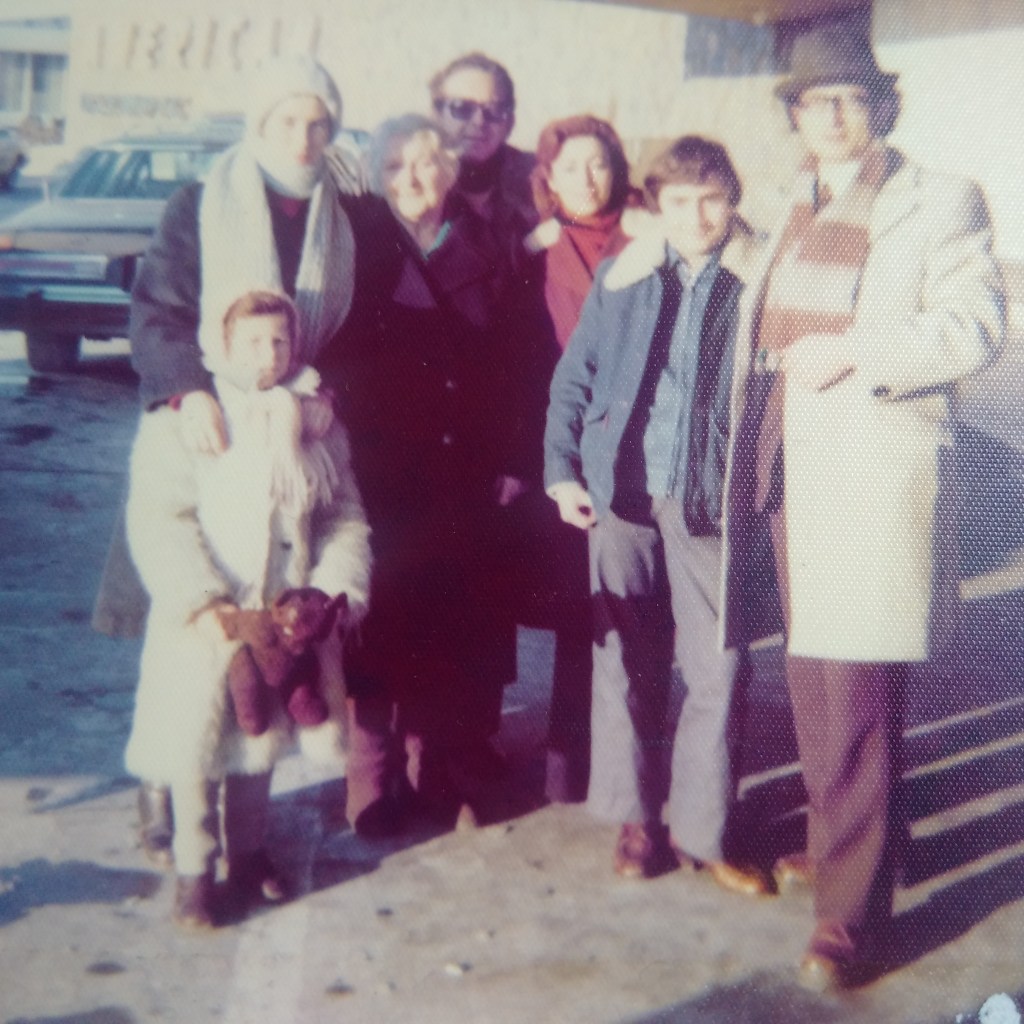
Arriving in New York City
I was born in Odessa, USSR, and grew up hearing stories not just of the war against the Fascists, but also what the Communists did, starting with the revolution, going through the deliberate starvation of the Ukraine (between 3 and 7 million deaths), to Stalin’s accusation that Jewish doctors were poisoning the local populace, knows as “The Doctor’s Plot,” right up until the country’s collapse in 1991.
In 1988, right after Gorbachev first came to power and perestroika made it possible for former Soviet citizens to go back and visit the country they’d fled, my mother and I traveled to Moscow and Odessa. That trip informs the one my characters take, also in 1988, as they go back to look for those they left behind.
Host: I agree with your assessment wholeheartedly. Novels focusing on that time period fail to consider what was going on in the rest of the world. My own family’s history living under Peron, or men of his ilk, is often overlooked. I applaud your efforts and strongly believe it is important sharing our stories. Why do you think Jewish Historical Fiction is an important, stand-alone, genre?
Guest: Just when it feels like we’ve told all the stories there are to tell, new ones pop up. Since “The Nesting Dolls” came out in July 2020, smack in the middle of the pandemic, I’ve been doing dozens of Zoom Book Club talks.
At nearly every single one, I ask, “What was the first Jewish independent state of the 20th century?” Nearly everyone says, “Israel.” When I tell them about Birobidzhan predating Israel by about 20 years, they’re amazed. Even the most educated Jews have never heard of it!
Host: I admit it. I’ve never heard of Birobidzhan. Kudos to you for highlighting this important piece of history. The Jewish community is a diverse and unique culture; yet—here in America—we tend to focus on two narratives: The Holocaust and Fiddler on the Roof-type themes. As you have pointed out, there is so much more to talk about! As an immigrant, would you care to share your thoughts on this topic?
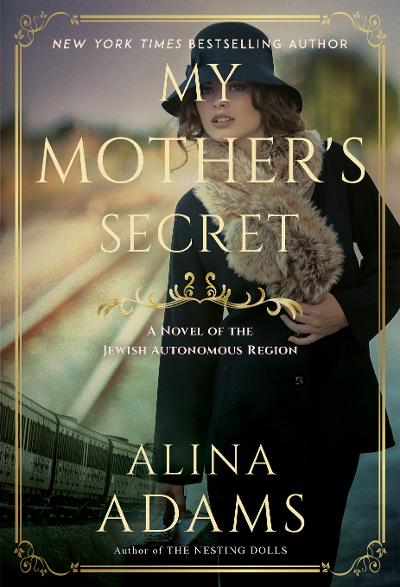
Guest: Yes, absolutely! One of the reasons I wrote both “The Nesting Dolls” and “My Mother’s Secret: A Novel of the Jewish Autonomous Region” was because I was tired of seeing only Fiddler and the Holocaust as the alpha and the omega of the Jewish experience, especially in Europe. It is so much broader than that.
My son calls it “Azhkanzie-normative,” but it goes even further than that. It’s Ashkanazie Jews in a very particular time and place, as though that were all there was.
Host: I like how you’ve put it: These subjects are not “the alpha and omega” of the Jewish experience. That has been my entire POV (point of view) when writing about Jewish Argentina. Our collective experience is much broader than these topics allow. Do you remember your first Jewish fiction that was non-Holocaust related?
Guest: I loved “Flowers in the Blood” by Gay Courter, about a wealthy Indian Jewish family.
Host: I have just researched the title. It sounds fascinating! Courter presents a unique story about Calcutta’s tight-knit Jewish community—something I don’t know much about. I appreciate authors who weave accurate history throughout the storyline. While doing your research, did anything come as a surprise?
Guest: My mother told me about a propaganda movie in Yiddish and Russian that she remembered being made to convince all the Jews of the world to move to Birobidzhan. We were able to find it on YouTube and watch it together. I don’t know what was worse, the clichés or the outright lies. You can see it too.
Host: Thanks for the suggestion! With your unique heritage and considerable education, you certainly have plenty of material to share. How long have you been writing? When did you consider yourself an author?
Guest: I’ve wanted to be a writer since before I even knew that was a job. My parents claim my first words were “pencil” and “paper.” I started sending out novels to publishers – and collecting rejections – when I was 17, a senior in high-school.
I finally sold my first book when I was 25, to Avon. It was a Regency romance, “The Fictitious Marquis,” which, believe it or not, actually had a Jewish woman as the heroine! Yes, it was possible, but she was also hiding her “tainted blood.” Years later, the Romance Writers of America named it the first #OwnVoices Jewish historical! Who knew?
Host: I’ve read “The Fictitious Marquis” and have included it on my Goodreads list! As a Janeite and a previous blogger for Austen Authors, I’m always happy to spread the word regarding Jewish Regency Romance.
Alina, I want to thank you for this fascinating and thought-provoking interview. I know you’ve touched many people with your stories—this audience included. Please let us know where we can find you online.
Guest: Thank you so much for hosting me, today. I can’t wait to hear what people think of “My Mother’s Secret: A Novel of the Jewish Autonomous Region,” and I’d love to answer any questions your readers might have about it, the USSR, writing in general or really pretty much anything!
 Mirta Ines Trupp~ Author