New Post

A Daily Devotional for Women of Valor~ Inspired by Jane Austen

Miss Caroline Bingley provides a definition of a “lady of quality” in Jane Austen’s Pride and Prejudice. However, in trying to call attention to Miss Elizabeth Bennet’s lack of social graces (the young lady would rather read, than play cards. Heavens!) Miss Bingley miscalculates and misses her mark. Mr. Fitzwilliam Darcy sees past the thinly veiled attack and offers a rejoinder of his own.

All this she must possess,” added Darcy, “and to all this she must yet add something more substantial, in the improvement of her mind by extensive reading.”

Pride and Prejudice~ Jane Austen
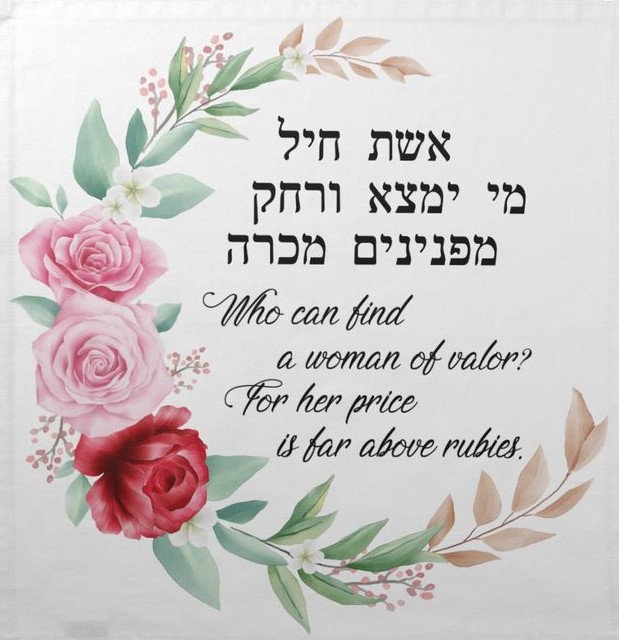
Without a doubt, Jane Austen was familiar with Proverbs 31. After all, she was the daughter of a Anglican rector. No doubt, she drew inspiration from the words that described a Woman of Valor. In fact, Austen’s own brother made certain to memorialize her using a quote from the same passage.

She opens her mouth with wisdom; and in her tongue is the law of kindness”  

Proverbs 31:26

Miss Elizabeth Bennet is known to be witty—a nicer way of saying sarcastic—and quick to judge. Certainly, the opposite of speaking with wisdom and kindness. Like any character worthy of notice, however, she goes through a series of events that spark introspection and change. Austen provides the arc for this character’s spiritual and emotional growth.

When Miss Bennet arrived at Netherfield, Mr. Darcy observed her skirts covered “six inches deep in mud…her hair, so untidy, so blowsy!” Instead of censuring her for her lack of grace as Miss Bingley was quick to do, Mr. Darcy saw a woman whose mission that day was to attend to her sister, Jane, who had taken ill. Clearly, the young lady had no improper pride; she was not there to exhibit or to lay claim to her many accomplishments. Later, when the party gathered in drawing room, he saw a young lady who would not be swayed by peer pressure. Elizabeth Bennet stood her ground against Miss Bingley and read a book, rather than play at cards.

In the 1995 version of Austen’s novel, Lizzy is asked to perform at the piano during a visit to Pemberley. She had no great talent, and often admitted her failure to practice. Lizzy does play, however, and the room is delighted. It is probably one of the most beloved scenes of the series. The admiration on Mr. Darcy’s face says it all. Throughout the novel, he was known to be a man who despises cunning and deception. He cannot, therefore, fail to notice Lizzy’s strength of character, her kindness, her vivacity, and grace.

It’s my belief that, in showing the character’s ability to reflect, to admit her own failings, and to seek to come up a bit higher, Austen created an Eishet Chayil —a Woman of Valor.

There are many in Austen’s fan base that have crafted devotionals inspired by the author’s work and personal life. I hope to add to the flavor, so to speak, by offering my own take on Women of Valor with this motivational journal.

With love,

New Post

Jewish Journaling for Women of Faith

The words “Fear not” or “Be not afraid” are written in the Torah over twenty times. We see the same refrain at least thirteen times in Psalms. There are twenty-six opportunities to read these encouraging words from the Prophets Isaiah and Jeremiah—not to mention the other, thirty-plus times we are commanded: “Do not be afraid. Stand firm and you will see the deliverance the Lord will bring you today.” (Exodus 14:13) The Torah’s brilliance is highlighted by the fact that we are not only instructed not to be afraid, but we are also told: “Do not be discouraged.”

Is that asking too much of us, weak and stiff-necked as we are known to be? Even the most faithful, the most courageous person, may stumble and lose their way. Fear is a natural component of our DNA— and not necessarily a bad emotion. After all, we need to be alert and aware of our surroundings. Discouragement, as we are told in this post, is another matter. We lose faith, we lose hope—we become overwhelmed.

The whole world is one long narrow bridge, so it is essential not to make oneself afraid. “

Rabbi Nachman of Bratzlav

Given the times, our community needs to reflect on our past and be inspired. More than ever, women today need to acknowledge: We are standing on the shoulders of giants! We need to emulate their strength, courage, and compassion and match it with our own. We need to remember who we are!

What is the worst thing Satan can accomplish? To make a person forget that he or she is a child of God.”

Rabbi Shelomo of Karlin

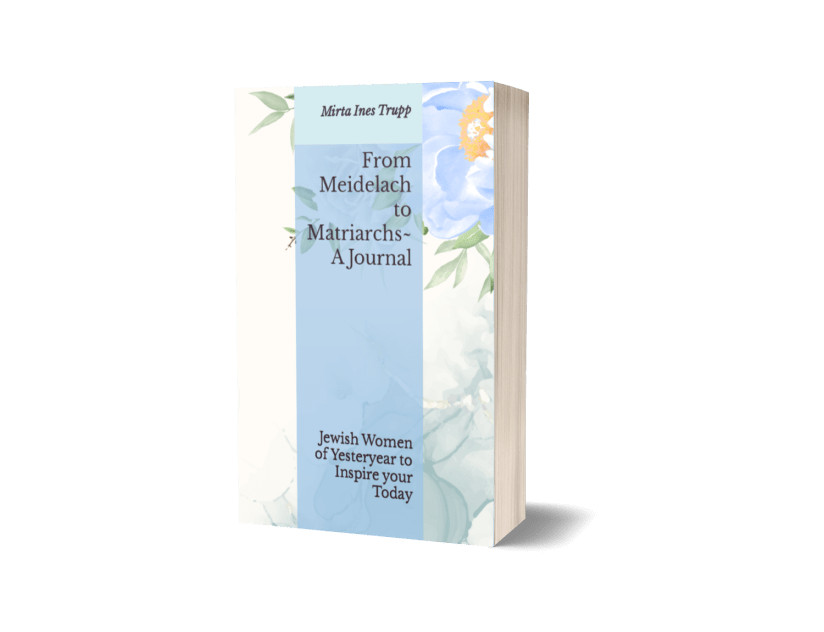
My book, “From Meidelach to Matriarchs: A Journal~ Jewish Women of Yesteryear to Inspire your Today” showcases one hundred women. Women from various eras. Women from diverse backgrounds. Women with different political opinions. Women of Valor. I share a brief snippet of each individual’s history and then provide prompts or questions for the reader to consider. This is a safe space for the reader to jot down their thoughts.

Each vignette is fascinating in its own right, rich in historical and social detail, however, what I loved and appreciated the most, and I believe is the true value and achievement of this publication, are the questions posed in the journaling section, encouraging the reader to think and reflect, and to analyze the historical and contemporary issues related to each story.”

Hilary Welland Miller, Jewish Inspiration at Your Fingertips

I encourage you to read this book. Use it as a resource. Use it help you focus your thoughts, your prayers, your goals and aspirations.

The time set aside for some quiet contemplation is for you, alone—don’t worry what others think or how your opinions might not fit in with the crowd.

I see this journal as an opportunity for spiritual growth. It is an opportunity to resonate with those that came before us, to take the baton forward and to symbolically stand alongside the women that paved the way. It is a reminder that, each day, we are given an opportunity to do better—to live better.

The many sins most people commit are not great crimes. The great crime is that we are all capable of change/reform every day and we do not do it.”

Rabbi Simcha Bunam of Pzhysha

I hope you give this book a chance. Spread the word! And let me know what you think!

With love,

New Post

A Daily Motivational Journal

I’ve been writing about my upcoming release for a few weeks now. I’ve called it a Daily Journal, a Daily Devotional, even a Motivational Journal. I talked about expressive writing, introspection, and guidance for your spiritual journey. Are you asking yourself, “So, what is it exactly?”

With Publication Day fast approaching, I thought I’d share an example of just one of the ladies showcased in From Meidelach to Matriarchs: A Journal~ Jewish Women of Yesteryear to Inspire your Today.

Let me introduce you to Annie “Londonderry” Kopchovsky ~ 1870-1947

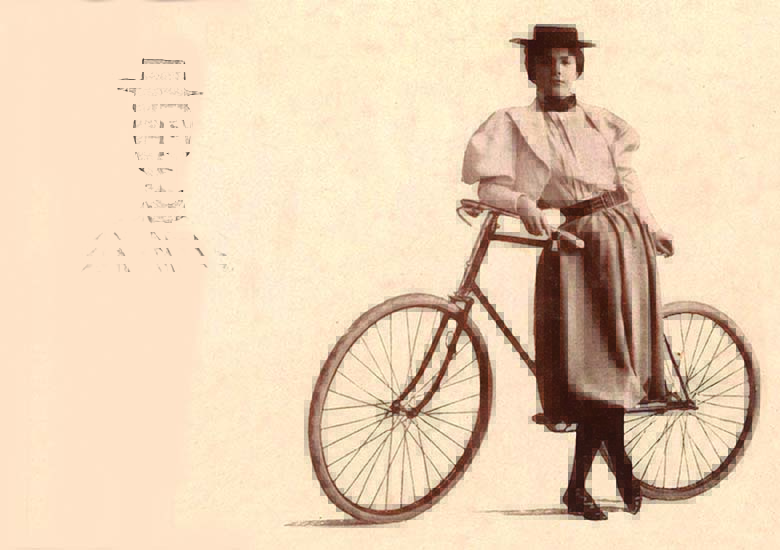
Annie was born in Latvia to Beatrice and Levi Cohen. When she was five years old, her family immigrated and settled in Boston. At the age of eighteen, she married Simon Kopchovsky. She had three babies within four years, yet, indomitable Annie held down a job selling advertising space for Boston newspapers. In 1894, two men placed a bet on whether a woman could travel the world alone on a bicycle. Annie was quoted as saying, “I didn’t want to spend my life at home with a baby under my apron every year,” and she submitted her name for consideration.

The mother of three—Annie had no previous cycling experience—was accepted to take on the challenge. The rules required that the contestant finish her journey within fifteen months, start off penniless, and earn $5,000 along the way. Annie put her advertising skills to work. She hung a sign on her bike advertising the Londonderry Lithia Spring Water Company. That is how Annie “Londonderry” was officially born.

Although she sailed for large portions of her journey, she fulfilled the requirements and cycled alone with a pearl revolver for protection. She returned home just under the allotted time to collect the $10,000 prize. In 1895, Annie became the first woman cyclist to travel around the world. Soon after, the family moved to New York. She wrote an article for “New Woman” that stated, “I am a journalist and ‘a new woman,’ if that term means that I believe I can do anything that any man can do.”


Now, just as I have done in the journal, I will share some questions for you to ponder:

Question Number One:

“A Jew must know that when he goes from one place to another, he is not going on his own, but he is being directed from Above.” (The Baal Shem Tov) Was Annie on a mission for G-d? Do you feel the Hand of G-d directing you?

Question Number Two:

A Chabad post postulated that, like a bike, our lives are also made up of multiple parts—most importantly, two parents and G-d. We do are best in the balancing act we call Life. But while we’re enjoying the ride, we must keep in mind that it’s not all our own doing. We must always remember who sustained us, molded us, inspired us to keep on pedaling. Who’s riding in tandem with you?

Question Number Three:

What does Annie’s story teach us about breaking barriers?

Question Number Four:

What are other “take-aways”? In other words, are you inspired to jot down any other thoughts that have come to mind?


So there you have it! An example of what you can expect when you pick up your own copy.

I’ve provided you with one hundred fabulous women. We will meet the meidelach, young women just getting started and trying to figure things out, and the matriarchs who are shouldering the burdens of life and leading by example. I will share a brief snippet of their stories, one woman for the next one hundred days. One hundred opportunities to inspire your thoughts, your creativity, your philanthropy, your Jewish observance or your Jewish identity.

What do you think? Are you interested? Are you up for the challenge?

I hope so! Until next time…