New Post

Celebrating Jane Austen’s 250th birthday; A Jewish Austen Fan Fiction Author’s Review of the Year

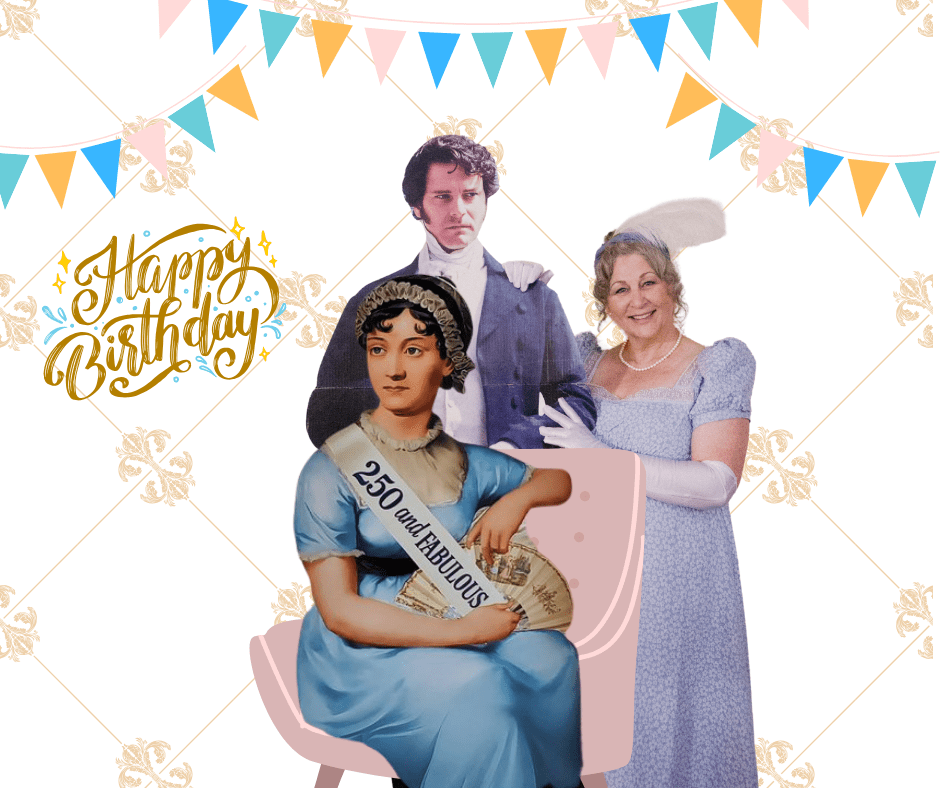
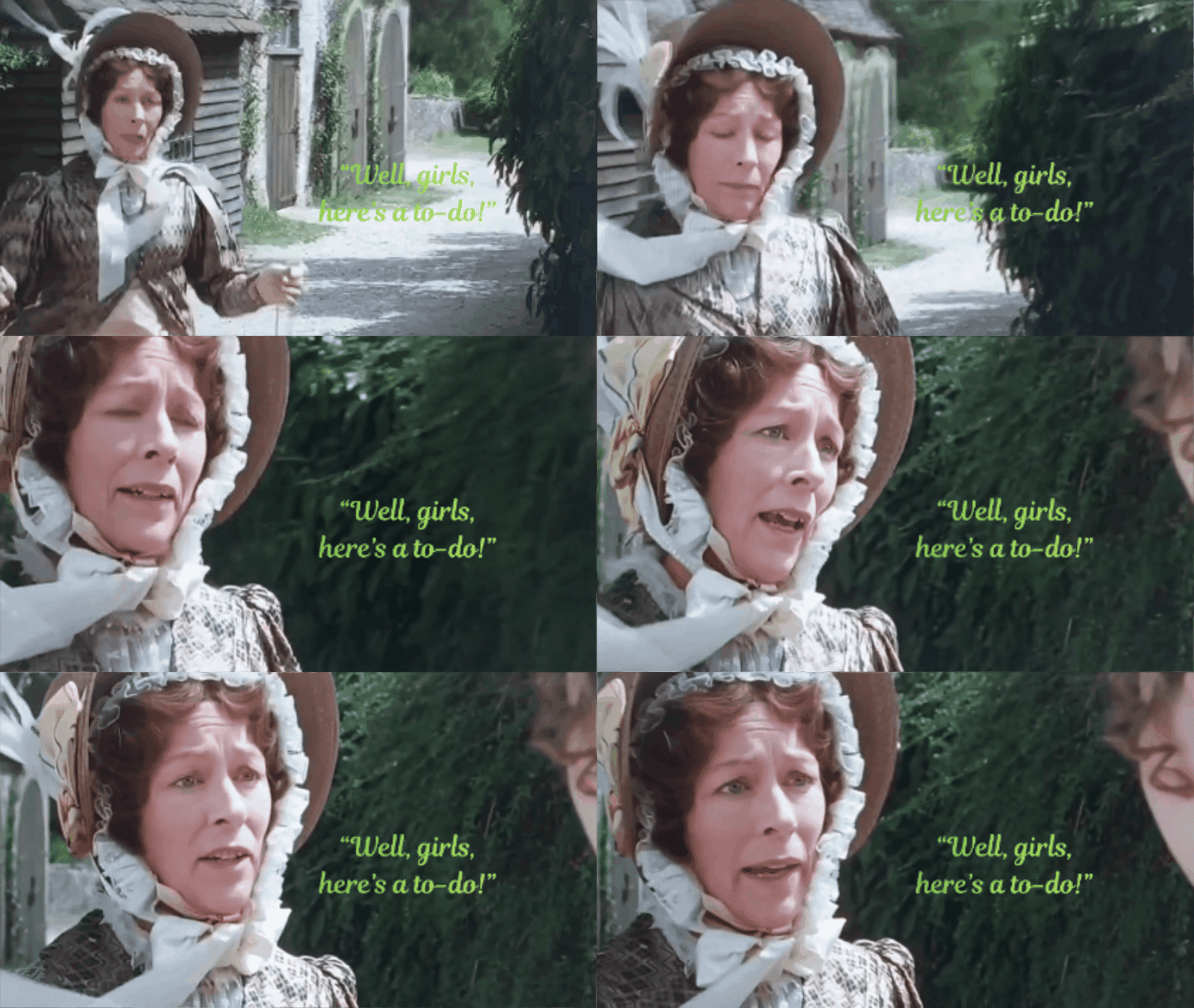
It has been a grand celebration! All year long, Janeites from around the world have been celebrating Jane Austen’s 250th birthday. Naturally, there have been events in Chawton, Hampshire where the author lived and wrote her novels. The city of Bath in Somerset, held a Yuletide Birthday Ball. A special church service was held in Steventon in Hampshire where Jane was born. The Jane Austen Society of North America (JASNA), with a membership exceeding 6,000, organized balls, brunches, and teas across the land. Beyond this, thousands more around the globe—from Argentina to Israel, Australia to the Czech Republic, and places far and wide—gathered to commemorate the occasion. 𝑾𝒉𝒂𝒕 𝒂 𝒕𝒐-𝒅𝒐!

Professor Michael Kramp of Lehigh University in Pennsylvania invited me to participate in his ongoing public humanities research project entitled, “Jane Austen and the Future of the Humanities.” I’m still blushing…what an honor! We spoke of my passion of incorporating Jewish protagonists into Austen’s storylines and even explored the cultural and historical roots of Argentina’s vibrant Austen fandom. I will share that interview once the episode is ready to be released and aired on his podcast.

Soon after, I was contacted by Juana Libedinsky, journalist and novelist extraordinaire! She was conducting research for her (now released) book, Queremos tanto a Jane. The scope of that work speaks to the longevity of Austen’s popularity. One of my titles, The Meyersons of Meryton, had led Juana to me. She soon discovered that I had also written a JAFF with connections to colonial (or Regency) Argentina. We talked quite a bit about my immigrant experience and how I connected Austen with the Viceroyalty of Rio de la Plata in Celestial Persuasion.

Between the three of us, we covered Buenos Aires, New York, London, Las Vegas, Nevada and Bethlehem PA.!

Throughout this year, I have had the pleasure of attending Regency teas and was the guest speaker at various book clubs.

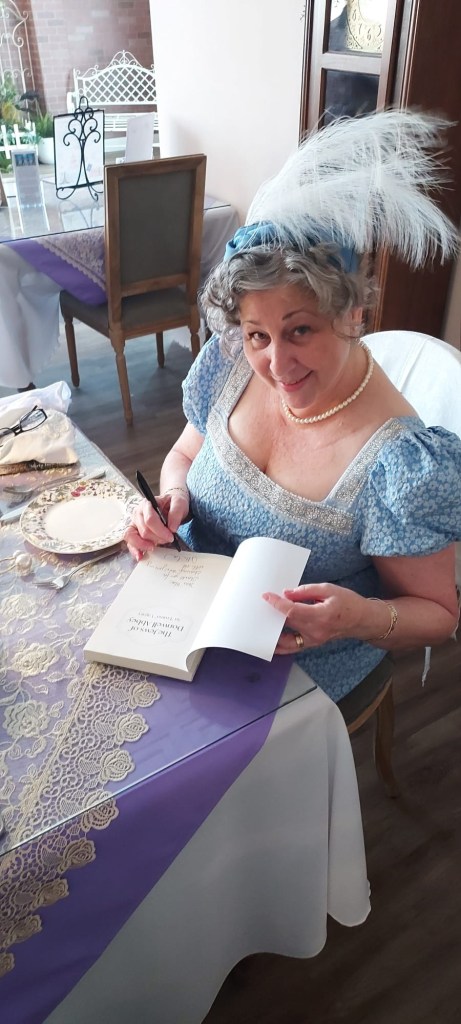
In May, I attended the annual Jewish Book Council’s Network Conference where I presented, The Jews of Donwell Abbey: An Emma Vagary. We were each given two minutes to “pitch” our book. No pressure, right? In all honesty, it was a strange combination of anxiety and pride and fun!

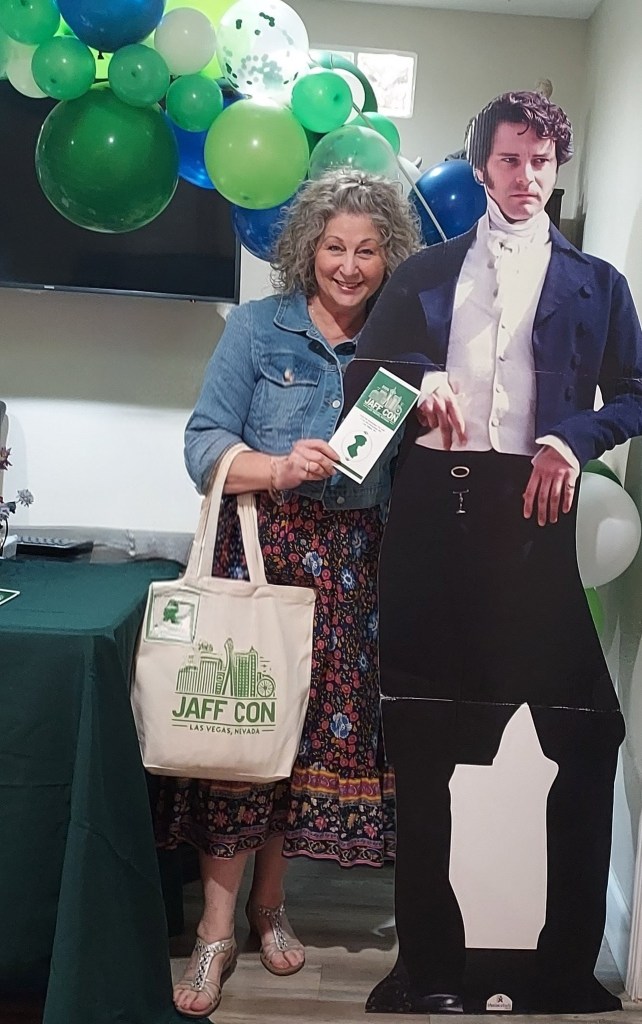
The culmination of the year was two-fold. I attended JAFFCon 2025, where I met with other authors and readers of Jane’s fandom. Lively discussions and informative presentations were coupled with games, raffles, dancing, and the partaking of refreshments!

Lastly, I attended the Vegas PBS Annual Tea, where we celebrated Jane’s birthday and enjoyed a wonderful presentation by world renown historian, author, and curator, Lucy Worsley. I heartfelt ‘thank you’ to Cindy Jensen for the invitation!

Austen’s fandom is alive and well! I look forward to new experiences, new stories, and connecting with my fellow Janeites throughout the world!

New Post

Author’s Interview with Lauren Tallman

A Funny Thing Happened on the Way to a “Run 4 Their Lives” Hostage Awareness Walk. For those of you in this audience who are today-years-old, my opening statement alludes to an old vaudeville line—and a 1962 musical that is filled with humorous situations and mistaken identities. But I digress…

I wish with all my heart that I could have met today’s guest author under different circumstances; but, until our meshpucha (our family) are released from captivity, we will walk in our neighborhoods—across the country and around the world—to raise awareness that the hostages Are. Still. There.

On one such walk, after having walked together week after week, Lauren and I discovered that we both write historical fiction. Up until that moment, we saw each other as concerned Jews; two middle-aged women outraged at the lack of basic, human rights for innocent people held hostage for two years as of today.

Lauren Tallman, author

Needless to say, we were very excited to learn we had other—more pleasant—things in common. And before any of you “couch referees” or “armchair critics” judge my choice of adjective or lack of vocabulary, excited is absolutely apropos! As you will soon learn, Lauren is much accustomed, shall we say, to that particular sentiment.

According to her website, Lauren Tallman “is a fearless voice in modern erotica and candid conversation.” Yes, you read that correctly. Lauren, also known as Lady Tallman or Lady of Glencoe, founded the Erotic Writers Group of Las Vegas in 2014. She has been a member—and is the current vice president—of the Henderson Writers Group (HWG) since 2009, where her stories have been accepted into six HWG anthologies.

In addition, my lady, Lauren is a columnist for the Vegas Voice where she writes about Health & Wellness and informs us that, “Seniors Still Do It.”

After doing a little research of Lauren’s online presence, I learned my new friend was born in Lithuania. Her arrival to Nevada was quite the trajectory, as stated here: “Her journey spans six cities across four countries, with thirty unforgettable years spent in Israel before making Las Vegas her home in 2006. Her diverse life experiences fuel her writing — bold, raw, and unapologetically honest.”

Lauren’s books, How To Have An Affair And Not Get Caught, Harem of the Dragon, Taste the Kiss Feel the Fire, Anthology X, and Come Again? have received world-wide recognition.

Talk about spicy!

How did you come to write these provocative narratives,” I asked.

Lauren didn’t miss a beat.

Because I’m good at it,” she replied.

I wasn’t altogether sure if she meant if she was good at writing or, you know… Very well, I’ll say it: sex.

Naturally, I shared my—um—passion for Jane Austen Fan Fiction with Lauren. And, after giving it a bit of thought, she and I are not so far apart in our writing style. We both are fulfillers of fantasy, we both are devisers of dreams. Certainly Austen cannot be considered a purveyor of erotica, but her writings did contain sexual undertones and innuendo. Think of Northanger Abbey and Mansfield Park.

In this JSTOR post by Beth Lau, Catherine Moreland is shown to “be an astute sexual and social strategizer who ends up marrying the most eligible man in the novel.” And in this essay, author Avrom Fleishman urges caution in “simply assuming that Jane Austen came under Evangelical influence…in order to explain a presumed moralizing tone in the novel.”

Sexuality is not a topic which springs immediately to mind on considering Jane Austen’s novel, “Mansfield Park,” but, in fact, much of the energy of the novel derives from the powerful machinations of sexual politics and much of the novel’s interest comes from the usually suppressed—though all the more fervid for that—love of Fanny for Edmund.” ~

Giulia Giuffre, “Sex, Self and Society in Mansfield Park”

No, Austen’s contemporaries were certainly not puritanical. Courtesans were prominent in London society. Sexual relationships were often discussed openly, and literature and art were often a celebration of sensuality. If we had a ha’penny every time we read about a couple “anticipating their vows”, we Regency fans would be set for life!

In fact, when comparing the Georgians, Victorians, and Edwardian eras, the Georgians (the era, not the country!) “were considered less prudish about sexual relations compared to the Victorians, who were often seen as more repressive due to strict moral codes. The Edwardians, while still influenced by Victorian values, began to show more openness towards sexuality and social norms.”

I have whet your appetite, I do believe, and expect that you are hungry for more. Do try to curb your frustration. Restrain your lust for the upcoming salacious dialogue because, without further ado, I’ll get on with the interview!

Host: You are very welcome, Lauren. Please tell us about your­­­­­­­­­­­­­­ work.

Guest: As a writer of erotica, I say my genre is “historical fiction with sensual undertones.” It very well tells what I write: erotica. Several books were published after Harem of The Dragon.  After many requests, the sequel is now in the works.

Host: That’s fascinating — “historical fiction with sensual undertones” really captures how you weave emotion and history together. Humanity’s struggles are naturally a combination of frenzied passions, often seen through a cultural or spiritual lens. With that in mind, what are your thoughts on Jewish Historical Fiction? Why is it an important, stand-alone, genre?

Guest: It’s imperative! Fiction always has a seed of truth, based on things we heard at family dinners or read in history class. Those seeds make the story line. Making the stories fiction allows us to read fascinating tales while unwittingly absorbing facts about our people. It’s difficult to read our history. It’s clever to blend it into fiction while still getting truths and facts across.

Host: That’s a wonderful point — by weaving truth into fiction, readers can connect emotionally to history they might otherwise find too painful or heavy to face directly. It’s such an effective way to preserve culture and pass on knowledge through story. Here in the United States, our exposure to Jewish narratives often centers on two main threads — the Holocaust and Fiddler on the Roof-type themes of shtetl life. But as you suggest, there’s so much more to explore, from different eras, places, and diverse perspectives. Could you share some titles of your favorite non-Holocaust Jewish fiction — stories that reveal other sides of Jewish experience and identity?

Guest: My Name Is Asher Lev by Chaim Potok – a Hasidic boy with artistic inclinations which almost destroys his family and life. A little heavy but very well done.

I felt I was hearing Flavius Josephus when I read The Wars of The Jews.  I was there with him. I could see the battles and survival.

Exodus by Leon Uris – I literally took the book to the library (that’s how long ago I read it) and read what I could about the creation of Israel. I looked up the facts such as the name of the real Exodus captain and found where Moshe Dayan was jailed (as used in the book). Ben Gurion was quoted: “…as a piece of propaganda, it’s the greatest thing ever written about Israel.”

The Source by James Michener is a must— I read it while living in Israel. When I realized it was about Megiddo, I drove out there. I searched every inch of the tell. The story was etched in my brain. I studied the tunnel and saw how the rock had been chipped by hand to make way to the source/water, the bringer of life. Trust me, I just stood there and understood the need to live, to survive, for themselves and thousands of years later, for me.

Host: Those are such powerful selections, Lauren, each one not only captures a pivotal moment in Jewish history but also brings it to life through deeply personal storytelling. I love how you described standing at Megiddo after reading The Source — that image of tracing history with your own footsteps is incredibly moving. I appreciate authors who weave accurate history throughout the storyline. While completing research for your novels, did anything particularly affect or move you? Were there any discoveries or moments that truly took you by surprise?

Guest: In Harem, I had 125 pages of research, indicating what they ate, where they slept, their customs, and so much about the difference between Emperor and commoner. No matter what you write, you can’t help but be moved when reading history. How could you know that gold/yellow could only be worn by the Emperor during the Ming Dynasty, and anyone daring to wear it was executed. How could you know that the Star of David worn by Holocaust victims was yellow indicating the color of urine. Without a word, the star was made to be a symbol of the lowest of low. What comes as a surprise? The agility, the rage, and the ability of people to rise up, to become greater than before, yet not as great as they would be in the future.

Host: Lauren, that’s a powerful observation. The resilience of people to rise, transform, and keep striving for something greater is truly timeless. It’s that same human spirit that often defines the heart of historical fiction, even when the setting or circumstances change. As you know, Regency Romance is a favorite genre of mine; however, Jane Austen did not consider herself to be a romance author and she was not labeled as a “Regency” novelist during her time. That being said, Austen’s narratives did impart a sense of physical attraction, of longing. We “Janeites” are familiar with the social taboos of sexual conduct and the corresponding gossip that usually follows. Talk to us about the taboos of today—in a society where apparently “everything goes.”

Guest: It doesn’t go. America is straight-laced compared to most countries. As a writer of erotica, I see people show their disdain for written sensuality. They feel ashamed or, worse, embarrassed about desire. There are affairs – I know, I wrote the book, How to Have an Affair and Not Get Caught. In public, people walked past me at a book signing. But they bought the book online or through my website (laurentallman.com). They don’t talk the talk, but they certainly walk the walk. In short, ‘everything goes’ may happen behind closed doors but speaking to the average Joe about passion doesn’t fly. Taboo means ‘something that is not acceptable’. Passion, want, need, and pure desire have been labeled taboo. How sad.

Host: That’s an insightful statement, because those “unacceptable” feelings have driven some of the greatest stories ever told. Authors lend authenticity to their narratives by not shying away from natural emotions or diverse, complicated scenarios. Which leads me to my next question regarding walking the same ground, so to speak, as your characters. Have you visited any of the locations you’ve written about?

Guest: I try to. I write a monthly column in The Vegas Voice, regarding senior relationships. When I wrote about the hot springs in Cali, I spent the night there. Making love under the stars? I stayed out under the stars, to see if it was doable. (It is doable.) Actually, being at a location gives me far more information than just calling on the phone or looking up a place on the net. And people love to talk and share information that you would never have known otherwise.

Host: Lauren, you are an adventurer! How long have you been writing? When did you first consider yourself an author?

Guest: Oh, forever! Even as a child I could tell a good story. Not that I knew anything about the art but the stories weaved in the senses: rain dripping from tree leaves and hurling to the ground, ivory clouds, the sound of skates on ice. My first book, The Erotic Tales of Renni (not published, long story) was written 35 years ago. When I first published the affair book, I realized I was a true author. Since then I’ve written short stories, my forte, as well as books. At first it was difficult to say “I am an author.”  Someone told me, “You worked hard on your book. You researched, edited, and marketed it. You deserve the title author.”  They were right.

Host: I wholeheartedly agree! Of late, the term “Historical Romance” seems to equate with a narrative containing sexual language or scenes ranging from “clean reads” to soft porn to something rated XXX. While some readers prefer “drawing room romance” to “bedroom romance” —where adult activities are carried out behind closed doors—there is a massive audience that wants the spice level turned up all the way. In your experience; and, speaking in general terms, how does an American audience differ to that of an Israeli audience?

Guest: Day and night. In Israel I can speak about Harem, which has ‘edgy’ erotica, or any of my many short stories, without missing a beat. They commend me for writing an interesting, and truly sensual, story. Here, I had to change the wording on Harem’s cover, from erotic to sensual. Israelis listened, sipped their coffee, and asked questions!

Americans would first say, “I don’t read porn.” And I’d answer, “Neither do I.” They’d stare are me. I often explain, “Erotica is a whisper. It is sensual. It is tender. It can be edgy because sensuality comes in different levels.”

By the way, my books don’t have one “dirty” word in them. A nice Jewish girl from Brooklyn doesn’t say those things. So I turned to erotica which shows you sensuality rather than tells you. I wouldn’t write, “He grabbed her (fill in the blank).”  Rather, I write, “Her skin felt like silk under his fingers.”

Host: I love that you make it your own and have no need to apologize or explain your style.

“I could not sit seriously down to write a serious Romance under any other motive than to save my life, and if it were indispensable for me to keep it up and never relax into laughing at myself or other people, I am sure I should be hung before I had finished the first chapter. No – I must keep my own style and go on in my own way; and though I may never succeed again in that, I am convinced that I should totally fail in any other.” ~ Jane Austen

Host: Lauren, thank you for participating on another fascinating, Author’s Interview! Before we end our chat, is there anything else you’d like to add?

Guest: Yes, thank you. My books can be found on my site laurentallman.com. My podcasts and columns are on The Vegas Voice site (thevegasvoice.net).  Id like to share the last paragraph in Harem:


I jumped out and walked alone until I reached the edge of the mighty wall.  

I breathed in the brisk air. My nostrils flared and my chest burned as a fire waited to burst forth.

The waves crashed but dared not splash onto me.

The wind swirled but did not have the courage to dry my eyes.

I raised my arms, clenched my fist, and shouted out to the ebb and flow of the water.

“I am Long, Chief Eunuch of the Emperor’s Harem. Hear me waters. Hear me wind. Scream my name to the sky and say, I am the dragon.”


Thanks, again, Lauren! And thank you, reading audience! I hope you’ve enjoyed the post and I look forward to hearing your thoughts in the comments below.

New Post

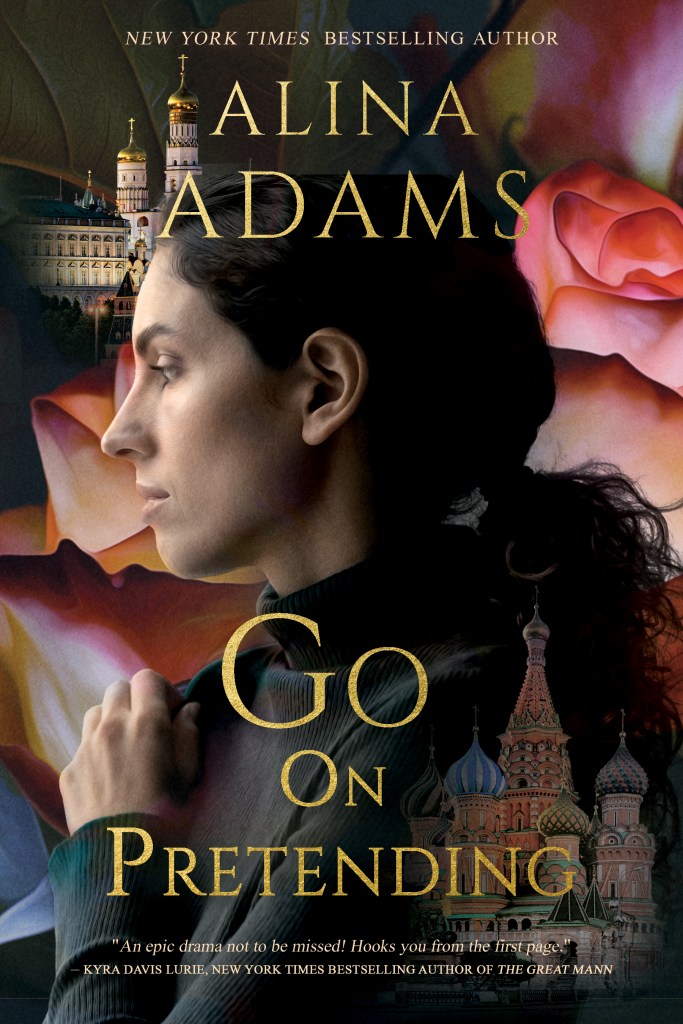
Soap Operas, Shakespeare & Secrets: An Excerpt from “Go On Pretending” by Alina Adams

It was recently pointed out to me that I was born in the “early 1900s.”

Wait! What?

You could have knocked me over with Mr. Carson’s Bowler hat…

Obviously, I know my own birthday—I know that I’m considered a “baby boomer”— but, come on now!

Some of you are from my generation. How does that statement strike you? The “early 1900s” gives Downton Abbey vibes, doesn’t it? Not hip-hugger bell bottoms, olive green and orange kitchens, or mountain-high platform shoes!

That being said, I have to admit the speaker was right. I was born in 1962, in the middle of what is known as the “Mid-Century Modern” period; and, while I typically gravitate to the late Victorian or early Edwardian eras for entertainment, many others think of Mad Men, The Marvelous Mrs. Maisel, or Call the Midwife. That’s why when author, Alina Adams told me about her new release, I thought she’d be a fabulous guest host. Along with her personal family history and immigrant experience, her professional background lends itself perfectly to this complex and conflicted era. That’s why I am honored to welcome Alina back to the blog!

We have previously collaborated, as some of you may recall, such as in this author’s interview promoting her book The Nesting Dolls, but today, Alina will be sharing an excerpt of her latest novel, “Go On Pretending.” It’s scheduled to be released on May 1, 2025.

I first discovered the author when I read The Fictitious Marquis. The Romance Writers of America named this Jewish Regency Romance the first Own-Voices Jewish historical; however, along with being a New York Times best-selling author, Alina is a soap opera industry insider and a pioneer in online storytelling and continuing drama. Throughout her career, Alina has worked as a television writer, researcher, website producer, content producer, and creative director. So without further ado—ladies and gentleman:

ALINA ADAMS!


I realize this blog is usually about romance in the Regency, Victorian and Edwardian eras (with some sprinkling of Jews), but I’m hoping readers will indulge me just a little for this guest post. I promise there will still be romance! Only it will be more modern. The 1950s, to be precise. So not too modern. And it will still feature romance. Plus some Shakespeare, to boot! (Which, I realize is Elizabethean… so… closer.) But there will definitely be Jews!

In fair New York City, where we set out scene, Rose Janowitz (that’s the definitely Jewish part) has just started working for the radio soap opera “Guiding Light” and it’s brilliant, mercurial creator, Irna Phillips, when she is forced to confront the drama, intrigue and romance of her own life – or lack thereof. What happens next is not at all what anyone expected…


There were llama droppings on the marble stairs.

Rose couldn’t have been happier.

“Props!” she shouted, leading to a chorus of chuckles and groans. The studio where they staged The Guiding Light for fifteen minutes live every weekday, year round, also broadcast periodic, experimental television programs. Said programs featured a disproportionate number of animal acts. As the building had no elevator, the cast, sets and assorted creatures arrived via marble staircase. This not only made a clatter – while they broadcast, Rose stationed boys at the top and bottom to stop anyone from interrupting; an aspect of Rose’s job Irna had neglected to mention – but also proved a magnet for fecal droppings of many sizes and textures. There was an ongoing building argument about which department’s responsibility clean-up fell under. Most recently, it had been dumped on – pardon the expression – props. Hence, Rose’s call.

 While such matters, technically, did not fall under her job description, Rose didn’t mind. She was happy to do whatever it took to keep the wheels of production churning. Because, as she’d promised Irna, the show came first. Everybody from Network Head to actors with a single line, not to mention the sound effects crew, the director and engineers, put their personal needs on the back burner and rallied to ensure their product was the best it could be from the moment the organ announced its histrionic beginning, until the music adroitly faded “until next time.” Rose would have expected to experience the height of worker solidarity at proudly socialist WEVD. It turned out, though, that there was nothing like money to be made to get everybody enthusiastically rowing in the same direction.

 Money, of course, was also the source of some of their greatest conflicts. Not among the staff, but among those who created the shows and those who controlled them. Sponsors loved getting into the act, demanding characters use their products, orate about using their products, and marvel at the convenience and thrift of using their products. Irna was a wizard at scripting heart-clenching drama to take place amidst a variety of cleaning supplies. If a villain wasn’t being threatened to have his mouth washed out with soap (only one brand would do!), then the heroine was hurrying to get her laundry done before her husband arrived home and learned she’d been out all day, engaging in who knows what mischief. How lucky she was that this brand of detergent took half the time for twice the results!

Their bigger problems stemmed from all that they weren’t allowed to do by Standards and Practices. According to “daytime morality,” good men and women could not smoke. This infuriated Irna, who saw thousands of dollars in potential sponsorship monies wafting away like, well, smoke. It was Rose who came up with having the bad characters be the smokers, but of having the good ones constantly remark on it. “Go, and take your (brand of) cigarettes with you!” and “I knew you’d been there. I could smell your (brand of) cigarette the second I arrived!” That way, they wouldn’t be going against the censors, but the product would still be associated with the voices of heroes and heroines.

They faced the same obstacles with alcohol. Even beer and sherry were off limits. Tea or coffee were the mandated beverages of choice, no matter what the crises. (They could always select from hot or iced, in case anyone complained of feeling creatively shackled.) Inspired by prohibition, Rose suggested to Irna that she write any drinking as either religious or medicinal. When Rose submitted that having Jewish characters would make a sip on Friday a directive from God Himself – what pious censor could deny that? – she actually pried a smile out of her redoubtable boss.

Their biggest problem, however, was sex. They couldn’t show it. This was radio, not the movies. They couldn’t speak of it. This was radio, not… the bible. (Irna had chortled at that one, too, which was the biggest compliment Rose could hope for.) On The Romance Of Helen Trent, one of the few radio soaps not created by Irna, where the titular heroine had been proving that “romance can begin at thirty-five” for seventeen years; while managing to remain thirty-five – they spoke of the “emotional understanding” that could only come with marriage. And not a second before. They meant sex. Everyone knew they meant sex. But no one was allowed to say it. Irna gave notice she wasn’t going to adopt that awkward turn of phrase for her own shows.

So, on The Guiding Light, characters begged each other to “hold me and never let me go.” They embraced. Quite a bit. They stared into each other’s eyes. Sometimes from one day to the next. And then they somehow ended up pregnant. Viewers filled in the gaps on their own.

Rose wished she could do the same. She’d told Irna the truth when she answered she wasn’t married. But she’d never confirmed the implicit promise that she never would be. She’d like to be. No matter how many times Mama told Rose she’d ruined whatever chance she’d had – what man would want her after what she’d done, what woman would want a man who would; it was quite the recursive question – Rose never quite managed to give up hope. She was a year short of thirty now. If Helent Trent could “find romance” at an even more decrepit age, why not Rose Janowitz?

She spent her days surrounded by men. For a woman’s genre, daytime drama – save Irna – was suspiciously dominated by men. Men at Procter & Gamble, men at the network, men at the advertising agency, men in the production booth, men on the studio floor. There were men in tailored suits and men in shirtsleeves. Men in fedoras and men in caps. Men wearing the latest No. 89 by Floris cologne, and men who smelled of the Ivory P&G gifted each employee at Christmastime. There were men wherever Rose looked. So why was she still alone?

Naturally, a majority of those men were married. Rose wasn’t ready to go the mistress route yet – though she knew Irna had a stable of such philanderers in her life. Irna preferred doctors and lawyers, just like on her shows. If Rose were twenty, the pickings might have been broader. But men her age were interested in younger women. And older men were either divorced – which came with children and alimony… and bitterness – or… well, Mama said Rose was picky. As tall as she was, she had to accept that some men would be shorter. As opinionated as she was, she had to accept that silence could be golden. And certainly she must never talk about how much money she was making. No man would stand to be emasculated in such a manner. Yet, after all that, remember, he had to also be Jewish. Anything less would be unthinkable.

The worst part was, Mama was right. Rose was too picky. She could put up with short. She could put up with poor. She could put up with old. The one thing she could not put up with was: boring. Compared to the hustle, bustle, constant crises and close calls of production, the conversation proffered by the majority of men Rose met for dinner dates left much to be desired. Mama said it was because Rose challenged them. Rose should be sitting quietly and listening. Yes, even when the men were wrong. Especially when they were wrong. A good man, Mama lectured, didn’t expect the woman across from him to know more about a given subject than he did. And he certainly didn’t appreciate her demonstrating it. When a man waxed poetic about a film he’d seen, he didn’t need Rose breaking down the dialogue and scene structure. When he talked facts and figures about his job, he didn’t need to know that Rose also oversaw a budget – and it was greater than his. And he definitely had no interest in anything she had to say about politics! Rose found the men she stepped out with boring. She could only imagine what they thought about her.

Luckily, she had very little time to dwell on it. Irna lived up to her promise. She kept Rose so preoccupied, the only love lives Rose agonized over were Bill and Bertha “Bert” Bauer as they battled that floozy, Gloria, and whether widowed reporter Joe should choose Nurse Peggy, whom his children preferred, or ex-jailbird Meta, who made Joe’s heart flutter. Irna was thinking bigger than radio. She’d already produced one television soap-opera, These Are My Children, which sputtered out after less than a month of episodes on NBC. Yet Irna remained convinced the fledgling medium was her serials’ future. To that end, she was battling to convince Procter & Gamble to resettle The Guiding Light on the small screen. To assuage their doubts about its viability, Irna used her own money to produce a pilot. When it failed to convince her sponsors, she set to work on a second one.

This meant Irna had less time for the radio version. Outside of writing, which Irna still guarded ferociously, the bulk of responsibilities were now Rose’s. Rose raced from advertiser meeting to rehearsal to casting session. When the latter was plunked in her lap, Rose switched all auditions to the telephone. It allowed her to sift through paperwork without the actor noticing her distraction and getting – rightfully – offended. It also kept Rose from basing her decisions on appearance. It was difficult to picture a dashing, romantic leading man when the applicant was balding and barely came up to Rose’s chest, or an ingenue when the lady reading for the part looked more appropriate for grand opera. Since all that mattered was how they sounded, Rose holding auditions over the phone was more likely to yield unprejudiced results. Which was what was best for the show. Because the show always came first.

On the schedule for today were tryouts for a new role, that of ne-er-do-well Edmund Bard, who’d be coming to town to set every young and not so young lady’s heart aflame, toy with them mercilessly, then be revealed as the illegitimate son of a pillar of the community. It was a fun, juicy role, and Rose was looking forward to hearing her candidates’ takes on it.

The first six proved a disappointment. They were playing it too evil right from the start. There was no tension, no surprise, nothing to reveal or learn. Rose couldn’t imagine listeners at home not seeing right through the literal bastard and wondering why the women of The Guiding Light couldn’t do so, as well.

For the seventh applicant, Rose didn’t even glance at his name until after he’d been speaking for almost a minute. She didn’t even listen to the words – she’d heard them so many times – until she realized that – what was his name, now? Cain… Jonas Cain – was offering a completely different interpretation from the men who’d preceded him. Where they’d snarled, he purred. Where they’d bellowed, he murmured. Where they’d insisted on seduction, he made the listener want to be seduced. No, he made the listener ache to be.

“Mr… Cain,” Rose needed to clear her throat, lest her voice crack.

“Yes, Miss Janowitz?” His speaking voice was the same as his auditioning voice. Which meant he was either always on, or always himself.

“That was… that was quite… good.”

“I thank you for saying so.” Yes, he was definitely always… something. Impossible to believe he didn’t realize precisely what effect his speaking voice had on the listener. And that he wielded it for all it could do for him. Rose didn’t blame him. She’d do the same in his position.

“May I ask what inspired your take on this character? It’s so different from how every other actor saw him.”

“Is it now?”

A drawl? A bass clarinet? A full-throated pipe organ? Just what was it about this man’s voice that made Rose vibrate from hip-bone to hip-bone as surely as if he’d plucked a string, like Rose might melt through her desk-chair, dissolving towards the carpet.

“Yes.” This time, she swallowed instead of coughing. Hardly less obvious.

“Well, it’s obviously Shakespeare, isn’t it?”

“I’m sorry, what?”

“Edmund Bard?” His laugh rolled in like a fog diffusing throughout her senses. “You gave the whole game away right there. He’s Edmund the Bastard from King Lear.” Jonas quoted, “To both these sisters have I sworn my love; each jealous of the other, as the stung are of the adder, which of them shall I take?” When Rose didn’t reply quickly enough; primarily because she’d run out of coughs and gulps and felt pressed to come up with an alternative; speaking was out of the question, his confidence wavered. “Did I get it wrong, then? How terribly embarrassing.”

“No.” Rose found her voice, because his had briefly tottered. “You’re one hundred percent correct. When Irna – Miss Phillips – when she told me about the character, I suggested the name. As sort of a little joke between the two of us.”

“Ah! So you’re the Shakespearean scholar.”

“Hardly!” Her snort was instinctive. If utterly unladylike.

“It was precisely the guidance I required to understand this man. He commits villainous acts, seducing married women, attempting to murder his father and brother, but he does not see himself as the villain. After being cast aside for an accident of birth, he feels righteously justified to, as they say: top the legitimate. I grow; I prosper: Now, gods, stand up for bastards! Surely, a sentiment we’ve all experienced. Whether or not we’d admit it.”

Was that the moment Rose fell in love with him? In later years, decades, centuries, that was the seed she traced it all back to. The moment when Jonas Cain – with a pinch of help from William Shakespeare – put words, put poetry, to the feelings Rose had been pressing down her entire life. Because the one time she’d let them roam free, she’d ruined everything.

She’d read those words. If she hadn’t read King Lear she wouldn’t have known of Edmund, and if she hadn’t known of Edmund, she never would have suggested that name to Irna. And if she’d never suggested that name to Irna, what would Rose and Mr. Cain be speaking about now?

She’d read those words. But she’d never heard them outside a well-meaning college professor who made as apt an Edmund as she did a Juliet. Rose had read the words, she’d heard the words recited. She’d never realized they were about her until they came undulating over the phone line at her office on the East Side of Manhattan.

Rose might have fallen in love with Jonas then and there. But the only thing she said was, “You’ve got the job.”

Rose sent the standard contract to Mr. Cain’s agent, perplexed when it was returned promptly, without a change. She wondered if her new employee had inexpert representation – it was an unknown to her agency – or whether they were desperate to see the document counter-  signed before… what?

What could they be hiding? She’d heard the voice. The voice was all that mattered. The worst Rose could conceive of was Jonas Cain might be a pseudonym, and he was employed on another show which forbade him from performing on competing programs. But Rose listened to a lot of radio. She felt certain that, if she’d heard his voice before, she’d have proven incapable of forgetting it.

On the morning Jonas Cain was scheduled to come in for his first broadcast, Rose made a point of not dressing any differently. It was just another day. No longer did a chic autumn coat cost more than her weekly salary. Thanks to Irna, Rose could afford a closet full of crepe and taffeta tunic dresses with their touted slenderizing waists and straight three-gore skirts.  She’d paid extra to have the lapels and pockets dotted in rhinestones, as per the current fashion. The sole reason Rose chose the lightweight green over the navy fine-ribbed was because the day was shaping up warm. She didn’t want to overheat. It wasn’t because the white jabot of the latter made Rose appear older – she saved those for meetings with the sponsors – while the overbodice of the former brought out the hazel in her otherwise dull brown eyes. A pair of black Capezios with sharply pointed toe-tips completed the ensemble. Rose opted for flatties. No reason to appear any taller than she needed to.

Because one thing that Rose had already braced herself for was the possibility of Jonas Cain being short. She had no idea why a disproportionate number of deep-voiced men seemed to be challenged in the height – and follicle – department. Maybe a compressed entity was vital to generate such a profound resonance? Rose told herself she didn’t wish to intimidate Mr. Cain by towering over him. Not on his first day.

“Jonas Cain is…” the voice of the unspeakably competent assistant Rose met the day of her interview and now knew to be named Hazel, that she was twenty-four years old, working to pay her husband, Ike’s, way through medical school, counting the days until she could quit and just be a normal wife and, hopefully soon, mother to a brood of baby Ikes, echoed through the intercom on Rose’s desk, “… he’s here.” In later years, Rose would wonder if her taking heed of the unusually long pause in Hazel’s announcement might have changed anything. Would she have been better prepared for what was to come? Might she have circumvented it in some way? Did she wish she had? Would she have wanted it any other way?

“Send him in,” Rose chirped, oblivious to the message Hazel was trying to transmit.

“How do you do, Miss Janowitz? Jonas Cain, at your service.”

Rose had been in the process of rising to greet him. She’d just pressed her palms into the desktop, which came in handy when she nearly lurched forward, only stopping herself from plunging face first by the fact that her arms were already locked at the elbows.

She’d braced herself for Jonas Cain being short. She’d braced herself for him being ancient, him being a child half her age. She’d braced herself for his having a face Mama called “perfect for radio,” and a host of other deficiencies, as well.

She hadn’t braced herself for him being a Negro.


For soap operas, viewers had to tune in tomorrow to find out “what happens next.”

For readers, though, here is the rest of the story….

To pre-order “Go On Pretending,” please click on the link: https://www.historythroughfiction.com/go-on-pretending

Thank you!
New Post

The Musings of an Austenesque Novelist~ Following the Crumbs: Part I

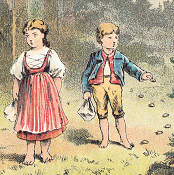
In The Jews of Donwell Abbey: An Emma Vagary, I weave a unique backstory into Jane Austen’s novel and allow Miss Harriet Smith to come to the forefront. Austen gives us a glimpse at this secondary character, this “natural daughter of nobody knows whom.” Readers must form their own conclusions—until the very end, when Austen provides a sentence or two in an attempt to wrap things up. But does she attempt to satisfy our curiosity—or does she mean to tease? In the famous Grimm’s fairy tale, Hansel and Gretel drop crumbs along their trail, leaving a path for others to follow. Can you guess where I’m going with this? Naturally, I had to follow the crumbs Austen left behind. There was another story to tell—I was sure of it—one with new characters and a Jewish storyline.

Austen provides a scenario in “Emma” that set my creative wheels in motion. I don’t want to reveal too much; but, for those of you who have read the original novel, the chapter that sends Mr. Elton off to London with Miss Smith’s portrait in hand provided my first crumb. A plot unfolded easily enough in my mind. The challenge was to ensure that historical events matched Austen’s timeline. You see, in other novels, I’ve used my own family’s immigrant experience to authenticate my protagonist’s journey. However, the exodus from Imperial Russia did not coincide with the Jewish population in Regency England. I had to look elsewhere. The timeframe allowed for a population of a majority of Sephardic Jews and a smattering of Ashkenazim of German descent.

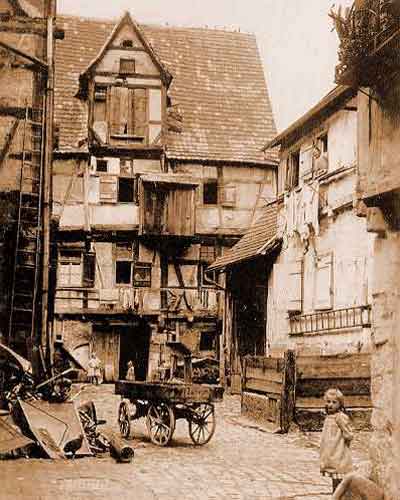
This second crumb sent me whirling further down the rabbit hole until the Weiss family was created and I placed them in London. They were an immigrant family; their original home, I decided, was in the Judengassin—the Jewish ghetto in Frankfurt. I had to find the impetus for their migration, something catastrophic that opened the ghetto gates and allowed for their freedom. And here is the conundrum that all authors face. A plot is conceived, the players are named, but the story cries out for historical accuracy. It may only be a few sentences; but, as any author will tell you, that sense of time and place requires hours and hours of research. And that was precisely what happened to me.

Without batting an eye, I could tell you about the Jewish Colonization Association and the immigration from Imperial Russia to Argentina. I could describe the lives of Jewish gauchos or the “cuentaniks” of Buenos Aires. What I can’t—or couldn’t—do is explain how immigrants fleeing Germany’s infamous Judengasse (Jewish Street) found their way into an Austenesque novel.

Research, my dear reader, research

In Heinrich Heine’s book, “The Rabbi of Bacherach,” the narrative unfolds in the 15th century where Kaiser Friedrich III and Pope Pius II demand that twenty Jewish families be removed from their homes and resettled in the Judengasse. By the year 1500, approximately 100 people live in the area nicknamed, “The New Egypt.” One hundred people in 14 houses. By 1600, there were 3,000 people living in 197 houses, wooden structures that were crammed together, story upon story until they blocked out the sun, reduced air flow, and created hazards that resulted in massive fires—three of historic consequence in 1711, 1721, and 1774.

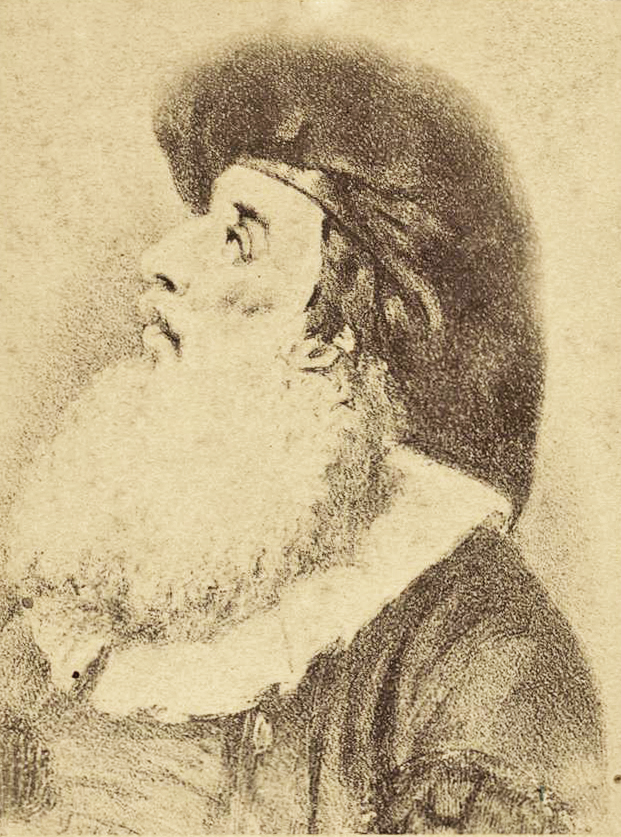
Rabbi Naphtali Cohen

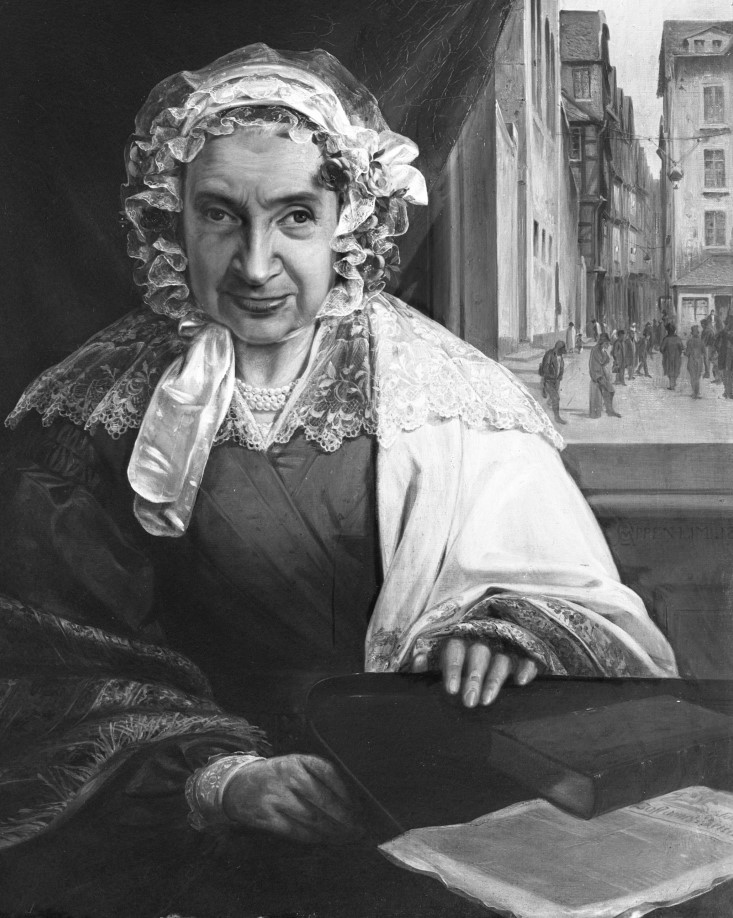
Rabbi Naphtali Cohen was called to Frankfurt am Main after his house was destroyed on January 14, 1711. Summoned to testify before the court, it was noted that the fire consumed the entire Jewish ghetto, but the rabbi—known for his Kabbalistic practice—had had the audacity to survive. Not only did he survive, the kabbalist was accused of “preventing the extinguishing of the fire by ordinary means.” The rabbi was accused of witchcraft and summarily thrown into prison. He was set free by renouncing his title and practice.

Juda Low Baruch, otherwise known as the poet, Ludwig Borne, lived in the ghetto during the late 1700s. His memories are bleak, to say the least. “The highly celebrated light of the eighteenth century has not yet been able to penetrate [the Judengasse].” His writings expressed disgust, anger, despair—futility. “If one were to consider play in childhood as the model for the reality of life, then the cradle of these children must be the grave of every encouragement, every exuberance, every friendship, every joy in life. Are you afraid that these towering houses will collapse over us? O fear nothing! They are thoroughly reinforced, the cages of clipped birds, resting on the cornerstone of eternal ill-will, well walled up by the industrious hands of greed, and mortared with the sweat of tortured slaves. Do not hesitate. They stand firm and will never fall.”

Adolf von Knigge, a German author, blamed the horrific living conditions on his Christian brethren. In his work entitled, “The Story of My Life”, he reminds his audience that these Jewish families were once “craftsmen, wine-growers and gardeners.” They once lived freely and contributed to society; however, “ecclesiastical ordinances” reduced them to peddling and to “practices of usury.” The very people who condemned this once-proud society to live in squalor, were the first to criticize and ridicule. For Knigge, these actions were the very antithesis of an enlightened society. His work was known to speak out against “aristocratic courtly culture as [being] superficial, immoderate, and wholly lacking in inner values.”

In his novel, “Labyrinth,” Jens Baggesen describes the inhuman living conditions he witnessed in the Judengassin of Frankfurt. This Danish-German author advocated for German Jews, locked behind ghetto gates night after night, not to mention Sundays and on all Christian holidays. How could an enlightened society allow such a thing? They were denied the pleasure of open air, of walks in the parks and plazas. They couldn’t patronize restaurants or coffee shops, or “walk more than two abreast in the street.” Baggesen leant his voice to the growing movement for civil rights and Jewish emancipation.

Many people have heard the name Rothschild. Mayer Amschel Rothschild and his descendants are very likely the most famous people to have lived in the Judengasse. Their surname evokes images of great wealth and power. For some, the name inspires thoughts of moxie and resourcefulness. For others, it inspires thoughts of greed and manipulation. What is the truth?

By 1560, Mayer’s ancestor, Isak, was confined to living in the ghetto. It was common for residents to be known by their address, so the family surname was most likely taken from the red shield (zum roten schild) that hung at their front door. Isak and his family were known to be pious and relatively successful cloth merchants. By the time Isak died in 1585, he had accumulated an income of 2,700 gulden. His great grandson, Kalman, had an income more than twice as large, and his son, Moses—Mayer Amschel’s grandfather—continued to prosper by not only dealing with silks and other costly materials, but with rare and foreign coins. This was not an unusual practice; Frankfurt was centrally located and was popular with businessmen from various neighboring towns and countries—not to mention noblemen and politicians.

Mayer’s father, successful merchant and patriarch, continued to live in a modest home with his family. It had been designed to suit their business needs, with an office on the ground floor, a kitchen on the first floor, and bedrooms on the top level. Mayer was allowed to attend rabbinical school at Furth, although he later was known to have said that he “only studied his religion in order to be a good Jew.” When both his parents succumbed to an unknown, but inevitable, epidemic that attacked ghetto inhabitants, Mayer’s studies came to end. He returned home for a brief time, before being sent to Hanover to apprentice with his father’s associate, Wolf Jakob Oppenheim.

Mayer was just twelve years of age when his journey into the privileged and elite world began. He learned what it meant to be a “court Jew,” garnering knowledge from Oppenheim’s family, court agents to the Austrian Emperor and the Bishop of Cologne. He learned how to work with aristocrats who were always in the business of buying and selling rare coins, jewels, and medals. In this manner, Mayer returned to Frankfurt, somewhere around 1764, a prosperous and renown businessman. In 1769, he was granted the title of court agent. In August of 1770, at the age of twenty-six, he married his beloved, Gutle, the sixteen-year-old daughter of Wolf Salomon Schnapper, court agent to the Prince of Saxe-Meiningen. All this success, and yet, he and his wife were confined to the ghetto.

Gutle Rothschild

Mayer and Gutle went on to have a large family; nineteen children were born, ten survived. While Gutle managed home and hearth, Mayer continued to grow more prosperous. By the mid-1780s, the Rothschilds had accumulated approximately 150,000 gulden and were able to move into a new home—substantially larger, yet still behind the ghetto gates. The new house, known as “the green shield” (zum grunen schild—they didn’t change their name at this point), was approximately fourteen feet wide. The rooms were narrow and cramped. The children all slept together in the attic. Still, it was considered to be a desirable residence. It had its own water pump! The lavatory was outside in a small courtyard. From these humble beginnings, a powerful and philanthropic family emerged.

Rothschild Coat of Arms 1817

To this day, the Rothschilds are criticized, judged, and maligned. Everyone has an opinion on their legacy. Perhaps, like Rabbi Naphtali Cohen, it would have been better if they had succumbed to their wretched circumstances. Perhaps they should have had the decency to fail miserably. Perhaps it is envy that is behind the contempt for the Jew.

The antisemitism we are living today does not differ much from what we have seen in the past. But that’s why understanding our own history, even in the form of “light” historical fiction or so-called, “Chick Lit” is vital. The past may reveal many injustices, but it also reveals our courage and our determination to survive—and to thrive.

Dignity is a powerful thing. We shall use it to break through the walls of the ghetto and set ourselves free.” – Sara Aharoni

I set out to show you how one simple thought can lead to hours and hours of research. And that, I have done.

I needed to piece together the whys and wherefores in order to bring my fictional Weiss family to London, England. And that, I have done.

I didn’t realize that this post was going to end up being some sort of call to arms. If I have encouraged you to be proud of your heritage, to advocate for justice, to look to your non-Jewish friends for support, to fulfill your dreams and destiny; then, I am glad to say: that I have done! I suppose that’s what happens when you follow one little crumb.

That being said, the original point of this post was to show how all. that. research. led to this short excerpt. I hope you enjoy!


It was September 1794. Hannah Weiss, a young woman who had not yet reached her majority and had no real knowledge of the world beyond the four corners that united her neighborhood, believed herself to be in love with Yaacov Kupperman.

Left quite unrestrained by parents who were otherwise engaged in rebuilding their lives in a foreign land, Hannah and Yaacov’s childhood friendship blossomed. They shared the love of the written word and the love of adventure. Stolen moments were spent sharing tidbits of knowledge, whether acquired from the streets teeming with intriguing activity or from passages within a tattered book. Whispered promises and fanciful dreams became woven into their very existence. It seemed so natural a thing. They spoke of their future lives with the same assurance that their mothers would bake sweet challah for the Sabbath and their fathers would sleep through the rabbi’s sermon the following day. It was inevitable. It was bashert—it was meant to be.

On a cool, temperate evening, unencumbered by chaperones or naysayers alike, the besotted pair anticipated their wedding vows. Yaacov murmured his pledge to be Hannah’s knight in shining armor, such as the men from days of yore. He vowed to protect her, to provide for her. There would be no more talk of the Judengasse, of poverty, or fear. They were English now, and their lives would be the stuff of fairytales.

“You will speak with my papa?” Hannah whispered. “You will come by us for Shabbes?”

Yaacov gently tugged on a golden curl. “Do not speak in that foreign manner, my sweet one. Instead, you should say: Will you come to our house for the Sabbath? We are native Londoners, even if our parents were born in Frankfurt. Let us not speak as if we were still in the ghetto.”

“You would admonish me now?” she bristled. “After we—after just—”

“You are such a little girl! See how you blush!” Bringing her closer, Yaacov whispered, “Never fear, my dear heart. I will speak with your papa and should be pleased to share the Sabbath meal with your family. How else will I earn my mother-in-law’s favor?”

Hannah smiled at his teasing but persisted with her train of thought. “What of your papa? Oughtn’t you speak with him first? Perhaps now, you may become his partner!”

“Perhaps,” he chuckled. “My father certainly has high hopes for the family business. I will speak with him on the morrow after he has broken his fast. Rest assured, my love. We shall be wed before Chanukah.”

Later that evening, Hannah peeked out her window and gazed into the heavens. She sent up a prayer asking for forgiveness. She was not so ill-bred that her earlier actions did not cause her some shame. Perhaps they ought to have waited until after the words had been spoken—after they had stood under the wedding canopy and the rituals had been commemorated.

I shall be married soon enough, and all will be well!

Hannah murmured another grateful prayer, for her dreams would soon be fulfilled. By December, she would recite the blessings over the chanukkiah, the precious heirloom that had been in the family for generations. It would soon be passed on to the newest bride.

September went by in a flurry. October and November, although bathed in vibrant hues of red and gold, foreshadowed the bitterness that was yet to come. Hannah could not take pleasure in the riot of colors that fell upon the city, not when her eyes were clouded with remorse. Yaacov had not come for Shabbes that Friday evening. Indeed, he had not been seen for many months past.

Hannah considered asking for him at synagogue after services or when she encountered Mrs. Kupperman at the butcher, but the unspoken words stayed upon her lips. How would she respond if they questioned her? It was not becoming for a young, unmarried girl to ask after a young man, even if they had been friends and neighbors throughout their youth. People were certain to talk. To be sure, in this matter, there was no distinction between the ghetto of Frankfurt and the streets of London.


See what people are saying about “The Jews of Donwell Abbey: An Emma Vagary” and get your copy today!

With love,