New Post

Juana Libedinsky, Jane Austen’s World-wide Fandom, and me!

Today’s post is a little bit of this and a little bit of that. It’s not an Author’s Interview—not in so many words. It’s not about one of my books—not in so many words.

You see, I didn’t interview Juana Libedinsky; in fact, it was the other way around. And while I will share a little of our conversation, this post is about the world-wide cultural phenomenon that is Jane Austen’s fandom. But let me go back and start over…

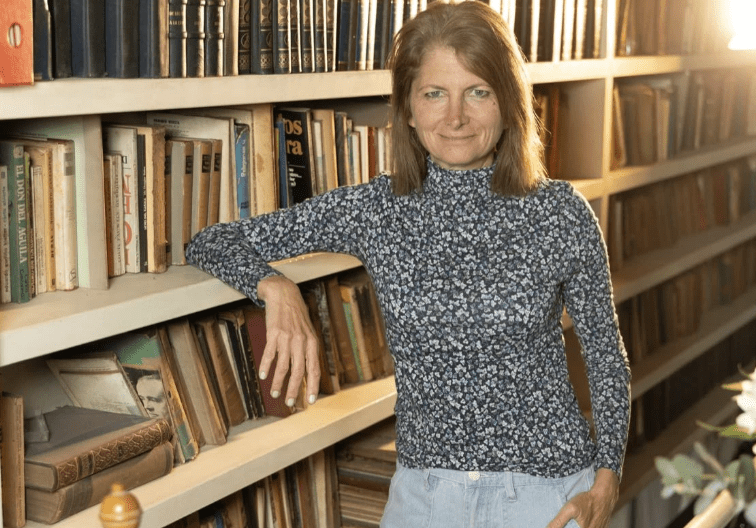
Juana is a columnist for one of Argentina’s most popular daily newspapers, La Nación, and is a cultural correspondent in New York for Uruguay’s newspaper, El País. A graduate of the University of San Andrés, she completed master’s degrees in Sociology of Culture at the National University of San Martín and in Reporting and Cultural Criticism at New York University. In addition, Juana was a New York Observer Fellow at New York University and a Wolfson Press Fellow at the University of Cambridge. Juana’s work has been published periodically in Vanity Fair and Spain’s Condé Nast Traveler. If that weren’t enough, Juana is the author of English Breakfast and Cuesta abajo—a first-person testimony about the dramatic skiing accident suffered by the author’s husband.

Before all the above was accomplished, Juana, of course, was a child much like any other. Born and raised in Argentina, her parents enjoyed attending flea markets and collected interesting objects to fill their home. I learned from Juana that, come hail or high water, the family would search through “the ugly, the kitsch, and the banal” like impassioned archeologists searching for buried treasure—much to Juana’s displeasure.

What did Juana prefer to do? She preferred reading. She discovered Jane Austen early on thanks to a distant relative, a relative with British ancestry. Partaking tea and scones whilst enjoying Austen apparently was a thing in the town of Acassuso, a locality of San Isidro. There, Juana fell in love with Austen’s happily-ever-after stories.

Unfortunately, these early reading experiences were based on poor translations that distorted the author’s original intent. Austen’s humor—that infamous irony—was all but removed by sentimental, decorous, dialogue. It wasn’t until much later, that Juana discovered the power of Austen’s genius— thanks to updated translations that were finally made available. Here Juana discovered the truth: underneath the romance, the author was a keen observer of society. Austen’s novels were actually witty commentary on class issues, gender issues, and a hypocritical society. Austen wasn’t simply an author of classics, but “a modern, ironic, political writer who was deeply observant of her social environment.”
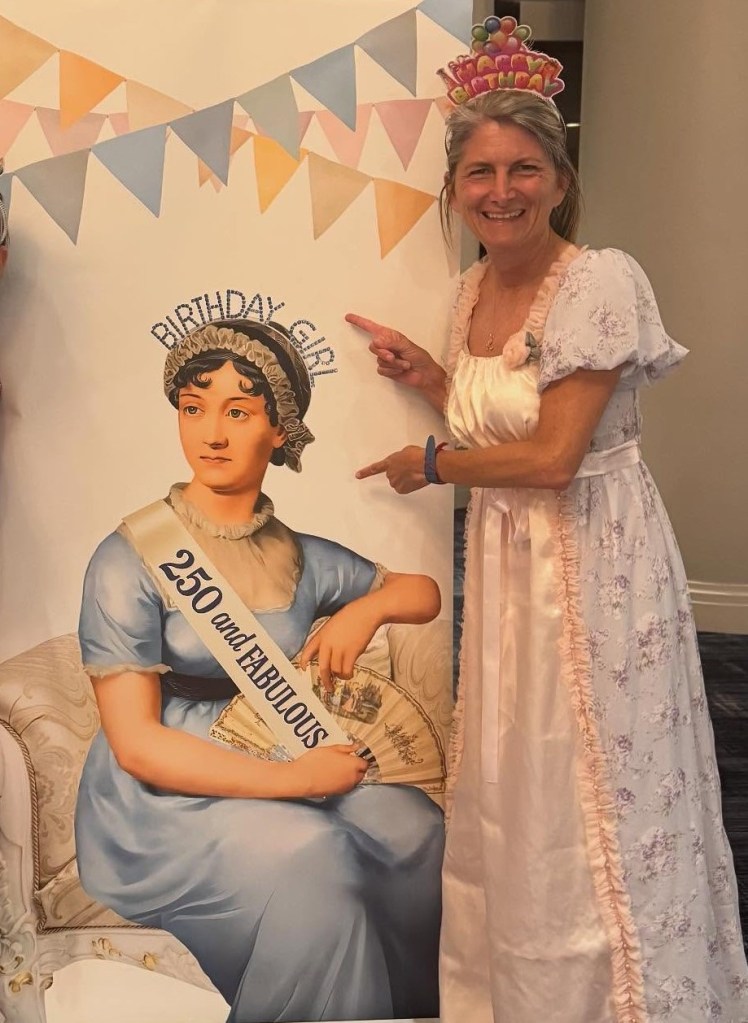
Jane Austen Society of North América

Wanting to join in the celebration of Jane Austen’s 250th birthday, Juana—along with being a wife and mother and journalist—came up with an idea for a new book. This “little book,” as she calls it, was not meant to convince anyone to love Jane or celebrate her work. Juana simply wanted to share a chronicle of adventures she undertook while experiencing Austen’s world-wide fandom.

Living in New York, Juana was fortunate enough to participate in the Jane Austen Society of North America’s various celebrations. But, it didn’t stop there! She traveled across the pond and visited London, Winchester, Bath and Chawton, attending balls, routs, and soirées in Regency attire.

Nos llaman los Janeites. El término, utilizado ya desde el siglo XIX, designa a quienes sentimos una conexión emocional intensa con las novelas, los personajes y el universo moral de Austen. Carga con un matiz de burla –por los excesos que puede implicar esa devoción–, pero también con un fuerte componente de orgullo por la pertenencia.”
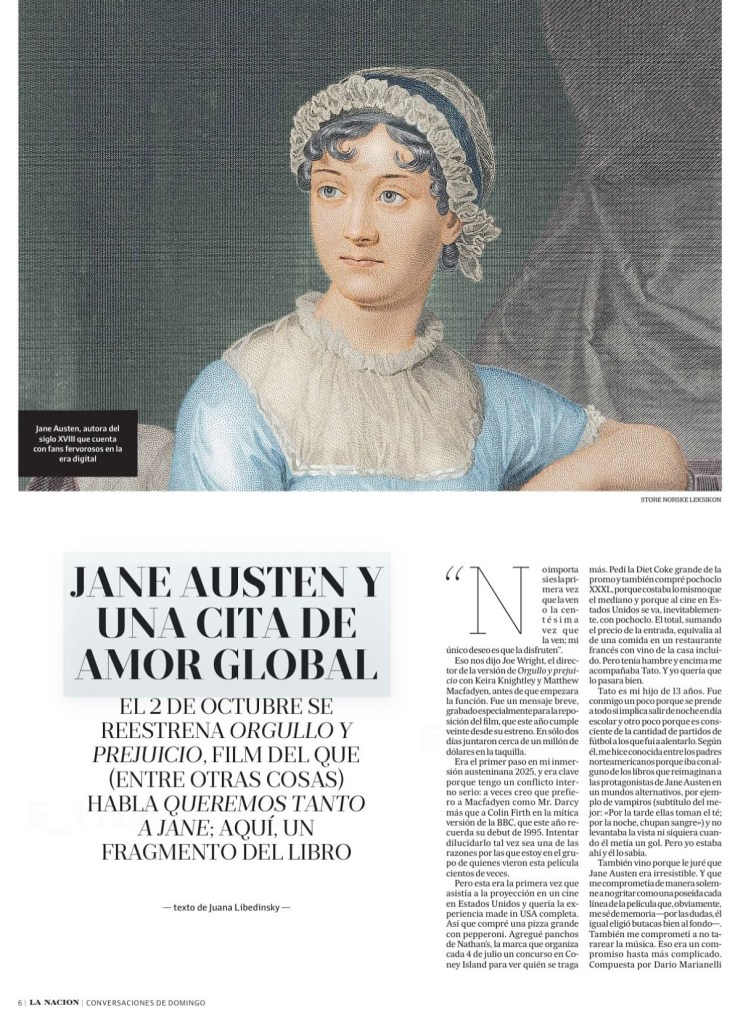
Credit: La Nacion

This is when Juana contacted me…when she was in England…out of the blue…to my Total. And. Complete. Shock.

Imagine it! I receive an email from this renown journalist—from La Nacion—asking if I would be interested in being interviewed for her new book.

She told me that she had read, The Meyersons of Meryton, and was excited to find that we had so many things in common.

We spoke of our love of Austen, of our ties to Argentina, and how we both experienced frustration as young readers with regards to fiction and Judaism. I laughed when I heard the trials she had experienced with her name. The “J” and “H” are quintessential problems for Spanish/English speakers. “Juana” was pronounced Kuana or Guana or Huana—it reminded me of my own experiences as Mirna, Mirda or worse yet, Merda. Ugh!

In any event, we shared emails, WhatsApp messages, and Messenger texts as Juana continued to travel. We finally set a date for the interview where I had the honor of participating in a dialogue that ended up in Juana’s book.

But she wasn’t done yet.

After traveling through England, Jane Austen Argentina was the next stop! She happily returned to Buenos Aires to partake in Austenesque activities and, of course, took the opportunity to visit her parents. They even had time to return to the flea markets in San Telmo, where she found old copies of those “imperfect” Austen translations. Juana shared that she no longer resented those works—or the time spent seeking buried treasure—because these experiences lead her to Jane in the first place. I love how she states the sentiment: “I suppose that, like Elizabeth, Emma, Anne, Catherine, Fanny, Marianne, I grew up.”
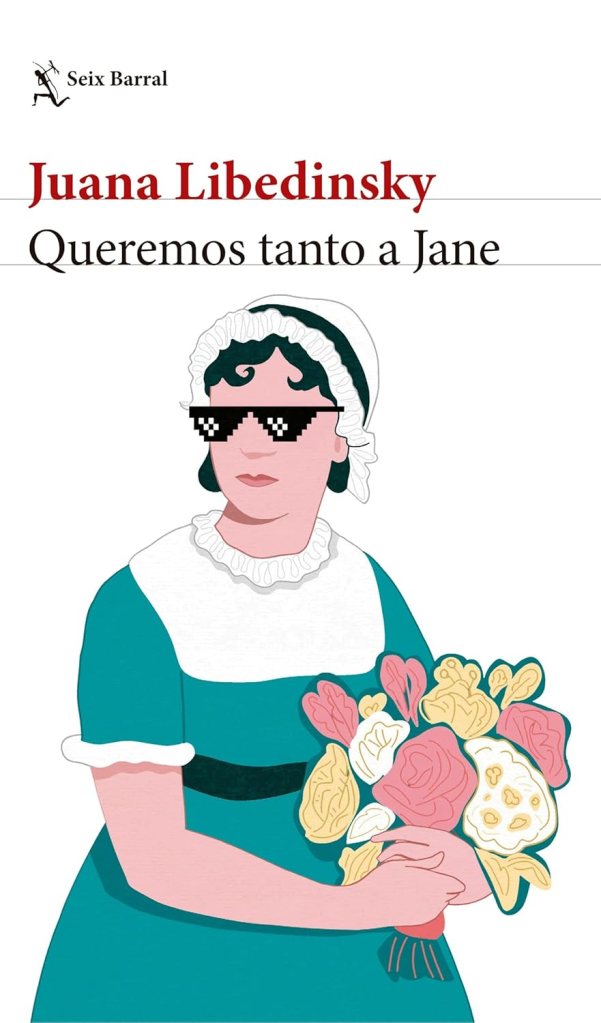
Con picardía y erudición en el tema, Juana Libedinsky ha escrito un libro festivo, que celebra la creatividad y fineza de una autora que ha resistido la destemplada prueba del tiempo y es una voz imprescindible del canon de la literatura occidental.”

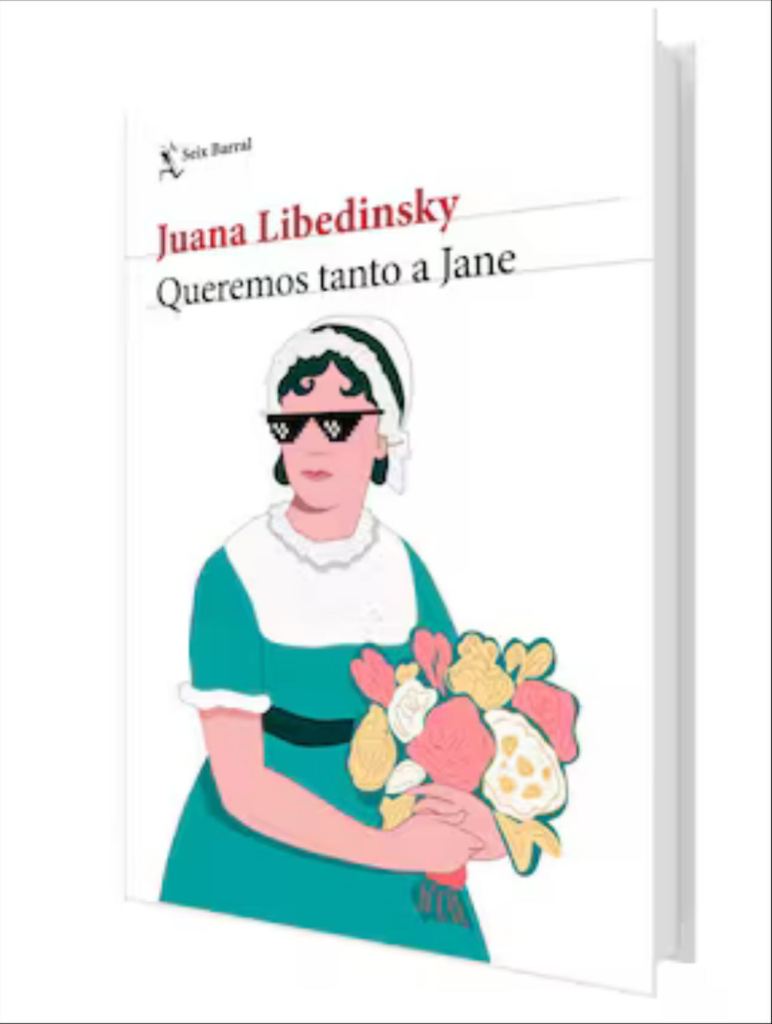
Juana’s book, Queremos tanto a Jane, was recently published. It is available in Spanish, which speaks to Austen’s popularity throughout Latin America. In the passage below, I share a translated version of our interaction (thanks to AI).


In fact, back in Winchester, during an impromptu chat with other enthusiasts at the café across from the cathedral, I discovered an author I hadn’t heard of before: Mirta Ines Trupp. I immediately felt that her books needed to reach my Argentine friends. Her story would turn out to be as astonishing as Amy’s and her Mr. Darcy, the bookseller on Corrientes Street.

Trupp’s book, The Meyersons of Meryton, was first recommended to me. Written in 2020, it featured Jewish characters: As far as we know, Jane Austen never met any Jews, although Jewry Street—which commemorates the Jewish moneylenders and merchants who lived there before their expulsion from England in 1290—runs through Winchester, where Austen went to receive medical treatment for a then-unknown illness, possibly autoimmune, and where she died at age 41.

But that detail, Mirta told me, was secondary. I had been put in touch with her by the prestigious Jewish Book Council in the United States, an organization with which she collaborates. Mirta told me that, when she was a girl, all the stories with Jewish characters were like The Diary of Anne Frank, Fiddler on the Roof, or The Merchant of Venice. Spoiler: they didn’t end well, and she would have given anything to read one where a Jewish girl could see herself represented—without death or sacrifice.

Moreover, there are no traces of antisemitism in Jane Austen’s novels, something rare for her time. According to theologian Shalom Goldman, although the phrase “rich as a Jew” appears in Northanger Abbey, it’s not spoken by Austen herself—it comes from John Thorpe, a thoroughly unpleasant character, suggesting that Austen used the phrase to expose his pomposity and prejudice, not to normalize it.

Jane Austen was the daughter of a clergyman; I don’t doubt her capacity to love and to recognize and value the humanity in everyone. I have faith that her most beloved characters would have been able to move beyond prejudice. In a sense, that’s what one of her greatest novels portrays,” Mirta explained to me over the phone from Las Vegas, where she lives.

Trupp’s first J.A.F.F. book introduces the Meyersons into the world of Pride and Prejudice. But it’s in her second, Celestial Persuasion, that the real surprise appears: she moves Austen’s characters to the Río de la Plata. Captain Wentworth from Persuasion crosses paths with San Martín, Alvear, and Mariquita Sánchez de Thompson, as well as with young English Jews who arrive, full of hope, drawn by the ideals of independence in a land free from inquisitions and persecution.

Of course, all of that serves as a backdrop for a grand love story.

Mirta was born in Buenos Aires, but when she was very young her family moved to Houston and, later, to Los Angeles. “My dad started working with Pan Am. That allowed us to travel to Argentina frequently—sometimes, for several months at a time; my life was always with one foot on each side,” she says.

In high school, she read Pride and Prejudice as part of the curriculum—and lost her mind. “The classic story: I fell in love with English history, with the fashion of the era, and above all, with Mr. Darcy. I could never think of anyone else again,” she laughs.

Although—she did. She met her “Mr. Darcy from Almagro,” as she naturally calls him, during one of her trips to visit family. They married in California, had three children, and later moved to Las Vegas. But it wasn’t until the kids left for college—and the empty nest syndrome hit—that Mirta began writing her Austen adaptations.

I had already done something autobiographical about my ancestors who came from Russia to the Jewish colonies in Entre Ríos and La Pampa; then I wrote a couple of fiction books about that. It was something I enjoyed researching, and I did it for fun, but I got so many comments, so many requests to continue, that I began to investigate what might have happened to Jews who arrived even earlier—and that became the theme of a new novel.”

The spark was the 1813 painting entitled, The National Anthem in the Home of Mariquita Sánchez de Thompson—the scene of the anthem’s first performance—an oil by Pedro Subercaseaux that hangs in the National Historical Museum. When Mirta saw it, she had an epiphany. The women, in their empire-waist dresses, could have stepped straight out of a Jane Austen novel. And though the painting doesn’t identify everyone depicted, it’s believed that one of the military men represents Martín Jacobo Thompson, Mariquita’s husband and Argentina’s first naval prefect, who trained in the British navy and maintained ties with English sailors all his life.

For Mirta, the conclusion was immediate: “He could easily have been friends with Captain Wentworth! And through him, could have met Mariquita, San Martín, Alvear… All of them were highly educated and could have crossed paths with English Jews of certain standing and education in England who, through the navy, also came to know the southern part of the Americas.”

In Persuasion, Captain Frederick Wentworth proposes to Anne Elliot when they are young, but she rejects him under family pressure—he had no fortune or position. Hurt, he goes to sea. Austen’s novel mentions some ships and destinations, but she never specifies a route or offers detailed geography. What matters is that Wentworth returns triumphant and wealthy enough to marry her, completely reversing his initial situation.

For Mirta, this means he could have been in the Río de la Plata—and that when he returned to England, his heart wasn’t entirely closed to a second chance with Anne thanks to the “persuasion” of the good friends he had made there.

The book is utterly charming, and today—to her surprise—Mirta has become a recognized figure in the world of Jane Austen retellings. Scholars consult her for research; she participates in conferences, book fairs, and podcasts commemorating the 250th anniversary of Austen’s birth.

She admits that jumping between Las Vegas, Regency England, and the Viceroyalty of the Río de la Plata isn’t easy—but she has the time now. “I retired last year from my job within the local government. My husband and I don’t go to casinos, and we’ve already seen Céline Dion and The Phantom of the Opera too many times, so now I can dedicate myself to this.”

What she loves most, she says, is when she’s invited to Jewish book fairs. “I go dressed as a Regency character, bring extra costumes, and people—the ones you least expect—get interested and sometimes even dress up too. Around me, there are brilliant books about the Inquisition, the pogroms, the Holocaust, the current surge in antisemitism. Clearly, I’m not Tolstoy. But there’s always a line at my booth. And if what I do serves, even just a little, to lift people’s spirits, I think Jane Austen would have approved.”


I am thrilled to have participated in Juana’s inspired project. To say that it was an honor to have been included along with other renown authors, professors, and academics doesn’t suffice. There is something very special about sharing this interest—this love—with other Janeites. I’m certain that Juana’s experience with Austen’s fandom was just the beginning of many more brilliant opportunities to gather, to discuss, and to debate the genius of Austen.

Juana—Juanita—I hope you’ll call me before you go on your next world-wide tour, because—to paraphrase your own words—I don’t want to take off my empire dress anymore!

Here’s to more celebrations and more engaging conversations!
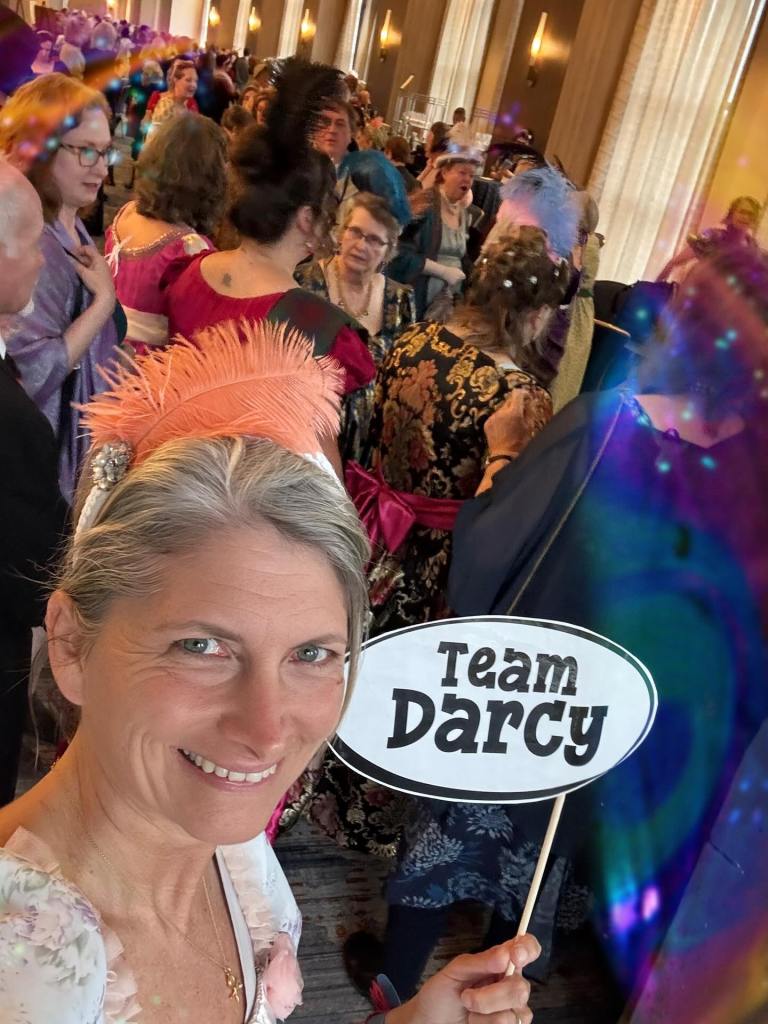
With love,

New Post

Two Austenites and the Connection Between our Asurim and our Anusim…

Months ago—after having the honor and the delight of being interviewed by author and journalist for the Argentine newspaper La Nación, Juana Libedinsky—I began planning today’s blog. Our discussion was not about Columbus Day or the Anusim (crypto or converso Jews) but rather about Jane Austen—naturally.

photo credit: Chris Beliera

However, Juana posed a question that stirred my curiosity to previously unexplored heights. I wanted to write about my discoveries here today. Needless to say, no one could have predicted that we’d be on the verge of seeing our beloved meshpucha home once more.

The hostages are said to be released within the next several hours.

Uploading a blog post today of all days seemed a bit…indifferent and self-serving. But, upon further thought and introspection, I found some interesting connections between today’s news headlines. At least, it was interesting to me—I hope you’ll let me know your thoughts in the comments section below.

The Hebrew word “anusim” (אֲנוּסִים), is derived from the root א-נ-ס (Aleph-Nun-Samekh). The etymology of the word meaning crypto or converso Jew, suggests the concept of being forced or coerced. The Hebrew word “asurim” (אסורים), refers to one who is physically restrained, held captive or hostage.

The Asurim we have long prayed for, and are anxiously awaiting, are a living reminder of “coerced vulnerability, of innocence bound.” If we reflect on the descendants of the Anusim (those forcibly converted in Spain, Portugal, etc.), it is hard not to see the correlation between the trauma of stolen individuality and the loss of the sacred, of innocence, and of peace of mind.

According to our tradition, we—as a community, as a family—bear the duty to remember, redeem, and restore. Freedom—whether of the body or soul—is an act of redemption. I learned this today while contemplating whether or not I should upload this post—a post about Christopher Columbus, about the Spanish Inquisition, about members of Klal Israel who were lost to us because they were coerced and held spiritually captive.

When I was a child, October 12th was celebrated as Columbus Day. Today—well, not so much. The day is now acknowledged as Día de la Raza (Day of the Race) or Día de la Hispanidad (Day of Hispanicity). Some communities prefer to acknowledge the day with celebrations of Indigenous Peoples’ Day or even Discoverers’ Day. In other words, we have gone from a Day of Observance, where President Franklin Delano Roosevelt invited “the people of the United States to observe Columbus Day, in schools and churches, or other suitable places, with appropriate ceremonies that express the public sentiment befitting the anniversary of the discovery of America” to outright disregard, disdain, and disrespect.

Christopher Columbus—Cristoforo Colombo or Cristóbal Colón— was the son of Domingo Colón y Susana Fontanarossa. There has been an ongoing debate about the family being cryptic or converso Jews. There hasn’t been any concrete evidence to prove that point, but it is interesting to note that Columbus had close ties with Sephardic Jews, and conversos, and his famous voyage in August 1492 coincided with the Jewish community’s final expulsion from Spain.

Coincidence? You tell me. And also ponder this interesting tidbit: Columbus used Hebraic or Kabbalistic notations on his documents and diaries. Why?

There are thirteen surviving personal letters written by Columbus to his son Diego. With dates ranging from November 1504 to February 1505, twelve of these letters display the Hebrew letters ב״ה, which are understood to be shorthand for Baruch Hashem (Blessed be He or With God’s help). And when he was and his crew were stranded in Jamaica among the Taíno peoples, Columbus used his knowledge of Jewish astronomy in order to save the day.

Columbus and his crew were running short of supplies. Relations with the Taíno were…stressed. By consulting the Ephemerides of Abraham Zacuto, a renowned Jewish astronomer, Columbus noted that a lunar eclipse was due on February 29, 1504. In order to secure food and shelter, Columbus told the Taíno that his God was angry at their refusal to help, and that His wrath would be made known with the disappearance of the Moon. As this “magical” phenomenon began to unfold, the Taíno, naturally, were terrified. Columbus “promised” to intercede with his God on their behalf; and, when the Moon reappeared, the matter was quickly resolved to everyone’s satisfaction. Yes, Columbus manipulated an indigenous people to his own benefit. My point, however, is this event showed yet another connection to Judaic practice and knowledge.

Why would Columbus have known the works of a Spanish Jew?  

Juana Libedinsky was in the midst of writing her upcoming book, Queremos tanto a Jane (scheduled to be published in November 2025) when she called me to talk about my fascination with Jane Austen. To say that I am honored to have a small part in her latest project would be an understatement! We discussed my novel, Celestial Persuasion, that takes place in the Viceroyalty of Río de la Plata—otherwise known as Argentina—and how I incorporated a Jewish storyline into Jane Austen Fan Fiction. Juana touched upon one of my recurring pet peeves: Why don’t we ever read about Jews in historical fiction outside of the Inquisition or the Holocaust? Why are Jewish fictional characters always portrayed in a demeaning light, money lenders and rag peddlers? Naturally, the question about Jews in Argentina was posed.

Juana asked if I could substantiate my suggestion that Jewish people have been in that country since the famous voyage of 1492. At the moment, unfortunately, I could only rely on conjecture based on family anécdotas—anecdotes—and Argentine history. I promised Juana that I’d look further into the matter. When I wrote Celestial Persuasion, I completed hours and hours of research on the internet. But, now, I had another resource: ChatGPT. In truth, I am not a fan of AI—much like the Taíno, this “magic” terrifies me. That being said, I couldn’t resist trying to find out more on the subject of early Jewish immigration to the New World.

This is only the tip of the iceberg:

Conversos, Hidden-Jews, New Christians, or Those with Unknown Heritage:

Juan Cardoso Pardo

  • Born in Lisbon, possibly one of the first conversos to arrive in the Río de la Plata
  • On April 16, 1614, the (Roman Catholic) Buenos Aires City Council imprisoned the 22-year-old teacher. He was accused of not teaching the Apostles’ Creed and not praying with his students

Diego Núñez

  • Born in Córdoba del Tucumán, Diego was the son of a Portuguese converso. Like his father, Diego was a physician; unlike his father, Diego was suspected of being unfaithful to Catholicism.
  • While in prison, Diego circumcised himself, and urged others accused of Judaizing to maintain their faith at all costs
  • Subjected to torture and starvation for twelve years, he later was burned at the stake in 1639

Diego de León Pinelo

  • Born in Córdoba del Tucumán in 1608. His father, Diego López de Lisboa y León, and mother, Catalina de Esperanza Pinelo, were conversos who fled the Inquisition
  • The family was often under suspicion and harassed by colonial authorities; however Diego went on to be Argentina’s first literary figure

Ensign Juan Rodríguez Estela

  • A wealthy Portuguese rancher, he married a daughter from a family of conquistadors.
  • He was suspected of Judaizing and sent to prison, where he was tortured to confess, and later burned at the stake

Manuel de Lucena

  • Lived in Buenos Aires in the mid-to-late 1600s
  • Accused of practicing Judaism by the Inquisition of Lima
    • Secretly observing Shabbat, avoiding pork, and Catholic rites
  • The outcome of his trial is unclear in surviving records, but his arrest is well documented, one of the few documented instances of a converso persecuted in Buenos Aires

Domingo Faustino Sarmiento (President of Argentina from 1868 to 1874)

  • Born in San Juan, Argentina, 1811 to Paula Zoila Albarracín y Irrázabal, a descendant from the Acosta family.
    • Sarmiento’s maternal grandmother, María Jesús de Irrázabal y Acosta, was the daughter of Miguel de Acosta.
    • Miguel descended from Gaspar de Acosta, a Portuguese settler in colonial Chile/Argentina.
  • Through the Acosta line, Sarmiento also descends from the Antúnez and Gómez/González families. These families are documented in early colonial Chile and Cuyo (today western Argentina), where many Portuguese conversos settled during the 17th century
    • This is supported by Inquisition trial records in Lima and Cartagena and archival documents showing New Christian status in colonial Chile and Argentina.

Juan Manuel de Rosas aka Juan Manuel José Domingo Ortiz de Rosas y López de Osornio (Nicknamed “Restorer of the Laws”, was an Argentine politician and army officer who ruled Buenos Aires Province and briefly the Argentine Confederation)

  • Born in Buenos Aires 1793 to Agustina López de Osornio, who was connected to the Machado family
    • María Antonia de la Trinidad de Azcuénaga y Basavilbaso (the daughter of María Rosa de Basavilbaso y Urtubia, daughter of Domingo de Basavilbaso) and/or María López de Osornio are the descendants of Ana de Machado, a 17th-century member of the Portuguese Machado family in Buenos Aires

Carlos María de Alvear (A soldier and statesman, Supreme Director of the United Provinces of the Río de la Plata in 1815)

  • Born in Santo Ángel, Misiones Orientales (now Brazil) in 1789 to María Balbina de Sáenz de la Quintanilla y de la Cámara. She was from a noble Spanish family, but her ancestry includes names such as Fonseca and Cámara. Both were associated with Portuguese conversos
  • His father, Diego de Alvear y Ponce de León was born in Montilla, Córdoba, Spain, of Andalusian and Portuguese origin.
    • The Portuguese surname “Alvear” is documented among New Christian families in Porto, Lisbon, and Seville. The Alvear family in Iberia included notaries, merchants, and soldiers, professions frequently held by New Christians.
    • Members in the Alvear lineage appear in Portuguese and Spanish Inquisition records accused of Judaizing.

José Hernández (One of Argentina’s most important literary and political figures of the 19th century, best known for his epic poem, Martín Fierro)

  • Born in San Martín, Buenos Aires in 1834 to Isabel Pueyrredón whose ancestry includes: the Sosa, Rojas, and Alcaraz families.
    • The surname Sosa is of Portuguese origin, and appears frequently in Inquisition records in Brazil and Peru. Several New Christian families named Sosa fled from Portugal to Brazil and the Río de la Plata in the 16th–17th centuries.
    • The Sosa family of Corrientes and Santa Fe, were active in trade and law in the 17th century, had crypto-Jewish connections

Mariquita Sanchez de Thompson aka María Josefa Petrona de Todos los Santos Sánchez de Velasco y Trillo ( A founding mother and patriot)

  • Born in 1786 to Petrona Trillo y Cárdenas, a descendant from the Trillo, Cárdenas, and del Valle families.
    • The Trillo surname appears in Portuguese Jewish naming patterns in Seville and Lisbon in the 16th century
      • There are Inquisition records from Peru and Brazil in which individuals named Trillo were tried for Judaizing
      • In Buenos Aires, Trillo family members were involved in trade, a common profession of New Christians
  • Father, Don Tomás Antonio Sánchez de Velasco y Pérez, belonged to the Sánchez de Velasco family—an established Castilian-Creole family in Buenos Aires
    • The del Valle surname is found in Inquisition records across the Iberian world.
      • Juan del Valle and other family members were tried in Cartagena and Lima for Judaizing
      • Families named del Valle were sometimes of Sephardic origin, and migrated to the Americas under false Christian identities
  • The Cárdenas, Trillo, and possibly Velasco lines include individuals involved in colonial trade, which was disproportionately managed by (Portuguese) New Christians

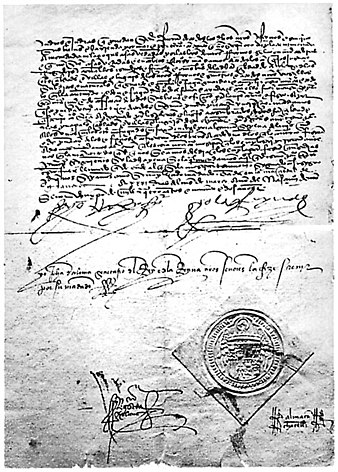
The last Jews left Spain on the 9th of Av or August 2, 1492. A member of a wealthy converso family, Luis de Santángel, loaned most of the money for Columbus’ voyage. Many speculate that it was Santángel’s “desire to help his persecuted brothers.” On his second voyage to the New World, Columbus set sail with 17 ships and approximately 1200 men. The expedition was paid entirely by the gold, and other valuables, confiscated by Spain from the expelled Jews. This also coincides with log entry written by Columbus which stated: “The object was to secure the property of the secret Jews for the state treasury … [and to] confiscate the property of those who openly professed to be Jews.”

Whatever else can be said about Christopher Columbus, I can’t help but think of the multitude of people who were saved from the Auto-da-Fé (a ritualized, public penance carried out by “relaxing’ or burning the Judaizer as a form of spiritual release or purification) because of his voyages. What does this have to do with Jane Austen Fan Fiction? Nothing—and everything. Everything because fan fiction is a medium that allows an author to incorporate his or her own culture, religion, and traditions into Austen’s beloved classics. Fan fiction allowed me to imagine a Jewish young woman journeying from England to the fledgling nation of Argentina—a country that would abolish the Inquisition laws from its constitution on March 23, 1813.

The Anusim, whether tradesmen, laborers, teachers, soldiers, entrepreneurs or statesmen, were born into Jewish families. Somewhere along the line, they were forced to convert, to flee and abandon their homes, their livelihoods, their faith and culture. Their descendants, for the most part, were lost to the people Israel. Kabbalistic and Hasidic sages viewed these conversions as a metaphor for exile. Their physical beings were coerced by outside forces, and they were trapped in a cultural assimilation. Their souls, too, were held captive by circumstance, and these souls yearned to return, for Teshuva.

According to an article on Chabad.org, it doesn’t matter if a Jew converts or if a Jew lives a secular lifestyle or if, God forbid, a Jew is held captive and is unable to fulfill the rites and responsibilities of his or her faith. That Jew remains “intimately bonded with the God of Abraham.” God “awaits the moment this precious soul will return.” Just as we await, with bated breath, for the release of the hostages; the Asurim, who have too long been bound in exile. May their physical, emotional, and spiritual souls find healing and Ge’ullah—redemption.

Today, when we witness the hostages restored to their families, we will recite:

Baruch Atah Adonai, Eloheinu Melech ha-olam, matir asurim

בָּרוּךְ אַתָּה יְיָ אֱלֹהֵינוּ מֶלֶךְ הָעוֹלָם, מַתִּיר אֲסוּרִים

“Blessed are You, Adonai, Ruler of the Universe, Who frees the captives.”

Amen.