Yeah! The day has arrived! Today is Publication Day! And because it is Publication Day…there have been a few hiccups.
Hopefully, Amazon will get it straightened out by tomorrow.
And because of those pesky algorithms…
Daily Journal for Jewish Women, Daily Journal for Jewish Women, Daily Journal for Jewish Women, Daily Journal for Jewish Women, Daily Journal for Jewish Women, Daily Journal for Jewish Women, Daily Journal for Jewish Women…
Just a little humor, folks. I guess I’ve had too much pumpkin pie…
I hope you check out the new book. I’m excited to hear what you think!
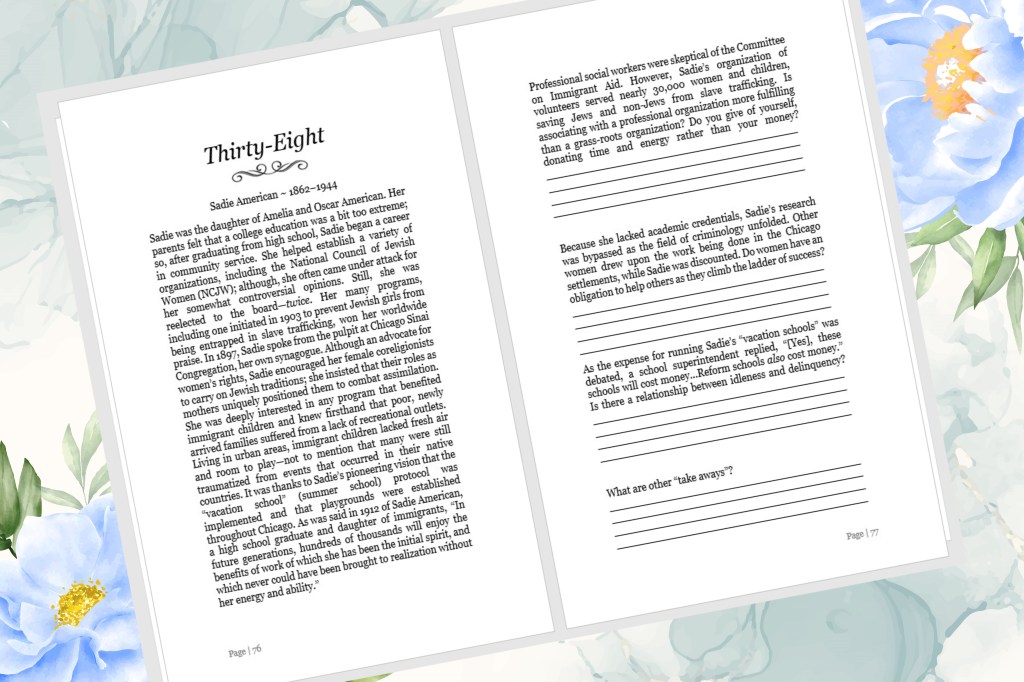
Publication Day is fast approaching! Do you know what to expect when you purchase a copy of “From Meidelach to Matriarchs: A Journal~ Jewish Women of Yesteryear to Inspire your Today” ?
I’ll let you in on the little secret… This book will introduce you to one hundred amazing women. You will learn a bit of their story and then address some thought-provoking questions. Perhaps introduce is the wrong word—let’s just say that I didn’t know some of these ladies. Have you heard of: Sadie American, Tikvah Alper, Anita Brenner, Claudia Douek, Shamsi Hekmat, Miriam Michaelson, or Hannah Sen?
That’s the whole point of this book! Meet one hundred inspiring, courageous, trail-blazing women. Jewish women of our recent past. Jewish women who have opened doors for the rest of us. Jewish women who have spoken up. Jewish women who have put their foot down and said, “I’m not having it.”
Jewish women to reinforce our identity, our pride, our purpose.
Coming soon on Amazon. Look for the release on Thanksgiving Day! With love,
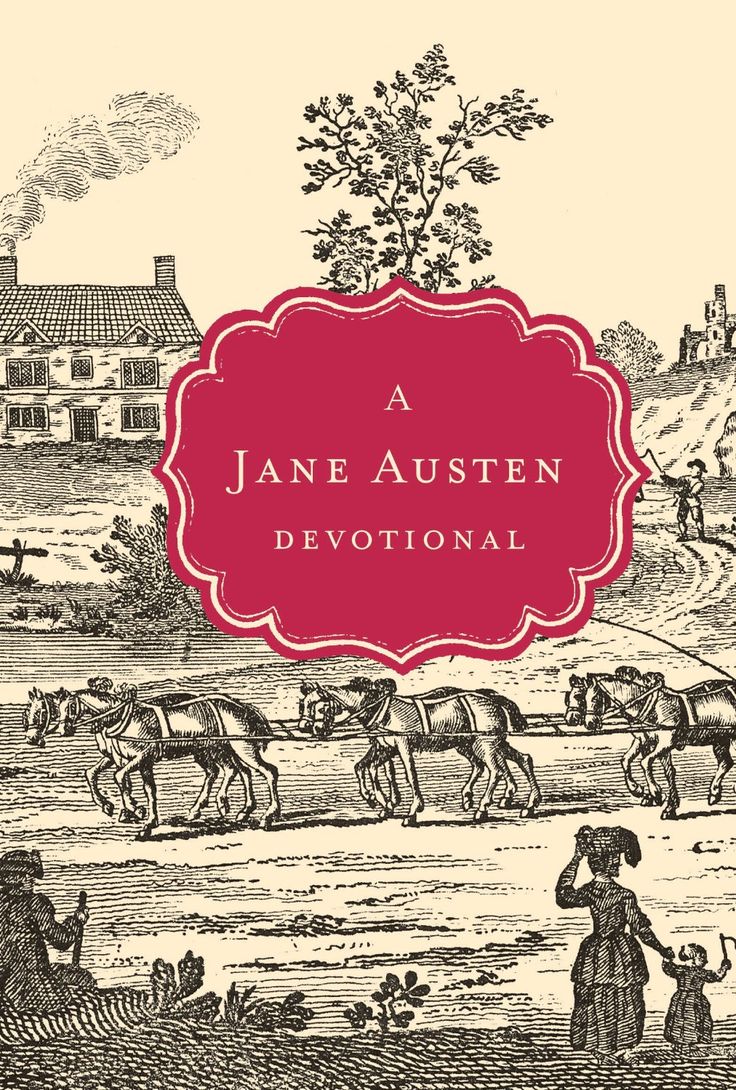
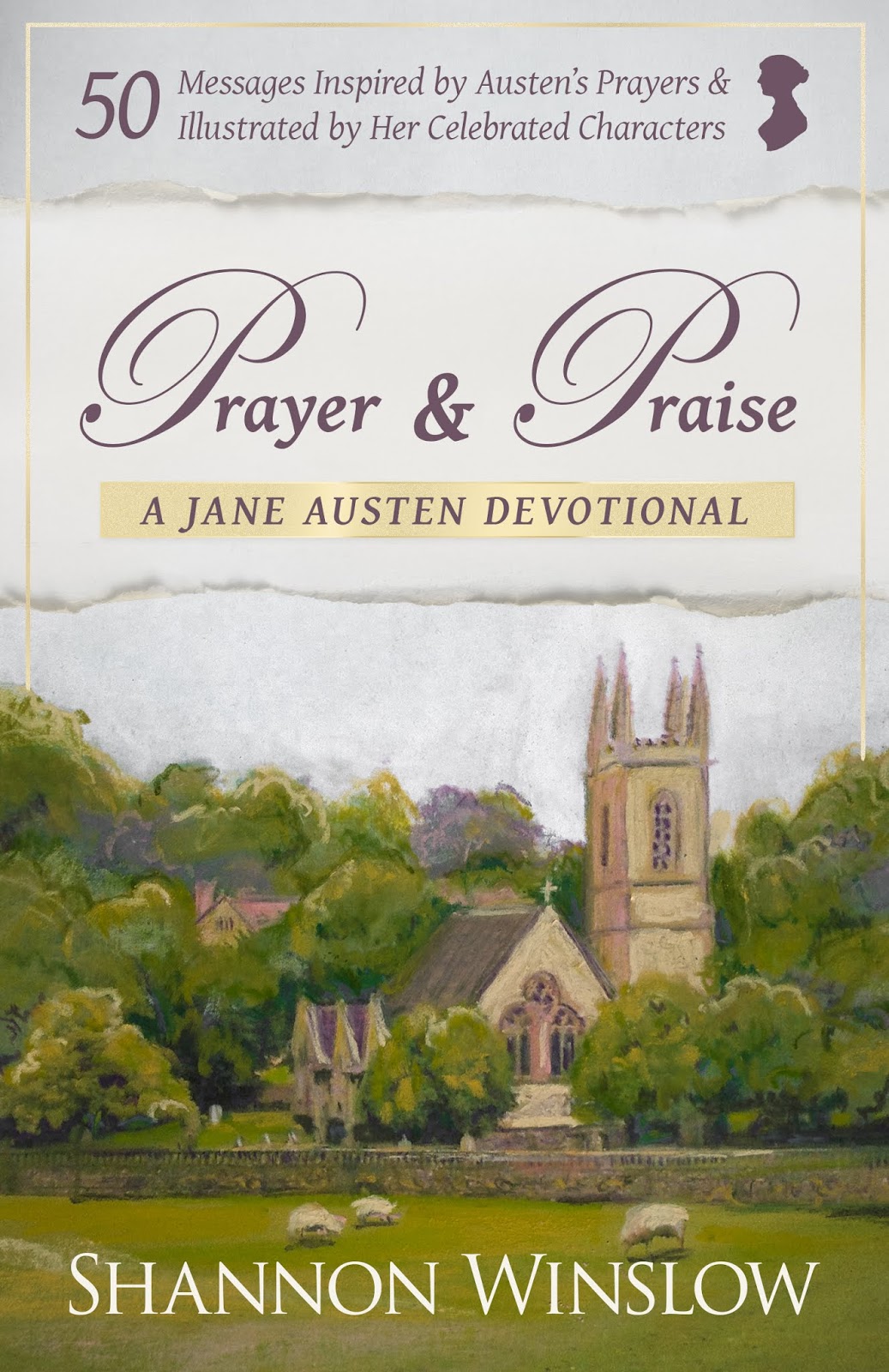
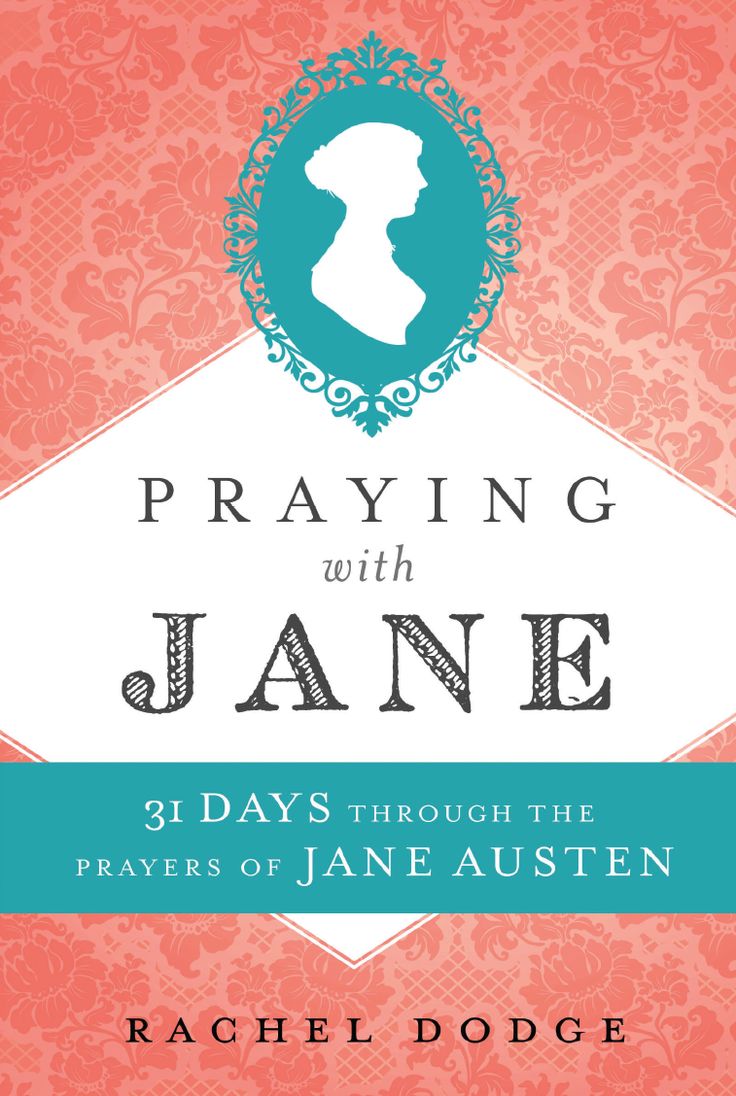
As a great fan of Jane Austen, it is not hard to imagine that I devour all sorts of material about the author and her life. Jane was the daughter of an Anglican clergyman. Her novels, as well as her personal correspondence highlight her connection to her faith. In reading fan-fiction, and following like-minded authors who are fans of Austen’s work, I’ve come across the practice of keeping a devotional. To be honest, I had to do some research on the subject. I thought it might just be a Christian practice. But, as I worked on my latest project, From Meidelach to Matriarchs: A Journal~ Jewish Women of Yesteryear to Inspire your Today, I found that I crafted something definitely Jew-ish.
Everyone likes to go their own way~ to choose their own time and manner of devotion.”
Jane Austen
Keeping a devotional journal is a way to reflect on your principles and what’ve you’ve gleaned from religious practice, readings, lessons, etc. It can help you focus on certain topics. It can help you track your progress while you set out on a spiritual journey.
Use it to:
Reflect, write down your thoughts, and applythe lessons
Write a prayerof your own
Set spiritual goals
Get creative
Here are three samples of non-Jewish authors who’ve done just that with their own Jane Austen devotional journals:
I know what you’re thinking. You’re already coming up with excuses.
Excuse #1: It doesn’t sound quite… kosher.
Some people pray and recite psalms and proverbs on a daily basis. Others say the words that in their hearts and minds. Some people attend services every week. Others only go to synagogue during the High Holidays. As Jews, we have rituals such as our morning prayers, tefillin, and blessings of thanksgiving. We do charitable work. We light our Shabbes candles. A devotional journal can be another ritual or tool in our spiritual connection.
Excuse #2: Ugh! I’m not interested in Jane Austen.
News flash: This journal is actually not at all related to Jane Austen.
Excuse #3: You’re too busy for another commitment.
What if you change your mindset and think of this as a self-care moment—a special treat, like a mani-pedi or meeting a friend for tea? What if you choose to use this journal, not only for its entertainment value, but to nourish your neshama, your Jewish soul? Here are some suggestions that you might find helpful:
Make an Appointment~ This is your time to reconnect
Decide on a timeframe~ Set a realistic amount of time aside. 15 minutes?
Choose a Place~ Set up a cozy nook, have a pen, highlighter, etc. handy
Be flexible ~ Life happens! Be kind to yourselfand adjust as necessary
Publication day is fast approaching! Stay tuned and follow this page for release updates.
I originally drafted this up a couple of weeks ago, but I couldn’t bring myself to share it due to the horrific situation in Israel. Reading enlightening work shared by other authors, and coming across requests for uplifting posts, I’ve decided to take make this a public piece.
In recent years, journal writing, or engaging in expressive writing, has been proven to have a positive impact on the participant. It helps us be more mindful, to be more grateful. It helps improve focus and alleviates stress. But studies have shown that simply writing onto a blank page doesn’t necessarily produce positive benefits. As with everything else, it’s the intention that matters. It’s about introspection and connection.
That’s where my new project comes in.
As many of you know, I am drawn to the success stories of days gone by. I’ve been working on creating a daily journal that will allow us to get acquainted—or reacquainted, as the case may be—with the women of yesteryear.
We’ll meet the meidelach, the young women who were just getting started and were trying to figure things out. We’ll meet the matriarchs who shouldered the burdens of life and led by example.
Here’s the plan: I will share a brief snippet of their stories, one woman for one hundred days. One hundred opportunities to inspire your thoughts, your creativity, your philanthropy, your Jewish observance or your Jewish identity. Let’s not focus on politics or other ideologies that may only serve to cause division. Let’s focus instead on the uniting factors.
There is an Eshet Chayil (a Woman of Valor) in every one of us.
My suggestion would be that the reader take a few minutes to learn about one woman each day—just one. Truly think about her, where she came from, what she accomplished. Reflect on the barriers she had to overcome. Does her experience resonate with you? Allow yourself to be inspired. There will be prompts to jot down your thoughts and additional space to scribble a few notes, ask G-d for guidance—put things into perspective. I will include a page where you can track your observations at the end of this journey. There is no pressure, no judgement. That’s the beauty of this journal. No one needs to know; it’s just between you and the Woman of Valor that lives inside you.
How does that sound? Does it appeal to you? I hope you will enjoy it and share it with your family, friends and loved ones. I can’t wait for Publication Day! This will be an enlightening resource or a lovely gift for all Jewish women. Here are a few suggestions:
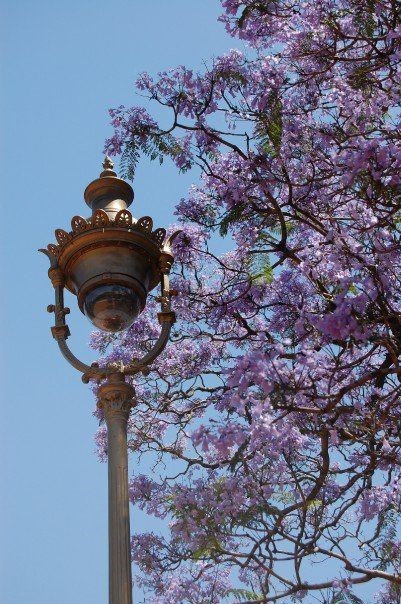
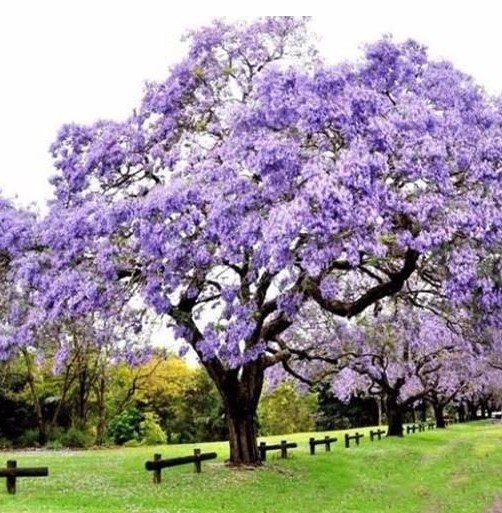
As we turn the corner on another winter here in the Northern Hemisphere, and look forward to the next season, I can’t help thinking of my native country. November in Buenos Aires is a sight to behold! While Spring officially starts there in September, the Jacarandás are in full bloom by the time we—here in America, anyway—have taken down the sukkah and have turned our thoughts to all things turkey.
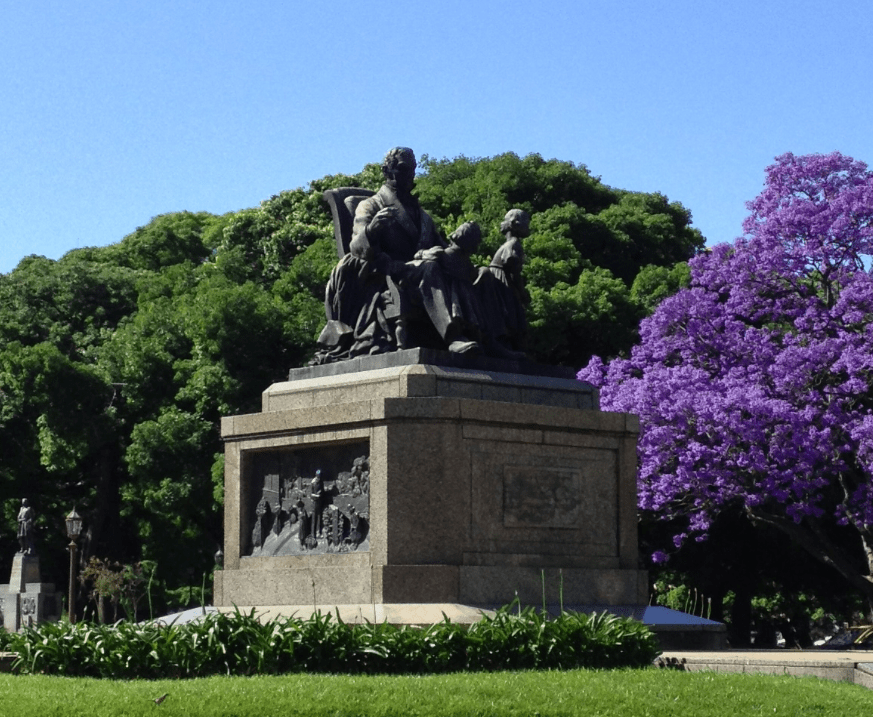
The majestic Jacarandá is native to South America, but it was late in the 19th century when city planners officially introduced the foliage to Buenos Aires. The trees were planted in the city’s Bosques de Palermo in 1875, specifically placed in the Plaza 3 de Febrero to commemorate two famous victories, including the Battle of San Lorenzo (you can read about that particular event in my novel).
Plaza de San Martin
They can still be found there and throughout the capital, especially in and around Plaza de Mayo, Avenida Roque Saenz Peña and Plaza San Martin.
The English Tower in Buenos Aires
Legend has it that Jacarandás are associated with an Amazonian moon goddess. She symbolizes wisdom and ethics and the blossoms represent good fortune and rebirth. It is no wonder that the trees have become synonymous with the vibrant city of Buenos Aires.
My novel takes place in the Regency era of the Viceroyalty of Rio de la Plata, nearly 65 years prior to the dedication of the famous plaza in Palermo. In Celestial Persuasion, Miss Abigail Isaacs has her first glimpse of the beloved foliage as she approaches her new home in the province of Santa Fe.
A hedgerow of trees, striking in their billowing lilac color, marked the borders of the entire property.”
Of course, once Abigail arrives, she is not only drawn to the spectacular foliage. Curiosity wins out and she is compelled to ask…
As she followed Tati to the granary, she could not help but take notice of a particular fragrance. It was slightly pungent, a sweet scent that had a touch of earthiness. She looked about their surroundings, trying to isolate the origin of the distinct aroma.
“It is the jacarandá, madam.”
“Pardon me?”
“That musky fragrance—it comes from the jacarandá,” offered Tati, pointing to the lilac blossoms.
“I noticed them when we arrived,” replied Abigail. “In truth, one could hardly not take notice. They are quite striking. I cannot imagine what they must look like in full bloom. But pray forgive me, for their name is quite unfamiliar.”
“It is not a Spanish word, it is Guarani—as am I. And you are most astute, madam. The summer foliage is nothing to the blossoms in the spring. Their color changes depending on the sunlight. One moment they appear light blue and the next, they are like a vibrant amethyst.”
“You are a native of this land, then?”
“Yes, madam, but my ancestors were from a place farther north. My people settled here when my grandfather was still a child. I call this place home.” She paused as they came upon the granary. Taking hold of the ladder, she peered upward before turning to face her mistress.
“Madam, I am unable to assist you in this effort. Are you certain you can manage?”
Abigail laughed. “Dear Tati! My brother taught me how to climb trees when I was a young girl. And if you had seen me on the ship as we crossed the great Atlantic, you would not doubt me now! Lead the way, my girl!”
The women made quick work of ascending the ladder; and when Abigail crossed the threshold, she was overcome by the intoxicating scent of wheat that had been recently harvested and stored away. But they had not reached their destination yet. Tati led the way, climbing not one, but two other levels. Abigail had never doubted that her father had been a visionary. That he would have dreamed of living in such a place, surpassed her every imagining. The transformation of the granary into an astronomer’s observatory was incredible, to be sure. The vista was a luxury that surely even Caroline Herschel had not been afforded.
“I shall see every star shining in the night’s sky tonight!” Abigail exclaimed.
“You are truly arandu,” whispered Tati.
“Another word of the Guarani?”
The young woman nodded. “It means one who understands the message of the stars.”
Abigail smiled. “I fear I do not qualify, not yet at any rate. I am seeking to understand, but I am far from anything that would warrant such an accolade. Tell me, for I am curious to know more of your language, what does Tati signify?”
“My true name is Yasitata. My mother spent more than two days in travail before giving birth to me. It was only after she pleaded to the gods and made solemn oaths that I was finally delivered. There was a bright moon that night, causing the stars to shine down upon us. My name pays homage to Yasy, the moon goddess.”
“What a compelling tale. Your mother was a brave woman. No doubt you are as well.” Abigail paused and gave her next words some thought. “I feel that calling you Tati somehow diminishes your noble heritage.”
“Not at all, madam. It is a sobre nombre, a name given in the friendliest of terms. My mother is known as Estella, though her true name is Mbyja, which means “star.” We are quite content to be known by these mundane names, for it does not change how we are known amongst our wise men or our gods.”
They were interrupted by the sounds of the approaching men. The telescope, such as it was, had been mounted on a cart. They would bring up the various parts and assemble the instrument under Abigail’s watchful eye. She recognized the need for furnishings too late. She began creating a list in her mind of everything she would require in order to establish herself properly in her new laboratory. A long table, and a chair or two, would do to start. Naturally, she would require her books and writing materials. It was becoming quite an undertaking, but it would be well worth the effort in the end. Another thought came to her as the men scrambled down the ladders for another load.
“Tati, your people seem to have quite a relationship with the heavenly bodies. It would please me to learn your people’s stories and compare them with my own.”
“Do the English have different stories from those of the Spaniards?”
“I fear much of their wisdom, which stems from peoples of various nations, has been lost over the course of the years. Perhaps lost is not quite accurate. It has diminished or, at the very least, it has been transformed. And Tati, although I was born in England, I am a Jew. My people’s story varies greatly from my Anglican brothers and sisters. Even our calendars are different, we mark the passage of time based on the cycles of the moon, not of the sun. Tomorrow night, we will celebrate the appearance of the new moon. The celebration of Rosh Chodesh ushers in a new month.”
“Then we have that in common, madam, though we call it Yasy Pyajhu. The concept of a calendar is new to my people, but we have always watched the heavens to understand the passage of time. Our wisemen know after twelve full moons have come and gone, the same climate cycle will return. In the month called June, Eichu appears on the eastern horizon as a great cluster of stars, and my people know that the rains will return. We have a grand celebration known as Arete Guazu in preparation for the planting season.”
“A great cluster of stars? In June, you say?” Abigail’s enthusiasm would not be denied. “But that must be what we call Pleiades. What more? Pray tell me more!”
Tati shrugged, uncertain what exactly to say. It was impossible to relate an entire culture with a few, simple anecdotes. Still, she wanted to please the new mistress who took notice of her and told her the names of the moon phases and the story of the Mborevi Rapee. “My ancestors tell the tale of a nocturnal animal, the tapir, who treads the same path between its den and its food source night after night. The tapir tramples on dry leaves as he treks back and forth. We, here on earth, can see his path as the light of the moon illuminates his tracks. You will surely see The Way of the Tapir this very night; and I promise, you will not require your tools to witness the sight.”
Abigail was astonished. “I thank you for sharing your ancestral wisdom, Tati. The Way of the Tapir must be what we call The Milky Way. And you are correct. I will not need my instruments, for I have witnessed the phenomenon with my own eyes. I have seen it on the ship that brought me here and I have seen it at home in Exeter. And I will gladly observe it from this very spot tonight. One never can tire of seeing God’s magnificent creation.”
“What magic is this? You have seen The Way of the Tapir from your family’s home?”
“It is not magic. It is the same sky, though I was in the north and we are now in the Southern Hemisphere. Our position on earth will change what we can see above, depending on the season and other variables…” Abigail paused and contemplated her words carefully. “Tati, it is not magic. I will teach you, if you wish to learn.”
I hope you have enjoyed this excerpt and the images I’ve shared. Stunning, aren’t they? I never tire of contemplating the majesty and mystery of nature. But did you know, that there wasn’t a word for “nature” in biblical Hebrew? Not being a theologian, I never gave it much thought. However, there has been an ongoing debate on the subject! Apparently, two medieval Jewish luminaries, Rabbi Yehudah ha-Levi and Maimonides, chimed in on the concept of a natural order and the word teva טבע was adopted into the Hebrew lexicon.
This Chabad site provided some interesting information; and so, I read on. Maimonides said, “G‑d is the eternal rock.” Another interpretation of this quote is “G‑d is the form of the world.” The idea was further developed by Rabbi Schneur Zalman of Liadi who taught that every creature, even a rock, has a soul. The soul of a rock, he explained, is the divine spark that brought it into existence in the first place. In retrospect, it appears, that we did have a Hebrew word for nature all along. It is a name of G‑d.
The post goes on to discuss the matter at length, but what are your thoughts on the subject? Let me know in the comments below.
















 Mirta Ines Trupp~ Author