New Post

Jane Austen and thoughts for Rosh Hashanah…

As a woman, an immigrant, and a Jew, I found that following in Jane Austen’s footsteps helped me find my voice. I have written several novels that try to emulate Austen’s tone and that reflect her era, all while incorporating my heritage and Judaic storylines.

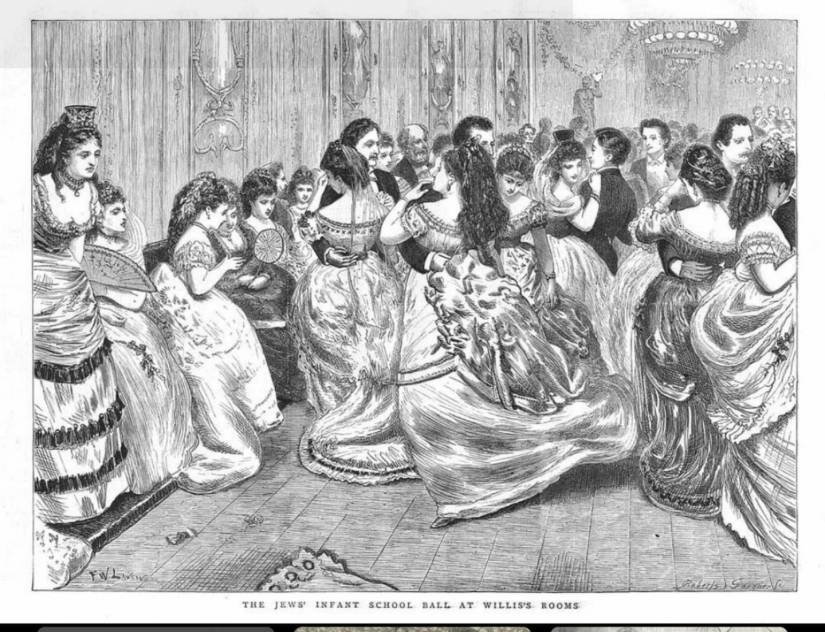
I choose to incorporate Jewish protagonists into these beloved classics not to try to change Austen’s characters—or to change the happily-ever-after events we Janeites have grown to love—but to emphasize the fact that we. were. there. Whether in the upper echelons or as entrepreneurs, manufacturers, tradesmen, or farmers, Jews were intertwined in the English tapestry.

I read Austen and many of her contemporaries—as well as many J.A.F.F. (Jane Austen fanfiction) authors—for entertainment, for escape, for inspiration. I know some readers may feel that including Jews in J.A.F.F. is beyond the scope of what Austen intended. There is no reason to believe that she had ever met a Jew or knowingly interacted with one. My novels hope to show how natural a thing it might have been by incorporating Jewish storylines and showing different characterizations of a culture so often maligned.

If readers search for Jewish historical fiction on Amazon, they will be inundated with Holocaust or WWII novels. They will find novels set during the Spanish Inquisition or from the biblical era. There are classics written by Chaucer, Shakespeare, and Dickens that include Jews characters. There are Regency novels written by modern-day authors such as Georgette Heyer that do the same; however, these books are disappointing to say the least—insulting and hurtful would be more to the point. The bigotry and intolerance of yesteryear has no place in today’s society; and yet, it still exists.

In the aftermath of the horrific events of 2023-2024, we Jews are preparing for the High Holy Days or the Days of Awe—Yamim Noraim. Though our hearts are broken, we prepare for a new year. Though we are grief stricken, we prepare for a new beginning. You may ask: How can you think of promoting a book at a time like this? Why even bother writing Jewish Austen Fan Fiction? The answer to that question can be found on my bookshelves and on my reading tablet.

Austen wrote with humor and sarcasm, but she didn’t shy away from powerful subjects. She touched upon hard-hitting societal issues such as the inequality between the have and have-nots; the dangers of childbirth and other health concerns that are treatable today; mental health, premarital sex and unwanted pregnancies, alcohol abuse and debauchery, the lack of opportunities and/or choices for women; the devastation of the Napoleonic Wars, etc.

Think only of the past as its remembrance gives you pleasure.”

We are shaped by our history, the good times and the bad. What has been done can’t be undone; however, with this quote, Austen encourages to be deliberate in our recollection. She reminds us to look back on the “good ol’ days” with nostalgia, choosing to recall only those memories that inspire hope. It is this attribute to focus on joyous occasions, on achieved dreams and accomplishments, that propels us forward and motivates us to persevere.

I write Jewish Austen Fan Fiction because that’s what I like to read. I write it for other Jewish women to provide them with a choice—to read something joyful, something light and entertaining. I write it for non-Jews too! I write it because we do not exist in a vacuum, all of our collective experiences matter.

In Judaism, Tuesday (Yom Shelishi) is a special day of the week. It is not uncommon to see weddings held on Tuesdays. Grand Openings are often scheduled for this day, as are the first day of school or summer camp, etc.

What other event may be scheduled for a Tuesday?

Hmm? How about a cover reveal? What about a book release? Yes, and yes! Like the double portion in the Torah…ki tov (for it is good)! Look for the cover reveal of my new book on Tuesday, October 1, 2024 and, with God’s help, the book release on Tuesday, November 5, 2024 (yes, that Tuesday).


Here is a little snippet to entice you:

Prior to beginning a new year at Mrs. Goddard’s School for Girls, Miss Harriet Smith spends the summer months with the Martin family at Abbey-Mill Farm—a house of Israelites, or is it Hebrews? Would it be impolitic to call them Jews? It matters not, for Harriet finds contentment there. And, if her heart betrays her with stronger feelings for Mr. Martin than she ought to have, they are hers alone.

Alone… a common enough phrase for the natural daughter of nobody knows whom. But when Miss Emma Woodhouse requires a new friend to guide and mold, Harriet suddenly finds herself in the midst of one imbroglio after another. Forbidden assignations, sentimental blunders, and questions abound!

Be it through gossip or vengeance—or small-minded people, “the instruments of darkness tell us truths.” Will Harriet remain encumbered to her mysterious past, or will astonishing discoveries provide the fulfillment she long desired?


I hope you’ll help me spread the word!

I wish all who celebrate: Shana Tova Umetuka (A sweet and happy new year)! May God hear our prayer! May the hostages be released and may we all be blessed with peace.

New Post

Sound the Shofar! This Jewish Historical Fiction Author Reflects Upon the Season

This month, the British empire suffered a tremendous loss. I dare say, the world at large lost a dedicated and devout leader. Queen Elizabeth’s death touched people from all walks of life, none more so than the Jewish community under her protection.

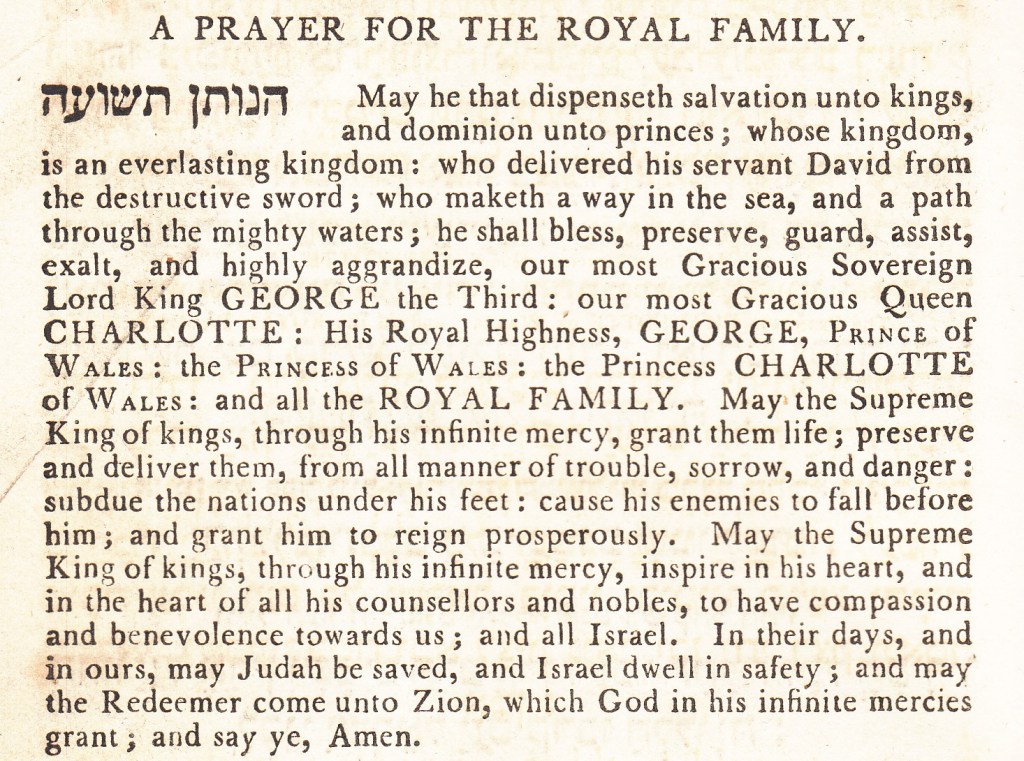
For over seventy years, congregations across the land concluded their Sabbath service praying that “He who gives salvation to kings and dominions to princes, guard her and deliver her from all trouble and sorrow.” But Jewish prayers for the monarchy, or for any ruling government, are not unusual. After the Israelites first expulsion from Jerusalem in 586 B.C.E., the prophet Jeremiah urged the community to pray to the Lord in order for Him to guide their foreign rules with wisdom and compassion. These prayers were eventually incorporated into the siddurim (weekly prayer book) in the 14th century.

However, the supplications were not solely reserved for the Sabbath service. In England, any royal event may have called the community to prayer. Indeed, if Jane Austen attended a Jewish service in 1787, she would have heard a prayer calling for the preservation of King George lll “from the hands of an assassin.” And in 1817, while the empire mourned the death of Princess Charlotte, Hyman Hurwitz composed Israel’s LamentMourn for the universal woe, With solemn dirge and fault’ring tongue, For England’s Lady is laid low, So dear, so lovely, and so young! 

Of course, there were occasions for happier prayers, such as the Golden Jubilee of Queen Victoria in 1887 and that of Queen Elizabeth II in 2002 and again in 2022.  

Her crown is honor and majesty; her scepter, law and morality. Her concern has been for welfare, freedom and unity, and in the lands of her dominion she has sustained justice and liberty for all races, tongues and creeds.” 

Rabbi Ephraim Mirvis, the Chief Rabbi of the United Kingdom and the Commonwealth

Did you know that the concept of jubilee hails from the Torah (Pentateuch)? According to the Book of Leviticus, a commemoration was held at the end of seven cycles of shmita (sabbatical years). Slaves or prisoners would be freed, debts would be forgiven and “the mercies of God would manifest.” The sounding of a ram’s horn (a shofar) would proclaim the celebration. In fact, the ancestral summons was used to announce a variety of events, including a king’s coronation or the proclaiming of a period of mourning—so apropos during these sad days of September.

This is the moment history stops; for a minute, an hour, for a day or a week; this is the moment history stops.”

BBC NEWS

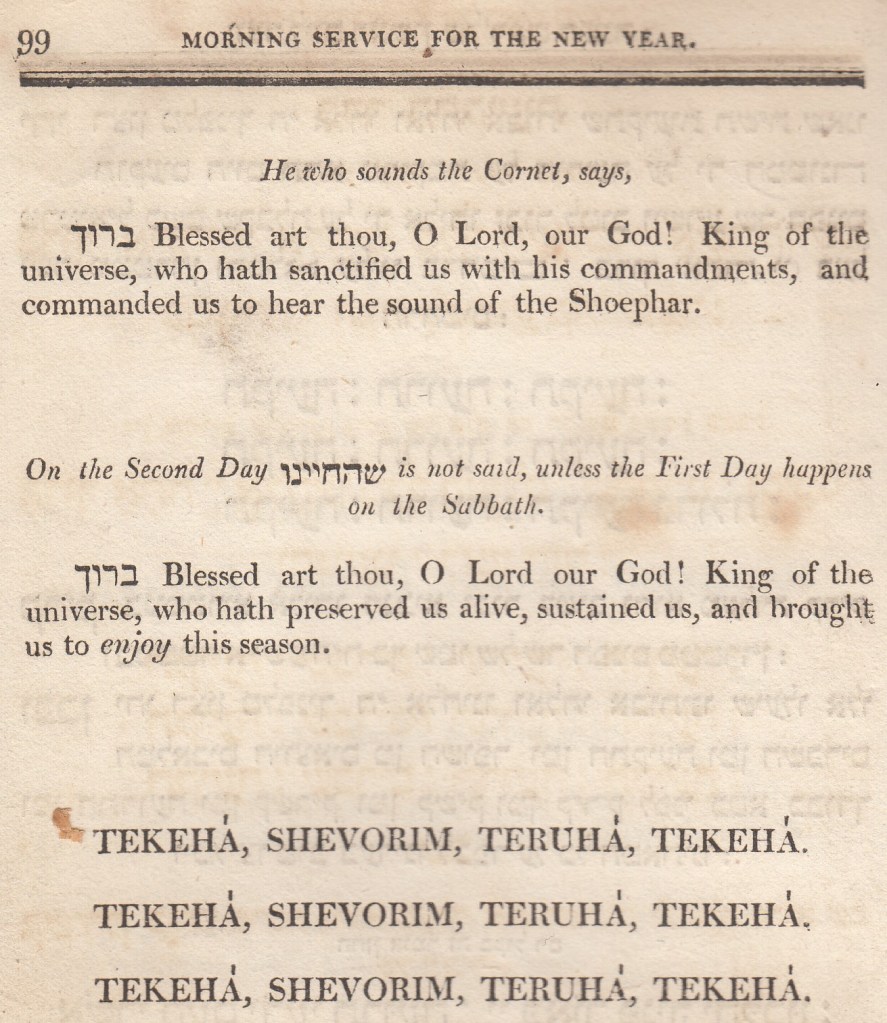
If we were living in biblical times, the shofar would have certainly announced this momentous occasion and the community would have responded in kind. Today, Jews worldwide recognize the cry of Tekiah as the call to prepare for the new year and the Day of Atonement.

For over 5,700 years during the month of Elul (which usually falls during August or September in the Gregorian calendar), the piercing sound of the shofar has beckoned us to examine our behavior—to ask for forgiveness and to prepare to make amends for the new year.

I came across another blog post about Anglo-Jewry while preparing this article. Naturally, it led me to another post where I discovered an interesting historical figure by the name of Solomon Bennett. For a variety of reasons, Mr. Bennett made it his life’s work to torment Solomon Hirschell, the Chief Rabbi of the German and Polish Jews of England. To be honest, I would say that both Solomon Bennett and Solomon Hirschell were full of themselves! If ever anyone ought to have heeded the sound of the shofar…The series of events that transpired between these two men borders on the ridiculous. Therefore you cannot fault me, dear reader, for immediately envisioning Mr. Collins and Mr. Bennet of Austen’s Pride and Prejudice.

Mr. Collins is a clergyman. He is tall and maintains formal manners; he comes across as pompous and grave. He takes great pains to inform everyone about his social status, which mostly stems from his noble patroness. Mr. Collins is excessive in his compliments and excessively snobbish. His counterpart is Mr. Bennet of Longbourn. This landed gentleman has a sarcastic, cynical sense of humor which he purposefully uses to irritate his prey. However, his dry wit and composure in the midst of mayhem serves him ill, for Mr. Bennet is weak and largely ineffective as a husband, father, or property owner.

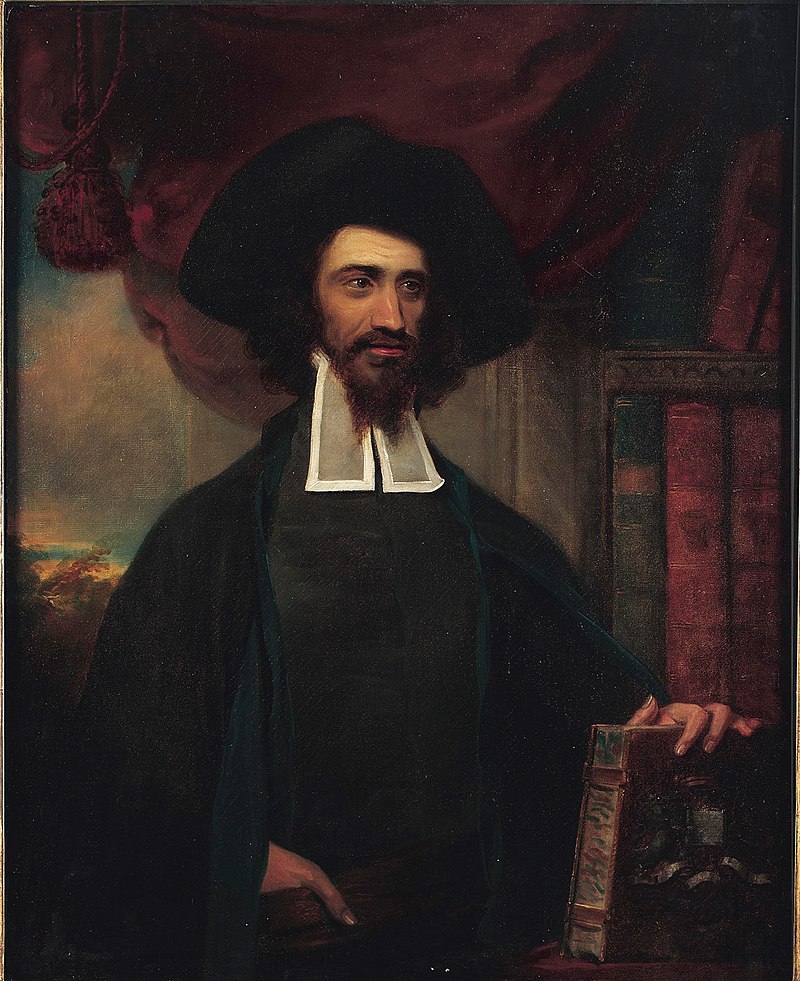
Solomon Hirschell

I now present Rabbi Solomon Hirschell. He was said to be a tall and imposing sort of man. He was a traditionalist and did not apologize for wanting to maintain ancient standards and customs. The rabbi liked to boast of his long line of impressive ancestors and benefactors, such as Sir Moses Montefiore and the Goldsmids. Although he had no formal secular education, Hirschell was proud of his Talmudic training and made it known that he possessed an impressive rabbinic library.

In 1811, the European Magazine published an interview with the clergyman. Hirschell proclaimed that he was direct descendant of the royal house of David. He believed his election as chief rabbi to be a natural turn of events. His fiercest enemy, Solomon Bennett, had a field day with that announcement. An author, artist, and a Hebrew scholar in his own right, Bennett publicly ridiculed the rabbi by declaring that he was only given the position due to his connections. But it didn’t end there. He claimed that Hirschell was barely competent in the English language and that he hid behind his father’s precious library to mask his illiteracy.

Of one thing you may be assured, Hirschell could only have known my English publications at second hand because he could not even understand them in the original language, of which his knowledge is so slender.”

Bennett continued to write scathing remarks about the shocking lack of rabbinical publications put out by the Hirschell administration. The Magna Bibliotheca shows that the chief rabbi only published three sermons. Of note: one marked the battle of Trafalgar in 1805 and another, which warned the community against sending their children to secular schools. The rabbi was so set in his ways, the sermons were given in Yiddish and had to be translated into English for publication.

Sometime around 1815, Rabbi Hirschell endorsed a book of Jewish studies written by another Solomon —Solomon Jacob Cohen. Bennett was highly critical of the work and published a 66-page pamphlet where he called the rabbi “a proud, savage, and tyrannical Pontiff…in his orthodox piety on the one hand, and his ignorant malice on the other.” 

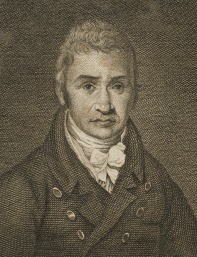
Solomon Bennett

The public did not appreciate Bennett’s wit and he did not succeed in defaming his nemesis. In fact, the project was a complete failure and Bennett lost money— a £100 to be exact. Short of funds, he was unable to pay his publishers and was sent to debtor’s prison—blaming Hirschell for his misfortune all along the way.

For all that was said against him, Rabbi Hirschell appeared to hold England dear. In one particularly poignant speech, the rabbi expressed his gratitude that “providence permitted me to return to this my beloved native Land.” During the Napoleonic wars, Hirschell encouraged his congregants to enlist and to serve their adopted nation. It was also said that the rabbi secured permission for Jews to “stay away from church parades and to be sworn upon the Book of Leviticus—instead of the New Testament.” This was in keeping with his lack of interaction with his Christian counterparts and his sermons against the newly established Reform movement. On the other hand, Hirschell was known for his charitable organizations and worked to help the relatively newer community of Eastern European Jews.

In 1811, he aided the Westminster Jews’ Free School to open its doors. In 1817, the Jews’ Free School was founded. In 1820, the Western Institute for Clothing and Apprenticing Indigent Jewish Boys was opened; and in 1824,  the Society for the Relief of Indigent Poor began providing widows with five shillings per week.

During his administration as chief rabbi, the problem of poverty was investigated, reforms were suggested, and solutions were implemented (certainly not in keeping with a Mr. Collins).  In the face of these good deeds, Mr. Bennett’s cynicism should not have prevailed; however, it did. To this day, Solomon Hirschell’s legacy remains tainted. He has been labeled as a pompous, unwavering traditionalist, ignorant and out of touch.

Without wishing to overstep the boundaries of a simple blogger (who has no right to sit in judgment), it would seem that the call of Tekiah fell upon deaf ears with these two men. Talk about pride and prejudice! Perhaps they ought to have heeded Elul’s message; they should have recognized the error of their ways and made amends. History might have been kinder to both if the had learned to compromise a bit; but to paraphrase Jane Austen’s Northanger Abbey, I leave it to be settled, by whomsoever it may concern, whether the tendency of these two gentlemen is to recommend tyrannical rivalry or reward stubborn constancy.

May the sound of the shofar awaken us to be kind to one another and to cherish the moments that make up the days of our lives. May we all be inscribed in the Book of Life and may the new year be blessed with health, happiness and goodwill.