
I can’t think of any author who wouldn’t appreciate the chance to talk about their new book—the research, the premise, the inspiration…well, you get my meaning. I had such an opportunity when I was asked to participate in an Author’s Q & A with Writergurlny. Click on the highlighted link to read the interview, or read a few snippets here:
Getting the full scope of history goes well beyond a generic textbook. For every well-known person, there are many others whose names and histories are lost to time. Mirta Ines Trupp’s new historical novel, Kindle the Light of Liberty, is set in Philadelphia during the American Revolution.
AB: What was the inspiration for the book?
MIT: First of all, thanks for the opportunity! I appreciate your interest in my latest book.
The inspiration for Kindle the Light of Liberty grew from three longtime passions. As a grateful naturalized citizen of this country, I wanted to contribute to the celebration of America’s 250th anniversary by exploring a lesser-known aspect of the nation’s founding—the experiences and contributions of Jewish Americans during the Revolutionary era. I am also passionate about writing Jewish protagonists in wholesome, accessible fiction. Too often, Jewish characters are absent from historical novels or appear only in stories centered on persecution. I wanted to create a compelling, “clean” read that allows Jewish characters to take their place at the heart of an engaging historical story—one filled with courage, hope, and the pursuit of liberty. Finally, as a devoted Jane Austen reader, I have long admired her ability to illuminate universal truths through the lives of ordinary people. Austen showed that questions of family, duty, love, and social belonging can be every bit as compelling as grand historical events. In Kindle the Light of Liberty, I sought to emulate that vision by placing personal relationships and moral choices against the backdrop of a transformative moment in history, allowing readers to experience the American Revolution through the hearts and minds of the people living it.
AB: Did the idea of Rose come from anyone specific?
MIT: Rose wasn’t based on any one specific person, but she was certainly influenced by a few different sources. As I mentioned, I am a longtime Austen fan. I would be hard-pressed to deny the influence of Miss Elizabeth Bennet of Pride and Prejudice fame. I’ve always admired Lizzy’s intelligence, wit, and willingness to speak her mind, even when doing so is not the easiest path. Those qualities definitely found their way into Rose’s character. At the same time, I often joke that all of my heroines are, in some sense, a blend of myself and the women who came before me. Rose reflects some of my own interests, values, and perspectives, but she is also inspired by the resilience, strength, and determination I imagine in my female ancestors.
As a historical novelist, I spend a great deal of time thinking about the lives of the women who preceded us—the challenges they faced, the choices they made, and the dreams they carried. In many ways, Rose became a way for me to honor both my own heritage and the remarkable women whose stories were never written down but whose lives helped shape the generations that followed.
AB: What made you choose the American Revolution as opposed to another time?
MIT: That’s a great question. As I mentioned earlier, one of the original inspirations for the novel was the upcoming commemoration of America’s 250th anniversary. I wanted to explore the colonial era, but through a lens that readers don’t often encounter. When most people think about Jewish involvement in the American Revolution, if they think about it at all, they tend to recall a handful of financiers and wealthy merchants. I was struck by how history reduced Jewish colonials to a single dimension. Ancient tropes and European stereotypes shouldn’t dictate how historical novel readers—Jewish or not—understand the past.
The Revolutionary period offered a fascinating opportunity to challenge those assumptions and expand the narrative. I wanted to portray Jewish characters as fully realized people—patriots, neighbors, friends, daughters, sons, and, when called upon, individuals capable of courage and sacrifice. The American Revolution was not only a struggle for independence; it was also a moment when many different groups were asking what it meant to belong in a new nation. That question felt as relevant to me as ever, and it made the Revolutionary era the perfect setting for Rose’s story.
AB: What kind of research did you do? Was it more internet-based, or did you rely on physical texts?
MIT: My research was actually conducted mostly online. One of the great advantages of not living in colonial times is that so much history is literally at our fingertips. Newspapers, letters, diaries, maps, genealogy records, academic articles, and digitized books that once required travel to specialized archives can now be accessed from home. The challenge is no longer finding information—it’s finding the time and patience to follow the trail of sources wherever they lead, and remembering to come up for air once you’ve disappeared down a research rabbit hole!
That said, online research doesn’t mean superficial research. Many of the sources I consulted were digital versions of primary documents and scholarly works. In fact, even my beloved Jane Austen was part of my online research process. Her novels are available free of charge through Project Gutenberg, which makes it easy to search passages and revisit particular scenes. Of course, I also keep a well-worn copy of Pride and Prejudice on my desk. Whether I’m reading a digitized eighteenth-century newspaper or a printed history book, the goal is always the same: reliable information. It needs to help me understand the period as accurately and vividly as possible so that readers can feel as though they have stepped back in time.
AB: The hardest part of historical fiction is melding the real people/events with the fictional ones. How do you go about it?
MIT: That’s probably the hardest—and most rewarding—part of writing historical fiction. The events themselves are often well documented, but people are much more complicated than the brief descriptions history leaves behind. When I encounter a historical figure, I try to look beyond the labels that have been attached to them. Take Rebecca Franks, for example.
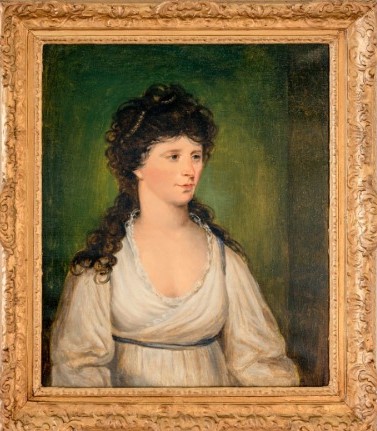
On the surface, she can be easy to categorize. She came from a prominent Jewish family, yet she was a Loyalist. She was a known flirt, witty, and resourceful (to put it kindly). She married an Englishman and ultimately lived in Britain as part of the aristocracy. Viewed from a certain angle, she might appear to have turned her back on both her countrymen and her heritage. But I found myself asking a different question: What made her the person she became? What hopes, fears, disappointments, and demands shaped her choices? The moment you start asking those questions, a historical figure stops being a name in a book and becomes a human being.
In many ways, that approach is influenced by a central idea in Judaism. At Passover, we are instructed to see ourselves as if we personally came out of Egypt. At Shavuot, we are encouraged to imagine ourselves standing at Sinai. Jewish tradition asks us to enter the story rather than merely observe it. As a novelist, I try to do something similar. I place myself in the position of my characters—both the real historical figures and the fictional ones—and ask what the world looked like through their eyes. What would I have believed? What would I have feared? What would I have hoped for? Once I can answer those questions, the boundary between history and fiction becomes much easier to navigate. The historical record provides the framework, but empathy helps fill in the spaces between the facts. That’s where the story comes alive.
AB: Philadelphia is as much of a character as the people. Did you deliberately choose the city, or was it an organic decision?
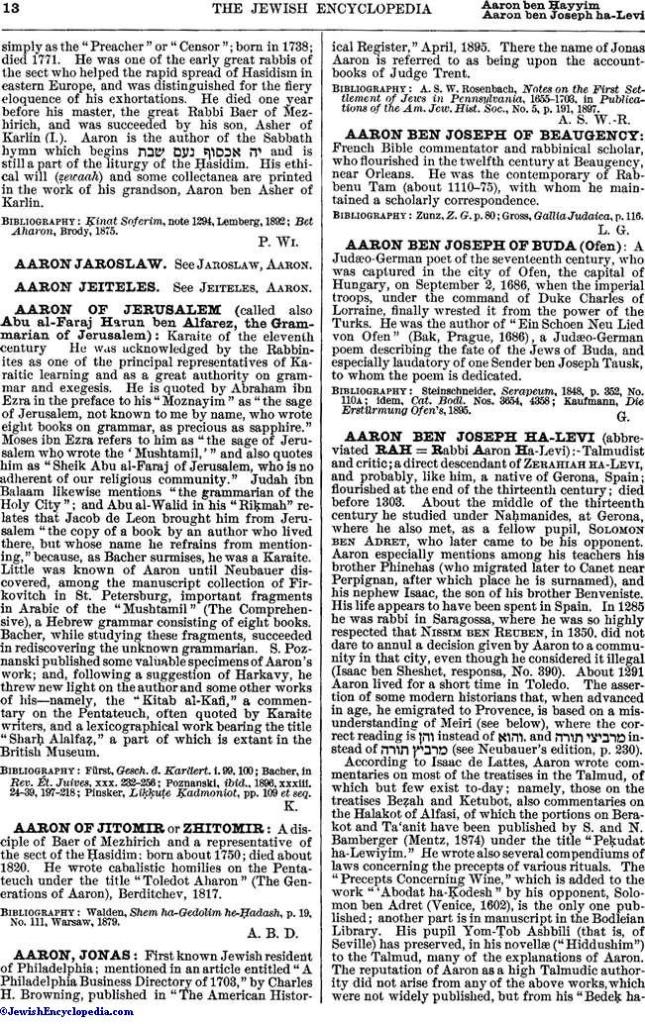
MIT: Absolutely deliberate! From the very beginning, I knew that if I was going to tell a story about Jewish life during the American Revolution, Philadelphia was the natural setting. I was drawn first to the city’s rich Jewish history. Philadelphia was home to one of the earliest and most important Jewish communities in colonial America, and many of the individuals I wanted to write about either lived there or passed through it. One figure who particularly intrigued me was Jonas Aaron, who arrived in Philadelphia in 1703 and is often considered the city’s first known Jewish resident. His presence is a reminder that Jewish history in Philadelphia stretches back long before the Revolution itself.
At the same time, Philadelphia was the political heart of the Revolution. The Continental Congress met there. Benjamin Franklin walked the streets. Betsy Ross lived and worked there. It was a city where world-changing events and ordinary daily life existed side by side. I was also fascinated by Philadelphia’s Quaker roots. William Penn’s vision created a colony that was remarkably welcoming for its time. While no eighteenth-century society was free from prejudice, Pennsylvania offered opportunities for religious minorities that were difficult to find elsewhere. Quakers, Jews, Anglicans, Presbyterians, and many others lived alongside one another, creating a vibrant and diverse community. That diversity made Philadelphia an ideal place to explore questions of identity, belonging, and citizenship during the founding of the nation.
AB: Rose and Nathan have a specific Elizabeth Bennet/Fitzwilliam Darcy energy to their relationship. Was this a deliberate choice, or did it emerge as a natural part of the writing process?
MIT: That’s a fair observation—Pride and Prejudice has been such a long-standing touchstone for me; Elizabeth and Darcy’s dynamic was always part of my creative landscape. At the same time, I didn’t want to simply recreate Austen in an American Revolutionary setting. Several of my other novels are “Austenesque” or straight-up Jane Austen fan fiction (JAFF), but I tend to introduce Jewish protagonists to the narrative, rather than portray Austen’s characters as Jews. There’s a reason for that approach.
What I’ve always found most powerful in Austen’s work is how clearly she shows the real stakes for women in her world: the very real fear of not marrying, of lacking financial security, of being labeled a spinster and therefore considered somehow “unfulfilled” or even nonessential in society. She also captures how profoundly a family’s social standing could shape the entire trajectory of a woman’s life, and how a single “wrong” choice could carry lifelong consequences. Those concerns absolutely echo through Rose and Nathan’s story, and in that sense, they do shadow Elizabeth and Darcy’s world. But as I wrote, those familiar Austen themes began to branch outward in new directions. Rose and Nathan are shaped by their Jewish identity, by a long history of displacement and persecution, and by the added weight of what it means to belong—or not belong—in a young nation trying to define itself. Their choices are not only about love, marriage, or reputation, but also about survival, continuity, and the question of whether a community that has endured centuries of exclusion can truly find a stable place in this new world. So I would say Austen gave me the emotional framework, but Rose and Nathan ultimately grew into something more layered—I hope! They are rooted in her world of social constraint and romantic tension, yet expand into broader historical and cultural realities that define their own lives.
Be sure to click on the link above if you’d like to read more, and don’t forget: both paperback and electronic versions of Kindle the Light of Liberty will be available on July 4, 2026! The pre-order link for the eBook is now live.
With love,