I had the pleasure and the honor of participating in the Jewish Book Council Network Conference. This is an extraordinary experience! It gives authors the opportunity to present their latest book in a unique forum. It provides program directors, libraries, synagogues and other venues from across the country, a more personalized, in-depth look into potential speakers and their work. The conference is done via Zoom and lasts several days. Just imagine! All that creativity, knowledge, and enthusiasm for Jewish literature!
The scope of presentations cover practically every genre imaginable. The authors themselves ranged from newbies to established, professional writers. It was inspiring to be included amongst such talent. It was intimidating as well.
Authors are given two minutes to present their book. A two-minute shpiel, if you will, to entice, intrigue, and inspire. Listening to the other presenters was a rare treat. I was moved by several authors as they talked about their journey and the body of their work. With so many great titles published this year, I encourage you to take a look at the JBC website to find the ones that speak to you.
In preparing for the event, authors are given the opportunity to be coached by seasoned professionals. Presentations are reviewed and revised with a focus on timing and content. As the saying goes: Editing is never easy, but always necessary! Being the only Austenite in the line up—or, at least, that was my assumption—I came across a “hiccup” or two in trying to explain my POV (point of view). I would have liked to have shared more about the concept of Austen devotionals or my passion about historical Jewish women; but, two minutes goes by quickly! There isn’t much time to go into detail or provide background. Here is the text of my presentation:
Hello everyone. As a woman, an immigrant, and a Jew, I found that following in Jane Austen’s footsteps helped me find my voice. She wrote about her surroundings with a keen eye. She used humor to call out the injustices of her society; and in this brilliant manner, Austen touched upon some heady subjects that are still relevant today. This form of Realism coincided with my purpose for writing Judaic storylines.
When I set out to write, “From Meidelach to Matriarchs,” I took Austen’s words to heart. She said, “Everyone likes to go their own way—to choose their own time and manner of devotion.” I found this to be very relatable to Judaism. As the old saying goes, you put two Jews together and you end up with three opinions. Judaism encourages debate and contemplation. It challengesus to cultivate habits that help connect to the Divine.
My previous books are Austenesque in nature; however my latest book is different. As a non-fiction and motivational journal, it is a form of…spiritual work. It asks the reader to interact with the text. It is a reminder that we, as Jewish women, are standing on the shoulders of giants. From athletes to actors, social workers to socialites, playwrights to pioneers—these women faced adversity, found their voices, and won! We need to emulate their strength, their courage, and compassion and walk in that light.
“From Meidelach to Matriarchs” focuses on one hundred women from various eras and diverse backgrounds. I share a snippet of each individual’s history and then provide questions for consideration. It’s aBu-Jo (that’s a bullet journal for us Boomers) and a safe space for you to jot down your thoughts. There is no pressure, no judgement. That’s the beauty of this book. No one needs to know; it’s just between you and the Woman of Valor within.
What do you think? Was I successful in representing myself and my newest book? Let me know your thoughts and don’t forget to keep your eyes on the Jewish Book Council’s website with updates on the 2024-2025 season!
You did a double take, didn’t you? Hehehe…you thought I said Buju.
Sorry. You must be thinking of another Jewish blogger. I said Bujo…
If you’re still with me and asking, “But what is Bujo,” let me direct you to this article that states: ”Bullet Journal® (aka Bujo) is a mindfulness practice designed as a productivity system. It will meet you wherever you are to help you write a better life. All you need is pen and paper.”
Nu? Sound familiar? It certainly is in keeping with my latest publication that speaks to being more mindful, more productive, more like the Eshet Chayil (Woman of Valor) that you aspire to be. More than that, it is in keeping with the Jewish practice of Mussar. The tradition encourages us to refine ourselves, to cultivate a connection to our higher being.
According to this My Jewish Learning post, Rabbi Elya Lopian said that the ancient ritual of accessing, and incorporating, virtue-based ethics is “teaching the heart what the mind already understands.” Meditation is certainly one form to transcend to a better sense of self. Another method is through journaling.
The paperback version of From Meidelach to Matriarchs: A Journal provides space for your thoughts, notes, and yes, even art work. I thought I was being so clever! I imagined readers adding sticky notes with motivational reminders and inspirational pictures from magazines or Pinterest…
However, many of you Wonder Women have asked if the journal is available as an eBook, because, you know, you are busy, you’re on the go! Honestly, I was stumped! How would you be able to activate the “right side of your brain”—the creative part of you that likes to use colored pencils and doodle while you draft your thoughts, make your lists, and plan out strategies—on your phone, tablet, or Kindle reader?
We don’t want to push our ideas on to customers, we simply want to make what they want.”
Laura Ashley, designer and businesswoman
It only makes sense to give the customer what they want, so I’m setting out to publish an eBook version as you’ve requested. It will have the same content—the history of 100 Jewish women and the questions and/or prompts for you to consider—however, as you might have guessed, it won’t have the “space” for your thoughts. You’ll have to provide that by keeping a note pad or notebook close at hand.
I will leave it to you to doodle away and add color or cutouts for your inspiration. That’s a happy compromise, I believe, and I’m confident that you’ll enjoy the experience! Because, at the end of the day…
Miss Caroline Bingley provides a definition of a “lady of quality” in Jane Austen’s Pride and Prejudice. However, in trying to call attention to Miss Elizabeth Bennet’s lack of social graces (the young lady would rather read, than play cards. Heavens!) Miss Bingley miscalculates and misses her mark. Mr. Fitzwilliam Darcy sees past the thinly veiled attack and offers a rejoinder of his own.
All this she must possess,” added Darcy, “and to all this she must yet add something more substantial, in the improvement of her mind by extensive reading.”
Pride and Prejudice~ Jane Austen
Without a doubt, Jane Austen was familiar with Proverbs 31. After all, she was the daughter of a Anglican rector. No doubt, she drew inspiration from the words that described a Woman of Valor. In fact, Austen’s own brother made certain to memorialize her using a quote from the same passage.
She opens her mouth with wisdom; and in her tongue is the law of kindness”
Proverbs 31:26
Miss Elizabeth Bennet is known to be witty—a nicer way of saying sarcastic—and quick to judge. Certainly, the opposite of speaking with wisdom and kindness. Like any character worthy of notice, however, she goes through a series of events that spark introspection and change. Austen provides the arc for this character’s spiritual and emotional growth.
When Miss Bennet arrived at Netherfield, Mr. Darcy observed her skirts covered “six inches deep in mud…her hair, so untidy, so blowsy!” Instead of censuring her for her lack of grace as Miss Bingley was quick to do, Mr. Darcy saw a woman whose mission that day was to attend to her sister, Jane, who had taken ill. Clearly, the young lady had no improper pride; she was not there to exhibit or to lay claim to her many accomplishments. Later, when the party gathered in drawing room, he saw a young lady who would not be swayed by peer pressure. Elizabeth Bennet stood her ground against Miss Bingley and read a book, rather than play at cards.
In the 1995 version of Austen’s novel, Lizzy is asked to perform at the piano during a visit to Pemberley. She had no great talent, and often admitted her failure to practice. Lizzy does play, however, and the room is delighted. It is probably one of the most beloved scenes of the series. The admiration on Mr. Darcy’s face says it all. Throughout the novel, he was known to be a man who despises cunning and deception. He cannot, therefore, fail to notice Lizzy’s strength of character, her kindness, her vivacity, and grace.
It’s my belief that, in showing the character’s ability to reflect, to admit her own failings, and to seek to come up a bit higher, Austen created an Eishet Chayil —a Woman of Valor.
There are many in Austen’s fan base that have crafted devotionals inspired by the author’s work and personal life. I hope to add to the flavor, so to speak, by offering my own take on Women of Valor with this motivational journal.
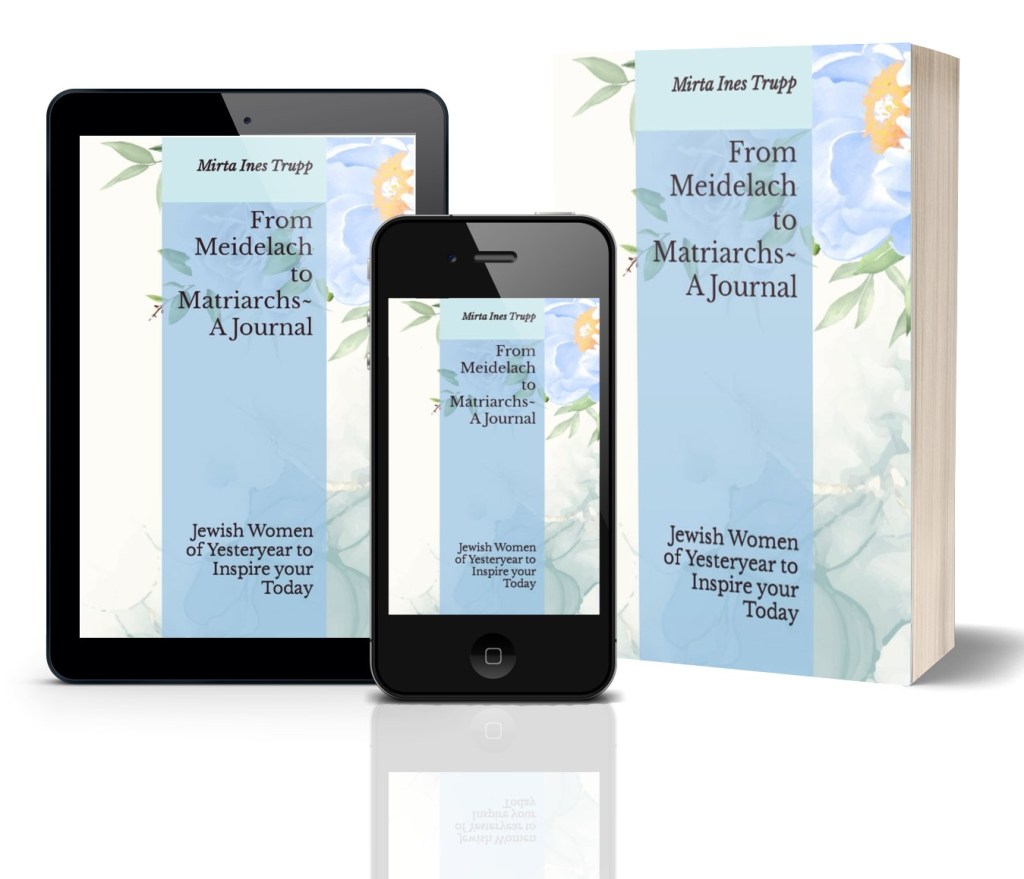
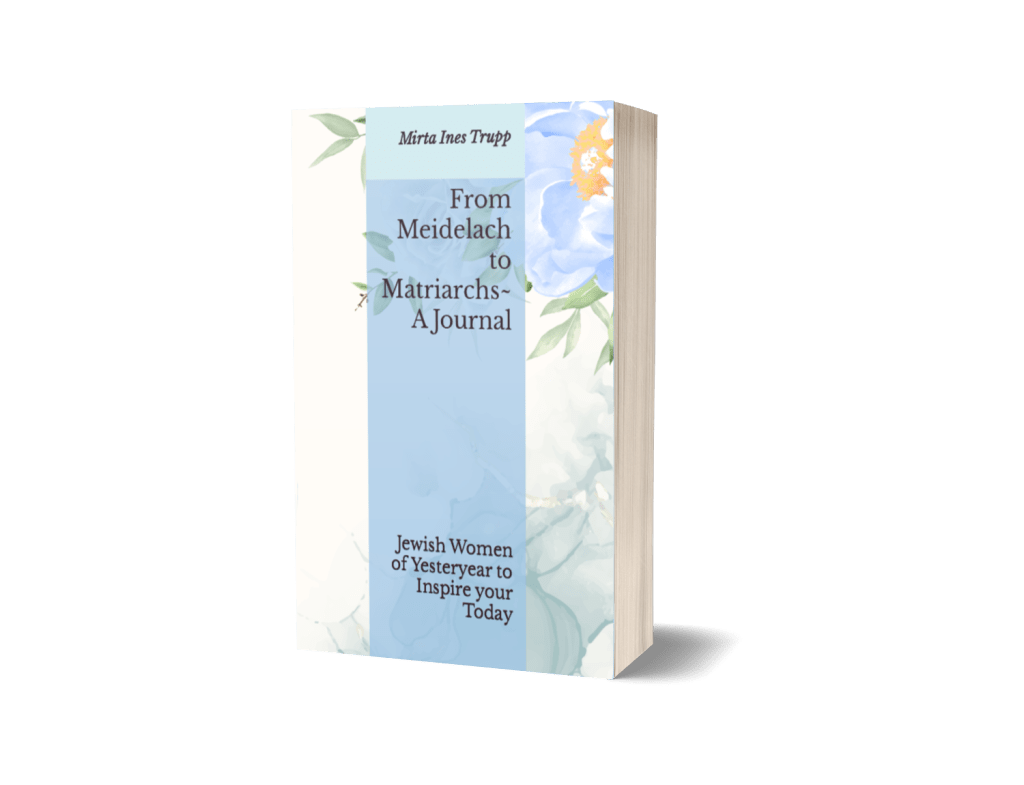
Publication Day is fast approaching! Do you know what to expect when you purchase a copy of “From Meidelach to Matriarchs: A Journal~ Jewish Women of Yesteryear to Inspire your Today” ?
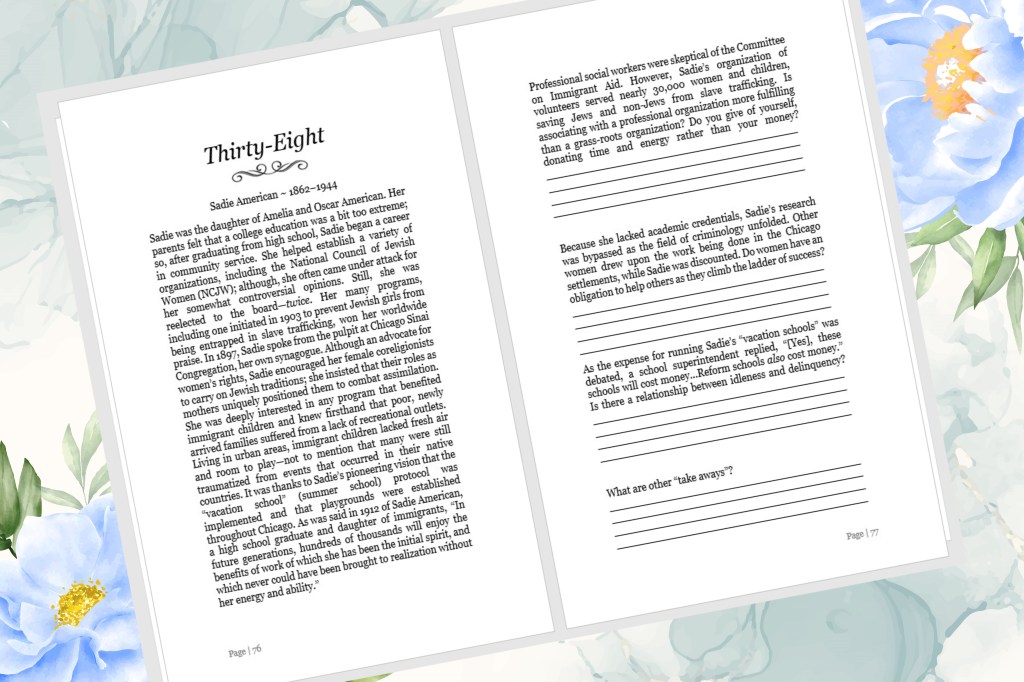
I’ll let you in on the little secret… This book will introduce you to one hundred amazing women. You will learn a bit of their story and then address some thought-provoking questions. Perhaps introduce is the wrong word—let’s just say that I didn’t know some of these ladies. Have you heard of: Sadie American, Tikvah Alper, Anita Brenner, Claudia Douek, Shamsi Hekmat, Miriam Michaelson, or Hannah Sen?
That’s the whole point of this book! Meet one hundred inspiring, courageous, trail-blazing women. Jewish women of our recent past. Jewish women who have opened doors for the rest of us. Jewish women who have spoken up. Jewish women who have put their foot down and said, “I’m not having it.”
Jewish women to reinforce our identity, our pride, our purpose.
Coming soon on Amazon. Look for the release on Thanksgiving Day! With love,
I’ve been writing about my upcoming release for a few weeks now. I’ve called it a Daily Journal, a Daily Devotional, even a Motivational Journal. I talked about expressive writing, introspection, and guidance for your spiritual journey. Are you asking yourself, “So, what is it exactly?”
With Publication Day fast approaching, I thought I’d share an example of just one of the ladies showcased in From Meidelach to Matriarchs: A Journal~ Jewish Women of Yesteryear to Inspire your Today.
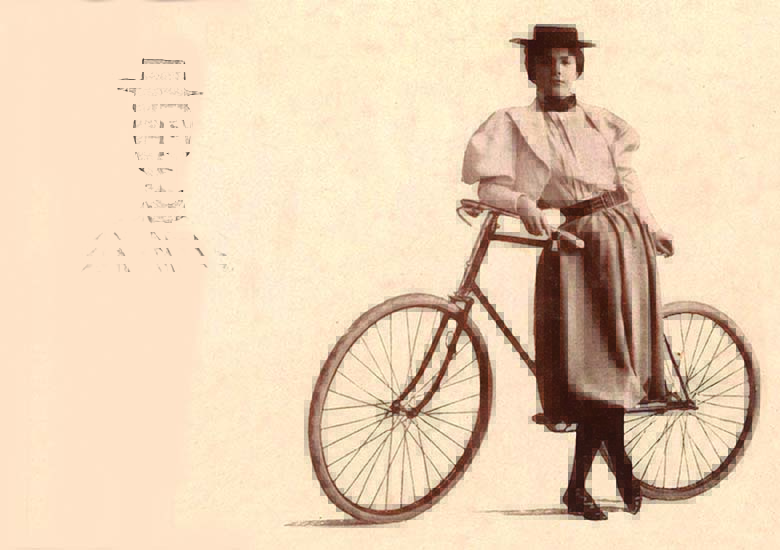
Let me introduce you to Annie “Londonderry” Kopchovsky ~ 1870-1947
Annie was born in Latvia to Beatrice and Levi Cohen. When she was five years old, her family immigrated and settled in Boston. At the age of eighteen, she married Simon Kopchovsky. She had three babies within four years, yet, indomitable Annie held down a job selling advertising space for Boston newspapers. In 1894, two men placed a bet on whether a woman could travel the world alone on a bicycle. Annie was quoted as saying, “I didn’t want to spend my life at home with a baby under my apron every year,” and she submitted her name for consideration.
The mother of three—Annie had no previous cycling experience—was accepted to take on the challenge. The rules required that the contestant finish her journey within fifteen months, start off penniless, and earn $5,000 along the way. Annie put her advertising skills to work. She hung a sign on her bike advertising the Londonderry Lithia Spring Water Company. That is how Annie “Londonderry” was officially born.
Although she sailed for large portions of her journey, she fulfilled the requirements and cycled alone with a pearl revolver for protection. She returned home just under the allotted time to collect the $10,000 prize. In 1895, Annie became the first woman cyclist to travel around the world. Soon after, the family moved to New York. She wrote an article for “New Woman” that stated, “I am a journalist and ‘a new woman,’ if that term means that I believe I can do anything that any man can do.”
Now, just as I have done in the journal, I will share some questions for you to ponder:
Question Number One:
“A Jew must know that when he goes from one place to another, he is not going on his own, but he is being directed from Above.” (The Baal Shem Tov) Was Annie on a mission for G-d? Do you feel the Hand of G-d directing you?
Question Number Two:
A Chabad post postulated that, like a bike, our lives are also made up of multiple parts—most importantly, two parents and G-d. We do are best in the balancing act we call Life. But while we’re enjoying the ride, we must keep in mind that it’s not all our own doing. We must always remember who sustained us, molded us, inspired us to keep on pedaling. Who’s riding in tandem with you?
Question Number Three:
What does Annie’s story teach us about breaking barriers?
Question Number Four:
What are other “take-aways”? In other words, are you inspired to jot down any other thoughts that have come to mind?
So there you have it! An example of what you can expect when you pick up your own copy.
I’ve provided you with one hundred fabulous women. We will meet the meidelach, young women just getting started and trying to figure things out, and the matriarchs who are shouldering the burdens of life and leading by example. I will share a brief snippet of their stories, one woman for the next one hundred days. One hundred opportunities to inspire your thoughts, your creativity, your philanthropy, your Jewish observance or your Jewish identity.
What do you think? Are you interested? Are you up for the challenge?
The last blog post discussed the concept of expressive writing and my hopes for publishing something unique and thought provoking. This project is not a historical fiction based in Russia or Argentina. It’s not a Regency Romance in keeping with my love for Jane Austen. My sixth publication is a daily journal about—and more importantly, for—Jewish women. It will provide a bit of structure and a comfortable environment to reflect upon historical accomplishments, religious identity, moral questions, life cycle events, and so much more.
If you were to search for a daily journal on Amazon, the results would be staggering. As a matter of fact, in recent years the market has been overwhelmed with these so-called low content publications. These books have minimal, or even, no content— just pages of empty lines waiting to be filled with the consumer’s own thoughts. The author provides a quote or a simple phrase as motivation, but that’s about it. I’ve crafted something a bit different.
Technically, my project is considered medium content. There is some repetition in that I have provided space for you, the consumer, to write. However, rather than offering a quote or prayer as inspiration, I have provide a brief synopsis for each of the one hundred women showcased in the journal. After each snippet of history, there are three thoughtfully constructed questions to help you navigate through your thoughts and strengthen your resolve, your point of view—your faith.
Another factor that differentiates my project from other journals is that it’s specifically geared towards Jewish women. Naturally, everyone is welcome to enjoy it and learn from it. I believe any person of faith would find the journal an enlightening and useful tool. That being said, the P.O.V. for this project (Point of View—that’s me trying to show off my author’s vocabulary) is unapologetically Jewish. Jennifer Wulff, Certified Spiritual Director, believes that, “Expressive journaling becomes a sacred and holy space, where you can explore your deepest questions and strengthen the connections between yourself and the Divine.” Now, more than ever, it is important to find our own voice. To look back with pride and to look forward without fear. To be comfortable in our own skin.
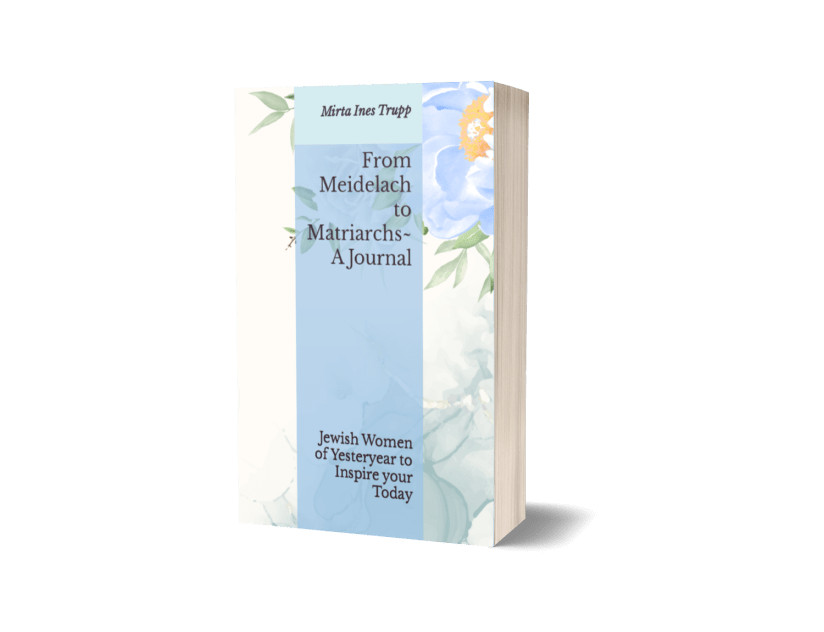
Shoyn! (as my bobe used to say) Enough already! I promised a cover reveal. So, here it is:
Nu? What do you think? Let me know in the comments below. Publishing Day is fast approaching! I look forward to hearing from you soon.
As an emerging author in the realm of Jane Austen Fanfiction (J.A.F.F.), I have introduced Jewish characters thus far into the world of Pride and Prejudice, as well as Persuasion. I purposely didn’t alter the beloved characters created by Austen’s imagination. I mean, of course, that Anglicans remain Anglicans. Instead, I present the reader with a different—more inclusive—makeup of the communities where said characters reside.
Some people may question why I chose this path, rather than the racebending or race-lifting phenomenon we are seeing today in fandom. Transforming the Bennets or Mr. Darcy as Jewish role models would not have satisfied my creativity. Instead, I wanted to personalize the canon with my heritage, so that our collective experiences in that period—known as The Regency—would not go unacknowledged. Some may question why I would want to meddle with works of art in the first place. They are classic novels, loved the world over. The answer is simple: It goes back to the practice of creating a midrash.
I’ve read several editorials and essays that pose an intriguing hypothesis. The authors stipulate that the concept of fanfiction is an accepted and familiar practice in Judaism. And I wholeheartedly agree. It is a truth universally acknowledged that our sages and their faithful students have been reinterpreting biblical texts in the hopes to discover new insights, to make them more accessible, or even to reveal different conclusions. It is in keeping with our traditions to reimagine these sacred passages, to personalize the story with our own life experiences or even to postulate the unknown—the “what-ifs.” These new interpretations or reworkings are known as midrash.
According to penlighten.com, “Fanfiction is basically fiction written by fans or, to put it in a better way, admirers of the original work. Fanfiction writers include much of the same characters and also sometimes choose to add new ones. Fanfiction stories often reflect the writer’s view (in this case, the view of the reader of the original work) as to what should have happened in that particular story.”
The great Ibn Ezra’s opinion on Midrash Aggadah was pretty clear. There are words, and there are meanings. As long as the reader gets the meaning of the text, it doesn’t matter how the message is communicated. Therefore (Finally! I’m getting to my point!) in my next series of blog posts, I mean to provide a ‘drash on Judaic themes in Regency literature by expressing how we can find Judaism in Austen’s work. Hopefully, this will encourage other authors, and readers, to open their minds to this particular genre. And that might have the happy chance of prompting even more discussion!
While Austen was the daughter of an Anglican minister, she didn’t follow the admonishments of clergymen such as James Fordyce, a Presbyterian minister infamous for his Sermons for Young Women. However, her work—or her “pestiferous” novels, as labeled by Fordyce—were characterized by morality. This could be recognized by her characters manners, their sense of duty to society, and their religious affinity. Furthermore, no self-important or indolent clergyman was safe from Austen’s eagle eye and sharp wit.
Without a doubt, she had strong opinions of correct and proper behavior, but Heaven help the poor soul that was caught in her crosshairs! She examined and cross-examined everyday life. Everyone was fair game. Everything was questioned and brought to light.
That is the epitome of Jewish study, is it not?
Throughout Austen fandom it has been said that Jane very likely never met a Jewish person; but her upbringing in the Anglican church would have given her sufficient exposure to Judaic theology and that is enough for me to proceed. Without further ado, ladies and gentlemen, today’s post will deal specifically with Pride and Prejudice.
EISHET CHAYIL~ A Woman of Valor
In Chapter Eight, we find Mr. Darcy, Miss Elizabeth Bennet, Miss Caroline Bingley, Mr. Bingley and Mr. and Mrs. Hurst in the drawing room. Miss Bennet is holding her own against Miss Bingley’s abuse. She is being chided for wishing to read, instead of joining the party at cards. The point of the conversation is to draw Mr. Darcy’s attention to Miss Bennet’s lack of social graces and accomplishments. But Miss Bingley miscalculates in offering her definition of a lady of Quality and Mr. Darcy, indubitably, puts her in her place.
All this she must possess,” added Darcy, “and to all this she must yet add something more substantial, in the improvement of her mind by extensive reading.”
Elizabeth Bennet expresses her amazement at Mr. Darcy’s description of an accomplished woman. To my ears, it all sounded vaguely familiar.
I am no longer surprised at your knowing only six accomplished women. I rather wonder now at your knowing any.”
Where do we find similar commentary within our liturgy?
Take a look at Proverbs, and in particular, Eishet Chayil, A Woman of Valor Who Can Find? Austen’s use and understanding of biblical language seems to be jumping off the page! Without a doubt, Jane Austen was familiar with these words. Her own dear brother made certain to memorialize her using a quote from the same Proverb 31.
She opens her mouth with wisdom; and in her tongue is the law of kindness”
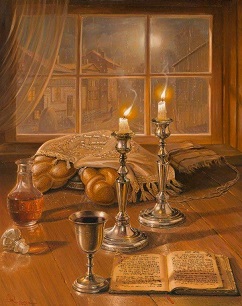
In today’s society, a woman is expected to be a superhero. She must be a good daughter, wife and mother. She must be teacher, nurse, caregiver, friend, homemaker, and provider. As Jewish families gather around the Shabbos table, husbands sing King Solomon’s praise of their Eishet Chayil. I would guess many women, exhausted and possibly overwhelmed, may secretly wonder if they are worthy of such a tribute. Can anyone truly live up to such perfection? I believe that is Elizabeth Bennet’s question. She challenges Mr. Darcy’s remark with great bewilderment.
I never saw such capacity, and taste, and application, and elegance, as you describe united.”
But according to a midrash, King Solomon was not actually describing one perfect woman. He was describing the combine attributes of our matriarchs and biblical heroines. They each brought their own treasured qualities and values. King Solomon did not expect one woman to do it all. Rather, the idea was that each woman should be held in high regard for her own precious and unique gifts.
Mr. Darcy, through the wisdom and creativity of Austen, was able to comprehend “a great deal.” He observed Miss Bennet’s skirts covered “six inches deep in mud…her hair, so untidy, so blowsy!” Instead of censuring her lack of grace, he saw a woman who cared not for her appearance. Her mission that day was to attend her sister, Jane, who was ill and needed nursing. He saw a woman who could not be swayed by the pressure of the group and stood her ground to read a book, rather than to play at cards. We know that Mr. Darcy despises cunning and deception; and in my view, Austen portrayed Elizabeth Bennet —at least in this chapter—as an Eishet Chayil. Her true character is showcased by her good actions and generous spirit.
LASHON HARA~ Gossip
We are introduced to George Wickham, that evil cur, in Chapter Fifteen when he arrives in Meryton to join the militia. He is handsome and amiable. Miss Elizabeth Bennet quickly falls for his charms. Although she prides herself for being astute and a good judge of character, Elizabeth is easy prey for Wickham’s mean-spirted insinuations and outright lies.
Mr. Wickham was therefore at leisure to talk to Elizabeth, and she was very willing to hear him, though what she chiefly wished to hear she could not hope to be told—the history of his acquaintance with Mr. Darcy.
It is not until Chapter Thirty-six, when Elizabeth is presented with a letter from Mr. Darcy, that she comes to terms with her error in judgement. Had she behaved according to the precepts of her faith, her upbringing, and her own good sense, Elizabeth would have refrained from participating in such idle gossip.
She grew absolutely ashamed of herself. Of neither Darcy nor Wickham could she think without feeling she had been blind, partial, prejudiced, absurd.
In allowing herself to listen to Wickham’s diatribe against Mr. Darcy, Elizabeth all-too eagerly solidified her poor impression of an innocent man. And in doing so, Elizabeth causes needless distress to herself, Mr. Darcy, to her family, and to Meryton at large. Shortly after, George Wickham’s evil nature is exposed for all to see when he steals away with Lydia Bennet, the youngest sister. Elizabeth suffers cruelly for the part she played in her family’s undoing, not to mention her own broken heart. Again, I say, this speaks to how much Austen’s Judeo-Christian upbringing influenced her work.
In our tradition, we are commanded to remember how siblings, Miriam and Aaron, listened to gossip about Moses’ private affairs with his wife… “And God heard.” Miriam was considered the instigator of the incident and was severely punished with Zora’at—leprosy. When you take into consideration that brother and sister spoke to Moses privately and apparently with his best interests at heart, it is clear that the sin of lashon hara is grave, indeed. Mr. Wickham and Elizabeth spoke behind Mr. Darcy’s back. A worse affront, to be sure. Elizabeth’s penalty was not of biblical proportions; nevertheless, Austen’s message comes through all the same.
ZELOPHEHAD and his FIVE DAUGHTERS
Several years ago, a clever man suggested that the film, Fiddler on the Roof, shares common themes with Austen’s Pride and Prejudice. In his blog, Robert Lockard brings up the similarities in between the Mother/Father relationship, rejecting a marriage proposal, forbidden love, soul mates, and losing one’s home. Needless to say, the author also mentions that the Bennets have five daughters, as do Tevye and his wife. I’m willing to take it one step further. Could Austen have been thinking of Zelophehad and his five daughters when she plotted out her storyline?
In Numbers 27, we are introduced to a family of five sisters: Mahlah, Noah, Hoglah, Milcah and Tirzah. As their father, Zelophehad, has died, the women are dependent on marriage to secure their future. Just as we see in the Bennet household with regard to the entail of Longbourn, these sisters may not inherit their father’s land. But here is where the two stories differ. Unlike the Bennets, these sisters speak up! They take their claim to Moses, who refers the question to God. And He says:
The plea of Zelophehad’s daughters is just: you should give them a hereditary holding among their father’s kinsmen; transfer their father’s share to them
Numbers 27:7
Of course, if Austen followed the suggestion found in her bible, her plot would have lost its arc. Mr. Darcy— and his ten thousand a year— would have been superfluous! Perish the thought! I still hold fast to my hypothesis and will continue with my examination of Judaic themes in Austen’s novels; only now, I will offer up my own work as an example.
LECH LECHA~ Go forth or Go towards yourself
In my book Celestial Persuasion, Abigail Isaacs finds herself at a crossroads. With few alternatives before her, Abigail chooses to heed her brother’s wishes and leaves home and hearth to make her way to a strange and distant land. I can’t help but connect this with the message that was given to Abram.
Go from your land, from your birthplace and from your father’s house, to the land which I will show you.”
Genesis 12:1
In researching this parsha (this section), I was drawn to a Kabbalistic interpretation of these famous words. Go from your land, becomes Go from your will—set aside your plans, your limited views of what you can become. From your birthplace, is understood to mean, walk away from your emotional self—which, as often is the case, is the product of one’s environment. From your father’s house, refers to the intellect or that which has the authority over one’s feelings and behavior. This interpretation fits my protagonist to a T.
Abigail Isaacs is a woman torn. She had set her eyes on a certain path and dedicated herself to fulfilling that one goal. In the process, Abigail closed the door on love, on the possibility of being hurt, of making mistakes. Tucked away in her observatory, she was safe. She set hard boundaries and felt secure. When her brother seemingly speaks to her from beyond the celestial veil, Abigail—much like Abram—is challenged to go forth and to become what she was always meant to be. I only can add that I hope you pick up a copy of the book and see how the story unfolds.
That’s all for today, my friends, but stay tuned. Next time, we’ll take a look at Emma.
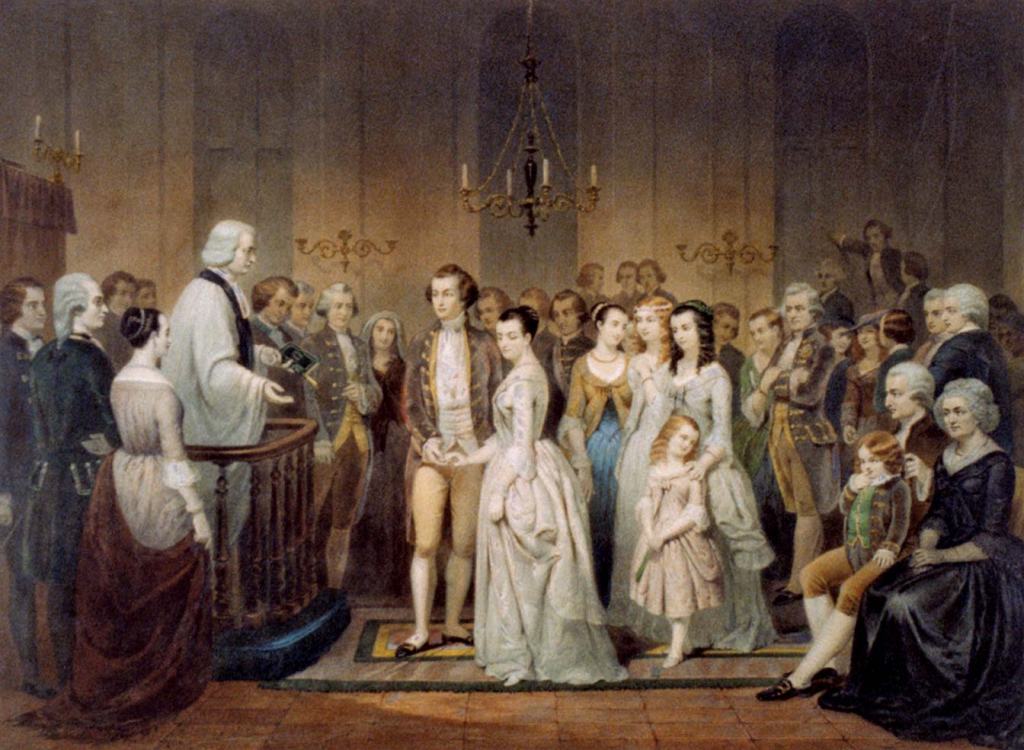
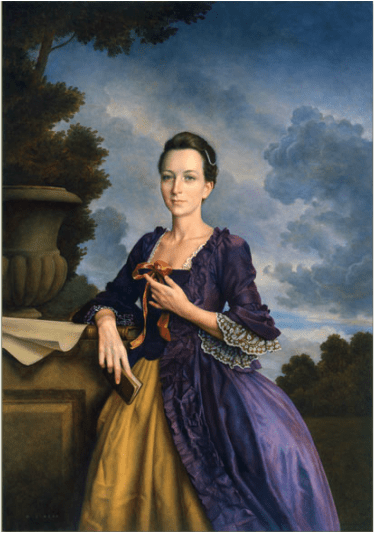
I believe I was in the third grade when I read Martha Washington’s biography. By then, I was an avid reader and historical was my favorite subject. I remember being fascinated by our nation’s First Lady’s history; although technically, this title was not coined until after her death. I learned of her first marriage and how she soon became a young widow with four children.
Now a woman with property and means of support, Martha Dandridge Custis didn’t need to marry for financial reasons; nevertheless, she did remarry. And even though I was only eight years old, the romantic in me was captivated by Martha’s “love match” with the up-and-coming, Colonel George Washington.
Although Martha was attractive and well-liked amongst society, her life was not exactly charmed. Two children, Daniel and Frances, were lost to her before they reached the age of five—most likely from malaria. It did not end there. Her daughter, affectionally called Patsy, suffered from debilitating seizures and died at the age of 17. Martha’s remaining son, John, died a few weeks before his twenty-seventh birthday from a “virulent illness.” But, as the story goes, Mrs. Washington continued on, serving her husband and her country through the Revolutionary War and beyond.
I’ve learned from experience that the greater part of our happiness or misery depends on our disposition and not on our circumstances.”
Martha Washington
As a young wife, Martha Dandridge Custis, moved amongst the upper echelons of Virginia’s society. She had been educated like most young ladies of her sphere, but when she became Mrs. Washington, Martha was in a position to do much good.
Determined and practical, she hosted weekly receptions where people of various backgrounds had the opportunity to exchange ideas and philosophies with the president. It was her intention that these so-called levees be dignified, yet informal so that the general society could take part in building the new nation.
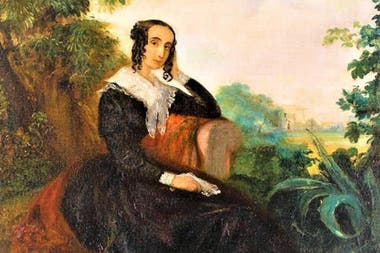
All these memories flooded my mind while I was researching Mariquita Sanchez de Thompson and her famous tertulias or salons. Much like America’s First Lady, Mariquita defined and redefined the roles of what it meant to be a wife, mother, and patriot.
Mariquita was born into an elite family of the Viceroyalty with important ties linking back to Spain. She was of petite stature, but she held her own against her parents and the strict societal rules of the day. Strong-willed and independent by the age of fifteen, she defied her parents and refused to marry the man of their choosing.
It is precious to me to defend my rights.”
After experiencing what one could easily label a Shakespearean rebellion, Mariquita was able to marry as her heart dictated. She and her new husband became linked with public life and supported the cause for freedom. They hosted events to promote patriotism and to encourage free thinking.
Mariquita Sanchez
The Thompsons had five children throughout their marriage. They moved in the highest circles and were beloved amongst their society. It was, therefore, a great tragedy when Martin Thompson died while returning from a diplomatic trip to the United States of America in 1817.
Similar to Martha, Mariquita was a woman of means and didn’t necessarily need a husband for financial support. Nevertheless, in 1820, she remarried. Isn’t it interesting to note that her second husband was a gentleman by the name of Washington. Washington de Mendeville, to be exact.
It appears the Mendeville marriage was not a great success; however, Mariquita did not let that deter her aspirations. She continued her political work and was known for her association with The Patrician Ladies (Damas Patricias).
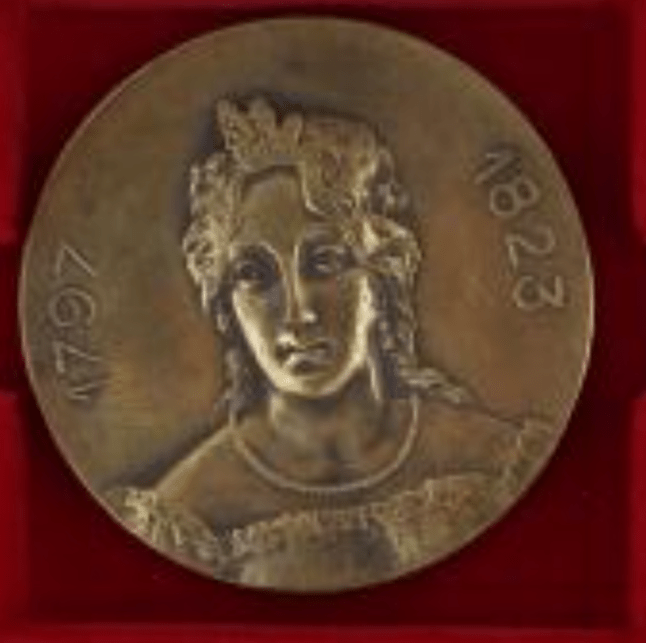
Just a few of the Damas Patricias of Argentina
She advocated for women’s rights. She established schools for women and girls and founded the Sociedad de Beneficencia, to aid the poor and needy. It appears that great minds do think alike— look back at Martha Washington’s quote that speaks to one’s disposition for happiness.
I don’t deny that I enjoy a traditional historical romance. But there has to be more than “boy meets girl.” Whether the storyline is set in a posh drawing room in England or the vast American frontier, I am attracted to the protagonist’s courage, as well as her growth. I cheer for her unwavering steadfastness shown in the face of turmoil and tragedy. Miss Abigail Isaacs in Celestial Persuasion has much in common with the women mentioned in this post. Although she is a fictional character, I hope readers will admire her strength, determination, and heart. I suppose that is the magic of novels. Through the written word, we can identify with impossible scenarios and a variety of character attributes. Their heart aches and struggles resonate with us. Their triumphs spur us on. We may even aspire to be such women~ Women of Valor.
Excerpt from Chapter Four:
The next morning, Abigail lingered in bed with a cup of hot chocolate, dutifully presented by a young maid. She had spent a sleepless night, staring into the black sky and seeking answers from above. She had prayed for guidance and for strength; but such was her grief, not even espying her favored constellation provided Abigail any comfort. Unaccustomed to vacillation, she was impatient with herself; and in truth, not a little overcome by her circumstances. She longed for days of yore when her little family celebrated the Sabbath as one. Though she was quite young, Abigail could yet recall the Friday evening meals, the rituals, and the blessings. Her father beaming with pride would preside over the table and praise his Eishet Chayil, with the ancient words of King Solomon: A Woman of Valor, who can find? Her worth is far beyond rubies. She and Jonathan would not be forgotten. They too would receive a parental blessing before partaking of the evening meal. Thus cossetted and cared for, their physical bodies were nurtured, as well as their spiritual selves. For as their mother would say, on the Sabbath, their souls were lifted and the uncertainties of life were set aside. Now wiping away her tears and throwing off the bed linens, Abigail arose to brave the day.
It was much later, whilst she and Mrs. Frankel were at luncheon, Pearson solemnly approached his lordship’s guests holding a silver salver, which he presented with utmost care. Abigail reached for the note and nodded her gratitude. Making quick work of the missive, she sighed heavily and informed her companion that his lordship would be delayed.
“It seems we are to have a quiet day, Frankie.”
“Perhaps all is how it ought to be, my dear. We will amuse ourselves, or not—we two are quite comfortable with one another—we are not compelled to do otherwise.”
They removed themselves into the drawing room, where a fire was set ablaze for their comfort. Mrs. Frankel kept her thoughts to herself and knitted away at heaven only knew what. Abigail did not question her companion’s efforts and turned to find her own escape in the pages of a book. When the sun finally began its descent, Abigail set down the novel and moved to the window to watch the changes in the sky. She did not hear the knock at the door, or Pearson’s somber salutation; therefore, when a man’s voice bade them a good afternoon, Abigail was quite startled.
“Are you so anxious for the Sabbath to end?”
Sufficiently recovered, Abigail was able to reply. “On the contrary, Mr. Gabay. One wishes to delay the inevitable. I have not yet seen three stars together.”
“We shall both have to remain alert then, and let Mrs. Frankel know when she may begin the prayers for Havdalah.”
“Excellent notion, young man,” Mrs. Frankel declared, and went off to find Mrs. Garrett to gather some spices, wine, and candlesticks for the evening ceremony.
“Forgive me, Miss Isaacs.” Remembering his manners, he performed a gallant bow. “I appear to have arrived early. Has his lordship not returned?”
“We had a missive from Lord Fife. He has been detained and we are awaiting his return just now. You are most welcome to join us, sir.”
“I find you a bit pale. I do hope you are in good health,” said the gentleman.
“Thank you, yes. We have not had an opportunity to be out of doors, and I fear that my mind has been much occupied.”
“I can well imagine.”
“I am not certain that you can, Mr. Gabay.” Abigail grimaced at her severe response but was helpless to muster great civility. “My grief has been sullied with uncertainty; my life has been uprooted and I find that I cannot mourn my brother when my heart is so burdened.”
The gentleman looked upon the young lady and astonished her with a grin. “I have often contemplated the ceremony of Havdalah, have you not?”
She was yet unaccustomed to the gentleman’s wit; and because of this, Abigail made every attempt to keep herself in check. Much as she wanted to condemn his ill-timed levity, her raised brow afforded him the impetus to continue with his discourse.
“The ritual—the symbolism—it challenges our senses,” said he, “as if to awaken us from a pleasant dream. Do you not find it so?”
“Indeed.” Begrudgingly, she accepted the sudden change of topic. “We are told to remember the Sabbath day and keep it holy. I would agree with your assessment, for we are in a dream world from sundown on Friday night until three stars appear the following evening. We are then awakened, as you say, with the ceremony of Havdalah—commanded to mark the separation from that holiness to the mundane.”
“My dear Miss Isaacs, mundane is not the word I would choose. Pray forgive my impertinence; but every week we are instructed to leave behind Perfection—or our concept of what that might be—in order to hurl ourselves, like a star shooting across the sky, into the chaos that is His creation. Into life.”
Raphael Gabay crossed the room and peered through the glass pane at the evening’s sky. Not finding what was required, he continued with his thought. “I ought not risk being thrown out by Pearson—perhaps I should behave in a more gentlemanlike manner—but your countenance assures me that you are, indeed, troubled. And it pains me to see you so.”
Abigail looked at him through her lashes and pondered his sincerity. “Your concern speaks well for your manners, sir, but I doubt very much our short acquaintance allows for such a declaration.”
“On the contrary. I believe my discernment is beyond reproach. Your idyllic life in Devonshire, surrounded by those you loved and the things you know, was your Perfection. But your brother is asking you, seemingly from beyond the celestial veil, to leave that place—not compromise or settle, but to see what else awaits you in the new world.”
“And what of your plans, sir? Does your soldier’s philosophy provide you sufficient cause to quit your home and family?”
“Ah—that was well done, Miss Isaacs. Implementing a defensive tactic in order to fell an opponent is a sound strategy on the battlefield. However, I am only too happy to respond to your enquiry which, of course, lessens the strength of your attack.” Mr. Gabay smiled and made himself comfortable on the divan before continuing. “I am a second son, madam, and have been given a certain freedom to live my life with some abandon. No doubt, I have caused my father some distress having no set course for the future; but try as I might, Miss Isaacs, I have never found my true calling. Therefore, the matter is very simple in my case. I am for Buenos Aires because I believe in this cause and respect the men at the lead. For now, that is enough for me. But I put it to you, Miss Isaacs: what is your destiny?”
Having heard his soliloquy, Abigail could no longer hold on to her vexation. She experienced an epiphany recalling her words to Mrs. Frankel the night in the inn. What was her destiny? If the ancient dictates of Gersonides, Ibn Ezra, and Zacuto were to be believed, it was apparent. Her celestial traits must not go unheeded.
I hope you enjoyed today’s post. There are so many Women of Valor in history. Can you name one or two you admire? Drop me a line and let me know!


















 Mirta Ines Trupp~ Author