Blog

New Post

Author’s Interview with Shirley Reva Vernick

Today, I am happy to welcome Shirley Reva Vernick to the blog.

Vernick is the author of four novels. The Blood Lie is an American Library Association Best Fiction for Young Readers pick and a Sydney Taylor Book Award honoree. Remember Dippy won the Dolly Gray Literature Award from the Council for Exceptional Children. The Black Butterfly is a Junior Library Guild selection.

She is a graduate of Cornell University and an alumna of the Radcliffe Writing Seminars. When not creating stories, she mentors incarcerated individuals with their writing via the Prisoner Express program.

Shirley! That last bit is intriguing all on its own! I am certain that we could spend an hour just talking about your work with the Prisoner Express program. What a mitzvah! But today, we’re here to chat about something altogether different and I’m excited to get started. Let’s begin, shall we? Tell us about your upcoming project.

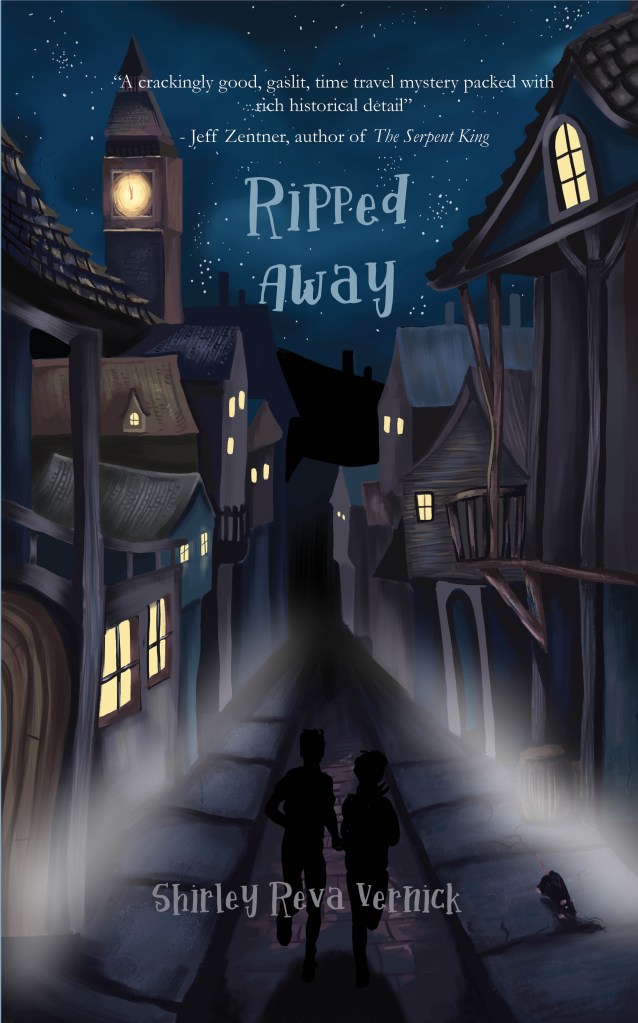
Guest: Thanks for your warm welcome, Mirta! I’m a big fan of your work, and I’m delighted to be here today. My new upper-MG/early-YA novel is Ripped Away (Regal House Publishing, February 8, 2022). This story is based on the experiences of Jewish immigrants to London during the Jack the Ripper spree, when xenophobia ran high.

In Ripped Away, a fortune teller reveals that classmates Abe and Mitzy may be able to save someone’s life…and then she sweeps them to the slums of Victorian London in the middle of the Jack the Ripper spree. To get back home, they’ll have to figure out how the fortune teller’s prophecy is connected to one of history’s most notorious criminal cases. They’ll also have to survive the outpouring of hate toward Jewish refugees that the Ripper murders triggered. 

My purpose in writing Ripped Away is to illuminate this episode in history, as well as to inspire readers to contemplate possible responses to intolerance. National Jewish Book Award-winning author Anne Blankman calls Ripped Away “an engrossing adventure. From the moment Abe and Mitzy are swept back in time to the infamous Jack the Ripper, readers will clamor to find out what happens next.”

Host: I applaud your efforts and motivation for writing this book. Why do you think Jewish Historical Fiction is an important, stand-alone genre?

Guest: Jewish history is incredibly rich—the people, places, philosophies, and so much more. This history is is important not just for contemporary Jews, but for the world, because Jews and their millennia-long experiences have been formative to modern sensibilities, science, ethics, politics, you name it. I believe that Jewish Historical Fiction allows meaningful access to these elements. It also inspires substantive conversations and cross-cultural understanding.

Host: That is very well said. Our history is so much more than what we normally find in school books, novels, and film. Do you remember your first Jewish fiction that was non-Holocaust related?

Guest: Yes, the stories of Isaac Bashevis Singer. I still go back and reread his timeless tales.

Host: One of Singer’s quotes states:  “The greatness of art is not to find what is common but what is unique.” What did you discover that was unique, while researching Jack the Ripper and the Jewish community in the Victorian era? Were you moved or surprised by your findings?

Guest: Yes and yes! I was anguished to learn that London’s Jewish refugees, who had endured such hardship in Eastern Europe (think pogroms), finally got to a place that seemed reasonably safe, only to have the antisemitic attacks happen all over again. I was sadly surprised to learn that the city of London engaged in the antisemitic hysteria—for instance, examining the knives at kosher slaughterhouses.

Host: In researching your book, I found some interesting information on the protagonists. You state that these modern-day youngsters, Abe and Mitzy, are learning to deal with “formative issues” such as acceptance, hate, sacrifice, crushes, and the meaning of friendship. Can you pick a favorite amongst these two? Which of your characters resonate with you most? 

Guest: It’s hard to pick a favorite “child”! But if pressed, I would say that Abe resonates with me most. He is a social outsider in the way I often felt as a youngster, the nerdy, unathletic, insecure kind. The kind who wants friends but doesn’t quite know how to go about it. And, of course, he’s a writer.

Host: I understand being an outsider! My grandparents were among the Russian Jewish immigrants in Argentina during the riots and pogroms of January 1919—the so-called “Tragic Week.” Because of hateful rumors and insinuations, immigrant communities were attacked—none more so than the rusos.

In Ripped Away, you showcase how rumors about Jack the Ripper spread throughout London and how the Jewish community was implicated out of pure antisemitism. In today’s society, what with the advent of social media, rumors and false information are running rampant. Young people, in particular, are targeted. Their ability to think for themselves and come to their own conclusions seems to diminish while they spend countless hours scrolling online. How do Abe and Mitzy fare in Victorian London, where word of mouth spreads propaganda and false truths?

Guest: Abe, Mitzy and their new families must brave the police searches, riots and vitriol triggered by the antisemitic lies in Victorian London. I sometimes wonder whether they would have fared better or worse if social media had been available then. On the one hand, false propaganda can spread much more quickly and pervasively online. On the other hand, I’d like to believe that the voice of reason, of truth, might also be heard faster and more broadly with modern technology.

Host: Your bio is impressive, Shirley. How long have you been writing? When did you first consider yourself an author?

Guest: As a preschooler, I used to scribble on a scrap of paper and ask my mother what I’d written. Genius that she was, she read back “my” pithy prose or imagery-rich poetry. I figured, hey, I’m a writer already! Yes, I began early.

Host: One never knows when the writing bug will bite! I want to thank you once again for stopping by today. Tell us, where can we learn more about you and your work?

Guest: Thank you, Mirta! I really enjoyed this conversation and your thoughtful questions. Here are relevant links:

Author website: https://www.shirleyrevavernick.com

Book trailer: https://www.youtube.com/watch?v=PS9LNn4w2qc

Amazon link: https://www.amazon.com/Ripped-Away-Shirley-Reva-Vernick/dp/1646032039/

New Post

Yiddishkeyt Porteño—Jewish Argentina

The High Holidays are upon us. In a few days, we will gather to hear the shofar blow. We will contemplate the year we are leaving behind (Baruch Hashem!) and the year that is unfolding. May it be a sweet and healthy new year for all!

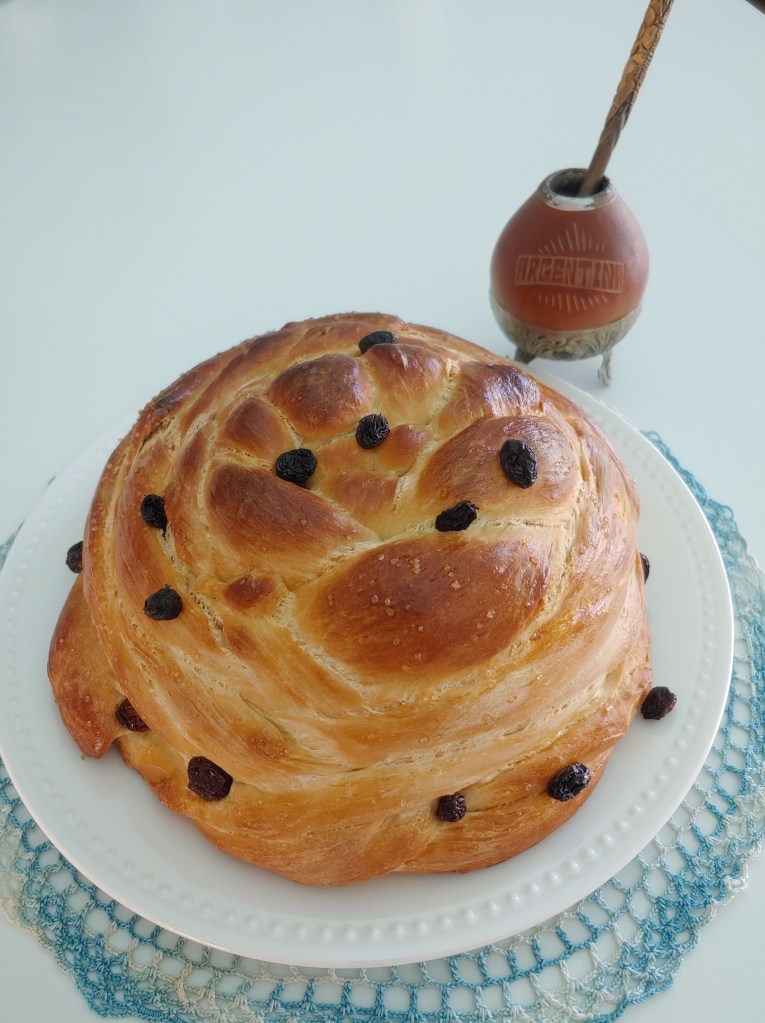
Today, I have been busy baking challah— punching out air bubbles from the soft dough, smoothing the edges, and rolling out long ropes that will form the traditional crown for Rosh Hashanah. Baking my own challah is a new talent I’ve incorporated into my repertoire (thank you @JamieGeller). I’m more known for my sweet brisket and potato knishes. I also am proud of my honey lekach and apple strudel. So many traditions! My parents were not “religious,” but they passed down enough yiddishkeyt to impress upon me the importance of staying connected to our roots.

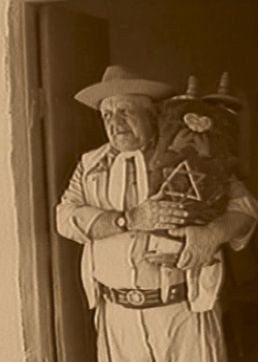
My heritage—like so many of us—is a mishmash of cultures. My grandparents were children when they immigrated from Imperial Russia to Argentina. And like so many other rusos, their food, their music, and their prayers were influenced by the local community. But these Argentine Jews were resilient! Their impact on society can’t be denied. Their influence is still felt today.

So, what is yiddishkeyt? Look up the word on the Internet. The first definition is simply: “Jewishness.” To me, the word is about the phenomenon of taking something ordinary or commonplace and incorporating a bit Jewish quality or custom into the mix. OK, so now you ask: what does porteño mean? This refers to a person from the port city of Buenos Aires, but it also can be a local tradition or cultural way of doing things. I could also write about doing a gauchada or making something criollo, but that’s another post. The point is that immigrants from various nations brought their ingenuity to their new country. For example, Italian food has long dominated Argentine cuisine. Another Italian creation is fileteado, an art form that has become synonymous with Buenos Aires (see example below). Suffice it to say that Argentines crave their Argentinismos, just like Jews crave yiddishkeit. The rusos took their Ashkenazi faith, culture, literature, theater, and film, gave them a local flair, and yiddishkeyt porteño was born!

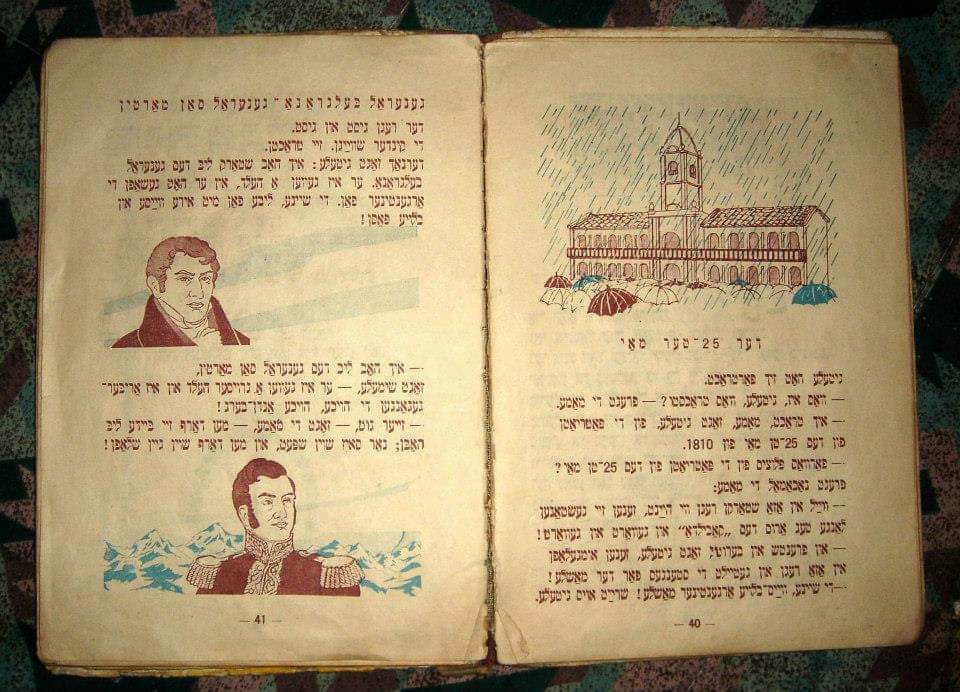
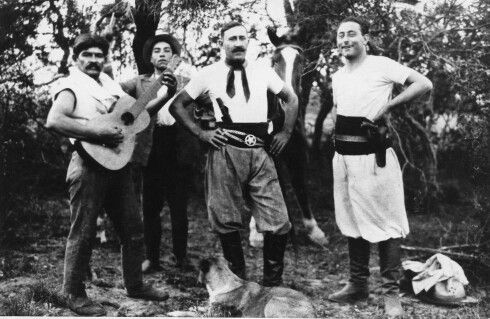
Immigrants fleeing pogroms and persecution arrived to their new country and were soon expected to assimilate to their adoptive land. They learned to drink mate and to sing the songs of the pampas.

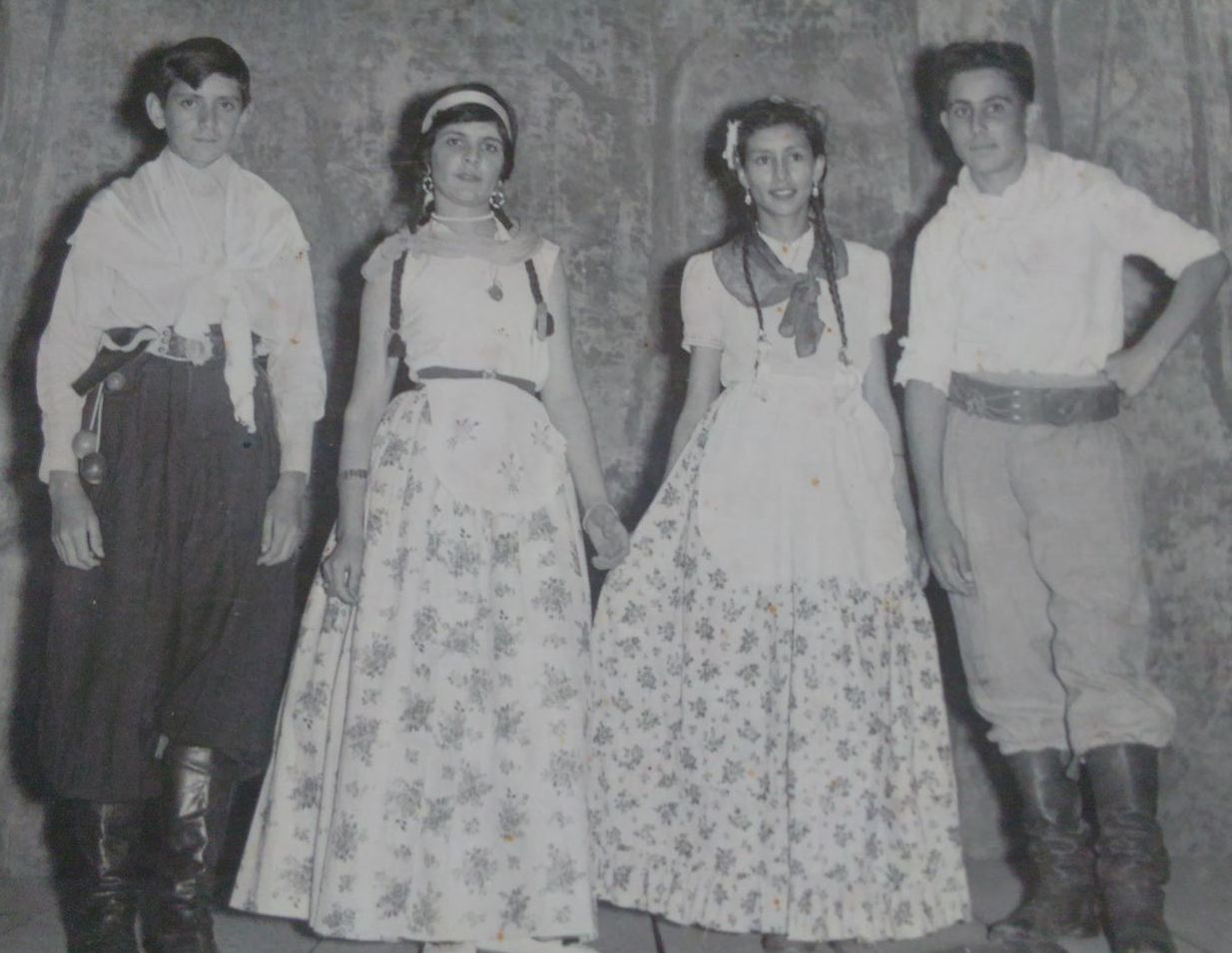
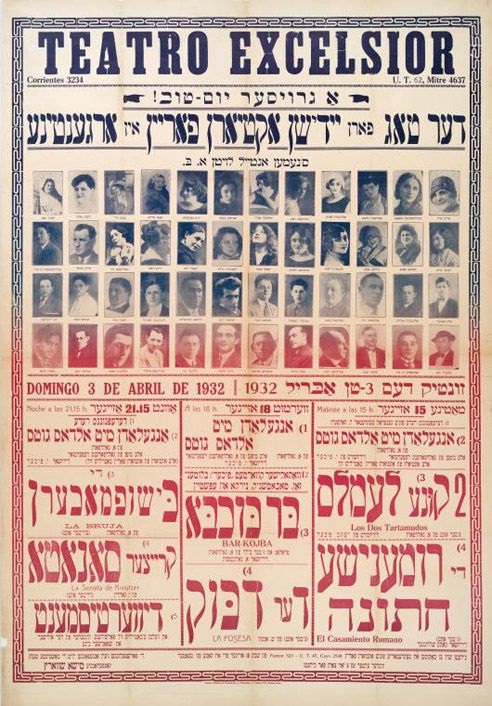
They were taught Argentine history and the national anthem. And when they slowly began to acclimate, these Jewish gauchos built schools, hospitals and charitable organizations. They printed newspapers, wrote novels, and staged theatrical performances.

They learned to sow wheat and corn and sunflowers too —it reminded them of their homeland. And for their efforts, they reaped doctors, lawyers, teachers and philosophers. They watched their children grow strong amongst the fertile land and new-found freedom, and waved them off as they left the inner provinces for Buenos Aires.

As I separate a piece of challah and say the appropriate prayers, it fills me with a sense of connection and a sense of peace. I think of those that came before me and know that I stand on the shoulders of some remarkable people. My ancestors brought knishes and kugel and sweet wine to make kiddush on the pampas. They wished their neighbors a gut shabbos and buen provecho. I wish you the same as well. Until next time…

Author's Interview

Author’s Interview with Valerie Estelle Frankel

It’s been a while since I’ve posted an author’s interview. I’m excited to spend some time with this powerhouse, Valerie Estelle Frankel. She has has won a Dream Realm Award, an Indie Excellence Award, and a USA Book News National Best Book Award for her Henry Potter parodies. Frankel has written over 80 books on pop culture, including Hunting for Meaning in The Mandalorian; Inside the Captain Marvel Film; Star Wars Meets the Eras of Feminism; and Who Tells Your Story? History, Pop Culture, and Hidden Meanings in the Musical Phenomenon Hamilton.

author, Valerie Estelle Frankel

Many of her books focus on women’s roles in fiction, from her heroine’s journey guides From Girl to Goddess and Buffy and the Heroine’s Journey to books like Superheroines and the Epic Journey and The Many Faces of Katniss Everdeen. Her Chelm for the Holidays (2019) was a PJ Library book, and now she’s the editor of Jewish Science Fiction and Fantasy, publishing an academic series for Lexington Press. Once a lecturer at San Jose State University, she now teaches at Mission College and San Jose City College and speaks often at conferences. You can explore her research at http://www.vefrankel.com

Impressed yet? I know I am! Let’s get on with the interview. It is sure to be fascinating!

Host: Welcome to my blog, Valerie. I am so happy to get to know you.

Guest: Hi, thrilled to be here. We need more Jewish book sites—there’s so much amazing fiction and scholarship out there!

Host: I couldn’t agree more! A few years ago, I dabbled in writing a bit of Jewish Historical Fantasy with Becoming Malka. By incorporating a mythical (and mystical) tarot card, I transported my modern-day protagonist to Imperial Russia at the beginning of the 20th century. And in my latest novel, a Jewish Historical Romance entitled Celestial Persuasion, I introduced Judaism’s ancient connection with Astronomy and Astrology. Why do you think it is important to emphasis the Jewish factor in these genres?

Guest: Jewish history is quite distinct from the history of the local country. Sadly, the main reason is that of pogroms and other persecution (I’m reminded of the moment in The Big Bang Theory in which actress Mayim Bialik tells the cute goy girl that it’s actually not an adorable story that she and her Jewish fiancé come from neighboring Polish villages). I think every Jew I’ve met identifies as Ashkenazi or Sephardic before having ancestry from a particular country (Israel being the exception here). You can really see it in the languages, the food, the culture beyond the religion.

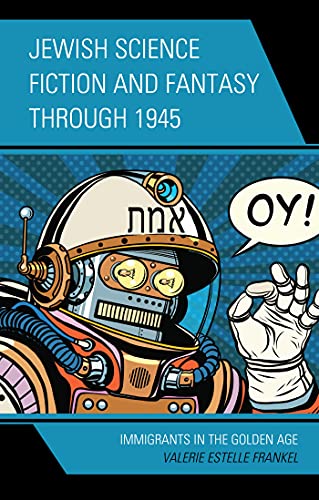
Host: In the introduction of your latest book, Jewish Science Fiction and Fantasy through 1945, you state that “Science has always been linked to Judaism.”  What do you find so intriguing about this subject matter?

Guest: I see so many people insisting they have to choose—that total faith in God means ignoring science, facts, reality itself. One thing I’ve always about Judaism is that such blind denial isn’t required. We’re a religion that invites argument, debate, even protest. And you mentioned the astronomy and astrology (at the time a legitimate science, so it goes)—exactly! While the Arab world is known for mathematics and early science, Jews also heavily participated in medicine, invention, and translation, especially partnered with them in the Golden Age of Spain.

Of course, the other fascinating, largely unknown story (if we fast-forward all the way to 1920s America) is that science fiction as we know it was really created by Jews. After Frankenstein, the genre was popularized by Verne and Wells, and then authors like Robert E. Howard, but they were all writing pulps—a focus on adventure in which the science didn’t have to be even a little plausible. Hugo Gernsback, a Jewish-Belgian immigrant in New York, started the first real science fiction magazine, Amazing Stories, which emphasized the plausible inventions being developed all around him. In fact, his electronics-based short story called “Ralph 124C 41+,” predicted microfilm, vending machines, tape recorders, synthetic fibers, the jukebox, the television, satellites, and spaceflight and even included a blueprint for radar. His authors, many young Jewish New Yorkers, spun off to edit more magazines. They also founded the first fan clubs, fan zines, and conventions. And the first inter-fandom battles, but that’s another story…

Host: Did they invent superheroes too?

Guest: There was a lot of crossover. The brand-new industries of American film, science fiction, and comic books all were willing to hire Jews, at a time when most “serious” professions weren’t. So Jews started working in them all, and, along with Sci-Fi and the comic book itself, invented almost all the well-known superheroes. Superman and Captain America were fighting Hitler on front covers. Likewise, Batman (plus Catwoman, Joker, Robin and the rest), Sheena, Black Canary, and Green Lantern were all invented by Jews—everyone but Wonder Woman.  (All the Avengers, the X-Men, Fantastic Four, Spider-Man, Daredevil, and Black Panther were invented by Jews as well, but not for a few more decades.) Overt Judaism was rare, but they were all fighting for social justice.

Host: The idea that these Jewish artists were crafting stories based on our history and experiences is riveting. It has always appeared to me that, here in America, we tend to focus on two narratives: The Holocaust and Fiddler on the Roof-type themes. There is so much more to discuss! For example, I have always been curious to learn about the lives of medieval Jews. What has your research taught you about Jewish customs and traditions during these times relative to your subject matter?

Guest: I know what you mean! Publishers are out there begging for diverse Jewish stories about the modern experience. Or history besides 1939 and 1492. One fascinating area few have heard of is that the Khazars, Turkish horsemen living between the eastern Crimea and the northern Caucasus, converted as an entire country to Judaism. From 650 to 965 CE, the Khazars balanced life between the Byzantine Empire and the Arabic lands as mighty warriors who wrote in Hebrew and followed rabbinic beliefs.

There are a few history books as one might expect. But there’s also an Indiana-Jonesstyle lost world novel–The Wind of the Khazars by Marek Halter—and a Michael Chabon sword and, er, sword (not any sorcery that I recall) novel called Gentlemen of the Road. The Book of Esther is alt-history as it sets the Khazar empire in the 1940s and sends a young warrior woman out to save her people. Most fascinating was Yugoslavian author Milorad Pavic’s Dictionary of the Khazars, which tells a postmodern triple story from the Jewish, Christian, and Muslim perspectives. Dreams, folktales, and letter-magic are woven in to give it a magical realism flavor too. So that’s just one moment in history that fantasy writers have decided to share in so many colorful ways.

Host: Magical realism seems to play an important role in Jewish literature. Is that different from Fantasy?

Guest: Well, there’s the culture—European-American fantasy generally has a big reason magic works—you have to cross over to Oz, or the wizards have been hiding at Hogwarts, or we’re in the ancient past of Middle-Earth, or you find a magic ring or leprechaun (or a magic tallit in the lovely children’s book The Blue Thread). It’s a shocking moment. By contrast, in magical realism, a woman starts crying and then cries so hard the house is flooded and they have to move—magic is treated as everyday and dealt with practically. It’s largely seen in South America and Israel (who have developed their own flavor of fantasy) but some European countries have it too. It’s often marketed as general fiction in America.

Host: The Wizard of Oz isn’t considered a Jewish story per se, or is it?

Guest: Hmm. There, I’ve got nothing (it is a very American Midwestern fantasy, arguably based on politics of the time). I know the composer of “Somewhere over the Rainbow” was Jewish, and I’ve seen Jewish analysis of the tune and message. Lots of Jews blend the story into their Purim shpiel and the heroine of The Devil’s Arithmetic film tells the story in the camps. Oh, and now I’ve looked up The Secret Jewish History of the Wizard of Oz (ah, Forward…), it adds that in the film the lion was doing Borsht Belt shtick and they had a few more of those comedians lined up for the wizard. So there we go. I still like Mel Brooks’ version in Spaceballs.

Host: I once heard—and was surprised to find— the J.R.R. Tolkien based his elves on the Jewish people and even incorporated stories from the midrashim into his narrative. I believe you speak to this in your chapter on British fantasy. I found that to be very interesting, as Tolkien is not, himself, Jewish. While doing your research for this book, what most moved you? Did anything come as a surprise?

Guest: The Khazars were cool (okay, they’ll be in Book Two I think). The biggest thing was what a huge genre this is. I’ve written a LOT of analysis (80 books worth) on Buffy, Star Wars, Hamilton, Game of Thrones, that stuff. I thought it would be fun to discuss Jewish themes in Sci-Fi and talk about my favorite authors like Peter S. Beagle and Jane Yolen. I imagined I’d pop this book out like the others in a month or two. Now it’s been years and the project is currently about 500,000 words (or in laypeople’s terms, 5 books) and it’s spun off into multiple anthologies and books by other authors too. Oh, and I’ve been made an editor of Jewish Science Fiction and Fantasy for Lexington Press in order to make a home for this colossal thing. At this point, this, not the TV stuff or the heroine’s journey, may end up being my legacy.

When I started, I was surprised no one had written such a book, just some essays and an excellent bibliography. Now I know why…

Host: There is some controversy surrounding the Khazars. I’d be interested to see your take on the history in Book Two! Looking again at the introduction of Jewish Science Fiction and Fantasy through 1945, I was happy to see that you dedicated some time to discuss Latin America. When my eyes spotted the word, Argentina, I was immediately drawn in! As I was born there, Jewish Argentina is a passion of mine.  Tell us what you learned, for example, about Borges, the Sephardim and kabbalah.

Guest: Borges, like Tolkien, was an admirer of Jews and wrote about them respectfully in his fiction. The questioning of religion was a real draw for him, a skeptic. Also, he thought of Jews and Latin Americans both as people of dual cultures forced to find balance. He was fascinated with kabbalah, and most of his stories have some kind of self-referential writing on the power of words and language. Short stories “The Secret Mir­a­cle,” “Baruch Spin­oza,” ​“The Golem,” and “Death and the Com­pass” all address Judaism. “The Library of Babel” and “The God’s Script” were also fascinating.

South American Judaism doesn’t get a lot of press (until lately— Professor Ilan Stavans in particular is filling the shelves with collected fiction and scholarship). A few famously were the conversos who fled Spain. However, the waves of Ashkenazi immigration to the US in the late nineteenth century were paralleled in South America, and of course by the thirties, Jews were heading anywhere that would take them in. Consequently, there’s Jewish immigrant fiction that blends folklore of the old country and the new to make something unique.  I’ve been searching up all the available collections…and really enjoying the treasure hunt side of all this.

Host: I consider myself a Trekkie—maybe not as knowledgeable as most devotees, but still a great fan. Mr. Spock, that venerated Vulcan, seemed to mirror Judaic philosophies and traditions.  His “Live Long and Prosper” greeting, accompanied by the famous hand gesture, had us all kvelling! The traditional Vulcan response is to say, “Peace and Long Life.” It sounds very much like saying: Shalom Alecheim (Peace be Upon you) with its response: Alecheim Shalom (Unto you Peace).

It is fun to see one’s culture incorporated in literature and other media. How else has Judaism interacted with Science Fiction and Fantasy in the modern age?

Guest: Oh yeah, when people at parties ask me, “So what is Jewish science fiction,” I just give the Vulcan salute. Even non-fans get that one. And did you know that when Nimoy directed Star Trek III, he modeled Vulcan on Israel? (Star Trek, likewise, will be in Book Two. But there’s quite a lot to say about it.)

When I think of TV and the big franchises, I think of overt Jewish themes vs tokenism. Characters like Willow on Buffy identify as Jewish but never do anything with it. More recently, the Arrowverse has a few characters of that type. There’s also the “golem episode” in many shows, which features guest Jewish characters but doesn’t affect the big plot.

By contrast, Babylon 5 has Lt. Commander Ivanova sit shiva with Theodore Bikel and light Hannukah candles in a symbolic moment. And Neil Gaiman wrote an episode based on the eruv concept. Another fascinating one is the big metaphor behind Doctor Who—a bookish, pacifist wanderer exiled from his home, created by a Jewish immigrant. Another series more about a Jewish outlook than Jewish characters is the original Twilight Zone—which was condemning Nazis in a decade when America just didn’t want to discuss them. And yes, Rod Serling was Jewish. In subtly Jewish-flavored YA, Shadowhunters and Shadow & Bone just became TV shows. Of course, for the most Jewish-fantasy TV ever, check out the Israeli vampire show Juda, which fully explores all the theology and how the magic would fit into Jewish law and practice. There you can really feel the big questions.   

Host: Are you working on Book Two now?

Guest: Oof, two, three, and four (maybe five) at once. Plus editing some anthologies of scholarly essays on Jewish SF (and I still have room! Everyone, contact me if you want to write one!) And editing others’ books for the series (one all about Goliath adaptations is coming next). And when I told Kar-Ben, the Jewish kiddie publisher who did my Chelm for the Holidays chapter book, about all this, they suggested I write a kiddie scifi story for each holiday. So I’m hoping that collection will come out soon too. Also my book on The Villain’s Journey will be out in September—which has nothing to do with any of this. And an academic anthology on Bridgerton. Phew. Clearly, I keep busy. I also teach.

Host: I am flabbergasted at the amount of work you put out! And as a fan of Regency, your academic anthology on Bridgerton caught my eye. That series has also sparked some controversy, especially in Jane Austen fandom. Valerie, thanks so much for stopping by today and sharing your passion. What would you recommend for fans of Jewish science fiction?

Guest: Thank you too—this has been great. As for the message, read! With Own Voices children’s and YA books I’ve been seeing a lot as Jews are encouraged to share their backgrounds. There’s so much great stuff—the bibliography has more than I ever would have guessed. (At the end of the bibliography is a video of a panel I did on Jewish SF, by the way, if you’d like specific recommendations). And if you’d like to contact me, I’m happy to chat about all this. Finally, to add the gratuitous author plug, all my books are on Amazon. Happy Jewish adventuring!

New Post

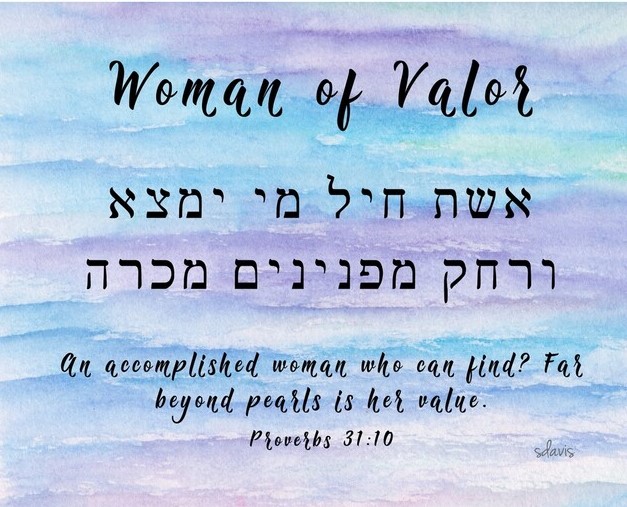
Women of Valor

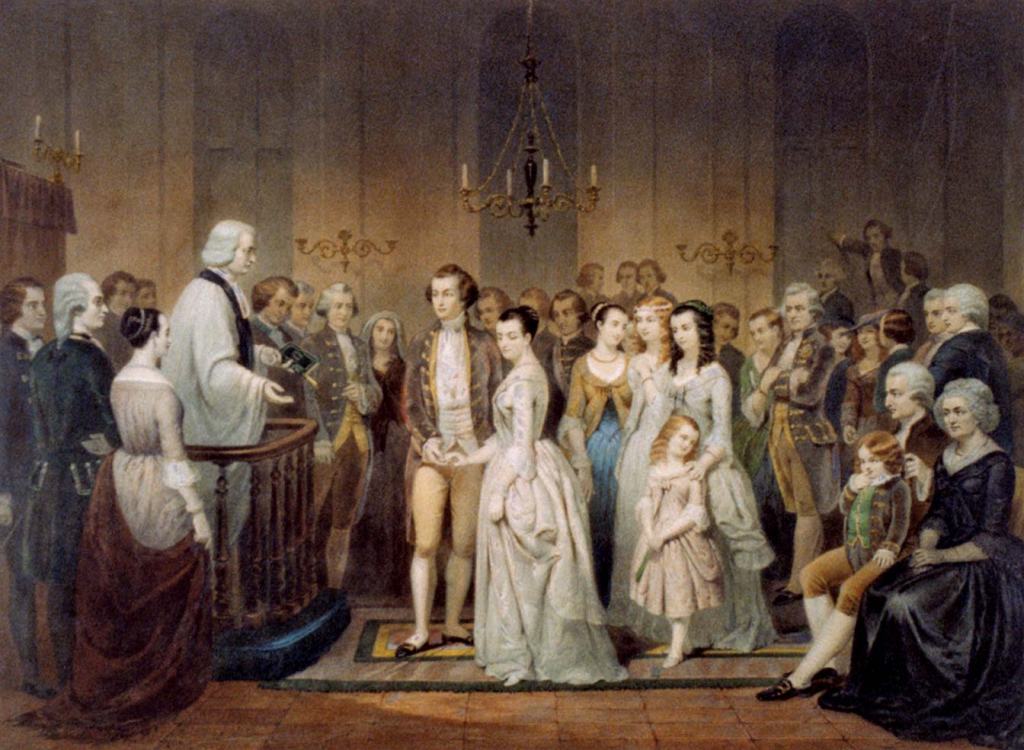
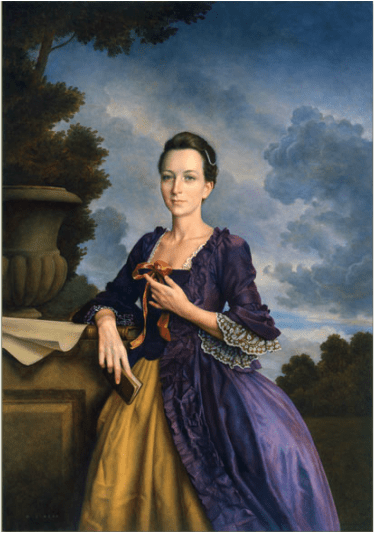
I believe I was in the third grade when I read Martha Washington’s biography. By then, I was an avid reader and historical was my favorite subject. I remember being fascinated by our nation’s First Lady’s history; although technically, this title was not coined until after her death. I learned of her first marriage and how she soon became a young widow with four children.

Now a woman with property and means of support, Martha Dandridge Custis didn’t need to marry for financial reasons; nevertheless, she did remarry. And even though I was only eight years old, the romantic in me was captivated by Martha’s “love match” with the up-and-coming, Colonel George Washington.

Although Martha was attractive and well-liked amongst society, her life was not exactly charmed. Two children, Daniel and Frances, were lost to her before they reached the age of five—most likely from malaria. It did not end there. Her daughter, affectionally called Patsy, suffered from debilitating seizures and died at the age of 17. Martha’s remaining son, John, died a few weeks before his twenty-seventh birthday from a “virulent illness.” But, as the story goes, Mrs. Washington continued on, serving her husband and her country through the Revolutionary War and beyond.

I’ve learned from experience that the greater part of our happiness or misery depends on our disposition and not on our circumstances.”

Martha Washington

As a young wife, Martha Dandridge Custis, moved amongst the upper echelons of Virginia’s society. She had been educated like most young ladies of her sphere, but when she became Mrs. Washington, Martha was in a position to do much good.

Determined and practical, she hosted weekly receptions where people of various backgrounds had the opportunity to exchange ideas and philosophies with the president. It was her intention that these so-called levees be dignified, yet informal so that the general society could take part in building the new nation.

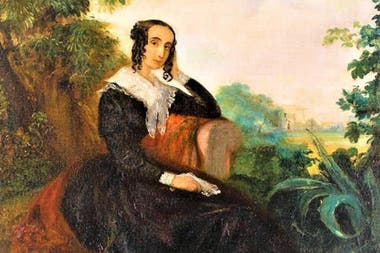
All these memories flooded my mind while I was researching Mariquita Sanchez de Thompson and her famous tertulias or salons. Much like America’s First Lady, Mariquita defined and redefined the roles of what it meant to be a wife, mother, and patriot.

Mariquita was born into an elite family of the Viceroyalty with important ties linking back to Spain. She was of petite stature, but she held her own against her parents and the strict societal rules of the day. Strong-willed and independent by the age of fifteen, she defied her parents and refused to marry the man of their choosing.

It is precious to me to defend my rights.”

After experiencing what one could easily label a Shakespearean rebellion, Mariquita was able to marry as her heart dictated. She and her new husband became linked with public life and supported the cause for freedom. They hosted events to promote patriotism and to encourage free thinking.

Mariquita Sanchez

The Thompsons had five children throughout their marriage. They moved in the highest circles and were beloved amongst their society. It was, therefore, a great tragedy when Martin Thompson died while returning from a diplomatic trip to the United States of America in 1817.

Similar to Martha, Mariquita was a woman of means and didn’t necessarily need a husband for financial support. Nevertheless, in 1820, she remarried. Isn’t it interesting to note that her second husband was a gentleman by the name of Washington. Washington de Mendeville, to be exact.

It appears the Mendeville marriage was not a great success; however, Mariquita did not let that deter her aspirations. She continued her political work and was known for her association with The Patrician Ladies (Damas Patricias).

She advocated for women’s rights. She established schools for women and girls and founded the Sociedad de Beneficencia, to aid the poor and needy. It appears that great minds do think alike— look back at Martha Washington’s quote that speaks to one’s disposition for happiness.

I don’t deny that I enjoy a traditional historical romance. But there has to be more than “boy meets girl.” Whether the storyline is set in a posh drawing room in England or the vast American frontier, I am attracted to the protagonist’s courage, as well as her growth. I cheer for her unwavering steadfastness shown in the face of turmoil and tragedy. Miss Abigail Isaacs in Celestial Persuasion has much in common with the women mentioned in this post. Although she is a fictional character, I hope readers will admire her strength, determination, and heart. I suppose that is the magic of novels. Through the written word, we can identify with impossible scenarios and a variety of character attributes. Their heart aches and struggles resonate with us. Their triumphs spur us on. We may even aspire to be such women~ Women of Valor.


Excerpt from Chapter Four:

The next morning, Abigail lingered in bed with a cup of hot chocolate, dutifully presented by a young maid. She had spent a sleepless night, staring into the black sky and seeking answers from above. She had prayed for guidance and for strength; but such was her grief, not even espying her favored constellation provided Abigail any comfort. Unaccustomed to vacillation, she was impatient with herself; and in truth, not a little overcome by her circumstances. She longed for days of yore when her little family celebrated the Sabbath as one. Though she was quite young, Abigail could yet recall the Friday evening meals, the rituals, and the blessings. Her father beaming with pride would preside over the table and praise his Eishet Chayil, with the ancient words of King Solomon: A Woman of Valor, who can find? Her worth is far beyond rubies. She and Jonathan would not be forgotten. They too would receive a parental blessing before partaking of the evening meal. Thus cossetted and cared for, their physical bodies were nurtured, as well as their spiritual selves. For as their mother would say, on the Sabbath, their souls were lifted and the uncertainties of life were set aside. Now wiping away her tears and throwing off the bed linens, Abigail arose to brave the day.

It was much later, whilst she and Mrs. Frankel were at luncheon, Pearson solemnly approached his lordship’s guests holding a silver salver, which he presented with utmost care. Abigail reached for the note and nodded her gratitude. Making quick work of the missive, she sighed heavily and informed her companion that his lordship would be delayed.

“It seems we are to have a quiet day, Frankie.”

“Perhaps all is how it ought to be, my dear. We will amuse ourselves, or not—we two are quite comfortable with one another—we are not compelled to do otherwise.”

They removed themselves into the drawing room, where a fire was set ablaze for their comfort. Mrs. Frankel kept her thoughts to herself and knitted away at heaven only knew what. Abigail did not question her companion’s efforts and turned to find her own escape in the pages of a book. When the sun finally began its descent, Abigail set down the novel and moved to the window to watch the changes in the sky. She did not hear the knock at the door, or Pearson’s somber salutation; therefore, when a man’s voice bade them a good afternoon, Abigail was quite startled.

“Are you so anxious for the Sabbath to end?”

Sufficiently recovered, Abigail was able to reply. “On the contrary, Mr. Gabay. One wishes to delay the inevitable. I have not yet seen three stars together.”

“We shall both have to remain alert then, and let Mrs. Frankel know when she may begin the prayers for Havdalah.”

“Excellent notion, young man,” Mrs. Frankel declared, and went off to find Mrs. Garrett to gather some spices, wine, and candlesticks for the evening ceremony.

“Forgive me, Miss Isaacs.” Remembering his manners, he performed a gallant bow. “I appear to have arrived early. Has his lordship not returned?”

“We had a missive from Lord Fife. He has been detained and we are awaiting his return just now. You are most welcome to join us, sir.”

“I find you a bit pale. I do hope you are in good health,” said the gentleman.

“Thank you, yes. We have not had an opportunity to be out of doors, and I fear that my mind has been much occupied.”

“I can well imagine.”

“I am not certain that you can, Mr. Gabay.” Abigail grimaced at her severe response but was helpless to muster great civility. “My grief has been sullied with uncertainty; my life has been uprooted and I find that I cannot mourn my brother when my heart is so burdened.”

The gentleman looked upon the young lady and astonished her with a grin. “I have often contemplated the ceremony of Havdalah, have you not?

She was yet unaccustomed to the gentleman’s wit; and because of this, Abigail made every attempt to keep herself in check. Much as she wanted to condemn his ill-timed levity, her raised brow afforded him the impetus to continue with his discourse.

“The ritual—the symbolism—it challenges our senses,” said he, “as if to awaken us from a pleasant dream. Do you not find it so?”

“Indeed.” Begrudgingly, she accepted the sudden change of topic. “We are told to remember the Sabbath day and keep it holy. I would agree with your assessment, for we are in a dream world from sundown on Friday night until three stars appear the following evening. We are then awakened, as you say, with the ceremony of Havdalah—commanded to mark the separation from that holiness to the mundane.”

“My dear Miss Isaacs, mundane is not the word I would choose. Pray forgive my impertinence; but every week we are instructed to leave behind Perfection—or our concept of what that might be—in order to hurl ourselves, like a star shooting across the sky, into the chaos that is His creation. Into life.”

Raphael Gabay crossed the room and peered through the glass pane at the evening’s sky. Not finding what was required, he continued with his thought. “I ought not risk being thrown out by Pearson—perhaps I should behave in a more gentlemanlike manner—but your countenance assures me that you are, indeed, troubled. And it pains me to see you so.”

Abigail looked at him through her lashes and pondered his sincerity. “Your concern speaks well for your manners, sir, but I doubt very much our short acquaintance allows for such a declaration.”

“On the contrary. I believe my discernment is beyond reproach. Your idyllic life in Devonshire, surrounded by those you loved and the things you know, was your Perfection. But your brother is asking you, seemingly from beyond the celestial veil, to leave that place—not compromise or settle, but to see what else awaits you in the new world.”

“And what of your plans, sir? Does your soldier’s philosophy provide you sufficient cause to quit your home and family?”

“Ah—that was well done, Miss Isaacs. Implementing a defensive tactic in order to fell an opponent is a sound strategy on the battlefield. However, I am only too happy to respond to your enquiry which, of course, lessens the strength of your attack.” Mr. Gabay smiled and made himself comfortable on the divan before continuing. “I am a second son, madam, and have been given a certain freedom to live my life with some abandon. No doubt, I have caused my father some distress having no set course for the future; but try as I might, Miss Isaacs, I have never found my true calling. Therefore, the matter is very simple in my case. I am for Buenos Aires because I believe in this cause and respect the men at the lead. For now, that is enough for me. But I put it to you, Miss Isaacs: what is your destiny?”

Having heard his soliloquy, Abigail could no longer hold on to her vexation. She experienced an epiphany recalling her words to Mrs. Frankel the night in the inn. What was her destiny? If the ancient dictates of Gersonides, Ibn Ezra, and Zacuto were to be believed, it was apparent. Her celestial traits must not go unheeded.


I hope you enjoyed today’s post. There are so many Women of Valor in history. Can you name one or two you admire? Drop me a line and let me know!

New Post

The Patrician Ladies of Buenos Aires Society~ Damas Patricias

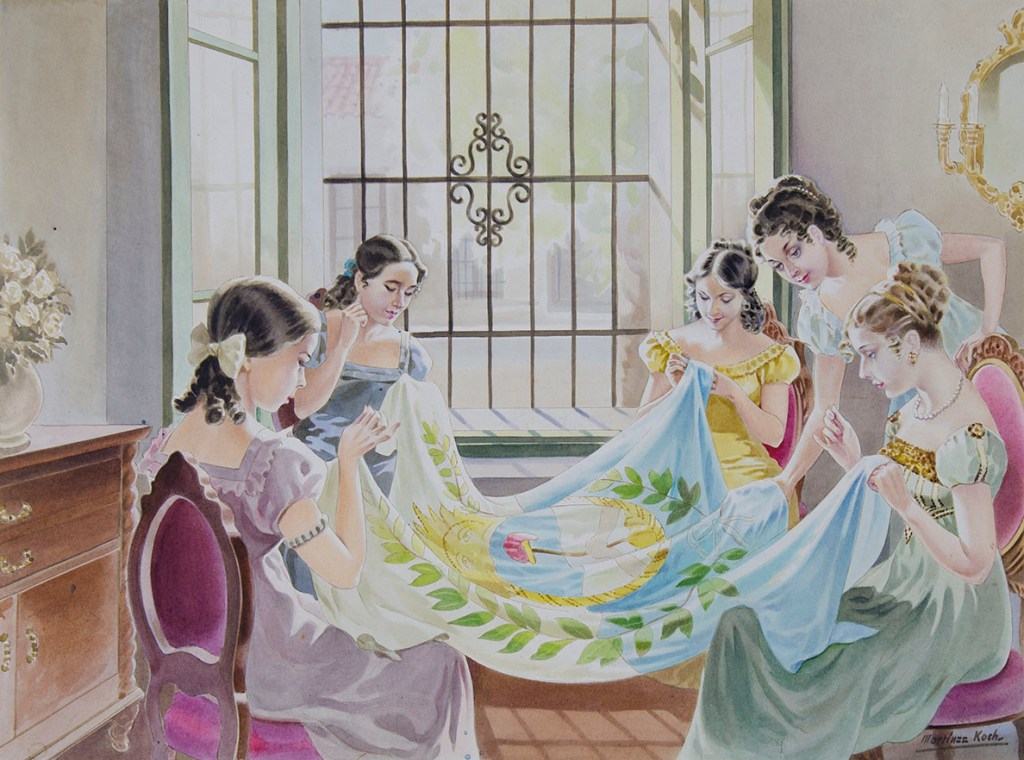
It was May 30, 1812, when fourteen women of Buenos Aires’ elite society gathered for a fund raising event. A collection was taken in support of the ragtag criollo army fighting against the Spanish crown. Each women —listed below—financed one pistol each. Obviously, it was not nearly enough to battle the Spaniards; but they inspired other women to do their part by crafting uniforms and eventually, as the story goes, stitching together the first Argentine flag.

  1. Tomasa de la Quintana
  2. María de los Remedios de Escalada
  3. María de las Nieves de Escalada
  4. María Eugenia de Escalada de Demaría
  5. María de la Quintana
  6. María Sánchez de Thompson
  7. Carmen de la Quintanilla de Alvear
  8. Ramona Esquivel y Aldao
  9. Petrona Bernardina Cordero
  10. Rufina de Orma
  11. Isabel Calvimontes de Agrelo
  12. Magdalena de Castro de Herrero
  13. Ángela Castelli de Irgazábal
  14. María de la Encarnación Andonaégui de Valdepares.

My new novel, Celestial Persuasion, unfolds in the Viceroyalty of Rio de la Plata at the cusp of Argentina’s independence. After a series of astonishing events, the protagonist, Abigail Isaacs, finds herself in Buenos Aires. Here she writes to Captain Wentworth…

I received a missive this morning, presented by a liveried servant. It was an invitation from a Mr. and Mrs. Martin Thompson for Tuesday next. You can well imagine my astonishment, Captain Wentworth, as we are so newly arrived that I have not yet regained the use of my land legs. I have not a clue who these good people might be, or how they came to know of my arrival in the city. It was Mrs. Tavares who supplied the necessary information and assured me that I might respond to the invitation without compunction. It was all due to Lord Fife and his connections with society. I imagined the Thompsons were fellow compatriots, perhaps an elderly couple from Sussex or Bath. Imagine my astonishment when Mrs. Tavares explained the truth of the matter. Mrs. Thompson, in fact, is María Josepha Petrona de Todos los Santos Sánchez de Velasco y Trillo. The articulation of the lady’s name alone was quite an undertaking! It practically encompassed my daily Spanish lesson in its entirety. Mrs. Tavares was only too happy to impart her knowledge. To begin with, much to my relief, the lady is simply known as Mariquita Sanchez de Thompson. She is the daughter of a distinguished family of Río de la Plata, with an impressive lineage tracing back to Spain and Portugal. She married Martin Jacobo Thompson and the pair have become the toast of the town.

Mrs. Tavares’s countenance upon seeing the invitation was quite telling. I have never witnessed such excitement. It would seem that an invitation to Mrs. Thompson’s salon is paramount to taking tea with one of the patronesses of Almacks! One must understand, these social gatherings include some of the most renowned citizens of the Viceroyalty. I am to expect an introduction to compatriots and locals, aristocrats and artisans. If I am to trust in my housekeeper’s accounting, Mrs. Thompson is an extraordinary example of female ingenuity. She is known as a great advocate for the new republic. Mrs. Tavares assures me that a more fervent patriot cannot be found among those who support the cause. Not only did the lady donate three ounces of gold to the coffers, she lends her domestic skills for the sewing of uniforms.

In short, Captain Wentworth, I am undone at the thought of attending Mrs. Thompson’s salon. I fear I lack the talent of conversing easily with strangers; although you may believe that an odd statement after I have, after all, rambled on for two pages complete. Your close ties with Jonathan, and your own insistence, have made you less a stranger and more a relative.

I hope you enjoyed the excerpt! You can find Celestial Persuasion on Amazon in both digital and paperback formats. Happy reading!

New Post

Jewish Historical Romance: A look at the Navy

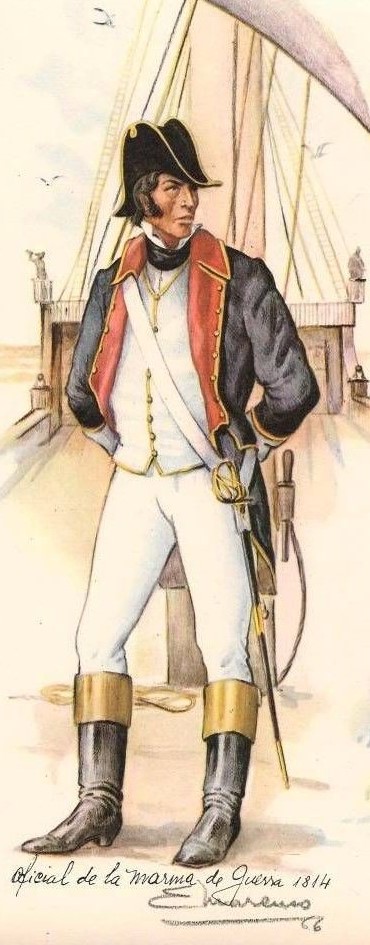
As you have read in my previous posts, I began piecing together a story that involved Captain Wentworth and his good friend—and ship’s physician—Jonathan Isaacs. Naturally, this sliver of an idea resulted in hours and hours of research. I knew nothing about the Navy, nothing about officers, and nothing about the Jewish factor that I wanted to thread into this particular tapestry of a story. Now, before I write another word: Tell me you don’t see the similarities between the naval officers of Argentina’s Regency era and those of Austen fame.

Need I say more?

Apparently, I do! My story unfolds in Exeter, where the Isaac family lived in close proximity to Barton Cottage. That, of course, is a fictional location; nonetheless, one well known to fans of Sense and Sensibility. In any event, the head of the Isaacs family was a country doctor, but I wanted Jonathan to be a physician in service to the Crown. This is where the questions began. Were there Jews in Exeter during the Regency era? Were they allowed to serve in the Navy? Did they have any connection to that world at all?  It was then that I discovered a veritable treasure trove!

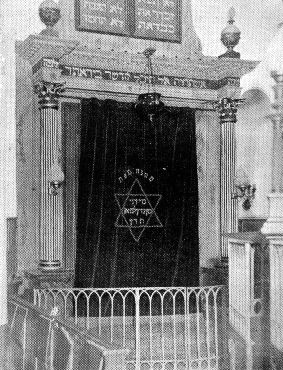
Exeter synagogue

Jewish Communities and Records- The Jews of South-West  England (Jewishgen.org) provides this information and more! It soon became clear to me that there was Jewish life in Exeter, Plymouth, Falmouth and Penzance, as well as several other towns throughout Devon in the years dating from 1750 to 1900. There is evidence from earlier still, but the records I focused on were those of the Regency and Victorian eras (where the details were irrefutable). And in stark contrast to what Dickens and Heyer portray in their works, the Jewish community of South-West England was comprised of a small, yet respectable, upper middle class.

7 families kept one servant indicating that they may have been in the £150 – £300 per annum income bracket; two families each with two servants may have earned about £500 per annum; and the one family with three servants was possibly in the £750 per annum income group.

By 1796, five Jews had shops in the fashionable shopping area of Exeter sufficiently well established as to warrant inclusion in the Exeter Pocket Journal, a local newspaper. There were two silversmiths, an engraver who sold a variety of goods, a pawnbroker, and a stationer. And in addition to these and other trades, there were naval agents.

To say that conditions were harsh in the Royal Navy throughout the eighteenth and early nineteenth centuries would be an understatement, but the ever-present hope of prize money made the cruel life somewhat bearable. Think of how Captain Wentworth’s life changed course when he was awarded his prize money!  Officers had bankers to look after their interests. The seamen, however, turned to local tradesmen of naval towns for assistance. They were the link to the naval authorities in London. This system, at first, was unofficial and based on mutual trust. I present Abraham Joseph, an Exeter tradesmen, as a fine example. He earned such trust, as his obituary in the Flying Post (1794) indicates:

As an agent for seamen, his practice was well worthy of the imitation of every person in that business, as several orphans and indigent widows can testify.

At some point in 1809, legislation was enacted which required all seamen to register with a licensed navy agent. In order to obtain a license, the tradesman had to post a bond with two sureties, under penalty of £200. Sometimes, a would-be navy agent was a man of high social standing; nevertheless, everyone had to swear that they were worth more than £5,000 in order to qualify. The first list of 174 licensed navy agents included 66 Jews. It was said that Jewish tradesmen were held in high esteem and the proof was in their rapid growth in that particular community. Between 1807 and 1814, navy agents as a whole increased sevenfold throughout England. The number of Jewish agents increased thirtyfold!

The British fleet was manned by nearly 35,000 seamen by this time. Jewish shopkeepers throughout the port towns specialized in doing trade with the ships. They were allowed to go on board with goods that appealed to the “simple seamen,” such as “old watches and seals, watch chains, rings, fancy shoes, scarlet and blue silk handkerchiefs, clay pipes, and fresh food of every description.” Honest traders with good references were most welcome. In 1813, Joseph Joseph presented the following royal command which granted him access to the crewmen at port:

I do hereby certify that Joseph Joseph of Plymouth has at different times supplied the Crews of His Majesty’s Ships when under my Command with Clothing to my entire satisfaction, and I do hereby recommend him to the Admirals, Captains, and Officers of His Majesty’s Navy, to be permitted to transact any Business that may be done on board the respective Ships under their Command.

St. James’s Palace ~ December 2, 1812

How do I top a letter of recommendation from St James’s Palace? With this:

Members of both congregations at Exeter and Plymouth would, on occasion, travel up to Dartmoor prison to practice acts of chesed, or lovingkindness. By the end of 1814, there were 2,340 American prisoners of war being held at Dartmoor, and a number of them were Jewish soldiers and sailors. Commodore Uriah P. Levy, was among them. Notably, this officer created the law which abolished the act of flogging in the United States Navy. Captain Levi Charles Harby was another Jewish sailor being held captive. During his imprisonment, a Jewish baker from Plymouth would make the daily trip to sell his baked goods. One day, he offered a loaf of bread to Captain Harby. The officer refused it. The baker, however, insisted. Inside the loaf, he had hidden a newspaper clipping that told of an important battle at New Orleans. This encouraged the captain to escape, apparently with the help of the baker! The story went on to report that Captain Harby was able to find his way back to his men. He continued to serve his country with great success and it was in no small part, thanks to the baker mench from South-West England.

Seeing that we— here in the U.S. —are celebrating our freedom today, I’d say that little tidbit is quite fitting! Happy Independence Day!

With love,

New Post

Today’s the day!

It seemed like the day would never arrive, but here we are! I am excited and nervous and hopeful and, well…excited! I can’t wait for you to read my latest book and tell me your thoughts.

A Jewish Regency Romance Set Against the Backdrop of Argentina’s Struggle for Independence.

Celestial Persuasion is now available on Amazon in both digital and paperback format. This has been a labor of love and inspiration, but now the real work begins. I’m an independent author, which means I need your help to spread the word. Please tell your friends! Share my posts on your social media. Are you on Goodreads? You can help me by adding the book to your “Want to Read” shelf. Actually, you could take it a step further and create a new shelf and call it “Jewish Regency Romance” or “Jewish Historical Fiction.” Vote for the book in the Listopia section. There are many great categories from which to choose, like this one, or this one or this one ! If you don’t know how to add or vote for the book, ASK ME! I’m only too happy to help. 🙂 Last, but not least, read the book! Leave a rating or a review on Amazon, Goodreads, or on your blog. The momentum created by your input is priceless. It helps me engage with other readers and brings my work out into the forefront—protecting me from those nasty algorithms!

Caroline Herschel was the perfect role model for my protagonist, Abigail Isaacs. Her extraordinary contributions to Astronomy were certainly an inspiration, but Caroline had two other interesting attributes. One was her Jewish heritage, the other was her relationship with her brother, William. The similarity with Abigail and her brother, Jonathan was bashert: It was meant to be.

I am grateful for your support and your interest. Please continue to watch this blog for future posts and interesting tidbits.

With love,

New Post

Blog Tour~ Day Three…but, different

I’m going back to revisit Day Three of the Blog Tour…you know, the day that didn’t go as planned. I am a believer that everything happens for a reason, so I am going to try something different. ¡Espero que les guste!

As you have read, Celestial Persuasion takes place during Argentina’s Regency period. I thought it would be nice to translate, and share, one of my Blog Tour entries with our Spanish-speaking Janeite friends. And so, without further ado, here is Day One presented in Spanish.

Hola Mirta y bienvenidos a My Jane Austen Book Club! Como de costumbre, pregunto ¿cuándo fue tu primer encuentro con Jane Austen”?

¡Hola María Grazia! Te agradezco tu bienvenida. ¡He estado esperando este día! Para responder a tu pregunta, tengo que volver a la clase de literatura inglesa de la Sra. Malm en la escuela secundaria. Estaba en el noveno grado cuando leímos Orgullo y Prejuicio. Era una ávida lectora de novelas en ese momento, pero si la memoria no me falla, me tomó varios años apreciar su genio y convertirme en una verdadera fanática de Jane.

Felicitaciones por el lanzamiento de Celestial Persuasion. ¿Descubriste algo notable sobre los personajes de Persuasión de Jane Austen mientras escribías tu libro?

De hecho, lo hice, pero comenzó cuando estaba escribiendo mi novela anterior, The Meyersons of Meryton y tenía que ver más con la ambientación, que con los propios personajes. Tuve que crear una solución para disciplinar al Sr. Wickham, ¡ese sin vergüenza! Lo que descubrí no solo me proporcionó una alternativa de transportation a Australia, sino que me abrió los ojos a una historia que hubiese aprendido, si hubiera sido educada en mi tierra natal de Argentina.

A ver si me puedo explicar. En general, aquellos de nosotros que leemos Austen y disfrutamos de historias de la regencia estamos bien versados en las Guerras Napoleónicas. Es casi imposible recoger una novela centrada en esa época y no encontrar algo relacionado con ese conflicto. Fue parte de la vida de Austen; ¡impactó a toda Europa! Pero mientras Napoleón causaba estragos y marchaba por todo el continente, había otros que se concentraban en el Nuevo Mundo. Mi investigación me llevó por el proverbial agujero del conejo y aterricé a los pies de Lord Duff, el cuarto conde de Fife. Me enteré del patrocinio de Lord Fife de José de San Martín. Descubrí las conexiones entre los ingleses y el Virreinato del Río de la Plata. Entre las historias de oficiales navales, monarcas desterrados, y damas vestidas de regencia, comencé a formular una idea. Las piezas estaban allí sobre la mesa, esperando a ser ensambladas como un gran rompecabezas. Fue el capitán Wentworth quien lo pudo unir para mi y así fue que desarrollé mi cuento.

Debido a que las guerras napoleónicas y la lucha por la independencia del Virreinato ocurrieron en el mismo período, pude tejer una historia en torno a mi protagonista, Abigail Isaacs—una joven que se encuentra en una situación desesperada—y el buen capitán del HMS Laconia. Al igual que el trabajo de Austen, una parte de la historia es epistolar. La correspondencia entre Abigail y el capitán Wentworth habría sido bastante escandalosa en circunstancias normales. Pero, la narrativa exige la comunicación; y al final de mi novela, el escenario está preparado para que Anne Elliot y el capitán comiencen su camino —tal como Jane Austen lo imaginó.

2. ¿Cuál es la conexión entre Persuasión de Austen y tu Celestial Persuasion?

Quise que mi libro sea una precuela; pero en orden para presentarlo como tal, necesitaba comprender plenamente el estado de Frederick Wentworth antes de su puesto en el HMS Asp. Y de hecho, leí Persuasión devuelta. Al mismo tiempo—mientras tropezaba por ese agujero de conejo que mencioné en la pregunta anterior—descubrí a una fascinante mujer que ustedes conocen bien: Mariquita Sánchez. Descubrí que su historia de amor con Jacob Thompson era similar a la de Anne Elliot y su capitán. Tanto las opciones de Mariquita como las de Anne fueron rechazadas por sus familias. En ambos casos, las familias afirmaron que oficiales navales pobres y jóvenes — desconocidos y sin experiencia— no eran candidatos para sus hijas. Donde Anne y Mariquita difieren es en su manera de reaccionar. Anne se dejó convencer de retirarse de su apego. Si lo hizo por el bien del capitán o por el de ella, es una pregunta que muchos lectores todavía debaten. Mariquita, en cambio, luchó por su elección y le costó caro. Mi protagonista, Abigail Isaacs, también se encuentra en aguas turbulentas y se le pide que tome una decisión que le altera la vida. No tiene ni amante ni familia que la convenza de una manera o otra. Abigail es una mujer sola; y siendo una criatura racional, ella hace su elección basada en los hechos tal como se presentan.

Había muchas similitudes entre la época de la regencia argentina y la de la obra de Austen, y no pude evitar unir las historias. Creé una conexión entre el capitán Wentworth y el hermano de mi protagonista. Es esta amistad la que obliga al capitán a entrar en la vida de Abigail Isaacs y pone a ambos en una nueva trayectoria.

3. ¿Hubo alguna escena que te gusto escribir particularmente?

¡Esta es una pregunta difícil! ¡No quisiera arruinar la lectura para tu audiencia! Solo diré que mi escena favorita fue muy satisfactoria de escribir. Sentí que la voz de Abigail sobresaltó más fuerte y más allá de cualquier cosa que había imaginado originalmente. Me conmovió la escena a mí misma, como si la estuviera observando como un extraño. Espero que también sea la favorita de un lector.

Otra escena involucraba la inclusión de una leyenda guaraní. Necesitaba inspiración para algún diálogo entre el teniente Gabay y Yasitata, una sirvienta guaraní. Pensé que tendría que pasar horas investigando en internet sobre esta cultura indígena, pero tuve suerte. O tal vez, me conmovió un ángel que vigila a los autores con bloque de escritor—¡no estoy del todo segura! Sólo voy a decir esto: Fue una gran satisfacción poder incluir esta fábula en el libro.

4. ¿Tienes una novela favorita de Austen? ¿Quiénes son tu heroína y héroe favorito?

Por mucho que disfruté Orgullo y Prejuicio—y he visto la adaptación cinematográfica de 1995 una y otra vez—Persuasión me conquistó. El crecimiento que vemos en Anne y el capitán Wentworth es poderoso, la constancia de su amor es conmovedora. Escribí sobre estos atributos en otro de mis libros: Destiny by Design~ Leah’s Journey. Si bien esta novela no es un verdadero “J.A.F.F.”, el libro fue definitivamente inspirado por Austen; y la transformación de Anne en Persuasión se discute con gran fervor entre mis dos protagonistas. Me encantó la determinación y amabilidad de Anne y su fuerza templada. Me encantó que el capitán Wentworth, aunque se sintió traicionado y mal utilizado, nunca amó a otra mujer.

5. ¿Cómo te ha inspirado Jane Austen?

Su Realismo me inspiró. Su afán por mostrar la vida tal y como la veía me inspiró. Austen, como sabemos, escribió sobre su mundo y su entorno. Aunque era ingeniosa y un poco sarcástica, nos trajo temas profundos para considerar y apreciar. Por supuesto, había historias de amor, pero en esencia, Austen nos permitió mirar a un mundo diferente, una cultura diferente. Con mi herencia cultural y mi origen étnico, seguir los pasos de Jane Austen me da una plataforma para compartir mis pasiones por la Judaica y mis raíces argentinas, con la ficción histórica. Desde luego, no pretendo tener su genio; su estilo e ingenio son legendarios. Sólo siento que ella abrió la puerta para los demás quienes tenemos historias para compartir, en un estilo propio…como Austen solía decir.

6. Contame más sobre tu investigación para Celestial Persuasion. ¿Qué te atrajo a esta historia en particular?

Supongo que mi radar de inmigrante atrae palabras que otros podrían no notar. Por ejemplo, si estoy leyendo, o viendo una película, y palabras como “el argentino” o “la pampa“ aparecen de repente, ¡me siento inmediatamente atraída! Aunque se suele mencionar de pasada, autores de la Regencia y las épocas victoriana han aludido a menudo a la participación inglesa en el Virreinato del Río de la Plata. En la miniserie de la BBC de la novela de Edith Wharton, The Buccaneers, el actor Greg Wise (también conocido como Willoughby) interpreta el papel de Guy Thwarte, un joven que se va a construir ferrocarriles en Argentina. En la miniserie de 2004 de Elizabeth Gaskell’s North and South, el Sr. Bell deja a Margaret Hale un legado antes de zarpar a la tierra de las pampas. Así que ya ven: sólo quería seguir el ejemplo que se puso delante de mí.

Debido a que me crié en los Estados Unidos, mi comprensión de la lucha argentina por la independencia era bastante deficiente. Pasé algún tiempo investigando la historia de la influencia de Inglaterra en el nacimiento de la República Argentina. Además, tuve que estudiar temas como la astronomía y la astrología en forma muy básicas, pero desde la perspectiva hebraica. Debido a que Abigail Isaacs “estudió los cielos”—al igual que su heroína, Caroline Herschel—quería que las fechas hebraicas correlacionaran con las actividades celestiales en y alrededor de 1812. El calendario hebreo está basado en la luna y, por lo tanto, difiere del calendario gregoriano. Tuve la suerte de incluir datos históricos y fiestas judías en la novela, y hacer que coincidan con lo que estaba sucediendo en los cielos. Esto fue particularmente importante en el capítulo que enfoca a la famosa batalla de San Lorenzo.

7. Mencionas temas que no se encuentran generalmente en una novela de Regencia: Argentina, Caroline Herschel y los temas judíos. ¿Cómo llegó a escribir sobre tales temas y el lector necesita tener una comprensión del judaísmo para disfrutar de tu libro?

¡Gran pregunta! Espero poder representar el judaísmo de Abigail Isaacs y Raphael Gabay al igual que los personajes anglicanos de Austen. Su fe forma parte de lo que son; está ahí, en el fondo…simplemente añade otra dimensión. Escribir sobre personajes y temas judíos es importante para mí, porque lo que nos han dado autores como Chaucer, Shakespeare, Dickens e incluso Heyer, no me agrada. Las caricaturas de los judíos codiciosos, malvados y de nariz grande es una parodia y debe ser impugnada. Del otro lado, hay una multitud de material de lectura que trata de la historia trágica del Holocausto. Esto es como debe ser. Deberíamos saber, y nunca olvidar lo que sucedió durante ese reinado de terror; el judaísmo es una religión que aprecia la vida. ¡Hay mucho más en nuestra historia que la tragedia y el dolor! Y es por eso que escribo ficción histórica judía ambientada en la Regencia y la época victoriana.

Sobre el tema de Argentina: ¡la respuesta es igual de sencilla! Como inmigrante, mi experiencia fue como dice la canción: No soy de aquí, ni soy de allá. Descendiente de rusos, Judía, nacida en Argentina, pero fanática de mi país adoptivo…me llevó casi toda mi vida (ya pronto cumplo 60) aceptar quien soy, cuales son mis raíces. Batallé en contra de un complejo de identidad. ¡Pero ya no más! Mi primer libro: With Love, The Argentina Family, una especie de autobiografía, fue terapéutico y abrió la puerta a otras oportunidades y formas de pensar. No pretendo que mi trabajo sea académico; ¡no está destinado a serlo! Espero que les resulte leve y entretenido… e incluso ilustrativo.

En cuanto a por qué elegí a Caroline Herschel: Estaba buscando un modelo o héroe para mi protagonista, pero descubrí que había pocas mujeres matemáticas y científicas a principios de 1800. Descubrí a Sara Guppy, Mary Edwards y Mary Somerville y quedé completamente impresionada con sus logros. Luego me encontré con Caroline Lucretia Herschel. Sus extraordinarias contribuciones al mundo de la ciencia y la astronomía fueron sin duda una inspiración, pero ella tenía otros dos atributos interesantes que me llamaron la atención. Una era su herencia judía y la otra era su relación con su hermano, William. La relación con Abigail y su hermano, Jonathan Isaacs, fue bashert: Estaba destinado a ser.

8. ¿Por qué los lectores de Austen deberían obtener una copia de tu Celestial Persuasion? ¿Cómo los invitarías a hacerlo?

¡Gracias por preguntarme! Sabemos que hay una gran cantidad de variaciones de Austen disponibles para una audiencia mundial. Creo que es significativo que el trabajo de Austen continúe inspirando a un grupo diverso. Se nos han presentado interpretaciones modernas, historias de viajes en el tiempo, y narrativas que se centran en cualquier número de etnias y culturas. Esto habla de nuestra sed de nuevas y tentadoras tramas y temas austenescos. Celestial Persuasion no cambia a nuestros queridos personajes, pero llevará al lector en un viaje fuera de Inglaterra. Conocerás nuevas personas y culturas, y con suerte, te enamorarás de otra pareja cruzada por las estrellas.

Celestial Persuasion es definitivamente una novela independiente; y aunque he tratado de emular a Austen, la historia es única y propia. Permítanme terminar con los pensamientos de Austen:

“No podía sentarme seriamente a escribir un romance serio bajo ningún otro motivo que salvar mi vida, si fuera indispensable para mí mantenerlo – nunca relajarme en reírme de mí misma o de otras personas, estoy segura que debería ser colgada antes de haber terminado el primer capítulo. No – Debo mantener mi propio estilo y seguir a mi manera; y aunque nunca vuelva a tener éxito en eso, estoy convencida de que debería fracasar totalmente en cualquier otro.”

Invito a tu audiencia a dar una vuelta alrededor del mundo conmigo. Si las estrellas se alinean, Celestial Persuasion estará disponible en Amazon tanto en formato digital como impreso el 30 de junio de 2021. ¡Espero que disfruten de la lectura! Gracias por invitarme. ¡Fue divertido! Si desean más información sobre cualquiera de mis libros, les invito a visitar mi blog: mirtainestruppauthor.com

New Post

Blog Tour ~ Day Six: Double Duty!

We’ve come to the end of the tour today; but, never fear!

I’m leaving you with not one, but TWO entries.

Make yourself a nice cup of tea and settle down for a visit with the following bloggers:

Renown author and blogger, Regina Jeffers is my host at:

Every Woman Dreams

Over at Bonnie Reads and Writes, reviewer for Historical Novels Review Magazine, Netgalley, and BookSirens, Bonnie DeMoss will share her thoughts on my book, Celestial Persuasion.

I hope you follow the links and take a peek at both posts.

Thank you for coming along for the ride and thank you to all the wonderful bloggers who made the tour possible. I couldn’t have done it without all of you!

New Post

Blog Tour~Day Five: Faith, Science, Joy, and Jane Austen

Thank you for accompanying me on this week-long extravaganza!

We’re off to visit Brenda…

photo credit: Shiki

This blogger has planned to review Celestial Persuasion for her reading audience. Oh! I hope she likes it!

Follow the link to find out!