Thank you for accompanying me on this week-long extravaganza!
We’re off to visit Brenda…

This blogger has planned to review Celestial Persuasion for her reading audience. Oh! I hope she likes it!
For those who like a little Yiddishkeit with their Period Drama.

Thank you for accompanying me on this week-long extravaganza!
We’re off to visit Brenda…
This blogger has planned to review Celestial Persuasion for her reading audience. Oh! I hope she likes it!
We’re back on track today.
Follow me, won’t you?

Here’s your chance to read an excerpt and enter a giveaway.
Just click on the link !
Oh dear!
Due to unforeseen difficulties, today’s visit has been postponed. Please stay tuned!
In the meantime, feel free to enter the giveaway on Goodreads:
Here we go. Day Two!
You don’t want to miss this next stop!

Follow the link below & let me know what you think.
According to ancient Judaic tradition, a great miracle occurred in the month of Tamuz. This Hebrew month corresponds to June and July in the Gregorian calendar and begins with Rosh Chodesh on June 9th. I found it fitting to share this bit of information with you, as it relates to my new book: Celestial Persuasion.
Without going deep into the weeds, let me just say that during this season the ancient Israelites were at battle with the five kings of the Emorite Nation (Book of Yehoshua 10:11-14). As the verse unfolds, we read that “great stones” fell from the heavens, and the sun and the moon did not advance in the sky until the Israelites could claim victory. Today, we can assume that an intense meteor or asteroid shower fell upon the particular place; but according to tradition, it was a celestial miracle. I couldn’t resist sharing this with you because it touches upon a recurring theme in my story. Here is a snippet that speaks to fresh starts and new beginnings:
Dinner was completed with no further discussion of wars, revolution, or immigration to far and distant lands. Abigail noted Mrs. Frankel’s silent approval of the elegant meal, which mainly consisted of fish and poultry and various dishes of accompaniment. While they supped, polite conversation regarding the weather in Devonshire was the rule, much to Abigail’s chagrin, but then at last his lordship introduced a new topic, the extraordinary shape of the crescent moon.
“As tonight is Rosh Chodesh, a celebratory occasion of our faith, I beg you apply to Miss Isaacs for commentary,” Mrs. Frankel offered.
“Indeed? I would be glad to hear of it,” the earl replied. “Pray tell.”
“I would not wish to bore you, my lord, with talk of instruments and calculations,” said she, in an attempt to curtail her natural instincts; “however, if you care to learn about the holiday Mrs. Frankel references, I would share Rabbi Nachman’s compelling words on the subject.”
With his lordship’s approval, Abigail continued. “The moon has been a point of great significance since the time of the ancient Israelites. We use its cycles to calculate the months of the year, which differs from the Gregorian calendar based on the sun. Rabbi Nachman suggests that when even the slightest portion of this heavenly body is spotted, that least sighting—that modicum of hope—is sufficient to proclaim a fresh beginning for every one of us. And this evening, as witnessed by the shape of the moon, we celebrate the head of the new month and wish each other peace.”
“That is truly providential,” the earl stated and raised his glass. “Join me in a toast, won’t you? To Jonathan, the best of men, and to new beginnings!”
“To Jonathan,” Abigail repeated and swallowed hard. “And to new beginnings.”
“L’ chaim,” murmured Mrs. Frankel. “To life.”
Dear readers, you are cordially invited to my upcoming Blog Tour. During the week of June 13-18, several bloggers will be reviewing the book or hosting an author’s interview with yours truly.
I hope you join me on this virtual excursion!
Here are the dates:
Sunday, June 13, 2021~My Jane Austen Book Club
Monday, June 14, 2021~Heidi Slowinski
Wednesday, June 16, 2021~ Diary of an Eccentric
Thursday, June 17, 2021~Faith, Science, Joy, and Jane Austen
Friday, June 18, 2021~Bonnie Reads and Writes
Friday, June 18, 2021~Every Woman Dreams
One last thing before I sign off: The preorder link for the eBook can be found here
Happy Reading!

Announcing the arrival of the Pre-order link!
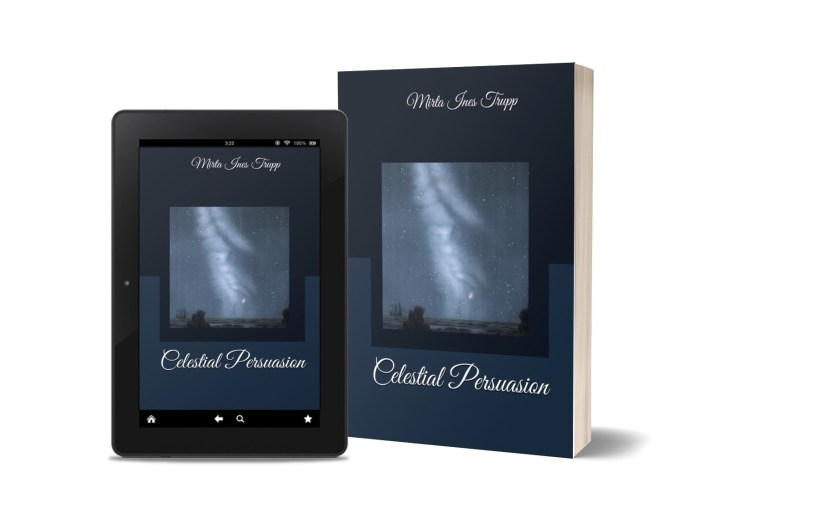
Celestial Persuasion is now available for pre-order HERE
Be the first in line to get your copy!
Purchase the eBook today and receive the content on 6/30/2021.
I’m so excited! I know you are excited, because I have been receiving lovely messages from so many readers. Help me spread the word. Preorder your eBook today and let Amazon do its magic!
Happy reading!
Readers of this blog know that I was inspired to write a Jewish historical fiction based on Jane Austen’s Persuasion. I understand some of you have not had the pleasure of reading Austen’s original work or seeing the film adaptations. Never fear! Celestial Persuasion is a stand-alone novel with more than enough to tempt you. But you don’t have to take my word for it. Here are a few early comments from people in the know…
“I’m still shaking my head at how good this was! Even though I knew nothing about the history of this area, I found the story fascinating. The appearance of an Austen character in the story always made me smile.” ~ Jeanne Garrett
“A wonderful and inventive novel that paints a compelling historical tale upon a large canvas background of a culture different from what most are used to seeing in #Austenesque variations. Celestial Persuasion left me contemplating about how destiny is written in the stars.” ~ Don Jacobson, author of The Bennet Wardrobe series
“Devotees of Austen’s work, who never wanted her stories to end, will enjoy Trupp’s writing, and those who have adored Persuasion, will not be disappointed in what could possibly come after.” ~Sherry V Ostroff, author of Caledonia, Mannahatta and The Lucky One
“From a literary perspective, I love the way Jane Austen’s characters are sewn into the book. While Abigail’s Jewishness is certainly a central focus, I must commend the respect offered to several other faiths throughout the story, emphasizing that which we have in common rather than that which separates us. I loved this book!” ~ Debbie Brown
I hope to entice you with this shortest of snippets. Please enjoy!
With her morning correspondence completed, she was at leisure; however, this was not a pleasant interlude and Abigail dreaded such moments. For it was during these quiet times that the gripping claws of sorrow tore at her heart. She required an occupation, as the stillness of her life had become too much to bear. She quitted the morning room and quietly climbed the stairs to find Jonathan’s bedchamber.
Opening the door, Abigail was met with the familiar scent of old books and leather. Mrs. Frankel had seen to the room being kept tidy. The clean linen upon his bed added to the crispness in the air. Jonathan’s wardrobe contained most of his clothes, as he took only the essentials when he went off to sea. His shelves were lined with an eclectic combination of writings. Books of Kabbalah and astrology were placed side by side with authoritative treatises on astronomy, physics, and physiology. There were novels of the sea that spoke of great battles of yore, and there were books of poetry and psalms. Abigail ran her fingers across their delicate bindings and cried over the senseless loss of such a kind and gentle man. She would have to pack his belongings, as she had done with her father’s things. Some things would be given to charity, clothes and the like, but the books would not be forsaken.
Abigail reached for an ancient tome; it had once belonged to her maternal great-grandfather and had been passed down throughout the generations. Jonathan had shown her this very book when she was yet a child of five years of age and their mother had left their world. The Sefer Yetzirah, Jonathan had explained, was devoted to speculations concerning God’s creation of the world. He had shown her drawings of the constellations that formed the galgal hamazalot, the wheel of the Zodiac, which exerted influence on Man’s traits and tendencies and on the natural course of things. Abigail recalled his gentle voice as he proposed that they study the celestial spheres together and learn of their characteristics. In her innocence, she had asked if their mama had become one of the heavenly formations watching them from above.
“Dearest, you may still speak to Mama,” Jonathan had said. “Ask her to guard you and guide you from her heavenly home. You may look upon the shining stars and imagine one of them is our own mama sending her love to us here on earth. But Avi, the stars and the moon, and all the wondrous celestial creations, are only a manifestation of God’s will. We must always remember to place our faith and trust in our Creator.”
Abigail closed the book and returned it to its rightful place on the shelf. There would be time enough to reminisce in the days to come. She was not compelled to act with much alacrity; her brother’s belongings would remain as he left them, and Abigail did not look back as she closed the door.
Dear readers: the preorder link for the eBook can be found here
A few weeks ago, I wrote about my Work in Progress: Celestial Persuasion. You can read about it here.
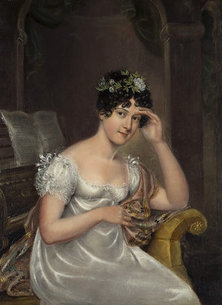
I’m getting closer to Publishing Day and I can’t wait to share it with you. In the mean time, please take a minute to watch this short trailer. The painting of Mariquita Sanchez de Thompson was the inspiration for the entire project. Please enjoy!
Coming soon! Celestial Persuasion on Amazon.
Abigail Isaacs fears ever again falling under the power of love and dedicates her life to studying the heavens. However, upon her father’s demise she finds herself in reduced circumstances and must write to her brother, who has long been away at sea. When instead Captain Wentworth of the HMS Laconia sends a tragic reply, Abigail is asked to set aside her own ambitions and fulfill her brother’s dreams in the Viceroyalty of Río de la Plata.
In his relentless pursuit for justice, Lieutenant Raphael Gabay lends his sword to the Spanish American cause. But as he prepares to set sail with the others, he is entrusted with the care of a young woman. She is quite unlike anyone he has ever known, and Raphael wonders whether the brilliant astronomer will see beyond his frivolous façade and recognize his true nature.
Their destinies have been plotted beyond the celestial veil; their charts foretell of adventure. Can these two troubled souls be persuaded to heed the stars and find love—and their purpose—in this fledgling nation?
Please share and tell all your friends!
The preorder link for the eBook can be found here

How many of you have seen the film, My Big Fat Greek Wedding? Swap out “Greek” and insert “Argentine” and you would have a clear picture of my family. Every character reminded me of a relative; every embarrassing scenario was relatable and every corny saying sounded familiar. The movie had my family in stitches. We laughed, we cried, and we pointed fingers at each other, saying: That is so you! This movie, in fact, was one of three impactful works that played a part in my writing (the other two were I Remember Mama and Fiddler on the Roof). I aspired to accomplish something in that same vein and wrote my first book, With Love, The Argentina Family~ Memories of Tango and Kugel, Mate with Knishes.

Interestingly enough, I came across a blog post that spoke of the similarities in between Pride and Prejudice and Fiddler on the Roof. Both stories feature five daughters, three of which are married by the end of the piece.
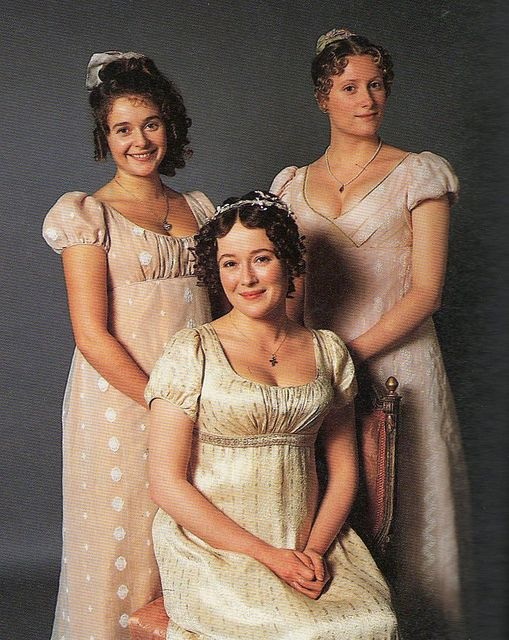
Both showcase awkward scenes of rejected marriage proposals. The mother and father relationship in Fiddler shares similar characteristics with those in P & P. Both stories have forbidden love and worries of losing one’s home. In short, this author spoke to my love of meshing the world of Period Dramas and Jewish Historical Fiction.
In all fairness to the original post, I encourage you to take a peek at it here: Read it and tell me if you don’t agree. An Anglican woman in England and a Jewish man in Imperial Russia wrote two very different stories that are remarkably the same, and remarkably relatable to a wide and diverse audience.
Last week, I binged on the third season of Shtisel. Have you heard about it? It is a hit show on Netflix. I devoured the entire season in two days. No doubt, you’re wondering why I’m writing about a modern-day series that evolves around a Haredi family living in Israel. You’re rolling your eyes at this point thinking: I signed up for a historical fiction blog—why is she writing about Shtisel-mania? Good question; but before I answer, I have a question for you…
How many Jane Austen variations are there in the Fan Fiction world? I couldn’t even begin to tell you, but I know this: Keep her storyline and exchange the Anglican family with a Hindu family, a Black family, a Jewish family; or even a family of Zombies, you still get an Austenesque novel. Austen’s work centered around her commentary about the human condition. She used humor and irony to make her point. She wrote about heartaches, financial concerns, and dysfunctional families. Her stories are still relevant to millions of people around the world who are not necessarily English, Anglican, or actually living in the Regency era. 😉
Shtisel has taken the world by storm and it has many people scratching their heads in wonder. How is it possible that in today’s society, where everything goes and everything is permissible, a story about an ultra-orthodox Jewish family is a Number One hit? They dress modestly. They have strict dietary restrictions. The roles for women and men are clearly defined. But, take away all the trappings, the clothes, the language, the seemingly archaic rules, and exchange them with any other culture or religion and you still get the very essence of the show. The humanity remains. The power of the emotions expressed and experienced by these characters are universal.
Three or four families in a country village is the very thing to work on. Those three or four families are the mind we knew intimately – the landed gentry, the upper classes, the lower classes, not only the industrial masses, but also the agricultural laborers.”
Jane Austen- in a letter to her niece
Jane Austen’s trademark was her knack for realism. She didn’t write about the Napoleonic Wars or earth-shattering catastrophes. She wrote about the world around her, knowing that life’s every-day “little dramas” were sufficient fodder to get her point across. Her writings have been inspirational and Shtisel is working the same magic. Its triumph is in sharing a common story, focusing on Universal Truths to which we all can relate. How could I not aspire to do the same?