New Post

A National Shabbat for America at 250: How Jewish Memory Illuminates Liberty

In special honor of 250 glorious years of American independence, a national jubilee of prayer, praise, and thanksgiving has been designated for this Shabbat, Friday, May 15, 2026.

“We celebrate the contributions that Jewish Americans have made to our way of life, we honor their role in shaping the story of our Nation, and we remember that religious devotion, learning, and service to others are enduring pillars of a thriving culture,” the president stated. “Through every trial and triumph, the contributions of Jewish Americans have shaped our past, have strengthened our communities, and will continue to inspire American greatness for generations to come.”

The timing feels especially meaningful. On May 15, 1776 — exactly 250 years ago — the movement toward American independence took a decisive turn. Following the Fifth Virginia Convention’s resolution instructing its delegates to propose independence, the colonies moved more deliberately toward severing ties with Great Britain, setting the stage for the Declaration of Independence. Even Patrick Henry resigned his military commission to join the political struggle for liberty.

Yet amid revolutionary fervor, America’s founders also turned toward spiritual reflection. Congress proclaimed May 17, 1776, a “day of Humiliation, Fasting and Prayer,” revealing something often forgotten today: the first national government of the United States believed that public prosperity depended upon the moral and religious vitality of the people. Congress called for nothing less than a “spirit of universal reformation among all ranks and degrees of our citizens,” believing that such devotion would “make us a holy, that so we may be a happy people.”

There is another striking parallel. May 15, 1776 corresponded to the 26th of Iyar, during the counting of the Omer — the sacred forty-nine-day journey from Passover to Shavuot. For Jewish colonials, this timing would not have been incidental. Iyar has long been associated with healing — “I am God your healer” — and the Omer marks the movement from liberation to covenant, from freedom gained to freedom disciplined and sustained.
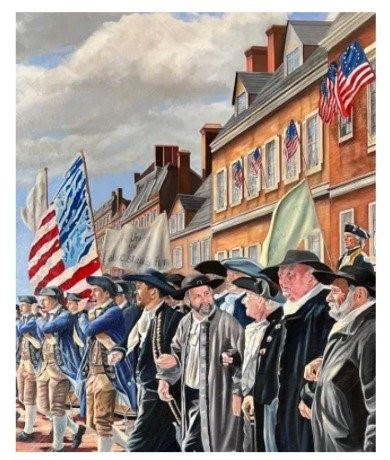
In the spring of 1776, those sacred weeks unfolded alongside the colonies’ own decisive movement toward independence. Passover had begun only weeks after the British evacuation of Boston, while the Omer stretched across the very period in which the Continental Congress shifted from reconciliation to preparing a declaration of independence. Colonial Jews, many of whom strongly favored the Patriot cause, often interpreted contemporary events through the language and memory of Jewish history.

Just as Passover recalls liberation from Egypt and the Omer counts the journey toward Sinai and national covenant, many Jewish colonials would have recognized in America’s struggle echoes of an older story: a people seeking freedom not merely from oppression, but toward moral purpose and self-governance. The symbolism would have been especially powerful. During the Omer, Jews engage in daily reflection and self-discipline in preparation for receiving the law at Sinai.

For Patriots — Jewish and otherwise — liberty demanded sacrifice, virtue, and responsibility. Freedom was never understood as mere release from authority, but as the difficult work of building a people capable of governing themselves.

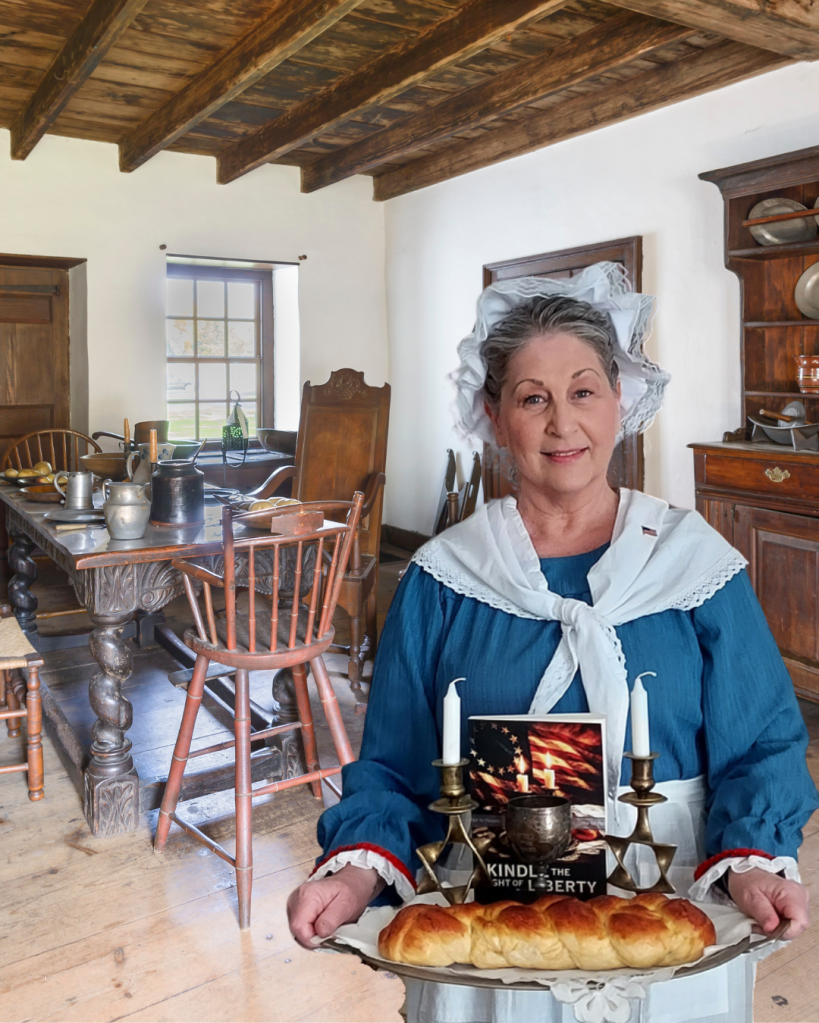
As I prepare for the release of Kindle the Light of Liberty, this moment feels particularly fitting. My novel explores not only the struggle for freedom, but the quieter truth that liberty is sustained by faith, memory, family, and the moral obligations we owe one another. Perhaps there is wisdom for all of us in Shabbat this weekend: to pause, gather with those we love, and remember that the light of liberty must continually be rekindled.

With love,

New Post

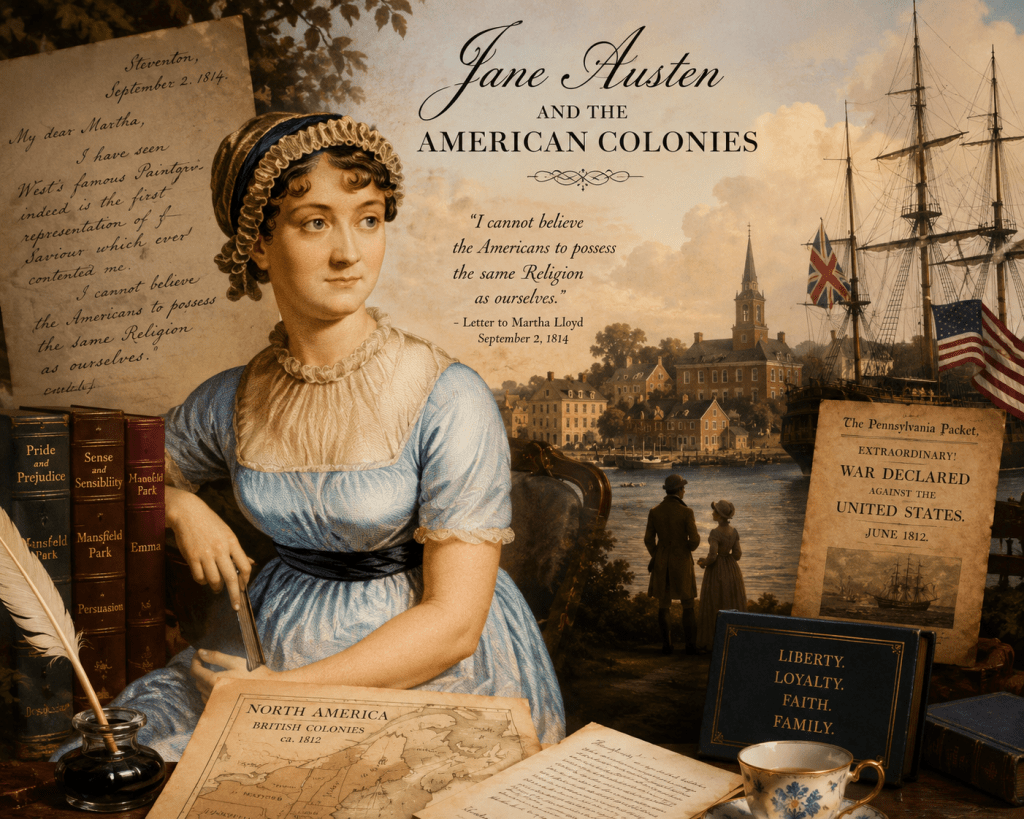
Jane Austen, the American Colonies, and the Fragility of Order


Americans have long embraced Jane Austen as though she somehow belongs to us.

We adapt her novels endlessly. We quote Elizabeth Bennet as if she were an old friend. Entire American industries have formed around Regency balls, tea culture, and Austen-inspired romance. Yet Austen herself appears to have regarded America with considerable suspicion.

In an 1814 letter written during the War of 1812, Austen confessed that while Britain remained “a Religious Nation,” she could not believe Americans possessed the same religious seriousness. It is one of the clearest surviving glimpses of her feelings toward the young republic. To modern readers, this can feel surprising. Austen is often claimed as a proto-progressive writer whose intelligent heroines challenge social expectations. Surely such a woman would have sympathized with revolutionary ideals?

And yet Austen’s fiction consistently reveals a deep suspicion of rupture.

She was born in 1775, only two years after the Boston Tea Party and in the very year the American Revolutionary War began. She grew up in a Britain shaken by the loss of the colonies and later horrified by the violence of the French Revolution. To Austen’s generation, revolution did not necessarily signify liberty. It often signified instability, betrayal, bloodshed, and the collapse of inherited order.

And betrayal, notably, becomes one of Austen’s great fictional obsessions.

Again and again, her novels revolve around broken trust tied to money, advancement, or self-interest. In Sense and Sensibility, Willoughby abandons Marianne for wealth. In Emma, Frank Churchill deceives nearly everyone around him to preserve his inheritance prospects. In Pride and Prejudice, George Wickham’s trail of deception—from his attempt on Georgiana’s fortune to his ruinous elopement with Lydia—exposes how easily self-interest can dismantle a family’s social standing. Even the pragmatic marriage of Charlotte Lucas feels like a betrayal of shared ideals to Elizabeth, proving that trust is often sacrificed at the altar of security.  Finally, in Persuasion, Anne Elliot’s broken engagement becomes a quiet meditation on loyalty, regret, and wounded trust.

But Austen rarely discussed politics directly; instead, she wove its themes into the fabric of everyday life. In her novels, the tensions shaping nations often reveal themselves within families: through inheritance, courtship, duty, and belonging. The fractures of public life become emotional burdens that society must somehow bear together. I suppose, as a Jewish reader, this resonates with me. Contemporary culture often romanticizes revolution and social upheaval. Jewish history, however, tends to remember the cost.

Across centuries, revolutions, wars, and collapsing social orders rarely produced immediate freedom for Jews. More often, they unleashed uncertainty, scapegoating, displacement, or violence.

Stability itself became precious.

Maybe that’s why Austen’s suspicion of political rupture feels less alien to me than it might to some modern readers. Beneath the wit and courtship plots lies an intense concern with continuity: how families endure, how moral inheritance survives, and how fragile civilization can become when loyalty gives way to appetite and self-interest. This made a strong basis for my new novel, Kindle the Light of Liberty, which explores life in Colonial America during another age of uncertainty and transformation. For Jews living through the Revolutionary era, it was not merely a philosophical debate about liberty. It was personal and precarious. Jewish communities in places like New York City, Newport, Charleston, and Philadelphia had to navigate divided loyalties, economic instability, shifting governments, and the eternal question every Jewish community has faced in exile: will this society remain safe tomorrow?

Some Jews supported the Revolution enthusiastically. Others feared the chaos that revolutions inevitably unleash. Many simply hoped to preserve their families, faith, and fragile place within society while empires battled around them. That tension between liberty and stability, hope and uncertainty, reinvention and continuity feels profoundly Austenian to me—even though Austen herself may never have intended it so. After all, the author’s greatest conflicts are about what happens to human relationships when social structures begin to shift. Her characters must navigate competing claims of duty, desire, inheritance, class, morality, and personal freedom. Beneath the drawing rooms and courtships lies a deeper anxiety about continuity itself: what must be preserved, what may change, and what is lost when loyalty gives way to self-interest. That is one reason Elizabeth Bennet and Fitzwilliam Darcy profoundly influenced the dynamic between Rose Wachsman and Nathan Hirsch—characters in my own forthcoming novel. Their misunderstandings are not merely romantic obstacles; they reflect the delicate balance between personal freedom and communal expectation, individual judgment and inherited responsibility. Those tensions felt especially relevant to me while writing about Jews in Colonial America, where questions of loyalty, belonging, security, and identity were not theoretical abstractions, but daily realities.

Austen may never have trusted revolutions. But she understood what it meant to live in a world where old certainties were beginning to fracture. Perhaps that is why her novels still speak so powerfully to readers shaped by histories of displacement, endurance, and survival — to readers who know how fragile civilization, continuity, and belonging can become. If these themes resonate with you, I invite you to journey into the world of Kindle the Light of Liberty. Through the lives of Rose Wachsman and Nathan Hirsch, the novel explores what it meant for Jewish families to navigate a revolutionary age while trying to preserve faith, belonging, and hope in an ever-shifting world.

Kindle the Light of Liberty will be released this July.

With love,