New Post

Publishing Day: A Revolutionary Jewish Fiction I Couldn’t Find on the Shelf~

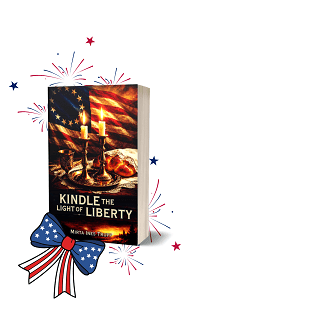
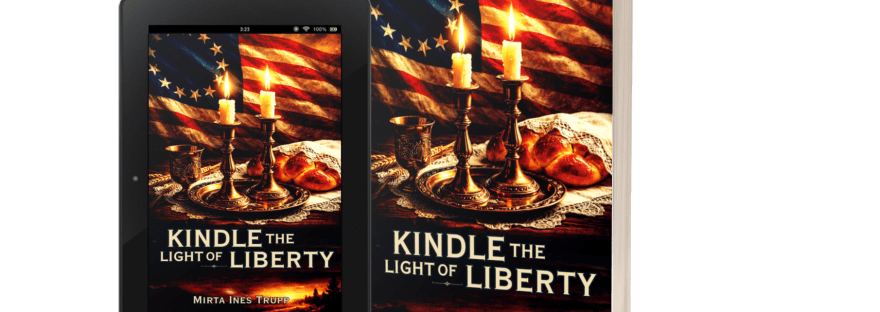
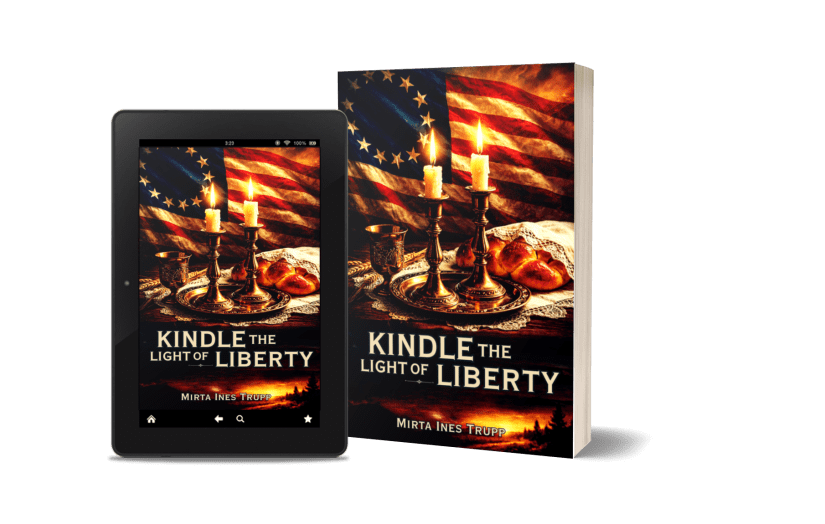
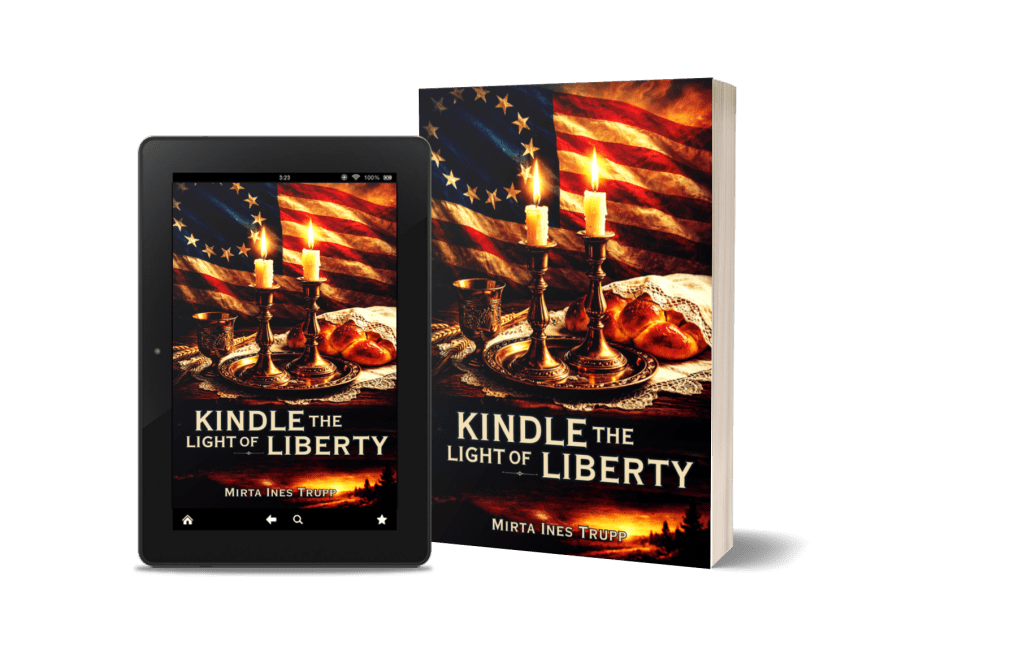
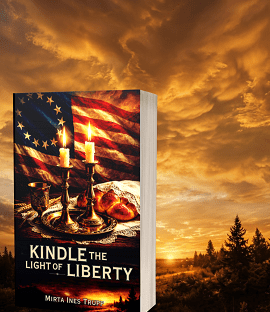
As America commemorates the 250th anniversary of its independence, I’m delighted to announce that Kindle the Light of Liberty is now available on Amazon.

Like many readers who love early American novels, I grew up surrounded by familiar stories. We know the Pilgrims. We know the Puritans and the Quakers. We know Washington, Franklin, Adams, and Jefferson. Historical fiction has given us countless perspectives on the birth of our nation. But one question kept nagging at me:

Where were the Jews?

Not because we weren’t here—but because we so rarely appear in the founding narrative.
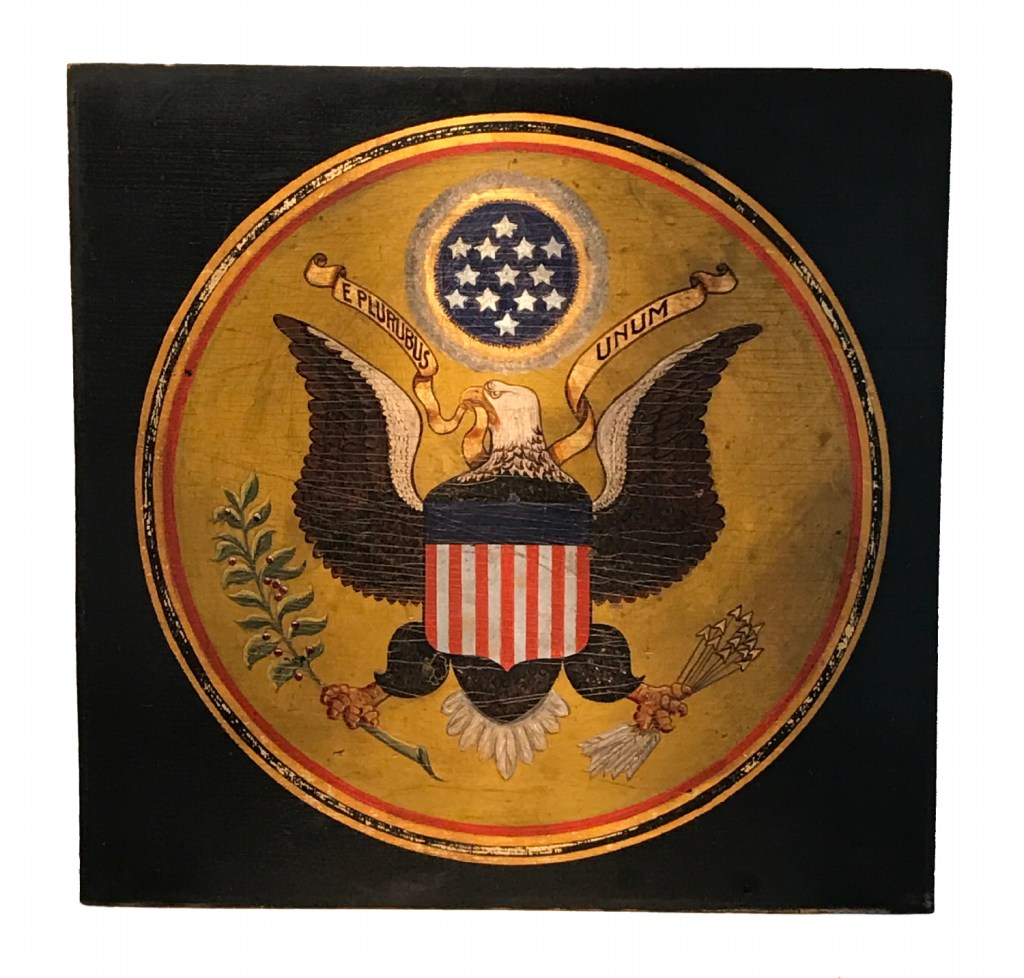
Great Seal of the United States

Historians have long documented the lives of America’s colonial Jewish communities. Adam Jortner’s A Promised Land: Jewish Patriots, the American Revolution, and the Birth of Religious Freedom, Oscar Reiss’s The Jew in Colonial America, and Laurens Schwartz’s Jews and the American Revolution: Haym Salomon and Others all remind us that Jewish families were very much part of the American story. They built businesses, raised children, prayed in their houses of worship, argued over politics, supported different sides of the conflict, and helped shaped an emerging nation. Yet when I looked for novels that placed Jewish families at the center of Revolutionary America, I found surprisingly few.

That absence became the beginning of Kindle the Light of Liberty.

Set in Philadelphia, the novel follows Jewish colonists wrestling with questions of identity, faith, and loyalty as their city transforms into the cradle of Revolution. The story unfolds not only in the streets and meeting houses, but around kitchen tables, inside shops, through letters, and clandestine conversations. Rose Wachsman and her family live alongside neighbors whose lives are equally shaped by uncertainty—including Betsy Ross—because history wasn’t experienced in isolated communities. It was shared.

And just as Jane Austen used drawing rooms and assemblies to critique a changing world, her sharp social commentary inspired me to view the American Revolution through the intimate, high-stakes lens of one Jewish household.

Yes, I said Jane Austen.
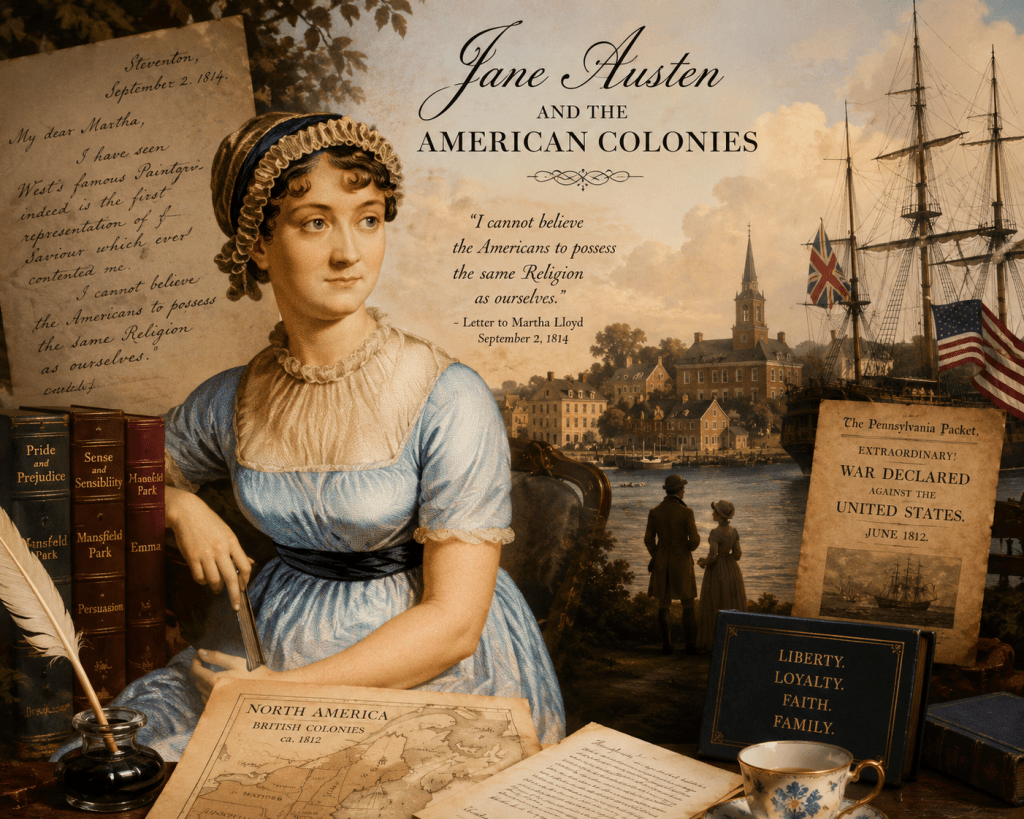
People often are surprised by my literary influences; Austen doesn’t seem to be a logical choice when contemplating a novel set in this era. At first glance, I understand that it does seem an unlikely pairing! But Austen understood something timeless about human nature: history provides the backdrop, yet stories endure because of the people who live through it. That’s her genius and the secret to her longevity. She mastered the art of the domestic canvas—showing how massive societal shifts echo through family dinner tables and neighborhood gossip.

Elizabeth Bennet taught generations of readers that first impressions can be wonderfully, painfully wrong. Her wit, compassion, and willingness to reexamine her assumptions helped inspire my own heroine, Rose Wachsman. And if readers catch a glimpse of Fitzwilliam Darcy in Mr. Hirsch—reserved, honorable, occasionally misunderstood—I will happily plead guilty! They may also recognize faint echoes of Caroline Bingley, Mr. Wickham, or even Lady Catherine de Bourgh. After all, every story needs its social climbers, charmers, and people whose polished exteriors conceal far less admirable motives.

That’s why Austen still captivates us more than two centuries after her birth. She reminds us that beneath every great historical event are ordinary people navigating pride, prejudice, family expectations, misunderstandings, and deeply human connections.

That’s the novel I wanted to read. And that’s the novel I wrote.

A Revolutionary story where the Jewish experience isn’t a footnote.

A love story grounded in history.

And a reminder that America’s founding was always more diverse, more interconnected, and more human than we sometimes imagine.

Sneak Peek: Read an Excerpt from Chapter Four:


Rose tallied the chandlery’s goods with a restless precision. She found her thoughts snagging on the great gamble taking place blocks away. Had the divided loyalties finally snapped the cord of their resolve?

For weeks, men dawdled at her father’s counter, stripped of their coats and their patience in equal measure. Women lingered after completing their purchases, feigning an interest in a particular scent or the quality of soap, but their voices were lowered and their eyes watchful as they spoke of those grave matters which now threatened the balance of their world. Her father maintained a most rigorous display of neutrality, attending to every wick and ledger with a public diligence intended to keep his doors unbarred—not merely for the sake of the coin, but for the quiet, folded messages that were expected to pass through his hands in the shadows of the shop.

The burden of such secrets required a mask of perfect indifference, a performance that was put to an immediate test by a most unexpected visitor. One afternoon, while the bells of Christ Church tolled noon, Mr. Hirsch entered the candle shop and found Rose and Hannah Ellicott passing the time of day.

He stood tall in the doorway, his dark coat impeccably cut, appearing remarkably untouched by the stifling heat that had caused the rest of the city to wilt. His hair, tied simply at the nape, lent him an austerity that suited his grave expression. Rose noted a sharp, discerning flare of his features—a movement so fleeting she might have imagined it had her own pulse not quickened in response. She had hoped the clean fragrance of the honeycomb and citrus peel would mask the heavy, acrid scent of the rendering kettles, but the sudden, rigid set of his jaw suggested her efforts had been in vain.

Steadying her breathing and smoothing her apron, Rose masked any flicker of concern. She cared little if a stray smudge of soot marked her cheek. Boiling berries and rendering raw comb was a messy business; it followed that it was an odorous one. The result, however—the sweet-smelling soaps and tapers born of that labor—softened the edges of their world.

Given his apparent state, Nathan Hirsch was plainly not a man given to softened edges.

Rose felt rather than saw the shift in Hannah beside her as her friend’s missive slipped swiftly into the folds of her apron. She curtailed any emotion that would give her away, although she noticed Mr. Hirsch’s eyes registered the exchange. The gentleman had not yet approached the pair. In fact, he had not greeted Rose in his usual way. The simple nod she was afforded possessed nothing of his accustomed formality. And it gave her pause.

“The mail has come early today?” he asked.

His tone was mild. Too mild for her liking. What game was he playing? Rose felt the ridge of the wax seal from within her apron’s pocket. Wax was meant to protect. It could just as easily betray. She could not trust him. The letter was bound for Savannah. If it failed to reach its destination, a family might be ruined—or worse.

“Just the butcher’s bill,” she said lightly. “Mistress Ellicott was good enough to drop it off, seeing that she had to collect her weekly order of tapers. It is a small kindness we extend to one another.”

“Yes,” Hannah quickly added. “It helps when one must tend one’s shop. Sometimes Mrs. Riley or even little Tommy comes to our aid—such a good boy, that one. Always willing to help carry our little packages or knick-knacks.”

Rose resisted the urge to reproach her friend. Mr. Hirsch’s mouth, she noticed, curved ever so faintly—not in amusement, but in something like…recognition.

“Ah,” he said softly. “How clever you are.”

His gaze lingered on Rose’s face with cool intensity, as if attempting to reconcile the woman before him with some private conclusion.

“I would encourage you,” he continued, “to be selective in choosing couriers for your… knick-knacks. You would not wish anything to fall into the wrong hands.”

Rose met his eyes steadily, though her pulse hammered against her ribs. It was a moment that required a most calculated diversion; she must lead his thoughts away from the missive he had observed—away from the dangerous reality of their schemes and into the safer, if more painful, territory of society’s parlors.

“I thank you, sir, for your concern. Pray tell me—how may I be of service?” she asked with the civil indifference of a tradesman’s daughter.

“Was there something amiss with your mother’s order,” Rose continued with practiced calm, “or perhaps you seek a gift for a young lady? For Miss Franks, perchance? I believe my cousin has a particular partiality for our lavender soaps.”

He hesitated. It was a silence of a most distressing duration, and one which frightened her more than a direct accusation would have.

“Be at ease, Miss Wachsman,” he said at last. “I have been commissioned to acquire an additional dozen of the bleached tapers, if you please.”

Though she found the request odd—she had, after all, filled his mother’s order only two days prior—Rose turned to retrieve the items at once, willing her hands not to tremble beneath his keen observation. Mr. Hirsch had not shifted from his place; his dark eyes, however, took in every detail. Every shelf and display was scrutinized. Nothing, it would appear, was too small for the gentleman’s attention. Rose set the wrapped candles upon the counter between them—a small barricade of paper and twine.

“You keep busy,” he said. “I suppose you have felt the effects of the recent blockade.

“Indeed, sir. We have felt it exceedingly,” replied Rose. “We pray that the strain does not prove too hard to bear—for ourselves and for our families.”

Mr. Hirsch nodded his understanding as he placed his payment beside the parcel Rose had presented.

Sterling! He paid in sterling.

The silver coins caught the light with a cold, indisputable authority which the paper Continental notes could never hope to mimic. Rose found her gaze anchored to them a second longer than propriety allowed, her mind racing to reconcile the gleam of the King’s metal with the man who stood so unruffled before her.

Something unreadable flickered across his face. “Is there anything… amiss?” he asked, repeating her words.

She searched his expression for accusation—or mockery—but found neither. “No, not at all, sir. I thank you for your custom.”

He inclined his head. “Then I wish you a good day, Miss Wachsman; Mistress Ellicott.”

Rose watched him make his way toward the door. The question of where his loyalties truly lay rose to her lips with such force she very nearly put it to him directly.

“Mr. Hirsch.”

He paused, his hand upon the latch. “Yes, Miss Wachsman?”

“If you would authorize me to do so, sir,” she said instead, “I shall adjust your mother’s weekly order. I would not wish to incommode your schedule.”

“I have every faith in your judgment, madam,” he replied.

The bell above the door gave a soft, indifferent chime as he departed. Rose could not help but roll her eyes at the formality of his parting salutation. Madam, indeed!

Beside her, Hannah exhaled. “He knows.”

Rose turned the letter slowly between her fingers, the parchment feeling suddenly like lead. “He suspects,” she corrected, though the distinction brought her little comfort. She could not know if she had truly diverted his scrutiny or merely confirmed it; she was not sure which might prove worse.

Nathan Hirsch moved easily between worlds that distrusted one another. He frequented the Franks’ salons—seemingly paying court to the daughter of the house—yet he stood in prayer beside her own father each Sabbath.

He spoke carefully—and watched everything.

She could not know which allegiance governed him. Rose suspected that his neutrality was not a choice of conscience, but a masterwork of convenience.

Slipping the provocative letter into the hidden compartment beneath the counter, Rose felt her pulse steady as wood and wax and ordinary commerce enfolded the message until it could be revealed. He might keep his elegant decorums and his careful speech! She cared not for them. Here, amidst the scent of rendered fat and cooling wax, there was no room for duplicity—only the hard, honest work of survival.


I hope you’ll join Rose, Mr. Hirsch, and the families of Colonial Philadelphia as they discover that liberty is kindled not only by famous speeches and battlefield victories, but by the quiet courage of ordinary people whose stories deserve to be remembered. Click here to be directed to Amazon.

Happy Birthday, America! Kol hakavod—well done—for the first 250 years! May God’s presence continue to abide among us, and may our country remain a beacon of freedom and justice for the world.

With love,

New Post

Jewish Historical Romance: A Jewish Colonial Love Story of the American Revolution

I can’t think of any author who wouldn’t appreciate the chance to talk about their new book—the research, the premise, the inspiration…well, you get my meaning. I had such an opportunity when I was asked to participate in an Author’s Q & A with Writergurlny. Click on the highlighted link to read the interview, or read a few snippets here:

Getting the full scope of history goes well beyond a generic textbook. For every well-known person, there are many others whose names and histories are lost to time. Mirta Ines Trupp’s new historical novel, Kindle the Light of Liberty, is set in Philadelphia during the American Revolution.

AB: What was the inspiration for the book?

MIT: First of all, thanks for the opportunity! I appreciate your interest in my latest book.

The inspiration for Kindle the Light of Liberty grew from three longtime passions. As a grateful naturalized citizen of this country, I wanted to contribute to the celebration of America’s 250th anniversary by exploring a lesser-known aspect of the nation’s founding—the experiences and contributions of Jewish Americans during the Revolutionary era. I am also passionate about writing Jewish protagonists in wholesome, accessible fiction. Too often, Jewish characters are absent from historical novels or appear only in stories centered on persecution. I wanted to create a compelling, “clean” read that allows Jewish characters to take their place at the heart of an engaging historical story—one filled with courage, hope, and the pursuit of liberty. Finally, as a devoted Jane Austen reader, I have long admired her ability to illuminate universal truths through the lives of ordinary people. Austen showed that questions of family, duty, love, and social belonging can be every bit as compelling as grand historical events. In Kindle the Light of Liberty, I sought to emulate that vision by placing personal relationships and moral choices against the backdrop of a transformative moment in history, allowing readers to experience the American Revolution through the hearts and minds of the people living it.

AB: Did the idea of Rose come from anyone specific?

MIT: Rose wasn’t based on any one specific person, but she was certainly influenced by a few different sources. As I mentioned, I am a longtime Austen fan. I would be hard-pressed to deny the influence of Miss Elizabeth Bennet of Pride and Prejudice fame. I’ve always admired Lizzy’s intelligence, wit, and willingness to speak her mind, even when doing so is not the easiest path. Those qualities definitely found their way into Rose’s character. At the same time, I often joke that all of my heroines are, in some sense, a blend of myself and the women who came before me. Rose reflects some of my own interests, values, and perspectives, but she is also inspired by the resilience, strength, and determination I imagine in my female ancestors.

As a historical novelist, I spend a great deal of time thinking about the lives of the women who preceded us—the challenges they faced, the choices they made, and the dreams they carried. In many ways, Rose became a way for me to honor both my own heritage and the remarkable women whose stories were never written down but whose lives helped shape the generations that followed.

AB: What made you choose the American Revolution as opposed to another time?

MIT: That’s a great question. As I mentioned earlier, one of the original inspirations for the novel was the upcoming commemoration of America’s 250th anniversary. I wanted to explore the colonial era, but through a lens that readers don’t often encounter. When most people think about Jewish involvement in the American Revolution, if they think about it at all, they tend to recall a handful of financiers and wealthy merchants. I was struck by how history reduced Jewish colonials to a single dimension. Ancient tropes and European stereotypes shouldn’t dictate how historical novel readers—Jewish or not—understand the past.

The Revolutionary period offered a fascinating opportunity to challenge those assumptions and expand the narrative. I wanted to portray Jewish characters as fully realized people—patriots, neighbors, friends, daughters, sons, and, when called upon, individuals capable of courage and sacrifice. The American Revolution was not only a struggle for independence; it was also a moment when many different groups were asking what it meant to belong in a new nation. That question felt as relevant to me as ever, and it made the Revolutionary era the perfect setting for Rose’s story.

AB: What kind of research did you do? Was it more internet-based, or did you rely on physical texts?

MIT: My research was actually conducted mostly online. One of the great advantages of not living in colonial times is that so much history is literally at our fingertips. Newspapers, letters, diaries, maps, genealogy records, academic articles, and digitized books that once required travel to specialized archives can now be accessed from home. The challenge is no longer finding information—it’s finding the time and patience to follow the trail of sources wherever they lead, and remembering to come up for air once you’ve disappeared down a research rabbit hole!

That said, online research doesn’t mean superficial research. Many of the sources I consulted were digital versions of primary documents and scholarly works. In fact, even my beloved Jane Austen was part of my online research process. Her novels are available free of charge through Project Gutenberg, which makes it easy to search passages and revisit particular scenes. Of course, I also keep a well-worn copy of Pride and Prejudice on my desk. Whether I’m reading a digitized eighteenth-century newspaper or a printed history book, the goal is always the same: reliable information. It needs to help me understand the period as accurately and vividly as possible so that readers can feel as though they have stepped back in time.

AB: The hardest part of historical fiction is melding the real people/events with the fictional ones. How do you go about it?

MIT: That’s probably the hardest—and most rewarding—part of writing historical fiction. The events themselves are often well documented, but people are much more complicated than the brief descriptions history leaves behind. When I encounter a historical figure, I try to look beyond the labels that have been attached to them. Take Rebecca Franks, for example.

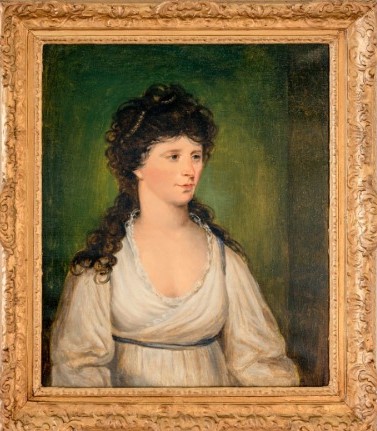
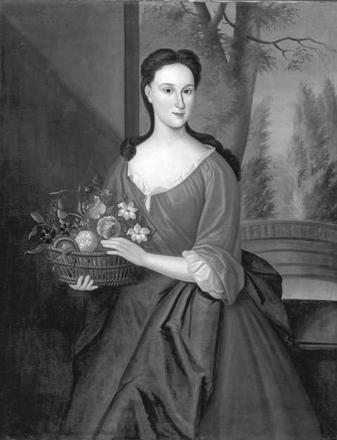
Rebecca Franks

On the surface, she can be easy to categorize. She came from a prominent Jewish family, yet she was a Loyalist. She was a known flirt, witty, and resourceful (to put it kindly). She married an Englishman and ultimately lived in Britain as part of the aristocracy. Viewed from a certain angle, she might appear to have turned her back on both her countrymen and her heritage. But I found myself asking a different question: What made her the person she became? What hopes, fears, disappointments, and demands shaped her choices? The moment you start asking those questions, a historical figure stops being a name in a book and becomes a human being.

In many ways, that approach is influenced by a central idea in Judaism. At Passover, we are instructed to see ourselves as if we personally came out of Egypt. At Shavuot, we are encouraged to imagine ourselves standing at Sinai. Jewish tradition asks us to enter the story rather than merely observe it. As a novelist, I try to do something similar. I place myself in the position of my characters—both the real historical figures and the fictional ones—and ask what the world looked like through their eyes. What would I have believed? What would I have feared? What would I have hoped for? Once I can answer those questions, the boundary between history and fiction becomes much easier to navigate. The historical record provides the framework, but empathy helps fill in the spaces between the facts. That’s where the story comes alive.

AB: Philadelphia is as much of a character as the people. Did you deliberately choose the city, or was it an organic decision?

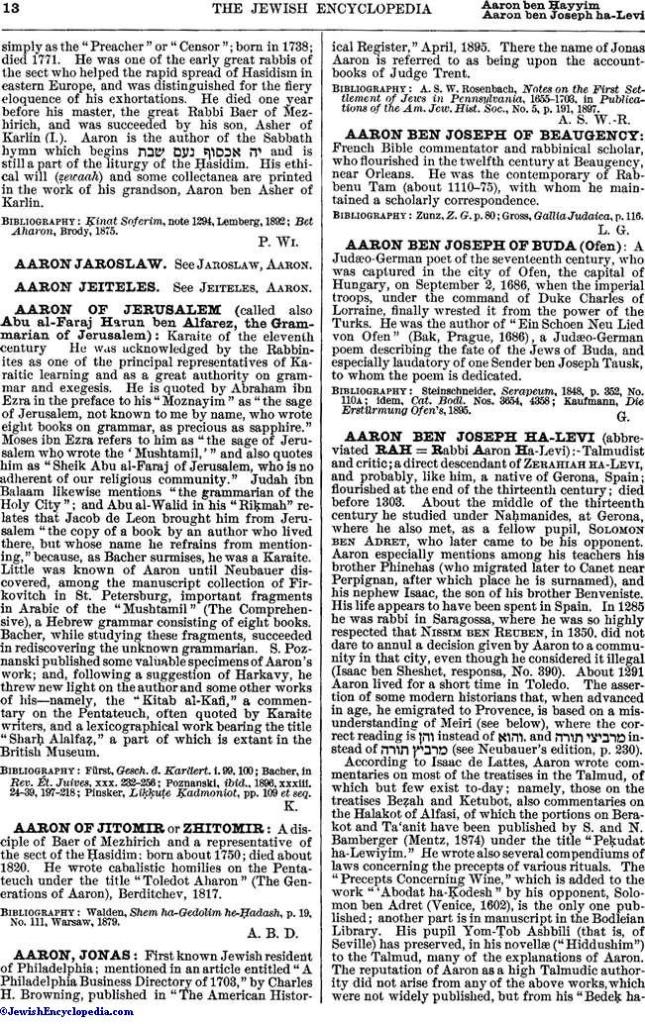
MIT: Absolutely deliberate! From the very beginning, I knew that if I was going to tell a story about Jewish life during the American Revolution, Philadelphia was the natural setting. I was drawn first to the city’s rich Jewish history. Philadelphia was home to one of the earliest and most important Jewish communities in colonial America, and many of the individuals I wanted to write about either lived there or passed through it. One figure who particularly intrigued me was Jonas Aaron, who arrived in Philadelphia in 1703 and is often considered the city’s first known Jewish resident. His presence is a reminder that Jewish history in Philadelphia stretches back long before the Revolution itself.

At the same time, Philadelphia was the political heart of the Revolution. The Continental Congress met there. Benjamin Franklin walked the streets. Betsy Ross lived and worked there. It was a city where world-changing events and ordinary daily life existed side by side. I was also fascinated by Philadelphia’s Quaker roots. William Penn’s vision created a colony that was remarkably welcoming for its time. While no eighteenth-century society was free from prejudice, Pennsylvania offered opportunities for religious minorities that were difficult to find elsewhere. Quakers, Jews, Anglicans, Presbyterians, and many others lived alongside one another, creating a vibrant and diverse community. That diversity made Philadelphia an ideal place to explore questions of identity, belonging, and citizenship during the founding of the nation.

AB: Rose and Nathan have a specific Elizabeth Bennet/Fitzwilliam Darcy energy to their relationship. Was this a deliberate choice, or did it emerge as a natural part of the writing process?

MIT: That’s a fair observation—Pride and Prejudice has been such a long-standing touchstone for me; Elizabeth and Darcy’s dynamic was always part of my creative landscape. At the same time, I didn’t want to simply recreate Austen in an American Revolutionary setting. Several of my other novels are “Austenesque” or straight-up Jane Austen fan fiction (JAFF), but I tend to introduce Jewish protagonists to the narrative, rather than portray Austen’s characters as Jews. There’s a reason for that approach.

What I’ve always found most powerful in Austen’s work is how clearly she shows the real stakes for women in her world: the very real fear of not marrying, of lacking financial security, of being labeled a spinster and therefore considered somehow “unfulfilled” or even nonessential in society. She also captures how profoundly a family’s social standing could shape the entire trajectory of a woman’s life, and how a single “wrong” choice could carry lifelong consequences. Those concerns absolutely echo through Rose and Nathan’s story, and in that sense, they do shadow Elizabeth and Darcy’s world. But as I wrote, those familiar Austen themes began to branch outward in new directions. Rose and Nathan are shaped by their Jewish identity, by a long history of displacement and persecution, and by the added weight of what it means to belong—or not belong—in a young nation trying to define itself. Their choices are not only about love, marriage, or reputation, but also about survival, continuity, and the question of whether a community that has endured centuries of exclusion can truly find a stable place in this new world. So I would say Austen gave me the emotional framework, but Rose and Nathan ultimately grew into something more layered—I hope! They are rooted in her world of social constraint and romantic tension, yet expand into broader historical and cultural realities that define their own lives.

New Post

June 11, 1776 to June 11, 2026: A Date Worth Celebrating

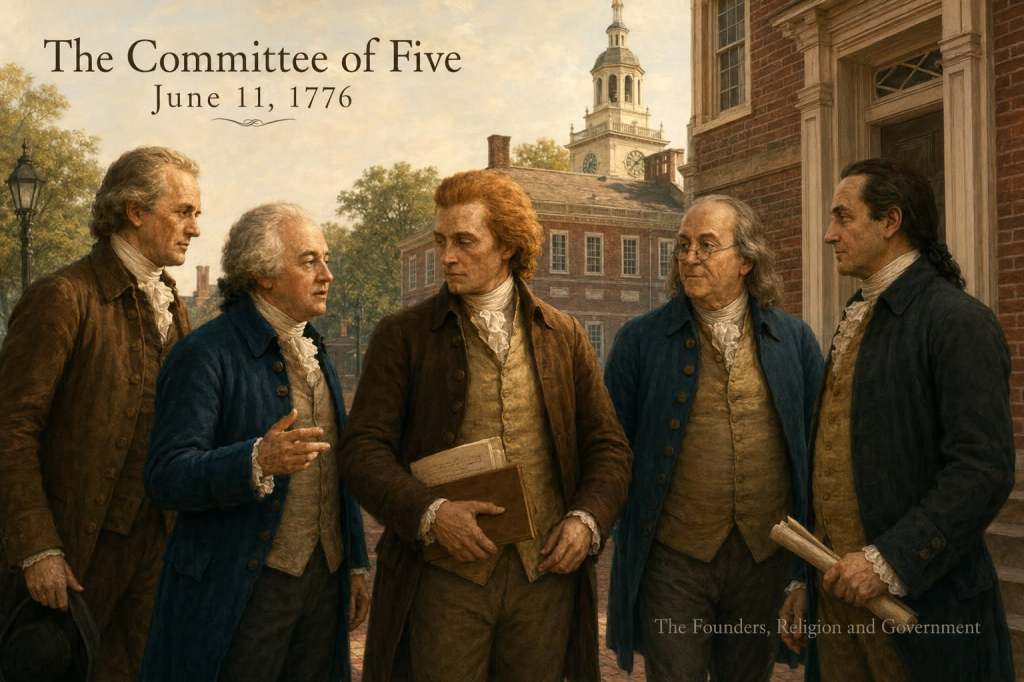
On June 11, 1776, the Second Continental Congress appointed the Committee of Five—Thomas Jefferson, John Adams, Benjamin Franklin, Roger Sherman, and Robert Livingston—to draft what would become the Declaration of Independence. Their task was nothing less than putting into words the principles upon which a new nation would be founded. Two hundred and fifty years later, on June 11, 2026, I am delighted to share a milestone of my own. The ebook pre-order for Kindle the Light of Liberty is now live on Amazon.

The timing feels especially meaningful.

My novel is set during the Revolutionary era and follows Rose, a young Jewish woman in Philadelphia, as she navigates friendship, family, faith, and the uncertain birth of a nation. Like the men charged with drafting the Declaration, my characters find themselves living through extraordinary times when the future is unwritten, and every choice carries consequences.

As I researched the period, I was struck by how often Jewish participation in the Revolution is remembered through a narrow lens, focused primarily on a handful of financiers and merchants. Kindle the Light of Liberty seeks to broaden that picture by portraying Jewish characters as fully realized people—friends, neighbors, patriots, and family members whose lives were shaped by the same hopes, fears, and sacrifices as their fellow Americans. Readers may also recognize traces of the social and emotional tensions that drew me to Jane Austen’s novels. Rose faces many of the same concerns that shaped women’s lives in Austen’s world: the importance of marriage, family expectations, financial security, and the consequences of a single ill-considered choice. Yet Rose and Nathan’s story unfolds within a different historical reality. Their lives are shaped not only by questions of love and reputation, but also by their Jewish identity and by the larger question of what it means to belong in a new nation still defining itself.

The journey toward publication has already brought wonderful opportunities to discuss the history behind the novel. On May 1, 2026, I was honored to appear as a guest author on History Imagined, where we discussed Jews in colonial America and the fascinating historical research that helped shape the story.

Early ARC (Advanced Reading Copy) readers have also begun sharing their thoughts.

From Claudia F. on Goodreads: Trupp takes the qualities I love most about Austen—witty observations, complex family relationships, social expectations, and a romance built on misunderstanding and mutual respect—and places them in Revolutionary Philadelphia…with Jewish patriots to boot! The result feels both familiar and entirely fresh.

From Judy K. on Goodreads: Trupp has done it again! As America prepares to celebrate its 250th anniversary, I can think of no better book to begin the festivities than “Kindle the Light of Liberty.”

From Mrs. W. on Goodreads: As America approaches its 250th anniversary, there seems no better time to remember that Jewish patriots were present at the nation’s founding—not standing on the sidelines, but helping to shape the course of events. 

On May 30, 2026, Writergurlny posted a thoughtful review of Kindle the Light of Liberty, highlighting the novel’s blend of historical detail, friendship, and romance. I’m also pleased to share that I’ll be returning to Writergurlny in the near future for an author interview.

There are several exciting events coming up over the next few months:

As America approaches the 250th anniversary of independence, I am grateful for the opportunity to share a story set during the nation’s founding era. Historical fiction allows us to look beyond the familiar names and dates and imagine the lives of ordinary people who experienced extraordinary events firsthand. Through Rose’s eyes, readers can explore a Revolutionary America that includes voices too often overlooked, including the small but vibrant Jewish communities that helped build the new nation.

Thank you to everyone who has supported this book, reviewed it, hosted me on your blogs, or simply shared your enthusiasm for Revolutionary-era history. I look forward to celebrating the launch of Kindle the Light of Liberty with all of you in the weeks ahead.

Happy June 11th. Two hundred and fifty years ago, a committee began drafting a document that would change history. Today, I am honored to share a story inspired by the people who lived through those extraordinary times.

With love,

New Post

A National Shabbat for America at 250: How Jewish Memory Illuminates Liberty

In special honor of 250 glorious years of American independence, a national jubilee of prayer, praise, and thanksgiving has been designated for this Shabbat, Friday, May 15, 2026.

“We celebrate the contributions that Jewish Americans have made to our way of life, we honor their role in shaping the story of our Nation, and we remember that religious devotion, learning, and service to others are enduring pillars of a thriving culture,” the president stated. “Through every trial and triumph, the contributions of Jewish Americans have shaped our past, have strengthened our communities, and will continue to inspire American greatness for generations to come.”

The timing feels especially meaningful. On May 15, 1776 — exactly 250 years ago — the movement toward American independence took a decisive turn. Following the Fifth Virginia Convention’s resolution instructing its delegates to propose independence, the colonies moved more deliberately toward severing ties with Great Britain, setting the stage for the Declaration of Independence. Even Patrick Henry resigned his military commission to join the political struggle for liberty.

Yet amid revolutionary fervor, America’s founders also turned toward spiritual reflection. Congress proclaimed May 17, 1776, a “day of Humiliation, Fasting and Prayer,” revealing something often forgotten today: the first national government of the United States believed that public prosperity depended upon the moral and religious vitality of the people. Congress called for nothing less than a “spirit of universal reformation among all ranks and degrees of our citizens,” believing that such devotion would “make us a holy, that so we may be a happy people.”

There is another striking parallel. May 15, 1776 corresponded to the 26th of Iyar, during the counting of the Omer — the sacred forty-nine-day journey from Passover to Shavuot. For Jewish colonials, this timing would not have been incidental. Iyar has long been associated with healing — “I am God your healer” — and the Omer marks the movement from liberation to covenant, from freedom gained to freedom disciplined and sustained.

In the spring of 1776, those sacred weeks unfolded alongside the colonies’ own decisive movement toward independence. Passover had begun only weeks after the British evacuation of Boston, while the Omer stretched across the very period in which the Continental Congress shifted from reconciliation to preparing a declaration of independence. Colonial Jews, many of whom strongly favored the Patriot cause, often interpreted contemporary events through the language and memory of Jewish history.

Just as Passover recalls liberation from Egypt and the Omer counts the journey toward Sinai and national covenant, many Jewish colonials would have recognized in America’s struggle echoes of an older story: a people seeking freedom not merely from oppression, but toward moral purpose and self-governance. The symbolism would have been especially powerful. During the Omer, Jews engage in daily reflection and self-discipline in preparation for receiving the law at Sinai.

For Patriots — Jewish and otherwise — liberty demanded sacrifice, virtue, and responsibility. Freedom was never understood as mere release from authority, but as the difficult work of building a people capable of governing themselves.

As I prepare for the release of Kindle the Light of Liberty, this moment feels particularly fitting. My novel explores not only the struggle for freedom, but the quieter truth that liberty is sustained by faith, memory, family, and the moral obligations we owe one another. Perhaps there is wisdom for all of us in Shabbat this weekend: to pause, gather with those we love, and remember that the light of liberty must continually be rekindled.

With love,

New Post

Jane Austen, the American Colonies, and the Fragility of Order


Americans have long embraced Jane Austen as though she somehow belongs to us.

We adapt her novels endlessly. We quote Elizabeth Bennet as if she were an old friend. Entire American industries have formed around Regency balls, tea culture, and Austen-inspired romance. Yet Austen herself appears to have regarded America with considerable suspicion.

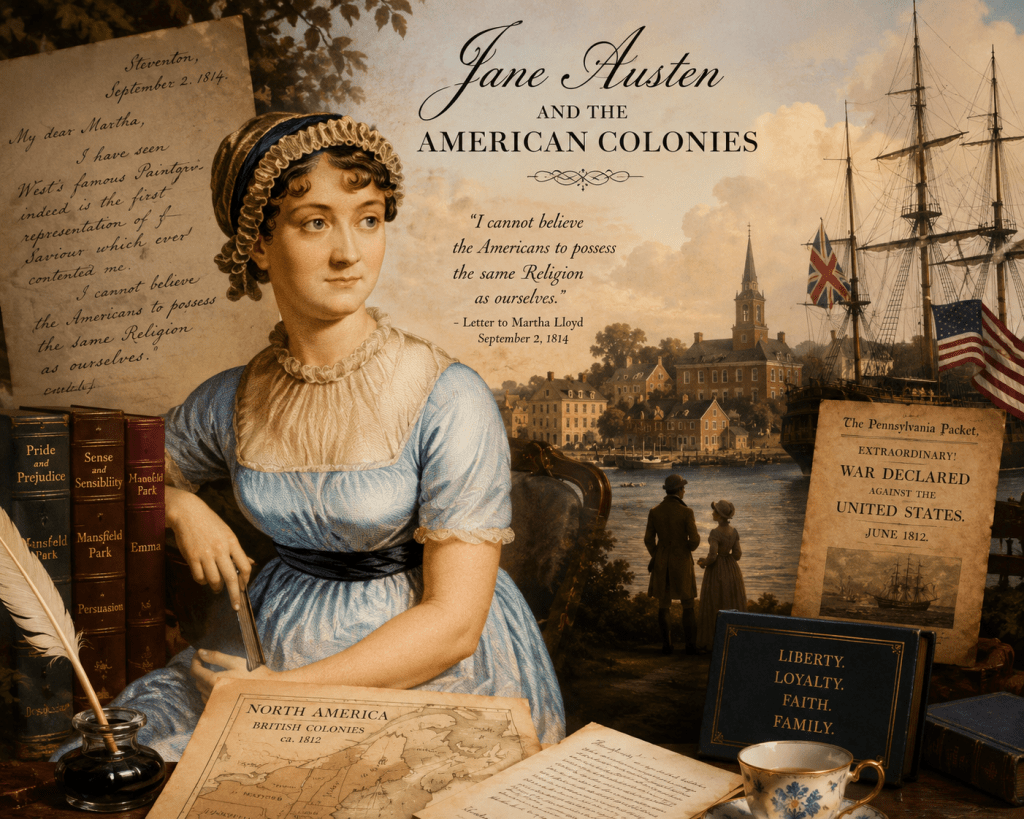
In an 1814 letter written during the War of 1812, Austen confessed that while Britain remained “a Religious Nation,” she could not believe Americans possessed the same religious seriousness. It is one of the clearest surviving glimpses of her feelings toward the young republic. To modern readers, this can feel surprising. Austen is often claimed as a proto-progressive writer whose intelligent heroines challenge social expectations. Surely such a woman would have sympathized with revolutionary ideals?

And yet Austen’s fiction consistently reveals a deep suspicion of rupture.

She was born in 1775, only two years after the Boston Tea Party and in the very year the American Revolutionary War began. She grew up in a Britain shaken by the loss of the colonies and later horrified by the violence of the French Revolution. To Austen’s generation, revolution did not necessarily signify liberty. It often signified instability, betrayal, bloodshed, and the collapse of inherited order.

And betrayal, notably, becomes one of Austen’s great fictional obsessions.

Again and again, her novels revolve around broken trust tied to money, advancement, or self-interest. In Sense and Sensibility, Willoughby abandons Marianne for wealth. In Emma, Frank Churchill deceives nearly everyone around him to preserve his inheritance prospects. In Pride and Prejudice, George Wickham’s trail of deception—from his attempt on Georgiana’s fortune to his ruinous elopement with Lydia—exposes how easily self-interest can dismantle a family’s social standing. Even the pragmatic marriage of Charlotte Lucas feels like a betrayal of shared ideals to Elizabeth, proving that trust is often sacrificed at the altar of security.  Finally, in Persuasion, Anne Elliot’s broken engagement becomes a quiet meditation on loyalty, regret, and wounded trust.

But Austen rarely discussed politics directly; instead, she wove its themes into the fabric of everyday life. In her novels, the tensions shaping nations often reveal themselves within families: through inheritance, courtship, duty, and belonging. The fractures of public life become emotional burdens that society must somehow bear together. I suppose, as a Jewish reader, this resonates with me. Contemporary culture often romanticizes revolution and social upheaval. Jewish history, however, tends to remember the cost.

Across centuries, revolutions, wars, and collapsing social orders rarely produced immediate freedom for Jews. More often, they unleashed uncertainty, scapegoating, displacement, or violence.

Stability itself became precious.

Maybe that’s why Austen’s suspicion of political rupture feels less alien to me than it might to some modern readers. Beneath the wit and courtship plots lies an intense concern with continuity: how families endure, how moral inheritance survives, and how fragile civilization can become when loyalty gives way to appetite and self-interest. This made a strong basis for my new novel, Kindle the Light of Liberty, which explores life in Colonial America during another age of uncertainty and transformation. For Jews living through the Revolutionary era, it was not merely a philosophical debate about liberty. It was personal and precarious. Jewish communities in places like New York City, Newport, Charleston, and Philadelphia had to navigate divided loyalties, economic instability, shifting governments, and the eternal question every Jewish community has faced in exile: will this society remain safe tomorrow?

Some Jews supported the Revolution enthusiastically. Others feared the chaos that revolutions inevitably unleash. Many simply hoped to preserve their families, faith, and fragile place within society while empires battled around them. That tension between liberty and stability, hope and uncertainty, reinvention and continuity feels profoundly Austenian to me—even though Austen herself may never have intended it so. After all, the author’s greatest conflicts are about what happens to human relationships when social structures begin to shift. Her characters must navigate competing claims of duty, desire, inheritance, class, morality, and personal freedom. Beneath the drawing rooms and courtships lies a deeper anxiety about continuity itself: what must be preserved, what may change, and what is lost when loyalty gives way to self-interest. That is one reason Elizabeth Bennet and Fitzwilliam Darcy profoundly influenced the dynamic between Rose Wachsman and Nathan Hirsch—characters in my own forthcoming novel. Their misunderstandings are not merely romantic obstacles; they reflect the delicate balance between personal freedom and communal expectation, individual judgment and inherited responsibility. Those tensions felt especially relevant to me while writing about Jews in Colonial America, where questions of loyalty, belonging, security, and identity were not theoretical abstractions, but daily realities.

Austen may never have trusted revolutions. But she understood what it meant to live in a world where old certainties were beginning to fracture. Perhaps that is why her novels still speak so powerfully to readers shaped by histories of displacement, endurance, and survival — to readers who know how fragile civilization, continuity, and belonging can become. If these themes resonate with you, I invite you to journey into the world of Kindle the Light of Liberty. Through the lives of Rose Wachsman and Nathan Hirsch, the novel explores what it meant for Jewish families to navigate a revolutionary age while trying to preserve faith, belonging, and hope in an ever-shifting world.

Kindle the Light of Liberty will be released this July.

With love,

New Post

My Guest Post on History Imagined; what an honor!

I had the honor of submitting a guest post on the History Imagined blog. I invite you to click on the link below and read the article. Please share your comments there; I’d love to read your thoughts on the topic of #jewsincolonialamerica

Shabbat Shalom and God Bless America!

New Post

In Honor of the 250th Anniversary of This Great Nation’s Independence: Let’s Discuss Jewish American Colonists

A candle to one is a candle to many ~ Talmud, Shabbos 23b

I am thrilled to share a first look at my new novel, Kindle the Light of Liberty, arriving on July 4, 2026! As we approach the 250th anniversary of this nation’s Independence, I wanted to write a tribute to the diverse, complex voices of the Revolutionary period—especially the Jewish colonists who fought for a home in the new Republic.

While my characters, Rose Wachsman and Nathan Hirsch, are definitely influenced by the sharp, social wit of Jane Austen, this story isn’t just about parlors and assemblies; it’s about the hidden sparks of rebellion carried by those whom history often overlooks.

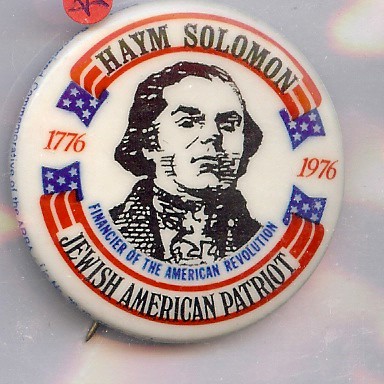
Remarkable figures navigated quiet alliances and treacherous loyalties before and after 1776. People such as: Frances Sheftall, Mordecai Sheftall, Haym Solomon, Issac Franks, The Gratz Family, Abigail Minis, Gerhom Mendes Seixas, Jonas Phillips, Moses Michael Hayes, Solomon Bush, and many more! We often focus on the muskets and battles, but liberty was also won in the shadows by men and women of profound faith and courage.

I’ve called this an American Revolution Love Story. I suppose you can interpret that in different ways. There is a familiar Pride and Prejudice trope, certainly, but as Jane Austen wrote, “there are as many forms of love as there are moments in time.” I can think of a few: Love of Country. Love of Heritage. Love of Liberty. 

It is such an honor to celebrate these unsung patriots as we prepare for this massive milestone in our nation’s history! Please look for the book on Amazon this July!

They had no voice. They held no power. Yet they helped decide the fate of a nation.

In the bustling streets of Philadelphia, Rose Wachsman has no time for the rigid expectations of her community—and even less for the infuriatingly reserved Nathan Hirsch.

She is a woman of the hearth, sharp-witted and fiercely loyal to the cause of liberty; he is a man of business and tradition, seemingly more concerned with ledgers than the fires of revolution.

But as the war moves from a tradesman’s chandlery to the parlors of the elite, Rose and Nathan find themselves forced into a dangerous game of intelligence and alliance. In a world that would rather forget their names, they must overcome their own prejudices to discover that their greatest adversary might be their only hope.

New Post

Shabbat Shalom~ Commentary from a Jewish Regency Romance Author on Celebrating Independence Day

Here in the United States of America, we will soon celebrate the 246th anniversary of our independence. And as a grateful immigrant, I will soon be celebrating my 60th year in this great nation. The blessings are boundless; a deep sense of pride and patriotism continues to fill my heart.

I come from a long line of immigrants. I wish I could trace my lineage with some level of accuracy beyond that which I know: Russian Jews that settled in Argentina thanks to Baron Hirsch and the Jewish Colonization Association. My family later immigrated to the U.S. and I’ve spent a life time explaining, to all who ask, why there are blue-eyed Jews that speak Spanish.  I try to explain the diaspora. I try to explain the complex history of our immigration. I try to explain that there have been Jews in South America since 1492… “when Columbus sailed the ocean blue.” Quite often, this fact is met with shock. Quite often, this fact only brings up the next question:

How long have Jews been in the good ol’ USA?

As a history buff and a great fan of historical fiction, these questions—for the most part—please me. It is a subject near and dear to my heart! But it is for that very reason, that these questions are also bittersweet. Most people have some understanding, or knowledge, of the massive wave of immigration in the early 20th century. Stories of Ellis Island have been made popular and encompass the history of many peoples that came to these shores. But the story of Jewish immigration doesn’t begin with familiar scenes from “Fiddler on the Roof” or “Yentl.” Here’s a fact for you: Jews have been in both North and South America since the fifteenth century. They found their way here escaping the Spanish Inquisition; however, there is documented proof of observant Jews in colonial America. In fact, it is estimated that there were approximately 2,000 Jews living here and at least seven Sephardic (Iberian Peninsula Jews) congregations. Congregation Shearith Israel was founded in New York City in 1655. Rhode Island’s Yeshuat Israel in Newport began 1658. Congregation Mickve Israel served the people of Savannah, Georgia as early as 1733.

These Jews were from all across Europe. Their list of reasons for leaving hearth and home were the very same that other immigrants could enumerate. They sought freedom. They sought prosperity. They sought peace of mind. And when the colonies united against England, these Jewish immigrants answered the call in some form or fashion.

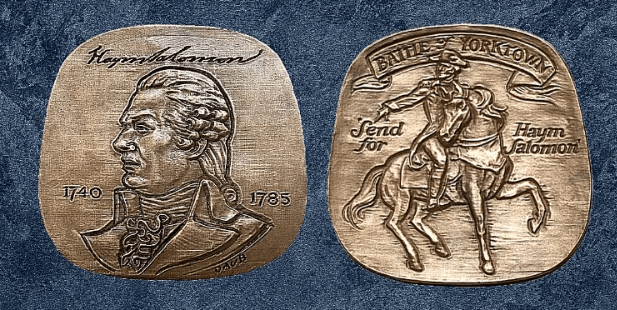
Haym Salomon rendered immeasurable service to the Revolution by providing financial support in desperate times. His service to this nation should be heralded by all. Aaron Lopez of Newport and Isaac Moses of Philadelphia also had the means to assist the cause. Risking their source of revenue, as well as their lives, these merchants sailed their own ships past British blockades and brought clothing, guns, and food to deprived soldiers. Many other Jewish patriots took up arms. In South Carolina, for example, one troop had so many Jewish soldiers, they were dubbed the “Jews’ Company.” In 1776, Francis Salvador, the first Jewish State Legislator of South Carolina, was killed fighting against Loyalists and their Cherokee allies.  In 1777, Lieutenant Solomon Bush discovered a spy in George Washington’s headquarters. The lieutenant was taken prisoner by the British, although he was later released.

Needless to say, women also supported the cause. Abigail Minis was a prominent businesswoman in Georgia during the American Revolutionary War. Left a widow at a young age, she took charge of the family finances. A patriot, Minis also put her hospitality and resources to good use— earning fame and admiration amongst the troops. Legend has it that Mrs. Minis met George Washington in 1791 when he visited her tavern in Savannah. Unfortunately, that can’t be confirmed. Her daughter, Leah, however did meet with the president years later. Mrs. Minis was 91 years of age at the time. She was surely kvelling at that honor, as any mother would!

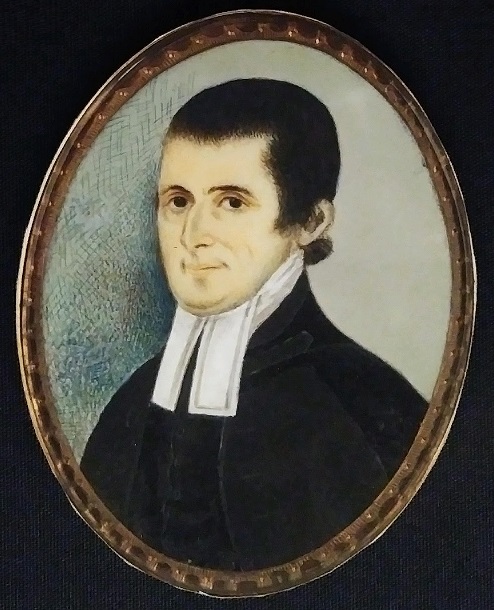
The Mill Street synagogue was a central anchor for the Jewish community in the city of New York since its founding in 1730. In 1766, Gershom Mendes Seixas became the hazzan, or cantor, of the congregation. Although he was not an ordained rabbi, he lead the Jewish community and encouraged their integration into their new society. He was an ardent patriot and supported the cause; and when the British captured New York, Mendes Seixas led the congregation to its temporary home in Philadelphia.  

In the Post-Revolutionary period, Mendes Seixas strived to undergird the patriotism felt by the Jewish community. To reinforce their significance in the American tapestry, he wrote President Washington and asked for a statement of recognition—and reassurance—from the new government.

Deprived as we heretofore have been of the invaluable rights of free Citizens, we now (with a deep sense of gratitude to the Almighty disposer of all events) behold a Government, erected by the Majesty of the People—a Government, which to bigotry gives no sanction, to persecution no assistance—but generously affording to All liberty of conscience, and immunities of Citizenship: deeming every one, of whatever Nation, tongue, or language, equal parts of the great governmental Machine

In probably one of the most important presidential letters in American history, Washington wrote back.

It is now no more that toleration is spoken of as if it were the indulgence of one class of people that another enjoyed the exercise of their inherent natural rights, for, happily, the Government of the United States, which gives to bigotry no sanction, to persecution no assistance, requires only that they who live under its protection should demean themselves as good citizens in giving it on all occasions their effectual support. . .

May the children of the stock of Abraham who dwell in this land continue to merit and enjoy the good will of the other inhabitants—while everyone shall sit in safety under his own vine and fig tree and there shall be none to make him afraid.

May the father of all mercies scatter light, and not darkness, upon our paths, and make us all in our several vocations useful here, and in His own due time and way everlastingly happy...”

This message highlights an extraordinary moment in history and for American Jewry. Here, in this great country, we were given freedom of speech, freedom of religion, freedom of enterprise. And as an immigrant, I know that freedom is rare and fragile. On this Shabbat, and on this anniversary of independence, I simply wanted to acknowledge that fact and say thank you. God Bless America!

God bless America,
land that I love.
Stand beside her
and guide her,
through the night with a light from above.
From the mountains
to the prairies
to the oceans white with foam,
God bless America,
my home sweet home,
God bless America,
my home sweet home.

גאָט בּענטש אַמעריקע,
לאַנד װאָס איך ליבּ,
שטײזע בּײַ איר,
מַדְרִיךְ זײַ איר
איבּראל לײַכט א שטראל אונז צוליבּ
פון די בּערג בּיז
צו די פּרײריעס
בּיז די יאמן װײַס מיט שױם
גאָט בּענטש אַמעריקע,
מײַן זיסע הײם
גאָט בּענטש אַמעריקע,
מײַן זיסע הײם

Jewish Historical Fiction

Inspiration

There is an adage that states: “Write what you know.” Another axiom urges: “Write the book you wish to read.” That is exactly what set me on this path. I have a penchant for all things Judaic, along with a great passion for period fiction, but I couldn’t find anything to satisfy my cravings for a fusion of these two worlds! There are a few “mash ups” out there- if you look hard enough- but I found most of them to be filled with stereotypical characterizations of the Jewish community. When I did find something of merit, the material was intense, heavy reading. Daniel Deronda comes to mind as a good example. Of course, there is a wealth of dark Fiction and Nonfiction that speaks to the atrocity of anti-Semitism throughout the ages, but I was inspired to shine the light on the Regency period, as well as the Victorian and Edwardian. My own family history of immigration takes place just prior to the Russian Revolution and I wanted to bring attention to the heroic steps taken by Baron Maurice Hirsch, his wife, Baroness Clara, and the Jewish Colonization Association.

My favorite, go-to books speak of the landed gentry, aristocrats and high society. It’s pure escapism, I know; nevertheless, I was inspired to create elegant, successful, philanthropic characters. The Brodskys- the famed Sugar Kings -are a prime example. And no Jewish Historical Fiction worth its weight in tea and kamishbroit can overlook Lady Judith and her husband, Sir Moses Montefiore. I wanted to write about Jewish ladies, fashionably dressed, taking tea in the drawing room of a well-appointed estate. I wanted to present a cultured, well-established family living “Jewishly” in Mother Russia, England, and Argentina. Argentina, you ask? Yes! I wanted to write about the emigration to this “New Jerusalem,” as it speaks to the courage of my own ancestors and countless others who risked everything for the sake of future generations.

There is no denying the horrors of Jewish history. In every era, there are voices that cry out to be heard. My point of view is not to quiet those voices, but to allow others to join in the chorus. It is important to remember the beauty and the joy of our culture. To remember the laughter, the talent and the tenacity of our ancestors. Their goals and achievements should not be forgotten. As Tevye once sang, “To Life! To Life! L’chaim!”