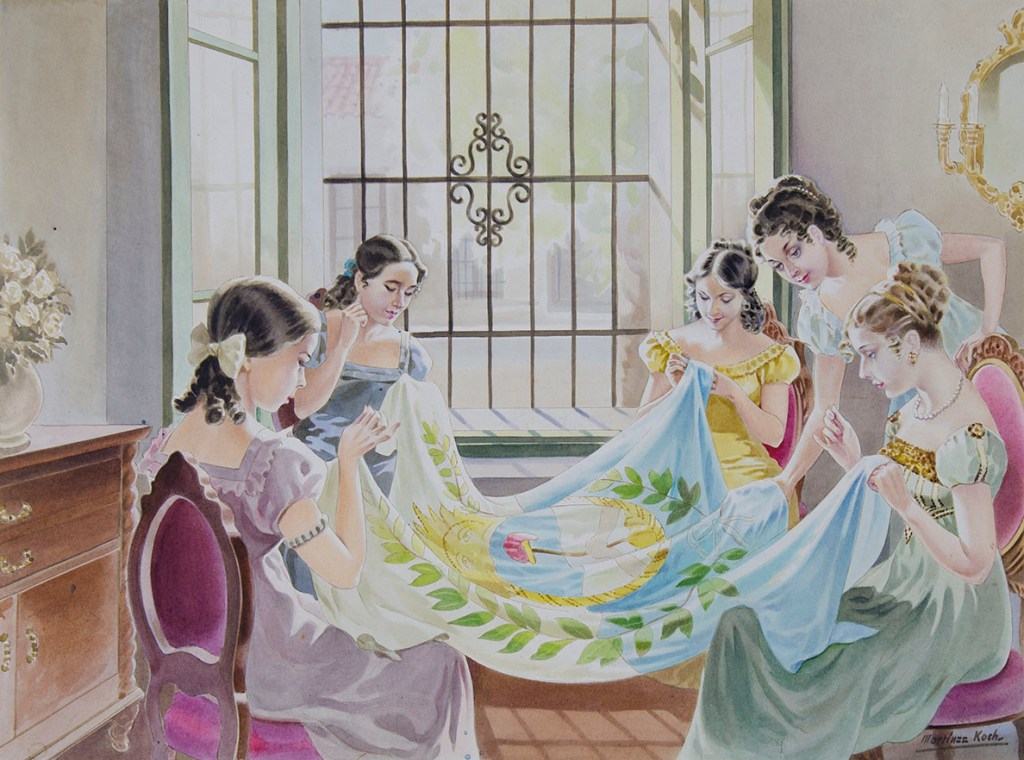
It was May 30, 1812, when fourteen women of Buenos Aires’ elite society gathered for a fund raising event. A collection was taken in support of the ragtag criollo army fighting against the Spanish crown. Each women —listed below—financed one pistol each. Obviously, it was not nearly enough to battle the Spaniards; but they inspired other women to do their part by crafting uniforms and eventually, as the story goes, stitching together the first Argentine flag.
My new novel, Celestial Persuasion, unfolds in the Viceroyalty of Rio de la Plata at the cusp of Argentina’s independence. After a series of astonishing events, the protagonist, Abigail Isaacs, finds herself in Buenos Aires. Here she writes to Captain Wentworth…
I received a missive this morning, presented by a liveried servant. It was an invitation from a Mr. and Mrs. Martin Thompson for Tuesday next. You can well imagine my astonishment, Captain Wentworth, as we are so newly arrived that I have not yet regained the use of my land legs. I have not a clue who these good people might be, or how they came to know of my arrival in the city. It was Mrs. Tavares who supplied the necessary information and assured me that I might respond to the invitation without compunction. It was all due to Lord Fife and his connections with society. I imagined the Thompsons were fellow compatriots, perhaps an elderly couple from Sussex or Bath. Imagine my astonishment when Mrs. Tavares explained the truth of the matter. Mrs. Thompson, in fact, is María Josepha Petrona de Todos los Santos Sánchez de Velasco y Trillo. The articulation of the lady’s name alone was quite an undertaking! It practically encompassed my daily Spanish lesson in its entirety. Mrs. Tavares was only too happy to impart her knowledge. To begin with, much to my relief, the lady is simply known as Mariquita Sanchez de Thompson. She is the daughter of a distinguished family of Río de la Plata, with an impressive lineage tracing back to Spain and Portugal. She married Martin Jacobo Thompson and the pair have become the toast of the town.
Mrs. Tavares’s countenance upon seeing the invitation was quite telling. I have never witnessed such excitement. It would seem that an invitation to Mrs. Thompson’s salon is paramount to taking tea with one of the patronesses of Almacks! One must understand, these social gatherings include some of the most renowned citizens of the Viceroyalty. I am to expect an introduction to compatriots and locals, aristocrats and artisans. If I am to trust in my housekeeper’s accounting, Mrs. Thompson is an extraordinary example of female ingenuity. She is known as a great advocate for the new republic. Mrs. Tavares assures me that a more fervent patriot cannot be found among those who support the cause. Not only did the lady donate three ounces of gold to the coffers, she lends her domestic skills for the sewing of uniforms.
In short, Captain Wentworth, I am undone at the thought of attending Mrs. Thompson’s salon. I fear I lack the talent of conversing easily with strangers; although you may believe that an odd statement after I have, after all, rambled on for two pages complete. Your close ties with Jonathan, and your own insistence, have made you less a stranger and more a relative.
I hope you enjoyed the excerpt! You can find Celestial Persuasion on Amazon in both digital and paperback formats. Happy reading!
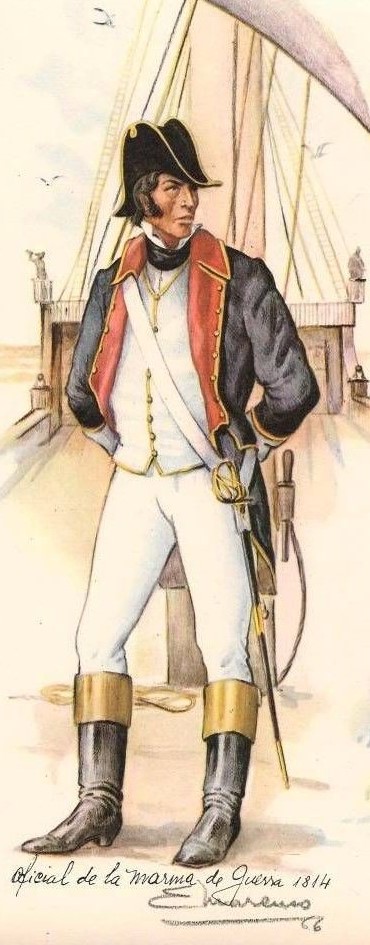
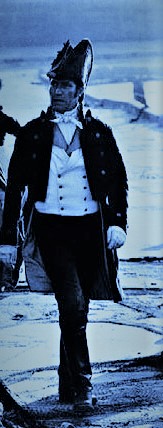
As you have read in my previous posts, I began piecing together a story that involved Captain Wentworth and his good friend—and ship’s physician—Jonathan Isaacs. Naturally, this sliver of an idea resulted in hours and hours of research. I knew nothing about the Navy, nothing about officers, and nothing about the Jewish factor that I wanted to thread into this particular tapestry of a story. Now, before I write another word: Tell me you don’t see the similarities between the naval officers of Argentina’s Regency era and those of Austen fame.
Need I say more?
Apparently, I do! My story unfolds in Exeter, where the Isaac family lived in close proximity to Barton Cottage. That, of course, is a fictional location; nonetheless, one well known to fans of Sense and Sensibility. In any event, the head of the Isaacs family was a country doctor, but I wanted Jonathan to be a physician in service to the Crown. This is where the questions began. Were there Jews in Exeter during the Regency era? Were they allowed to serve in the Navy? Did they have any connection to that world at all? It was then that I discovered a veritable treasure trove!
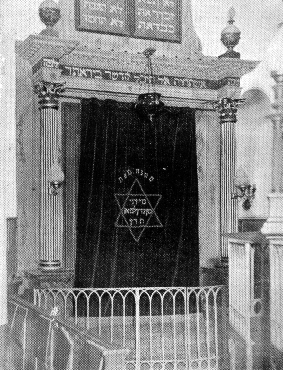
Exeter synagogue
Jewish Communities and Records- The Jews of South-West England (Jewishgen.org) provides this information and more! It soon became clear to me that there was Jewish life in Exeter, Plymouth, Falmouth and Penzance, as well as several other towns throughout Devon in the years dating from 1750 to 1900. There is evidence from earlier still, but the records I focused on were those of the Regency and Victorian eras (where the details were irrefutable). And in stark contrast to what Dickens and Heyer portray in their works, the Jewish community of South-West England was comprised of a small, yet respectable, upper middle class.
7 families kept one servant indicating that they may have been in the £150 – £300 per annum income bracket; two families each with two servants may have earned about £500 per annum; and the one family with three servants was possibly in the £750 per annum income group.
By 1796, five Jews had shops in the fashionable shopping area of Exeter sufficiently well established as to warrant inclusion in the Exeter Pocket Journal, a local newspaper. There were two silversmiths, an engraver who sold a variety of goods, a pawnbroker, and a stationer. And in addition to these and other trades, there were naval agents.
To say that conditions were harsh in the Royal Navy throughout the eighteenth and early nineteenth centuries would be an understatement, but the ever-present hope of prize money made the cruel life somewhat bearable. Think of how Captain Wentworth’s life changed course when he was awarded his prize money! Officers had bankers to look after their interests. The seamen, however, turned to local tradesmen of naval towns for assistance. They were the link to the naval authorities in London. This system, at first, was unofficial and based on mutual trust. I present Abraham Joseph, an Exeter tradesmen, as a fine example. He earned such trust, as his obituary in the Flying Post (1794) indicates:
As an agent for seamen, his practice was well worthy of the imitation of every person in that business, as several orphans and indigent widows can testify.
At some point in 1809, legislation was enacted which required all seamen to register with a licensed navy agent. In order to obtain a license, the tradesman had to post a bond with two sureties, under penalty of £200. Sometimes, a would-be navy agent was a man of high social standing; nevertheless, everyone had to swear that they were worth more than £5,000 in order to qualify. The first list of 174 licensed navy agents included 66 Jews. It was said that Jewish tradesmen were held in high esteem and the proof was in their rapid growth in that particular community. Between 1807 and 1814, navy agents as a whole increased sevenfold throughout England. The number of Jewish agents increased thirtyfold!
The British fleet was manned by nearly 35,000 seamen by this time. Jewish shopkeepers throughout the port towns specialized in doing trade with the ships. They were allowed to go on board with goods that appealed to the “simple seamen,” such as “old watches and seals, watch chains, rings, fancy shoes, scarlet and blue silk handkerchiefs, clay pipes, and fresh food of every description.” Honest traders with good references were most welcome. In 1813, Joseph Joseph presented the following royal command which granted him access to the crewmen at port:
I do hereby certify that Joseph Joseph of Plymouth has at different times supplied the Crews of His Majesty’s Ships when under my Command with Clothing to my entire satisfaction, and I do hereby recommend him to the Admirals, Captains, and Officers of His Majesty’s Navy, to be permitted to transact any Business that may be done on board the respective Ships under their Command.
St. James’s Palace ~ December 2, 1812
How do I top a letter of recommendation from St James’s Palace? With this:
Members of both congregations at Exeter and Plymouth would, on occasion, travel up to Dartmoor prison to practice acts of chesed, or lovingkindness. By the end of 1814, there were 2,340 American prisoners of war being held at Dartmoor, and a number of them were Jewish soldiers and sailors. Commodore Uriah P. Levy, was among them. Notably, this officer created the law which abolished the act of flogging in the United States Navy. Captain Levi Charles Harby was another Jewish sailor being held captive. During his imprisonment, a Jewish baker from Plymouth would make the daily trip to sell his baked goods. One day, he offered a loaf of bread to Captain Harby. The officer refused it. The baker, however, insisted. Inside the loaf, he had hidden a newspaper clipping that told of an important battle at New Orleans. This encouraged the captain to escape, apparently with the help of the baker! The story went on to report that Captain Harby was able to find his way back to his men. He continued to serve his country with great success and it was in no small part, thanks to the baker mench from South-West England.
Seeing that we— here in the U.S. —are celebrating our freedom today, I’d say that little tidbit is quite fitting! Happy Independence Day!
Over at Bonnie Reads and Writes, reviewer for Historical Novels Review Magazine, Netgalley, and BookSirens, Bonnie DeMoss will share her thoughts on my book, Celestial Persuasion.
I hope you follow the links and take a peek at both posts.
Thank you for coming along for the ride and thank you to all the wonderful bloggers who made the tour possible. I couldn’t have done it without all of you!
Celestial Persuasion is now available for pre-order HERE
Be the first in line to get your copy!
Purchase the eBook today and receive the content on 6/30/2021.
I’m so excited! I know you are excited, because I have been receiving lovely messages from so many readers. Help me spread the word. Preorder your eBook today and let Amazon do its magic!
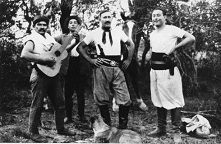
Argentina—the word conjures up images of fiery gauchos and romantic tangueros…or is it romantic gauchos and fiery tangueros? If your travel agent suggested this country as your next vacation destination, what would come to mind? Based on my experiences, most people respond with the Broadway song, Don’t Cry for Me Argentina. They think of crazed soccer players, or worse yet, they imagine a country overrun by escaped Nazis. I have another image; but mine is painted by a refined hand, a landscape of multiple layers of color, shadows, and dimension. You see, although Argentina is my native country; it is not my ancestral home. I’m the granddaughter of Russian immigrants—Jews fleeing the pogroms and chaos prior to the Revolution.
My Argentine travel blog would not showcase the exquisite architecture inspired by the French. Museums, theaters, cultural and government centers abound. There’s no particular need for me to point them out. I wouldn’t speak of the British influence on such things as finger sandwiches, polo or afternoon tea. Neither would I speak of how the Brits constructed the nation’s first railroad system. I wouldn’t ramble on about the grass-fed cattle or the mouthwatering cuisine heavily influenced by the Italians. I wouldn’t point out that you could visit prairies, jungles, deserts, glaciers or the majestic Iguazú Falls—larger and wider than Niagara and far more breathtaking. I understand…you want to know about all these things. You want to know about gauchos and hear about the Paris of South America, with its sensual nights of dancing tango and drinking Malbec; but in my world; Argentina is about drinking maté and eating potato knishes in my bobe’s house. Yes, I said my bobe’s house (not bubbe).
Jews in Argentina? They went there during WWII, right? No! Although there has been a Jewish community in South America since the time of Cristobal Colon (that’s Christopher Columbus), significant number of Jews began arriving towards the end of the 19th century. You are familiar with the exodus from Eastern Europe into the United States, but did you know that thousands upon thousands found their “New Jerusalem” in Argentina? Facilitated by Baron Maurice de Hirsch, the Jewish Colonization Association was created on September 11, 1891 with the intention of evacuating persecuted Jews from Imperial Russia. The J.C.A. worked in collaboration with the Argentine government by placing the immigrants in agricultural colonies throughout the rich, untapped land of the newly founded nation.
In Entre Ríos, there were over seventeen colonies, including Basavilbaso (Lucienville), Clara, Pedernal, and Villa Domínguez. In the province of Buenos Aires, there was Colonia Lapin, Carlos Casares and Rivera to name a few. Santa Fe was home of the most famous colony Moises Ville. Bernasconi (Narcisse Levin) was located in the province of La Pampa; and in the northern tip of the country, was Colonia Dora in Santiago del Estero.
Sembramos trigo y cosechamos doctores
We sow wheat and we reap doctors—that was the famous saying among the pioneers who toiled on the pampas, but birthed a new and hopeful generation of engineers, scientists, teachers and entrepreneurs.
La colectividad—the Jewish community in Argentina—is second only to the United States and it thanks to these unsung heroes, these Jewish gauchos. The colonists organized agricultural co-operatives. They built libraries, hospital, and charitable organizations. They built schools for their children to study both secular and religious programs. They built athletic organizations and impressive country clubs where families met for networking and socializing, challenging the most popular clubs of the American Borscht Belt. Their aspirations and achievements need to be heralded. Oh, and by the way, you would be remiss to think that these immigrants were all illiterate, wretched and downtrodden. Among their numbers were people of means and consequence who contributed not only their knowledge and funds, but a hearty spirit of perseverance and hope!
Not wanting to be accused of having a revisionist view of history, I can’t neglect to mention the hardships, the anti-Semitism and outright evil that Argentine Jews faced. And sometimes, it was at the hands of their own people.
A Polish organized crime group, the Zwi Migdal, established a holding in Buenos Aires as early as 1860. Their sole purpose was the trafficking of Central European Jewish women into forced prostitution. The organization was legally registered as the Warsaw Jewish Mutual Aid Society and they lured the women from their homes and families by promising a fresh start in a new country, away from economic strife and persecution. Desperate and hopeless, parents would send their daughters away thinking that they would be settled in proper Jewish homes as servants or taught some useful skill in a country that was at the cusp of becoming a leading nation. Often times, the harsh realities of their new lives began as soon as they boarded the ship.
In January 1919, for the duration of an entire “tragic week” (Semana Trágica), the Jewish community in Buenos Aires experienced a pogrom—physical violence and destruction of property on par with what many had experienced in the old country. At the time, the United States embassy reported that 1,500 people were killed, “mostly Russians and generally Jews.”
During the “Dirty War” era of 1976-1983, disproportionate numbers of Jewish students and professionals were victimized, kidnapped, tortured, or were simply made to “disappear” as a hard-right military regime attempted to control left-wing extremists fighting to create a Marxist stronghold.
In the 1990’s, both the Israeli embassy and the A.M.I.A. (Asociación Mutual Israelita Argentina) buildings were bombed—allegedly by Hezbollah.
When I would ask my grandparents about the anti-Semitism they would say, “Yes, it exists, but we don’t allow it to define us.” Argentine Jews faced stifling and horrific events—comparable to what was experienced in Russia and throughout Eastern Europe—nonetheless in many, important ways, their adopted country did indeed prove to be their “New Jerusalem.” There was heartache and hardship, of course, but my grandparents impressed upon me that there was no time to cry. They were too busy getting on with the business of living!
Admit it…you know the song. You’ve seen the play. Eva Peron is standing on the balcony of the Casa Rosada, arms stretched out—aching to embrace her enamored, spell-bound followers. But Argentina is more than the infamous—villainous—Perons. Argentina is more than futbol and Messi. Argentina is more than the guerilla leader, Ernesto “Che” Guevara. To me, Argentina is where my ancestors found their refuge. It is where knishes and empanadas shared a table. It is where the sweet sounds of the klezmer’s clarinet combined with the gaucho’s guitar; and later, the tanguero’s bandoneón. That is my Argentina and I want to share it with you.
Too often, we think of Russian Jews and imagine Tevye and his cohorts in Anetevka. There is nothing wrong with that—Sholem Aleichem was a beloved and brilliant teller of tales. I simply want to add to that narrative. Take the story of the Jewish gaucho and that romantic tanguero into your heart. Set them alongside the stories of Tevye and yourown ancestors, but remember: Do not cry!
An excerpt from Destiny by Design~ Leah’s Journey
Having traveled several miles deep in her own thoughts, Leah suddenly realized that the chatter and excitement, stemming from both the children and the adults, had decreased significantly. Turning her head ever so slightly to the right and then to the left, Leah witnessed the cause for the abrupt change in her family’s emotions. Lonely homesteads spotted the terrain. Farmland and open range was all one could see.
As if he could read their minds, Yosef called out from the head wagon. Cupping his hands around his lips, so that his voice would travel down the line he exclaimed, “Remember—we are free to come and go as we please. This is not the Pale of Settlement and there are no inspectors, revizors, or Okhrana!”
At that precise moment, Leah found Yosef’s astute observation very small comfort, indeed. Slow and steady, the oxen ambled on for what seemed an eternity before señor Lipinsky held up his hand, signaling the drivers to come to a stop. They had arrived.
The Abramovitz men jumped off the wagons and handed down the women and children. Dismayed, they stood solemnly in place and quietly took in their surroundings. A dilapidated wooden fence, in dire need of sanding and a new coat of paint, marked the property. As señor Lipinsky had promised, the lot and the dwelling appeared somewhat larger than those seen on the previous homesteads. León Goldfarb had mentioned that they would most likely have a cabin or a cottage, depending on their luck, along with a small barn and granary. His assumption had been correct.
“I cannot believe that we trekked across Mother Russia through Europe and across the Atlantic Ocean to end up here—to live like krepostnyye!” Naftali bellowed.
“We are not serfs, Brother. We will work the land for our own benefit—not for some nobleman,” replied Yosef. “And we will live in peace.”
“We might as well have gone to Siberia,” was Yaacov’s grim reply. “We are in the middle of nowhere.”
“‘If only we had died by the hand of the Lord in the land of Egypt, when we sat by pots of meat, when we ate bread to our fill!’” Ysroel recited. “‘For you have brought us out into this desert, to starve this entire congregation to death’—does that sound familiar? We have not yet been here one full day!” exclaimed the pious brother. “Where is your faith?”
Malka nodded her agreement. “It is quite fitting that you quote Exodus, my son, for are we not the epitome of Israelites wandering in the desert? But the Lord will provide—of that I am sure!”
Señor Lipinsky cleared his throat and the men turned towards the agent. Aware that the Abramovitz family had begun their odyssey with a different plan in mind, he did not begrudge them their displeasure. He could only imagine the life they had led in Odessa in the upper stratums of Jewish society. It was quite a different scenario than the vast majority of colonists, but not completely unheard of. The agronomic engineer, Miguel Sajaroff and his brother-in-law, Doctor Noé Yarcho, were both learned men of means—certainly known and admired among the colonists. They, too, had come from rather illustrious origins.
Señor Lipinsky gently reminded the family that they were on the outskirts of town but, there wasindeed a thriving town–a Jewish town. The children would be required to attend public school in the morning; but the town was proud to boast of their own cheder, where Yiddish and religious studies were taught in the afternoons. The community had shops, a synagogue, a cemetery and a social hall. They would soon meet their neighbors and establish friendships with the criollos and the yiden alike.
“We—the Argentines and the Jews—live together in peace,” he said. “God has made it possible for us to make a good life here.”
“Of course, señor Lipinsky and we will do the same—may it be Hashem’s will,” replied Malka, as she turned and took in the full view of their new land. “Are these fruit trees? The orchard seems to have been abandoned, but with some work, we will have a bountiful harvest next year. This reminds me of when I was a child. It will be good for the kinder to get their hands into the dirt.”
“You most likely will find peach and plum trees. At home, we also have mango,” the land agent boasted.
“What is a mango?” Duvid asked. “May I try one?”
Señor Lipinsky laughed. “Yes, of course boychik! When you taste it, you will think it is a slice of heaven. Sweet and tangy, it is like biting into a peach and an orange at the same time.”
“Come now, children,” Malka said, as she marched to the door. “Let us enter our new home with uplifted spirits and gratitude in our hearts.”
With their mother and señor Lipinsky leading the way, the Abramovitz clan followed suit. Leah trailed behind. She willed herself not to turn around, but curiosity overruled. The gauchos were still there—hewas still there.
From atop his steed, El Moro removed his hat once more, and placed it over his heart. Knowing she owed him apology, she sunk into a deep curtsey, as if he were the Tsar himself. He laughed, not in a disparaging fashion, but with full appreciation of her good sportsmanship. He let out a triumphant holler, as the men turned their horses and raced away. Feeling herself blush, Leah laughed as well and quickly caught up with the family now entering their new lodgings.
Her mother, having removed her hat and gloves, was inspecting the building, which could not be compared to anything but the gardener’s cabin back home. Leah could see her mamá’s mind at work. She could only imagine the list of duties that soon would be imparted to each and every one. When she heard her mother speaking of chemical compounds, Leah began to understand the true magnitude of the undertaking.
“I will need a fair amount of the product, if we are to paint these walls and the fruit trees,” Malka informed the J.C.A. agent.
“Yes, of course,” Lipinsky replied, agreeing with the fine lady’s assessment. Many of the colonists applied whitewash to the trees in order to prevent sun scorching.
“My father was known to paint the entire tree trunk, not just the bottom portion, as he insisted that it kept the tree from blooming prematurely.”
“We are going to paint the trees?” Duvid asked.
“Yes, as well as the house,” said Malka. “If we can purchase a bit of blue dye—perhaps a local laundress might have a decent supply—we can color the calcimine and end up with a lovely shade of pale blue.”
“Lovely. It will be our very own Winter Palace,” added Leah in jest. Having only known the luxury of living on a grand estate, she hadn’t a clue of the benefits of whitewashing; and although she had enjoyed her lessons with watercolors, the idea of washing the grimy stone walls sounded exhausting. Noting the sarcasm in her own voice, Leah winced and waited for the certain rebuke. When none came, she decided it was in her best interest to pay attention to her mamá.
“We will cover the walls with this compound several times a year, my dears, for the coating has hygienic properties. Once we have added successive applications, layers of scale will build up on the roughhewn walls, and the flakes will fall off. Then it is simply a matter of sweeping away any remaining debris,” she said, running her finger along the wainscoting. You shall see…with fresh, clean paint, colorful curtains, and cheerful wildflowers on the table, we will feel quite at home.”
“It will be like visiting the country house!” shouted Duvid with delight.
“It will be better than visiting our dacha—we will be home.” replied Yosef.





 Mirta Ines Trupp~ Author