It all started—as these things often do—with a “what if…?” Over two years ago, a story plot came to mind for my least favorite Austen novel: Emma. I know I might ruffle some feathers, but I’m not alone in my feelings towards this novel.
I am going to take a heroine whom no one but myself will much like.” ~ Jane Austen
Miss Emma Woodhouse is said to be handsome, clever, and rich, with a comfortable home and happy disposition. She is twenty-one years of age and has lived with very little to distress or vex her. In other words, she comes across as a spoiled brat. She is a snob.
Emma is used to getting her own way, in particular with her father, her governess—actually, with everyone who acknowledges her station in life. She has too much time on her hands and becomes quite a “yachne“—a meddlesome, gossiping busybody (I know you’re thinking of the word “yente,” but that’s a misnomer).
In any event, Austen provides sufficient fodder for her character to evolve and grow. Like other Austenesque protagonists, Emma becomes relatable and, yes, even inspiring. But one question remains: Is Emma Woodhouse the true heroine in this story?
The “what if…?” I contemplated was complicated and required too much thought at a time when I was still fully engaged at my “day job.” Like they say nowadays: I didn’t have the bandwidth to handle another project, so I tucked away my idea for another day. The mind is a funny thing, however—at least, mine is!
Once the idea presents itself, I start visualizing how the story will unfold. I hear the dialogue, I imagine scenes and settings. Of course, this usually takes place at 3:00 in the morning when I’m trying to sleep. It’s exhausting. It’s unrelenting. It doesn’t stop until I start putting my thoughts down on paper.
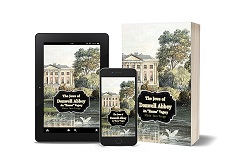
And so began this latest novel: The Jews of Donwell Abbey: An “Emma” Vagary.
Editorial reviews are hard to come by, especially for an indie author who self-publishes. I have been blessed by an army of beta-readers and volunteers, and by a few generous professionals who provided the following testimonials:
“A creative, heartwarming take on a beloved story, The Jews of Donwell finally gives Harriet Smith her due.” ~ Caroline Warfield, author of An Open Heart, The Entitled Gentlemen series, The Ashmead Heirs series, Children of the Empire series, et cetera
“Trupp has written a charming and entertaining novel with The Jews of Donwell Abbey. A captivating read!” ~ Meryl Ain, author of Shadows We Carry and The Takeaway Men
“Blending Emma with a Jewish story line is an ingenious idea! Fans of Austen, and those who crave Jewish Regency stories rich in Jewish content, will find The Jews of Donwell Abbey an extremely satisfying read. L’ chaim!” ~ Rabbi Jo David (aka Nola Saint James, author of Regency Romances)
“The Jews of Donwell Abbey introduces a colorful dimension of minority identities in Jane Austen’s Emma. Trupp’s orchestration of history and mystery enriches the ongoing collection of stimulating rewrites of classical novels. A gift to Austen fans, it will interest all readers curious about the hidden facets of “proper” social intercourse in Georgian England.” ~ Yael Halevi-Wise, author of Interactive Fictions: Scenes of Storytelling in the Novel, Professor ofJewish Studies and English Literature
“Who could have guessed that under the genteel veneer of Jane Austen’s Regency England lurked secrets beyond what could have been openly addressed at the time? In The Jews of Donwell Abbey, Trupp brings sidekick Harriet Smith to the forefront, her mysterious origins are explained, and her ultimate happy ending turned into a lesson about tolerance, acceptance, and the miracles hidden within mundane lives. The perfect companion piece!” ~ Alina Adams, author of The Fictitious Marquis, Romance Writers of America’s first #OwnVoices Jewish Regency Romance
The book is scheduled to be released on Tuesday, November 5, 2024. Look for it on Amazon! I look forward to hearing (or reading) your thoughts!
Harriet Smith looked around the room she had shared with Miss Martin for these months past. She had been invited to spend the summer holiday with her schoolmates and was made to feel quite at home. Such a simple, yet evocative word. Home. It was the one thing she truly did not have of her own. It affected her keenly to leave just now, especially after the warm reception she had received; however, the circumstances surrounding her abrupt leave-taking were not of her doing. Harriet would have given anything to have remained for the three months complete, but it was a sorrowful event that had brought the visit to an end. The Martins had been thrown into a period of mourning.
Harriet had been roused from her slumber by foreign sounds, having grown accustomed to the natural cacophony of Abbey-Mill Farm. A messenger from the abbey had knocked upon the door, even before the family’s favorite rooster crowed his first morning’s call.
Wiping the sleep from her eyes, Harriet sat up and turned to her bedmate who had been awoken by the persistent rapping as well. Elizabeth bade her to be silent as they heard her brother’s footsteps pass their chamber and down the stairs. The youngest family member, Judith, thankfully remained asleep. She would have caused a great commotion, as was her wont, and they would have been unable to keep their awakened state—and curiosity—unknown.
As it happened, the girls were unable to make out anything of interest, for only a mumbled exchange could be perceived. Elizabeth removed the counterpane and edged her way to the door, placing her ear against the thick wood in the attempt to hear below. Harriet waited abed, holding little hope that her friend’s action would provide any clues. It was only when the messenger took his leave, and the front door was shut closed, that Mr. Robert Martin made his way back up the stairs.
Elizabeth scurried back to Harriet’s side, and pulling the bedlinens back into place, the girls awaited for news of what was amiss. They shared a moment of disappointment when they heard Mr. Martin knock upon his mother’s door. In truth, Harriet was more relieved than disappointed. She would have burned with embarrassment had Mr. Martin seen her in such a state—in her night rail and her hair rolled up in curling paper.
Elizabeth crept up against the door once again. The ploy proved more successful this time as her mother’s chamber was down the hall, and the voices were easily discerned.
“Baruch Dayan Emet,” Elizabeth heard her mother utter.
“Blessed is the Judge of Truth,” Elizabeth and her sister repeated quietly.
“What is it?” Harriet whispered. “What has happened?”
Elizabeth brought her finger to her lips as she pried opened the door, and motioned for the girls to come forward. Huddled together, they peered through the opening and watched Mrs. Martin reach for a sewing kit that had been thoughtlessly discarded atop a chest of drawers.
Withdrawing a pair of scissors from its cover, Mrs. Martin took hold of her son’s shirt collar and made a deep cut. Taking hold of the fabric, Robert deepened the cut with his own hands.
“A time to rend and a time to sew…do you know the verse, Harriet?”
“Yes, of course, I know it. It is from Ecclesiastes, but what does it signify?”
“Someone has died,” cried Judith.
“It could only be one person for Robert to perform such an act,” Elizabeth offered. “Grandpapa…”
Touched by this pronouncement, Harriet moved to embrace her friends, but Mrs. Martin caught sight of her daughters and called them hither.
“Mr. Knightley has sent word this morning,” she began. “Your grandpapa, peace be upon him, is no longer with us—now, now girls—” Mrs. Martin tightened her embrace, “we have been prepared for this eventuality. I beg you, be calm. Grandpapa, no doubt, has been reunited with his son, your own dear father, and your grandmama.”
Mrs. Martin brought a handkerchief to her lips and paused but for a moment. “We must dress and prepare the house. The rabbi will, no doubt, be visiting shortly.”
The family dispersed, each quietly seeing to their morning ablutions. Once dressed, the girls made their way downstairs and looked to their mother for direction. Harriet wished to be of service, though she knew her best efforts would only cause her friends additional work.
During her six-week visit, Harriet had learned that the Martin household was like no other of her acquaintance. The pantry and cupboards, indeed, all kitchen matters, were governed by a particular set of rules. Food preparation was of the utmost importance, as was the observance of the Sabbath, which began on Friday evenings and lasted through dusk the following day.
Unable to control herself, Harriet had asked the girls to explain this strange practice. She smiled now, recalling how Judy had rolled her eyes upon hearing yet another question, but it could not be helped. Harriet had always been a curious creature.
“Mysteries are the bane of my existence!” she had declared on more than one occasion. How she came to live at Mrs. Goddard’s school, she understood, was a mystery that could never be resolved. Therefore, at a very young age, Harriet determined that asking questions was her right—even if impertinent Miss! was often applied to her name.
Today, however, was another matter entirely. The household was in an uproar; the Martins were clearly distressed. Harriet would not add to their discomfort for the world, and so she sat quietly with her cup of tea and waited to be of service, and not a hinderance.
The cottage was not a grand home, not by any means, but Mrs. Martin had made it comfortable and had added feminine touches throughout. A framed mirror of respectable size had been placed by the front door where one could adjust one’s wrap or bonnet. Nonetheless, this instrument of vanity was the first to be draped with linen. The girls covered their hand-held mirrors and placed them face down upon their dressing tables. One’s toilette was not of importance on this sad day.
Mrs. Martin directed her son to gather as many small stools from around the farm that could be found while she swept the better of her two parlors. As mourners, the family would be seated low to the ground; those coming to condole would be offered the finer furniture—the upholstered chairs usually reserved to receive honored guests such as Mr. Knightley or his steward.
At length, Elizabeth put her friend to work, handing over a basket full of fresh eggs.
“Pray, set these to boil in the appropriate pot,” she instructed. “You know which one by now, dear Harriet.”
Before quitting the room, Elizabeth grabbed hold of her friend’s hand. “I know you are bursting with the need to ask your questions, but now is not the time. I promise I will explain it all—perhaps you will not find it that much different from your own family’s mourning rituals.”
These words, no doubt, were kindly meant; nonetheless, Harriet could not help but feel her shame even more profoundly. Whatever was Elizabeth thinking?
Family rituals? She did not have a family—other than Mrs. Goddard and the girls at school. In truth, she was all alone in the world. But it was not her custom to be petulant or dreary, and certainly not when her friends were in crisis.
Harriet gently placed the eggs to boil and was quite pleased, knowing she had chosen the proper pot. Indeed, Mrs. Martin had instructed her upon her first day at Abbey-Mill. The kitchen had been carefully prepared to house two separate sections: one for dairy products and preparation, and another for meat. Explanations as to why had not followed, and Harriet had to tuck her questions away for another time. She had collected a great list of questions during her visit, and it would take another six weeks to address each and every one!
Harriet overheard voices from the parlor as Mrs. Martin sent Judith to find a small table to set outside the door. Elizabeth was to follow with a bowl and pitcher of water. The girls were heard scurrying about, when Harriet heard yet another knock upon the front door. Checking on her pot of boiling water, she wiped her hands on a borrowed apron and peered into the foyer as Mrs. Martin welcomed the visitor.
The gentleman was unknown to Harriet, having never made his acquaintance in Highbury. In truth, upon further inspection, she found him to be oddly fascinating.
Dressed in unrelieved black, his long coat reached down to his calves. His pointed beard, peppered with gray, reminded Harriet of the Martin’s billy goat, and she nearly embarrassed herself by laughing aloud at the thought. She was unable to see the color of his hair, or if he had any at all, for he would not remove his hat—though he was in the presence of ladies. It was altogether strange to note that the man appeared to have ringlets on either side of his face!
Whatever could he be about?
Elizabeth and her sister had taken a seat by their mother’s side and signaled Harriet to join them in the parlor. While Mr. Martin offered the guest their most comfortable chair, Harriet quietly crept in, standing behind the girls in silent solidarity. The man opened a book he had withdrawn from his coat pocket and, speaking in the language that Harriet had grown accustomed to hearing in weeks past, began chanting a mournful prayer.
“Thank you for coming to us so quickly, Rabbi Kolman,” said Mrs. Martin after the family pronounced their amens. “We only just learned the news—you find us in quite a state.”
“One is never sufficiently prepared for these events, Mrs. Martin. Pray, do not make yourself anxious. Doctor Martsinkovsky, of blessed memory, would not burden his family and friends by being ill-prepared—even for his own funeral.” The rabbi allowed himself a slight chortle at his attempt at levity.
“My grandfather was known for his meticulous attention to detail,” said Mr. Martin. “He was the best of men.”
“Indeed. You will find that everything is in order, Mrs. Martin. The burial will take place this afternoon at three o’clock; our small congregation will accompany you during your seven days of mourning.”
“What?” gasped Harriet. “So soon?”
Elizabeth glared at her friend, who immediately understood her blunder. Bowing her head, Harriet silently vowed to say no more.
“Robert,” the rabbi continued, “you will want to unbolt the front door. It will be incommodious to be interrupted by visitors while at evening prayers. Whoever wishes to condole with the family will wash their hands before entering and come in quietly thereafter.”
“Yes, Rabbi Kolman,” replied Robert Martin. “I will see to it.”
“And girls,” the man said, addressing the Martin daughters, “make sure your dear mama does not tire herself with cooking and baking. The women of our congregation will fill the house with enough food to feed an army—certainly enough to last the week of mourning.”
The rabbi rose and shook hands with the man of the house and made for the door. “Remember to exchange your leather boots for other footwear. The weather has been relatively pleasant of late. I doubt you will be plagued with mud or muck. And one more thing! There is to be no shaving nor hair cutting—you young men today seem to have a penchant for fashion rather than following our traditions—for the whole of the week, mind!”
He gave a short bow to one and all before declaring: “May the Almighty comfort you among the mourners of Zion and Jerusalem.”
Taking to her feet upon the rabbi’s departure, Mrs. Martin clapped her hands to rouse the party from their melancholy. “That’s it, then,” said she. “Let us finish preparing ourselves…”
Another knock upon the door, however, interrupted Mrs. Martin’s directive. Harriet hoped whomever it was came bearing good news. She watched as Mr. Martin made for the door once again and was astonished to see Miss Emily Bickerton, her classmate, standing there. Sitting atop the pony trap was Peter, Mrs. Goddard’s manservant.
“Why, Emily!” cried Harriet. “Whatever do you do here?’
The young lady, known to Elizabeth and Judith Martin, for the foursome were at school together, was asked to enter and offered a glass of cool lemonade. This she was tempted to accept—the morning sun had taken its toll, even on the short ride—however, Emily Bickerton had been given a task, and she meant to discharge it with alacrity.
“Begging your pardon, Mrs. Martin,” she began and offered a quick bob of a curtsey. “I should be happy to take refreshment with you and my friends some other time. Mrs. Goddard has sent this note for you, ma’am.”
Having made her little speech, and handing over the missive, Emily turned to her classmates and took hold of their hands. “Harriet is to return with me,” said she. “Word was received that the doctor had passed—Oh! Please accept my condolences—Mrs. G. thought it best that Harriet return home.”
“Oh, no!” cried Elizabeth, her sister joining in unison. Even Mr. Martin seemed disappointed as his shoulders drooped even further, though he did not give voice to his objection.
Harriet felt herself blush. How kind they were to make such a fuss on her behalf. But she felt it only right to pack her things and return to school. Surely, she would only be in the way, and the family ought to have some privacy at such a time.
“Miss Smith,” said Mrs. Martin, as Harriet made for the staircase, “our present circumstances must draw your visit to a close, but you are such a sweet, unassuming girl, I know you will understand.”
“Pray, ma’am, be at ease. Naturally, I understand and should not wish to inconvenience you at such a time.”
“Our tradition requires us to observe certain practices, my dear, beginning with the full state of mourning for a week complete. Perhaps, after the following thirty-day period, when our restrictions are lessened, you girls may make arrangements to meet—certainly, you shall see each on Market Day or a visit to Ford’s.”
“Robert, now you must say something,” Judith decreed. “Lest Harriet feel she is not welcome by the whole family!”
Mr. Martin, it seemed, had no notion that he, too, was expected to add his farewell remarks. Caught unaware, he mumbled, “Miss Smith is always welcome at Abbey-Mill.”
As a woman, an immigrant, and a Jew, I found that following in Jane Austen’s footsteps helped me find my voice. I have written several novels that try to emulate Austen’s tone and that reflect her era, all while incorporating my heritage and Judaic storylines.
I choose to incorporate Jewish protagonists into these beloved classics not to try to change Austen’s characters—or to change the happily-ever-after events we Janeites have grown to love—but to emphasize the fact that we. were. there. Whether in the upper echelons or as entrepreneurs, manufacturers, tradesmen, or farmers, Jews were intertwined in the English tapestry.
I read Austen and many of her contemporaries—as well as many J.A.F.F. (Jane Austen fanfiction) authors—for entertainment, for escape, for inspiration. I know some readers may feel that including Jews in J.A.F.F. is beyond the scope of what Austen intended. There is no reason to believe that she had ever met a Jew or knowingly interacted with one. My novels hope to show how natural a thing it might have been by incorporating Jewish storylines and showing different characterizations of a culture so often maligned.
If readers search for Jewish historical fiction on Amazon, they will be inundated with Holocaust or WWII novels. They will find novels set during the Spanish Inquisition or from the biblical era. There are classics written by Chaucer, Shakespeare, and Dickens that include Jews characters. There are Regency novels written by modern-day authors such as Georgette Heyer that do the same; however, these books are disappointing to say the least—insulting and hurtful would be more to the point. The bigotry and intolerance of yesteryear has no place in today’s society; and yet, it still exists.
In the aftermath of the horrific events of 2023-2024, we Jews are preparing for the High Holy Days or the Days of Awe—Yamim Noraim. Though our hearts are broken, we prepare for a new year. Though we are grief stricken, we prepare for a new beginning. You may ask: How can you think of promoting a book at a time like this? Why even bother writing Jewish Austen Fan Fiction? The answer to that question can be found on my bookshelves and on my reading tablet.
Austen wrote with humor and sarcasm, but she didn’t shy away from powerful subjects. She touched upon hard-hitting societal issues such as the inequality between the have and have-nots; the dangers of childbirth and other health concerns that are treatable today; mental health, premarital sex and unwanted pregnancies, alcohol abuse and debauchery, the lack of opportunities and/or choices for women; the devastation of the Napoleonic Wars, etc.
Think only of the past as its remembrance gives you pleasure.”
We are shaped by our history, the good times and the bad. What has been done can’t be undone; however, with this quote, Austen encourages to be deliberate in our recollection. She reminds us to look back on the “good ol’ days” with nostalgia, choosing to recall only those memories that inspire hope. It is this attribute to focus on joyous occasions, on achieved dreams and accomplishments, that propels us forward and motivates us to persevere.
I write Jewish Austen Fan Fiction because that’s what I like to read. I write it for other Jewish women to provide them with a choice—to read something joyful, something light and entertaining. I write it for non-Jews too! I write it because we do not exist in a vacuum, all of our collective experiences matter.
In Judaism, Tuesday (Yom Shelishi) is a special day of the week. It is not uncommon to see weddings held on Tuesdays. Grand Openings are often scheduled for this day, as are the first day of school or summer camp, etc.
What other event may be scheduled for a Tuesday?
Hmm? How about a cover reveal? What about a book release? Yes, and yes! Like the double portion in the Torah…ki tov (for it is good)! Look for the cover reveal of my new book on Tuesday, October 1, 2024 and, with God’s help, the book release on Tuesday, November 5, 2024 (yes, that Tuesday).
Here is a little snippet to entice you:
Prior to beginning a new year at Mrs. Goddard’s School for Girls, Miss Harriet Smith spends the summer months with the Martin family at Abbey-Mill Farm—a house of Israelites, or is it Hebrews? Would it be impolitic to call them Jews? It matters not, for Harriet finds contentment there. And, if her heart betrays her with stronger feelings for Mr. Martin than she ought to have, they are hers alone.
Alone… a common enough phrase for the natural daughter of nobody knows whom. But when Miss Emma Woodhouse requires a new friend to guide and mold, Harriet suddenly finds herself in the midst of one imbroglio after another. Forbidden assignations, sentimental blunders, and questions abound!
Be it through gossip or vengeance—or small-minded people, “the instruments of darkness tell us truths.” Will Harriet remain encumbered to her mysterious past, or will astonishing discoveries provide the fulfillment she long desired?
I hope you’ll help me spread the word!
I wish all who celebrate: Shana Tova Umetuka (A sweet and happy new year)! May God hear our prayer! May the hostages be released and may we all be blessed with peace.
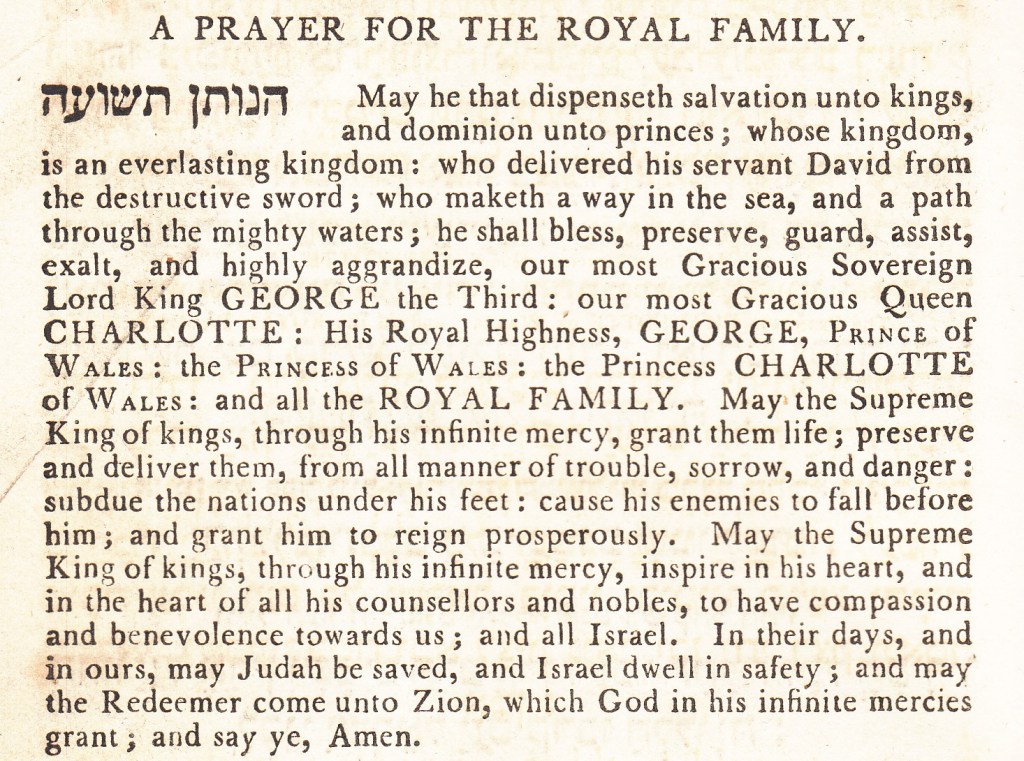
This month, the British empire suffered a tremendous loss. I dare say, the world at large lost a dedicated and devout leader. Queen Elizabeth’s death touched people from all walks of life, none more so than the Jewish community under her protection.
For over seventy years, congregations across the land concluded their Sabbath service praying that “He who gives salvation to kings and dominions to princes, guard her and deliver her from all trouble and sorrow.” But Jewish prayers for the monarchy, or for any ruling government, are not unusual. After the Israelites first expulsion from Jerusalem in 586 B.C.E., the prophet Jeremiah urged the community to pray to the Lord in order for Him to guide their foreign rules with wisdom and compassion. These prayers were eventually incorporated into the siddurim (weekly prayer book) in the 14th century.
However, the supplications were not solely reserved for the Sabbath service. In England, any royal event may have called the community to prayer. Indeed, if Jane Austen attended a Jewish service in 1787, she would have heard a prayer calling for the preservation of King George lll “from the hands of an assassin.” And in 1817, while the empire mourned the death of Princess Charlotte, Hyman Hurwitz composed Israel’s Lament: Mourn for the universal woe, With solemn dirge and fault’ring tongue, For England’s Lady is laid low, So dear, so lovely, and so young!
Of course, there were occasions for happier prayers, such as the Golden Jubilee of Queen Victoria in 1887 and that of Queen Elizabeth II in 2002 and again in 2022.
Her crown is honor and majesty; her scepter, law and morality. Her concern has been for welfare, freedom and unity, and in the lands of her dominion she has sustained justice and liberty for all races, tongues and creeds.”
Rabbi Ephraim Mirvis, the Chief Rabbi of the United Kingdom and the Commonwealth
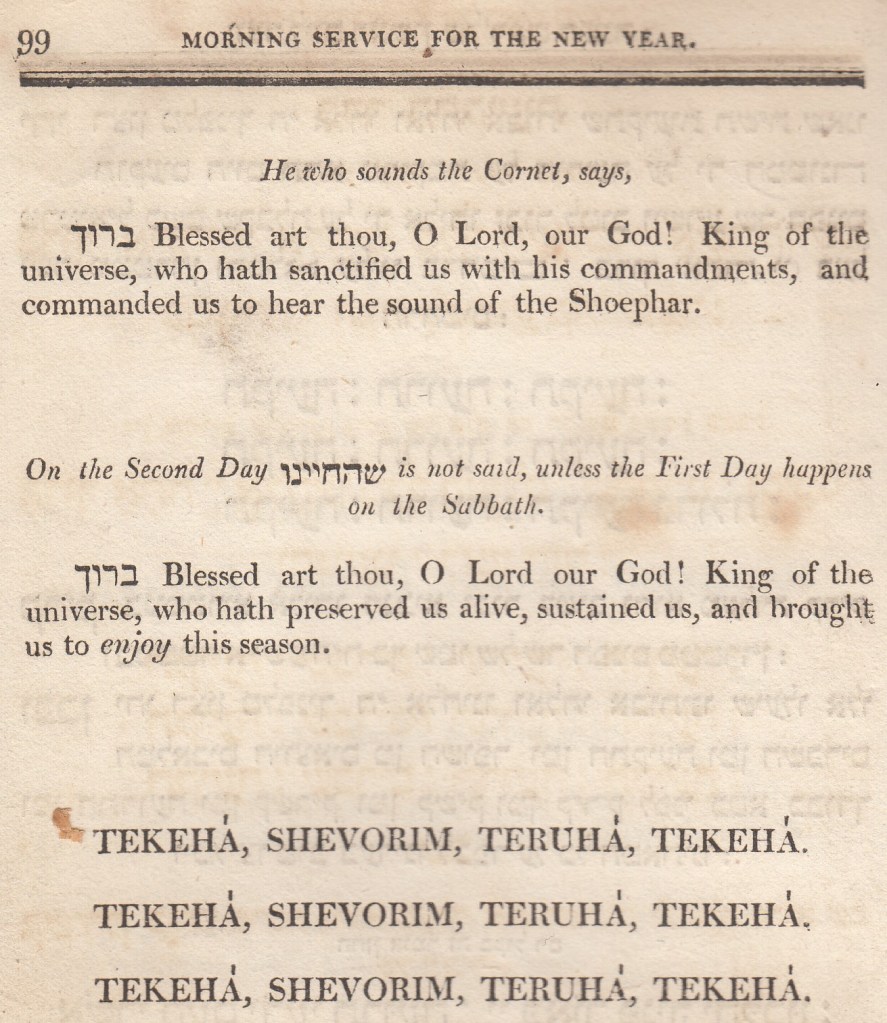
Did you know that the concept of jubilee hails from the Torah (Pentateuch)? According to the Book of Leviticus, a commemoration was held at the end of seven cycles of shmita (sabbatical years). Slaves or prisoners would be freed, debts would be forgiven and “the mercies of God would manifest.” The sounding of a ram’s horn (a shofar) would proclaim the celebration. In fact, the ancestral summons was used to announce a variety of events, including a king’s coronation or the proclaiming of a period of mourning—so apropos during these sad days of September.
This is the moment history stops; for a minute, an hour, for a day or a week; this is the moment history stops.”
BBC NEWS
If we were living in biblical times, the shofar would have certainly announced this momentous occasion and the community would have responded in kind. Today, Jews worldwide recognize the cry of Tekiah as the call to prepare for the new year and the Day of Atonement.
For over 5,700 years during the month of Elul (which usually falls during August or September in the Gregorian calendar), the piercing sound of the shofar has beckoned us to examine our behavior—to ask for forgiveness and to prepare to make amends for the new year.
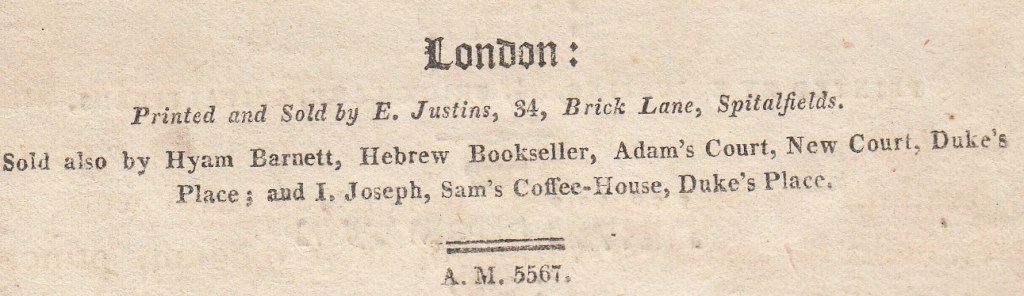
I came across another blog post about Anglo-Jewry while preparing this article. Naturally, it led me to another post where I discovered an interesting historical figure by the name of Solomon Bennett. For a variety of reasons, Mr. Bennett made it his life’s work to torment Solomon Hirschell, the Chief Rabbi of the German and Polish Jews of England. To be honest, I would say that both Solomon Bennett and Solomon Hirschell were full of themselves! If ever anyone ought to have heeded the sound of the shofar…The series of events that transpired between these two men borders on the ridiculous. Therefore you cannot fault me, dear reader, for immediately envisioning Mr. Collins and Mr. Bennet of Austen’s Pride and Prejudice.
Mr. Collins is a clergyman. He is tall and maintains formal manners; he comes across as pompous and grave. He takes great pains to inform everyone about his social status, which mostly stems from his noble patroness. Mr. Collins is excessive in his compliments and excessively snobbish. His counterpart is Mr. Bennet of Longbourn. This landed gentleman has a sarcastic, cynical sense of humor which he purposefully uses to irritate his prey. However, his dry wit and composure in the midst of mayhem serves him ill, for Mr. Bennet is weak and largely ineffective as a husband, father, or property owner.
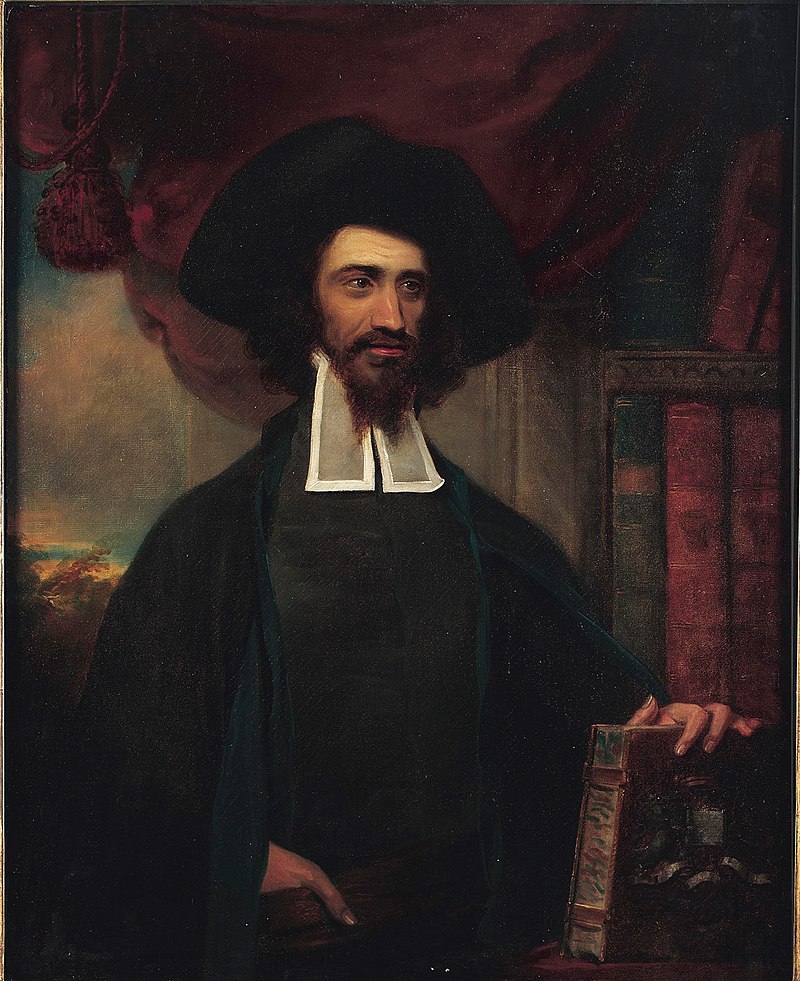
Solomon Hirschell
I now present Rabbi Solomon Hirschell. He was said to be a tall and imposing sort of man. He was a traditionalist and did not apologize for wanting to maintain ancient standards and customs. The rabbi liked to boast of his long line of impressive ancestors and benefactors, such as Sir Moses Montefiore and the Goldsmids. Although he had no formal secular education, Hirschell was proud of his Talmudic training and made it known that he possessed an impressive rabbinic library.
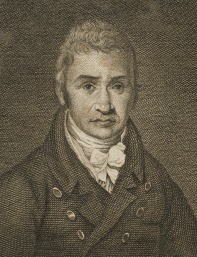
In 1811, the European Magazine published an interview with the clergyman. Hirschell proclaimed that he was direct descendant of the royal house of David. He believed his election as chief rabbi to be a natural turn of events. His fiercest enemy, Solomon Bennett, had a field day with that announcement. An author, artist, and a Hebrew scholar in his own right, Bennett publicly ridiculed the rabbi by declaring that he was only given the position due to his connections. But it didn’t end there. He claimed that Hirschell was barely competent in the English language and that he hid behind his father’s precious library to mask his illiteracy.
Of one thing you may be assured, Hirschell could only have known my English publications at second hand because he could not even understand them in the original language, of which his knowledge is so slender.”
Bennett continued to write scathing remarks about the shocking lack of rabbinical publications put out by the Hirschell administration. The Magna Bibliotheca shows that the chief rabbi only published three sermons. Of note: one marked the battle of Trafalgar in 1805 and another, which warned the community against sending their children to secular schools. The rabbi was so set in his ways, the sermons were given in Yiddish and had to be translated into English for publication.
Sometime around 1815, Rabbi Hirschell endorsed a book of Jewish studies written by another Solomon —Solomon Jacob Cohen. Bennett was highly critical of the work and published a 66-page pamphlet where he called the rabbi “a proud, savage, and tyrannical Pontiff…in his orthodox piety on the one hand, and his ignorant malice on the other.”
Solomon Bennett
The public did not appreciate Bennett’s wit and he did not succeed in defaming his nemesis. In fact, the project was a complete failure and Bennett lost money— a £100 to be exact. Short of funds, he was unable to pay his publishers and was sent to debtor’s prison—blaming Hirschell for his misfortune all along the way.
For all that was said against him, Rabbi Hirschell appeared to hold England dear. In one particularly poignant speech, the rabbi expressed his gratitude that “providence permitted me to return to this my beloved native Land.” During the Napoleonic wars, Hirschell encouraged his congregants to enlist and to serve their adopted nation. It was also said that the rabbi secured permission for Jews to “stay away from church parades and to be sworn upon the Book of Leviticus—instead of the New Testament.” This was in keeping with his lack of interaction with his Christian counterparts and his sermons against the newly established Reform movement. On the other hand, Hirschell was known for his charitable organizations and worked to help the relatively newer community of Eastern European Jews.
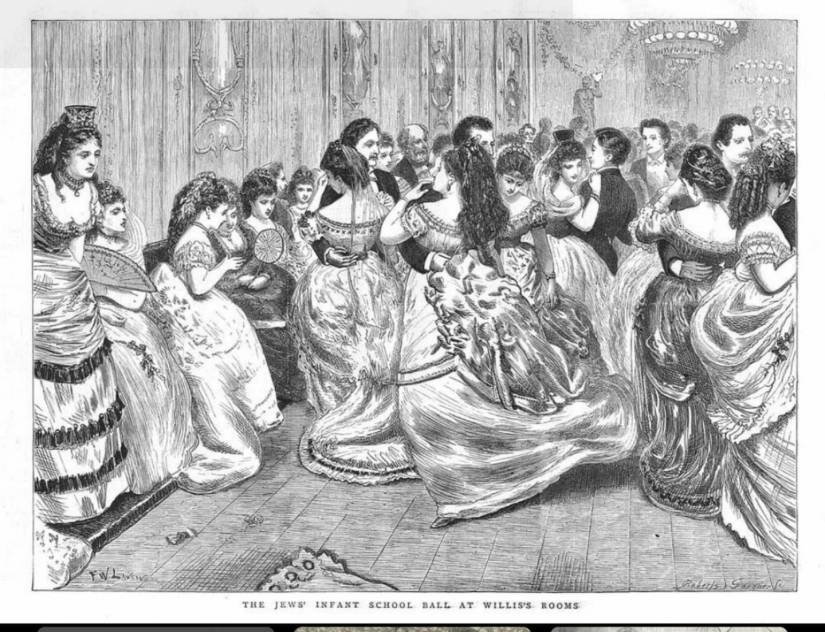
In 1811, he aided the Westminster Jews’ Free School to open its doors. In 1817, the Jews’ Free School was founded. In 1820, the Western Institute for Clothing and Apprenticing Indigent Jewish Boys was opened; and in 1824, the Society for the Relief of Indigent Poor began providing widows with five shillings per week.
During his administration as chief rabbi, the problem of poverty was investigated, reforms were suggested, and solutions were implemented (certainly not in keeping with a Mr. Collins). In the face of these good deeds, Mr. Bennett’s cynicism should not have prevailed; however, it did. To this day, Solomon Hirschell’s legacy remains tainted. He has been labeled as a pompous, unwavering traditionalist, ignorant and out of touch.
Without wishing to overstep the boundaries of a simple blogger (who has no right to sit in judgment), it would seem that the call of Tekiah fell upon deaf ears with these two men. Talk about pride and prejudice! Perhaps they ought to have heeded Elul’s message; they should have recognized the error of their ways and made amends. History might have been kinder to both if the had learned to compromise a bit; but to paraphrase Jane Austen’s Northanger Abbey, I leave it to be settled, by whomsoever it may concern, whether the tendency of these two gentlemen is to recommend tyrannical rivalry or reward stubborn constancy.
May the sound of the shofar awaken us to be kind to one another and to cherish the moments that make up the days of our lives. May we all be inscribed in the Book of Life and may the new year be blessed with health, happiness and goodwill.
Readers of this blog know that I was inspired to write a Jewish historical fiction based on Jane Austen’s Persuasion. I understand some of you have not had the pleasure of reading Austen’s original work or seeing the film adaptations. Never fear! Celestial Persuasion is a stand-alone novel with more than enough to tempt you. But you don’t have to take my word for it. Here are a few early comments from people in the know…
“I’m still shaking my head at how good this was! Even though I knew nothing about the history of this area, I found the story fascinating. The appearance of an Austen character in the story always made me smile.” ~ Jeanne Garrett
“A wonderful and inventive novel that paints a compelling historical tale upon a large canvas background of a culture different from what most are used to seeing in #Austenesque variations. Celestial Persuasion left me contemplating about how destiny is written in the stars.” ~ Don Jacobson, author of The Bennet Wardrobe series
“Devotees of Austen’s work, who never wanted her stories to end, will enjoy Trupp’s writing, and those who have adored Persuasion, will not be disappointed in what could possibly come after.” ~Sherry V Ostroff, author of Caledonia, Mannahatta and The Lucky One
“From a literary perspective, I love the way Jane Austen’s characters are sewn into the book. While Abigail’s Jewishness is certainly a central focus, I must commend the respect offered to several other faiths throughout the story, emphasizing that which we have in common rather than that which separates us. I loved this book!” ~ Debbie Brown
I hope to entice you with this shortest of snippets. Please enjoy!
With her morning correspondence completed, she was at leisure; however, this was not a pleasant interlude and Abigail dreaded such moments. For it was during these quiet times that the gripping claws of sorrow tore at her heart. She required an occupation, as the stillness of her life had become too much to bear. She quitted the morning room and quietly climbed the stairs to find Jonathan’s bedchamber.
Opening the door, Abigail was met with the familiar scent of old books and leather. Mrs. Frankel had seen to the room being kept tidy. The clean linen upon his bed added to the crispness in the air. Jonathan’s wardrobe contained most of his clothes, as he took only the essentials when he went off to sea. His shelves were lined with an eclectic combination of writings. Books of Kabbalah and astrology were placed side by side with authoritative treatises on astronomy, physics, and physiology. There were novels of the sea that spoke of great battles of yore, and there were books of poetry and psalms. Abigail ran her fingers across their delicate bindings and cried over the senseless loss of such a kind and gentle man. She would have to pack his belongings, as she had done with her father’s things. Some things would be given to charity, clothes and the like, but the books would not be forsaken.
Abigail reached for an ancient tome; it had once belonged to her maternal great-grandfather and had been passed down throughout the generations. Jonathan had shown her this very book when she was yet a child of five years of age and their mother had left their world. The Sefer Yetzirah, Jonathan had explained, was devoted to speculations concerning God’s creation of the world. He had shown her drawings of the constellations that formed the galgal hamazalot, the wheel of the Zodiac, which exerted influence on Man’s traits and tendencies and on the natural course of things. Abigail recalled his gentle voice as he proposed that they study the celestial spheres together and learn of their characteristics. In her innocence, she had asked if their mama had become one of the heavenly formations watching them from above.
“Dearest, you may still speak to Mama,” Jonathan had said. “Ask her to guard you and guide you from her heavenly home. You may look upon the shining stars and imagine one of them is our own mama sending her love to us here on earth. But Avi, the stars and the moon, and all the wondrous celestial creations, are only a manifestation of God’s will. We must always remember to place our faith and trust in our Creator.”
Abigail closed the book and returned it to its rightful place on the shelf. There would be time enough to reminisce in the days to come. She was not compelled to act with much alacrity; her brother’s belongings would remain as he left them, and Abigail did not look back as she closed the door.
Dear readers: the preorder link for the eBook can be found here
A few weeks ago, I wrote about my Work in Progress: Celestial Persuasion. You can read about it here.
I’m getting closer to Publishing Day and I can’t wait to share it with you. In the mean time, please take a minute to watch this short trailer. The painting of Mariquita Sanchez de Thompson was the inspiration for the entire project. Please enjoy!
Coming soon! Celestial Persuasion on Amazon.
Abigail Isaacs fears ever again falling under the power of love and dedicates her life to studying the heavens. However, upon her father’s demise she finds herself in reduced circumstances and must write to her brother, who has long been away at sea. When instead Captain Wentworth of the HMS Laconia sends a tragic reply, Abigail is asked to set aside her own ambitions and fulfill her brother’s dreams in the Viceroyalty of Río de la Plata.
In his relentless pursuit for justice, Lieutenant Raphael Gabay lends his sword to the Spanish American cause. But as he prepares to set sail with the others, he is entrusted with the care of a young woman. She is quite unlike anyone he has ever known, and Raphael wonders whether the brilliant astronomer will see beyond his frivolous façade and recognize his true nature.
Their destinies have been plotted beyond the celestial veil; their charts foretell of adventure. Can these two troubled souls be persuaded to heed the stars and find love—and their purpose—in this fledgling nation?
How many of you have seen the film, My Big Fat Greek Wedding? Swap out “Greek” and insert “Argentine” and you would have a clear picture of my family. Every character reminded me of a relative; every embarrassing scenario was relatable and every corny saying sounded familiar. The movie had my family in stitches. We laughed, we cried, and we pointed fingers at each other, saying: That is so you! This movie, in fact, was one of three impactful works that played a part in my writing (the other two were I Remember Mama and Fiddler on the Roof). I aspired to accomplish something in that same vein and wrote my first book, With Love, The Argentina Family~ Memories of Tango and Kugel, Mate with Knishes.
Interestingly enough, I came across a blog post that spoke of the similarities in between Pride andPrejudice and Fiddler on the Roof. Both stories feature five daughters, three of which are married by the end of the piece.
Both showcase awkward scenes of rejected marriage proposals. The mother and father relationship in Fiddler shares similar characteristics with those in P & P. Both stories have forbidden love and worries of losing one’s home. In short, this author spoke to my love of meshing the world of Period Dramas and Jewish Historical Fiction.
In all fairness to the original post, I encourage you to take a peek at it here: Read it and tell me if you don’t agree. An Anglican woman in England and a Jewish man in Imperial Russia wrote two very different stories that are remarkably the same, and remarkably relatable to a wide and diverse audience.
Last week, I binged on the third season of Shtisel. Have you heard about it? It is a hit show on Netflix. I devoured the entire season in two days. No doubt, you’re wondering why I’m writing about a modern-day series that evolves around a Haredi family living in Israel. You’re rolling your eyes at this point thinking: I signed up for a historical fiction blog—why is she writing about Shtisel-mania? Good question; but before I answer, I have a question for you…
How many Jane Austen variations are there in the Fan Fiction world? I couldn’t even begin to tell you, but I know this: Keep her storyline and exchange the Anglican family with a Hindu family, a Black family, a Jewish family; or even a family of Zombies, you still get an Austenesque novel. Austen’s work centered around her commentary about the human condition. She used humor and irony to make her point. She wrote about heartaches, financial concerns, and dysfunctional families. Her stories are still relevant to millions of people around the world who are not necessarily English, Anglican, or actually living in the Regency era. 😉
Shtisel has taken the world by storm and it has many people scratching their heads in wonder. How is it possible that in today’s society, where everything goes and everything is permissible, a story about an ultra-orthodox Jewish family is a Number One hit? They dress modestly. They have strict dietary restrictions. The roles for women and men are clearly defined. But, take away all the trappings, the clothes, the language, the seemingly archaic rules, and exchange them with any other culture or religion and you still get the very essence of the show. The humanity remains. The power of the emotions expressed and experienced by these characters are universal.
Three or four families in a country village is the very thing to work on. Those three or four families are the mind we knew intimately – the landed gentry, the upper classes, the lower classes, not only the industrial masses, but also the agricultural laborers.”
Jane Austen- in a letter to her niece
Jane Austen’s trademark was her knack for realism. She didn’t write about the Napoleonic Wars or earth-shattering catastrophes. She wrote about the world around her, knowing that life’s every-day “little dramas” were sufficient fodder to get her point across. Her writings have been inspirational and Shtisel is working the same magic. Its triumph is in sharing a common story, focusing on Universal Truths to which we all can relate. How could I not aspire to do the same?
The last few months have been awfully busy. Having recently finished a rough draft of my next novel, I’ve been focused on working with my alpha readers and trying to revise, restructure and basically reinvent my ever-evolving storyline. All this is done in stolen moments in between a 10-hour work day and household responsibilities… laundry, grocery shopping, etc. Life seems but a quick succession of busy nothings when all I want to do is write. And before I knew it, Passover was upon us and I was not prepared.
Being empty-nesters, the holidays are just not the same any more, especially because my children, and family in general, are spread out across the world. But I still wanted to celebrate the occasion and preserve the traditions, so out came the cookbooks and beloved recipes. I’m not a particularly talented cook, nor am I overly ambitious. And as our diets are restricted throughout the week, I sometimes am at a loss to create things without the prohibited chometz. Or as our family haggadah indicates, we are to avoid anything that “puffs up.” As a side note—or maybe not—I think this haggadah is spot on with regard to a spiritual cleansing of pride and self-importance. Leavened breads, cakes and other yeast or flour products inflate and thicken our bodies. All year long, we are full of chometz, full of ourselves, with no room for God or anything else. For one week, we are told to eat matzah, which is flat and bland, and contemplate our lives and our freedoms. It is the complete opposite of haughtiness and puffiness.
OK, if I haven’t lost you yet, let me get back to my post…
In looking at the family favorites, I noticed how I have tweaked recipes here and there. Ingredients have been swapped out, preparations have been revised. In other words, the recipes evolved, much like my latest novel, depending on whose voice had taken the lead. Depending on which grandmother, aunt, or cousin passed it along, or from which country, culture and timeframe, the difference was notable.
Are you still with me?
I had previously written about Lady Judith Montefiore, and the impact of her cookbook on Anglo-Jewry, but started to think about food in relation to our identity. I am ethnically a Russian Jew who was born in Argentina. But I am also a (proud) naturalized citizen of the United States of America and have been highly influenced by the culture in my adopted land.
“Tell me what you eat: I will tell you what you are.”
That statement was published by Jean-Anthelme Brillat-Savarin in 1825; and I think, it still holds true! Celebrity chef Jamie Oliver recently stated that “Dishes evolve, impacted by trade, war, famine and a hundred other forces.” I find it all fascinating and here is just one example of how recipes evolve and cultures intermingle.
Almond sweets were all the rage in Sicily; but by 1552, they had gained popularity and became known to the rest of modern-day Italy, Spain, France, and England. And across the pond, in a hand-written cookbook published by the first lady, Martha Washington’s Booke of Cookery contained a recipe for almond cookies. So, by the 17th century, we have the word macaron in French or macaroon in English. At this time, the world was also introduced to the Sicilian word maccarruni. In English, of course, we know it as macaroni.
To complicate things a bit, a fad developed in the United States in the late 1800s with the importation of coconut from India. Coconut cream pies, ambrosia and custards were very popular— as was the coconut macaroon, which suddenly began appearing in Jewish cookbooks. In 1871, Esther Levy’s Jewish Cookery Book included a recipe for this new dessert; and because they didn’t contain flour, they soon became an American Passover tradition.
Never let it be said that the French were left behind in the world of baking! Soon after coconut macaroons first appeared, bakers Gerbet and Desfontaines created a sandwich cookie by putting almond paste or ganache between two individual macarons. The new cookie was called “le macaron Parisien.” In the United States, the word macaron now referred to the French ganache cookie, leaving macaroon to describe the coconut confection we eat all throughout this holiday week.
Don’t forget the word macaroni. We think of it as elbow pasta. Right? Au contraire! In 18th century England, macaroni had an altogether different meaning. Wealthy gentlemen, who sported outlandish hairstyles and pretentious fashions, were called Macaronis. Why? Because while they did the Grand Tour across the Continent, they acquired a taste for Italian pasta, which was considered an exotic food sensation. For those of us who grew up singing “Yankee Doodle,” this explanation helps to make sense of the song. The chorus makes fun of a disheveled Yankee soldier who attempts to look fashionable. Remember? “…stuck a feather in his cap and called it macaroni.”
At this point, you may be asking yourself: How is she going to tie all these ponderings together? Don’t worry. I’ll tell you.
This year for Passover, I couldn’t find a nice brisket in my grocery store, so I chose to make an American-style pot roast. And because my husband doesn’t care for chicken soup, we ate our kneidalach (matzah balls) in Argentine-style tuco (similar to a Pomodoro sauce). I wonder what Lady Judith might have opined of my international Pesach menu. And what of our beloved, Jane Austen? Did she have an interest in food? In one of her many letters to her sister, Cassandra, she wrote:
“My mother desires me to tell you that I am a very good housekeeper, which I have no reluctance in doing, because I really think it my peculiar excellence, and for this reason – I always take care to provide such things as please my own appetite, which I consider as the chief merit in housekeeping. I have had some ragout veal, and I mean to have some haricot mutton to-morrow.”
Both of these entrées stem from French cuisine. I wonder if Jane ever dined on anything quite so exotic as pasta? I know for a fact she was acquainted with a few Macaronis—at the very least she wrote about them! I can think of a few Austen dandies, can’t you? But then again, our Miss Jane was never at a loss for words about pride…
“Vanity and pride are different things, though the words are often used synonymously. A person may be proud without being vain. Pride relates more to our opinion of ourselves; vanity, to what we would have others think of us.”
I wonder what she would have to say about Pharaoh? Talk about being “puffed up”!
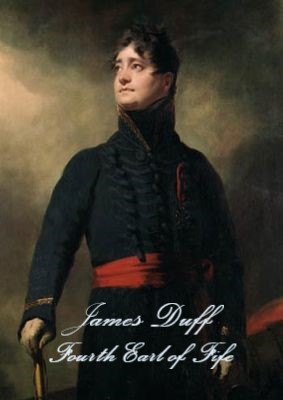
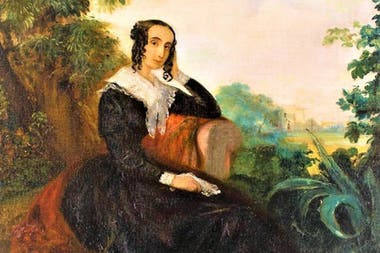
After nearly a year, I am happy to announce I’ve completed the first draft of my latest novel. Of course, that only opens the door for the various re-writes, alpha reads, beta reads, etc. In other words, the hard part is yet to come! In the meantime, I want to share the inspiration for this novel. The book is currently entitled, Celestial Persuasion and I hope it can be accepted as a prequel to Persuasion in the hearts and minds of my fellow “Janeites.” But it is much more than that! Allow me then to introduce a few key historical figures that were the impetus for my novel.
Lord Fife ~ Jose San Martin ~ Mariquita Sanchez de Thompson
It is interesting to note, England was at war almost continually throughout Jane Austen’s lifetime. Most Regency fans are familiar with the Napoleonic Wars and the impact on the Austen family and to her fictional characters. For the most part, these battles and engagements remained on the Continent, with brief mentions of the West Indies and the Caribbean. I’m going to take you further south, all the way to South America; and in particular, to the Viceroyalty of Río de la Plata. Today, it’s known as the Republic of Argentina.
Though it was a Spanish colony, the English were very much a part of the area’s growth. From whalers and farmers, to engineers, bankers, and second sons, they journeyed to the Viceroyalty to make their fortunes on the pampas. Things got a little heated, however, when in 1806 and again in 1807, the English decided to invade the territory. Remember, England’s resources had been spread thin, what with those pesky American colonists, not to mention the French. They needed to expand their reach to fill the Crown’s emptying coffers. In the Viceroyalty, the criollos (those born in the New World but of European ancestry) were contemplating their freedom—much like their brethren up north had done—when the English decided to attack. Needless to say, the Redcoats were not successful, having been repulsed by a ragtag colonial militia. The criollos’ victory against a great European power only helped to increase their confidence, and sparked a wave of patriotism and pride.
Now, across the pond, the officers suffered tremendous embarrassment for not being able to hold the line. Sir Home Popham, for example, had captured Buenos Aires and tried to impose an oath of loyalty, but the citizens refused to obey. They locals fought and took back their city and General Beresford had to surrender. A few months later, more troops were sent to engage the Spanish colony, but found themselves fighting in the streets and having to negotiate an evacuation! Their shame was complete. Jane Austen, however, had compassion for their efforts and in a letter dated 1807, we find a poem penned by her own hand.
ON SIR HOME POPHAM’S SENTENCE, APRIL 1807
Of a Ministry pitiful, angry, mean,
A gallant commander the victim is seen.
For promptitude, vigour, success, does he stand,
Condemn’d to receive a severe reprimand!
To his foes I could wish a resemblance in fate:
That they, too, may suffer themselves, soon or late,
It is understandable that Austen would be sympathetic to the officer; she had two brothers in the Navy and would, naturally, support the cause. Nonetheless, there was a large population of English living in the Viceroyalty, many of them had married and had raised their families in the New World. They did not support the English invasion, nor did they support the Spanish crown. In 1807, Napoleon had invaded Spain and the king had been removed from power. The criollos, living an ocean away, believed they had the right to govern themselves until the lawful king was restored to the throne. In January 1809, Napoleon crowned his brother, Joseph, as King of Spain. This act was the perfect excuse for secession and here enter our players: Jose San Martín, Lord Fife and Mariquita Sanchez de Thompson.
If you have read this far, I thank you! I realize that I am passionate about things that put most people to sleep; but once I realized that San Martín was in England, collaborating with Lord Fife, Sir Charles Stuart and host of other aristocrats, I couldn’t get this idea out of my head. And when I discovered Mariquita Sanchez, I knew I had the makings of a wonderful story. Captain Wentworth was an easy choice and I proceeded to create the characters of Abigail and Jonathan Isaacs to bond the entire project together.
I decided to place my fictional family in the town of Exeter, located in the historic county of Devon. Exeter worked well with my storyline because it is adjacent to Austen’s fictional Barton Cottage, as well as the Great House of Uppercross (if you’re a Janeite, you’ll understand). And more importantly, I wanted to place my fictional country doctor and his family among a small Jewish community in Southwestern England. Did you know there has been such a community in Exeter since medieval times? They were expelled in 1290, but were allowed to return and rebuild by the mid-1700s. The synagogue, built in 1763, is the third oldest existing synagogue in the United Kingdom and the second oldest Ashkenazi Synagogue in the English-speaking world (Plymouth Synagogue was built in 1762). Rabbi Moses Horwitz was the leader of the community from 1792-1837. One of the town’s more renown citizens, and founder of the Jewish congregation, was Abraham Ezekiel. He was described as a silversmith, engraver in general, optician, goldsmith and print-seller; and “for fifty years and upwards, a respectable tradesman of Exeter.” By 1796, five other Jewish citizens had shops in the fashionable shopping area of town, sufficiently well established as to warrant inclusion in the Exeter Pocket Journal. And so, I placed Doctor Simon Isaacs, widower, in this charming locality along with his children, Jonathan and Abigail Isaacs.
I will sign off with an excerpt from the W.I.P. (Work in Progress) in the hopes that it will tempt you!
Captain Wentworth returned to his ship, and nary a crewman offered more than a silent salute as the ship’s commander stormed to his quarters. Every man, from first lieutenant to cabin boy and everyone in between, had seen that look of their captain’s face before. They knew better than to engage him when he was clearly consumed with a task that required his full attention. He crossed the upper deck and descended the companionway before briefly saluting the marine sentry posted at his door. Cursing, he threw his hat across the room and roughly removed his coat. Normally controlled and reserved, the captain allowed himself a moment to release his frustration. Truth be told, he was more than frustrated. He was angry. Angry with Captain Lawrence for his abject abuse of power. Angry with the Admiralty for turning a blind eye to rogue and lawless officers. Angry with the helpless situations in which young women found themselves when their menfolk failed to respect their intellect and resolve. He could not help himself and thought of Anne again. Would the pain ever subside? Would he be able to set aside the rejection and rally again?
Throwing himself into his chair, uncharacteristically without ceremony or care, Captain Wentworth grimaced at the task before him. He must write to Isaacs’ sister. He—of all men—would have to lay out a new trajectory and pray she would comply. The captain reached for a nearby bottle of claret and poured the ruby liquid into a crystal glass. He swilled the contents down in one gulp, feeling only the burning sensation as it glided down his throat. The feeling was welcome. Considering what was required of him now left a worse taste in his mouth than the fiery wine. Captain Wentworth could not scruple that he was now in the position of having to persuade a young lady in the course of her life. Of all things, he despised the thought of manipulating someone by playing on their respect of his rank and command. And again, he thought of Anne. She too had been young and naïve of the ways of the world, and allowed someone she trusted to guide her. To guide her in such a way as to lead her away from him.
He took another swallow of courage and thought now of Miss Abigail Isaacs. Throughout their friendship and time at sea, Jonathan had provided some of the essentials—she seemed quite unlike other young ladies. But, then again, were not all young ladies easily persuaded?
12th of August, 1811
Gibraltar
Madam,
I take pen in hand to inform you that I am in receipt of your letters, both the one you had so wisely addressed to my attention and the one intended for your brother. It grieves me to relay this information. It is a task no commander ever wishes to undertake; and knowing that you have recently lost your father, this will be a harder blow than any young lady should have to bear. With all my heart and soul, I would wish to spare you this intelligence; however, Isaacs—that is to say, Jonathan—always spoke so highly of his sister, that I take courage in knowing your strength will allow you to rally. Your dear brother, and my good friend, will not be returning home. He has completed his service to the Crown and distinguished himself with great honor. You may hold your head high. Jonathan Isaacs is, and will always be, thought of as the best of men. These are trying times, Miss Isaacs. Wars seem to be never ending, and a grateful nation asks much of the families that are left behind to wonder, to pray, and to grieve. I hope that you have family and friends to help you through these dark and troubled waters; but until you find yourself tranquil once more, pray allow me to guide you to a safe harbor. Your brother charged me to relay some instructions, and I am only too honored to fulfill my promise expeditiously and with great care.
It was your brother’s greatest wish that you meet Lord Fife. You may be unaware of the relationship, but your father and his lordship were friends and business partners. At your father’s bidding, Jonathan was introduced to the earl when he was at university at Edinburgh. Please make whatever arrangements are necessary to travel to London at once. You are expected, Miss Isaacs, and can rest assured that accommodations will be at your disposal with the earl’s compliments. His lordship is making his townhouse available to you and will, naturally, stay at his club for the duration of your visit. I cannot say this more succinctly, madam: Jonathan was most adamant in his declaration and has entrusted your wellbeing to Lord Fife.
I can well imagine your present state of mind. Please forgive my impertinence, but having learned much of your homelife, I feel quite part of the family. The Bible tells us to build our lives upon the stable rock that is God’s love, wisdom, and salvation. I would humbly add to that. My own brother, the Reverend Edward Wentworth, has been the rock in my life. I know what Jonathan has meant to you, as he has told me much of your childhood together. To be sure, I know you are a talented mathematician and astronomer, and that these accomplishments were brought about by hours and hours of your brother’s loving dedication to the betterment of your brilliant mind. I know, too, that you were quite put out and displayed righteous indignation when you were prohibited—at the age of nine or ten— to accompany your brother to university. Pray, do not be vexed with Jonathan for relaying this intelligence. It was one of his cherished memories of his most beloved sister. Jonathan treasured this time spent together, learning and discovering all matter of things. He also spoke of the influences of many of your sex, giants in their fields of expertise. I, myself, had no knowledge of their greatness and readily admitted my ignorance of such feminine luminaries.
Because of these intimate conversations with your brother, I feel that I have been given leave to speak to you thusly. These brilliant women, of whom Jonathan spoke, had shown great courage in forging ahead in worlds that denied their very existence. I am now obligated to help you navigate the trajectory that the stars have so clearly outlined. As the Bible tells us, Miss Isaacs: Be strong and of good courage! I entreat you to make haste and communicate with Lord Fife as soon as you are able.
Your servant,
Captain Frederick Wentworth
I hope you enjoyed the post. I am currently seeking one or two alpha-readers; so if you are interested, please let me know!



















 Mirta Ines Trupp~ Author