New Post

Character Interview with Mrs. Meyerson~ a look into a Jewish Austen Fan Fiction novel

If you have been following the series of author interviews on this blog, you might have noticed a particular question that I often pose. Are you a panster or a plotter? I am most definitely a plotter, needing an outline and a spreadsheet with dates, names and personality traits. That being said, there comes a point, while one is furiously typing away, that the characters take over. Their own unique voice will be heard, even if that means deleting the last chapter and rewriting the trajectory for the entire story. Mrs. Meyerson is one such character in The Meyersons of Meryton. But rather than telling you about the rebbetzin, allow me to introduce you to the lady, as I conduct a brief interview with Hertfordshire’s newest arrival.

Host: Greetings, Mrs. Meyerson and welcome to my blog.

Guest: Thank you, my dear. Pray forgive my ignorance. I am not at all familiar with your modern-day colloquialisms.

Host: I do apologize, madam. A blog is a—well, the arrangement is of little consequence. Suffice it to say, you are joining us today to discuss your arrival to Meryton. Tell me, what was your first impression of that small market town?

Guest: It certainly was vastly different from London, nonetheless, we were greeted graciously by the Bennet family of Longbourn on our first night. I was later pleasantly surprised when we met the congregants of the little synagogue, and understood straight away, the importance of my husband’s presence in that village.

Host: Vastly different from London, you say? What was it that you missed the most? The routs? The balls? The fashionable society?

Guest: Oh no, my dear! We lived in Cheapside—not quite the center of fashionable society. Do not misunderstand me. We had our share of good society. My cousin—rather distant, needless to say—is Moses Montefiore. He and his lovely new bride, Judith, are related to Nathan Rothschild by marriage. I have had the privilege of collaborating with Mrs. Montefiore in doing charitable works within the Jewish community. As to your question, I miss my family naturally. I miss my many acquaintances. And I miss the good work, the tzedakah, I was privileged to undertake. But God is good! Baruch Hashem! I have made new friends in Meryton and have been kept busy with… perhaps, it is best, my dear, if I do not delve into matters that might be too delicate in nature.

Host: Let’s change the subject then. Tell me of your new friends, the Bennets. As a mother of five yourself, what did you think of their daughters?

Guest: Oh! The Bennets! What a delightful family! They were a God-send to us. Jane is an angel, a sweet angel. What more can I say? Mary reminds me of a beautiful, but untended, flower. A bit of attention and some loving kindness is all she needs. Lydia, poor dear, was a whirling dervish when I met her—a Chanukah dreidel spinning out of control! Kitty, or Catherine as I prefer to call her, has been like a daughter to me. In some ways, she has also been my teacher. As the rebbetzin, I am called to lead the women of my husband’s congregation. I am supposed to be learned in the ways of our culture. I am expected to be a good example for the women of my faith. But Catherine reminded me of something very important, when I lost my way, and I am truly grateful.

Host: But you have only mentioned four, Mrs. Meyerson. I believe you forgot someone.

Guest: Heaven’s no! I left Elizabeth for last. Elizabeth is a true Eishet Chayil—a Woman of Valor. I realize that the proverb usually is sung to honor the mother, or the matriarch of the house; nonetheless, Elizabeth has earned this title in my eyes. She exudes the qualities which are attributed to such a woman: Feminine strength, intelligence, wit, and compassion. Even so, I witnessed how she struggled, how she fought to overcome her less than admirable traits, and this made her even more estimable in my eyes. Her worth is far beyond that of rubies, as I am certain Mr. Darcy would agree.

Host: I have no doubt! Now, in order to entice my audience further, what do you say to my sharing a snippet of the story?

Guest: I can only repeat that which someone else wiser, and more clever than I, once wrote: “I declare after all there is no enjoyment like reading!” By all means, my dear, lead on.

It was many hours later, in the darkest part of night, when a series of harried knocks were heard upon the door that caused the Bennet family to stir in alarm.

“What is it, Mr. Bennet? Who is at the door?” cried Mrs. Bennet pulling the bedclothes under her chin.

“I have not a clue, but I doubt we will learn the meaning of this rude interruption by hiding under the linens!” Mr. Bennet declared in a huff as he pulled on his dressing gown and stuffed his feet into his slippers. Carefully managing the staircase as he held a flickering chamberstick in one hand and wiped the sleep out of his eyes with the other, the master found himself at his front door just as Hill came from behind with a few coins from the household funds at the ready.

“For the runner, sir,” she said with a shaky curtsey.

“Thank you, Hill,” he replied gratefully, for he had not thought of compensating the errant messenger.

Mrs. Hill bobbed once more and stumbled back to her quarters as the master made quick work of opening the door. The messenger grinned an apology at the lateness of his arrival. Handing over the missive, he touched his cap and bounded off into the night. Mr. Bennet, now fully awake and justifiably curious, held his hand high and allowed the candle to illuminate a path to his library. Once there, he quietly shut the door, sat down in his familiar welcoming chair and was adjusting his spectacles when Mrs. Bennet came rushing in, followed by his two eldest daughters.

“How cozy you are, Mr. Bennet!” cried she. “With no consideration to my poor nerves, you have sequestered yourself without further thought of your wife or children who lay trembling in their beds. What has happened?” she beseeched. “Is it from Lydia?”

As he unfolded the object in question, Mr. Bennet peered over his spectacles and looked at his girls. “Jane? Lizzy? Were you all a tremble?”

“No indeed, sir, but we are anxious to know what news comes at this hour,” Elizabeth replied, taking hold of her sister’s hand.

The women gathered in front of Mr. Bennet as he silently read through the brief message. Satisfied that he was at liberty to share the contents, he cleared his throat and turned to his fretful wife.

“I trust you have ordered a good dinner for tomorrow evening, my dear, for I have just been informed we may expect an addition to our family party.”

“Pray, who would be so indelicate as to awaken us in the middle of the night for such a matter? Who, may I ask, wishes to trespass on our hospitality without so much as a by your leave?”

“‘Tis your brother who has written…”

“Edward? Whatever is he about?”

“If you would but calm yourself and allow me to read the letter, all will be explained.”

Jane gently guided her mother to a seat, as Elizabeth lit the candles on the mantelpiece to better illuminate their surroundings. Mr. Bennet hemmed and hawed before commencing:

Gracechurch Street, London

Dear brother, I know you will understand when I say things are well in hand here in town. I have met with Mr. Moses Montefiore and found him to be the best of men, brilliant as he is honorable! Upon his expert understanding of the current situation, Mr. Montefiore conveys the Meyersons to your good care. This letter is to be accepted as means of an introduction for the rabbi and his family into Meryton society. You can expect a party of three—husband, wife and child—to arrive by four o’clock on Wednesday. I have assured them of my sister’s fine hospitality, but tell Fanny not to fuss for their accommodations; they will only be staying the night. Montefiore has made arrangements for a living to be had in town. Fanny, I have no doubt, will be happy to know the Meyersons have need to be settled in that establishment by Friday afternoon! Now, with regards to…

Mr. Bennet stopped at this juncture, folding and placing the letter most purposefully in his pocket.

“I believe therein lies the crux of the matter. The rest involves business that I will need to attend in the coming weeks.”

“How extraordinary!” exclaimed Jane. “Whatever does my uncle mean by ‘things are well in hand in town’?”

“Are you at liberty to divulge anything further on these people and their business in Meryton?” Elizabeth asked, covering a yawn with the back of her hand. “Who is this Montefiore? Can he be a sensible man, ushering these people to us in this manner?”

Mrs. Bennet had more pressing matters to discuss and would not be silenced. “We are in the midst of planning our daughters’ weddings! My poor nerves cannot take much more agitation, Mr. Bennet. What does my brother mean by sending strangers to our home? And what, pray tell, is a rabbi?”

The hour being late and with no desire to entertain any further debate, Mr. Bennet stood and waved his hand, signaling towards the door. “Off with the lot of you. Tomorrow is another day and it will come soon enough. I am to bed and will brook no argument, Mrs. Bennet. Good night, Jane. Good night, Lizzy,” he said, with a kiss to each daughter’s brow.

Elizabeth blew out the candles and followed her father and sister as they wearily climbed towards their warm and welcoming beds. Mrs. Bennet, alone in the darkened room, sat down on Mr. Bennet’s favorite chair and indulged in a good cry, presumably relieving her poor nerves.

THE MEYERSONS OF MERYTON is FREE today on Kindle Unlimited!

New Post

The Ongoing Journey of an Indie Author~

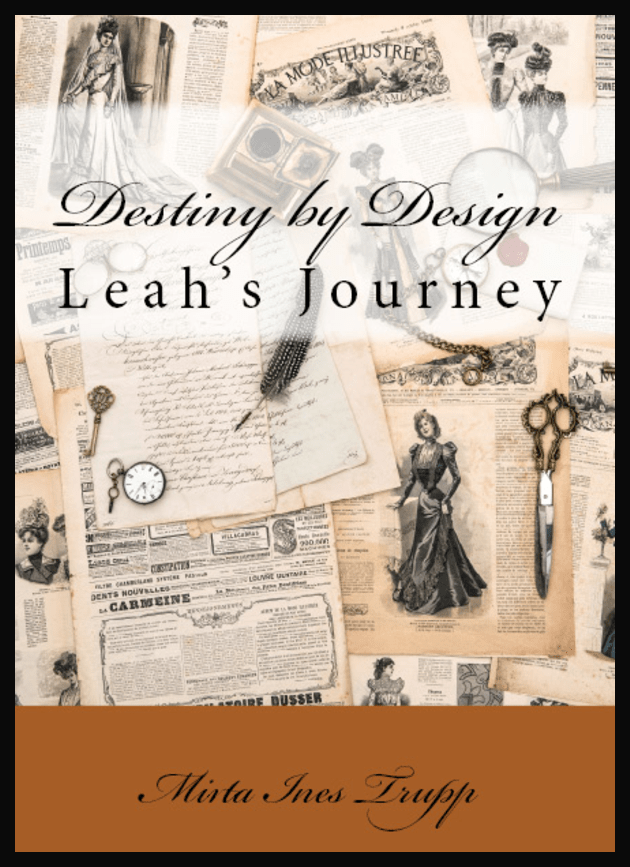
In the upcoming months, I will be participating (via Zoom) in two separate book club meetings. Both groups have decided to read and discuss my novel, Destiny by Design~ Leah’s Journey.

To say that I am humbled, delighted, and encouraged doesn’t even begin to describe what I’m feeling. The book was published in 2017; and as an indie author, it goes without saying, the continued show of interest is invaluable. However, for this book in particular, I should not be surprised. Just about a year after its publication, I embarked on a journey of my own. As cliché as it sounds, I was touched by a fairy godmother all of my own. Talk about a show of interest…

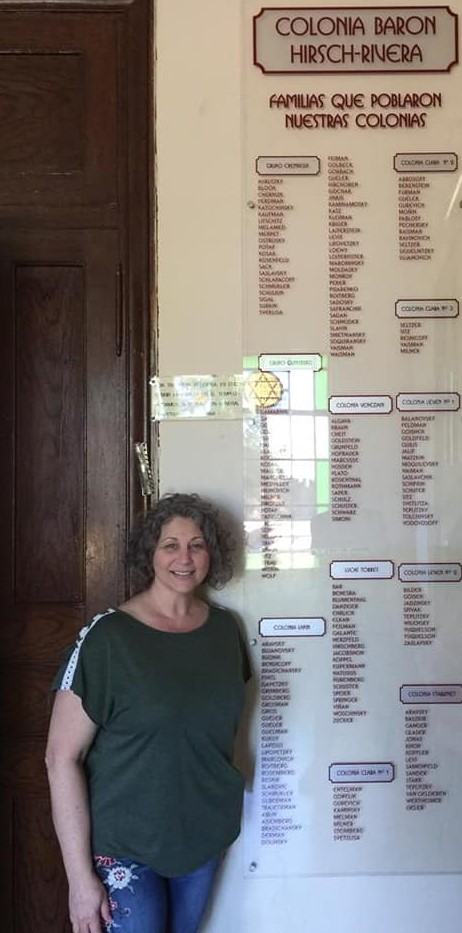
I received an email via Goodreads.com. The note was from a woman who had read and enjoyed, Destiny by Design~ Leah’s Journey. She went on to explain that a group from the Jewish Federation of Palm Beach County were in the midst of planning a trip, their so-called “VIP Mission to Argentina.” Stacey Levy introduced herself as the lead chair of the mission and explained that her team of organizers were preparing an exclusive itinerary in this hub of South American Jewish life. They were planning on visiting synagogues and Jewish schools, and meeting with dignitaries and officials to discuss the needs and the experiences of Jewish Argentines. She also wanted to schedule an afternoon Meet & Greet with a Jewish Argentine author.

Do you happen to know of anyone who’d be interested to meet with us?”

In my naiveté, I wrote back, graciously thanking her for her kind words regarding my book. I offered to contact my relatives in Argentina, in the hopes of finding someone to work with her organization. That is to say, an Argentine author of Jewish fiction, who—by the way— spoke English. Several emails later (Yes! I am that slow), my fairy godmother nearly had to slap me with the plane ticket.

Your book was hand selected. I am inviting you to come speak to the group.”

To say that I was honored doesn’t even come close. Naturally, I accepted the invitation, but how would I explain it all to my family? A complete stranger was inviting me to go to Argentina. My kids were astounded. Hadn’t I always preached the need for safety and precaution when interacting with people on the internet? Admittedly, I did some research and found that I was dealing with a legitimate person from a well-known organization.

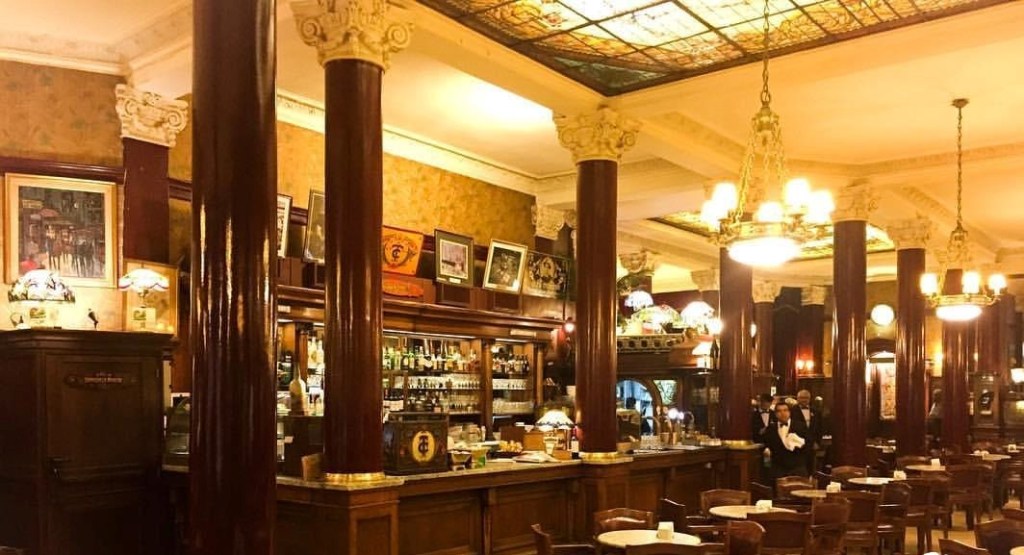
There were a flurry of emails and phone calls to organize the event. I was given the opportunity to suggest a venue, and I immediately proposed meeting in Las Violetas, an iconic café in Buenos Aires. The location is even mentioned in my novel. But the café could not accommodate a group of fifty people, so I suggested Café Tortoni. This legendary establishment has been home to Argentina’s most famous artists, literary giants, journalists and politicians. And I, an unknown indie author, would now be joining in their ranks.

Each participant of the trip would receive a signed copy of my historical fiction. As Stacey said, it would “help provide invaluable insight to Jewish Argentina in a substantive, yet entertaining manner.”

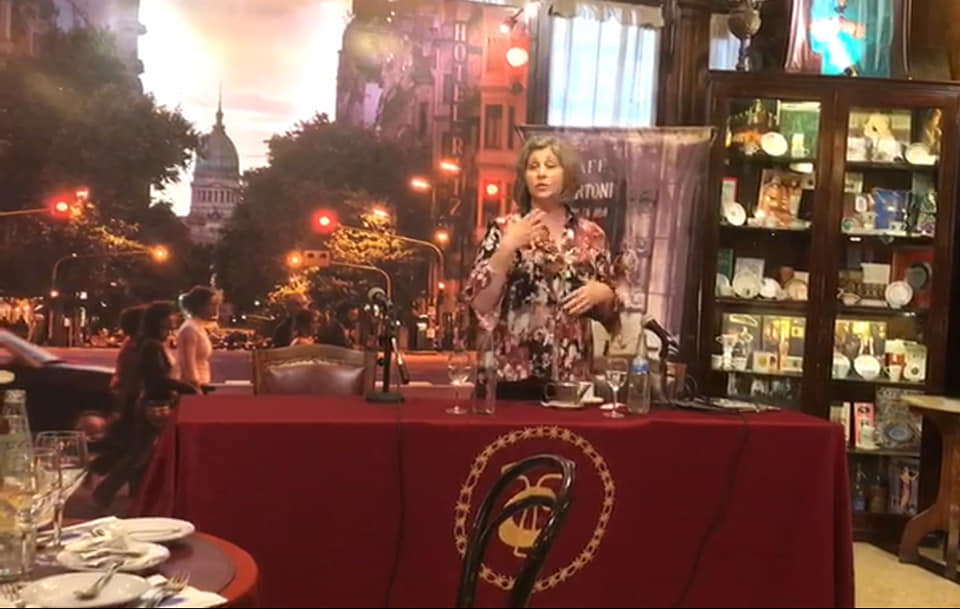
The day of the event finally arrived. I was met at the door by the manager of the café and escorted to a private room. I walked by famous works of art and stained glass, noting the lovely display of treats that had been set out. An Argentine afternoon tea closely resembles what one might expect to find in any British setting. Finger sandwiches and fine, elaborated pastries were presented upon intricate silver trays and delicate china. Of course, there were cookies filled with Dulce de Leche, but I couldn’t touch a bite. I took a seat, next to a life-sized picture of world-renown author, Jorge Borges, and sipped my tea in anticipation. I had yet to meet Stacey in person!

At last, the group arrived. They had completed a tour of Teatro Colon; and after my presentation, they would have just enough time to change before dining with one of the city’s officials. Again, I was taken aback at the magnitude of what was transpiring. The entire episode was surreal. With not a moment to waste, Stacey and I embraced— as if we had known each other our entire lives— and she proceeded with the introductions.

Taking the floor, I was overcome with a sense of calm. The nerves were gone and I was “in the zone.” This moment in time was the exact reason I had written Becoming Malka and Destiny by Design~ Leah’s Journey. I was given this opportunity, not to gloat or to promote my work, but to elaborate on my own family’s history and Jewish Argentina.

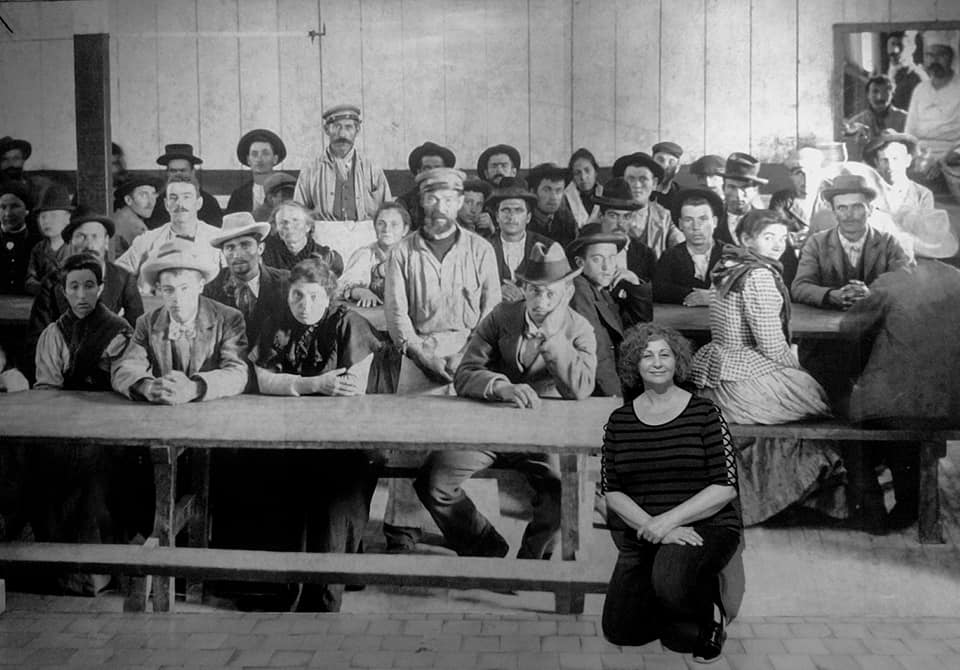
Many participants had had the opportunity to read the novel, but there were others who had not. I explained that my book focuses on the experiences of Jewish immigrants at the end of the nineteenth century and speaks to their struggles and their tremendous achievements. It is thanks in part to these unsung heroes, and the Jewish Colonization Association established by Baron Maurice Hirsch, that the community—la colectividad— flourished. Of course, being an enthusiast of novels set in the Regency, Victorian and Edwardian period, I readily admitted that my story had an Austenesque flair. Nevertheless, it was important for my audience to understand the book’s true purpose. Destiny by Design-Leah’s Journey intentionally pays homage to this particular era and to the immigrant merchants, teachers, tailors, and farmers, who became Jewish gauchos. Afterwards, I was approached by members of the group who eagerly shared their thoughts.

I loved your presentation!”

I felt connected with the Jewish gauchos and their descendants after reading your book; more so, than after visiting the synagogues and museums.

You painted such a vivid picture—I was right there with you and Leah!”

In a moment that could only be described as supernatural, I felt surrounded by all my ancestors. The bobes and zeides were kvelling. I felt. I knew it. Their voices had been calling out to me. They had carved out a path for us and showed us the true meaning of courage, faith and determination. My books are solely a vehicle to illuminate their work. In preparation for my upcoming events, I will continue to focus on that point.

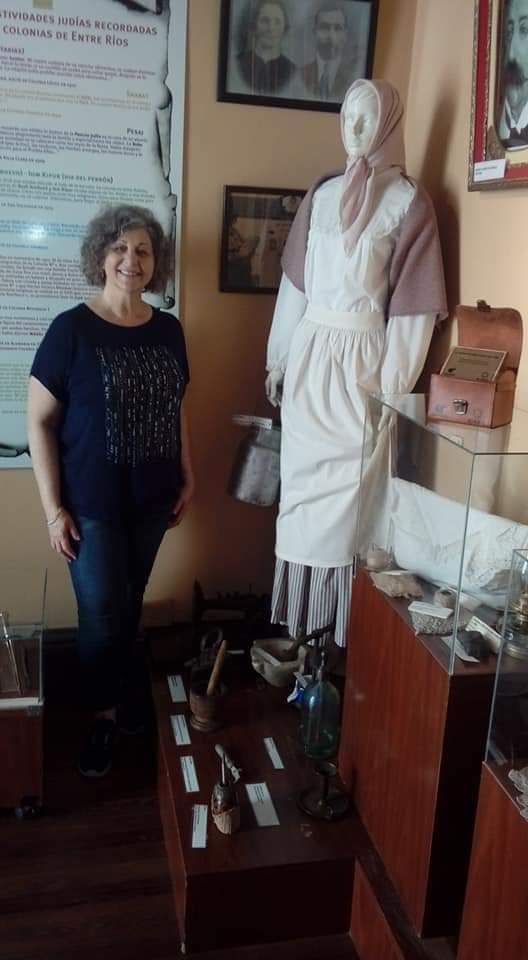
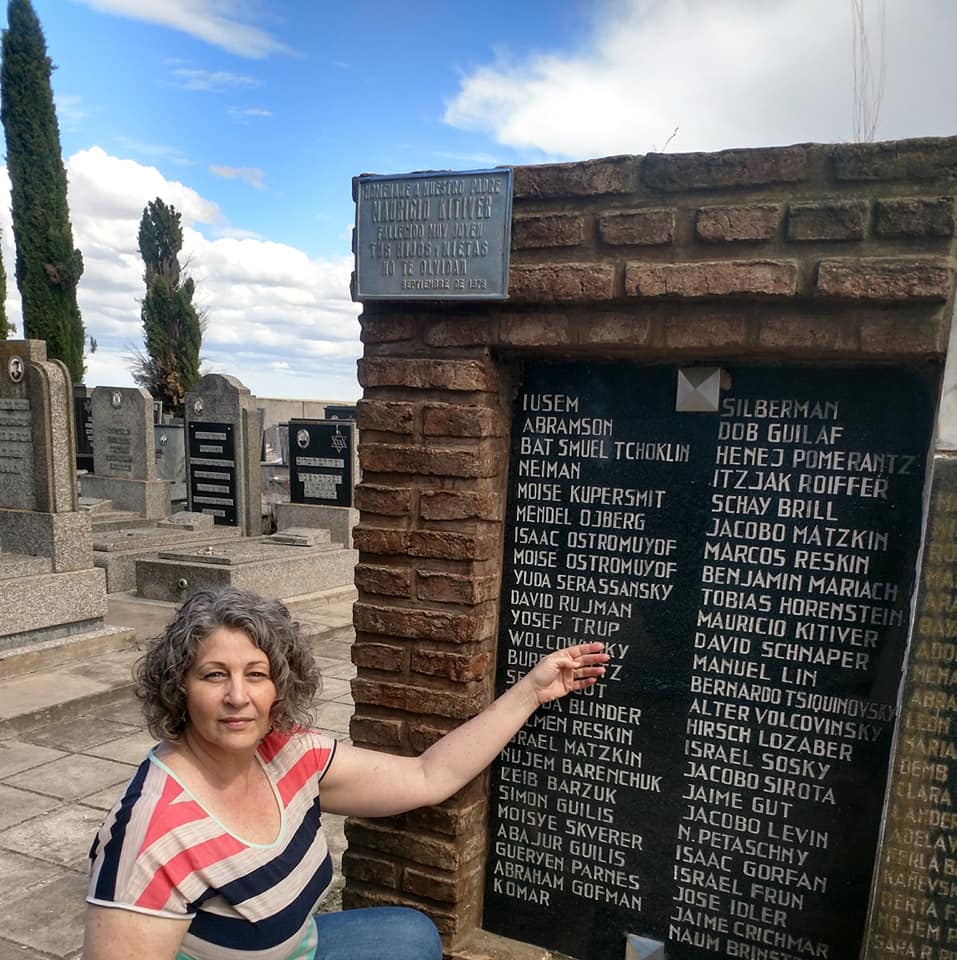
My trip to Argentina was a once-in-a-lifetime event. Of course, I have been back on numerous occasions (that’s a subject for another book), but this trip was unique. I traveled alone and with a specific agenda. My roots were in the provinces; my ancestors were the founding pioneers of several Jewish colonies. I had the opportunity of visiting these places, of placing stones on graves, of touring their rural synagogues and schools, of meeting people who knew my grandparents in their early days. Every time I am invited to speak, it is an opportunity to honor their memory. It is an opportunity to underscore the importance of what took place in that “New Jerusalem.” I hope my readers enjoy the experience and come away with a new understanding of Jewish Argentina.

New Post

Going Down the Rabbit Hole~ In Pursuit of Jewish Austen Fan Fiction

Have there ever been two siblings more connected than the Austen sisters?

Their mother was known to have said, “If Cassandra were to have her head cut off, Jane would insist on sharing her same fate.

Rabbit Hole Number OneSisters…

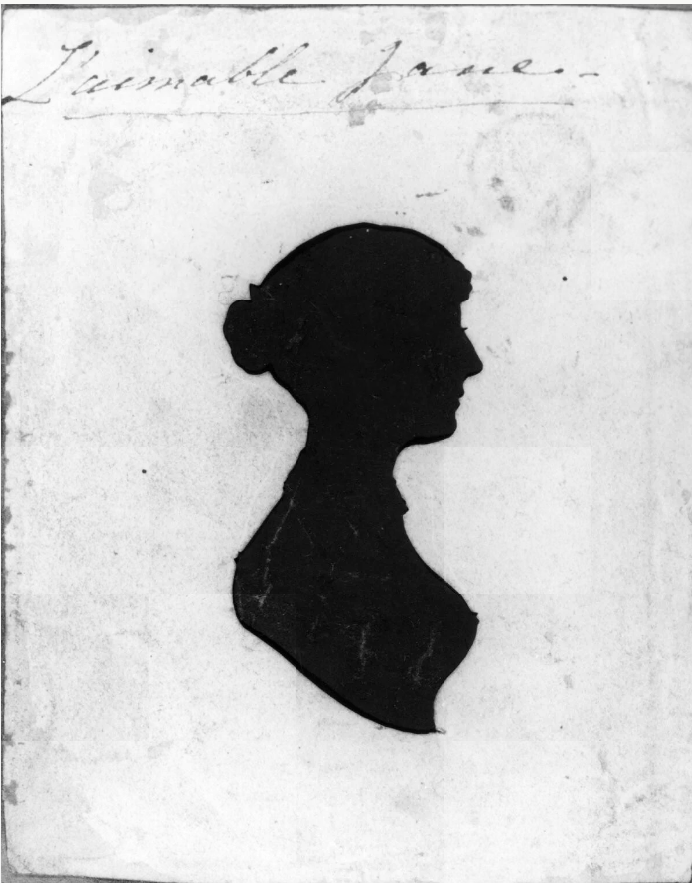
Cassandra Austen
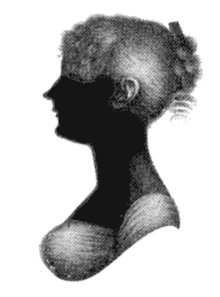
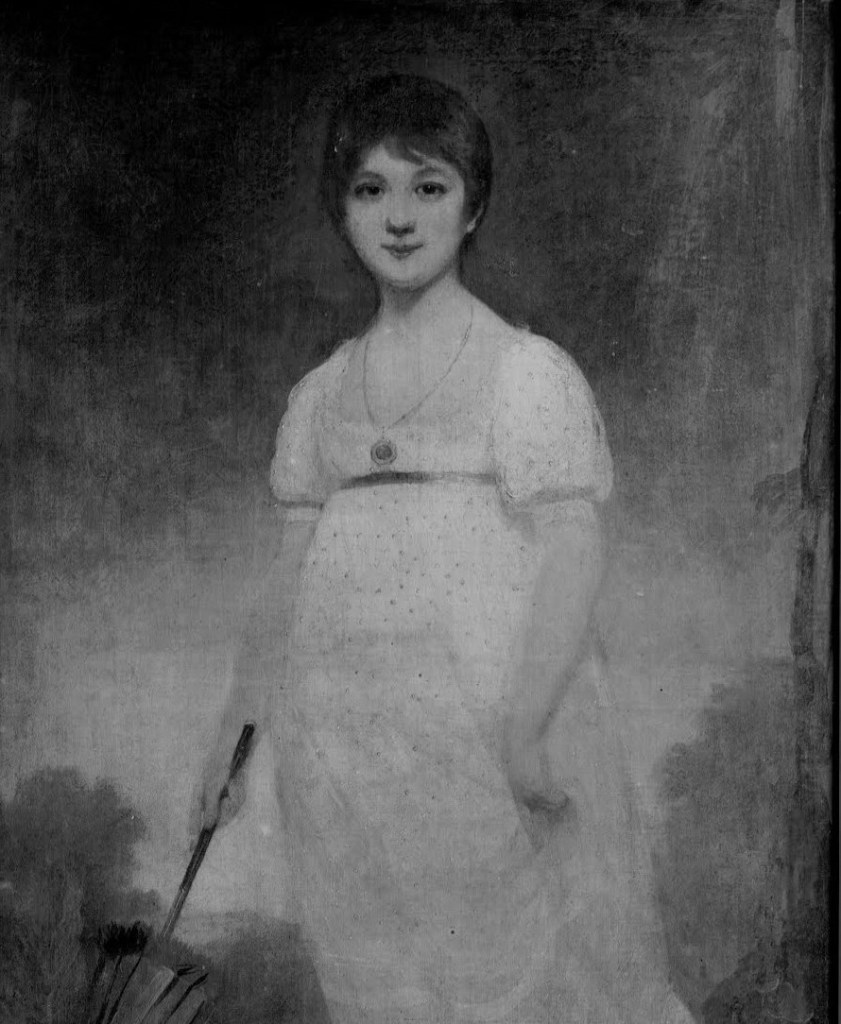
“Possibly” Jane Austen

I am forever delving into history books and Internet sites, going down the proverbial rabbit’s hole in search of enchanting stories of elegant ladies and gentlemen of days gone by…who just so happen to be of the Jewish faith.  I surround myself with Austen’s novels, Regency knickknacks, and Judaic memorabilia in the attempt to weave  something Austenesque with a touch of Yiddishkeit. I strive to become, in some small way, a soul sister to our beloved author.

Follow me, if you can, as I go through this process of finding commonality and concurrence.

Rabbit Hole Number Two:  What is a soul sister? An Internet search provided the following information: Soul sisters have a strong emotional bond with one another. They have common dreams and aspirations and share fundamental life philosophies— despite having no blood relation. 

Rabbit Hole Number Three: Who could be considered Jane Austen’s soul sister? I looked for a contemporary— someone who might find herself featured in one of my J.A.F.F. stories. Someone who was like Jane in most every way, but one. After countless hours of research, and untold cups of tea, I found her: Rebecca Gratz.

Are you ready? Here we go…

  • Rebecca Gratz was born in Philadelphia, Pennsylvania, on March 4, 1781, a middle child among twelve children.
  • Jane Austen was born in Steventon, Hampshire, on December 16, 1775, the seventh of eight children.
  • Gratz, a fervent patriot the whole of her life, was accustomed to the highly political atmosphere of a post-revolutionary America. 
  • Austen, accustomed to having her country at war for most of her life, had three brothers serving in the navy and militia. 
  • Gratz abandoned her early poetry and put her literary talent to work supporting both women’s roles and Judaism in America.
  • Austen began her career as an epistolary novelist. Her work has been a lasting influence on British literature; her stories underscored the realities of women’s’ lives.
  • Well-educated for her day, Gratz attended women’s academies and read her father’s extensive library stocked with literature, histories, and popular science.
  • Austen attend schools for girls. She was, however, allowed to use “some of the same school books as the boys” and had “unfettered access” to her father’s library.
  • Rebecca Gratz fell deeply in love with Samuel Ewing, a non-Jewish lawyer and son of the provost of the University of Pennsylvania. Nothing came of it, however, possibly because intermarriage was one step she could not take. When he died decades later, Gratz visited the room where his body lay, leaving three white roses and her miniature on his heart. Gratz would argue that, from what she saw of marriage, it was a state that brought little happiness. “Better to wander alone through the neglected path of single life,” she wrote, “than with an ungenial companion.”
  • Jane Austen was twenty when she met Tom Lefroy, a young man studying to become a barrister. The Lefroy family intervened and separated the pair. She never saw him again; however, in a letter to her sister, Austen related that she had had tea with one of his relatives, “and wanted desperately to ask about him, but could not bring herself to raise the subject.” In 1814, Austen replied to her niece’s request for advice regarding a possible suitor. “Anything is to be preferred,” she said, “or endured rather than marrying without affection.”
  • Rebecca Gratz was a visionary. She became the founder of the American-style “Hebrew school” and developed the prototype for many women’s charitable organizations. She died on August 27, 1869 in Philadelphia, Pennsylvania and was buried at Mikveh Israel Cemetery. Shortly after, her brother, Hyman founded and financed Gratz College, a teachers’ college in Philadelphia in her memory.
  • Jane Austen was a visionary. Lauded as being the first woman to write great “comic” novels, she used humor to explore the individualism of women’s lives. Austen died on July 18, 1817. Her brother, Henry, saw to her burial at Winchester Cathedral. He arranged for the publication of Persuasion and Northanger Abbey and contributed a note, which for the first time, identified his sister as the author of the novels.

Rabbit Hole Number Four:     I put it to you. Are these two ladies, one Anglican and one Jew, not the very personification of soul sisters? Enquiring minds want to know!

Jane Austen- Rice Portrait
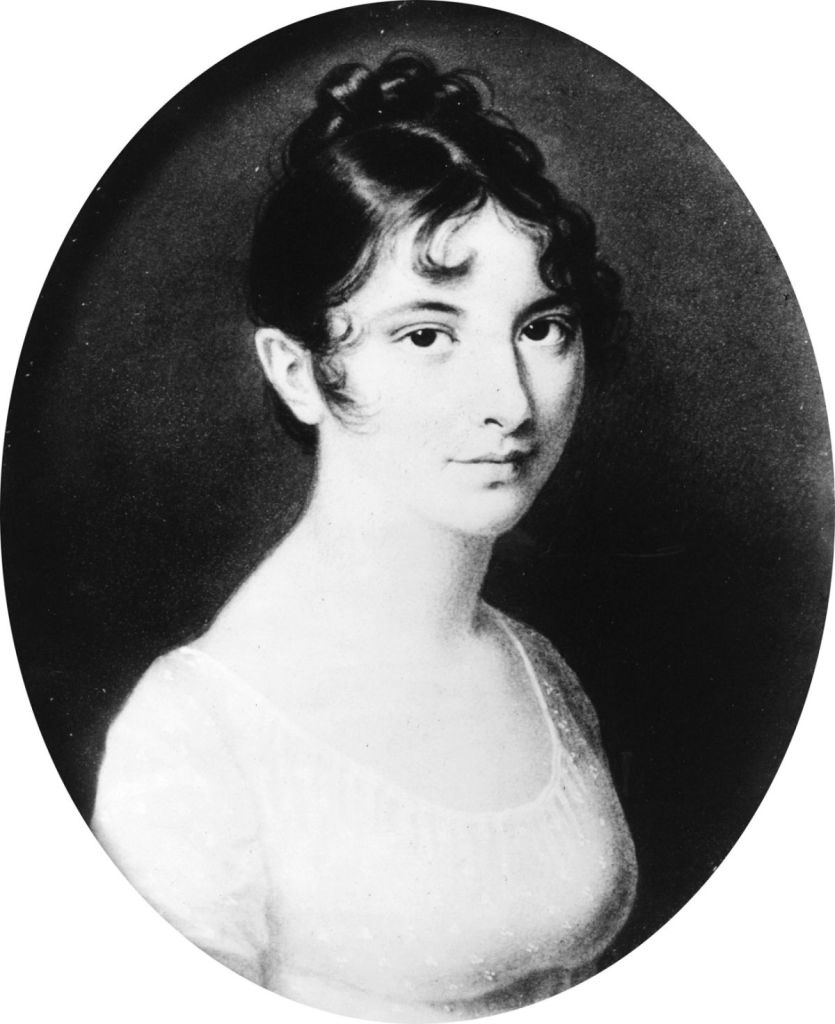
Rebecca Gratz

With love,

Jewish Historical Fiction

From Social Calls to Matzah Balls, a look at Jewish Austen Fan Fiction

The hosting, and attending, of morning calls, house parties, routs, balls and assemblies was imperative for those entering the upper echelons of society—think of Mr. Bingley and his sisters, who had so recently borne the “stench of trade.” How much more so for foreigners

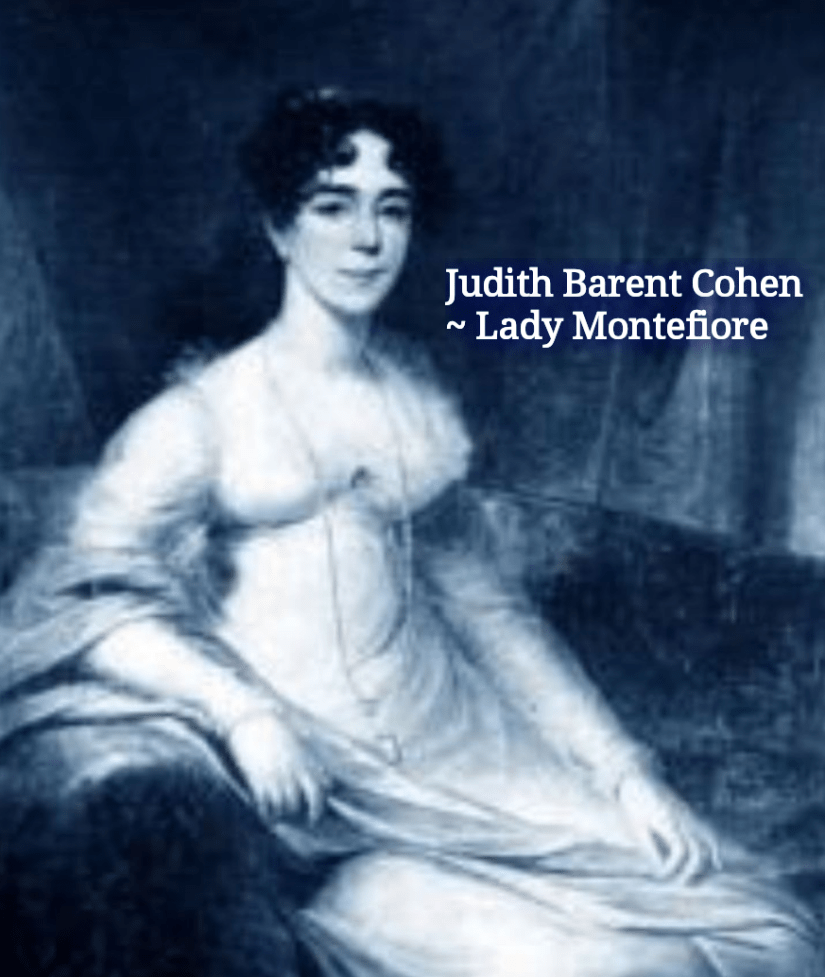
During the nineteenth century, Jews were experiencing unprecedented mobility in English society; and while this certainly was a blessing, the process of acceptance in the Anglican world threatened to erode their level of religious observance. The simple act of sharing a meal among friends presented certain complications. Cookbooks of the era did not take into consideration the ingredients or combinations that were prohibited in a kosher kitchen, such as the mixing of meat and dairy, or the partaking of shellfish or pork. Lady Montefiore (née Judith Barent Cohen 1784-1862) was the first to affirm, in so public a fashion, the existence of a distinctive Jewish cuisine and to draw from both Sephardic and Ashkenazi traditions (in general terms, Sephardic Jews hail from the Iberian Peninsula, but also such places as Italy, Greece, and Northern Africa. Ashkenazi Jews encompass Eastern Europe).

Much like Jane Austen, Lady Judith was a keen observer of human nature. Her book, The Jewish Manual; or, Practical Information in Jewish & Modern Cookery, with a Collection of Valuable Recipes & Hints Relating to the Toilette, therefore, was much more than a guide to cooking within the Jewish dietary laws known as kashrut. She meant “to guide the young Jewish housekeeper in the luxury and economy of the table, on which so much of the pleasure of social intercourse depends.” She encouraged homemakers to present elegant dinners, and to not draw any undesirable attention to the kosherness of the preparations. The end result would produce “haute cuisine that was invisibly Jewish and gastronomically exceptional.”

Montefiore was a great proponent of female education; and in keeping with Austen, she had a profound understanding of a woman’s lot in Regency England. The author pointedly wrote about the importance of cultivating the mind, and stated that womanhood should encompass “individuality, self-control, reason, intellect and fine feeling.”  Miss Elizabeth Bennet is the personification of that description, don’t you think? In her final chapter entitled “Influence of the Mind as regards Beauty,” Lady Judith professes that “all the milk of roses and essence of lavender in the world could not make a woman beautiful whose inner life was not up to standard.” It seems that Lady Judith and Miss Austen were of the same mind. Recall Mr. Darcy’s rejoinder when he said: “And to all this she must yet add something more substantial, in the improvement of her mind by extensive reading.”

“Let those females, therefore, who are the most solicitous about their beauty, and the most eager to produce a favorable impression, cultivate the moral, religious and intellectual attributes, and in this advice consists the recipe of the finest cosmetic in the world.”

Judith Barent Cohen was a child of an immigrant linen merchant; and while her father was successful, Judith identified with the “middling” class. Although they practiced strict religious observance at home, her father was a devotee of Moses Mendelssohn, a leader in the Jewish Enlightenment movement. Because of this alignment to a philosophy that encouraged secular studies and modernization, Judith was highly educated and spoke several languages. After her marriage in 1812, she held a place of some importance within England’s upper class. Her book offered suggestions “so that a lady’s physical appearance, accomplishments, inner qualities, and even her table could be an extension of herself—not as a Jew, but as a civilized person.”

Here is a snippet from The Meyersons of Meryton, where Mrs. Bennet—of all people—teaches us a lesson in civility:

“Do tell us about your good works, Mrs. Meyerson. Your husband mentioned such provocative activities. I would hear it from your own lips.”

“Mr. Meyerson tends to flatter when, in truth, I am the fortunate one. Charitable works are a blessing for the giver as well as the receiver.”

Mary nodded her agreement and quoted a favorite verse, “One who is gracious to a poor man lends to the Lord, and He will repay him for his good works.”

“Truly, the repayment, if it may be considered as such, is the great privilege to work alongside generous, intelligent women such as Judith Montefiore. Currently we are working on establishing a school for underprivileged Jewish girls. They will learn a trade and be able to find work in Jewish houses which, you must understand, are always looking for employees who are familiar with our ways.”

“Pray, enlighten us,” Lady Lucas said. “While it is true that good help is hard to come by, why should standards be any different in a Hebrew household?”

“The girls are taught to work in kosher kitchens for the elite in our society who keep our dietary regulations,” Mrs. Meyerson replied.

“If your people wish to socialize with The Upper Ten, they must needs learn to adapt to British fare and give up their dietary regulations altogether!” Lady Lucas retorted rather emphatically.

“Many families, sadly, have done just that, and others, such as in my household, attempt to find a solution that is appropriate for their circumstance. My husband and I, as well as Mr. and Mrs. Montefiore, do not concern ourselves overly much with kashrut when we are away from home. In truth, I tend to make do with what is put before me, but Judith is quite formidable! She is ever experimenting and creating new recipes, refusing to lower her standards, for she is adamant we need not suffer by keeping faith with our laws.”

“I dare say, if these Montefiores are truly in society, they would not venture to impose their peculiar ways upon the ton.”

“You would be mistaken, Lady Lucas, for my cousins entertain many prominent families of the highest social circles and, even more astonishing, their Christian acquaintances are demanding their own chefs learn to prepare a kosher cuisine. It appears The Upper Ten find it not only satisfying, but a delight to their fastidious digestion.”

Mrs. Bennet smiled at one lady and then the other. While Lady Lucas was a person of some import in Meryton, it was clear the Meyersons had notable connections in Town. Who was to say that their acquaintance would not prove to be advantageous for her girls? It was necessary to speak a little; it would be odd to be entirely silent on the subject. Therefore, Mrs. Bennet, in her effort to appease both parties, believed she had found some common ground. “Perhaps,” she suggested, “these recipes would not only benefit ladies of the Hebrew persuasion. Pray recall, Lady Lucas, we ourselves are charged to make dishes without meat or dairy many times throughout the year such as during the Lenten or fasting holy days. Perhaps it is not so peculiar as it appears to be at first glance.”

Elizabeth overheard this exchange and was astonished. Why, her mother’s words were practically revolutionary!

Originally posted on Austen Authors.net on October 30, 2020

Jewish Historical Fiction

Jewish Austen Fan Fiction, a look into Mirta Ines Trupp’s world of J.A.F.F.

Greetings and welcome to my debut post. I am delighted to make your acquaintance, if only through this medium. Shall I begin by properly introducing myself? Unlike Miss Jane Austen, I was not born in a scenic village in rural England. My family were neither descendant of landed gentry, nor were they Anglican. Far from it! Just prior to the revolution, my grandparents escaped the pogroms and persecution of Imperial Russia, and immigrated to Argentina. This was largely due to the auspices of a philanthropic organization created by Baron Maurice Hirsch, which rescued Jews trapped in the Pale of Settlement. I was born in Buenos Aires; but, by the end of 1962—the year of my birth—my parents immigrated to the United States of America.

From an early age, I was mesmerized by stories of young ladies from days of yore. My exigency for Historical Fiction continued as I grew older, but when I discovered Jane Austen, I was besotted. The truth of the matter was that the history, combined with the foreign settings, fashion, and mannerisms captured my heart and my attention. I began writing late in life, mainly when I transitioned into being an empty-nester. I wrote a coming-of-age memoir and two historical fiction novels, loosely based on my family’s immigration stories.  But when I began delving into the history of British Jews, the trappings for a new project began formulating; one where I could pay homage to Miss Austen, while acknowledging my culture and flavoring it with a bit of Yiddishkeit (Jewish qualities or essence). Having never written a fan fiction, I readily admit the venture was a bit daunting. Jane’s own words were sufficient impetus to forge ahead. In a letter to librarian, James Stanier Clarke, she wrote the following:

“I could not sit seriously down to write a serious Romance under any other motive than to save my life, & if it were indispensable for me to keep it up & never relax into laughing at myself or other people, I am sure I should be hung before I had finished the first chapter. No – I must keep my own style & go on in my own way; and though I may never succeed again in that, I am convinced that I should totally fail in any other.”

The synagogue’s dedication took place on June 16, 1833

Needless to say, I took Miss Austen’s advice and wrote a J.A.F.F. —that’s Jewish Austen Fan Fiction—in a style all my own. In doing research for “The Meyersons of Meryton,” I found that there were many eminent Jewish families in my focus Regency-period, such as the Montefiores and the Rothschilds, whose role in society cannot be denied and should not be forgotten. I will share a few tidbits to (hopefully) whet your appetite. Moses Montefiore and Judith Barent Cohen were married in 1812. They honeymooned in Ramsgate; and were so enchanted with the sea side resort, they purchased an estate there and commissioned a synagogue to be built for the local Jewish community. Through their philanthropic work, they went on to become one of the most influential Jewish couples throughout the Georgian and Victorian era.

Lady Judith Montefiore

Lady Judith assisted her husband in his communal affairs and public activities. She was an authoress, writing of their experiences visiting Damascus, Rome, St. Petersburg and the Holy Land.  More than travel logs, these works were hailed as spiritually inspiring and educational. She wrote a “how-to” manual for ladies who mixed and mingled with a diverse society. She adapted recipes to conform to Jewish dietary laws, replacing ingredients such as lard, so much used in English kitchens, and eliminating shellfish and forbidden meats. It was said that, many of her non-Jewish guests, began insisting on a kosher-style cuisine in their own homes, as their gout and dyspeptic maladies lessened. Lady Judith recommended simplicity in dress, considered delicate hands a mark of elegance and refinement, and carefully assessed the effect of diet on the complexion. The imagery of this famous couple, socializing and hobnobbing with the upper echelons of London society, was enough to seduce my imagination! It certainly was more alluring than the stereotypical characterizations of greedy money lenders and lowly rag merchants heralded in classics written by Shakespeare, Chaucer and Dickens.                                                         

Sir Moses Montefiore

Creative license allowed me to use Miss Bingley, Mrs. Phillips, and Mrs. Bennet as vehicles for ignorance and ill-manners in my novel. Here is a snippet from a scene where the Bennets and the Meyersons are becoming acquainted:

Mrs. Bennet fidgeted in her chair, uncomfortable with the topic and uncertain if was proper to speak of such a delicate matter in one’s dining room. Attempting to direct the conversation to something to which she could contribute, she grasped at the flittering thoughts that crossed her mind.

“Pray tell me, sir, how are you acquainted with my brother?”

“It is rather a complicated story, ma’am, and it all began thanks to the machinations of two enterprising ladies.”

Mr. Bennet snorted and muttered something mercifully imperceptible. However, its meaning did not escape his wife, whose disapproving mien conveyed her thoughts.

“Let me see if I can unravel this web of familial connections and Divine Providence,” he said, rubbing his hands together as if preparing for a great feast. “As I believe we mentioned, my wife is related to Moses Montefiore, a Sephardic Jew. They are cousins through mutual relations with the Mocatta family—who, if you are interested, Miss Mary, settled in this country in the 1670s! In any event, Montefiore took to wife a lovely young lady from a prominent Ashkenazi family by the name of Judith Barent Cohen.”

“Jacob, perhaps you should get to the point,” Mrs. Meyerson encouraged.

“Quite right, dearest. You see, Miss Judith, nay, Mrs. Montefiore, is a patron of the Jewish Ladies’ Loan and Visiting Society and an officer of the Jews’ Orphan Asylum, as is my Sofia! Both ladies participate in a veritable host of philanthropic organizations. While they are from different communities, they soon became friends without knowing they were related—distant cousins, of course but, nonetheless, related.”

“I believe Mr. Montefiore is connected to Nathan Mayer Rothschild, a man of some importance in London’s financial world,” Mr. Bingley added.

“Indeed! The men are connected by marriage. Mrs. Montefiore’s sister, Hannah, is married to Mr. Rothschild, but it does not end there. Moses Montefiore’s brother is married to Rothschild’s sister.”

“I say!” Sir William exclaimed.

“It is exceedingly diverting, striving to follow the branches of this family tree, and most particularly because marriages between Sephardim and Ashkenazim have been frowned upon…until recently, that is. My own union was much criticized,” he said with a wink towards his disapproving wife. “Yes…well—I digress. Because the two ladies were much thrown together organizing charitable balls and philanthropic events, Mr. Montefiore and his wife have been frequent visitors in our rather unfashionable neighborhood of Cheapside.”

“Ah,” Mrs. Bennet said, waving a delicate fan about her heated face imagining the illustrious society of said ‘charitable balls’ and ‘philanthropic events.’ “And now I see. You met my brother there.”

“Precisely, but not for the reason you might think. Mrs. Meyerson’s brother, Aaron, owns a factory near Gracechurch Street. He was recently blessed with a generous military contract and will have need of employing many people who would otherwise be destitute.”

“Unfortunately,” Mr. Darcy said dryly, “war is good for business.”

“The military requires a host of goods and in massive quantities, to be sure. Everything from tents, knapsacks, and uniforms, to muskets, gunpowder…”

“Jacob—” A gentle prodding was whispered.

“I believe you take my meaning,” said Mr. Meyerson with a sheepish grin. “In any event, it was Montefiore and a few of his colleagues who came to Cheapside and introduced my brother-in-law and many other merchants of the East End to Mr. Gardiner and his business partners. Your brother, Mrs. Bennet, and my brother-in-law have put their heads together for a grand business venture! Aaron will produce the merchandise and Mr. Gardiner will use his warehouses to store and distribute accordingly.”

“I would not have expected such maneuverings and assignations,” exclaimed Mrs. Bennet, “but of course, I wish them much success—anything to bring Little Boney to his knees!”

I cannot confirm or deny that Miss Austen would have interacted with anyone from the Jewish community; nonetheless, this daughter of a clergyman did take a stand against anti-Semitism. When Mr. Thorpe, of “Northanger Abbey” fame, spews out that Mr. Allen is “as rich as a Jew,” our dear Miss Moreland is speechless. Thorpe truly is an ill-mannered, insufferable—ignorant—young man!  Jane Austen understood human nature and took pleasure in bringing unseemly realities to light. I feel her portrayal of Mr. Thorpe’s nasty character speaks volumes. In writing a “Pride and Prejudice” vagary, I aspired to take a page from Austen’s repertoire and emulate her social commentary. The Montefiores and the Rothschilds are prime examples of non-Anglicans thriving in England’s Regency society. It was my hope that “The Meyersons of Meryton” would exemplify how people of different faiths can focus on their commonalties and help one another in difficult times. In today’s world, as in Austen’s day, that quintessential Universal Truth still rings true.

Mirta Ines Trupp, Author of Jewish Austen Fan Fiction

Originally posted on Austen Authors.net on October 2, 2020

Jewish Historical Fiction

Inspiration

There is an adage that states: “Write what you know.” Another axiom urges: “Write the book you wish to read.” That is exactly what set me on this path. I have a penchant for all things Judaic, along with a great passion for period fiction, but I couldn’t find anything to satisfy my cravings for a fusion of these two worlds! There are a few “mash ups” out there- if you look hard enough- but I found most of them to be filled with stereotypical characterizations of the Jewish community. When I did find something of merit, the material was intense, heavy reading. Daniel Deronda comes to mind as a good example. Of course, there is a wealth of dark Fiction and Nonfiction that speaks to the atrocity of anti-Semitism throughout the ages, but I was inspired to shine the light on the Regency period, as well as the Victorian and Edwardian. My own family history of immigration takes place just prior to the Russian Revolution and I wanted to bring attention to the heroic steps taken by Baron Maurice Hirsch, his wife, Baroness Clara, and the Jewish Colonization Association.

My favorite, go-to books speak of the landed gentry, aristocrats and high society. It’s pure escapism, I know; nevertheless, I was inspired to create elegant, successful, philanthropic characters. The Brodskys- the famed Sugar Kings -are a prime example. And no Jewish Historical Fiction worth its weight in tea and kamishbroit can overlook Lady Judith and her husband, Sir Moses Montefiore. I wanted to write about Jewish ladies, fashionably dressed, taking tea in the drawing room of a well-appointed estate. I wanted to present a cultured, well-established family living “Jewishly” in Mother Russia, England, and Argentina. Argentina, you ask? Yes! I wanted to write about the emigration to this “New Jerusalem,” as it speaks to the courage of my own ancestors and countless others who risked everything for the sake of future generations.

There is no denying the horrors of Jewish history. In every era, there are voices that cry out to be heard. My point of view is not to quiet those voices, but to allow others to join in the chorus. It is important to remember the beauty and the joy of our culture. To remember the laughter, the talent and the tenacity of our ancestors. Their goals and achievements should not be forgotten. As Tevye once sang, “To Life! To Life! L’chaim!”