I’ve been addressing Jane Austen’s work and the correlating themes found in Judaic text. The reason for this exercise stems from my desire to find historical fiction or historical romance novels that contain a modicum of Judaica. Of course, Austen’s work isn’t considered historical fiction. Her stories were contemporary; her readers would have recognized their world amongst the backdrop of her settings. But that’s not my point. Sorry!
While I have scoured endless book titles and conducted mind numbing Internet searches in the hopes of finding some hidden gem, I have very little to show for my effort. That was the impetus to take pen in hand, so to speak, and to write my own fanfiction. And why not? Jane Austen’s work continues to inspire and entertain a diverse, world-wide audience. We are presented with modern interpretations of her classics novels, time-travel storylines, and narratives that focus on any number of ethnicities and cultures. Evidently, our thirst for new and tantalizing Austenesque plots and themes is not so easily quenched! And for this particular reader, it seemed only logical that the Jewish community be represented in Austen’s fandom.
That being said, I am not an advocate of racelifting. By that I mean, I have no need to replace a character’s Anglican faith for Judaism. I am satisfied with the introduction of Jewish protagonists and themes that are a true reflection of our community as a whole. For other authors and readers, I understand that it is imperative to see a Jewish character cast in the original role. And that’s okay. That’s the magic of fanfiction. InThe Meyersons of Meryton, I introduce a rabbi and his family to Austen’s fictional town in Hertfordshire. In Celestial Persuasion, I create a friendship in-between Captain Wentworth and the Isaacs siblings that stretches far beyond England’s shores. With Destiny by Design~ Leah’s Journey, I showcase a story that is loosely based on my ancestors’ experiences. Although this novel is not a J.A.F.F. (Jane Austen Fan Fiction), there is a definite nod to the author and her work. These novels, along with my first title, Becoming Malka, are my small contribution to the lesser known genres of Jewish Historical Fiction and Jewish Historical Romance.
As we are now officially in the “holiday season,” there is an opportunity to address diversity and Jewish characters in other forms of entertainment. For example, Hallmark has attempted to incorporate Jewish storylines and characters in their holiday lineup. These shows are a bit cringe-worthy, I’ll admit it, but at least they’re trying. I’d encourage them to try a littleharder. While I do want to see Jewish representation in these soapy movies, I do not want to see Hanukkah downgraded to a Christmas-wanna-be. The whole point of the Maccabean revolt was not to assimilate to the dominating culture. It is a fine line, I understand. Hallmark can do better.
Over at Disney, we were introduced to a Jewish heroine for one episode of Elena of Avalor. The character is supposed to be a Sephardic princess, but she uses Yiddish terminology and speaks of Ashkenazi traditions. And, I’m sorry to say, the princess is not very attractive. Like the folks over at Hallmark, the imagineers could have put forth more effort. This piece needed a little more research into the character’s cultural background and a lot more generosity in developing her aesthetic. Perhaps they could have taken a page from the variety of diverse characters showing up in other animation, comics, and television series and given the Jewish community a proper heroine.
And speaking of television, did you hear the collective “oy!” when fans of Downton Abbey found out that Lady Crawley’s father was Jewish? The writers did not stop there. The series also introduced a Jewish family of the upper echelons of society. Apparently, Lord Sinderby’s family had fled the pogroms and persecution of Imperial Russia some sixty years ago. Sparks fly when his son, Ephraim (he goes by his second name, Atticus) meets and falls in love with Lady Rose…who is not Jewish. This all-too-familiar predicament, as well as other issues of anti-Semitism in Edwardian England, are brought to the forefront. While I was not entirely pleased with the outcome, I was glad that at least our community’s presence was addressed.
With the success of Sanditon and Bridgerton—and the plethora of costume dramas in the world today— it seems clear we are in need of the escapism that these shows provide. We fantasize and yearn for the days of polite society and social graces. How much more pleasing is it to read a novel or watch a show that allows one to identify with a character— someone who stands to represent one’s community, one’s values, and heritage in a positive light? It is time to come out from the shadows of the likes of Heyer, Dickens, and Shakespeare. Their Jewish characters were cliché and demeaning. The Jewish community has played a proud and active role in nearly every culture around the world. We are connected to that history by a chain that spans over five thousand years.
Jane Austen certainly instilled her biblical knowledge and values into her novels. She commented on societal issues with her wit and keen power of observation. Her readers, no doubt, recognized and identified with these truths. If one of my books brings a sense of connection, a sense of community, a sense of pride to a Jewish reader, I would have fulfilled my goal. My books are a link in that ancient chain. They are another opportunity to say: Hineini —I am here. We are here. And we’re not going anywhere.
It would be funny, if it wasn’t a little… demoralizing. The conversation starts off well enough:
“What do you do?”
“I’m an author. I’ve written five books.”
“Oh wow! That’s amazing! How did you manage to get published? I hear it’s kind of rough out there.”
“I self-published. I’m an independent author.”
“Oh…that’s cool.”
Then comes that awkward moment where you see the admiration slowly fade away. It’s replaced with a smile and a nod…and a look that says: She can’t be any good if she can’t get a publisher to take on her work.
When you say that you’ve self-published, people tend to think of poorly formatted, unedited manuscripts, and ugly covers. But with the advent of various mediums, such as the Amazon platforms, authors have found the means to publish quality work. These pioneers have slowly begun to reverse the stigma attached to being an independent. That being said, even an indie author needs to collaborate with others in order to produce a marketable book. At minimum, they will need to consult with beta-readers; and if the budget allows, a proofreader, a copy editor, and a designer are highly recommended. And then there is the small matter of marketing and promoting.
In my experience, the marketing component is the hardest part of all. It requires not only creativity and aplomb, but hours and hours of dedicated time on social media, interacting with potential customers, participating in blog tours and interviews, and well…truthfully, trying not to pester your friends and family with requests to LIKE, SHARE, and spread the word. Unbeknownst to many readers, even if one chooses the “traditional” route, publishing houses rely on the author to assist with sales these days. There’s just no escaping the task.
Given the fact that I’m still working at my day job, I try to utilize social media platforms that have proven to give me the best results. I started this blog and am so grateful for those who have joined me here. During my time on Facebook, I had over 1,500 followers; but due to that site’s policies and algorithms, it wasn’t productive or cost effective. I’ve had more success on Goodreads, and less so on Pinterest and Instagram. Recently, I joined the ranks of other authors, traditional and independent, on BookBub. I’ll have to see how that goes, but of course that entails more pestering. If you are a reader and utilize that site, please follow me on BookBub. And yes…please spread the word.
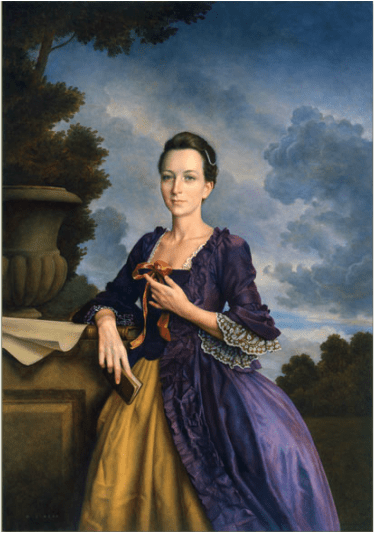
I believe I was in the third grade when I read Martha Washington’s biography. By then, I was an avid reader and historical was my favorite subject. I remember being fascinated by our nation’s First Lady’s history; although technically, this title was not coined until after her death. I learned of her first marriage and how she soon became a young widow with four children.
Now a woman with property and means of support, Martha Dandridge Custis didn’t need to marry for financial reasons; nevertheless, she did remarry. And even though I was only eight years old, the romantic in me was captivated by Martha’s “love match” with the up-and-coming, Colonel George Washington.
Although Martha was attractive and well-liked amongst society, her life was not exactly charmed. Two children, Daniel and Frances, were lost to her before they reached the age of five—most likely from malaria. It did not end there. Her daughter, affectionally called Patsy, suffered from debilitating seizures and died at the age of 17. Martha’s remaining son, John, died a few weeks before his twenty-seventh birthday from a “virulent illness.” But, as the story goes, Mrs. Washington continued on, serving her husband and her country through the Revolutionary War and beyond.
I’ve learned from experience that the greater part of our happiness or misery depends on our disposition and not on our circumstances.”
Martha Washington
As a young wife, Martha Dandridge Custis, moved amongst the upper echelons of Virginia’s society. She had been educated like most young ladies of her sphere, but when she became Mrs. Washington, Martha was in a position to do much good.
Determined and practical, she hosted weekly receptions where people of various backgrounds had the opportunity to exchange ideas and philosophies with the president. It was her intention that these so-called levees be dignified, yet informal so that the general society could take part in building the new nation.
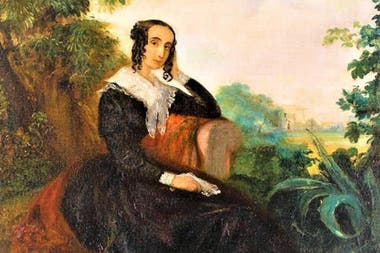
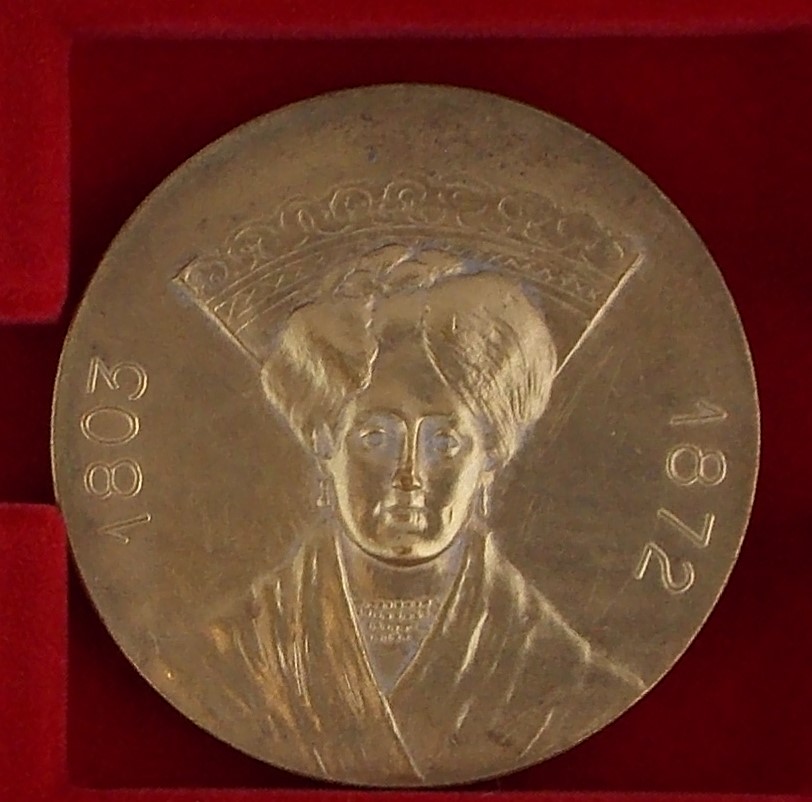
All these memories flooded my mind while I was researching Mariquita Sanchez de Thompson and her famous tertulias or salons. Much like America’s First Lady, Mariquita defined and redefined the roles of what it meant to be a wife, mother, and patriot.
Mariquita was born into an elite family of the Viceroyalty with important ties linking back to Spain. She was of petite stature, but she held her own against her parents and the strict societal rules of the day. Strong-willed and independent by the age of fifteen, she defied her parents and refused to marry the man of their choosing.
It is precious to me to defend my rights.”
After experiencing what one could easily label a Shakespearean rebellion, Mariquita was able to marry as her heart dictated. She and her new husband became linked with public life and supported the cause for freedom. They hosted events to promote patriotism and to encourage free thinking.
Mariquita Sanchez
The Thompsons had five children throughout their marriage. They moved in the highest circles and were beloved amongst their society. It was, therefore, a great tragedy when Martin Thompson died while returning from a diplomatic trip to the United States of America in 1817.
Similar to Martha, Mariquita was a woman of means and didn’t necessarily need a husband for financial support. Nevertheless, in 1820, she remarried. Isn’t it interesting to note that her second husband was a gentleman by the name of Washington. Washington de Mendeville, to be exact.
It appears the Mendeville marriage was not a great success; however, Mariquita did not let that deter her aspirations. She continued her political work and was known for her association with The Patrician Ladies (Damas Patricias).
Just a few of the Damas Patricias of Argentina
She advocated for women’s rights. She established schools for women and girls and founded the Sociedad de Beneficencia, to aid the poor and needy. It appears that great minds do think alike— look back at Martha Washington’s quote that speaks to one’s disposition for happiness.
I don’t deny that I enjoy a traditional historical romance. But there has to be more than “boy meets girl.” Whether the storyline is set in a posh drawing room in England or the vast American frontier, I am attracted to the protagonist’s courage, as well as her growth. I cheer for her unwavering steadfastness shown in the face of turmoil and tragedy. Miss Abigail Isaacs in Celestial Persuasion has much in common with the women mentioned in this post. Although she is a fictional character, I hope readers will admire her strength, determination, and heart. I suppose that is the magic of novels. Through the written word, we can identify with impossible scenarios and a variety of character attributes. Their heart aches and struggles resonate with us. Their triumphs spur us on. We may even aspire to be such women~ Women of Valor.
Excerpt from Chapter Four:
The next morning, Abigail lingered in bed with a cup of hot chocolate, dutifully presented by a young maid. She had spent a sleepless night, staring into the black sky and seeking answers from above. She had prayed for guidance and for strength; but such was her grief, not even espying her favored constellation provided Abigail any comfort. Unaccustomed to vacillation, she was impatient with herself; and in truth, not a little overcome by her circumstances. She longed for days of yore when her little family celebrated the Sabbath as one. Though she was quite young, Abigail could yet recall the Friday evening meals, the rituals, and the blessings. Her father beaming with pride would preside over the table and praise his Eishet Chayil, with the ancient words of King Solomon: A Woman of Valor, who can find? Her worth is far beyond rubies. She and Jonathan would not be forgotten. They too would receive a parental blessing before partaking of the evening meal. Thus cossetted and cared for, their physical bodies were nurtured, as well as their spiritual selves. For as their mother would say, on the Sabbath, their souls were lifted and the uncertainties of life were set aside. Now wiping away her tears and throwing off the bed linens, Abigail arose to brave the day.
It was much later, whilst she and Mrs. Frankel were at luncheon, Pearson solemnly approached his lordship’s guests holding a silver salver, which he presented with utmost care. Abigail reached for the note and nodded her gratitude. Making quick work of the missive, she sighed heavily and informed her companion that his lordship would be delayed.
“It seems we are to have a quiet day, Frankie.”
“Perhaps all is how it ought to be, my dear. We will amuse ourselves, or not—we two are quite comfortable with one another—we are not compelled to do otherwise.”
They removed themselves into the drawing room, where a fire was set ablaze for their comfort. Mrs. Frankel kept her thoughts to herself and knitted away at heaven only knew what. Abigail did not question her companion’s efforts and turned to find her own escape in the pages of a book. When the sun finally began its descent, Abigail set down the novel and moved to the window to watch the changes in the sky. She did not hear the knock at the door, or Pearson’s somber salutation; therefore, when a man’s voice bade them a good afternoon, Abigail was quite startled.
“Are you so anxious for the Sabbath to end?”
Sufficiently recovered, Abigail was able to reply. “On the contrary, Mr. Gabay. One wishes to delay the inevitable. I have not yet seen three stars together.”
“We shall both have to remain alert then, and let Mrs. Frankel know when she may begin the prayers for Havdalah.”
“Excellent notion, young man,” Mrs. Frankel declared, and went off to find Mrs. Garrett to gather some spices, wine, and candlesticks for the evening ceremony.
“Forgive me, Miss Isaacs.” Remembering his manners, he performed a gallant bow. “I appear to have arrived early. Has his lordship not returned?”
“We had a missive from Lord Fife. He has been detained and we are awaiting his return just now. You are most welcome to join us, sir.”
“I find you a bit pale. I do hope you are in good health,” said the gentleman.
“Thank you, yes. We have not had an opportunity to be out of doors, and I fear that my mind has been much occupied.”
“I can well imagine.”
“I am not certain that you can, Mr. Gabay.” Abigail grimaced at her severe response but was helpless to muster great civility. “My grief has been sullied with uncertainty; my life has been uprooted and I find that I cannot mourn my brother when my heart is so burdened.”
The gentleman looked upon the young lady and astonished her with a grin. “I have often contemplated the ceremony of Havdalah, have you not?”
She was yet unaccustomed to the gentleman’s wit; and because of this, Abigail made every attempt to keep herself in check. Much as she wanted to condemn his ill-timed levity, her raised brow afforded him the impetus to continue with his discourse.
“The ritual—the symbolism—it challenges our senses,” said he, “as if to awaken us from a pleasant dream. Do you not find it so?”
“Indeed.” Begrudgingly, she accepted the sudden change of topic. “We are told to remember the Sabbath day and keep it holy. I would agree with your assessment, for we are in a dream world from sundown on Friday night until three stars appear the following evening. We are then awakened, as you say, with the ceremony of Havdalah—commanded to mark the separation from that holiness to the mundane.”
“My dear Miss Isaacs, mundane is not the word I would choose. Pray forgive my impertinence; but every week we are instructed to leave behind Perfection—or our concept of what that might be—in order to hurl ourselves, like a star shooting across the sky, into the chaos that is His creation. Into life.”
Raphael Gabay crossed the room and peered through the glass pane at the evening’s sky. Not finding what was required, he continued with his thought. “I ought not risk being thrown out by Pearson—perhaps I should behave in a more gentlemanlike manner—but your countenance assures me that you are, indeed, troubled. And it pains me to see you so.”
Abigail looked at him through her lashes and pondered his sincerity. “Your concern speaks well for your manners, sir, but I doubt very much our short acquaintance allows for such a declaration.”
“On the contrary. I believe my discernment is beyond reproach. Your idyllic life in Devonshire, surrounded by those you loved and the things you know, was your Perfection. But your brother is asking you, seemingly from beyond the celestial veil, to leave that place—not compromise or settle, but to see what else awaits you in the new world.”
“And what of your plans, sir? Does your soldier’s philosophy provide you sufficient cause to quit your home and family?”
“Ah—that was well done, Miss Isaacs. Implementing a defensive tactic in order to fell an opponent is a sound strategy on the battlefield. However, I am only too happy to respond to your enquiry which, of course, lessens the strength of your attack.” Mr. Gabay smiled and made himself comfortable on the divan before continuing. “I am a second son, madam, and have been given a certain freedom to live my life with some abandon. No doubt, I have caused my father some distress having no set course for the future; but try as I might, Miss Isaacs, I have never found my true calling. Therefore, the matter is very simple in my case. I am for Buenos Aires because I believe in this cause and respect the men at the lead. For now, that is enough for me. But I put it to you, Miss Isaacs: what is your destiny?”
Having heard his soliloquy, Abigail could no longer hold on to her vexation. She experienced an epiphany recalling her words to Mrs. Frankel the night in the inn. What was her destiny? If the ancient dictates of Gersonides, Ibn Ezra, and Zacuto were to be believed, it was apparent. Her celestial traits must not go unheeded.
I hope you enjoyed today’s post. There are so many Women of Valor in history. Can you name one or two you admire? Drop me a line and let me know!
Readers of this blog know that I was inspired to write a Jewish historical fiction based on Jane Austen’s Persuasion. I understand some of you have not had the pleasure of reading Austen’s original work or seeing the film adaptations. Never fear! Celestial Persuasion is a stand-alone novel with more than enough to tempt you. But you don’t have to take my word for it. Here are a few early comments from people in the know…
“I’m still shaking my head at how good this was! Even though I knew nothing about the history of this area, I found the story fascinating. The appearance of an Austen character in the story always made me smile.” ~ Jeanne Garrett
“A wonderful and inventive novel that paints a compelling historical tale upon a large canvas background of a culture different from what most are used to seeing in #Austenesque variations. Celestial Persuasion left me contemplating about how destiny is written in the stars.” ~ Don Jacobson, author of The Bennet Wardrobe series
“Devotees of Austen’s work, who never wanted her stories to end, will enjoy Trupp’s writing, and those who have adored Persuasion, will not be disappointed in what could possibly come after.” ~Sherry V Ostroff, author of Caledonia, Mannahatta and The Lucky One
“From a literary perspective, I love the way Jane Austen’s characters are sewn into the book. While Abigail’s Jewishness is certainly a central focus, I must commend the respect offered to several other faiths throughout the story, emphasizing that which we have in common rather than that which separates us. I loved this book!” ~ Debbie Brown
I hope to entice you with this shortest of snippets. Please enjoy!
With her morning correspondence completed, she was at leisure; however, this was not a pleasant interlude and Abigail dreaded such moments. For it was during these quiet times that the gripping claws of sorrow tore at her heart. She required an occupation, as the stillness of her life had become too much to bear. She quitted the morning room and quietly climbed the stairs to find Jonathan’s bedchamber.
Opening the door, Abigail was met with the familiar scent of old books and leather. Mrs. Frankel had seen to the room being kept tidy. The clean linen upon his bed added to the crispness in the air. Jonathan’s wardrobe contained most of his clothes, as he took only the essentials when he went off to sea. His shelves were lined with an eclectic combination of writings. Books of Kabbalah and astrology were placed side by side with authoritative treatises on astronomy, physics, and physiology. There were novels of the sea that spoke of great battles of yore, and there were books of poetry and psalms. Abigail ran her fingers across their delicate bindings and cried over the senseless loss of such a kind and gentle man. She would have to pack his belongings, as she had done with her father’s things. Some things would be given to charity, clothes and the like, but the books would not be forsaken.
Abigail reached for an ancient tome; it had once belonged to her maternal great-grandfather and had been passed down throughout the generations. Jonathan had shown her this very book when she was yet a child of five years of age and their mother had left their world. The Sefer Yetzirah, Jonathan had explained, was devoted to speculations concerning God’s creation of the world. He had shown her drawings of the constellations that formed the galgal hamazalot, the wheel of the Zodiac, which exerted influence on Man’s traits and tendencies and on the natural course of things. Abigail recalled his gentle voice as he proposed that they study the celestial spheres together and learn of their characteristics. In her innocence, she had asked if their mama had become one of the heavenly formations watching them from above.
“Dearest, you may still speak to Mama,” Jonathan had said. “Ask her to guard you and guide you from her heavenly home. You may look upon the shining stars and imagine one of them is our own mama sending her love to us here on earth. But Avi, the stars and the moon, and all the wondrous celestial creations, are only a manifestation of God’s will. We must always remember to place our faith and trust in our Creator.”
Abigail closed the book and returned it to its rightful place on the shelf. There would be time enough to reminisce in the days to come. She was not compelled to act with much alacrity; her brother’s belongings would remain as he left them, and Abigail did not look back as she closed the door.
Dear readers: the preorder link for the eBook can be found here
A few weeks ago, I wrote about my Work in Progress: Celestial Persuasion. You can read about it here.
I’m getting closer to Publishing Day and I can’t wait to share it with you. In the mean time, please take a minute to watch this short trailer. The painting of Mariquita Sanchez de Thompson was the inspiration for the entire project. Please enjoy!
Coming soon! Celestial Persuasion on Amazon.
Abigail Isaacs fears ever again falling under the power of love and dedicates her life to studying the heavens. However, upon her father’s demise she finds herself in reduced circumstances and must write to her brother, who has long been away at sea. When instead Captain Wentworth of the HMS Laconia sends a tragic reply, Abigail is asked to set aside her own ambitions and fulfill her brother’s dreams in the Viceroyalty of Río de la Plata.
In his relentless pursuit for justice, Lieutenant Raphael Gabay lends his sword to the Spanish American cause. But as he prepares to set sail with the others, he is entrusted with the care of a young woman. She is quite unlike anyone he has ever known, and Raphael wonders whether the brilliant astronomer will see beyond his frivolous façade and recognize his true nature.
Their destinies have been plotted beyond the celestial veil; their charts foretell of adventure. Can these two troubled souls be persuaded to heed the stars and find love—and their purpose—in this fledgling nation?
How many of you have seen the film, My Big Fat Greek Wedding? Swap out “Greek” and insert “Argentine” and you would have a clear picture of my family. Every character reminded me of a relative; every embarrassing scenario was relatable and every corny saying sounded familiar. The movie had my family in stitches. We laughed, we cried, and we pointed fingers at each other, saying: That is so you! This movie, in fact, was one of three impactful works that played a part in my writing (the other two were I Remember Mama and Fiddler on the Roof). I aspired to accomplish something in that same vein and wrote my first book, With Love, The Argentina Family~ Memories of Tango and Kugel, Mate with Knishes.
Interestingly enough, I came across a blog post that spoke of the similarities in between Pride andPrejudice and Fiddler on the Roof. Both stories feature five daughters, three of which are married by the end of the piece.
Both showcase awkward scenes of rejected marriage proposals. The mother and father relationship in Fiddler shares similar characteristics with those in P & P. Both stories have forbidden love and worries of losing one’s home. In short, this author spoke to my love of meshing the world of Period Dramas and Jewish Historical Fiction.
In all fairness to the original post, I encourage you to take a peek at it here: Read it and tell me if you don’t agree. An Anglican woman in England and a Jewish man in Imperial Russia wrote two very different stories that are remarkably the same, and remarkably relatable to a wide and diverse audience.
Last week, I binged on the third season of Shtisel. Have you heard about it? It is a hit show on Netflix. I devoured the entire season in two days. No doubt, you’re wondering why I’m writing about a modern-day series that evolves around a Haredi family living in Israel. You’re rolling your eyes at this point thinking: I signed up for a historical fiction blog—why is she writing about Shtisel-mania? Good question; but before I answer, I have a question for you…
How many Jane Austen variations are there in the Fan Fiction world? I couldn’t even begin to tell you, but I know this: Keep her storyline and exchange the Anglican family with a Hindu family, a Black family, a Jewish family; or even a family of Zombies, you still get an Austenesque novel. Austen’s work centered around her commentary about the human condition. She used humor and irony to make her point. She wrote about heartaches, financial concerns, and dysfunctional families. Her stories are still relevant to millions of people around the world who are not necessarily English, Anglican, or actually living in the Regency era. 😉
Shtisel has taken the world by storm and it has many people scratching their heads in wonder. How is it possible that in today’s society, where everything goes and everything is permissible, a story about an ultra-orthodox Jewish family is a Number One hit? They dress modestly. They have strict dietary restrictions. The roles for women and men are clearly defined. But, take away all the trappings, the clothes, the language, the seemingly archaic rules, and exchange them with any other culture or religion and you still get the very essence of the show. The humanity remains. The power of the emotions expressed and experienced by these characters are universal.
Three or four families in a country village is the very thing to work on. Those three or four families are the mind we knew intimately – the landed gentry, the upper classes, the lower classes, not only the industrial masses, but also the agricultural laborers.”
Jane Austen- in a letter to her niece
Jane Austen’s trademark was her knack for realism. She didn’t write about the Napoleonic Wars or earth-shattering catastrophes. She wrote about the world around her, knowing that life’s every-day “little dramas” were sufficient fodder to get her point across. Her writings have been inspirational and Shtisel is working the same magic. Its triumph is in sharing a common story, focusing on Universal Truths to which we all can relate. How could I not aspire to do the same?
This is a monthly event, bringing together those who cover Jewish literature online to “meet, read, and comment on each other’s posts.” Organized by the Association of Jewish Libraries (AJL), the Carnival is hosted by a different participant’s site on the 15th of every month.
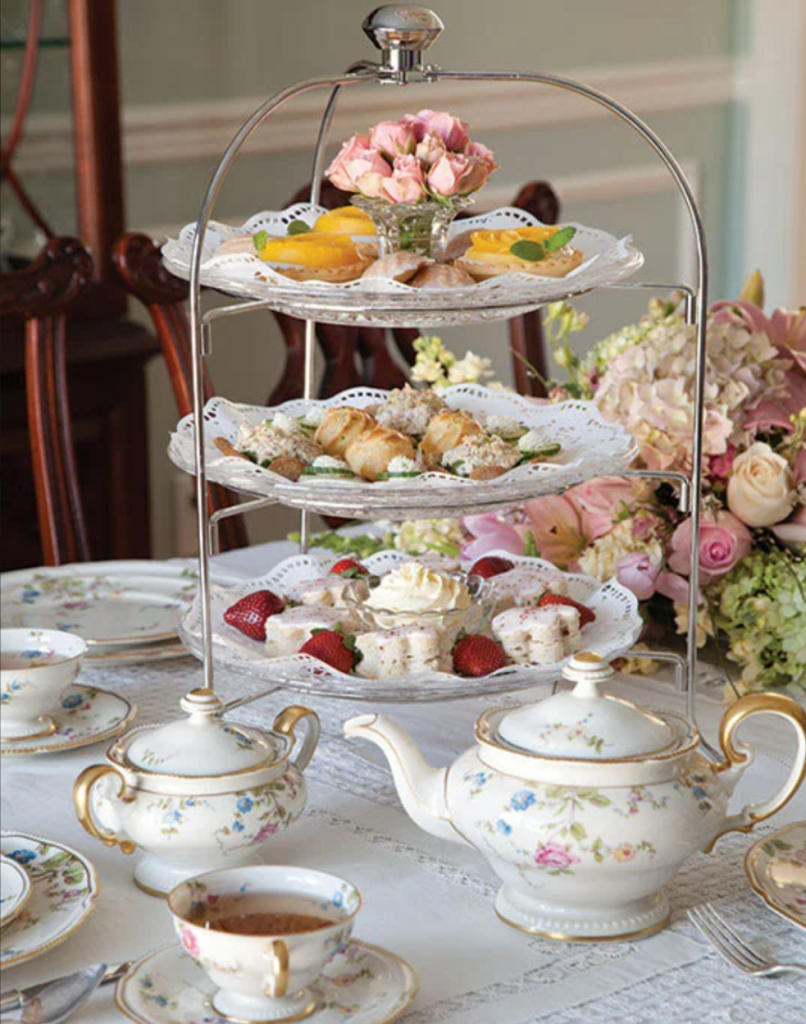
As you can see, I have prepared a lovely tea to celebrate the occasion. Join me, won’t you?
This month on gilagreenwrites, Gila interviews author Sharon Kirsch on her new book The Smallest Objective. According to Kirsch, the book is categorized as a memoir but it is a “hybrid of genres.”
Deborah Kalb interviews a variety of authors on her website, Book Q&As with Deborah Kalb. Here’s a recent interview she did with Jacqueline Jules about her new poetry collection, Manna in the Morning.
On Heidi Rabinowitz’s Book of Life blog, read a double interview with authors Ruth Behar (Letters from Cuba) and Barbara Krasner (37 Days at Sea) to learn about the relationship between Jews and Cuba.https://jewishbooks.blogspot.com/2021/04/cuba-and-jews.html
And join me in revisiting a most interesting interview with Israeli author, Sara Aharoni as we discuss The First Mrs. Rothschild and Jewish Historical Fiction:
This month, I will have the great honor of hosting the Jewish Book Carnival on this site. If you are not familiar with the event, let me tell you a little bit about it. Each month, a host welcomes links and posts from a myriad of other bloggers who are promoting works of Jewish content. It is an incredible format that allows us to share in rich and varied topics ranging from Children’s literature to Adult fiction and everything in between.
author, Barbara Krasner
Barbara and I met like many people do these days; that is to say, we met online. In preparing for the Carnival, Barbara contributed a link (don’t forget to visit this site on April 15th!) and also shared some information with regard to her new book. I had the pleasure of reading her latest work; and while it is not a subject that I normally lean towards, it is an important topic and is sure to have a long-lasting impact. Without further ado, please join me in welcoming today’s guest, Barbara Krasner~ author, blogger, and historian extraordinaire!
Host: Barbara, I thoroughly enjoyed reading your book. I found the format unique and unexpected. It pulled on my heartstrings; but more importantly, it brings up a subject that often is neglected. I don’t want to give anything away, so I’ll stop now and allow you to tell the audience about your newest release.
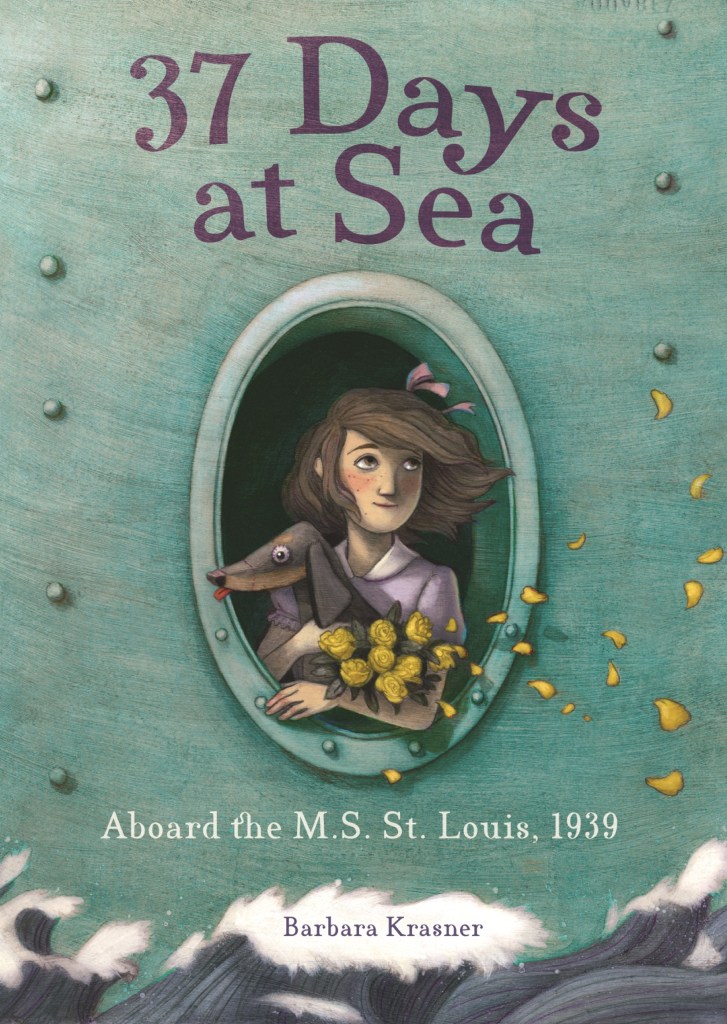
Guest: Thanks, Mirta, for having me. I’m always interested in talking about Jewish historical fiction! My new book, 37 Days at Sea: Aboard the MS St. Louis, 1939, is a middle-grade novel in verse. It’s the story of twelve-year-old Ruthie Arons, traveling with her parents and nearly 1,000 other German-Jewish refugees bound for Cuba. But the ship is not allowed to land, and the captain receives orders to return the ship to Germany. Ruthie and her friend, Wolfie, take action to help minimize the despair.
Host: From reading your blog page, I see that you are a historian, linguist and an author. Your list of accomplishments speaks to the love for your heritage and dedication to your craft. Tell us what intrigued you about this particular period in time?
Guest: My mother told me something about the St. Louis growing up. I decided to explore it in 2010 and read Scott Miller and Sarah Ogilvie’s Refuge Denied, which determined the fate the passengers after the ship landed in Antwerp in June 1939. I contacted Scott and he gave me the names of survivors who lived in the New Jersey-Pennsylvania-New York area. One by one I contacted them and interviewed them in their homes during 2010. The narrative actually started as nonfiction, then transformed to poetry for adults, then poetry for kids, ultimately fictionalized.
There are many time periods I’m interested in: Jews in early America, the mass immigration period, the postwar period (Displaced Persons). The Holocaust period, for me, takes precedence because these stories must be told to remember and honor those who perished and to keep warning the world about the loss of human rights and genocide.
Host: I understand that you are specializing in Holocaust & Genocide Studies. The scope of such a curriculum must be daunting, to say the least. Have you always been a great reader? Do you remember your first Jewish fiction that was non-Holocaust related?
Guest: I am currently a doctoral candidate in Holocaust & Genocide Studies at Gratz College outside Philadelphia. I’ve always been attracted to historical fiction even as a young reader and loved Sydney Taylor’s All-of-a-Kind Family series about a Jewish family in the early 1900s in New York City.
Host: Yes! That was one of my childhood favorites as well. As an immigrant myself, I found it to be highly relatable in so many ways. The focus on identity, assimilation, and pride in heritage was powerful for this young Argentine Jewish girl, trying to understand her place in the world.
With regard to the MS St. Louis, and the general understanding of America’s position towards Jewish refugees at the time, I feel that the history has been downplayed to the detriment of our society. Given your professional experience in this genre, I would assume you are accustomed to the grim and the tragic aspects attributed to the subject matter. What did you learn, while doing your research, that particular affected you?
Guest: I spent days researching the St. Louis at the American Jewish Joint Distribution Committee headquarters in New York City as well as several days at the U.S. Holocaust Memorial Museum in Washington, DC. I interviewed about eight survivors who had been aboard the St. Louis as kids. What struck me most was the resilience of these people. I noticed in one survivor’s home all the Judaica that hung on the walls. He said, “Hitler did not survive. We did.”
Host: That, indeed, is a poignant statement. Resilient. The word is applicable to Ruthie Arons. Her innocence, hope, and courage touched my heart. How did this character resonate with you?
Guest: Ruthie’s character is a composite of people I interviewed and then some. Writing in verse helped me better understand her character and how she would respond to situations.
Host: I found the verse format to be compelling. It painted a singular picture of the situation; and though the story is told through a child’s eyes, it is not childish. I was completely engaged. Barbara, tell us a little about some of the places you have visited and their connection to your books.
Guest: In 2008 I traveled to my grandparents’ “shtetlekh” in northeastern Poland to research a historical novel. While that manuscript is still in the drawer, standing on the same ground as my grandparents was a once-in-a-lifetime experience. My grandmother’s hometown of Ostrow Mazowiecka felt like my hometown.
Host: I had a similar experience when I traveled to Argentina and visited the Jewish colonies in the pampas~ the land that adopted my Russian grandparents. I felt like a time traveler. Talk about research! I would love to hear more about this manuscript, stashed away in the drawer. Will it come out soon or are you working on something else?
Guest: I have a few projects I’m working on now that I guess one could characterize as Jewish historical fiction. Too soon to talk about them in detail, but both take place in America during the Cold War.
Host: I can relate…Stories take on a life of their own; and sometimes, books understand timing better than we do! Even so, I wish you all the best with this project and in your future endeavors. It is important work. Kol hakavod! Before we sign off, is there anything else you’d like to add?
The last few months have been awfully busy. Having recently finished a rough draft of my next novel, I’ve been focused on working with my alpha readers and trying to revise, restructure and basically reinvent my ever-evolving storyline. All this is done in stolen moments in between a 10-hour work day and household responsibilities… laundry, grocery shopping, etc. Life seems but a quick succession of busy nothings when all I want to do is write. And before I knew it, Passover was upon us and I was not prepared.
Being empty-nesters, the holidays are just not the same any more, especially because my children, and family in general, are spread out across the world. But I still wanted to celebrate the occasion and preserve the traditions, so out came the cookbooks and beloved recipes. I’m not a particularly talented cook, nor am I overly ambitious. And as our diets are restricted throughout the week, I sometimes am at a loss to create things without the prohibited chometz. Or as our family haggadah indicates, we are to avoid anything that “puffs up.” As a side note—or maybe not—I think this haggadah is spot on with regard to a spiritual cleansing of pride and self-importance. Leavened breads, cakes and other yeast or flour products inflate and thicken our bodies. All year long, we are full of chometz, full of ourselves, with no room for God or anything else. For one week, we are told to eat matzah, which is flat and bland, and contemplate our lives and our freedoms. It is the complete opposite of haughtiness and puffiness.
OK, if I haven’t lost you yet, let me get back to my post…
In looking at the family favorites, I noticed how I have tweaked recipes here and there. Ingredients have been swapped out, preparations have been revised. In other words, the recipes evolved, much like my latest novel, depending on whose voice had taken the lead. Depending on which grandmother, aunt, or cousin passed it along, or from which country, culture and timeframe, the difference was notable.
Are you still with me?
I had previously written about Lady Judith Montefiore, and the impact of her cookbook on Anglo-Jewry, but started to think about food in relation to our identity. I am ethnically a Russian Jew who was born in Argentina. But I am also a (proud) naturalized citizen of the United States of America and have been highly influenced by the culture in my adopted land.
“Tell me what you eat: I will tell you what you are.”
That statement was published by Jean-Anthelme Brillat-Savarin in 1825; and I think, it still holds true! Celebrity chef Jamie Oliver recently stated that “Dishes evolve, impacted by trade, war, famine and a hundred other forces.” I find it all fascinating and here is just one example of how recipes evolve and cultures intermingle.
Almond sweets were all the rage in Sicily; but by 1552, they had gained popularity and became known to the rest of modern-day Italy, Spain, France, and England. And across the pond, in a hand-written cookbook published by the first lady, Martha Washington’s Booke of Cookery contained a recipe for almond cookies. So, by the 17th century, we have the word macaron in French or macaroon in English. At this time, the world was also introduced to the Sicilian word maccarruni. In English, of course, we know it as macaroni.
To complicate things a bit, a fad developed in the United States in the late 1800s with the importation of coconut from India. Coconut cream pies, ambrosia and custards were very popular— as was the coconut macaroon, which suddenly began appearing in Jewish cookbooks. In 1871, Esther Levy’s Jewish Cookery Book included a recipe for this new dessert; and because they didn’t contain flour, they soon became an American Passover tradition.
Never let it be said that the French were left behind in the world of baking! Soon after coconut macaroons first appeared, bakers Gerbet and Desfontaines created a sandwich cookie by putting almond paste or ganache between two individual macarons. The new cookie was called “le macaron Parisien.” In the United States, the word macaron now referred to the French ganache cookie, leaving macaroon to describe the coconut confection we eat all throughout this holiday week.
Don’t forget the word macaroni. We think of it as elbow pasta. Right? Au contraire! In 18th century England, macaroni had an altogether different meaning. Wealthy gentlemen, who sported outlandish hairstyles and pretentious fashions, were called Macaronis. Why? Because while they did the Grand Tour across the Continent, they acquired a taste for Italian pasta, which was considered an exotic food sensation. For those of us who grew up singing “Yankee Doodle,” this explanation helps to make sense of the song. The chorus makes fun of a disheveled Yankee soldier who attempts to look fashionable. Remember? “…stuck a feather in his cap and called it macaroni.”
At this point, you may be asking yourself: How is she going to tie all these ponderings together? Don’t worry. I’ll tell you.
This year for Passover, I couldn’t find a nice brisket in my grocery store, so I chose to make an American-style pot roast. And because my husband doesn’t care for chicken soup, we ate our kneidalach (matzah balls) in Argentine-style tuco (similar to a Pomodoro sauce). I wonder what Lady Judith might have opined of my international Pesach menu. And what of our beloved, Jane Austen? Did she have an interest in food? In one of her many letters to her sister, Cassandra, she wrote:
“My mother desires me to tell you that I am a very good housekeeper, which I have no reluctance in doing, because I really think it my peculiar excellence, and for this reason – I always take care to provide such things as please my own appetite, which I consider as the chief merit in housekeeping. I have had some ragout veal, and I mean to have some haricot mutton to-morrow.”
Both of these entrées stem from French cuisine. I wonder if Jane ever dined on anything quite so exotic as pasta? I know for a fact she was acquainted with a few Macaronis—at the very least she wrote about them! I can think of a few Austen dandies, can’t you? But then again, our Miss Jane was never at a loss for words about pride…
“Vanity and pride are different things, though the words are often used synonymously. A person may be proud without being vain. Pride relates more to our opinion of ourselves; vanity, to what we would have others think of us.”
I wonder what she would have to say about Pharaoh? Talk about being “puffed up”!












 Mirta Ines Trupp~ Author