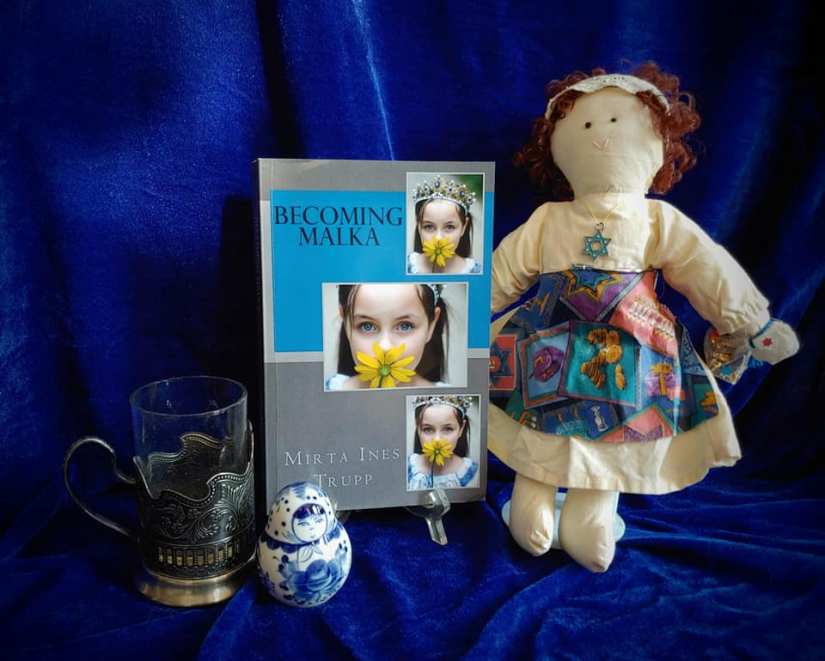
Author's Interview

Author’s Interview with L. Bordetsky-Williams

As a “newbie” in the blog world and an independent author, I was excited when L. Bordetsky-Williams contacted me for the purpose of marketing her new book; but I have to admit, I vacillated before going forward. Why? In all honesty, it was because the scope of the author’s work differs greatly with the theme of my site. While the premise for my blog is Jewish Historical Fiction, this novel cannot be considered light reading and it certainly is not Austenesque. I therefore need to alert sensitive readers to the darker subjects discussed in the interview. Now that I’ve done my due diligence, allow me to introduce today’s guest!

L. Bordetsky-Williams is the author of the newly released historical novel, Forget Russia (Tailwinds Press), the memoir, Letters to Virginia Woolf (Hamilton Books, 2005, http://www.letterstovirginiawoolf.com); The Artist as Outside in the Novels of Toni Morrison and Virginia Woolf (Greenwood Press, 2000); and three poetry chapbooks:  The Eighth Phrase (Porkbelly Press 2014), Sky Studies (Finishing Line Press 2014), and In the Early Morning Calling (Finishing Line Press, 2018). She is a Professor of Literature at Ramapo College of New Jersey and lives in New York City.

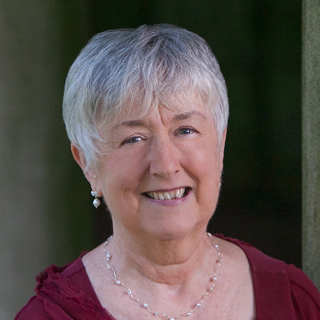
L. Bordetsky-Williams, author

Host:  It’s an honor to host such a prolific author and educator. The world of Jewish fiction encompasses a diverse field of narratives. Please tell us all about your current release. 

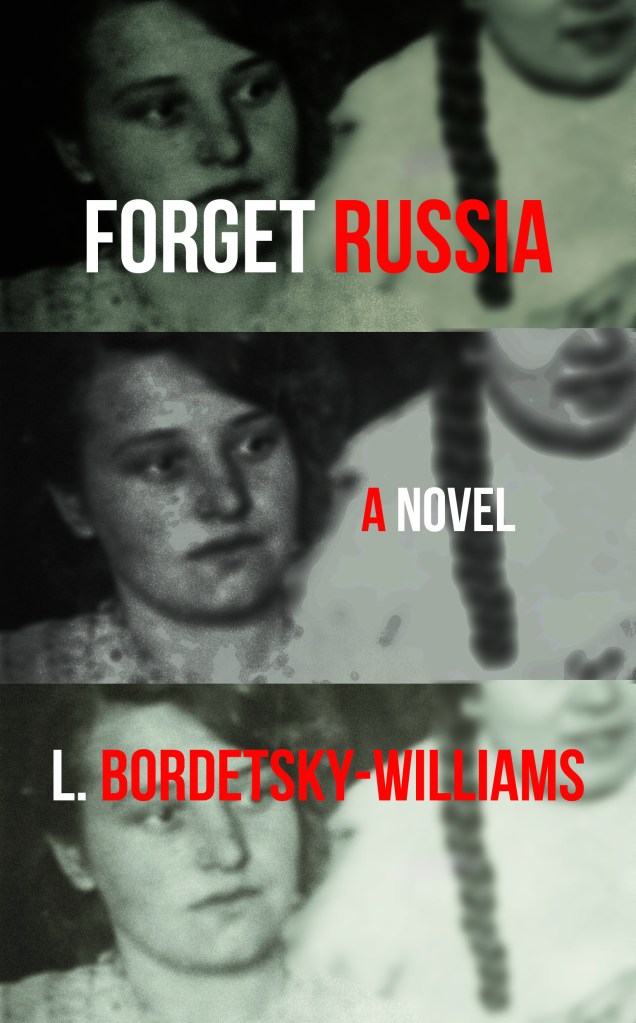
Guest: Forget Russia tells the story of three generations of Russian Jews, journeying back and forth from America to Russia, during the twentieth century, as they search for a home.  From before the 1917 Revolution to Brezhnev’s Soviet Union, this is a tale of unlikely heroes and the loss of innocence.  It is a story of love, murder, revolution, and betrayal. The novel is set to be published by Tailwinds Press on December 1, 2020.

Host: My own ancestors were fortunate to escape Imperial Russia prior to the revolution. What was your motivation in writing about this time period?

Guest: I wanted to understand the lives of my ancestors and how their lives intersected and influenced my own.  My great-grandmother was raped and murdered in a pogrom in a small Ukrainian shtetl by Cossacks shortly after the Civil War between the Red and White armies ended.  When the Red army finally was able to take over the Ukraine from the White and Ukrainian Nationalists, the retreating and defeated armies went into the Jewish shtetls and killed many Jews, who they equated with the Bolsheviks.  I wanted to understand how this initial trauma affected the subsequent generations of women in the family.  My grandmother came to America in 1921 after losing her mother in such a tragic and violent way.  She settled in Roxbury, where her father, who had deserted the family years ago now lived with a new wife and children.  It is not surprising that shortly after arriving, at the age of seventeen, she married a man approximately eighteen years her senior. 

Then, in 1931, she and my grandfather actually returned to the Soviet Union with my mother and aunt, ages five and three.  My grandfather, a carpenter, had come to America before the Revolution and had radicalized here.  Life became incredibly difficult here during the Depression. It had always been a dream of his to return to the Soviet Union, the land of his birth, and build the revolution.  While much has been written about Jewish Eastern European immigrants coming to this country, the experience of those American Russian Jews who returned to the Soviet Union to build the revolution in the early 30’s has been relatively unexamined.

Host: That certainly holds true for me. I have not read much about Russian Jews returning after the revolution. My paternal grandfather, zeide Manuel, always insisted the family supported the White Russians. My understanding was there had been hope for a democratic monarchy prior to the Bolshevik uprising. Childhood memories can only recall my grandparents’ gratitude for having been able to immigrate. Have you had the opportunity to visit the area yourself? 

Guest: Yes, I was a Russian language student in Moscow in 1980 at the Pushkin Institute.  When I was there, I had the opportunity to meet the Soviet Jewish grandchildren of the Bolsheviks.  Many of their ancestors had been imprisoned, killed, or exiled to labor camps by Stalin.  It was heartbreaking to see how their ancestors’ dreams for a better, more equal society had been betrayed during Stalin’s purges.  I also, for the first time, saw first-hand, how anti-Semitic Soviet society was.  On Rosh Hashanah Eve, we went to the only functioning synagogue in Moscow, and a car dashed across the cobble-stoned streets in an effort to intimidate and frighten the Jews gathered there.

My trip as a student to the Soviet Union truly changed my life.  I spent three and a half months there, and from the moment I returned, I struggled to find the right form to express the ways that journey changed me.  Finally, I realized the novel form would give me the freedom to intertwine the three generations’ stories.  I also wanted to weave in a love story with an epic, historical setting, so the novel was the best form for that as well.

Host: Did any particular character resonate more than others in your novel? 

Guest: My character Iosif, a young Soviet Jew, who has a photograph of Leo Tolstoy hanging in his room.  He is a true intellectual within a distinctly Russian and Soviet context.  While he hates the absence of freedoms in his own country, he sees America as a sick and decadent place and imagines Americans only talk about business. For him, America is soul-less in its materialism, and yet the Soviet Union is as he calls it a nightmare where nothing works, and everyone worries that life will get even worse after Brezhnev dies.

Host: Iosif sounds like a troubled soul, grieving for his country and mourning for humanity. As the granddaughter of Russian Jews, and a second-generation Argentine, I recently commemorated Thanksgiving Day by acknowledging my gratitude for living in the United States of America. Such a day gives one pause to reflect on the meaning of the words: Life, Liberty and the Pursuit of Happiness.  Had my ancestors remained in Russia, they would have had to suffer through the revolution and the tumultuous period thereafter. If they survived Lenin and the Bolsheviks, they would have faced the Nazis. The horror is unimaginable. And so, I gave thanks that my ancestors fled their homeland and that my parents had the wherewithal to leave behind the corruption— and destruction— of Peron’s Argentina. The courage that our ancestors demonstrated in their pursuit to survive is astounding. But I seem to have taken over your interview. Before I go off on a tangent again, let me take this opportunity to thank you for sharing your story with us. 

I understand you have an excerpt from Forget Russia. Is there anything else you’d like to add?

Guest: Thank you, Mirta. Here are the links to my social media and website:

Forget Russia website: https://www.forgetrussia.com/

Twitter: https://twitter.com/BordetskyL

Instagram:  https://www.instagram.com/forgetrussia/

Facebook:  https://www.facebook.com/ForgetRussia

Forget Russia Book trailer:


It was only five hours from Heathrow to Sheremetyevo. We flew through more than time zones. Outside the clouds obscured the sunrise. It seemed we were descending into a new realm, perhaps to seek advice on how to reach our destination. But before I knew it, the plane started to arrive, to dip down until I saw the trees through the small window—Russian trees, thickets of pine. The plane bumped down noisily onto the runway.

The doors opened and I stepped out of the plane into a dim, flickering passageway. I moved into a gray darkness. Military men in brown uniforms were everywhere in the Sheremetyevo airport, their rifles slung across their chests. The American students nodded wordlessly or else walked very close together, speaking in half-whispers.

The first stop was a glass partition where another man in brown sat and asked for my visa. He looked first at the picture stapled to the document and then at me, his eyes inspecting every aspect of my visa; he stared at my face and then the visa photograph over and over again. Just when I was expecting the military men to escort me somewhere, he nodded and returned the visa to me, so I could proceed with my suitcase to customs. I looked backward and saw the American students standing in a line, one by one, as they approached the glass divider, our first greeting in the Soviet Union.

In the USA, the group leaders had said: The Soviets may search your bags. Don’t bring in a Bible. Don’t bring in Time magazine. Don’t write addresses of Russian friends in a book that is easily read. The customs official only opened one of my two suitcases and looked quickly inside before closing it up. But one student, Barry Moskowitz, had all his clothes dumped in a heap for him to refold and squash back inside. I couldn’t believe what I was seeing. I wanted to help Barry repack, but we were kept moving in a line. No one dared speak above a whisper.

The driver of the yellow school bus waited for the American students outside the airport. Two by two we entered. It should be morning, my body told me, but I entered evening and when the bus began to move all I could see was highway and cement pavement.

I had come back to the land where my great-grandmother died, thrown off a boat into the Guilopyat River.  Her spirit, it seemed, was in the cracks of cement, in the wide streets and lights rising in the evening, in the thin branches of trees visible before we entered the highway. I wanted somehow to find her.

Darkness was falling on the outskirts of Moscow. I peered across the highway into the center of the city, where Cyrillic letters glittered across the tops of buildings, Power to the Revolution. As the bus ambled along, I saw a poster of a man in a dark suit, a torch raised high in his hand, a red hammer and a sickle behind him and the words, XXVI Congress of the Communist Party of the Soviet Union above his arm. Then another one of Brezhnev—his slicked-back hair emphasized his widow’s peak, his wide face, and glasses; the circular hammer and sickle with a star hung above him and printed below, Following Lenin’s Course. There were no advertisements anywhere, no rugged Marlboro man, no Let Your Fingers Do the Talking, no Light My Lady Cigarette, no Coca-Cola Pepsi feuds or Minute Rice. I was relieved to get a break from all the flashy slogans everywhere in the USA, and yet the city looked so stark and austere without them.

I glanced up at the Hotel Rossiya, a rectangular building; its name lit up in all that darkness.

New Post

Chanukah – Hanukkah – Januca- חֲנֻכָּה- Jewish Historical Fiction Books Make Wonderful Gifts!

Whichever way you spell it, the holiday is here! Give them a book this year. Everyone wins!

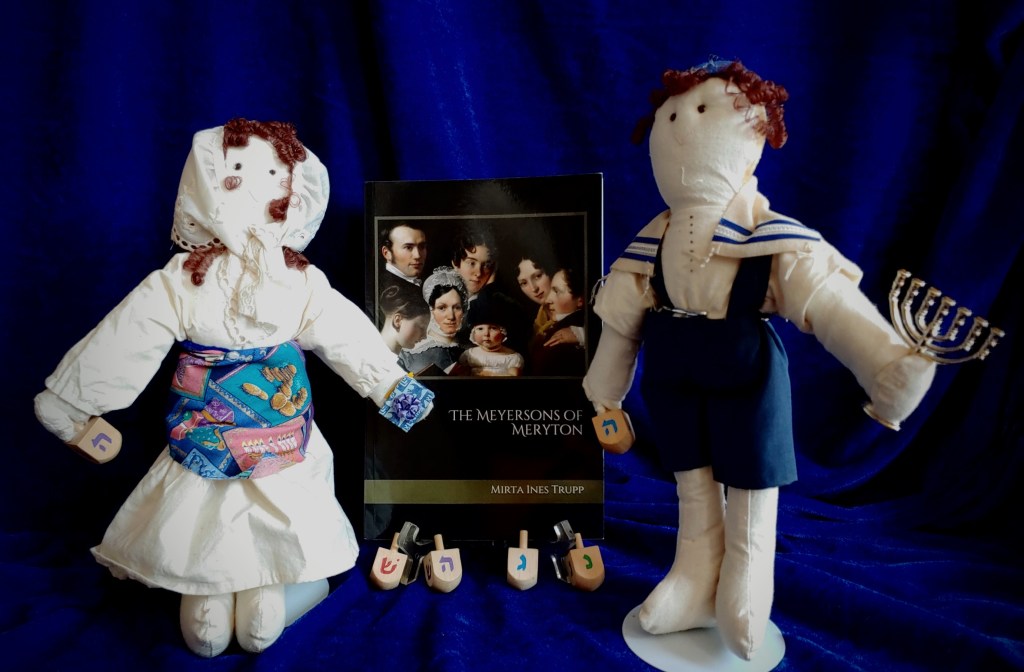
A different take on Jane Austen’s Pride and Prejudice. This novel introduces Jewish characters to this beloved novel. Mr. Darcy and Elizabeth are days away from saying their vows when Rabbi Meyerson arrives to Meryton.


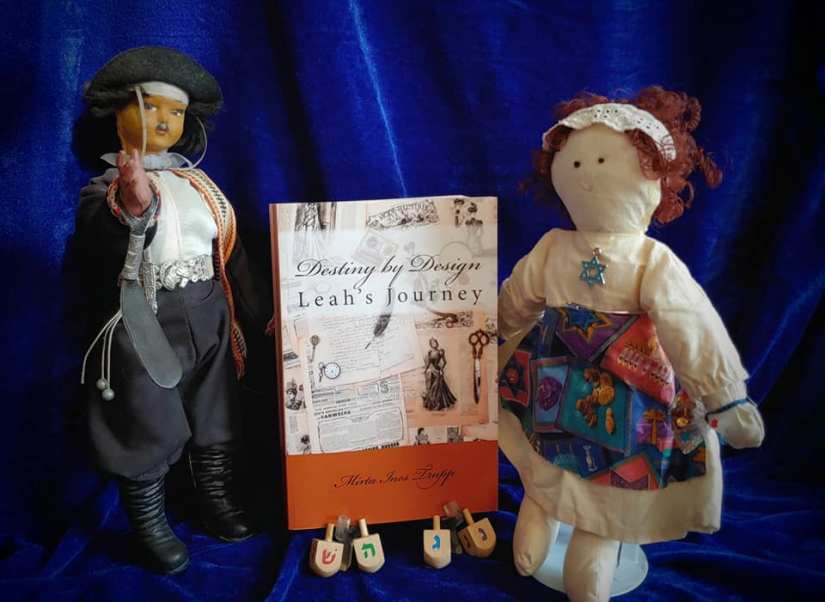
With a definite nod to Jane Austen, this novel begins in Imperial Russia and follows the Abramovitz family to the shores of Argentina. Leah is faced with life-altering decisions. Where will this journey lead?


A coming of age fantasy, this novel will take the reader back in time to Imperial Russia in the early 1900s. An accident reading of an ancient incantation, allows Molly Abramovitz to meet her great-great grandmother, Malka.


These Jewish Historical Fictions novels are clean reads and set outside of Europe. I hope you enjoy!

New Post

Going Down the Rabbit Hole~ In Pursuit of Jewish Austen Fan Fiction

Have there ever been two siblings more connected than the Austen sisters?

Their mother was known to have said, “If Cassandra were to have her head cut off, Jane would insist on sharing her same fate.

Rabbit Hole Number OneSisters…

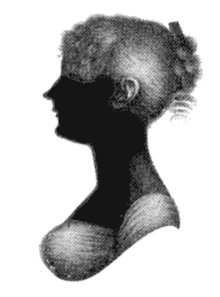
Cassandra Austen
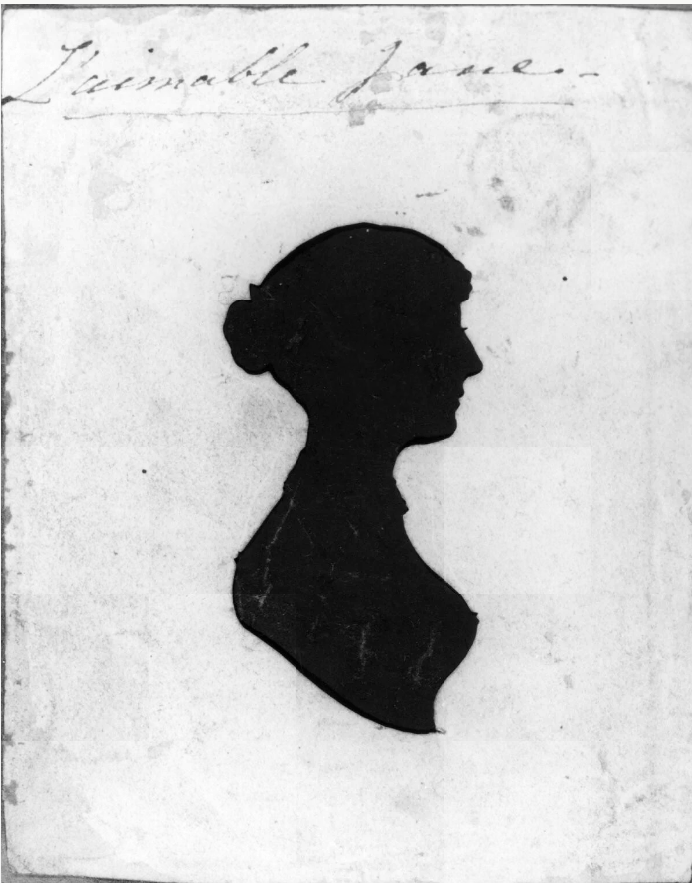
“Possibly” Jane Austen

I am forever delving into history books and Internet sites, going down the proverbial rabbit’s hole in search of enchanting stories of elegant ladies and gentlemen of days gone by…who just so happen to be of the Jewish faith.  I surround myself with Austen’s novels, Regency knickknacks, and Judaic memorabilia in the attempt to weave  something Austenesque with a touch of Yiddishkeit. I strive to become, in some small way, a soul sister to our beloved author.

Follow me, if you can, as I go through this process of finding commonality and concurrence.

Rabbit Hole Number Two:  What is a soul sister? An Internet search provided the following information: Soul sisters have a strong emotional bond with one another. They have common dreams and aspirations and share fundamental life philosophies— despite having no blood relation. 

Rabbit Hole Number Three: Who could be considered Jane Austen’s soul sister? I looked for a contemporary— someone who might find herself featured in one of my J.A.F.F. stories. Someone who was like Jane in most every way, but one. After countless hours of research, and untold cups of tea, I found her: Rebecca Gratz.

Are you ready? Here we go…

  • Rebecca Gratz was born in Philadelphia, Pennsylvania, on March 4, 1781, a middle child among twelve children.
  • Jane Austen was born in Steventon, Hampshire, on December 16, 1775, the seventh of eight children.
  • Gratz, a fervent patriot the whole of her life, was accustomed to the highly political atmosphere of a post-revolutionary America. 
  • Austen, accustomed to having her country at war for most of her life, had three brothers serving in the navy and militia. 
  • Gratz abandoned her early poetry and put her literary talent to work supporting both women’s roles and Judaism in America.
  • Austen began her career as an epistolary novelist. Her work has been a lasting influence on British literature; her stories underscored the realities of women’s’ lives.
  • Well-educated for her day, Gratz attended women’s academies and read her father’s extensive library stocked with literature, histories, and popular science.
  • Austen attend schools for girls. She was, however, allowed to use “some of the same school books as the boys” and had “unfettered access” to her father’s library.
  • Rebecca Gratz fell deeply in love with Samuel Ewing, a non-Jewish lawyer and son of the provost of the University of Pennsylvania. Nothing came of it, however, possibly because intermarriage was one step she could not take. When he died decades later, Gratz visited the room where his body lay, leaving three white roses and her miniature on his heart. Gratz would argue that, from what she saw of marriage, it was a state that brought little happiness. “Better to wander alone through the neglected path of single life,” she wrote, “than with an ungenial companion.”
  • Jane Austen was twenty when she met Tom Lefroy, a young man studying to become a barrister. The Lefroy family intervened and separated the pair. She never saw him again; however, in a letter to her sister, Austen related that she had had tea with one of his relatives, “and wanted desperately to ask about him, but could not bring herself to raise the subject.” In 1814, Austen replied to her niece’s request for advice regarding a possible suitor. “Anything is to be preferred,” she said, “or endured rather than marrying without affection.”
  • Rebecca Gratz was a visionary. She became the founder of the American-style “Hebrew school” and developed the prototype for many women’s charitable organizations. She died on August 27, 1869 in Philadelphia, Pennsylvania and was buried at Mikveh Israel Cemetery. Shortly after, her brother, Hyman founded and financed Gratz College, a teachers’ college in Philadelphia in her memory.
  • Jane Austen was a visionary. Lauded as being the first woman to write great “comic” novels, she used humor to explore the individualism of women’s lives. Austen died on July 18, 1817. Her brother, Henry, saw to her burial at Winchester Cathedral. He arranged for the publication of Persuasion and Northanger Abbey and contributed a note, which for the first time, identified his sister as the author of the novels.

Rabbit Hole Number Four:     I put it to you. Are these two ladies, one Anglican and one Jew, not the very personification of soul sisters? Enquiring minds want to know!

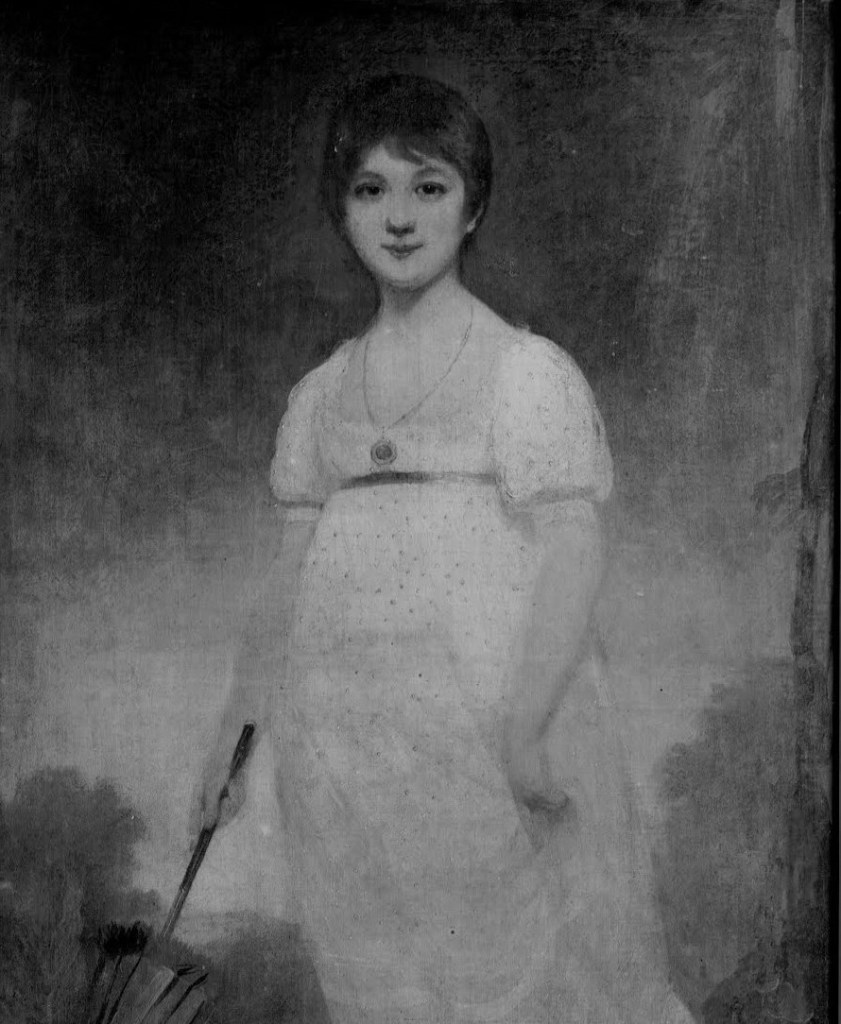
Jane Austen- Rice Portrait
Rebecca Gratz

With love,

Author's Interview

Author’s Interview with Michelle Cameron

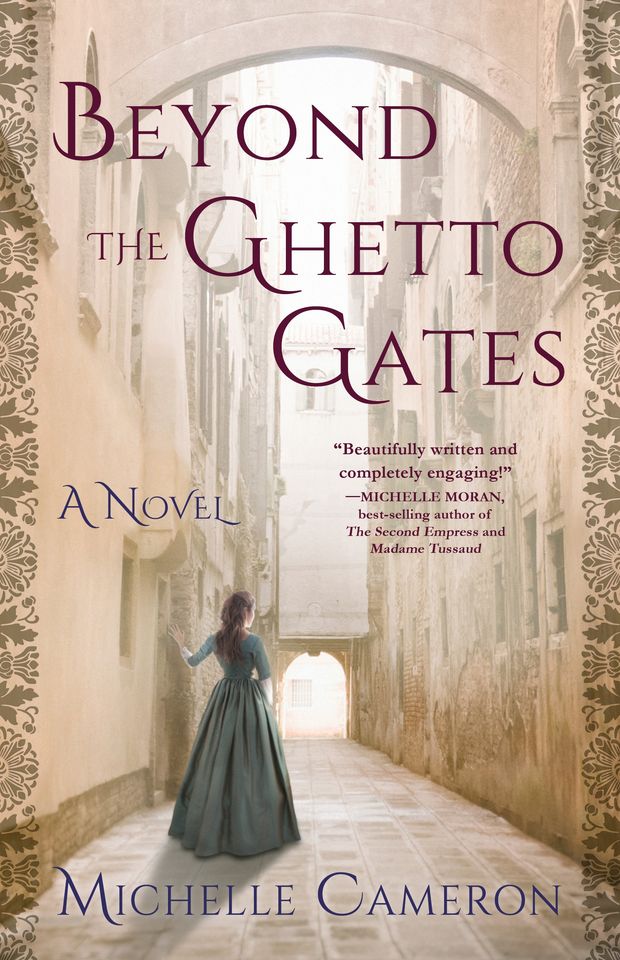
I am pleased to introduce today’s guest, Michelle Cameron. Michelle is a director of The Writers Circle, an NJ-based organization that offers creative writing programs to children, teens, and adults, and the author of works of historical fiction and poetry: Beyond the Ghetto Gates, which won the 2020 Silver Medal in Historical Fiction in the Independent Book Publisher Awards (IPPYs), The Fruit of Her Hands: The Story of Shira of Ashkenaz, and In the Shadow of the Globe.

Michelle Cameron, author

She lived in Israel for fifteen years (including three weeks in a bomb shelter during the Yom Kippur War) and served as an officer in the Israeli army teaching air force cadets technical English. Michelle lives in New Jersey with her husband and has two grown sons of whom she is inordinately proud.

Host: Michelle, that is quite a fascinating bio. I’m excited to learn more of your work. Please tell us about about your latest project.

Guest: My Jewish historical novel, Beyond the Ghetto Gates, was published this past April. It tells the story of the 26-year old General Napoleon’s military campaign through Italy in 1796-7. When he reaches the harbor city of Ancona, he first encounters locked ghetto gates, and sends his Jewish soldiers to demolish them and emancipate the Jewish residents. Beyond the Ghetto Gates is also the story of two women – Jewish Mirelle, who must choose between her duty to her family and faith or her love for a dashing French Catholic soldier and Catholic Francesca, who is trapped in a marriage to an abusive and ultimately murderous husband.

Host: Why were you motivated to write about this time period?

Guest: My earlier historical novel took place during the rise of antisemitism and, as it included blood libels, book burning, torture, and more, in many ways it was a difficult book to write. I was explicitly looking for that rare beast – a joyous moment in Jewish history.

Host: Ah. Now you are speaking my language! Tell me more.

Guest: While reading about the Jews of the French Revolution, I happened upon Michael Goldfarb’s nonfiction book, Emancipation. In it, he describes the scene of Napoleon’s happening upon the ghetto gates. This highly dramatic moment had “novel” written all over it. One of the themes that runs through much of my writing is the tension between assimilation and safeguarding religious belief, which is why I was motivated to write about this time period. It also intrigued me because it was a historical episode many readers (and this writer) had never heard of before.

Host: I appreciate authors who weave accurate history throughout the storyline. In particular, I enjoy discovering, and highlighting, the beauty of our Jewish heritage. While doing your research, were you surprised at your findings?

Guest: While I could anticipate much of what I found in my research, there were actually two substantial surprises, both of which contributed mightily to the plotline.  The first was discovering that Ancona, Italy, was the world center of ketubah (Jewish marriage certificate) making during this time. The artisans of Ancona were the first to illuminate these documents, and the ketubot (plural) had a highly distinctive shape. This shape – called an ogee arch, a rounded top culminating in a peak – allowed me to recognize when a ketubah came from Ancona in such far-flung exhibits of Judaica in Toronto, Edinburgh, and New York. It also gave my heroine a purpose and a desire: to contribute to her family’s legacy, as makers of these exquisite documents.

The second surprise was stumbling on the story of the miracle Madonna. In June, about eight months before Napoleon arrived, a portrait of the Virgin Mary in Ancona’s Cathedral purported to turn its head, smile upon the congregation, and weep. This was all documented in a Vatican recounting of the event, which included the fact that Francesca Marotti and her daughter Barbara – both characters in the novel – were the first to see the miracle.

Part of Napoleon’s campaign was the systematic looting of Italy’s artwork and religious artifacts. An anecdote tells of him denuding the cathedral in Ancona and seeing the miracle portrait. According to the story – which may be fabricated – something he saw as he stared at the painting shocked him. I couldn’t resist adding this scene! I should add that everything that happens to the portrait after Napoleon sees it is purely my invention. But the portrait itself became a critical plot device.

Host: Which of your characters resonate with you most? 

Guest: I think in many ways both of the main characters have a bit of me in them – Mirelle in her feeling toward her family and conflicting desire to accomplish something that is nontraditional, Francesca in her internal sense of rightness.

Host: What is your writing process? Do you know how it will end, as you get started?

Guest: Because research is such a critical part of my novels, I begin with a three-month “deep dive” into the material, just to get my arms around it. This is when I discover what parts of the story can be derived from the research. But since I love historical research so much, I make myself limit it to that three-month period. Otherwise, I might never emerge! But I do still keep researching, of course, as I hit the many, many times when I arrive at a scene where I don’t know what I need to know – and even consult my books and other research materials when I’m in the midst of revising.

In fact, I revised Beyond the Ghetto Gates more than I’ve ever revised any other novel. I thought I did know the end when I started – but my beta readers convinced me that I didn’t! In fact, I changed both the beginning and the end of the novel multiple times. The end itself is somewhat unusual, and many of my readers have been surprised by it. (Frankly, so was I!)

Host: How long have you been writing? When did you first consider yourself an author?

Guest: I’ve been writing since the fourth grade and always wanted to become a writer. It didn’t come easily. My first three novels never saw the light of day – thank goodness! When the third was rejected, I decided that I had tried and failed, and took a hiatus from writing. It was my youngest son whose love of writing brought me back to it – which is one of several reasons that Beyond the Ghetto Gates is dedicated to him. I first considered myself an author with the publication of my first work – a verse novel about William Shakespeare and the Globe theatre, called In the Shadow of the Globe.
 

Host: Are you already onto the next project? When will we see it in print?

Guest: Yes, I’m already deep in research for the next novel – a sequel to Beyond the Ghetto Gates in which Napoleon does something unexpected: takes a military expedition to Egypt and Israel. So we’ll be continuing with the same cast of characters. This novel took me about three years to write, so my earnest hope is that the next book will be out in 2023 – or earlier. But we’ll see.

Host: You are certainly keeping busy! Is there anything else you’d like to add?

Guest:  Here are the links to my website and social media:

Website: michelle-cameron.com Facebook Author page: /michellecameronauthor
Instagram: @michellecameronwriter
Twitter: @mcameron_writer
In addition, Beyond the Ghetto Gates can be found at all online and brick-and-mortar booksellers, including: ​  Bookshop.org| Barnes & Noble | Amazon | Kindle | Books-A-Million 

Host: Thank you, Michelle, for spending some time with us today. I believe you are leaving us with an excerpt. I know we will all enjoy the read!

Guest: Yes, the following is from Chapter Two.  Thanks so much for this interview, Mirta!


Tall buildings loomed on either side of the street. Mirelle was used to the narrow space, but today the air seemed more fetid than usual, the close-packed homes more menacing. The buildings—many built centuries before and precariously expanded upward—were crumbling at their foundations. Apartments exuded the smells of a hundred cooking pots, paint curling under the sweat and filth of packed living.

Toddlers played in the streets, ignoring the refuse running down the center sewer. Housewives stopped to gossip, straw baskets crushed against their sides. The market was bustling, with vibrant oranges and lemons piled into pyramids, cut citrus samples sharp in the spring air, bundled chard and spinach, flowery clusters of cauliflower and broccoli, and long spears of artichokes piled high. Crusty breads, fruit-filled flans, and boxes of biscotti wafted enticing odors. But today all Mirelle felt were the centuries of dirt and sweat trapped inside the enclosed ghetto. The walls pressed in on her, making it difficult to breathe. On impulse, she decided to visit a different market—the one outside the gates, where she could feel sea breeze and sunlight on her face.

During daylight hours, the ornate, wrought-iron gates at the ghetto entrance were flung wide. Because her friend Dolce often designated them as a meeting spot, Mirelle knew their every nook and curve. As she’d wait, she’d run her fingers over the peeling patterns, twisting and curling. From dawn until nightfall, ghetto residents moved freely through the stone archway into the city of Ancona. As the sun dipped behind the horizon, however, city guards slammed the gates shut and chained a heavy padlock to the bars. The clang of the closing gates always raised the hair on the back of Mirelle’s neck.

It affected her generally carefree brother even more. Jacopo often railed against being imprisoned inside the ghetto.Just once, I want to see what the sea looks like under the stars,” he’d said one night as they stood outside, straining to see more than a few inches of night sky. “Just once, I’d like to walk freely out the gate and not have someone stare at me because I’m Jewish.”

Something had stirred in her chest as he spoke. A whole world existed outside the ghetto. If only they could both walk out of the gates freely!

But they were trapped. Day or night, whenever the Jews left their homes, they were required by law to don the yellow hat and armband that branded them as different. For as long as she could remember, Mirelle had covered her brown locks with a yellow kerchief before walking in the streets. She always wrinkled her nose in the mirror as she adjusted the badge of her faith. They make us wear yellow because it is the color of urine, she’d think distastefully. And of cowardice.

Her brother might feel caught inside the enclosure of the locked ghetto gates, but she felt doubly trapped—as a Jew and as a woman.

New Post

Searching for our Destiny~ A look at George Eliot’s, “Daniel Deronda”

Being an avid novel reader and great fan of period dramas, I decided to take a closer look at George Eliot’s, Daniel Deronda. Why this particular work? The answer is simple. My own book, Destiny by Design~ Leah’s Journey is also set at the cusp of the Zionist movement, just as Eastern European Jews begin to seek refuge in the United States of America, Argentina, and the Holy Land. I am not by any means equating myself with George Eliot; however, the thought of working in the same vein as this well-known and respected author is intriguing and must be further explored.

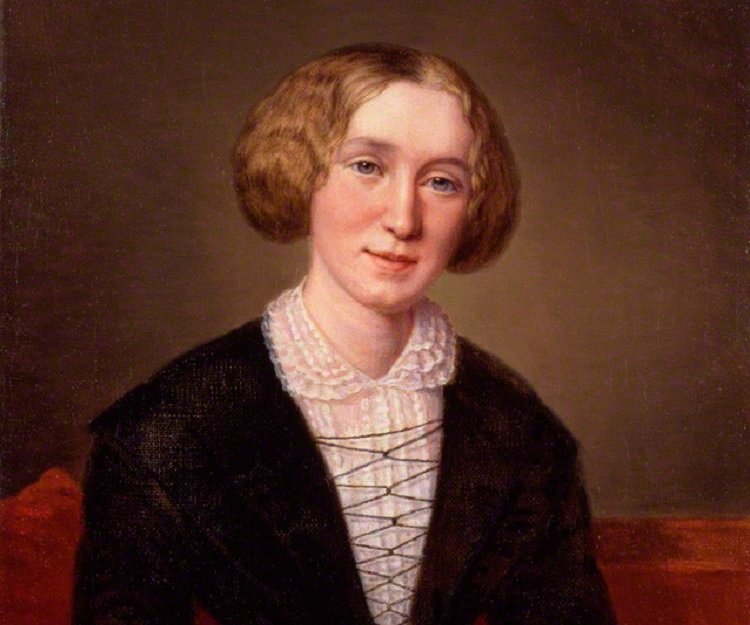
As a young educated woman, George Eliot (born Mary Ann Evans) associated herself with freethinkers in political and religious matters. She felt that Jews were ostracized in Britain and that they suffered from prejudice which was, at best, thinly disguised. It was some time in 1860 that Eliot met the Jewish scholar, Emanuel Deutsch. It seems that the author was so taken with the subject of Anglo Jews, she would later pen a novel and base the character of Mordecai on her close friend and early Zionist. That novel was Daniel Deronda, a classic work that speaks to Universal Truths. It is about a group of people dealing with romance and heartache, scandals, treachery and agonizing soul searching. First published in 1876, this was Eliot’s only contemporary novel; and because of its sympathetic representation of Jewish characters, her final statement on Victorian society was quite controversial.

Elliot’s provocative narrative interlaced two seemingly distinct storylines, allowing the audience—possibly for the first time—to peek into the world of Anglo-Jews; and in this attempt, she created complex characters very different from stereotypical roles. The author’s life partner, George Henry Lewes, apparently opposed Eliot’s objectives. Upon the novel’s publication he stated: “The Jewish element seems to me likely to satisfy nobody.” George Eliot’s friend, John Blackwood, also shared his poor estimation when he said, “The Jews should be the most interesting people in the world, but even her magic pen cannot at once make them a popular element in a novel.” That magic pen tackled a few sensitive subjects such as anti-Semitism in 19th century England, Zionism, and Feminism. I also found that Eliot addressed three poignant and thought-provoking themes.

Let’s explore, shall we?

SEARCHING FOR LOVE

While we tend to romanticize period dramas and their love stories, marriage was a serious matter. The idea of marrying for love—of finding that one perfect person—was the stuff of fantasy. In Daniel Deronda, we see that women could only assert their place in society by seeking an advantageous match. We watch as Gwendolen Harleth marries Henleigh Grandcourt to save her family from financial ruin, but she is helpless against his abuse and is trapped by societal expectations.

We follow Daniel as he struggles with his feelings for Gwendolen, a magnificent beauty who is in dire need of salvation and Mirah Lapidoth; a delicate, sensitive creature who lives—and nearly dies—in quiet desperation.

“You have a passion for people who are pelted,” Daniel’s guardian often reproached his lovesick ward.

One could only wonder: which woman would come to Daniel’s rescue?

SEARCHING FOR IDENTITY

Daniel Deronda is a young man plagued with uncertainty. Although he has been raised by a devoted guardian, Sir Hugo Mallinger, Daniel’s inner turmoil derives from not knowing his roots. Where does he come from? Who are his people? When circumstances reveal the verities of his history, Daniel represses his self-identity to suit his position as a true Englishman. After all, in 19th century England, Jews were mysterious foreigners. What did he know of those people?

When we are first introduced to the would-be heroine of the novel, we find Gwendolen Harleth to be a somewhat petulant beauty, yet one who dazzles friends and family with her charms and accomplishments. She is spoiled and prone to hysterics, but Gwendolen is tested—as we all are in real life. She struggles to surmount the endless bombardment of obstacles and misfortunes that shape her life. Finally, in a testament to her true mettle, she determines to prove herself worthy—for her own sake—and reinvents a better self.

Mirah Lapidoth’s first appearance in the novel is one of despair and despondency; however, her childlike mannerisms and endearing characteristics are deceptive, for she has survived much. Torn away from a traditional Jewish home, she lost her family and was subjected to ridicule and rejection by her own father’s cruel actions. Mirah quickly became aware of her insignificance in the world, but when Daniel saves her from the river’s edge, she slowly rebels against her circumstances. Longing to reunite with her true essence, Mirah aligns herself to her people—her passion—and rallies once more.

SEARCHING FOR DESTINY

Sir Moses Montefiore and Lady Judith—arguably the most influential Anglo-Jewish couple of the Georgian and Victorian eras—visited the Holy Land in 1827. They returned on several occasions, donating generously to promote industry, education and health in that beleaguered region. By the end of the 19th century, a movement for the re-establishment of a Jewish nation was led by Theodor Herzl. Eastern European Jews, fleeing tyranny, segregation, and famine, made their way to the Holy Land and other countries willing to receive the massive wave of immigration. Meanwhile in Paris, another organization was coming to light under the direction of Baron Maurice Hirsch. “The Moses of South America,” Baron Hirsch established the Jewish Colonization Association to help the persecuted Jews find their freedom and their destiny in the fledgling nation of Argentina.

While Eliot’s protagonist was certainly not in dire straits—neither fleeing for his life nor foraging for his dinner—Deronda would not inherit Sir Hugo’s title and land, as he was not Mallinger’s legal heir. Daniel was presented with another definition of destiny. His guardian suggests a talented and passionate individual should carve his own path in life and, at length, we find that Daniel does indeed discover that he can be the master of his own fate.

Unassuming and gentle Mirah finds the wherewithal not only to survive, but to thrive in her new found path—and happily, so does Gwendolyn. Although she loves Daniel, Gwendolyn relinquishes him to what she knows to be his rightful path; and in doing so, she proves to herself that she is good.

I see both Gwendolyn and Mirah in my own young protagonist, Leah Abramovitz of Destiny by Design~ Leah’s Journey. Leah has much to learn, and much to achieve, as she makes her way from the Pearl of the Black Sea to the Argentine pampas.

Those of us who are ardent lovers of period drama, appreciate a story that takes us to another place and time. That is what I have attempted to do with my books. We admire stories that are rich with longing, struggle and redemption because—whether we share the same ethnicity, culture or religion—we can relate to the various Universal themes.

Perhaps George Eliot’s true controversy was to show that growth and peace of mind comes from self-knowledge and not from societal status, a difficult concept to grasp—whether in the Victorian era or in the present day. Once we peel away the labels, whether self-inflicted or imposed by others, we can see ourselves in the narrative and find the way to fulfill our own destiny.

Jewish Historical Fiction

From Social Calls to Matzah Balls, a look at Jewish Austen Fan Fiction

The hosting, and attending, of morning calls, house parties, routs, balls and assemblies was imperative for those entering the upper echelons of society—think of Mr. Bingley and his sisters, who had so recently borne the “stench of trade.” How much more so for foreigners

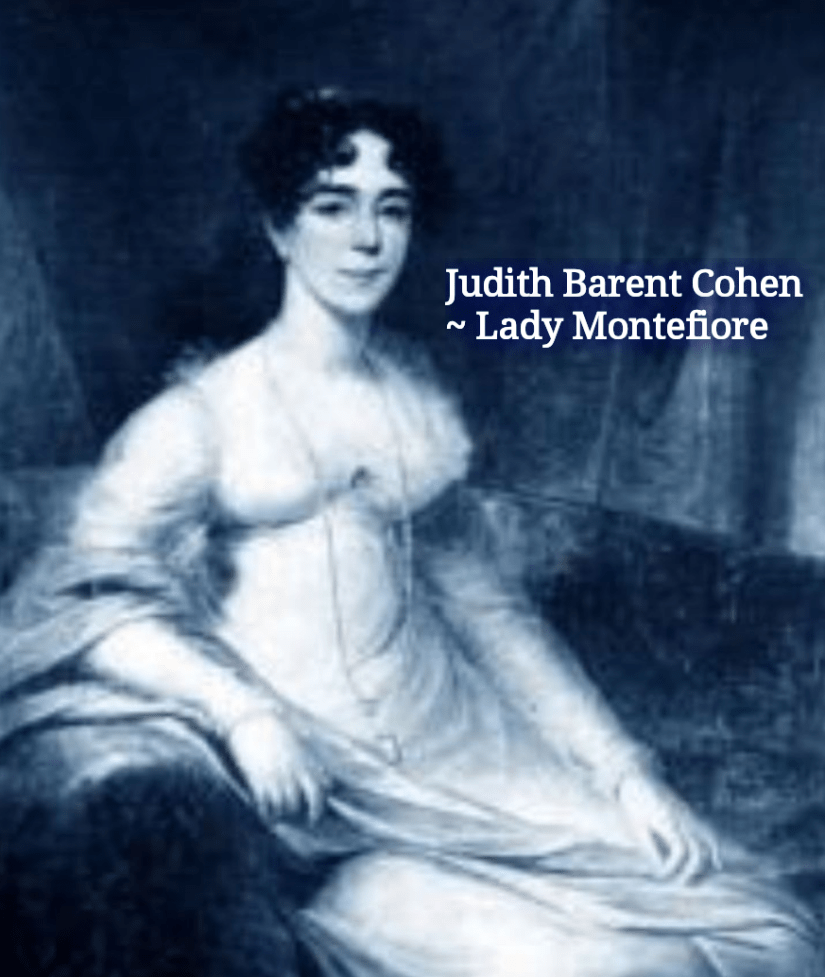
During the nineteenth century, Jews were experiencing unprecedented mobility in English society; and while this certainly was a blessing, the process of acceptance in the Anglican world threatened to erode their level of religious observance. The simple act of sharing a meal among friends presented certain complications. Cookbooks of the era did not take into consideration the ingredients or combinations that were prohibited in a kosher kitchen, such as the mixing of meat and dairy, or the partaking of shellfish or pork. Lady Montefiore (née Judith Barent Cohen 1784-1862) was the first to affirm, in so public a fashion, the existence of a distinctive Jewish cuisine and to draw from both Sephardic and Ashkenazi traditions (in general terms, Sephardic Jews hail from the Iberian Peninsula, but also such places as Italy, Greece, and Northern Africa. Ashkenazi Jews encompass Eastern Europe).

Much like Jane Austen, Lady Judith was a keen observer of human nature. Her book, The Jewish Manual; or, Practical Information in Jewish & Modern Cookery, with a Collection of Valuable Recipes & Hints Relating to the Toilette, therefore, was much more than a guide to cooking within the Jewish dietary laws known as kashrut. She meant “to guide the young Jewish housekeeper in the luxury and economy of the table, on which so much of the pleasure of social intercourse depends.” She encouraged homemakers to present elegant dinners, and to not draw any undesirable attention to the kosherness of the preparations. The end result would produce “haute cuisine that was invisibly Jewish and gastronomically exceptional.”

Montefiore was a great proponent of female education; and in keeping with Austen, she had a profound understanding of a woman’s lot in Regency England. The author pointedly wrote about the importance of cultivating the mind, and stated that womanhood should encompass “individuality, self-control, reason, intellect and fine feeling.”  Miss Elizabeth Bennet is the personification of that description, don’t you think? In her final chapter entitled “Influence of the Mind as regards Beauty,” Lady Judith professes that “all the milk of roses and essence of lavender in the world could not make a woman beautiful whose inner life was not up to standard.” It seems that Lady Judith and Miss Austen were of the same mind. Recall Mr. Darcy’s rejoinder when he said: “And to all this she must yet add something more substantial, in the improvement of her mind by extensive reading.”

“Let those females, therefore, who are the most solicitous about their beauty, and the most eager to produce a favorable impression, cultivate the moral, religious and intellectual attributes, and in this advice consists the recipe of the finest cosmetic in the world.”

Judith Barent Cohen was a child of an immigrant linen merchant; and while her father was successful, Judith identified with the “middling” class. Although they practiced strict religious observance at home, her father was a devotee of Moses Mendelssohn, a leader in the Jewish Enlightenment movement. Because of this alignment to a philosophy that encouraged secular studies and modernization, Judith was highly educated and spoke several languages. After her marriage in 1812, she held a place of some importance within England’s upper class. Her book offered suggestions “so that a lady’s physical appearance, accomplishments, inner qualities, and even her table could be an extension of herself—not as a Jew, but as a civilized person.”

Here is a snippet from The Meyersons of Meryton, where Mrs. Bennet—of all people—teaches us a lesson in civility:

“Do tell us about your good works, Mrs. Meyerson. Your husband mentioned such provocative activities. I would hear it from your own lips.”

“Mr. Meyerson tends to flatter when, in truth, I am the fortunate one. Charitable works are a blessing for the giver as well as the receiver.”

Mary nodded her agreement and quoted a favorite verse, “One who is gracious to a poor man lends to the Lord, and He will repay him for his good works.”

“Truly, the repayment, if it may be considered as such, is the great privilege to work alongside generous, intelligent women such as Judith Montefiore. Currently we are working on establishing a school for underprivileged Jewish girls. They will learn a trade and be able to find work in Jewish houses which, you must understand, are always looking for employees who are familiar with our ways.”

“Pray, enlighten us,” Lady Lucas said. “While it is true that good help is hard to come by, why should standards be any different in a Hebrew household?”

“The girls are taught to work in kosher kitchens for the elite in our society who keep our dietary regulations,” Mrs. Meyerson replied.

“If your people wish to socialize with The Upper Ten, they must needs learn to adapt to British fare and give up their dietary regulations altogether!” Lady Lucas retorted rather emphatically.

“Many families, sadly, have done just that, and others, such as in my household, attempt to find a solution that is appropriate for their circumstance. My husband and I, as well as Mr. and Mrs. Montefiore, do not concern ourselves overly much with kashrut when we are away from home. In truth, I tend to make do with what is put before me, but Judith is quite formidable! She is ever experimenting and creating new recipes, refusing to lower her standards, for she is adamant we need not suffer by keeping faith with our laws.”

“I dare say, if these Montefiores are truly in society, they would not venture to impose their peculiar ways upon the ton.”

“You would be mistaken, Lady Lucas, for my cousins entertain many prominent families of the highest social circles and, even more astonishing, their Christian acquaintances are demanding their own chefs learn to prepare a kosher cuisine. It appears The Upper Ten find it not only satisfying, but a delight to their fastidious digestion.”

Mrs. Bennet smiled at one lady and then the other. While Lady Lucas was a person of some import in Meryton, it was clear the Meyersons had notable connections in Town. Who was to say that their acquaintance would not prove to be advantageous for her girls? It was necessary to speak a little; it would be odd to be entirely silent on the subject. Therefore, Mrs. Bennet, in her effort to appease both parties, believed she had found some common ground. “Perhaps,” she suggested, “these recipes would not only benefit ladies of the Hebrew persuasion. Pray recall, Lady Lucas, we ourselves are charged to make dishes without meat or dairy many times throughout the year such as during the Lenten or fasting holy days. Perhaps it is not so peculiar as it appears to be at first glance.”

Elizabeth overheard this exchange and was astonished. Why, her mother’s words were practically revolutionary!

Originally posted on Austen Authors.net on October 30, 2020

Jewish Historical Fiction

Jewish Austen Fan Fiction, a look into Mirta Ines Trupp’s world of J.A.F.F.

Greetings and welcome to my debut post. I am delighted to make your acquaintance, if only through this medium. Shall I begin by properly introducing myself? Unlike Miss Jane Austen, I was not born in a scenic village in rural England. My family were neither descendant of landed gentry, nor were they Anglican. Far from it! Just prior to the revolution, my grandparents escaped the pogroms and persecution of Imperial Russia, and immigrated to Argentina. This was largely due to the auspices of a philanthropic organization created by Baron Maurice Hirsch, which rescued Jews trapped in the Pale of Settlement. I was born in Buenos Aires; but, by the end of 1962—the year of my birth—my parents immigrated to the United States of America.

From an early age, I was mesmerized by stories of young ladies from days of yore. My exigency for Historical Fiction continued as I grew older, but when I discovered Jane Austen, I was besotted. The truth of the matter was that the history, combined with the foreign settings, fashion, and mannerisms captured my heart and my attention. I began writing late in life, mainly when I transitioned into being an empty-nester. I wrote a coming-of-age memoir and two historical fiction novels, loosely based on my family’s immigration stories.  But when I began delving into the history of British Jews, the trappings for a new project began formulating; one where I could pay homage to Miss Austen, while acknowledging my culture and flavoring it with a bit of Yiddishkeit (Jewish qualities or essence). Having never written a fan fiction, I readily admit the venture was a bit daunting. Jane’s own words were sufficient impetus to forge ahead. In a letter to librarian, James Stanier Clarke, she wrote the following:

“I could not sit seriously down to write a serious Romance under any other motive than to save my life, & if it were indispensable for me to keep it up & never relax into laughing at myself or other people, I am sure I should be hung before I had finished the first chapter. No – I must keep my own style & go on in my own way; and though I may never succeed again in that, I am convinced that I should totally fail in any other.”

The synagogue’s dedication took place on June 16, 1833

Needless to say, I took Miss Austen’s advice and wrote a J.A.F.F. —that’s Jewish Austen Fan Fiction—in a style all my own. In doing research for “The Meyersons of Meryton,” I found that there were many eminent Jewish families in my focus Regency-period, such as the Montefiores and the Rothschilds, whose role in society cannot be denied and should not be forgotten. I will share a few tidbits to (hopefully) whet your appetite. Moses Montefiore and Judith Barent Cohen were married in 1812. They honeymooned in Ramsgate; and were so enchanted with the sea side resort, they purchased an estate there and commissioned a synagogue to be built for the local Jewish community. Through their philanthropic work, they went on to become one of the most influential Jewish couples throughout the Georgian and Victorian era.

Lady Judith Montefiore

Lady Judith assisted her husband in his communal affairs and public activities. She was an authoress, writing of their experiences visiting Damascus, Rome, St. Petersburg and the Holy Land.  More than travel logs, these works were hailed as spiritually inspiring and educational. She wrote a “how-to” manual for ladies who mixed and mingled with a diverse society. She adapted recipes to conform to Jewish dietary laws, replacing ingredients such as lard, so much used in English kitchens, and eliminating shellfish and forbidden meats. It was said that, many of her non-Jewish guests, began insisting on a kosher-style cuisine in their own homes, as their gout and dyspeptic maladies lessened. Lady Judith recommended simplicity in dress, considered delicate hands a mark of elegance and refinement, and carefully assessed the effect of diet on the complexion. The imagery of this famous couple, socializing and hobnobbing with the upper echelons of London society, was enough to seduce my imagination! It certainly was more alluring than the stereotypical characterizations of greedy money lenders and lowly rag merchants heralded in classics written by Shakespeare, Chaucer and Dickens.                                                         

Sir Moses Montefiore

Creative license allowed me to use Miss Bingley, Mrs. Phillips, and Mrs. Bennet as vehicles for ignorance and ill-manners in my novel. Here is a snippet from a scene where the Bennets and the Meyersons are becoming acquainted:

Mrs. Bennet fidgeted in her chair, uncomfortable with the topic and uncertain if was proper to speak of such a delicate matter in one’s dining room. Attempting to direct the conversation to something to which she could contribute, she grasped at the flittering thoughts that crossed her mind.

“Pray tell me, sir, how are you acquainted with my brother?”

“It is rather a complicated story, ma’am, and it all began thanks to the machinations of two enterprising ladies.”

Mr. Bennet snorted and muttered something mercifully imperceptible. However, its meaning did not escape his wife, whose disapproving mien conveyed her thoughts.

“Let me see if I can unravel this web of familial connections and Divine Providence,” he said, rubbing his hands together as if preparing for a great feast. “As I believe we mentioned, my wife is related to Moses Montefiore, a Sephardic Jew. They are cousins through mutual relations with the Mocatta family—who, if you are interested, Miss Mary, settled in this country in the 1670s! In any event, Montefiore took to wife a lovely young lady from a prominent Ashkenazi family by the name of Judith Barent Cohen.”

“Jacob, perhaps you should get to the point,” Mrs. Meyerson encouraged.

“Quite right, dearest. You see, Miss Judith, nay, Mrs. Montefiore, is a patron of the Jewish Ladies’ Loan and Visiting Society and an officer of the Jews’ Orphan Asylum, as is my Sofia! Both ladies participate in a veritable host of philanthropic organizations. While they are from different communities, they soon became friends without knowing they were related—distant cousins, of course but, nonetheless, related.”

“I believe Mr. Montefiore is connected to Nathan Mayer Rothschild, a man of some importance in London’s financial world,” Mr. Bingley added.

“Indeed! The men are connected by marriage. Mrs. Montefiore’s sister, Hannah, is married to Mr. Rothschild, but it does not end there. Moses Montefiore’s brother is married to Rothschild’s sister.”

“I say!” Sir William exclaimed.

“It is exceedingly diverting, striving to follow the branches of this family tree, and most particularly because marriages between Sephardim and Ashkenazim have been frowned upon…until recently, that is. My own union was much criticized,” he said with a wink towards his disapproving wife. “Yes…well—I digress. Because the two ladies were much thrown together organizing charitable balls and philanthropic events, Mr. Montefiore and his wife have been frequent visitors in our rather unfashionable neighborhood of Cheapside.”

“Ah,” Mrs. Bennet said, waving a delicate fan about her heated face imagining the illustrious society of said ‘charitable balls’ and ‘philanthropic events.’ “And now I see. You met my brother there.”

“Precisely, but not for the reason you might think. Mrs. Meyerson’s brother, Aaron, owns a factory near Gracechurch Street. He was recently blessed with a generous military contract and will have need of employing many people who would otherwise be destitute.”

“Unfortunately,” Mr. Darcy said dryly, “war is good for business.”

“The military requires a host of goods and in massive quantities, to be sure. Everything from tents, knapsacks, and uniforms, to muskets, gunpowder…”

“Jacob—” A gentle prodding was whispered.

“I believe you take my meaning,” said Mr. Meyerson with a sheepish grin. “In any event, it was Montefiore and a few of his colleagues who came to Cheapside and introduced my brother-in-law and many other merchants of the East End to Mr. Gardiner and his business partners. Your brother, Mrs. Bennet, and my brother-in-law have put their heads together for a grand business venture! Aaron will produce the merchandise and Mr. Gardiner will use his warehouses to store and distribute accordingly.”

“I would not have expected such maneuverings and assignations,” exclaimed Mrs. Bennet, “but of course, I wish them much success—anything to bring Little Boney to his knees!”

I cannot confirm or deny that Miss Austen would have interacted with anyone from the Jewish community; nonetheless, this daughter of a clergyman did take a stand against anti-Semitism. When Mr. Thorpe, of “Northanger Abbey” fame, spews out that Mr. Allen is “as rich as a Jew,” our dear Miss Moreland is speechless. Thorpe truly is an ill-mannered, insufferable—ignorant—young man!  Jane Austen understood human nature and took pleasure in bringing unseemly realities to light. I feel her portrayal of Mr. Thorpe’s nasty character speaks volumes. In writing a “Pride and Prejudice” vagary, I aspired to take a page from Austen’s repertoire and emulate her social commentary. The Montefiores and the Rothschilds are prime examples of non-Anglicans thriving in England’s Regency society. It was my hope that “The Meyersons of Meryton” would exemplify how people of different faiths can focus on their commonalties and help one another in difficult times. In today’s world, as in Austen’s day, that quintessential Universal Truth still rings true.

Mirta Ines Trupp, Author of Jewish Austen Fan Fiction

Originally posted on Austen Authors.net on October 2, 2020

Jewish Historical Fiction

Inspiration

There is an adage that states: “Write what you know.” Another axiom urges: “Write the book you wish to read.” That is exactly what set me on this path. I have a penchant for all things Judaic, along with a great passion for period fiction, but I couldn’t find anything to satisfy my cravings for a fusion of these two worlds! There are a few “mash ups” out there- if you look hard enough- but I found most of them to be filled with stereotypical characterizations of the Jewish community. When I did find something of merit, the material was intense, heavy reading. Daniel Deronda comes to mind as a good example. Of course, there is a wealth of dark Fiction and Nonfiction that speaks to the atrocity of anti-Semitism throughout the ages, but I was inspired to shine the light on the Regency period, as well as the Victorian and Edwardian. My own family history of immigration takes place just prior to the Russian Revolution and I wanted to bring attention to the heroic steps taken by Baron Maurice Hirsch, his wife, Baroness Clara, and the Jewish Colonization Association.

My favorite, go-to books speak of the landed gentry, aristocrats and high society. It’s pure escapism, I know; nevertheless, I was inspired to create elegant, successful, philanthropic characters. The Brodskys- the famed Sugar Kings -are a prime example. And no Jewish Historical Fiction worth its weight in tea and kamishbroit can overlook Lady Judith and her husband, Sir Moses Montefiore. I wanted to write about Jewish ladies, fashionably dressed, taking tea in the drawing room of a well-appointed estate. I wanted to present a cultured, well-established family living “Jewishly” in Mother Russia, England, and Argentina. Argentina, you ask? Yes! I wanted to write about the emigration to this “New Jerusalem,” as it speaks to the courage of my own ancestors and countless others who risked everything for the sake of future generations.

There is no denying the horrors of Jewish history. In every era, there are voices that cry out to be heard. My point of view is not to quiet those voices, but to allow others to join in the chorus. It is important to remember the beauty and the joy of our culture. To remember the laughter, the talent and the tenacity of our ancestors. Their goals and achievements should not be forgotten. As Tevye once sang, “To Life! To Life! L’chaim!”