A candle to one is a candle to many ~ Talmud, Shabbos 23b
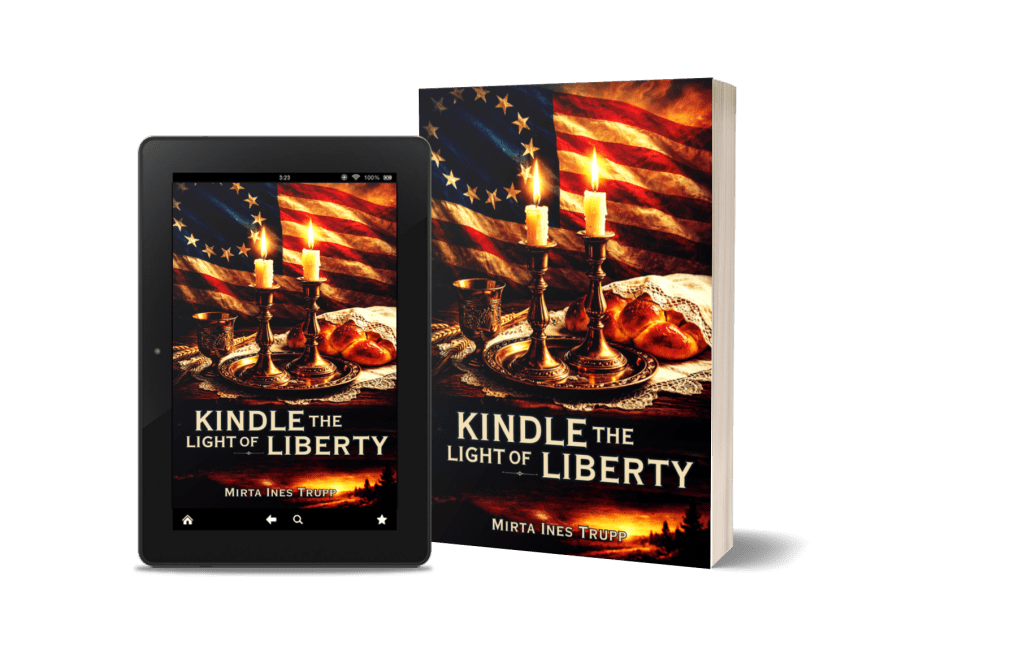
I am thrilled to share a first look at my new novel, Kindle the Light of Liberty, arriving on July 4, 2026! As we approach the 250th anniversary of this nation’s Independence, I wanted to write a tribute to the diverse, complex voices of the Revolutionary period—especially the Jewish colonists who fought for a home in the new Republic.
While my characters, Rose Wachsman and Nathan Hirsch, are definitely influenced by the sharp, social wit of Jane Austen, this story isn’t just about parlors and assemblies; it’s about the hidden sparks of rebellion carried by those whom history often overlooks.
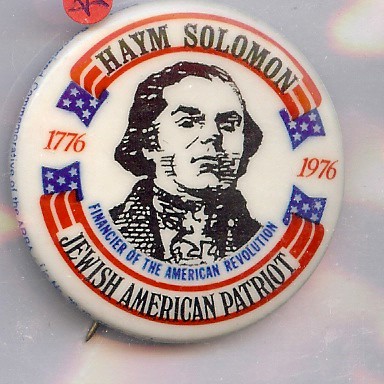
Remarkable figures navigated quiet alliances and treacherous loyalties before and after 1776. People such as: Frances Sheftall, Mordecai Sheftall, Haym Solomon, Issac Franks, The Gratz Family, Abigail Minis, Gerhom Mendes Seixas, Jonas Phillips, Moses Michael Hayes, Solomon Bush, and many more! We often focus on the muskets and battles, but liberty was also won in the shadows by men and women of profound faith and courage.
I’ve called this an American Revolution Love Story. I suppose you can interpret that in different ways. There is a familiar Pride and Prejudice trope, certainly, but as Jane Austen wrote, “there are as many forms of love as there are moments in time.” I can think of a few: Love of Country. Love of Heritage. Love of Liberty.
It is such an honor to celebrate these unsung patriots as we prepare for this massive milestone in our nation’s history! Please look for the book on Amazon this July!
They had no voice. They held no power. Yet they helped decide the fate of a nation.
In the bustling streets of Philadelphia, Rose Wachsman has no time for the rigid expectations of her community—and even less for the infuriatingly reserved Nathan Hirsch.
She is a woman of the hearth, sharp-witted and fiercely loyal to the cause of liberty; he is a man of business and tradition, seemingly more concerned with ledgers than the fires of revolution.
But as the war moves from a tradesman’s chandlery to the parlors of the elite, Rose and Nathan find themselves forced into a dangerous game of intelligence and alliance. In a world that would rather forget their names, they must overcome their own prejudices to discover that their greatest adversary might be their only hope.
Jane Austen’s work encompasses a worldwide audience. Her writing has touched us, inspired us and has undoubtedly changed us. A simple search on social media will illustrate the scope and magnitude of her reach. Can you imagine taking tea with Jane? Who wouldn’t want to spend an hour with this remarkable—influential—woman, chatting about anything and everything? Alas, I don’t possess a magic wand to whisk us back in time. Instead, this is what I propose…
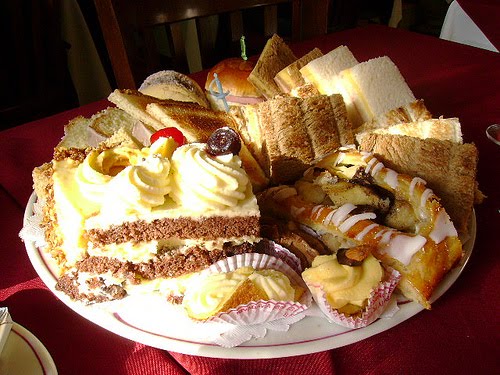
The tea things are set out. Tea for two, to be exact. I’m the hostess, so I’ll pour. I hope I’m equal to the task.
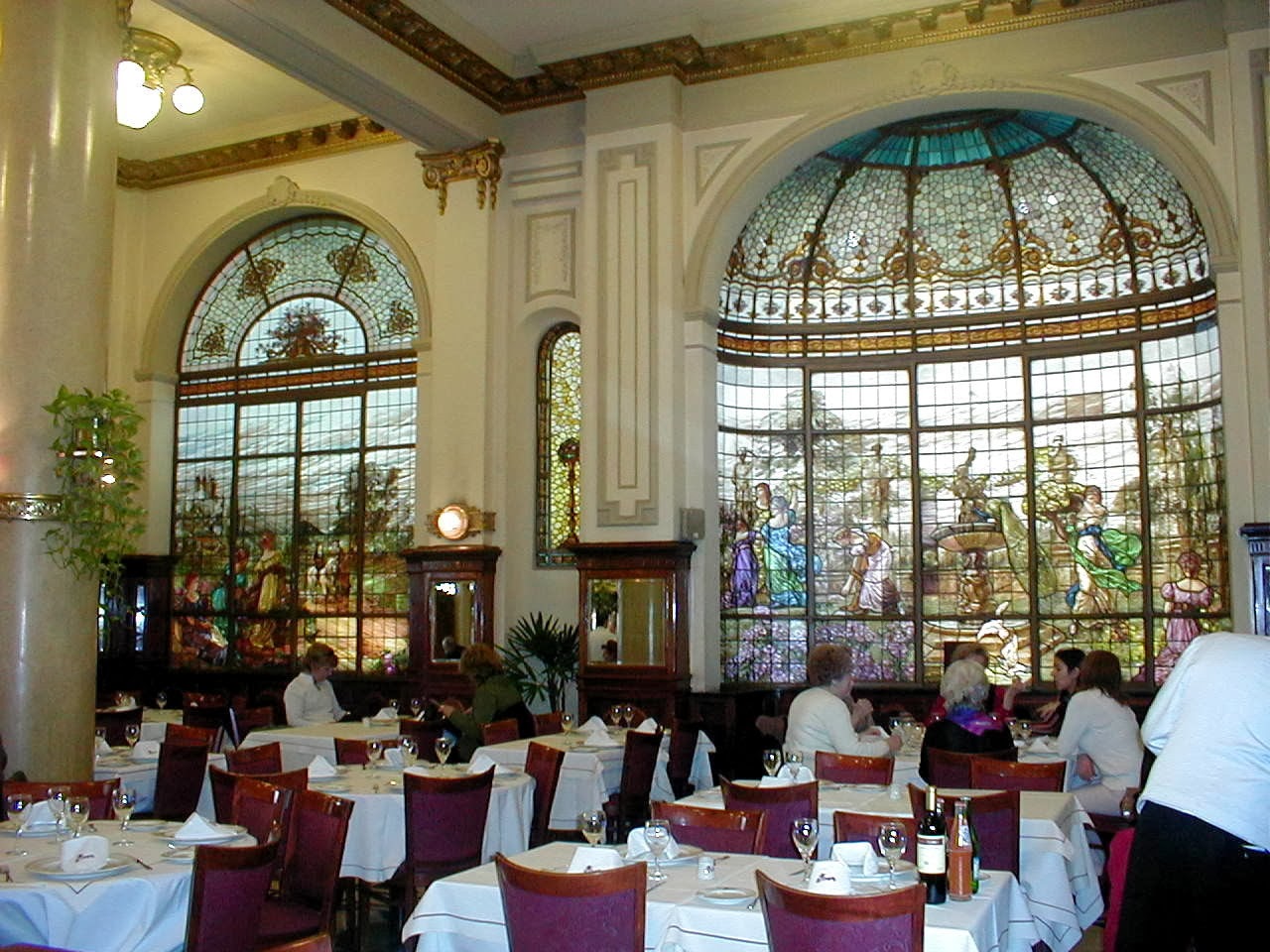
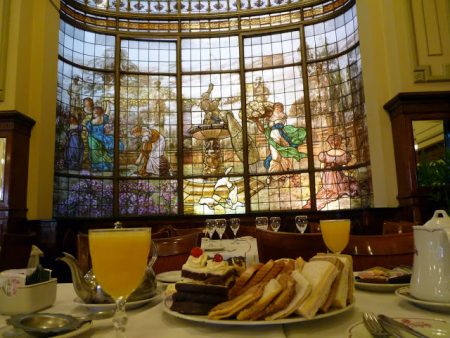
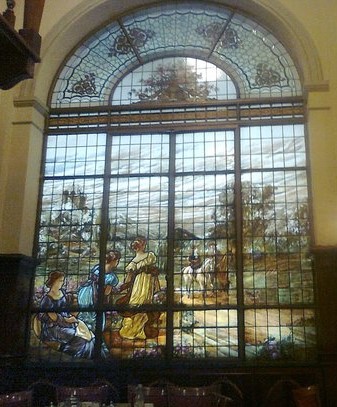
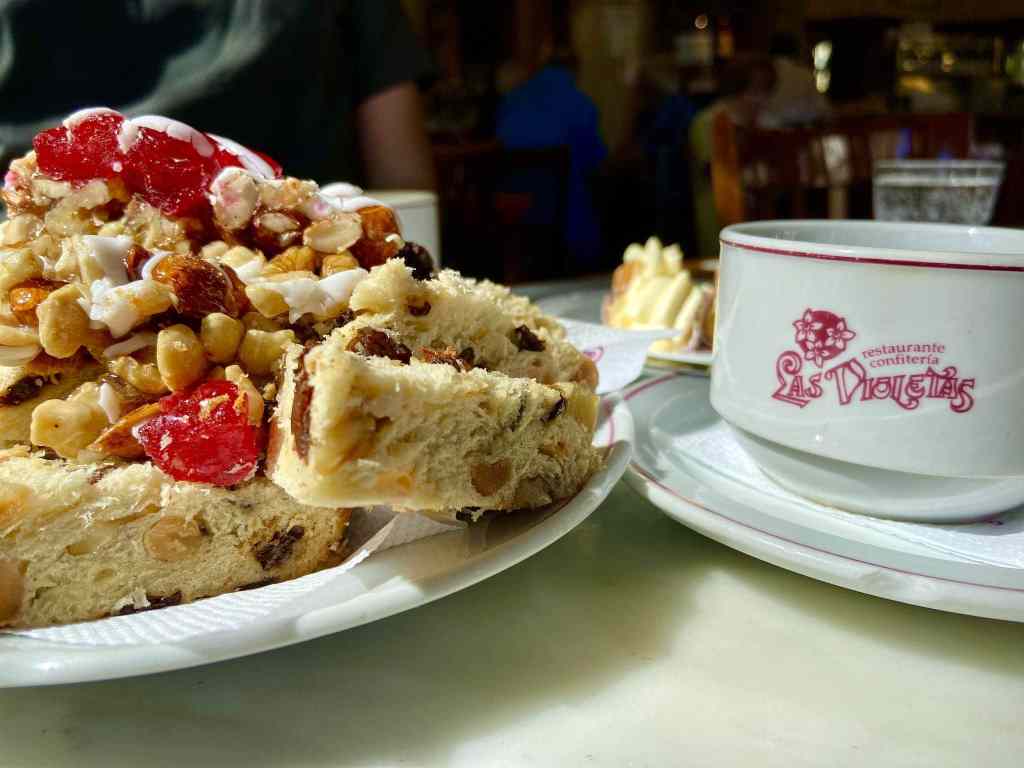
I may not be able to invite Miss Austen, but I do have the pleasure of welcoming the president of Jane Austen Argentina, Miss Yerimen Iglesias. And since this is my dream world, I’m going to pretend that we’re enjoying afternoon tea in the famous confiteriaLas Violetas in Buenos Aires.
If you’d like to read Yerimen’s original text in Spanish, please scroll down the page.
Yerimen, I am delighted that you could meet with us today. I’m sure we all want to know more about Jane Austen Argentina! Tell us a little about your group. How was it formed? Do you all reside in Buenos Aires?
Thank you for inviting me, Mirta! The group was originally formed in 2013 on Facebook; and soon after, we created a webpage. Later, several social networks were added so that we could connect with our many followers. That same year—thanks to the Austenitas group from Spain— I was able to meet other young women who also read Jane Austen.
By the end of 2013, we had our first in -person meeting. But we are not only from Buenos Aires. There are participants from other provinces. For example, in Tucumán, there is a member of JA Argentina who is starting a group that will hold events in the Argentine Northwest.
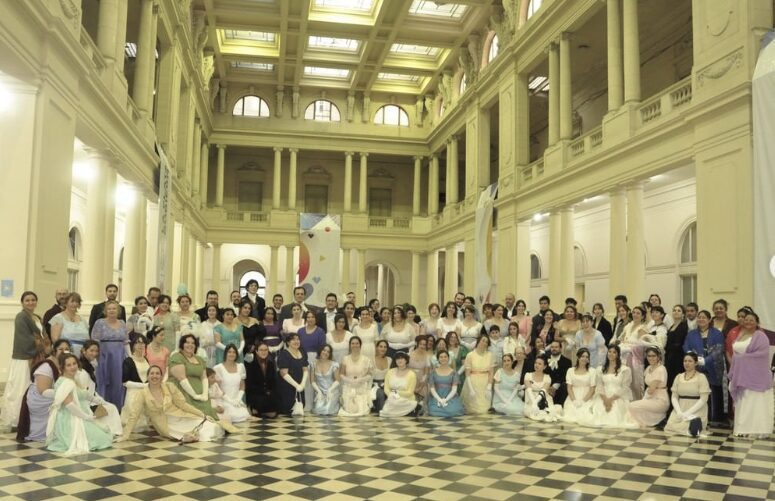
I am very impressed! And not a little jealous! The enthusiasm and devotion is quite evident. Just recently, your group held a ball—The Netherfield Ball, to be exact. By all accounts, it was a great achievement! Congratulations to all the ladies and gentlemen who organized and participated in the event. It must have been quite an undertaking. How did the idea of holding such a grand event come about?
We have always been fascinated by the great balls and historical re-enactments of the Regency era that are usually performed in Europe or in the United States. As we were not able to travel, we decided to organize our own dance in our city, La Plata. We had previously held another dance in 2015, but with fewer attendees.
Yerimen, I have seen countless pictures of your many and varied events about town. Book club meetings, dance tutorials, picnics, strolls throughout the park…How do people react when they see you out in public? I imagine the group draws a lot of attention.
Yes! People are struck by it. There are even people who can’t understand why we gather in historical clothing to honor a writer who passed away so long ago. The important thing is to do what we like, and in case of receiving unpleasant comments, we always ignore it. These comments lose importance compared to the happiness that our activities bring us.
Brava! I applaud that manner of thinking—that desire to fulfill your dreams. No doubt, Jane Austen would have approved. As an author myself, I was fascinated to learn about Mariquita Sánchez de Thompson, another lady with these same qualities. Her story, and that of José de San Martin’s friendship with James Duff, the Earl of Fife, inspired me to write a novel that couples the viceroyalty era with Persuasion.
My own family’s history of immigration, along with my love for Jane Austen, explains why I wroteCelestial Persuasion; but tell us, how did you come to be interested in the regency era of England and the novels of our beloved Jane?
I have always been interested in stories from 19th century England, but in the case of Jane Austen, I am also moved by the simple fact of reading how the characters live on a daily basis, and also connecting with the characters who, despite living in a totally different era, I can feel some identification.
On the other hand, historical fashion is one of the reasons why our literary group is so influenced by historical re-enactment. I love researching the online archives of museums around the world that show us much more than what we see in the costumes of movies set in the Regency era and the rest of the 19th century. Learning about everyday life and costumes helps to understand many details that appear in Jane Austen’s novels.
The colonial era of Argentina—with the tertulias, gentlemen in uniform, and elegant ladies, dressed in the style of Empress Joséphine—was a period of romance and passion. But, it was also a period of great courage and rebellion. While England fought against Napoleon, the people of the viceroyalty fought for their independence. Oh! The stories Jane could have written about those times!
Imagine for a moment that you are having tea in Mariquita Sanchez de Thompson’s drawing room. Seated to your right is Miss Remedios de Escalada, the future First Lady. Here is my final question: What are the three of you talking about?
As you know, Mirta, the beginnings of Argentina’s independence was very hard. The young government did not have enough money to support the armies fighting the Spanish. In these tertulias, or gatherings, I imagine that we ladies are probably talking about the political situation in the country, the war, or the anguish we would feel if our fiancés and husbands do not return. But we also discuss how we could help the armies.
In 1812, fourteen Patrician ladies (Mariquita and Remedios were among them) decided to buy thirteen rifles which were donated to the armies of the young nation, together with two ounces of gold. The name of one of the ladies was engraved on each rifle along with the inscription, “I armed this brave man who assured his glory and our freedom.” In other cities of the viceroyalty, other groups of women also collaborated by sending money, provisions, or making flags and uniforms.
It never ceases to amaze me what a group of determined ladies can accomplish! Jane Austen was a woman of information and strong opinions. Today, I believe she would be known as an “influencer”—much as Mariquita Sanchez was in her time…and much like you! Jane would have been delighted to have taken tea with these ladies of the viceroyalty, as I have enjoyed this time with you.
Thank you, Yerimen, for shedding light on these interesting subjects. Let me, again, offer my congratulations on your Netherfield Ball. You and your friends look like you’ve come straight out of an Austen novel.
Please send my regards to the members of Jane Austen Argentina. One more thing before I take my leave: How do people get in touch with you for more information?
Thank you, Mirta. It was my pleasure to attend this lovely tea party! I will leave you with a few of our social media links:
Yerimen, encantada de recibirte esta tarde, junto con la audiencia de Austen Authors. ¡Queremos saber más sobre Jane Austen Argentina! Contanos un poco sobre tu grupo. ¿Cómo se formó? ¿Todos residen en Buenos Aires?
Gracias Mirta por tu invitacion. Se formó en el año 2013 como grupo en facebook y poco después hubo página, Luego se fueron agregando varias redes sociales para conectar mucho mas con nuestros seguidores. Gracias a Austenitas de España pude conocer ese mismo año a chicas que también leían a Jane por lo que a finales del 2013 tuvimos la primera reunión en persona. No somos únicamente de Buenos Aires, también hay de otras provincias, por ejemplo en Tucumán hay una integrante de JA Argentina que está iniciando un grupo para realizar también eventos en la zona del Noroeste Argentino.
¡Estoy maravillada! ¡Y un poquito celosa! El entusiasmo y la devoción es evidente. Recientemente, tu grupo promovio una danza de la epoca—para aclarar: The Netherfield Ball. Según todos los informes, ¡fue un gran logro! Felicitaciones a todas las damas y los caballeros que organizaron y participaron en el evento. Debe haber sido toda un projecto. ¿Cómo surgió la idea de celebrar un evento de esta magnitud?
Siempre nos fascinaron los grandes bailes y recreaciones históricas de la época de regencia que se suelen realizar en Europa o Estados Unidos. Pero no teníamos posibilidad de viajar, así que decidimos realizar nuestro propio baile, en nuestra ciudad, La Plata. Previamente habíamos realizado otro baile en 2015, pero con menos asistentes.
Yerimen, he visto innumerables fotos de los variados eventos por toda la ciudad. Reuniones de lectura, tutoriales de baile, picnics, paseos por el parque… ¿Cómo reacciona la gente cuando los ven en público? Me imagino que llaman mucho la atención.
Si! A la gente le llama la atención e incluso hay gente que no logra entender porqué nos reunimos con ropa histórica a homenajear a una escritora que falleció hace tanto tiempo. Lo importante es hacer lo que nos gusta y en caso de recibir comentarios desagradables siempre lo ignoramos ya que pierde importancia frente a la felicidad que nos da realizar nuestras actividades.
¡Brava! Aplaudo esa forma de pensar, ese deseo de cumplir tus sueños. Sin duda, Jane Austen lo hubiese aprobado. Como autora, me fascinó conocer a Mariquita Sánchez de Thompson, otra mujer con estas mismas cualidades. Su historia, y la de la amistad de José de San Martín con James Duff, el conde de Fife, me inspiró a escribir una novela que combina la época del virreinato con Persuasion. La historia de inmigración de mi propia familia, junto con mi amor por Jane Austen, explica por qué escribí Celestial Persuasion; pero contame, ¿cómo llegaste a interesarte por la época de la regencia de Inglaterra y las novelas de nuestra querida Jane?
Siempre me he sentido interesada por las historias de la época del siglo XIX en Inglaterra, pero en el caso de Jane Austen también me conmueve el simple hecho de leer cómo viven cotidianamente los personajes, y también conectar con los personajes que, a pesar de tantos años de diferencia y vivir en una era totalmente diferentes, podemos sentir algo de identificación.
Por otro lado, la moda histórica es una de las razones por la cual nuestro grupo literario tiene tanta influencia de la recreación histórica. Amo investigar en los archivos online de museos del mundo que nos muestran mucho más de lo que vemos en los vestuarios de las películas ambientadas en la época de regencia y en el resto del siglo XIX. Aprender sobre la cotidianeidad y el vestuario ayuda a entender muchísimos detalles que aparecen en las novelas de Jane Austen.
La época colonial de Argentina—con las tertulias, caballeros en uniforme, y damas elegantes, vestidas en el estilo de la emperatriz Joséphine—fue un periodo de romance y pasión. Pero, también fue un periodo de mucho valor y rebeldía. Mientras que Inglaterra batallo en contra de Napoleón, el pueblo del virreinato lucho por su independencia. ¡Que historias pudo haber escrito Jane del pueblo criollo! Imagínate, por un momento, que estás tomando el té en el salón de los Thompsons. Sentada a su derecha está la señorita Remedios de Escalada, la futura Primera Dama. Aquí está mi pregunta final: ¿De qué hablan?
Mirta, como sabes, los comienzos de la independencia argentina fueron muy duros. El joven gobierno no tenía suficiente dinero para mantener a los ejércitos que combatían contra los españoles. Me imagino, como en todas las tertulias, que probablemente estamos hablando de la situación política del país, de la guerra, o de la angustia que sentiríamos si nuestros prometidos y esposos no regresan. Pero también discutimos cómo podríamos ayudar a los ejércitos.
Por eso, en 1812, 14 Damas Patricias (incluyendo Mariquita y Remedios de Escalada) decidieron comprar 13 fusiles que donaron a los ejércitos de la joven nación, junto a dos onzas de oro. En cada fusil se grabó el nombre de una de las damas junto a la inscripción “yo armé el brazo de este valiente que aseguró su gloria y nuestra libertad”. En otras ciudades del virreinato, otros grupos de mujeres también colaboraron enviando dinero, provisiones o confeccionando banderas y uniformes.
¡Nunca deja de sorprenderme lo que un grupo de mujeres decididas puede lograr! Jane Austen era una mujer de información y opiniones fuertes. Hoy, creo que sería conocida como una “influencer” al igual que Mariquita Sánchez lo fue en su tiempo… y muy parecida a ti! Jane hubiese estado encantada de haber tomado el té con las damas del virreinato, al igual que yo disfrute esta oportunidad de conocerte. Gracias, Yerimen, por compartir estos detalles y informacion tan interesantes. Permítime, una vez más, felicitarlos por su Netherfield Ball. ¡Parecen haber salido directamente de una novela de Austen!
Por favor, envía mis saludos a los miembros de Jane Austen Argentina. Antes de despedirme, una pregunta mas: ¿Cómo podemos contactarnos con el grupo para obtener más información?
Gracias, Mirta ¡Fue un placer asistir a esta encantadora fiesta del té! Aqui les dejo algunos de nuestros enlaces a redes sociales…
As I said, I think Jane would be a social media influencer today. Mariquita Sanchez certainly was in Argentina. Can you name another lady (Jane’s contemporary, but from your country, culture, or heritage) that could be nominated for this title? Please do share your thoughts.
Here in the United States of America, we will soon celebrate the 246th anniversary of our independence. And as a grateful immigrant, I will soon be celebrating my 60th year in this great nation. The blessings are boundless; a deep sense of pride and patriotism continues to fill my heart.
I come from a long line of immigrants. I wish I could trace my lineage with some level of accuracy beyond that which I know: Russian Jews that settled in Argentina thanks to Baron Hirsch and the Jewish Colonization Association. My family later immigrated to the U.S. and I’ve spent a life time explaining, to all who ask, why there are blue-eyed Jews that speak Spanish. I try to explain the diaspora. I try to explain the complex history of our immigration. I try to explain that there have been Jews in South America since 1492… “when Columbus sailed the ocean blue.” Quite often, this fact is met with shock. Quite often, this fact only brings up the next question:
How long have Jews been in the good ol’ USA?
As a history buff and a great fan of historical fiction, these questions—for the most part—please me. It is a subject near and dear to my heart! But it is for that very reason, that these questions are also bittersweet. Most people have some understanding, or knowledge, of the massive wave of immigration in the early 20th century. Stories of Ellis Island have been made popular and encompass the history of many peoples that came to these shores. But the story of Jewish immigration doesn’t begin with familiar scenes from “Fiddler on the Roof” or “Yentl.” Here’s a fact for you: Jews have been in both North and South America since the fifteenth century. They found their way here escaping the Spanish Inquisition; however, there is documented proof of observant Jews in colonial America. In fact, it is estimated that there were approximately 2,000 Jews living here and at least seven Sephardic (Iberian Peninsula Jews) congregations. Congregation Shearith Israel was founded in New York City in 1655. Rhode Island’s Yeshuat Israel in Newport began 1658. Congregation Mickve Israel served the people of Savannah, Georgia as early as 1733.
These Jews were from all across Europe. Their list of reasons for leaving hearth and home were the very same that other immigrants could enumerate. They sought freedom. They sought prosperity. They sought peace of mind. And when the colonies united against England, these Jewish immigrants answered the call in some form or fashion.
Haym Salomon rendered immeasurable service to the Revolution by providing financial support in desperate times. His service to this nation should be heralded by all. Aaron Lopez of Newport and Isaac Moses of Philadelphia also had the means to assist the cause. Risking their source of revenue, as well as their lives, these merchants sailed their own ships past British blockades and brought clothing, guns, and food to deprived soldiers. Many other Jewish patriots took up arms. In South Carolina, for example, one troop had so many Jewish soldiers, they were dubbed the “Jews’ Company.” In 1776, Francis Salvador, the first Jewish State Legislator of South Carolina, was killed fighting against Loyalists and their Cherokee allies. In 1777, Lieutenant Solomon Bush discovered a spy in George Washington’s headquarters. The lieutenant was taken prisoner by the British, although he was later released.
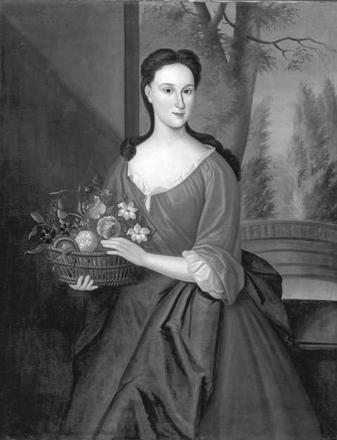
Needless to say, women also supported the cause. Abigail Minis was a prominent businesswoman in Georgia during the American Revolutionary War. Left a widow at a young age, she took charge of the family finances. A patriot, Minis also put her hospitality and resources to good use— earning fame and admiration amongst the troops. Legend has it that Mrs. Minis met George Washington in 1791 when he visited her tavern in Savannah. Unfortunately, that can’t be confirmed. Her daughter, Leah, however did meet with the president years later. Mrs. Minis was 91 years of age at the time. She was surely kvelling at that honor, as any mother would!
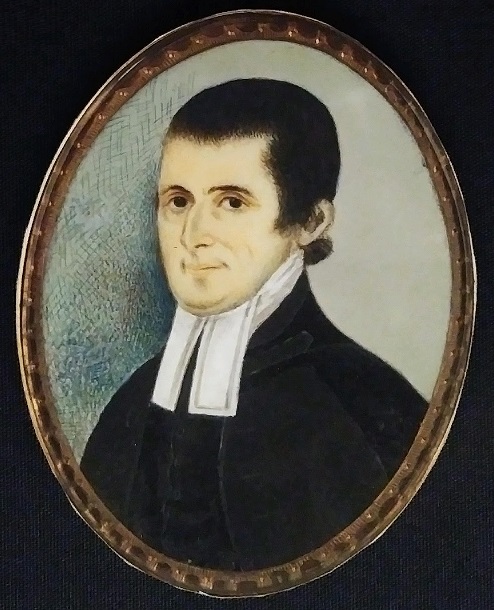
The Mill Street synagogue was a central anchor for the Jewish community in the city of New York since its founding in 1730. In 1766, Gershom Mendes Seixas became the hazzan, or cantor, of the congregation. Although he was not an ordained rabbi, he lead the Jewish community and encouraged their integration into their new society. He was an ardent patriot and supported the cause; and when the British captured New York, Mendes Seixas led the congregation to its temporary home in Philadelphia.
In the Post-Revolutionary period, Mendes Seixas strived to undergird the patriotism felt by the Jewish community. To reinforce their significance in the American tapestry, he wrote President Washington and asked for a statement of recognition—and reassurance—from the new government.
Deprived as we heretofore have been of the invaluable rights of free Citizens, we now (with a deep sense of gratitude to the Almighty disposer of all events) behold a Government, erected by the Majesty of the People—a Government, which to bigotry gives no sanction, to persecution no assistance—but generously affording to All liberty of conscience, and immunities of Citizenship: deeming every one, of whatever Nation, tongue, or language, equal parts of the great governmental Machine…
In probably one of the most important presidential letters in American history, Washington wrote back.
It is now no more that toleration is spoken of as if it were the indulgence of one class of people that another enjoyed the exercise of their inherent natural rights, for, happily, the Government of the United States, which gives to bigotry no sanction, to persecution no assistance, requires only that they who live under its protection should demean themselves as good citizens in giving it on all occasions their effectual support. . .
May the children of the stock of Abraham who dwell in this land continue to merit and enjoy the good will of the other inhabitants—while everyone shall sit in safety under his own vine and fig tree and there shall be none to make him afraid.
May the father of all mercies scatter light, and not darkness, upon our paths, and make us all in our several vocations useful here, and in His own due time and way everlastingly happy...”
This message highlights an extraordinary moment in history and for American Jewry. Here, in this great country, we were given freedom of speech, freedom of religion, freedom of enterprise. And as an immigrant, I know that freedom is rare and fragile. On this Shabbat, and on this anniversary of independence, I simply wanted to acknowledge that fact and say thank you. God Bless America!
God bless America, land that I love. Stand beside her and guide her, through the night with a light from above. From the mountains to the prairies to the oceans white with foam, God bless America, my home sweet home, God bless America, my home sweet home.
גאָט בּענטש אַמעריקע, לאַנד װאָס איך ליבּ, שטײזע בּײַ איר, מַדְרִיךְ זײַ איר איבּראל לײַכט א שטראל אונז צוליבּ פון די בּערג בּיז צו די פּרײריעס בּיז די יאמן װײַס מיט שױם גאָט בּענטש אַמעריקע, מײַן זיסע הײם גאָט בּענטש אַמעריקע, מײַן זיסע הײם
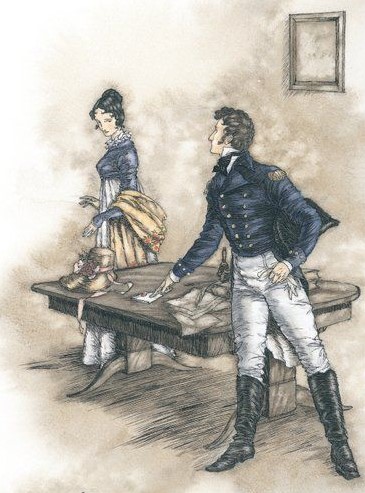
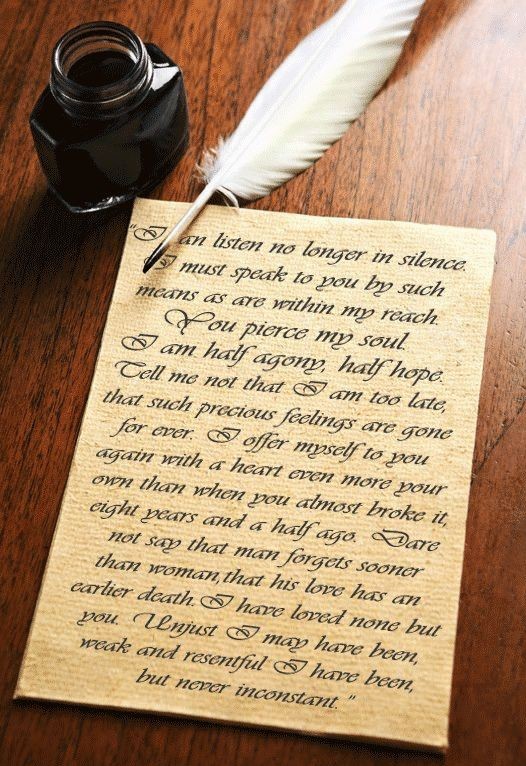
For those of us who have read Austen’s Persuasion, there can be no doubt. Captain Wentworth’s letter to Miss Anne Elliot is exquisite. It is a pivotal moment which brings tears to our eyes and returns hope to our bruised hearts.
But have you ever given any thought to what might have occurred before the good captain returned to England? The man was distraught! He was possessed by bitterness, regret, and a profound sense of grief. Did he pour out his heart? Did he attempt to contact his one true love and see if he could secure her trust and affections? No. No, he did not. The brave and battle-born sea captain dug in his heals and refused to give quarter! When he finally returns to England, he shows Anne Elliot no mercy and our hearts cry on her behalf. It’s not until the very end of the story that our injured souls truly begin to heal, and that is principally due —in my humble opinion—to Austen’s finest work: Captain Wentworth’s letter.
But what brought on the change in his behavior?
In “Celestial Persuasion,” Miss Abigail Isaacs and Captain Wentworth are thrown into a relationship that would have been considered quite rare during the Regency era. In fact, they become correspondents—pen pals, if you will, thanks to Jonathan Isaacs’ plotting and planning.
Abigail undergoes a series of trials; and as we usually discover in novels such as these, our protagonist finds her way through some dark and troubling times. Along the way, she shares her thoughts and experiences with her new friend. In her final letter, Abigail urges the captain home to England and back to his Anne. It remains to be seen if he was easily persuaded…
As we turn the corner on another winter here in the Northern Hemisphere, and look forward to the next season, I can’t help thinking of my native country. November in Buenos Aires is a sight to behold! While Spring officially starts there in September, the Jacarandás are in full bloom by the time we—here in America, anyway—have taken down the sukkah and have turned our thoughts to all things turkey.
The majestic Jacarandá is native to South America, but it was late in the 19th century when city planners officially introduced the foliage to Buenos Aires. The trees were planted in the city’s Bosques de Palermo in 1875, specifically placed in the Plaza 3 de Febrero to commemorate two famous victories, including the Battle of San Lorenzo (you can read about that particular event in my novel).
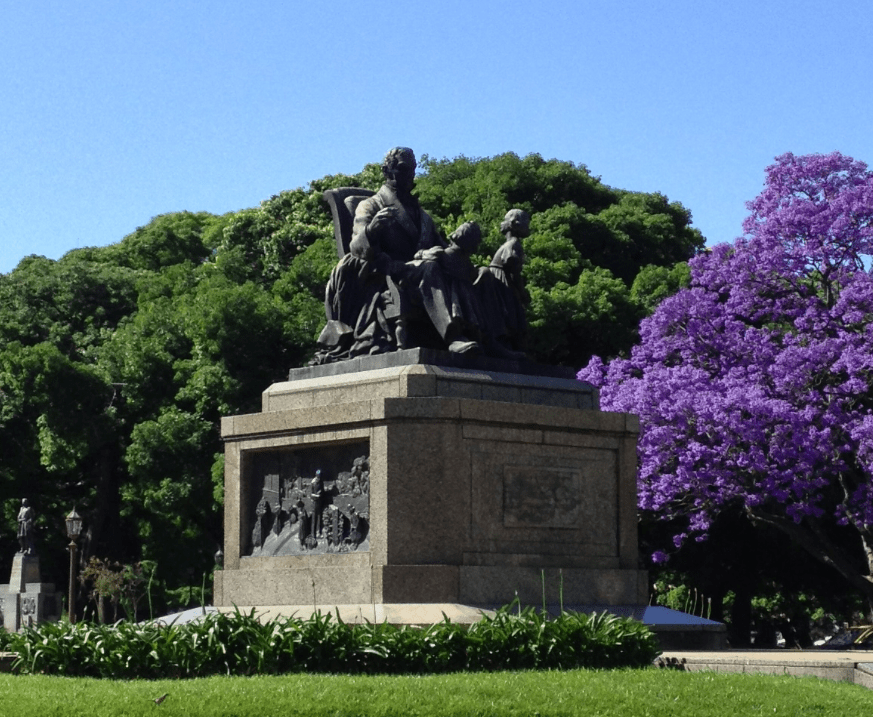
Plaza de San Martin
They can still be found there and throughout the capital, especially in and around Plaza de Mayo, Avenida Roque Saenz Peña and Plaza San Martin.
The English Tower in Buenos Aires
Legend has it that Jacarandás are associated with an Amazonian moon goddess. She symbolizes wisdom and ethics and the blossoms represent good fortune and rebirth. It is no wonder that the trees have become synonymous with the vibrant city of Buenos Aires.
My novel takes place in the Regency era of the Viceroyalty of Rio de la Plata, nearly 65 years prior to the dedication of the famous plaza in Palermo. In Celestial Persuasion, Miss Abigail Isaacs has her first glimpse of the beloved foliage as she approaches her new home in the province of Santa Fe.
A hedgerow of trees, striking in their billowing lilac color, marked the borders of the entire property.”
Of course, once Abigail arrives, she is not only drawn to the spectacular foliage. Curiosity wins out and she is compelled to ask…
As she followed Tati to the granary, she could not help but take notice of a particular fragrance. It was slightly pungent, a sweet scent that had a touch of earthiness. She looked about their surroundings, trying to isolate the origin of the distinct aroma.
“It is the jacarandá, madam.”
“Pardon me?”
“That musky fragrance—it comes from the jacarandá,” offered Tati, pointing to the lilac blossoms.
“I noticed them when we arrived,” replied Abigail. “In truth, one could hardly not take notice. They are quite striking. I cannot imagine what they must look like in full bloom. But pray forgive me, for their name is quite unfamiliar.”
“It is not a Spanish word, it is Guarani—as am I. And you are most astute, madam. The summer foliage is nothing to the blossoms in the spring. Their color changes depending on the sunlight. One moment they appear light blue and the next, they are like a vibrant amethyst.”
“You are a native of this land, then?”
“Yes, madam, but my ancestors were from a place farther north. My people settled here when my grandfather was still a child. I call this place home.” She paused as they came upon the granary. Taking hold of the ladder, she peered upward before turning to face her mistress.
“Madam, I am unable to assist you in this effort. Are you certain you can manage?”
Abigail laughed. “Dear Tati! My brother taught me how to climb trees when I was a young girl. And if you had seen me on the ship as we crossed the great Atlantic, you would not doubt me now! Lead the way, my girl!”
The women made quick work of ascending the ladder; and when Abigail crossed the threshold, she was overcome by the intoxicating scent of wheat that had been recently harvested and stored away. But they had not reached their destination yet. Tati led the way, climbing not one, but two other levels. Abigail had never doubted that her father had been a visionary. That he would have dreamed of living in such a place, surpassed her every imagining. The transformation of the granary into an astronomer’s observatory was incredible, to be sure. The vista was a luxury that surely even Caroline Herschel had not been afforded.
“I shall see every star shining in the night’s sky tonight!” Abigail exclaimed.
“You are truly arandu,” whispered Tati.
“Another word of the Guarani?”
The young woman nodded. “It means one who understands the message of the stars.”
Abigail smiled. “I fear I do not qualify, not yet at any rate. I am seeking to understand, but I am far from anything that would warrant such an accolade. Tell me, for I am curious to know more of your language, what does Tati signify?”
“My true name is Yasitata. My mother spent more than two days in travail before giving birth to me. It was only after she pleaded to the gods and made solemn oaths that I was finally delivered. There was a bright moon that night, causing the stars to shine down upon us. My name pays homage to Yasy, the moon goddess.”
“What a compelling tale. Your mother was a brave woman. No doubt you are as well.” Abigail paused and gave her next words some thought. “I feel that calling you Tati somehow diminishes your noble heritage.”
“Not at all, madam. It is a sobre nombre, a name given in the friendliest of terms. My mother is known as Estella, though her true name is Mbyja, which means “star.” We are quite content to be known by these mundane names, for it does not change how we are known amongst our wise men or our gods.”
They were interrupted by the sounds of the approaching men. The telescope, such as it was, had been mounted on a cart. They would bring up the various parts and assemble the instrument under Abigail’s watchful eye. She recognized the need for furnishings too late. She began creating a list in her mind of everything she would require in order to establish herself properly in her new laboratory. A long table, and a chair or two, would do to start. Naturally, she would require her books and writing materials. It was becoming quite an undertaking, but it would be well worth the effort in the end. Another thought came to her as the men scrambled down the ladders for another load.
“Tati, your people seem to have quite a relationship with the heavenly bodies. It would please me to learn your people’s stories and compare them with my own.”
“Do the English have different stories from those of the Spaniards?”
“I fear much of their wisdom, which stems from peoples of various nations, has been lost over the course of the years. Perhaps lost is not quite accurate. It has diminished or, at the very least, it has been transformed. And Tati, although I was born in England, I am a Jew. My people’s story varies greatly from my Anglican brothers and sisters. Even our calendars are different, we mark the passage of time based on the cycles of the moon, not of the sun. Tomorrow night, we will celebrate the appearance of the new moon. The celebration of Rosh Chodesh ushers in a new month.”
“Then we have that in common, madam, though we call it Yasy Pyajhu. The concept of a calendar is new to my people, but we have always watched the heavens to understand the passage of time. Our wisemen know after twelve full moons have come and gone, the same climate cycle will return. In the month called June, Eichu appears on the eastern horizon as a great cluster of stars, and my people know that the rains will return. We have a grand celebration known as Arete Guazu in preparation for the planting season.”
“A great cluster of stars? In June, you say?” Abigail’s enthusiasm would not be denied. “But that must be what we call Pleiades. What more? Pray tell me more!”
Tati shrugged, uncertain what exactly to say. It was impossible to relate an entire culture with a few, simple anecdotes. Still, she wanted to please the new mistress who took notice of her and told her the names of the moon phases and the story of the Mborevi Rapee. “My ancestors tell the tale of a nocturnal animal, the tapir, who treads the same path between its den and its food source night after night. The tapir tramples on dry leaves as he treks back and forth. We, here on earth, can see his path as the light of the moon illuminates his tracks. You will surely see The Way of the Tapir this very night; and I promise, you will not require your tools to witness the sight.”
Abigail was astonished. “I thank you for sharing your ancestral wisdom, Tati. The Way of the Tapir must be what we call The Milky Way. And you are correct. I will not need my instruments, for I have witnessed the phenomenon with my own eyes. I have seen it on the ship that brought me here and I have seen it at home in Exeter. And I will gladly observe it from this very spot tonight. One never can tire of seeing God’s magnificent creation.”
“What magic is this? You have seen The Way of the Tapir from your family’s home?”
“It is not magic. It is the same sky, though I was in the north and we are now in the Southern Hemisphere. Our position on earth will change what we can see above, depending on the season and other variables…” Abigail paused and contemplated her words carefully. “Tati, it is not magic. I will teach you, if you wish to learn.”
I hope you have enjoyed this excerpt and the images I’ve shared. Stunning, aren’t they? I never tire of contemplating the majesty and mystery of nature. But did you know, that there wasn’t a word for “nature” in biblical Hebrew? Not being a theologian, I never gave it much thought. However, there has been an ongoing debate on the subject! Apparently, two medieval Jewish luminaries, Rabbi Yehudah ha-Levi and Maimonides, chimed in on the concept of a natural order and the word teva טבע was adopted into the Hebrew lexicon.
This Chabad site provided some interesting information; and so, I read on. Maimonides said, “G‑d is the eternal rock.” Another interpretation of this quote is “G‑d is the form of the world.” The idea was further developed by Rabbi Schneur Zalman of Liadi who taught that every creature, even a rock, has a soul. The soul of a rock, he explained, is the divine spark that brought it into existence in the first place. In retrospect, it appears, that we did have a Hebrew word for nature all along. It is a name of G‑d.
The post goes on to discuss the matter at length, but what are your thoughts on the subject? Let me know in the comments below.
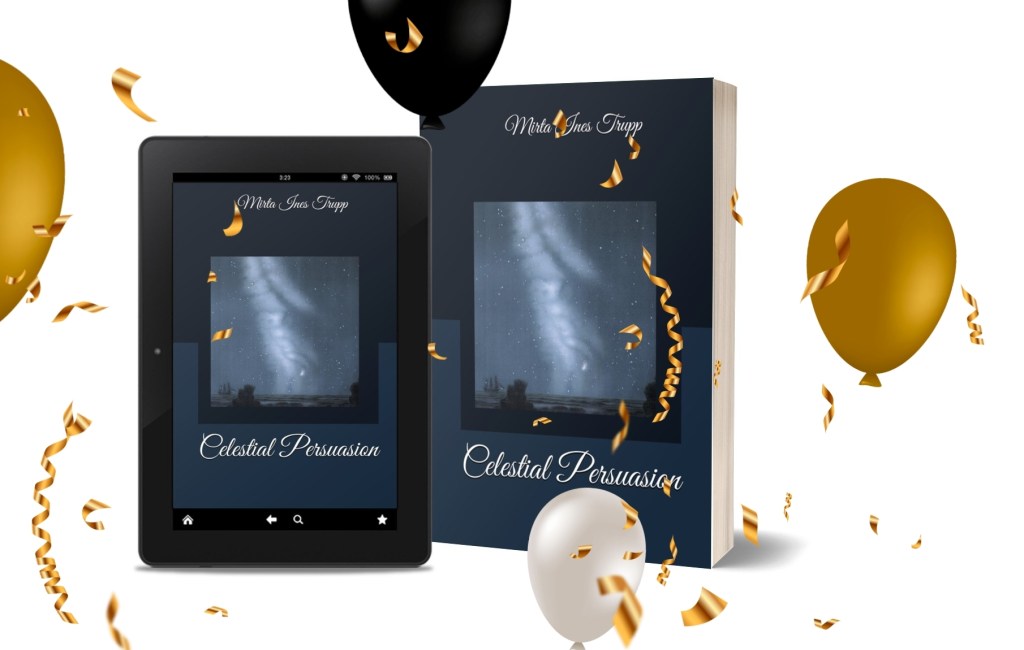
Celestial Persuasion is now available for pre-order HERE
Be the first in line to get your copy!
Purchase the eBook today and receive the content on 6/30/2021.
I’m so excited! I know you are excited, because I have been receiving lovely messages from so many readers. Help me spread the word. Preorder your eBook today and let Amazon do its magic!
A few weeks ago, I wrote about my Work in Progress: Celestial Persuasion. You can read about it here.
I’m getting closer to Publishing Day and I can’t wait to share it with you. In the mean time, please take a minute to watch this short trailer. The painting of Mariquita Sanchez de Thompson was the inspiration for the entire project. Please enjoy!
Coming soon! Celestial Persuasion on Amazon.
Abigail Isaacs fears ever again falling under the power of love and dedicates her life to studying the heavens. However, upon her father’s demise she finds herself in reduced circumstances and must write to her brother, who has long been away at sea. When instead Captain Wentworth of the HMS Laconia sends a tragic reply, Abigail is asked to set aside her own ambitions and fulfill her brother’s dreams in the Viceroyalty of Río de la Plata.
In his relentless pursuit for justice, Lieutenant Raphael Gabay lends his sword to the Spanish American cause. But as he prepares to set sail with the others, he is entrusted with the care of a young woman. She is quite unlike anyone he has ever known, and Raphael wonders whether the brilliant astronomer will see beyond his frivolous façade and recognize his true nature.
Their destinies have been plotted beyond the celestial veil; their charts foretell of adventure. Can these two troubled souls be persuaded to heed the stars and find love—and their purpose—in this fledgling nation?
Today, I have the pleasure of introducing author, Claudia Hagadus Long as the next participant in the interview series. I do hope everyone has been enjoying these posts; they have surpassed anything I could have hoped for as a new blogger. By her own description, Claudia “is a weaver of words, catcher of dreams, and chronicler of the spaces between the lines in the history books: women’s stories, women’s dreams, her-story.” She is a grandmother of “two spectacular grandsons, mother of two marvelous kids, chocolate-loving lawyer-mediator, wife and cook.”
author, Claudia H. Long
Claudia is the author of several historical fictions, many of which reference the anusim, Jews living as Catholics in colonial Mexico. Though these works are far from being Austenesque, I am delighted to share this platform with another passionate author.
Host: Bienvenida Claudia! Welcome! I’m so glad that you were able to accept my invitation. Your bio is creative and fascinating. Please tell us more about your work and your current release.
Guest: Hi, Mirta! Thanks so much for having me! I’m excited to be on your blog. As you know, my newest book, Nine Tenths of the Law came out on April 23, 2020, from Kasva Press. It’s a mixed contemporary-historical novel, and my first venture outside of straight historical fiction. It combines pre-pandemic New York City and flashbacks to various times from 1939 to 1945. I was drawn to this era because my mother was a Holocaust survivor. She died in 2014, and the following year, on the first anniversary of her death, my father sat down with me and told me her stories. It was pretty earth-shaking. My mother had never talked much about her life during the War, and my sister and I had very different views of that time period and what she had suffered. When my father told me her stories, from his vantage point of having met her right after the War, my sister and I were stunned.
I decided to write the story of two sisters, Zara and Lilly, who discover, in contemporary New York City, a menorah that was stolen from their mother in 1939. That really happened. From there, the book departs into fiction, and they chase that menorah all over, up into New Hampshire, down into the East Village, while a modern-day thief leaves a trail of mayhem in his wake. It’s really the story of sisters, of memories and of love. And Chinese food. (What’s a Jewish tragedy without humor?)
Host: Your family’s history is compelling. I can readily understand what intrigued you about that time period. but this is not your usual focus. Correct?
Guest: My earlier books took place in Mexico in 1690-1750, and I have long been fascinated by the Crypto-Jews of Mexico. These were the secret Jews who lived after the Expulsion and Conversion in Spain and Portugal in 1492. Some converted “at the point of a sword” and kept the old religion in secret. I have three books that center on this era. I grew up in Mexico City and I am partly descended from Sephardic Jews, so I was naturally drawn to that history. I also had a mad girl-crush on Sor Juana Ines de la Cruz in college, so the poetry of the time-period was a natural fit! In Nine Tenths, the era was deeply inspired by my mother.
Host: I find that many people are unaware of what occurred during the Inquisition and Expulsion. I also think it’s a common error to believe that the death, torture and persecution was contained to the Iberian Peninsula; when in fact, countries such as my own native Argentina, Peru, Mexico, most of Latin America actually, were involved in some capacity. These stories must be told, and it is why I believe Jewish Historical Fiction is an important, stand-alone, genre. What do you say?
Guest: Well, we can’t always read about Tudor England, can we? Now Historical Fiction is much broader, but when I was a younger reader that was the only era anyone wrote about. When I first read Cara Black’s Murder in the Marais I was beyond excited. And then, The Coffee Trader and A Conspiracy of Paper by David Liss sent me into a tail-spin of delight. Here were Jewish characters who weren’t just “Jewish characters in other people’s books.” While it may or may not be its own genre, it is definitely a vital sub-genre and one that will provide much material for a very long time.
Host: I appreciate authors who weave accurate history throughout the storyline. While doing your research, did anything affect or move you? Did anything come as a surprise?
Guest: One of the best moments in research came when my first historical fiction book, Josefina’s Sin, was being line-edited. I had researched the book meticulously, using art, theatre and poetry as my sources for clothing and speech patterns. I was enthralled with every detail. I had checked every resource for period details. And I had Josefina sitting under a mango tree. Well. Yes, I’d checked, there was a mention of mangoes in 1730, this was 1690, so I thought I was ok. But I wasn’t! The editor informed me that mangoes weren’t introduced into Mexico until twenty years later, in1710. Luckily, papayas worked as well in the story!
On the other hand, I had someone write to me and quote Wikipedia, and tell me that what I had written didn’t happen. Historical fiction takes place in the interstices between known facts. True academic historians are always delving deeply into what’s known, to discover the details and revise accepted versions of things that border on myth. It’s not enough to say, This person was born here and died there, and so that’s all that happened. During that person’s lifetime she could have had a lover, lost a child, built a home, dreamed of travel, failed at business, longed for certainty…and no Wikipedia entry will be able to gainsay it. So research can give you what happened, but fiction will put it in context.
Host: I love that explanation! It is an accurate description of what we endeavor to do with our novels. It is a painstaking process, and for a newcomer—like me—it is rather daunting. How long have you been writing? When did you first consider yourself an author?
Guest: I’ve been writing for 35 years. I wrote a romance novel while my first child was an infant. It didn’t go anywhere, but I was enthralled with the process. I wrote mysteries for a while, and those never went anywhere either. Then I published my first mystery and the excitement of seeing my work in print was overwhelming, and I knew I was hooked! I then wrote five books under a pen name for a particular kind of publisher, and finally felt ready to tackle a “serious” novel. When Simon & Schuster bought Josefina’s Sin I felt I was really truly an author. But…that was my error. I was really, truly an author when I wrote that first romance novel 35 years ago. I just didn’t know it.
It’s a big mistake to consider publication by a “big 5” (now “big 4”) house to be the measure of merit. The Duel for Consuelo and Nine Tenths of the Law might be the best books I’ve ever written, and each had very different paths to publication. Consuelo and Chains of Silver are co-op published, The Harlot’s Pen is published by a large commercial Canadian publisher, and Nine Tenths of the Law is published by a boutique Israeli publisher (there doesn’t seem to be the emphasis on “big 4” companies outside the US.) If you’re writing, you’re a writer.
Host: Thirty-five years! Talk about experience! Tell me a little about your writing process, if you will. Are you a panster or a plotter? Do you begin with an outline, and know how the story ends from the get-go, or do you go with the flow and allow your characters to lead the way?
Guest: I’m a plotter, but that’s because I’m a lawyer. I don’t want to go into the project unprepared. But the funny thing is, once I start, the story and the characters rebel against my rigid outline (complete with multiple subparts!) and demand a life of their own!
Host: I am well acquainted with those unexpected developments and am happy to know that it happens to even an accomplished author! Tell us, Claudia, are you working on something now?
Guest: Stay tuned for the sequel—yes, an actual sequel! —to Zara and Lilly’s adventures.
Host: That sounds promising! Is there anything else you’d like to add before we sign off?
Guest: You can get all of my books anywhere and any way that you buy your books. For online ordering contact your bookstore, or go to Amazon https://tinyurl.com/yddvh2rp
I’m excited to bring you another post in my author’s interview series. Joining us today is Felicia Grossman, author of American historical romance novels Appetites & Vices and Dalliances & Devotion. Felicia is a Delaware native. She now lives in the Midwest with her family and two dogs. When not writing romance, she enjoys eclairs, cannoli, and Sondheim musicals. Sounds like a girl after my own heart!
I spend a significant amount of time hurling myself down the notorious rabbit hole in search of reading material specific to my genre. There is a plethora of historical fiction that speaks to the horrifying events of the Holocaust. These narratives are closely followed by tales of the Inquisition and, of course, biblical stories. On the other side of the historical fiction/romance coin, we usually find ourselves in an English setting, though sometimes we get to go to “the continent.” Imagine my surprise when I discovered Felicia Grossman’s work! Here we have an author that introduces Jewish protagonists in the context of early American history. I have to learn more about her. Join me, won’t you?
Host: Welcome to my blog, Felicia. I’m delighted to get to know you. Tell us a little about your work.
Guest: I’m so excited to be here. Thank you so much for having me. In 2019, I released a historical romance miniseries with Carina Press called The Truitts. The two books in that series are Appetites & Vices, which takes place in 1841 and Dalliances & Devotion which follows the next generation of the family in 1871. I also had a contemporary romance short story called The Sweet Spot in the Love All Year anthology this past September.
Host: Sweet spot, indeed! My favorite eras tend to be the Regency, Victorian and Edwardian periods. Tell me why you were motivated to set your stories in this time frame?
Guest: The historical romances I write are primarily set in the middle of the nineteenth century. I think I keep going back to that era because, due to emerging technology, a great deal of changes occurred all over the world. Travel became easier, both by land and water, as well as communication with the advent of the telegraph. There are a lot of parallels between that era and the era we’re in now. Additionally, the theory and philosophy written during that time period, especially in central Europe is extremely interesting and exciting to me.
Host: This time was certainly an important period for Jews, particularly in the field of philosophy. The Jewish Enlightenment movement, the Haskalah, was in full swing then, though there doesn’t seem to be enough focus on the subject—much to my chagrin. Why do you think Jewish Historical Fiction is an important, stand-alone, genre?
Guest: Because Jews have mainly been a diaspora people for the last few eons, and thus have generally lived as a minority subject to a majority culture’s rule, our history is over looked. For example, saying something like “American,” or “western,” or “non-western,” history doesn’t necessarily include or capture our experience. Jews have lived in all those locations but had a completely different experience than the dominant class/culture/nationality. Thus, you could set a book 19th century historical novel in the Russian Empire or the Austrian or even the Ottoman, and while I had ancestors who lived in all those places during that time period, unless your characters were Jewish, the depiction of life would not be the same as what my ancestors experienced. It wouldn’t be our story. So I think, to get those stories, you need to need that more specific focus, if that makes sense?
Host: Yes! That completely makes sense to me and I applaud you for your efforts. I have long said we need to shine the light on our ancestors lives and celebrate their achievements, as well as their obstacles. I champion Jewish protagonists in lighter narratives, because I feel we do a disservice to our community by only speaking of the tragic and horrifying events of our past. Do you remember your first Jewish fiction that was non-Holocaust related?
Guest: This is my favorite question because no one has ever asked me this but I truly think this book is why I write—or at least the feeling it gave me is what I want to create for other people. So the book is Out of Many Waters by Jacqueline Dembar Greene. It’s an MG novel I read in second grade, a few years after it came out. It’s about a Jewish girl who was taken aware from her parents by the church during the Portuguese Inquisition and she ends up on the ship that will bring the first group of Jews to the Dutch colony of New Amsterdam in 1655. It was the first time I saw myself in history before the late 19th century. I was always a history person but I always sort of knew that the stories were never about me or anyone I could have been that wasn’t either centered on the Holocaust or a very small recent experience. I wanted roots deeper than 1881 and I got it.
Host: It is amazing, isn’t it, how a book can have such an impact on our young lives. An extraordinary amount of time is spent researching for interesting facts and those small, important details that make our novels so affecting. Were you moved by any of your own discoveries? Was anything particularly surprising or touching, in a way you may never have expected?
Guest: For especially Appetites & Vices, I relied pretty heavily on Rebecca Gratz’s letters for both daily life references as well as what sort of Judaism my Jewish characters practiced. What initially surprised me was how similar Gratz’s observance level is to my own as well as her relationship to with emerging formal Jewish institutions in Philadelphia despite the fact she lived in the late 18th and 19th centuries. I would probably argue that Judaism for me now is much more similar to hers and my characters than it is to my own ancestors during that period who didn’t live in the U.S. It’s something I should have realized, both because a great deal of the current American institutions as well as the movement of Judaism I belong to were created by and for that initial small group of Jews from western Europe. And when the bulk of the American Jewish population came as refugees from the former Pale of Settlement between 1881 and 1924, assimilation into the existing Jewish culture was heavily pushed. I’d argue that it wasn’t until after the Holocaust that concerted, concentrated resistance to that sort of assimilation and the preservation of certain spiritual based Jewish movements from Eastern Europe took hold in the U.S. in a significant way. Thus, it make sense that my family would adopt the customs brought from those early generations and make them ours as well.
Host: I remember reading a quote—it’s on one of my Pinterest boards—that says: ‘You will always leave something behind: Your influence’. Rebecca Gratz is one of the many people who highly influenced American Jewry; though sadly, many in our community are not familiar with her work. There are so many men and women who have had a tremendous impact on our lives today. Needless to say, they would serve as great building blocks when creating characters for our story lines. Do you have a favorite character? One who particularly resonates with you?
Guest: While I’d say there’s always a part of me in all my POV characters, Ursula Nunes in Appetites & Vices was based on and written for early teenage me. All the frustration, all the loneliness, and yes, all the, for lack of a better word, bullying, were based on my own younger life. Her personality, her strengths, her likes and dislikes are also very much based on little me. The biggest difference is her hair and eye color. I wrote her and her HEA and arc for the girl I used to be and all the girls like us, who I think, deserve to see themselves win.
Host: Have you visited any of the locations you have written about?
Guest: I’m from Wilmington, Delaware and set both Truitt books as well as The Sweet Spot, in the Wilmington area and yes, I’ve literally been everywhere I’ve described. The Truitt house is supposed to be Winterthur (even though Winterthur was built later) and the Nunes house is a specific house on Old Kennett Pike. The Levy house is based on a combination of houses in South Philadelphia near 4th and Delancey. Bedford Springs, the spa David and Amalia visit in Dalliances & Devotion, existed then and existed now (it’s owned by Omni). All the places in Pittsburgh and Gettysburg are also based on real places I’ve visited. That was what actually made those books so easy (and fun) to write, the setting was home.
Host: I completely understand. My experiences and familiarity with Buenos Aires and the other provinces in Argentina helped immeasurably when I wrote my first few books. The writing is richer, I would think, when the author is connected to the settings and events in the story line. Can you recall a favorite scene or setting from your work?
Guest: My absolute favorite scene I ever wrote was the carriage ride (on what is now Route 52) at the end of Appetites & Vices, with Ursula, her father, and her Uncle Bernard, where we learn that not only were they trying to marry her off to half of Jewish upper class Europe (I have an entire head cannon of actual specific people they had in mind, which gets mentioned a little in Dalliances & Devotion), but that, to protect her reputation, Uncle Bernard had used some fun quirks in Jewish law (which got threaded in earlier) regarding marriage (I took a Rabbi Michael Broyde course in graduate school and that particular area of Jewish law is his expertise).
Host: I am a little in awe of your academic background! Sometimes I have to pinch myself (figuratively speaking, of course!) when I have the opportunity to interact with educators, historians and published authors of renown fame. As I am relatively new to this craft, I often wonder how others got their start. How long have you been writing? When did you first consider yourself and author?
Guest: I’ve always been writing. I actually wrote my first full length manuscript my first year of college (it was WF/suspense). However, I didn’t decide to look into doing anything besides saving things on a disk and putting it in a drawer until the beginning of 2016, when my youngest started sleeping through the night. I’m not sure I considered myself an author until I opened that box from Harlequin with the physical, promotional samples of Appetites & Vices that I could actually hold in my hands because it all didn’t seem real until that moment.
Host: Ah! I know that feeling well! There’s nothing like holding that freshly printed book in your hands and knowing that it’s the culmination of your blood, sweat and tears! Let me ask you another question along those lines. Are you a “panster” – flying by the seat of your pants and writing come what may, or a “plotter”- starting out with a plot, and an outline and numerous spreadsheets?
Guest: I would say I’m a combination. I start with a pretty lose synopsis with a few tent poles but things often change while I’m writing. I love tropes and structure. While I totally get that people can find them limiting, I find them comforting. They’re like a guide that makes the entire task seem more manageable. So even when I play and twist them, I still have touchstones so I don’t get too lost.
Host: So tell us, are you working on something now? Perhaps something Downton-esque? Hint, hint…
Guest: I’m always writing and hoping to have some fun good news to share soon.
Host: I have no doubt that you will! Felicia, is there anything else you’d like to add before we sign off?
Guest: Thank you so much for interviewing me. I had so much fun! If you want more information about me or my books you can find me at:
There is an adage that states: “Write what you know.” Another axiom urges: “Write the book you wish to read.” That is exactly what set me on this path. I have a penchant for all things Judaic, along with a great passion for period fiction, but I couldn’t find anything to satisfy my cravings for a fusion of these two worlds! There are a few “mash ups” out there- if you look hard enough- but I found most of them to be filled with stereotypical characterizations of the Jewish community. When I did find something of merit, the material was intense, heavy reading. Daniel Deronda comes to mind as a good example. Of course, there is a wealth of dark Fiction and Nonfiction that speaks to the atrocity of anti-Semitism throughout the ages, but I was inspired to shine the light on the Regency period, as well as the Victorian and Edwardian. My own family history of immigration takes place just prior to the Russian Revolution and I wanted to bring attention to the heroic steps taken by Baron Maurice Hirsch, his wife, Baroness Clara, and the Jewish Colonization Association.
My favorite, go-to books speak of the landed gentry, aristocrats and high society. It’s pure escapism, I know; nevertheless, I was inspired to create elegant, successful, philanthropic characters. The Brodskys- the famed Sugar Kings -are a prime example. And no Jewish Historical Fiction worth its weight in tea and kamishbroit can overlook Lady Judith and her husband, Sir Moses Montefiore. I wanted to write about Jewish ladies, fashionably dressed, taking tea in the drawing room of a well-appointed estate. I wanted to present a cultured, well-established family living “Jewishly” in Mother Russia, England, and Argentina. Argentina, you ask? Yes! I wanted to write about the emigration to this “New Jerusalem,” as it speaks to the courage of my own ancestors and countless others who risked everything for the sake of future generations.
There is no denying the horrors of Jewish history. In every era, there are voices that cry out to be heard. My point of view is not to quiet those voices, but to allow others to join in the chorus. It is important to remember the beauty and the joy of our culture. To remember the laughter, the talent and the tenacity of our ancestors. Their goals and achievements should not be forgotten. As Tevye once sang, “To Life! To Life! L’chaim!”