For those who like a little Yiddishkeit with their Period Drama.
Author: Mirta Ines Trupp
My fascination with Jewish history and genealogy, coupled with an obsession for historical period drama, has inspired me to write four unique and enlightening novels. I have been a guest speaker for book clubs, sisterhood events, genealogy societies and philanthropic organizations. Sharing my passion for Jewish Argentina is an honor and a privilege.
A few weeks ago, I wrote about my Work in Progress: Celestial Persuasion. You can read about it here.
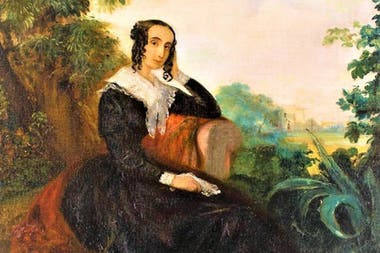
I’m getting closer to Publishing Day and I can’t wait to share it with you. In the mean time, please take a minute to watch this short trailer. The painting of Mariquita Sanchez de Thompson was the inspiration for the entire project. Please enjoy!
Coming soon! Celestial Persuasion on Amazon.
Abigail Isaacs fears ever again falling under the power of love and dedicates her life to studying the heavens. However, upon her father’s demise she finds herself in reduced circumstances and must write to her brother, who has long been away at sea. When instead Captain Wentworth of the HMS Laconia sends a tragic reply, Abigail is asked to set aside her own ambitions and fulfill her brother’s dreams in the Viceroyalty of Río de la Plata.
In his relentless pursuit for justice, Lieutenant Raphael Gabay lends his sword to the Spanish American cause. But as he prepares to set sail with the others, he is entrusted with the care of a young woman. She is quite unlike anyone he has ever known, and Raphael wonders whether the brilliant astronomer will see beyond his frivolous façade and recognize his true nature.
Their destinies have been plotted beyond the celestial veil; their charts foretell of adventure. Can these two troubled souls be persuaded to heed the stars and find love—and their purpose—in this fledgling nation?
How many of you have seen the film, My Big Fat Greek Wedding? Swap out “Greek” and insert “Argentine” and you would have a clear picture of my family. Every character reminded me of a relative; every embarrassing scenario was relatable and every corny saying sounded familiar. The movie had my family in stitches. We laughed, we cried, and we pointed fingers at each other, saying: That is so you! This movie, in fact, was one of three impactful works that played a part in my writing (the other two were I Remember Mama and Fiddler on the Roof). I aspired to accomplish something in that same vein and wrote my first book, With Love, The Argentina Family~ Memories of Tango and Kugel, Mate with Knishes.
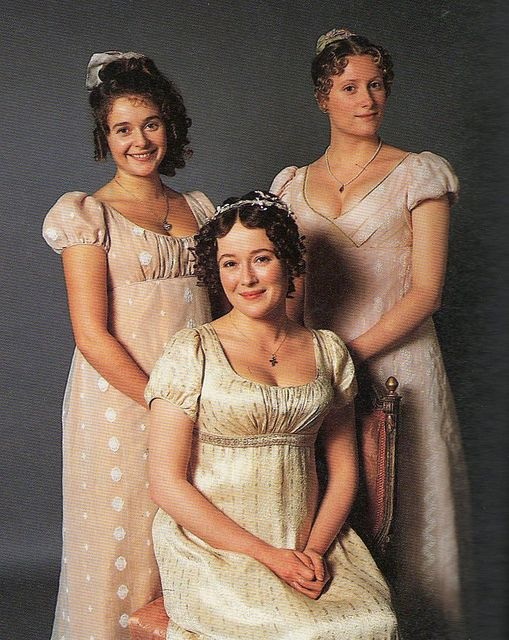
Interestingly enough, I came across a blog post that spoke of the similarities in between Pride andPrejudice and Fiddler on the Roof. Both stories feature five daughters, three of which are married by the end of the piece.
Both showcase awkward scenes of rejected marriage proposals. The mother and father relationship in Fiddler shares similar characteristics with those in P & P. Both stories have forbidden love and worries of losing one’s home. In short, this author spoke to my love of meshing the world of Period Dramas and Jewish Historical Fiction.
In all fairness to the original post, I encourage you to take a peek at it here: Read it and tell me if you don’t agree. An Anglican woman in England and a Jewish man in Imperial Russia wrote two very different stories that are remarkably the same, and remarkably relatable to a wide and diverse audience.
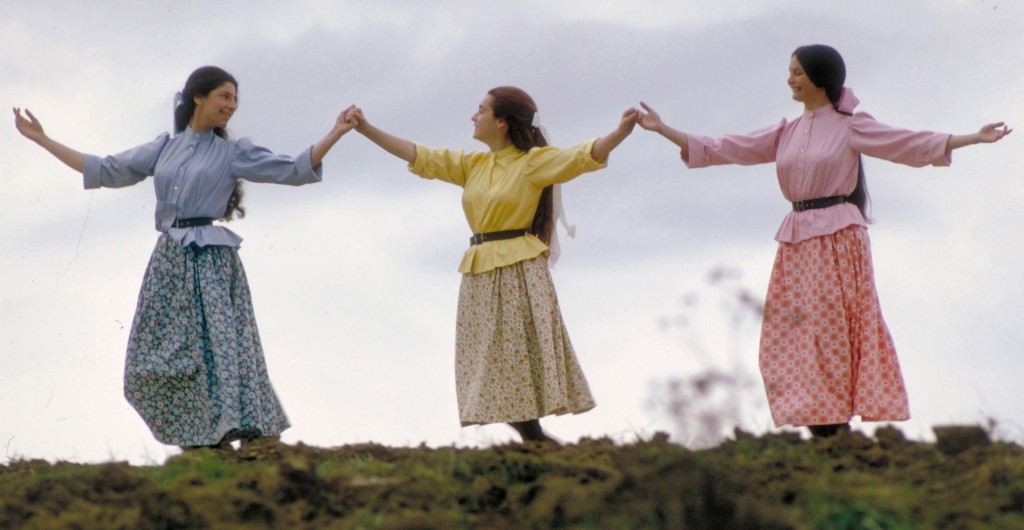
Last week, I binged on the third season of Shtisel. Have you heard about it? It is a hit show on Netflix. I devoured the entire season in two days. No doubt, you’re wondering why I’m writing about a modern-day series that evolves around a Haredi family living in Israel. You’re rolling your eyes at this point thinking: I signed up for a historical fiction blog—why is she writing about Shtisel-mania? Good question; but before I answer, I have a question for you…
How many Jane Austen variations are there in the Fan Fiction world? I couldn’t even begin to tell you, but I know this: Keep her storyline and exchange the Anglican family with a Hindu family, a Black family, a Jewish family; or even a family of Zombies, you still get an Austenesque novel. Austen’s work centered around her commentary about the human condition. She used humor and irony to make her point. She wrote about heartaches, financial concerns, and dysfunctional families. Her stories are still relevant to millions of people around the world who are not necessarily English, Anglican, or actually living in the Regency era. 😉
Shtisel has taken the world by storm and it has many people scratching their heads in wonder. How is it possible that in today’s society, where everything goes and everything is permissible, a story about an ultra-orthodox Jewish family is a Number One hit? They dress modestly. They have strict dietary restrictions. The roles for women and men are clearly defined. But, take away all the trappings, the clothes, the language, the seemingly archaic rules, and exchange them with any other culture or religion and you still get the very essence of the show. The humanity remains. The power of the emotions expressed and experienced by these characters are universal.
Three or four families in a country village is the very thing to work on. Those three or four families are the mind we knew intimately – the landed gentry, the upper classes, the lower classes, not only the industrial masses, but also the agricultural laborers.”
Jane Austen- in a letter to her niece
Jane Austen’s trademark was her knack for realism. She didn’t write about the Napoleonic Wars or earth-shattering catastrophes. She wrote about the world around her, knowing that life’s every-day “little dramas” were sufficient fodder to get her point across. Her writings have been inspirational and Shtisel is working the same magic. Its triumph is in sharing a common story, focusing on Universal Truths to which we all can relate. How could I not aspire to do the same?
This is a monthly event, bringing together those who cover Jewish literature online to “meet, read, and comment on each other’s posts.” Organized by the Association of Jewish Libraries (AJL), the Carnival is hosted by a different participant’s site on the 15th of every month.
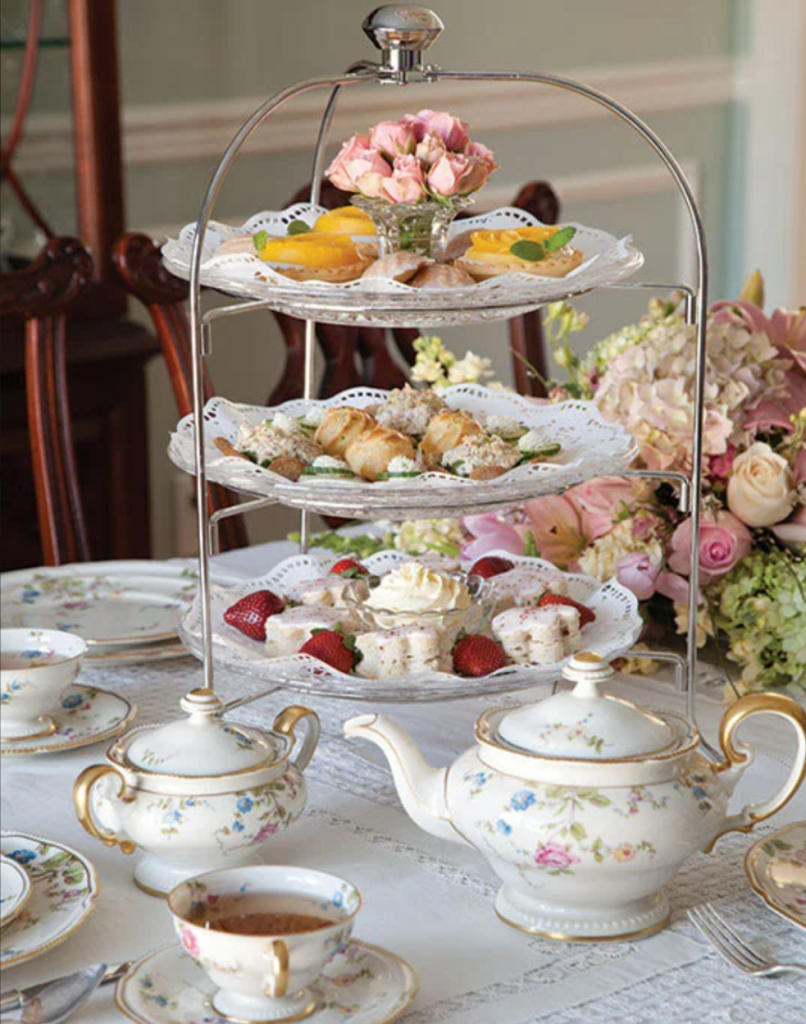
As you can see, I have prepared a lovely tea to celebrate the occasion. Join me, won’t you?
This month on gilagreenwrites, Gila interviews author Sharon Kirsch on her new book The Smallest Objective. According to Kirsch, the book is categorized as a memoir but it is a “hybrid of genres.”
Deborah Kalb interviews a variety of authors on her website, Book Q&As with Deborah Kalb. Here’s a recent interview she did with Jacqueline Jules about her new poetry collection, Manna in the Morning.
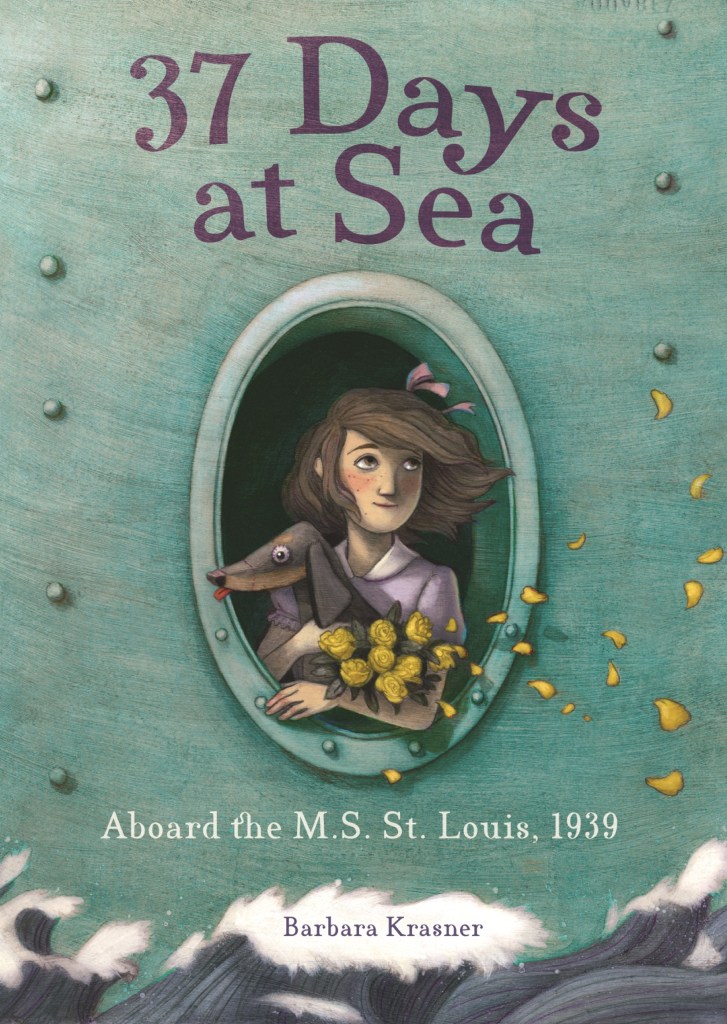
On Heidi Rabinowitz’s Book of Life blog, read a double interview with authors Ruth Behar (Letters from Cuba) and Barbara Krasner (37 Days at Sea) to learn about the relationship between Jews and Cuba.https://jewishbooks.blogspot.com/2021/04/cuba-and-jews.html
And join me in revisiting a most interesting interview with Israeli author, Sara Aharoni as we discuss The First Mrs. Rothschild and Jewish Historical Fiction:
This month, I will have the great honor of hosting the Jewish Book Carnival on this site. If you are not familiar with the event, let me tell you a little bit about it. Each month, a host welcomes links and posts from a myriad of other bloggers who are promoting works of Jewish content. It is an incredible format that allows us to share in rich and varied topics ranging from Children’s literature to Adult fiction and everything in between.
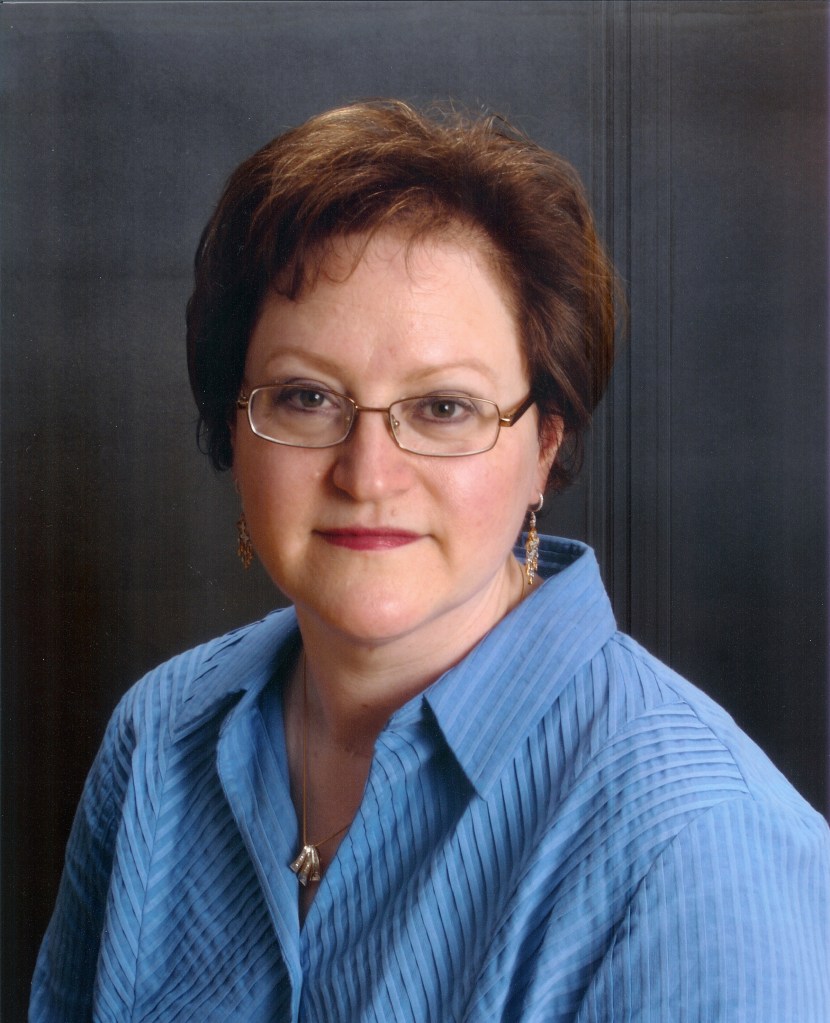
author, Barbara Krasner
Barbara and I met like many people do these days; that is to say, we met online. In preparing for the Carnival, Barbara contributed a link (don’t forget to visit this site on April 15th!) and also shared some information with regard to her new book. I had the pleasure of reading her latest work; and while it is not a subject that I normally lean towards, it is an important topic and is sure to have a long-lasting impact. Without further ado, please join me in welcoming today’s guest, Barbara Krasner~ author, blogger, and historian extraordinaire!
Host: Barbara, I thoroughly enjoyed reading your book. I found the format unique and unexpected. It pulled on my heartstrings; but more importantly, it brings up a subject that often is neglected. I don’t want to give anything away, so I’ll stop now and allow you to tell the audience about your newest release.
Guest: Thanks, Mirta, for having me. I’m always interested in talking about Jewish historical fiction! My new book, 37 Days at Sea: Aboard the MS St. Louis, 1939, is a middle-grade novel in verse. It’s the story of twelve-year-old Ruthie Arons, traveling with her parents and nearly 1,000 other German-Jewish refugees bound for Cuba. But the ship is not allowed to land, and the captain receives orders to return the ship to Germany. Ruthie and her friend, Wolfie, take action to help minimize the despair.
Host: From reading your blog page, I see that you are a historian, linguist and an author. Your list of accomplishments speaks to the love for your heritage and dedication to your craft. Tell us what intrigued you about this particular period in time?
Guest: My mother told me something about the St. Louis growing up. I decided to explore it in 2010 and read Scott Miller and Sarah Ogilvie’s Refuge Denied, which determined the fate the passengers after the ship landed in Antwerp in June 1939. I contacted Scott and he gave me the names of survivors who lived in the New Jersey-Pennsylvania-New York area. One by one I contacted them and interviewed them in their homes during 2010. The narrative actually started as nonfiction, then transformed to poetry for adults, then poetry for kids, ultimately fictionalized.
There are many time periods I’m interested in: Jews in early America, the mass immigration period, the postwar period (Displaced Persons). The Holocaust period, for me, takes precedence because these stories must be told to remember and honor those who perished and to keep warning the world about the loss of human rights and genocide.
Host: I understand that you are specializing in Holocaust & Genocide Studies. The scope of such a curriculum must be daunting, to say the least. Have you always been a great reader? Do you remember your first Jewish fiction that was non-Holocaust related?
Guest: I am currently a doctoral candidate in Holocaust & Genocide Studies at Gratz College outside Philadelphia. I’ve always been attracted to historical fiction even as a young reader and loved Sydney Taylor’s All-of-a-Kind Family series about a Jewish family in the early 1900s in New York City.
Host: Yes! That was one of my childhood favorites as well. As an immigrant myself, I found it to be highly relatable in so many ways. The focus on identity, assimilation, and pride in heritage was powerful for this young Argentine Jewish girl, trying to understand her place in the world.
With regard to the MS St. Louis, and the general understanding of America’s position towards Jewish refugees at the time, I feel that the history has been downplayed to the detriment of our society. Given your professional experience in this genre, I would assume you are accustomed to the grim and the tragic aspects attributed to the subject matter. What did you learn, while doing your research, that particular affected you?
Guest: I spent days researching the St. Louis at the American Jewish Joint Distribution Committee headquarters in New York City as well as several days at the U.S. Holocaust Memorial Museum in Washington, DC. I interviewed about eight survivors who had been aboard the St. Louis as kids. What struck me most was the resilience of these people. I noticed in one survivor’s home all the Judaica that hung on the walls. He said, “Hitler did not survive. We did.”
Host: That, indeed, is a poignant statement. Resilient. The word is applicable to Ruthie Arons. Her innocence, hope, and courage touched my heart. How did this character resonate with you?
Guest: Ruthie’s character is a composite of people I interviewed and then some. Writing in verse helped me better understand her character and how she would respond to situations.
Host: I found the verse format to be compelling. It painted a singular picture of the situation; and though the story is told through a child’s eyes, it is not childish. I was completely engaged. Barbara, tell us a little about some of the places you have visited and their connection to your books.
Guest: In 2008 I traveled to my grandparents’ “shtetlekh” in northeastern Poland to research a historical novel. While that manuscript is still in the drawer, standing on the same ground as my grandparents was a once-in-a-lifetime experience. My grandmother’s hometown of Ostrow Mazowiecka felt like my hometown.
Host: I had a similar experience when I traveled to Argentina and visited the Jewish colonies in the pampas~ the land that adopted my Russian grandparents. I felt like a time traveler. Talk about research! I would love to hear more about this manuscript, stashed away in the drawer. Will it come out soon or are you working on something else?
Guest: I have a few projects I’m working on now that I guess one could characterize as Jewish historical fiction. Too soon to talk about them in detail, but both take place in America during the Cold War.
Host: I can relate…Stories take on a life of their own; and sometimes, books understand timing better than we do! Even so, I wish you all the best with this project and in your future endeavors. It is important work. Kol hakavod! Before we sign off, is there anything else you’d like to add?
The last few months have been awfully busy. Having recently finished a rough draft of my next novel, I’ve been focused on working with my alpha readers and trying to revise, restructure and basically reinvent my ever-evolving storyline. All this is done in stolen moments in between a 10-hour work day and household responsibilities… laundry, grocery shopping, etc. Life seems but a quick succession of busy nothings when all I want to do is write. And before I knew it, Passover was upon us and I was not prepared.
Being empty-nesters, the holidays are just not the same any more, especially because my children, and family in general, are spread out across the world. But I still wanted to celebrate the occasion and preserve the traditions, so out came the cookbooks and beloved recipes. I’m not a particularly talented cook, nor am I overly ambitious. And as our diets are restricted throughout the week, I sometimes am at a loss to create things without the prohibited chometz. Or as our family haggadah indicates, we are to avoid anything that “puffs up.” As a side note—or maybe not—I think this haggadah is spot on with regard to a spiritual cleansing of pride and self-importance. Leavened breads, cakes and other yeast or flour products inflate and thicken our bodies. All year long, we are full of chometz, full of ourselves, with no room for God or anything else. For one week, we are told to eat matzah, which is flat and bland, and contemplate our lives and our freedoms. It is the complete opposite of haughtiness and puffiness.
OK, if I haven’t lost you yet, let me get back to my post…
In looking at the family favorites, I noticed how I have tweaked recipes here and there. Ingredients have been swapped out, preparations have been revised. In other words, the recipes evolved, much like my latest novel, depending on whose voice had taken the lead. Depending on which grandmother, aunt, or cousin passed it along, or from which country, culture and timeframe, the difference was notable.
Are you still with me?
I had previously written about Lady Judith Montefiore, and the impact of her cookbook on Anglo-Jewry, but started to think about food in relation to our identity. I am ethnically a Russian Jew who was born in Argentina. But I am also a (proud) naturalized citizen of the United States of America and have been highly influenced by the culture in my adopted land.
“Tell me what you eat: I will tell you what you are.”
That statement was published by Jean-Anthelme Brillat-Savarin in 1825; and I think, it still holds true! Celebrity chef Jamie Oliver recently stated that “Dishes evolve, impacted by trade, war, famine and a hundred other forces.” I find it all fascinating and here is just one example of how recipes evolve and cultures intermingle.
Almond sweets were all the rage in Sicily; but by 1552, they had gained popularity and became known to the rest of modern-day Italy, Spain, France, and England. And across the pond, in a hand-written cookbook published by the first lady, Martha Washington’s Booke of Cookery contained a recipe for almond cookies. So, by the 17th century, we have the word macaron in French or macaroon in English. At this time, the world was also introduced to the Sicilian word maccarruni. In English, of course, we know it as macaroni.
To complicate things a bit, a fad developed in the United States in the late 1800s with the importation of coconut from India. Coconut cream pies, ambrosia and custards were very popular— as was the coconut macaroon, which suddenly began appearing in Jewish cookbooks. In 1871, Esther Levy’s Jewish Cookery Book included a recipe for this new dessert; and because they didn’t contain flour, they soon became an American Passover tradition.
Never let it be said that the French were left behind in the world of baking! Soon after coconut macaroons first appeared, bakers Gerbet and Desfontaines created a sandwich cookie by putting almond paste or ganache between two individual macarons. The new cookie was called “le macaron Parisien.” In the United States, the word macaron now referred to the French ganache cookie, leaving macaroon to describe the coconut confection we eat all throughout this holiday week.
Don’t forget the word macaroni. We think of it as elbow pasta. Right? Au contraire! In 18th century England, macaroni had an altogether different meaning. Wealthy gentlemen, who sported outlandish hairstyles and pretentious fashions, were called Macaronis. Why? Because while they did the Grand Tour across the Continent, they acquired a taste for Italian pasta, which was considered an exotic food sensation. For those of us who grew up singing “Yankee Doodle,” this explanation helps to make sense of the song. The chorus makes fun of a disheveled Yankee soldier who attempts to look fashionable. Remember? “…stuck a feather in his cap and called it macaroni.”
At this point, you may be asking yourself: How is she going to tie all these ponderings together? Don’t worry. I’ll tell you.
This year for Passover, I couldn’t find a nice brisket in my grocery store, so I chose to make an American-style pot roast. And because my husband doesn’t care for chicken soup, we ate our kneidalach (matzah balls) in Argentine-style tuco (similar to a Pomodoro sauce). I wonder what Lady Judith might have opined of my international Pesach menu. And what of our beloved, Jane Austen? Did she have an interest in food? In one of her many letters to her sister, Cassandra, she wrote:
“My mother desires me to tell you that I am a very good housekeeper, which I have no reluctance in doing, because I really think it my peculiar excellence, and for this reason – I always take care to provide such things as please my own appetite, which I consider as the chief merit in housekeeping. I have had some ragout veal, and I mean to have some haricot mutton to-morrow.”
Both of these entrées stem from French cuisine. I wonder if Jane ever dined on anything quite so exotic as pasta? I know for a fact she was acquainted with a few Macaronis—at the very least she wrote about them! I can think of a few Austen dandies, can’t you? But then again, our Miss Jane was never at a loss for words about pride…
“Vanity and pride are different things, though the words are often used synonymously. A person may be proud without being vain. Pride relates more to our opinion of ourselves; vanity, to what we would have others think of us.”
I wonder what she would have to say about Pharaoh? Talk about being “puffed up”!
Chag Pesach sameach! A good Passover to you all. Talk about timely…I began preparing this post on the same day the world heard of a new discovery by Israeli archaeologists. Do you read about it? The Israel Antiquities Authority announced that dozens of new Dead Sea Scroll fragments were found in a desert cave and, apparently, they date back to the second century A.D. The team went on to find 2,000-year-old coins, a skeleton of a child and a basket of woven reeds—very likely the oldest of its kind. Do you recall what was going on during this time period in Jerusalem? Does the Bar Kochba Revolt sound familiar? If you answered: the Jewish uprising against Rome between 132 and 136 A.D., you are correct! That brings me to today’s guest.
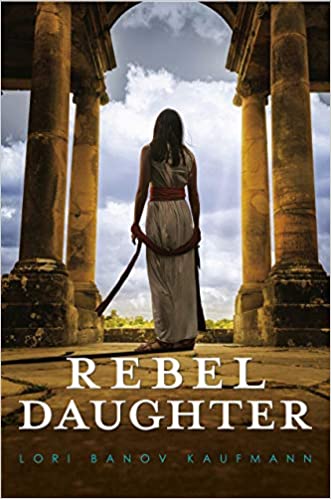
As soon as this author learned of the discovery of the first-century tombstone that inspired this book, Lori Banov Kaufmann wanted to know more. She was captivated by the ancient love story the stone revealed and resolved to bring it back to life.
Author Lori Kaufmann Photographer credit: Cathy Raff
Before becoming a full-time writer, Lori was a strategy consultant for high-tech companies. She has an AB from Princeton University and an MBA from the Harvard Business School. She lives in Israel with her husband and four adult children
Host: Lori, this latest discovery must have thrilled you beyond belief! More fodder for a sequel, perhaps? But I’m getting ahead of myself. Welcome to the blog and my series of author interviews. I understand that your book took ten years of research and diligent care, before your dream of publishing came to fruition. Please tell us all about it.
Guest: Hi Mirta. Thanks so much for having me. I’m excited to tell your readers about my new historical novel, Rebel Daughter. It’s based on the true story of a young woman in first-century Jerusalem who survives the Jewish revolt against Rome. I don’t want to reveal spoilers but let’s just say, a lot happens! It’s a tale of family, love and courage set in one of the most important periods of human history.
Host: Lori, as you may have perceived by taking a look around my site, I am drawn to the Regency, Victorian and Edwardian eras. My books strive to incorporate Jewish characters into these typically Anglican backgrounds. Tell us why you chose this particular time period, right before the destruction of the Second Temple.
Guest: That’s a great question. I was never drawn to this time period before. I’ve always loved historical fiction but for me that meant WWII or at the very latest, the Civil War! I decided to write this story after hearing about the discovery of a young woman’s two-thousand-year-old gravestone, an exciting and important archaeological find. It was the mystery behind the stone that drew me in and made me want to know more. Who was she? How did a girl from Jerusalem become a Roman woman buried in Italy? In many ways, I feel that I didn’t choose this story. It chose me.
Host: I’m still struck by the amount of work that went into this project. Tell us about your research. I’m sure that fascinating doesn’t even come close to describing your findings.
Guest: I felt an obligation to my real-life characters to tell their story as accurately as possible. I knew that there was a lot I had to imagine but I wanted everything that happened in the book to be historically plausible. So I went to a lot of archaeological sites and consulted with some of the world’s experts on this period. I remember one visit with an archaeologist to a recently excavated site in the Old City of Jerusalem. The archaeologist showed me where the stones of the road were broken. Underneath, you could see the sewage tunnels where the Jews had fled when the Romans destroyed the Temple. He and his team had found cooking pots, coins and other valuables in the tunnels. That gave me chills.
Host: I understand that sense of obligation to one’s characters. You spend so much time contemplating their thoughts and their feelings, they became like family. Did any particular character resonate with you?
Guest: My main character Esther. Even though she lived thousands of years ago, she wants what we all do – to protect our families, live our lives in freedom and dignity, and find love! Plus, she has her faults. I definitely relate to those!
Host: Do you have a favorite scene or event in the book?
Guest: That’s an interesting question. Many events in the book were quite difficult to bring to life. I wanted the the scenes to be not only historically accurate, but also emotionally true. Some of those scenes, especially of the destruction of Jerusalem, are still hard for me to read but I’m proud of them. I feel that I captured the characters’ passions, loves and fears.
Host: As you have been at work on this project for so long, dare I ask? When did you first consider yourself an author?
Guest: A better question would be how long have I wanted to write! I thought about writing for decades but then, as many of your readers know, life gets in the way. I’m not counting the little starts and stops through the years. But I only made a real commitment to myself when I turned 50. I said, “it’s now or never.” Little did I know that I would be a debut author at 61! So now I say, “better late than never!”
Host: Absolutely! I was a late bloomer as well! My empty nest turned into a writer’s haven, so to speak. Tell me about your writing process. Are you a panster or a plotter? I know it’s the catch phrase of the day, but it does fit the bill, doesn’t it?
Guest: I tried both ways and what I learned is that there is no right answer. Every one has to find what works for them. For me, it’s a combo approach. I need a general roadmap but then enough flexibility to take side-trips along the way. But I only discovered this through trial and error. Actually, many errors!
Host: And are you working on something now?
Guest: I’m working on a novel set in Charleston, South Carolina at the turn of the 20th Century. It’s loosely based on the life of my grandmother and her sisters. It’s fiction because no one would believe the real version! I grew up there and always knew I wanted to write a story set in the South. Charleston is another one of those magical cities – like Jerusalem and Rome – that takes hold of your heart and won’t let go no matter how far away you run or how long you stay away.
Host: Oh! That sounds intriguing, too! We certainly need more diversity in Jewish historical fiction. I look forward to reading your work, Lori. Before we sign off, is there anything else you’d like to add?
Guest: Thanks again for inviting me, Mirta. Here are my social media links:
Hello again! Today, we are in for a special treat. Renown Israeli author, Sara Aharoni joins us in this series of Authors’ Interviews. Sara has been a teacher, an educator and has worked as a school principal for 20 years. She also spent four years in Lima, Peru as an educational envoy of the Jewish Agency.
Sara Aharoni, author
Together with her husband, Meir Aharoni, Sara wrote, edited and published a series of books about Israel, including six in English. She has also published six children’s books. Her third novel, Mrs. Rothschild’s Love (the English title is The First Mrs. Rothschild), went instantly to the top of the Israeli bestseller list. Aharoni received the Steimatzky Prize for Best-Selling Book of the Year.
I have read this work and found it inspiring and thought-provoking. As you all know by now, I am fascinated with this time period. The Rothschilds, the Montefiores…what these family were able to accomplish under that level of persecution and oppression is mind boggling! Let’s find out more.
Host: Welcome Sara. You have done a remarkable job bringing this family to life for me. Kol hakavod! Please set the stage for this project. How did it all come about?
Guest: Thank you for inviting me, Mirta. I’m excited to be here. As an Israeli, born and living in Israel, I write my historical novels in Hebrew, and I am happy that my book, The First Mrs. Rothschild, has been translated into English and distributed by Amazon Crossing. It presents the life story of the Rothschild family in the Judengasse (the Alley of the Jews) in Frankfurt, who rose from extreme poverty to a global economic empire. The story takes place between the years of 1770 to 1849; from the marriage of Gutle to Meir Amschel Rothschild, until her death at the age of 96. The idea of writing this book was born from my visit to the agricultural settlements in Israel under the patronage of Baron Edmond de Rothschild, the well-known philanthropist. The visit was intense and aroused in me the desire to get to know him more deeply. I started to read books about Rothschild, and the more I read, the more I felt like writing a novel about him. I continued reading and reached the roots of the Baron, his grandfather, Meir Amschel (or Mayer Anshel, it’s the same) Rothschild, who lived in the Jewish ghetto in Frankfurt and raised the family from a state of dire poverty to a great wealth. This inspired me to write the novel about the founder of the Rothschild family.
Host: I certainly can understand being intrigued by the family’s founder; however, your book is written through the eyes of his wife, Gutle. Correct?
Guest: Right. I wanted to place the wife in the center of the scene. During my research I discovered that historians wrote a lot about the founder and his five children, and very little about his wife, Gutle, and her daughters. I regretted that. I was curious to know Gutle’s character. So, I continued to read and find details about Gutle. Every piece of information I found was like a diamond. I collected all the details into a chart which turned into a puzzle I could piece together to discover her character. I found a very special woman: a modest, intelligent woman with a big heart, giving, helping each person. Her kitchen was a shelter. Anyone who wanted to pour out his heart to someone, would come to her kitchen. She knew her place as a woman (it was the 18th century), knew when to keep quiet and when to say what she thinks. She had a wise heart and great understanding. For example, she used to send shirts from Judengasse to her son Nathan in London. She knew that Nathan was a very rich man and could buy expensive shirts in London, so why did she send him shirts? Because she was worried her son was changed. He made contact with the high society and showed signs of vanity. She didn’t want him to forget where he came from. She knew that when a shirt from Judengasse would touch his skin–he would never forget where he came from.
Her modesty is self-evident. She never left the ghetto even though her children were already living in palaces and offered her rooms there. Gutle loved Meir Amshel and supported him all along. Despite his strength and energy, he needed his wife behind him. This woman captivated me, and I decided to give her a stage and pass on the family story through her.
Host: That was what had me glued to the page — Gutle’s story and her views on life, family and their place in the world. Why do you think Jewish Historical Fiction is an important, stand-alone, genre?
Guest: As an ancient people thousands of years old that spread across the globe, we have become rich in a wide range of Jewish cultures – each diaspora and its Jewish culture: culture, language and creativity. Our Jewish history is rich in events, figures, upheavals, ups and downs – great achievements in the face of terrible tragedies. All of these are immortalized in the books of history, the first of which is of course the Bible that unfolds the history of our people and is a central focus of Jewish culture for generations. I see the historical novel as an important means of combining literary fiction with historical reality, which gives the reader an opportunity to become acquainted with the world of the Jews in a fascinating way. I sometimes hear history teachers say that the historical novel can bring students closer to history lessons. I consider it important that future generations become acquainted with Jewish history, and the historical novel is an integral part of the means of realizing this.
Host: And how would you differentiate a history book from a historical novel?
Guest: The fiction in the historical novel is adapted to the historical facts and fills in the gaps, the same gaps that the history books skip over, such as the moves of the mind, descriptions of emotions and thoughts, and the influence of these on the chain of events. For example, regarding my book, The First Mrs. Rothschild, historical sources indicate that Gutle, the wife of the founder, Meir Amshel Rothschild, gave birth to 19 children, of whom 10 survived. I must not change this basic fact. But I think as a woman, as a mother, as a writer – a mother who loses one baby feels she has lost her world. Gutle lost 9 children. The historian does not dwell on the mental state of the grieving mother. His role is to describe the sequence of events. In the historical novel I was given the opportunity to fill in the blanks and give a broad canvas to the loss. The historical novel develops in the reader an interest in the character and period. In The First Mrs. Rothschild, the historical background is woven throughout the novel: the Napoleonic Wars, the French Revolution, the Industrial Revolution, the Damascus plot. Quite a few readers turn after reading the historical novel to other sources to enrich their knowledge of the period.
Host: As an Israeli author, do you have any thoughts on what the Diaspora considers a Jewish book? By that I mean, Israel and the Jewish community at large, is a diverse and unique culture, yet—here in America—we tend to focus on two narratives: The Holocaust and Fiddler on the Roof-type themes. There is obviously so much more to talk (and read) about.
Guest: Within the Jewish story, Jewish culture is intertwined with the holidays and customs, such as Shabbat. It is not there as a title and is not dominant in the story, but is a natural part of the characters’ lifestyle and general atmosphere. It is a culture that accompanies us throughout history, it has created for us the special identity as a people, and it must be given expression. It is part of the respect for the faith and the Jewish people.
Host: Sara, tell us about your first book, Saltanat’s Love. I understand this was the impetus for your career as a historical fiction novelist.
Guest: My first novel was based on my mother’s life as a Jewish girl growing up in Iran. Through the story the reader is introduced to the lives and culture of Iranian Jews in the 30’s and 40’s of the 20th century. How did it happen? On a trip together with my mother in Europe, she told me the story of her life. I’ve already heard her story with my brothers when we were little, but in those days, it was as if my mother took a strainer with small holes and only part of reality was heard. That is, we were spared all sensitive parts. During that trip in Europe, I was already an adult and myself a mother of children. Mother allowed herself to throw away the sieve and tell me the whole story. I heard the story and remembered that when we were little, Mother used to say: “All I went through would make a book.” And now, when I hear the whole story, including the sensitive parts, I understand that this is a story to be written. I decided to write the book as a novel. The great and unexpected success of my debut novel made me decide to continue writing novels, or rather, historical novels.
Host: Have you visited any of the locations you have written about?
Guest: After reading so much books, letters and documents, I felt a need to physically get to the places where the Rothschilds lived. The first place I wanted to reach was Judengasse. But I knew I had no chance, because at the end of the World War II, the United States bombed Frankfurt, and the street was completely destroyed. But where the Rothschilds’ house once stood, they set up a museum – the Judengasse Museum. The visit to the museum left a strong impression on me. I saw the miniature structure of the street with the wooden houses, the reconstruction of a section of the street, including a ritual bath, the attire and the accessories they used, and the large pictures hanging on the walls. I will describe to you one of the pictures called “The Jewish Sow.” It was a relief placed above the gate of the city of Frankfurt and was in front of the passers-by every day. The picture shows a large sow on which a rabbi is riding. The rebbe raises the tail of the sow so that another rabbi will eat from its feces. There are Jewish children sucking from her nipples, and on the side, the devil stands and watches with pleasure.
I saw this picture in many books I read. But in the museum, I stood frozen in front of the big picture for a long time that I cannot measure, but long enough for me, to express the novel in this picture. On the journey to the Rothschilds I also reached London and Paris.
Host: I can well imagine being paralyzed standing in front of such an atrocity. The cruelty of being forced to live under such conditions, of being constantly reminded of what the outside world thought of you and your people…it is a testament to their faith and perseverance that the Rothschilds, and others of that generation, were able to overcome such prejudice and persecution. You describe these daily events so well. I was transported. I love this quote: “Dignity is a powerful thing. We shall use it to break through the walls of the ghetto and set ourselves free.” Do you have a favorite scene from the book?
Guest: My favorite scene is Gutle’s visit with her mother in the Forbidden Public Park. Every leaf, butterfly, branch and shrub is a world in its entirety for someone who has dreamed of coming to the garden all her life but the garden was on the list of prohibitions imposed on her and the Jews of Frankfurt. This scene makes it possible to raise the difficult reflections regarding the injustice done to the Jews. Here is an excerpt:
“Look, Gutaleh, how pretty this garden is.”
Mama tightened her grip. Her eyes sparkled. I looked at the glory of the garden. A carpet of beauty spread before me, as if to say, “Here I am! And where have you been this whole time?” My eyes took in the sights. All the wonders of the world could not compare to the splendor of this place. I felt I had to hurry up and drink in this luscious view.
Suddenly, I felt sad. The thought of all we had been deprived of until now filled me, pushing away the brilliance before me, threatening to take hold of my mind. Our people’s cruel fate was knocking on the door to my heart. I watched my mother, her burning eyes. She was living the moment, leaving the past behind. I must be like her, enjoy these moments to capacity. I mustn’t wallow in darkness. I must regain my senses. At that moment, I recognized that other smell. It was the aroma of freedom. Freedom smells intoxicating, superior to all other scents. I would always remember my first whiff of freedom.”
Host: That was a powerful scene! Tell us, Sara, are you working on something now?
Guest: I am in an advanced stage of writing the next historical novel, about a Jewish historical figure. I hope it will also be translated into English.
Host: Thank you for joining us today. It was such a treat! Is there anything else you’d like to add?
Guest: Thank you very much for interviewing me. I’ve enjoyed sharing this time with you. If you want more information about me or my book, here is the link to Amazon and the link to the Heroine’s Journey:
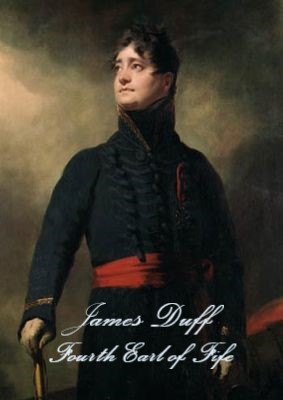
After nearly a year, I am happy to announce I’ve completed the first draft of my latest novel. Of course, that only opens the door for the various re-writes, alpha reads, beta reads, etc. In other words, the hard part is yet to come! In the meantime, I want to share the inspiration for this novel. The book is currently entitled, Celestial Persuasion and I hope it can be accepted as a prequel to Persuasion in the hearts and minds of my fellow “Janeites.” But it is much more than that! Allow me then to introduce a few key historical figures that were the impetus for my novel.
Lord Fife ~ Jose San Martin ~ Mariquita Sanchez de Thompson
It is interesting to note, England was at war almost continually throughout Jane Austen’s lifetime. Most Regency fans are familiar with the Napoleonic Wars and the impact on the Austen family and to her fictional characters. For the most part, these battles and engagements remained on the Continent, with brief mentions of the West Indies and the Caribbean. I’m going to take you further south, all the way to South America; and in particular, to the Viceroyalty of Río de la Plata. Today, it’s known as the Republic of Argentina.
Though it was a Spanish colony, the English were very much a part of the area’s growth. From whalers and farmers, to engineers, bankers, and second sons, they journeyed to the Viceroyalty to make their fortunes on the pampas. Things got a little heated, however, when in 1806 and again in 1807, the English decided to invade the territory. Remember, England’s resources had been spread thin, what with those pesky American colonists, not to mention the French. They needed to expand their reach to fill the Crown’s emptying coffers. In the Viceroyalty, the criollos (those born in the New World but of European ancestry) were contemplating their freedom—much like their brethren up north had done—when the English decided to attack. Needless to say, the Redcoats were not successful, having been repulsed by a ragtag colonial militia. The criollos’ victory against a great European power only helped to increase their confidence, and sparked a wave of patriotism and pride.
Now, across the pond, the officers suffered tremendous embarrassment for not being able to hold the line. Sir Home Popham, for example, had captured Buenos Aires and tried to impose an oath of loyalty, but the citizens refused to obey. They locals fought and took back their city and General Beresford had to surrender. A few months later, more troops were sent to engage the Spanish colony, but found themselves fighting in the streets and having to negotiate an evacuation! Their shame was complete. Jane Austen, however, had compassion for their efforts and in a letter dated 1807, we find a poem penned by her own hand.
ON SIR HOME POPHAM’S SENTENCE, APRIL 1807
Of a Ministry pitiful, angry, mean,
A gallant commander the victim is seen.
For promptitude, vigour, success, does he stand,
Condemn’d to receive a severe reprimand!
To his foes I could wish a resemblance in fate:
That they, too, may suffer themselves, soon or late,
It is understandable that Austen would be sympathetic to the officer; she had two brothers in the Navy and would, naturally, support the cause. Nonetheless, there was a large population of English living in the Viceroyalty, many of them had married and had raised their families in the New World. They did not support the English invasion, nor did they support the Spanish crown. In 1807, Napoleon had invaded Spain and the king had been removed from power. The criollos, living an ocean away, believed they had the right to govern themselves until the lawful king was restored to the throne. In January 1809, Napoleon crowned his brother, Joseph, as King of Spain. This act was the perfect excuse for secession and here enter our players: Jose San Martín, Lord Fife and Mariquita Sanchez de Thompson.
If you have read this far, I thank you! I realize that I am passionate about things that put most people to sleep; but once I realized that San Martín was in England, collaborating with Lord Fife, Sir Charles Stuart and host of other aristocrats, I couldn’t get this idea out of my head. And when I discovered Mariquita Sanchez, I knew I had the makings of a wonderful story. Captain Wentworth was an easy choice and I proceeded to create the characters of Abigail and Jonathan Isaacs to bond the entire project together.
I decided to place my fictional family in the town of Exeter, located in the historic county of Devon. Exeter worked well with my storyline because it is adjacent to Austen’s fictional Barton Cottage, as well as the Great House of Uppercross (if you’re a Janeite, you’ll understand). And more importantly, I wanted to place my fictional country doctor and his family among a small Jewish community in Southwestern England. Did you know there has been such a community in Exeter since medieval times? They were expelled in 1290, but were allowed to return and rebuild by the mid-1700s. The synagogue, built in 1763, is the third oldest existing synagogue in the United Kingdom and the second oldest Ashkenazi Synagogue in the English-speaking world (Plymouth Synagogue was built in 1762). Rabbi Moses Horwitz was the leader of the community from 1792-1837. One of the town’s more renown citizens, and founder of the Jewish congregation, was Abraham Ezekiel. He was described as a silversmith, engraver in general, optician, goldsmith and print-seller; and “for fifty years and upwards, a respectable tradesman of Exeter.” By 1796, five other Jewish citizens had shops in the fashionable shopping area of town, sufficiently well established as to warrant inclusion in the Exeter Pocket Journal. And so, I placed Doctor Simon Isaacs, widower, in this charming locality along with his children, Jonathan and Abigail Isaacs.
I will sign off with an excerpt from the W.I.P. (Work in Progress) in the hopes that it will tempt you!
Captain Wentworth returned to his ship, and nary a crewman offered more than a silent salute as the ship’s commander stormed to his quarters. Every man, from first lieutenant to cabin boy and everyone in between, had seen that look of their captain’s face before. They knew better than to engage him when he was clearly consumed with a task that required his full attention. He crossed the upper deck and descended the companionway before briefly saluting the marine sentry posted at his door. Cursing, he threw his hat across the room and roughly removed his coat. Normally controlled and reserved, the captain allowed himself a moment to release his frustration. Truth be told, he was more than frustrated. He was angry. Angry with Captain Lawrence for his abject abuse of power. Angry with the Admiralty for turning a blind eye to rogue and lawless officers. Angry with the helpless situations in which young women found themselves when their menfolk failed to respect their intellect and resolve. He could not help himself and thought of Anne again. Would the pain ever subside? Would he be able to set aside the rejection and rally again?
Throwing himself into his chair, uncharacteristically without ceremony or care, Captain Wentworth grimaced at the task before him. He must write to Isaacs’ sister. He—of all men—would have to lay out a new trajectory and pray she would comply. The captain reached for a nearby bottle of claret and poured the ruby liquid into a crystal glass. He swilled the contents down in one gulp, feeling only the burning sensation as it glided down his throat. The feeling was welcome. Considering what was required of him now left a worse taste in his mouth than the fiery wine. Captain Wentworth could not scruple that he was now in the position of having to persuade a young lady in the course of her life. Of all things, he despised the thought of manipulating someone by playing on their respect of his rank and command. And again, he thought of Anne. She too had been young and naïve of the ways of the world, and allowed someone she trusted to guide her. To guide her in such a way as to lead her away from him.
He took another swallow of courage and thought now of Miss Abigail Isaacs. Throughout their friendship and time at sea, Jonathan had provided some of the essentials—she seemed quite unlike other young ladies. But, then again, were not all young ladies easily persuaded?
12th of August, 1811
Gibraltar
Madam,
I take pen in hand to inform you that I am in receipt of your letters, both the one you had so wisely addressed to my attention and the one intended for your brother. It grieves me to relay this information. It is a task no commander ever wishes to undertake; and knowing that you have recently lost your father, this will be a harder blow than any young lady should have to bear. With all my heart and soul, I would wish to spare you this intelligence; however, Isaacs—that is to say, Jonathan—always spoke so highly of his sister, that I take courage in knowing your strength will allow you to rally. Your dear brother, and my good friend, will not be returning home. He has completed his service to the Crown and distinguished himself with great honor. You may hold your head high. Jonathan Isaacs is, and will always be, thought of as the best of men. These are trying times, Miss Isaacs. Wars seem to be never ending, and a grateful nation asks much of the families that are left behind to wonder, to pray, and to grieve. I hope that you have family and friends to help you through these dark and troubled waters; but until you find yourself tranquil once more, pray allow me to guide you to a safe harbor. Your brother charged me to relay some instructions, and I am only too honored to fulfill my promise expeditiously and with great care.
It was your brother’s greatest wish that you meet Lord Fife. You may be unaware of the relationship, but your father and his lordship were friends and business partners. At your father’s bidding, Jonathan was introduced to the earl when he was at university at Edinburgh. Please make whatever arrangements are necessary to travel to London at once. You are expected, Miss Isaacs, and can rest assured that accommodations will be at your disposal with the earl’s compliments. His lordship is making his townhouse available to you and will, naturally, stay at his club for the duration of your visit. I cannot say this more succinctly, madam: Jonathan was most adamant in his declaration and has entrusted your wellbeing to Lord Fife.
I can well imagine your present state of mind. Please forgive my impertinence, but having learned much of your homelife, I feel quite part of the family. The Bible tells us to build our lives upon the stable rock that is God’s love, wisdom, and salvation. I would humbly add to that. My own brother, the Reverend Edward Wentworth, has been the rock in my life. I know what Jonathan has meant to you, as he has told me much of your childhood together. To be sure, I know you are a talented mathematician and astronomer, and that these accomplishments were brought about by hours and hours of your brother’s loving dedication to the betterment of your brilliant mind. I know, too, that you were quite put out and displayed righteous indignation when you were prohibited—at the age of nine or ten— to accompany your brother to university. Pray, do not be vexed with Jonathan for relaying this intelligence. It was one of his cherished memories of his most beloved sister. Jonathan treasured this time spent together, learning and discovering all matter of things. He also spoke of the influences of many of your sex, giants in their fields of expertise. I, myself, had no knowledge of their greatness and readily admitted my ignorance of such feminine luminaries.
Because of these intimate conversations with your brother, I feel that I have been given leave to speak to you thusly. These brilliant women, of whom Jonathan spoke, had shown great courage in forging ahead in worlds that denied their very existence. I am now obligated to help you navigate the trajectory that the stars have so clearly outlined. As the Bible tells us, Miss Isaacs: Be strong and of good courage! I entreat you to make haste and communicate with Lord Fife as soon as you are able.
Your servant,
Captain Frederick Wentworth
I hope you enjoyed the post. I am currently seeking one or two alpha-readers; so if you are interested, please let me know!
If you have been following the series of author interviews on this blog, you might have noticed a particular question that I often pose. Are you a panster or a plotter? I am most definitely a plotter, needing an outline and a spreadsheet with dates, names and personality traits. That being said, there comes a point, while one is furiously typing away, that the characters take over. Their own unique voice will be heard, even if that means deleting the last chapter and rewriting the trajectory for the entire story. Mrs. Meyerson is one such character in The Meyersons of Meryton. But rather than telling you about the rebbetzin, allow me to introduce you to the lady, as I conduct a brief interview with Hertfordshire’s newest arrival.
Host: Greetings, Mrs. Meyerson and welcome to my blog.
Guest: Thank you, my dear. Pray forgive my ignorance. I am not at all familiar with your modern-day colloquialisms.
Host: I do apologize, madam. A blog is a—well, the arrangement is of little consequence. Suffice it to say, you are joining us today to discuss your arrival to Meryton. Tell me, what was your first impression of that small market town?
Guest: It certainly was vastly different from London, nonetheless, we were greeted graciously by the Bennet family of Longbourn on our first night. I was later pleasantly surprised when we met the congregants of the little synagogue, and understood straight away, the importance of my husband’s presence in that village.
Host: Vastly different from London, you say? What was it that you missed the most? The routs? The balls? The fashionable society?
Guest: Oh no, my dear! We lived in Cheapside—not quite the center of fashionable society. Do not misunderstand me. We had our share of good society. My cousin—rather distant, needless to say—is Moses Montefiore. He and his lovely new bride, Judith, are related to Nathan Rothschild by marriage. I have had the privilege of collaborating with Mrs. Montefiore in doing charitable works within the Jewish community. As to your question, I miss my family naturally. I miss my many acquaintances. And I miss the good work, the tzedakah, I was privileged to undertake. But God is good! Baruch Hashem! I have made new friends in Meryton and have been kept busy with… perhaps, it is best, my dear, if I do not delve into matters that might be too delicate in nature.
Host: Let’s change the subject then. Tell me of your new friends, the Bennets. As a mother of five yourself, what did you think of their daughters?
Guest: Oh! The Bennets! What a delightful family! They were a God-send to us. Jane is an angel, a sweet angel. What more can I say? Mary reminds me of a beautiful, but untended, flower. A bit of attention and some loving kindness is all she needs. Lydia, poor dear, was a whirling dervish when I met her—a Chanukah dreidel spinning out of control! Kitty, or Catherine as I prefer to call her, has been like a daughter to me. In some ways, she has also been my teacher. As the rebbetzin, I am called to lead the women of my husband’s congregation. I am supposed to be learned in the ways of our culture. I am expected to be a good example for the women of my faith. But Catherine reminded me of something very important, when I lost my way, and I am truly grateful.
Host: But you have only mentioned four, Mrs. Meyerson. I believe you forgot someone.
Guest: Heaven’s no! I left Elizabeth for last. Elizabeth is a true Eishet Chayil—a Woman of Valor. I realize that the proverb usually is sung to honor the mother, or the matriarch of the house; nonetheless, Elizabeth has earned this title in my eyes. She exudes the qualities which are attributed to such a woman: Feminine strength, intelligence, wit, and compassion. Even so, I witnessed how she struggled, how she fought to overcome her less than admirable traits, and this made her even more estimable in my eyes. Her worth is far beyond that of rubies, as I am certain Mr. Darcy would agree.
Host: I have no doubt! Now, in order to entice my audience further, what do you say to my sharing a snippet of the story?
Guest: I can only repeat that which someone else wiser, and more clever than I, once wrote: “I declare after all there is no enjoyment like reading!” By all means, my dear, lead on.
It was many hours later, in the darkest part of night, when a series of harried knocks were heard upon the door that caused the Bennet family to stir in alarm.
“What is it, Mr. Bennet? Who is at the door?” cried Mrs. Bennet pulling the bedclothes under her chin.
“I have not a clue, but I doubt we will learn the meaning of this rude interruption by hiding under the linens!” Mr. Bennet declared in a huff as he pulled on his dressing gown and stuffed his feet into his slippers. Carefully managing the staircase as he held a flickering chamberstick in one hand and wiped the sleep out of his eyes with the other, the master found himself at his front door just as Hill came from behind with a few coins from the household funds at the ready.
“For the runner, sir,” she said with a shaky curtsey.
“Thank you, Hill,” he replied gratefully, for he had not thought of compensating the errant messenger.
Mrs. Hill bobbed once more and stumbled back to her quarters as the master made quick work of opening the door. The messenger grinned an apology at the lateness of his arrival. Handing over the missive, he touched his cap and bounded off into the night. Mr. Bennet, now fully awake and justifiably curious, held his hand high and allowed the candle to illuminate a path to his library. Once there, he quietly shut the door, sat down in his familiar welcoming chair and was adjusting his spectacles when Mrs. Bennet came rushing in, followed by his two eldest daughters.
“How cozy you are, Mr. Bennet!” cried she. “With no consideration to my poor nerves, you have sequestered yourself without further thought of your wife or children who lay trembling in their beds. What has happened?” she beseeched. “Is it from Lydia?”
As he unfolded the object in question, Mr. Bennet peered over his spectacles and looked at his girls. “Jane? Lizzy? Were you all a tremble?”
“No indeed, sir, but we are anxious to know what news comes at this hour,” Elizabeth replied, taking hold of her sister’s hand.
The women gathered in front of Mr. Bennet as he silently read through the brief message. Satisfied that he was at liberty to share the contents, he cleared his throat and turned to his fretful wife.
“I trust you have ordered a good dinner for tomorrow evening, my dear, for I have just been informed we may expect an addition to our family party.”
“Pray, who would be so indelicate as to awaken us in the middle of the night for such a matter? Who, may I ask, wishes to trespass on our hospitality without so much as a by your leave?”
“‘Tis your brother who has written…”
“Edward? Whatever is he about?”
“If you would but calm yourself and allow me to read the letter, all will be explained.”
Jane gently guided her mother to a seat, as Elizabeth lit the candles on the mantelpiece to better illuminate their surroundings. Mr. Bennet hemmed and hawed before commencing:
Gracechurch Street, London
Dear brother, I know you will understand when I say things are well in hand here in town. I have met with Mr. Moses Montefiore and found him to be the best of men, brilliant as he is honorable! Upon his expert understanding of the current situation, Mr. Montefiore conveys the Meyersons to your good care. This letter is to be accepted as means of an introduction for the rabbi and his family into Meryton society. You can expect a party of three—husband, wife and child—to arrive by four o’clock on Wednesday. I have assured them of my sister’s fine hospitality, but tell Fanny not to fuss for their accommodations; they will only be staying the night. Montefiore has made arrangements for a living to be had in town. Fanny, I have no doubt, will be happy to know the Meyersons have need to be settled in that establishment by Friday afternoon! Now, with regards to…
Mr. Bennet stopped at this juncture, folding and placing the letter most purposefully in his pocket.
“I believe therein lies the crux of the matter. The rest involves business that I will need to attend in the coming weeks.”
“How extraordinary!” exclaimed Jane. “Whatever does my uncle mean by ‘things are well in hand in town’?”
“Are you at liberty to divulge anything further on these people and their business in Meryton?” Elizabeth asked, covering a yawn with the back of her hand. “Who is this Montefiore? Can he be a sensible man, ushering these people to us in this manner?”
Mrs. Bennet had more pressing matters to discuss and would not be silenced. “We are in the midst of planning our daughters’ weddings! My poor nerves cannot take much more agitation, Mr. Bennet. What does my brother mean by sending strangers to our home? And what, pray tell, is a rabbi?”
The hour being late and with no desire to entertain any further debate, Mr. Bennet stood and waved his hand, signaling towards the door. “Off with the lot of you. Tomorrow is another day and it will come soon enough. I am to bed and will brook no argument, Mrs. Bennet. Good night, Jane. Good night, Lizzy,” he said, with a kiss to each daughter’s brow.
Elizabeth blew out the candles and followed her father and sister as they wearily climbed towards their warm and welcoming beds. Mrs. Bennet, alone in the darkened room, sat down on Mr. Bennet’s favorite chair and indulged in a good cry, presumably relieving her poor nerves.
THE MEYERSONS OF MERYTON is FREE today on Kindle Unlimited!
Today, I have the pleasure of introducing author, Claudia Hagadus Long as the next participant in the interview series. I do hope everyone has been enjoying these posts; they have surpassed anything I could have hoped for as a new blogger. By her own description, Claudia “is a weaver of words, catcher of dreams, and chronicler of the spaces between the lines in the history books: women’s stories, women’s dreams, her-story.” She is a grandmother of “two spectacular grandsons, mother of two marvelous kids, chocolate-loving lawyer-mediator, wife and cook.”
author, Claudia H. Long
Claudia is the author of several historical fictions, many of which reference the anusim, Jews living as Catholics in colonial Mexico. Though these works are far from being Austenesque, I am delighted to share this platform with another passionate author.
Host: Bienvenida Claudia! Welcome! I’m so glad that you were able to accept my invitation. Your bio is creative and fascinating. Please tell us more about your work and your current release.
Guest: Hi, Mirta! Thanks so much for having me! I’m excited to be on your blog. As you know, my newest book, Nine Tenths of the Law came out on April 23, 2020, from Kasva Press. It’s a mixed contemporary-historical novel, and my first venture outside of straight historical fiction. It combines pre-pandemic New York City and flashbacks to various times from 1939 to 1945. I was drawn to this era because my mother was a Holocaust survivor. She died in 2014, and the following year, on the first anniversary of her death, my father sat down with me and told me her stories. It was pretty earth-shaking. My mother had never talked much about her life during the War, and my sister and I had very different views of that time period and what she had suffered. When my father told me her stories, from his vantage point of having met her right after the War, my sister and I were stunned.
I decided to write the story of two sisters, Zara and Lilly, who discover, in contemporary New York City, a menorah that was stolen from their mother in 1939. That really happened. From there, the book departs into fiction, and they chase that menorah all over, up into New Hampshire, down into the East Village, while a modern-day thief leaves a trail of mayhem in his wake. It’s really the story of sisters, of memories and of love. And Chinese food. (What’s a Jewish tragedy without humor?)
Host: Your family’s history is compelling. I can readily understand what intrigued you about that time period. but this is not your usual focus. Correct?
Guest: My earlier books took place in Mexico in 1690-1750, and I have long been fascinated by the Crypto-Jews of Mexico. These were the secret Jews who lived after the Expulsion and Conversion in Spain and Portugal in 1492. Some converted “at the point of a sword” and kept the old religion in secret. I have three books that center on this era. I grew up in Mexico City and I am partly descended from Sephardic Jews, so I was naturally drawn to that history. I also had a mad girl-crush on Sor Juana Ines de la Cruz in college, so the poetry of the time-period was a natural fit! In Nine Tenths, the era was deeply inspired by my mother.
Host: I find that many people are unaware of what occurred during the Inquisition and Expulsion. I also think it’s a common error to believe that the death, torture and persecution was contained to the Iberian Peninsula; when in fact, countries such as my own native Argentina, Peru, Mexico, most of Latin America actually, were involved in some capacity. These stories must be told, and it is why I believe Jewish Historical Fiction is an important, stand-alone, genre. What do you say?
Guest: Well, we can’t always read about Tudor England, can we? Now Historical Fiction is much broader, but when I was a younger reader that was the only era anyone wrote about. When I first read Cara Black’s Murder in the Marais I was beyond excited. And then, The Coffee Trader and A Conspiracy of Paper by David Liss sent me into a tail-spin of delight. Here were Jewish characters who weren’t just “Jewish characters in other people’s books.” While it may or may not be its own genre, it is definitely a vital sub-genre and one that will provide much material for a very long time.
Host: I appreciate authors who weave accurate history throughout the storyline. While doing your research, did anything affect or move you? Did anything come as a surprise?
Guest: One of the best moments in research came when my first historical fiction book, Josefina’s Sin, was being line-edited. I had researched the book meticulously, using art, theatre and poetry as my sources for clothing and speech patterns. I was enthralled with every detail. I had checked every resource for period details. And I had Josefina sitting under a mango tree. Well. Yes, I’d checked, there was a mention of mangoes in 1730, this was 1690, so I thought I was ok. But I wasn’t! The editor informed me that mangoes weren’t introduced into Mexico until twenty years later, in1710. Luckily, papayas worked as well in the story!
On the other hand, I had someone write to me and quote Wikipedia, and tell me that what I had written didn’t happen. Historical fiction takes place in the interstices between known facts. True academic historians are always delving deeply into what’s known, to discover the details and revise accepted versions of things that border on myth. It’s not enough to say, This person was born here and died there, and so that’s all that happened. During that person’s lifetime she could have had a lover, lost a child, built a home, dreamed of travel, failed at business, longed for certainty…and no Wikipedia entry will be able to gainsay it. So research can give you what happened, but fiction will put it in context.
Host: I love that explanation! It is an accurate description of what we endeavor to do with our novels. It is a painstaking process, and for a newcomer—like me—it is rather daunting. How long have you been writing? When did you first consider yourself an author?
Guest: I’ve been writing for 35 years. I wrote a romance novel while my first child was an infant. It didn’t go anywhere, but I was enthralled with the process. I wrote mysteries for a while, and those never went anywhere either. Then I published my first mystery and the excitement of seeing my work in print was overwhelming, and I knew I was hooked! I then wrote five books under a pen name for a particular kind of publisher, and finally felt ready to tackle a “serious” novel. When Simon & Schuster bought Josefina’s Sin I felt I was really truly an author. But…that was my error. I was really, truly an author when I wrote that first romance novel 35 years ago. I just didn’t know it.
It’s a big mistake to consider publication by a “big 5” (now “big 4”) house to be the measure of merit. The Duel for Consuelo and Nine Tenths of the Law might be the best books I’ve ever written, and each had very different paths to publication. Consuelo and Chains of Silver are co-op published, The Harlot’s Pen is published by a large commercial Canadian publisher, and Nine Tenths of the Law is published by a boutique Israeli publisher (there doesn’t seem to be the emphasis on “big 4” companies outside the US.) If you’re writing, you’re a writer.
Host: Thirty-five years! Talk about experience! Tell me a little about your writing process, if you will. Are you a panster or a plotter? Do you begin with an outline, and know how the story ends from the get-go, or do you go with the flow and allow your characters to lead the way?
Guest: I’m a plotter, but that’s because I’m a lawyer. I don’t want to go into the project unprepared. But the funny thing is, once I start, the story and the characters rebel against my rigid outline (complete with multiple subparts!) and demand a life of their own!
Host: I am well acquainted with those unexpected developments and am happy to know that it happens to even an accomplished author! Tell us, Claudia, are you working on something now?
Guest: Stay tuned for the sequel—yes, an actual sequel! —to Zara and Lilly’s adventures.
Host: That sounds promising! Is there anything else you’d like to add before we sign off?
Guest: You can get all of my books anywhere and any way that you buy your books. For online ordering contact your bookstore, or go to Amazon https://tinyurl.com/yddvh2rp