

New Post

Jewish Austen Fan Fiction~ Cover Reveal Day!

Drum roll please…

Surrey, England

August, 1812

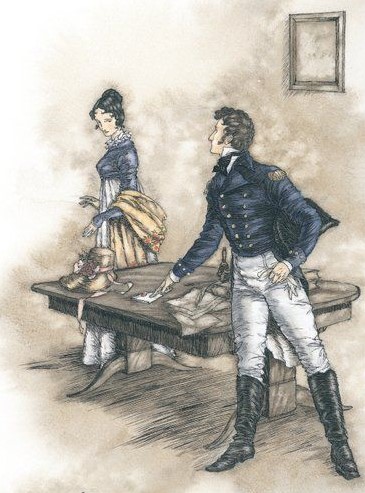
Harriet Smith looked around the room she had shared with Miss Martin for these months past. She had been invited to spend the summer holiday with her schoolmates and was made to feel quite at home. Such a simple, yet evocative word. Home. It was the one thing she truly did not have of her own. It affected her keenly to leave just now, especially after the warm reception she had received; however, the circumstances surrounding her abrupt leave-taking were not of her doing. Harriet would have given anything to have remained for the three months complete, but it was a sorrowful event that had brought the visit to an end. The Martins had been thrown into a period of mourning.

Harriet had been roused from her slumber by foreign sounds, having grown accustomed to the natural cacophony of Abbey-Mill Farm. A messenger from the abbey had knocked upon the door, even before the family’s favorite rooster crowed his first morning’s call.

Wiping the sleep from her eyes, Harriet sat up and turned to her bedmate who had been awoken by the persistent rapping as well. Elizabeth bade her to be silent as they heard her brother’s footsteps pass their chamber and down the stairs. The youngest family member, Judith, thankfully remained asleep. She would have caused a great commotion, as was her wont, and they would have been unable to keep their awakened state—and curiosity—unknown.

As it happened, the girls were unable to make out anything of interest, for only a mumbled exchange could be perceived. Elizabeth removed the counterpane and edged her way to the door, placing her ear against the thick wood in the attempt to hear below. Harriet waited abed, holding little hope that her friend’s action would provide any clues. It was only when the messenger took his leave, and the front door was shut closed, that Mr. Robert Martin made his way back up the stairs.

Elizabeth scurried back to Harriet’s side, and pulling the bedlinens back into place, the girls awaited for news of what was amiss. They shared a moment of disappointment when they heard Mr. Martin knock upon his mother’s door. In truth, Harriet was more relieved than disappointed. She would have burned with embarrassment had Mr. Martin seen her in such a state—in her night rail and her hair rolled up in curling paper.

Elizabeth crept up against the door once again. The ploy proved more successful this time as her mother’s chamber was down the hall, and the voices were easily discerned.

Baruch Dayan Emet,” Elizabeth heard her mother utter.

“Blessed is the Judge of Truth,” Elizabeth and her sister repeated quietly.

“What is it?” Harriet whispered. “What has happened?”

Elizabeth brought her finger to her lips as she pried opened the door, and motioned for the girls to come forward. Huddled together, they peered through the opening and watched Mrs. Martin reach for a sewing kit that had been thoughtlessly discarded atop a chest of drawers.

Withdrawing a pair of scissors from its cover, Mrs. Martin took hold of her son’s shirt collar and made a deep cut. Taking hold of the fabric, Robert deepened the cut with his own hands.

“A time to rend and a time to sew…do you know the verse, Harriet?”

“Yes, of course, I know it. It is from Ecclesiastes, but what does it signify?”

“Someone has died,” cried Judith.

“It could only be one person for Robert to perform such an act,” Elizabeth offered. “Grandpapa…”

Touched by this pronouncement, Harriet moved to embrace her friends, but Mrs. Martin caught sight of her daughters and called them hither.

“Mr. Knightley has sent word this morning,” she began. “Your grandpapa, peace be upon him, is no longer with us—now, now girls—” Mrs. Martin tightened her embrace, “we have been prepared for this eventuality. I beg you, be calm. Grandpapa, no doubt, has been reunited with his son, your own dear father, and your grandmama.”

Mrs. Martin brought a handkerchief to her lips and paused but for a moment. “We must dress and prepare the house. The rabbi will, no doubt, be visiting shortly.”

The family dispersed, each quietly seeing to their morning ablutions. Once dressed, the girls made their way downstairs and looked to their mother for direction. Harriet wished to be of service, though she knew her best efforts would only cause her friends additional work.

During her six-week visit, Harriet had learned that the Martin household was like no other of her acquaintance. The pantry and cupboards, indeed, all kitchen matters, were governed by a particular set of rules. Food preparation was of the utmost importance, as was the observance of the Sabbath, which began on Friday evenings and lasted through dusk the following day.

Unable to control herself, Harriet had asked the girls to explain this strange practice. She smiled now, recalling how Judy had rolled her eyes upon hearing yet another question, but it could not be helped. Harriet had always been a curious creature.

“Mysteries are the bane of my existence!” she had declared on more than one occasion. How she came to live at Mrs. Goddard’s school, she understood, was a mystery that could never be resolved. Therefore, at a very young age, Harriet determined that asking questions was her right—even if impertinent Miss! was often applied to her name.

Today, however, was another matter entirely. The household was in an uproar; the Martins were clearly distressed. Harriet would not add to their discomfort for the world, and so she sat quietly with her cup of tea and waited to be of service, and not a hinderance.

The cottage was not a grand home, not by any means, but Mrs. Martin had made it comfortable and had added feminine touches throughout. A framed mirror of respectable size had been placed by the front door where one could adjust one’s wrap or bonnet. Nonetheless, this instrument of vanity was the first to be draped with linen. The girls covered their hand-held mirrors and placed them face down upon their dressing tables. One’s toilette was not of importance on this sad day.

Mrs. Martin directed her son to gather as many small stools from around the farm that could be found while she swept the better of her two parlors. As mourners, the family would be seated low to the ground; those coming to condole would be offered the finer furniture—the upholstered chairs usually reserved to receive honored guests such as Mr. Knightley or his steward.

At length, Elizabeth put her friend to work, handing over a basket full of fresh eggs.

“Pray, set these to boil in the appropriate pot,” she instructed. “You know which one by now, dear Harriet.”

Before quitting the room, Elizabeth grabbed hold of her friend’s hand. “I know you are bursting with the need to ask your questions, but now is not the time. I promise I will explain it all—perhaps you will not find it that much different from your own family’s mourning rituals.”

These words, no doubt, were kindly meant; nonetheless, Harriet could not help but feel her shame even more profoundly. Whatever was Elizabeth thinking?

Family rituals? She did not have a family—other than Mrs. Goddard and the girls at school. In truth, she was all alone in the world. But it was not her custom to be petulant or dreary, and certainly not when her friends were in crisis.

Harriet gently placed the eggs to boil and was quite pleased, knowing she had chosen the proper pot. Indeed, Mrs. Martin had instructed her upon her first day at Abbey-Mill. The kitchen had been carefully prepared to house two separate sections: one for dairy products and preparation, and another for meat. Explanations as to why had not followed, and Harriet had to tuck her questions away for another time. She had collected a great list of questions during her visit, and it would take another six weeks to address each and every one!

Harriet overheard voices from the parlor as Mrs. Martin sent Judith to find a small table to set outside the door. Elizabeth was to follow with a bowl and pitcher of water. The girls were heard scurrying about, when Harriet heard yet another knock upon the front door. Checking on her pot of boiling water, she wiped her hands on a borrowed apron and peered into the foyer as Mrs. Martin welcomed the visitor.

The gentleman was unknown to Harriet, having never made his acquaintance in Highbury. In truth, upon further inspection, she found him to be oddly fascinating.

Dressed in unrelieved black, his long coat reached down to his calves. His pointed beard, peppered with gray, reminded Harriet of the Martin’s billy goat, and she nearly embarrassed herself by laughing aloud at the thought. She was unable to see the color of his hair, or if he had any at all, for he would not remove his hat—though he was in the presence of ladies. It was altogether strange to note that the man appeared to have ringlets on either side of his face!

Whatever could he be about?

Elizabeth and her sister had taken a seat by their mother’s side and signaled Harriet to join them in the parlor. While Mr. Martin offered the guest their most comfortable chair, Harriet quietly crept in, standing behind the girls in silent solidarity. The man opened a book he had withdrawn from his coat pocket and, speaking in the language that Harriet had grown accustomed to hearing in weeks past, began chanting a mournful prayer.

“Thank you for coming to us so quickly, Rabbi Kolman,” said Mrs. Martin after the family pronounced their amens. “We only just learned the news—you find us in quite a state.”

“One is never sufficiently prepared for these events, Mrs. Martin. Pray, do not make yourself anxious. Doctor Martsinkovsky, of blessed memory, would not burden his family and friends by being ill-prepared—even for his own funeral.” The rabbi allowed himself a slight chortle at his attempt at levity.

“My grandfather was known for his meticulous attention to detail,” said Mr. Martin. “He was the best of men.”

“Indeed. You will find that everything is in order, Mrs. Martin. The burial will take place this afternoon at three o’clock; our small congregation will accompany you during your seven days of mourning.”

“What?” gasped Harriet. “So soon?”

Elizabeth glared at her friend, who immediately understood her blunder. Bowing her head, Harriet silently vowed to say no more.

“Robert,” the rabbi continued, “you will want to unbolt the front door. It will be incommodious to be interrupted by visitors while at evening prayers. Whoever wishes to condole with the family will wash their hands before entering and come in quietly thereafter.”

“Yes, Rabbi Kolman,” replied Robert Martin. “I will see to it.”

“And girls,” the man said, addressing the Martin daughters, “make sure your dear mama does not tire herself with cooking and baking. The women of our congregation will fill the house with enough food to feed an army—certainly enough to last the week of mourning.”

The rabbi rose and shook hands with the man of the house and made for the door. “Remember to exchange your leather boots for other footwear. The weather has been relatively pleasant of late. I doubt you will be plagued with mud or muck. And one more thing! There is to be no shaving nor hair cutting—you young men today seem to have a penchant for fashion rather than following our traditions—for the whole of the week, mind!”

He gave a short bow to one and all before declaring: “May the Almighty comfort you among the mourners of Zion and Jerusalem.”

Taking to her feet upon the rabbi’s departure, Mrs. Martin clapped her hands to rouse the party from their melancholy. “That’s it, then,” said she. “Let us finish preparing ourselves…”

Another knock upon the door, however, interrupted Mrs. Martin’s directive. Harriet hoped whomever it was came bearing good news. She watched as Mr. Martin made for the door once again and was astonished to see Miss Emily Bickerton, her classmate, standing there. Sitting atop the pony trap was Peter, Mrs. Goddard’s manservant.

“Why, Emily!” cried Harriet. “Whatever do you do here?’

The young lady, known to Elizabeth and Judith Martin, for the foursome were at school together, was asked to enter and offered a glass of cool lemonade. This she was tempted to accept—the morning sun had taken its toll, even on the short ride—however, Emily Bickerton had been given a task, and she meant to discharge it with alacrity.

“Begging your pardon, Mrs. Martin,” she began and offered a quick bob of a curtsey. “I should be happy to take refreshment with you and my friends some other time. Mrs. Goddard has sent this note for you, ma’am.”

Having made her little speech, and handing over the missive, Emily turned to her classmates and took hold of their hands. “Harriet is to return with me,” said she. “Word was received that the doctor had passed—Oh! Please accept my condolences—Mrs. G. thought it best that Harriet return home.”

“Oh, no!” cried Elizabeth, her sister joining in unison. Even Mr. Martin seemed disappointed as his shoulders drooped even further, though he did not give voice to his objection.

Harriet felt herself blush. How kind they were to make such a fuss on her behalf. But she felt it only right to pack her things and return to school. Surely, she would only be in the way, and the family ought to have some privacy at such a time.

“Miss Smith,” said Mrs. Martin, as Harriet made for the staircase, “our present circumstances must draw your visit to a close, but you are such a sweet, unassuming girl, I know you will understand.”

“Pray, ma’am, be at ease. Naturally, I understand and should not wish to inconvenience you at such a time.”

“Our tradition requires us to observe certain practices, my dear, beginning with the full state of mourning for a week complete. Perhaps, after the following thirty-day period, when our restrictions are lessened, you girls may make arrangements to meet—certainly, you shall see each on Market Day or a visit to Ford’s.”

“Robert, now you must say something,” Judith decreed. “Lest Harriet feel she is not welcome by the whole family!”

Mr. Martin, it seemed, had no notion that he, too, was expected to add his farewell remarks. Caught unaware, he mumbled, “Miss Smith is always welcome at Abbey-Mill.”

Coming soon on November 5, 2024!


New Post

Jane Austen and thoughts for Rosh Hashanah…

As a woman, an immigrant, and a Jew, I found that following in Jane Austen’s footsteps helped me find my voice. I have written several novels that try to emulate Austen’s tone and that reflect her era, all while incorporating my heritage and Judaic storylines.

I choose to incorporate Jewish protagonists into these beloved classics not to try to change Austen’s characters—or to change the happily-ever-after events we Janeites have grown to love—but to emphasize the fact that we. were. there. Whether in the upper echelons or as entrepreneurs, manufacturers, tradesmen, or farmers, Jews were intertwined in the English tapestry.

I read Austen and many of her contemporaries—as well as many J.A.F.F. (Jane Austen fanfiction) authors—for entertainment, for escape, for inspiration. I know some readers may feel that including Jews in J.A.F.F. is beyond the scope of what Austen intended. There is no reason to believe that she had ever met a Jew or knowingly interacted with one. My novels hope to show how natural a thing it might have been by incorporating Jewish storylines and showing different characterizations of a culture so often maligned.

If readers search for Jewish historical fiction on Amazon, they will be inundated with Holocaust or WWII novels. They will find novels set during the Spanish Inquisition or from the biblical era. There are classics written by Chaucer, Shakespeare, and Dickens that include Jews characters. There are Regency novels written by modern-day authors such as Georgette Heyer that do the same; however, these books are disappointing to say the least—insulting and hurtful would be more to the point. The bigotry and intolerance of yesteryear has no place in today’s society; and yet, it still exists.

In the aftermath of the horrific events of 2023-2024, we Jews are preparing for the High Holy Days or the Days of Awe—Yamim Noraim. Though our hearts are broken, we prepare for a new year. Though we are grief stricken, we prepare for a new beginning. You may ask: How can you think of promoting a book at a time like this? Why even bother writing Jewish Austen Fan Fiction? The answer to that question can be found on my bookshelves and on my reading tablet.

Austen wrote with humor and sarcasm, but she didn’t shy away from powerful subjects. She touched upon hard-hitting societal issues such as the inequality between the have and have-nots; the dangers of childbirth and other health concerns that are treatable today; mental health, premarital sex and unwanted pregnancies, alcohol abuse and debauchery, the lack of opportunities and/or choices for women; the devastation of the Napoleonic Wars, etc.

Think only of the past as its remembrance gives you pleasure.”

We are shaped by our history, the good times and the bad. What has been done can’t be undone; however, with this quote, Austen encourages to be deliberate in our recollection. She reminds us to look back on the “good ol’ days” with nostalgia, choosing to recall only those memories that inspire hope. It is this attribute to focus on joyous occasions, on achieved dreams and accomplishments, that propels us forward and motivates us to persevere.

I write Jewish Austen Fan Fiction because that’s what I like to read. I write it for other Jewish women to provide them with a choice—to read something joyful, something light and entertaining. I write it for non-Jews too! I write it because we do not exist in a vacuum, all of our collective experiences matter.

In Judaism, Tuesday (Yom Shelishi) is a special day of the week. It is not uncommon to see weddings held on Tuesdays. Grand Openings are often scheduled for this day, as are the first day of school or summer camp, etc.

What other event may be scheduled for a Tuesday?

Hmm? How about a cover reveal? What about a book release? Yes, and yes! Like the double portion in the Torah…ki tov (for it is good)! Look for the cover reveal of my new book on Tuesday, October 1, 2024 and, with God’s help, the book release on Tuesday, November 5, 2024 (yes, that Tuesday).


Here is a little snippet to entice you:

Prior to beginning a new year at Mrs. Goddard’s School for Girls, Miss Harriet Smith spends the summer months with the Martin family at Abbey-Mill Farm—a house of Israelites, or is it Hebrews? Would it be impolitic to call them Jews? It matters not, for Harriet finds contentment there. And, if her heart betrays her with stronger feelings for Mr. Martin than she ought to have, they are hers alone.

Alone… a common enough phrase for the natural daughter of nobody knows whom. But when Miss Emma Woodhouse requires a new friend to guide and mold, Harriet suddenly finds herself in the midst of one imbroglio after another. Forbidden assignations, sentimental blunders, and questions abound!

Be it through gossip or vengeance—or small-minded people, “the instruments of darkness tell us truths.” Will Harriet remain encumbered to her mysterious past, or will astonishing discoveries provide the fulfillment she long desired?


I hope you’ll help me spread the word!

I wish all who celebrate: Shana Tova Umetuka (A sweet and happy new year)! May God hear our prayer! May the hostages be released and may we all be blessed with peace.

New Post

An “Emma” Vagary

The manuscript is finally with the editor. The nail biting has now begun. This stage in the process is the most unsettling. It has “my baby is leaving home” vibes all over it! Putting eighty thousands words down on paper, worrying about points of view, gaps in the story line, or the character’s arc is nothing compared to this stage. Soon, I will receive the manuscript with the editor’s corrections and suggestions—and the real work will begin.

I can’t wait to share this new story with you! A cover and title reveal is coming soon; but for now, I can only say: expect an Austen vagary. I know some of you will say, “What? Another fan fiction?” Some of you might ask, “What is a vagary?” Still others will ask, “Why??”

Jane Austen is known for her six published novels, however, she had been writing and compiling her work since she was eleven years of age. There are three bound notebooks containing twenty-nine poems and short-stories, now referred to as the Juvenilia. There are letters to family members and unfinished manuscripts. Since Austen’s death, her devoted fans have crafted stories to honor her wit and beloved, enduring characters.

Jane Austen Fan Fiction, also known as J.A.F.F. is a world-wide phenomenon. Some authors are passionate about including their culture or ethnicity into their stories. Others focus on secondary characters and reimagining plots to better suit their own creativity or tastes. As one author stated, readers have more options now. They can choose from “drawing-room” romance or “bedroom” romance or anywhere in between. The irony is that Jane Austen did not write “romance novels,” nor did she consider herself capable of writing such stories! That is the beauty of fan fiction. In writing a vagary or variation, the author is retelling a cherished story in a new light, with new characters, locations, and plot lines.

I, too, have written six books, including “The Meyerson’s of Meryton,” which is a variation-continuation of “Pride and Prejudice,” and “Celestial Persuasion,” which is a prequel of sorts to Austen’s “Persuasion.” This new book, number seven, is an “Emma” vagary.

The idea came to me in a dream one night. I recall waking the next morning and having to jot down the thought, before it became nothing more than a vague, ethereal memory. I quickly scribbled two or three sentences and they stared back at me from that white sheet of paper—every.single.day.

They were a constant reminder that I hadn’t written any more.

Well, now I have! Practically seventy-five thousand more words…on paper—waiting for the editor’s red pen and anticipating the delete button.

Thankfully, some of the suspense has been relieved by several lovely people who have volunteered to be “beta-readers.” These readers have pointed out the typos and grammatical errors, the nonsensical wording and aggravating gaps. However, they have also provided me with encouraging words, words of appreciation—words to inspire me to work harder still.

Pamela said: “Believe me when I say that I RARELY cry over a book, but reading that letter towards the end, must surely touch the heart (and tear-ducts) of all readers!”

Delia said: “A fascinating, surprising story of Harriet’s family history, new-found faith, and a maturing love.”

I suppose that’s enough coddling and “high-fiving” for now. I’m off to face the editor…

Wish me luck!

New Post

Sound the Shofar! This Jewish Historical Fiction Author Reflects Upon the Season

This month, the British empire suffered a tremendous loss. I dare say, the world at large lost a dedicated and devout leader. Queen Elizabeth’s death touched people from all walks of life, none more so than the Jewish community under her protection.

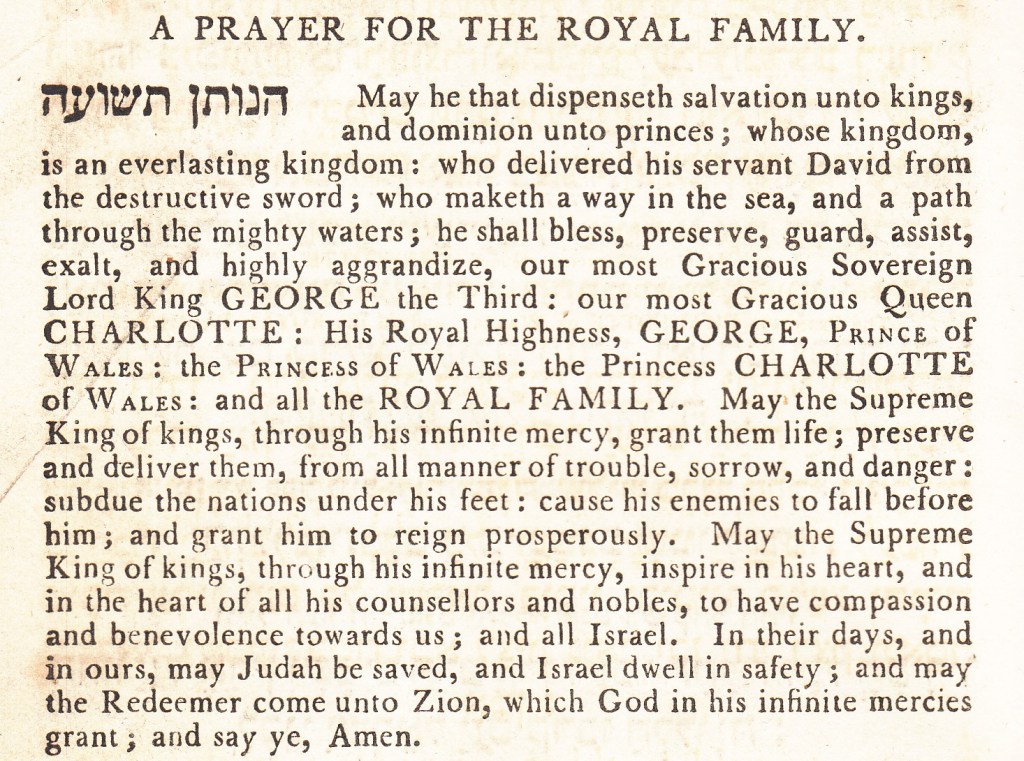
For over seventy years, congregations across the land concluded their Sabbath service praying that “He who gives salvation to kings and dominions to princes, guard her and deliver her from all trouble and sorrow.” But Jewish prayers for the monarchy, or for any ruling government, are not unusual. After the Israelites first expulsion from Jerusalem in 586 B.C.E., the prophet Jeremiah urged the community to pray to the Lord in order for Him to guide their foreign rules with wisdom and compassion. These prayers were eventually incorporated into the siddurim (weekly prayer book) in the 14th century.

However, the supplications were not solely reserved for the Sabbath service. In England, any royal event may have called the community to prayer. Indeed, if Jane Austen attended a Jewish service in 1787, she would have heard a prayer calling for the preservation of King George lll “from the hands of an assassin.” And in 1817, while the empire mourned the death of Princess Charlotte, Hyman Hurwitz composed Israel’s LamentMourn for the universal woe, With solemn dirge and fault’ring tongue, For England’s Lady is laid low, So dear, so lovely, and so young! 

Of course, there were occasions for happier prayers, such as the Golden Jubilee of Queen Victoria in 1887 and that of Queen Elizabeth II in 2002 and again in 2022.  

Her crown is honor and majesty; her scepter, law and morality. Her concern has been for welfare, freedom and unity, and in the lands of her dominion she has sustained justice and liberty for all races, tongues and creeds.” 

Rabbi Ephraim Mirvis, the Chief Rabbi of the United Kingdom and the Commonwealth

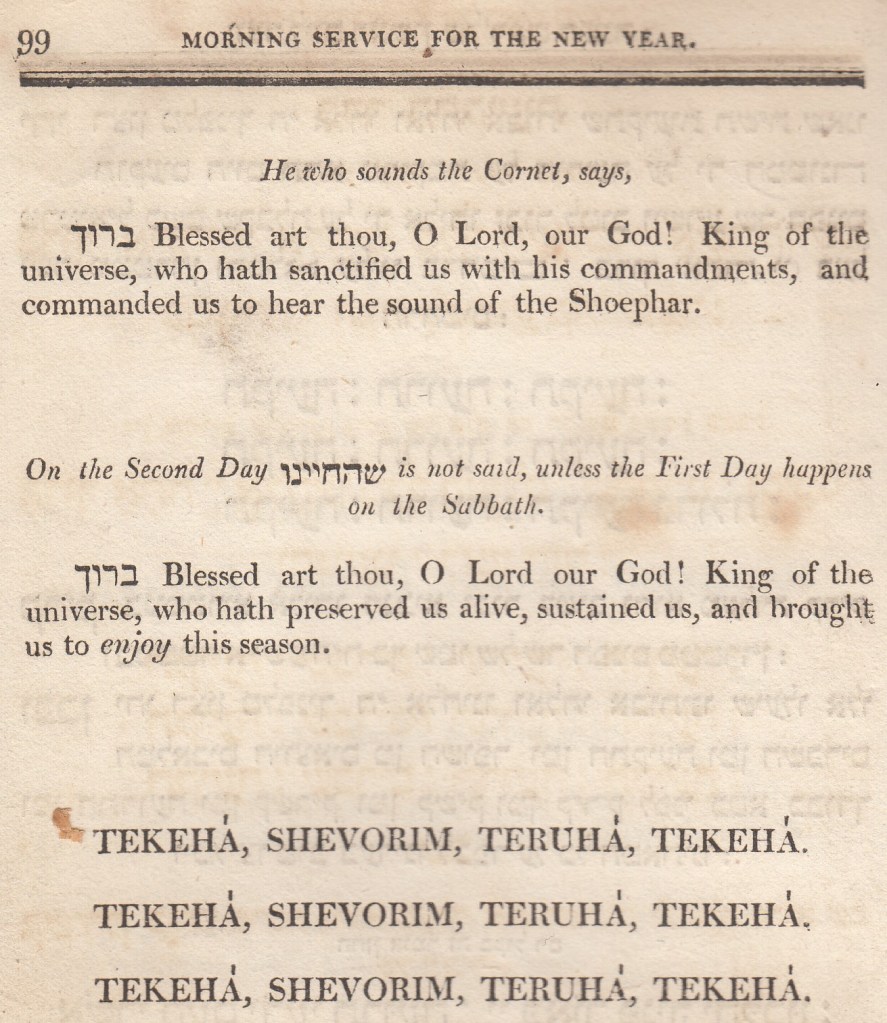
Did you know that the concept of jubilee hails from the Torah (Pentateuch)? According to the Book of Leviticus, a commemoration was held at the end of seven cycles of shmita (sabbatical years). Slaves or prisoners would be freed, debts would be forgiven and “the mercies of God would manifest.” The sounding of a ram’s horn (a shofar) would proclaim the celebration. In fact, the ancestral summons was used to announce a variety of events, including a king’s coronation or the proclaiming of a period of mourning—so apropos during these sad days of September.

This is the moment history stops; for a minute, an hour, for a day or a week; this is the moment history stops.”

BBC NEWS

If we were living in biblical times, the shofar would have certainly announced this momentous occasion and the community would have responded in kind. Today, Jews worldwide recognize the cry of Tekiah as the call to prepare for the new year and the Day of Atonement.

For over 5,700 years during the month of Elul (which usually falls during August or September in the Gregorian calendar), the piercing sound of the shofar has beckoned us to examine our behavior—to ask for forgiveness and to prepare to make amends for the new year.

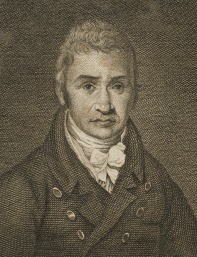
I came across another blog post about Anglo-Jewry while preparing this article. Naturally, it led me to another post where I discovered an interesting historical figure by the name of Solomon Bennett. For a variety of reasons, Mr. Bennett made it his life’s work to torment Solomon Hirschell, the Chief Rabbi of the German and Polish Jews of England. To be honest, I would say that both Solomon Bennett and Solomon Hirschell were full of themselves! If ever anyone ought to have heeded the sound of the shofar…The series of events that transpired between these two men borders on the ridiculous. Therefore you cannot fault me, dear reader, for immediately envisioning Mr. Collins and Mr. Bennet of Austen’s Pride and Prejudice.

Mr. Collins is a clergyman. He is tall and maintains formal manners; he comes across as pompous and grave. He takes great pains to inform everyone about his social status, which mostly stems from his noble patroness. Mr. Collins is excessive in his compliments and excessively snobbish. His counterpart is Mr. Bennet of Longbourn. This landed gentleman has a sarcastic, cynical sense of humor which he purposefully uses to irritate his prey. However, his dry wit and composure in the midst of mayhem serves him ill, for Mr. Bennet is weak and largely ineffective as a husband, father, or property owner.

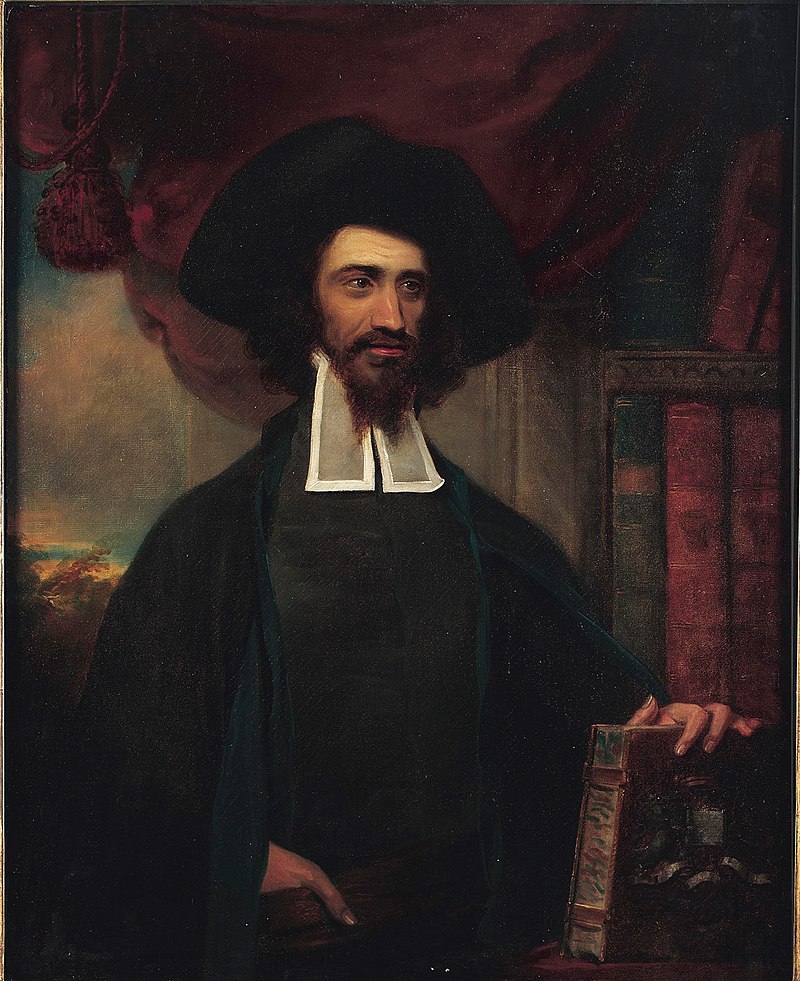
Solomon Hirschell

I now present Rabbi Solomon Hirschell. He was said to be a tall and imposing sort of man. He was a traditionalist and did not apologize for wanting to maintain ancient standards and customs. The rabbi liked to boast of his long line of impressive ancestors and benefactors, such as Sir Moses Montefiore and the Goldsmids. Although he had no formal secular education, Hirschell was proud of his Talmudic training and made it known that he possessed an impressive rabbinic library.

In 1811, the European Magazine published an interview with the clergyman. Hirschell proclaimed that he was direct descendant of the royal house of David. He believed his election as chief rabbi to be a natural turn of events. His fiercest enemy, Solomon Bennett, had a field day with that announcement. An author, artist, and a Hebrew scholar in his own right, Bennett publicly ridiculed the rabbi by declaring that he was only given the position due to his connections. But it didn’t end there. He claimed that Hirschell was barely competent in the English language and that he hid behind his father’s precious library to mask his illiteracy.

Of one thing you may be assured, Hirschell could only have known my English publications at second hand because he could not even understand them in the original language, of which his knowledge is so slender.”

Bennett continued to write scathing remarks about the shocking lack of rabbinical publications put out by the Hirschell administration. The Magna Bibliotheca shows that the chief rabbi only published three sermons. Of note: one marked the battle of Trafalgar in 1805 and another, which warned the community against sending their children to secular schools. The rabbi was so set in his ways, the sermons were given in Yiddish and had to be translated into English for publication.

Sometime around 1815, Rabbi Hirschell endorsed a book of Jewish studies written by another Solomon —Solomon Jacob Cohen. Bennett was highly critical of the work and published a 66-page pamphlet where he called the rabbi “a proud, savage, and tyrannical Pontiff…in his orthodox piety on the one hand, and his ignorant malice on the other.” 

Solomon Bennett

The public did not appreciate Bennett’s wit and he did not succeed in defaming his nemesis. In fact, the project was a complete failure and Bennett lost money— a £100 to be exact. Short of funds, he was unable to pay his publishers and was sent to debtor’s prison—blaming Hirschell for his misfortune all along the way.

For all that was said against him, Rabbi Hirschell appeared to hold England dear. In one particularly poignant speech, the rabbi expressed his gratitude that “providence permitted me to return to this my beloved native Land.” During the Napoleonic wars, Hirschell encouraged his congregants to enlist and to serve their adopted nation. It was also said that the rabbi secured permission for Jews to “stay away from church parades and to be sworn upon the Book of Leviticus—instead of the New Testament.” This was in keeping with his lack of interaction with his Christian counterparts and his sermons against the newly established Reform movement. On the other hand, Hirschell was known for his charitable organizations and worked to help the relatively newer community of Eastern European Jews.

In 1811, he aided the Westminster Jews’ Free School to open its doors. In 1817, the Jews’ Free School was founded. In 1820, the Western Institute for Clothing and Apprenticing Indigent Jewish Boys was opened; and in 1824,  the Society for the Relief of Indigent Poor began providing widows with five shillings per week.

During his administration as chief rabbi, the problem of poverty was investigated, reforms were suggested, and solutions were implemented (certainly not in keeping with a Mr. Collins).  In the face of these good deeds, Mr. Bennett’s cynicism should not have prevailed; however, it did. To this day, Solomon Hirschell’s legacy remains tainted. He has been labeled as a pompous, unwavering traditionalist, ignorant and out of touch.

Without wishing to overstep the boundaries of a simple blogger (who has no right to sit in judgment), it would seem that the call of Tekiah fell upon deaf ears with these two men. Talk about pride and prejudice! Perhaps they ought to have heeded Elul’s message; they should have recognized the error of their ways and made amends. History might have been kinder to both if the had learned to compromise a bit; but to paraphrase Jane Austen’s Northanger Abbey, I leave it to be settled, by whomsoever it may concern, whether the tendency of these two gentlemen is to recommend tyrannical rivalry or reward stubborn constancy.

May the sound of the shofar awaken us to be kind to one another and to cherish the moments that make up the days of our lives. May we all be inscribed in the Book of Life and may the new year be blessed with health, happiness and goodwill.

New Post

Jewish Regency Romance~ An Author’s View of the World

As a writer of Jewish Regency Romance and Jewish Austen Fan Fiction (JAFF), I can relate with the desire of wanting representation of my culture in a period piece; but my need goes as far as introducing new characters into Austen’s world. For me, it is enough to envision the diversity in the background, such as with the introduction of Rabbi and Mrs. Meyerson in The Meyersons of Merytonor in the forefront with Miss Abigail Isaacs and Lieutenant Gabay taking the lead roles in Celestial Persuasion.  Some would argue that Austen’s worldview was restricted and insular—that she never met a Jew—and that I’m missing the point.

I am at a loss to understand why people hold Miss Austen’s novels at so high a rate, which seem to me vulgar in tone, sterile in artistic invention, imprisoned in their wretched conventions of English society, without genius, wit, or knowledge of the world. Never was life so pinched and narrow.”

Ralph Waldo Emerson

In a letter dated December 17, 1816, Jane Austen describes her work to her sister, Cassandra, as “the little bit (two inches wide) of ivory on which I work with so fine a brush, as produces little effect after much labour.” Is it possible that even the author doubted her talent? In my view, Austen was very much present and interested in the world. She was well read and acquainted with the work of her contemporaries, however, Jane Austen transcended these novels that so often demanded and preached by creating her own nuanced style.  It is precisely her iconic wit and sardonic commentary of society that is quintessential Austen.

Austen’s contributions have been so widely adopted and adapted by other authors, it can be easy to forget how groundbreaking her work really was.”

Elizabeth Wilder, Stanford University

In a thesis presented at Leiden University, it is postulated that “Austen’s notion of realism stems from the detailed portrayals of her characters’ emotions and the social environment of the landed gentry.” This paper goes on to address what we Janeites already knew. Jane Austen was well aware of the French Revolution, the American Revolution, the Napoleonic wars, socio-economic, and socio-political issues. The issues of the day were a given—she didn’t need to beleaguer the point. Austen provided just enough of a backdrop for her audience to lose themselves in the fiction, yet feel completely ensconced in realistic scenarios.  

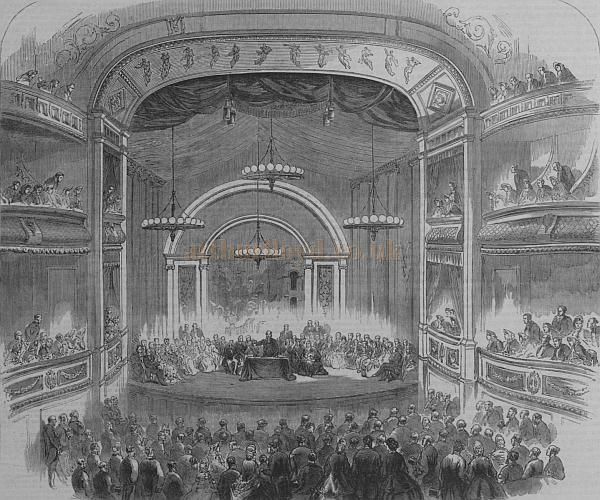
Bath Royal Theatre

Jane Austen may have lived a relatively quiet life as a parson’s daughter, but she was not without culture. She enjoyed books, plays, and operas written by foreign artists and compatriots alike. In fact, much has been written regarding a certain German author and his influence on Austen’s work. August von Kotzebue was tremendously popular during the Regency era. Over 170 editions of his plays were published, translated, and performed throughout Britain. While living in Bath, Jane attended a performance of one of his plays, Die Versöhnung (The Birthday) on June 19, 1799. It is very possible that she returned to watch another performance of the same play at the Bath Theatre Royal on May 21, 1803.

The Austen family had been keen exponents of amateur drama, and Jane herself was a discerning theatergoer.”

Joan Rees, author of Jane Austen: Woman and Writer

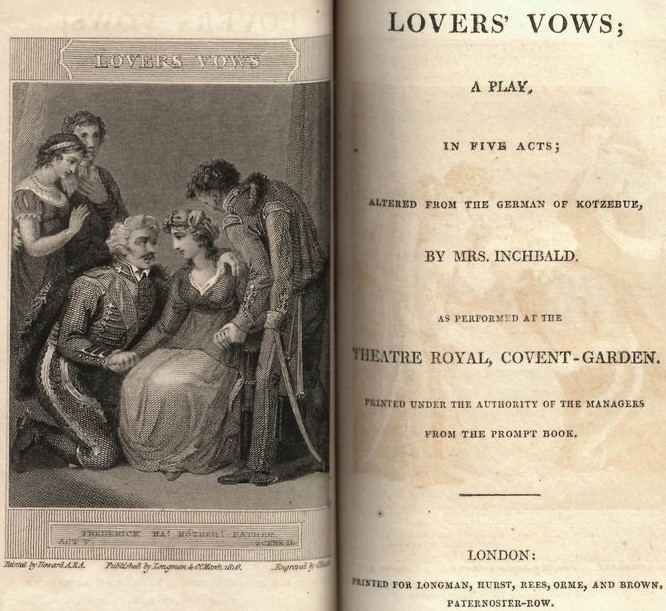
We don’t know what Austen thought of these performances; however, there is evidence that the play influenced her writing—specifically with Emma and Mansfield Park. Readers will recall that while the patriarch, Sir Thomas, is away from home, the Bertrams and Crawfords decide to try their hand at an amateur theatrical. They settle on the lascivious, Lovers’ Vows—an adaptation of Kotzebue’s Das Kind der Liebe.

Austen doesn’t specify the play’s author (or translator in this case) in her book. Just as she has done in other works, Austen trusts her audience is enlightened and up to speed on current trends. However, by using Kotzebue’s play as a plot device—with its open flirtation and seduction—Austen cleverly address the changing social mores (or lack thereof) in British culture. She also proves that she was in touch with the world around her and not “imprisoned in her wretched conventions of English society.”

For my purposes, I prefer to leave Austen’s characters as she would have imagined them in her own mind’s eye and add my cultural influence to the periphery. There were Jews in England in Austen’s day and they lived in various social spheres throughout the land. By not imposing this fact or truism upon beloved, fictional characters, I hope to follow Austen’s example. I’m simply adding another layer of dimension in the Regency world.

Just as Austen looked to Kotzebue for inspiration, I have looked to others to emulate. One such author was not Jane’s contemporary. Kate Emanuel was born to a family of German immigrants. Her grandfather had been a merchant and a goldsmith; however, by the time of Kate’s birth in 1844, the family was well established in Portsmouth and well known within the Jewish community. At the age of seventeen, Kate was a Sunday School teacher and devoted much of her free time to reading and writing.

It has been suggested that Kate delayed getting married—afraid that she wouldn’t be afforded the opportunity to write. Does that remind you of someone? Unlike Jane Austen, however, Kate was fortunate in her choice. She married her second cousin, Philip Magnus in 1870; and happily, her fears were unfounded. Her husband’s position as a teacher and rabbi at West London Synagogue allowed Kate the time, energy, and focus to become successful in her own right. She published The Outlines of Jewish History in 1880 and later Jewish Portraits, a series of essays on Heinrich Heine, George Eliot’s Daniel Deronda, and Moses Mendelssohn, amongst other subjects. In 1886, Philip was elevated to the peerage for his work in reforming national educational policy and the couple’s place among society was secured.

Lady Magnus speaks in the easy, cultured persona of the educated upper-class Englishwoman, often using irony and sarcasm…”

Cynthia Scheinberg, literary scholar

Again, I am reminded of that “other” British authoress. And much like Jane Austen, Kate Magnus did not underestimate her audience. She wrote as she saw, but didn’t impose her understanding of contemporary issues on others.

Lady Magnus

In 1906, The Jewish Encyclopedia compiled a list of over three hundred British citizens who, from 1700 on, “distinguished themselves in service, the arts and sciences, government, finance, and education.” Among these are fifteen women writers, including Kate Emanuel, Lady Magnus.

In dedication to her works, her son, Laurie, wrote: “Readers of Lady Magnus’s books, who knew the author, will know how steadfastly she practiced many of the virtues which she praised in the heroes of her religion. All her lifelong, she never omitted to spread the white cloth and light the candles in honor of Sabbath. From the beginning, her life and her writing were proudly Jewish.”

Austen and Magnus: two women who continue to influence my writing with their wit and understanding of the world. Who knows? Perhaps—”after a bit of labour”—I will find that my “bit of ivory” will also produce some effect.” Stay tuned and we shall see!

New Post

Mr. Darcy’s Declaration of Love~ A Poignant Scene by a Jewish Regency Author

There are those among us that could recite the so-called Hunsford Proposal—dismal and pathetic as it might have been—verbatim and with great flare. Mr. Darcy’s declaration of love is etched into our souls. Scenes from our favorite film adaptations—every raised brow, every clenched fist, and heaving breast—are easily recalled.

My feelings will not be repressed. You must allow me to tell you how ardently I admire and love you.”

At this juncture of Austen’s novel, Mr. Darcy and Miss Elizabeth Bennet are yet at odds with one another. Although he is besotted with the young lady, Mr. Darcy can’t see beyond his pride. His sense of Miss Bennet’s “inferiority,” her family connections and other obstacles are degrading in his view. Still, he feels strongly enough to forge ahead with the alliance and is certain that the lady will throw herself at his feet! However, our dear girl does nothing of the sort.

Although Lizzy’s reaction is in keeping with the insulting proposal, her own view of the gentleman is not without fault. Her sense of pride has been wounded since she overheard Mr. Darcy’s first words at the Meryton assembly and his unexpected declaration only served to further sanction her ire.

Austen’s work is often characterized as lovesick fiddle-faddle; however, the truth of the matter is the author is more a sociologist than romance novelist. What happens after the failed Hunsford proposal can only be called brilliant, because it is here, where Austen’s sharp observations of the highs and lows of human nature come into play. And when our dear couple finally find themselves thrown together once again, the results are as satisfying as a resolving chord after several measures of dissonance and tension.

My affections and wishes are unchanged; but one word from you will silence me on this subject for ever.”

In my J.A.F.F, The Meyersons of Meryton, I introduce a new family to the Bennets of Longbourn. Thanks to his alliance with Mr. Gardiner, Mr. Moses Montefiore and his brother-in-law, Mr. Nathaniel Rothschild, Rabbi Meyerson comes to Hertfordshire to establish a synagogue for the small Jewish community. But there is more to the story as the good rabbi is withholding some important facts. His dear wife will be shocked at his disclosure. The Bennet family will also have to deal with the consequences—none more so than Elizabeth and Mr. Darcy.

Their wedding is postponed, and the unexpected (and undesired) arrival of Mr. and Mrs. Wickham causes the anxious bride to have more than her fair share of the jitters. The following scene finds Elizabeth sharing her troubling thoughts with her betrothed.

“What is the matter, Elizabeth? You have not been yourself. Pray, tell me, what have I done?”

She winced at his concern, feeling penitent and undeserving. Still, she owed him some reply. “You have done nothing, sir. I feel…that is to say—I feel that I am ill prepared, Mr. Darcy.”

“Are we back to mister, again?” he whispered.

His sweet murmuring sent shivers down her spine, but she hardened herself and would not succumb to his charm. “A woman has so few opportunities to decide for herself, Mr. Darcy. Pray allow me to reconcile my doubts. A woman ought not to enter the matrimonial state half-heartedly.”

“I was not expecting such a practiced homily, certainly not at a time such as this.”

“I am my mother’s daughter,” she said, lifting her chin with a decisive flair. “I am outspoken and given to fits of impertinence—and well you know it. You witnessed my unpardonable display with Lydia, did you not? Lady Catherine accused me of being lost to every feeling of propriety and delicacy. Perhaps she was right.”

“Good God, Elizabeth! What does my aunt have to do with any of this?”

“Under the circumstances, one cannot help but be sensible to the lady’s objections. Already you have had to intercede on my family’s behalf, thanks to Lydia’s passionate and foolish nature. Now our wedding must be postponed due to my father’s involvement in espionage and heaven knows what. In reviewing my own behavior, I cannot help but find myself wanting of those talents which, surely, Mrs. Darcy of Pemberley should possess. Seen in this prodigious light, can you not acknowledge that Lady Catherine might have good reason to object to your connection to Longbourn?”

Is that our dear girl? Is that the Lizzy we’ve grown to know and love? Some readers have found the protagonist of my variation to be untrue to Austen’s vision. In my defense, I can only say that I followed Austen’s example of observation and delved a bit deeper into this beloved character. We know Elizabeth Bennet enjoys long walks and appreciates nature. She is lively and a brilliant conversationalist. Unfortunately, she is also a bit proud and not a little prejudice in her own right. And under certain, dire circumstances, Miss Elizabeth Bennet can be riddled with a common, ugly human flaw: self doubt.

In keeping with Pride and Prejudice, a series of events take place that find our dear couple thrown together after a brief separation. Much like Austen, I created a scene where Mr. Darcy bares his soul—again. But this time Elizabeth believes.

I hope you enjoyed the post and take a chance on The Meyersons of Meryton! If you like the video, please give it a thumbs up on YouTube. Until next time~

New Post

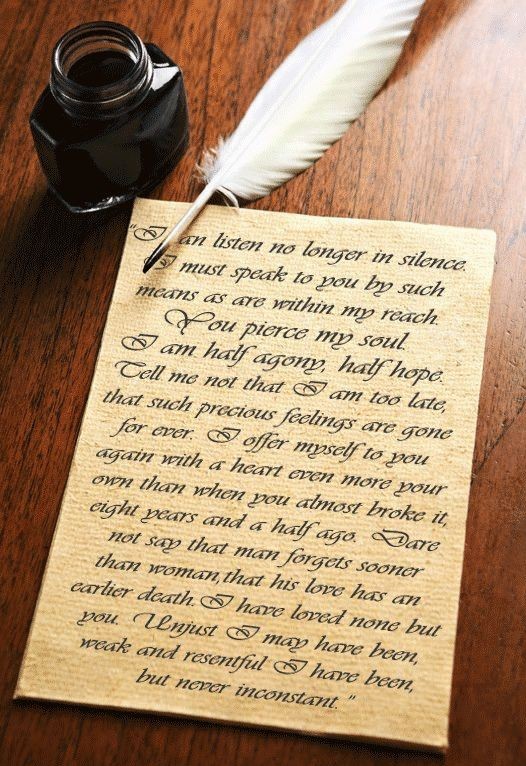
A Letter to Captain Wentworth~ A Snippet From a Jewish Regency Romance

For those of us who have read Austen’s Persuasion, there can be no doubt. Captain Wentworth’s letter to Miss Anne Elliot is exquisite. It is a pivotal moment which brings tears to our eyes and returns hope to our bruised hearts.

But have you ever given any thought to what might have occurred before the good captain returned to England? The man was distraught! He was possessed by bitterness, regret, and a profound sense of grief. Did he pour out his heart? Did he attempt to contact his one true love and see if he could secure her trust and affections? No. No, he did not. The brave and battle-born sea captain dug in his heals and refused to give quarter! When he finally returns to England, he shows Anne Elliot no mercy and our hearts cry on her behalf. It’s not until the very end of the story that our injured souls truly begin to heal, and that is principally due —in my humble opinion—to Austen’s finest work: Captain Wentworth’s letter.

But what brought on the change in his behavior?

In “Celestial Persuasion,” Miss Abigail Isaacs and Captain Wentworth are thrown into a relationship that would have been considered quite rare during the Regency era. In fact, they become correspondents—pen pals, if you will, thanks to Jonathan Isaacs’ plotting and planning.

Abigail undergoes a series of trials; and as we usually discover in novels such as these, our protagonist finds her way through some dark and troubling times. Along the way, she shares her thoughts and experiences with her new friend. In her final letter, Abigail urges the captain home to England and back to his Anne. It remains to be seen if he was easily persuaded…

With love,

New Post

Finding the Yiddishkeit in my Jane Austen Fan Fiction

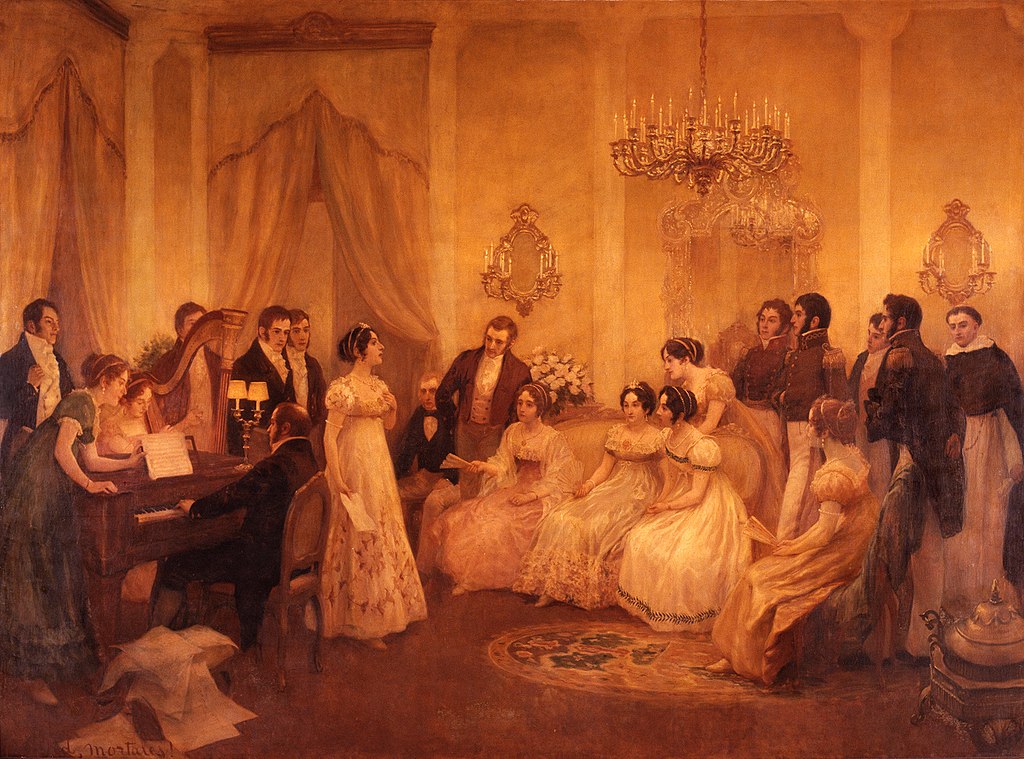
As some of you may know, I set out to write Celestial Persuasion when I came across this painting of Mariquita Sanchez de Thompson. This scene depicts the moment when the Argentine national anthem was sung for the very first time.

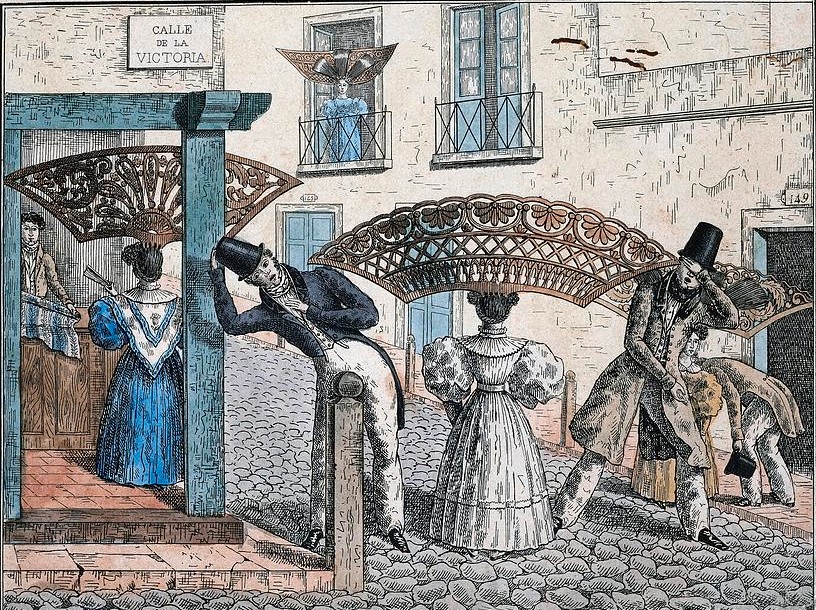
The image of ladies and gentlemen in Regency attire was far from what I had expected to find in colonial Argentina. To tell the truth, I would have expected full crinoline skirts and impressive peinetas, such as we find in the satirical work of Cesar Hipolito Bacle.

By delving into the aftermath of the May Revolution of 1810, I discovered that the aristocracy of Buenos Aires was more inclined to follow the fashion trends of Paris or even London. The influence coming from across the pond was not to be denied!

I began connecting the dots and weaved a tale that included English noblemen and naval officers, along with the liberator of Spanish America: Jose de San Martin. Establishing a friendship in between Jane Austen’s Captain Wentworth and my own fictional character, Jonathan Isaacs, was the next step in the process.

Next, I began looking to incorporate that bit of yiddishkeit that is so crucial to my work. For example, I wanted to ensure that the Jewish holidays mentioned throughout the novel occurred in accordance to the Hebrew calendar. In the prologue, Abigail Isaacs writes to her brother, describing their father’s passing—just prior to his favorite holiday: Pesach (Passover).

I must assume that you have not received my news from home, and knowing how you are impatient with all but the essentials, allow me to put it to you in words so familiar they could be your own: our dear papa died on March 26th on the eve of Rosh Chodesh—sadly a little more than a week before his favorite holiday. He had been looking forward to leading the Passover seder this year; but then again, he had been unwell for several months and refused to change his habits.

Rosh Chodesh is mentioned several times throughout the novel, as are other holidays, such as the High Holy Days and Chanukah. I suppose I could have picked any date when these events “usually” occur; but it was important to be accurate, particularly when it came to a certain battle that took place on February 3, 1813. Hopefully, the following snippet helps to explain…

“San Martín plans to engage with a Spanish royalist force in one month’s time,” he muttered beneath his breath. “When do you expect to travel to witness your monumental natural event?”

She grimaced at the small sound emitting from her lips. “I must be in residence at the beginning of the month, though I do not believe it is any of your concern.” Rethinking her statement, Abigail’s voice grew with enthusiasm. “Mr. Gabay!” she exclaimed, “has he chosen the exact date?”

“You cannot imagine that I would share that information, Miss Isaacs.”

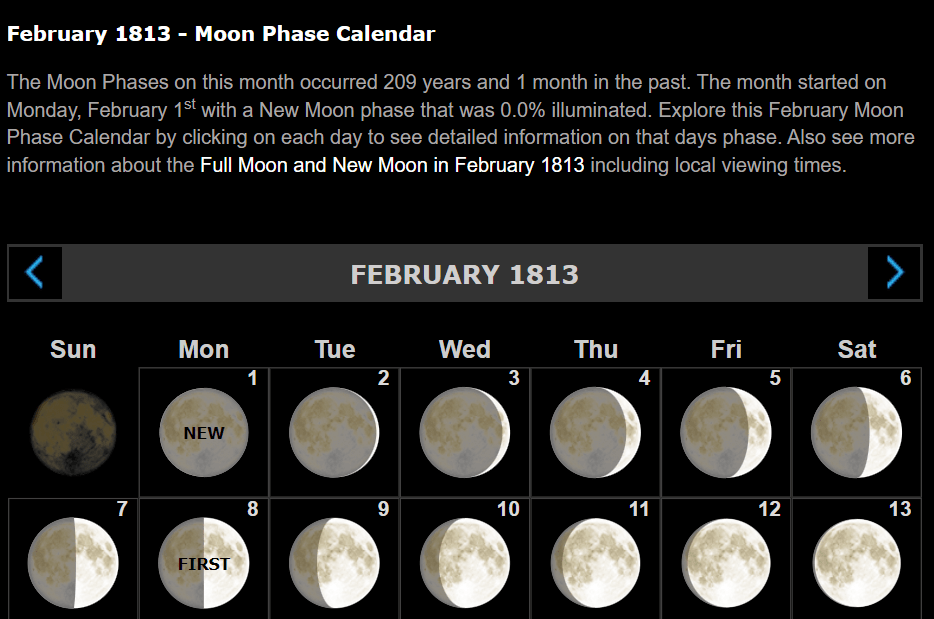
Vehemently she shook her head. “I care not for your confidences, at least for the reasons you may suspect. I only ask that you heed me, sir. I must be in Rosario for Rosh Chodesh. There will be a new moon on the first of February. The night’s sky will be sufficiently darkened to allow for maximum visibility of galactic activity. Do you understand my meaning?”

The Battle of San Lorenzo was a turning point for the rebels fighting the Spanish crown. If I wanted to showcase the event in my story—and have it coincide with Rosh Chodesh—it had to be… kosher. I knew I had to get it right! First, I researched the status of the moon phase in February 1813. I found that information here and here. Then, I checked to see if the Gregorian calendar aligned with the Hebrew calendar. I found that here and here. It worked out!

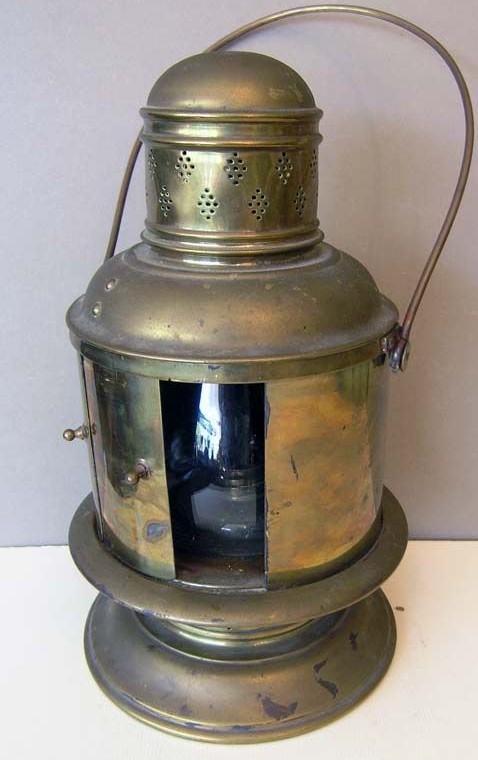
Throughout the story, we follow Abigail as she celebrates Shabbat and Havdalah. Granted, her family is no longer as pious as when her mother lived. Nevertheless, when Abigail is called to London to meet Lord Fife, she ensures to take her ritual items. And when she and Mrs. Frankel find themselves aboard a frigate sailing across the Atlantic, I made sure to incorporate an every day nautical item into a pivotal scene.

Wrapping up warmly in her darkest cape, Abigail reached for the lantern perched above the dresser. It was the same lantern she and Mrs. Frankel had been instructed to use for the Sabbath, for it came equipped with a sliding shutter to darken the room without extinguishing the candle. Abigail smiled, recalling the cabin boy’s shock at their request to kindle the Shabbos candles whilst aboard the ship. He had gone on for nearly a quarter of an hour outlining the hazards and noting the fire stations that equipped every passageway in the event of a crisis...

Abigail had been correct in her estimation. The men were gallivanting en masse at the forecastle and she could remain in peace to the aft. She allowed herself to be guided by the lantern’s light but closed the shutter when she reached her chosen destination and waited for her eyes to grow accustomed to the darkness. In truth, it was a perfect night for stargazing as they had just entered into the new moon phase. Without the moonlight, the galaxy’s core was visible in all its splendor, and Abigail stood immobile in awe of the spectacle before her.

How many minutes had transpired, she could not say for certain. She felt tears trickle down her cheeks, but she could not be bothered to wipe them away. How she longed to share the moment with Jonathan! Not to scribble down the longitude and latitude of their location. Not to calculate or measure, but simply to stand and observe the immensity of it all and to understand her place in the universe. Her tears had dried where they had fallen, but with the wind picking up, she could once again feel bits of salt water on her cheeks as the waves began to swell. It was not until she heard the men shouting and witnessed the crew running hither and thither that Abigail was obliged to return to her room.

She retraced her footsteps to find the ladder once more. The descent, she hoped, would prove to be easier; but as she stepped down off the last rung, the wind and waves combined and exerted such a force on the ship that Abigail lost her balance. With flailing hands she attempted to seize hold of something that would steady her feet; but the action cost her dearly, for the lantern slipped from her grasp and the candle was extinguished. She crept along the passageway, holding on to the walls, helpless in the dark, until the ship pitched suddenly and she felt herself tumble forward.

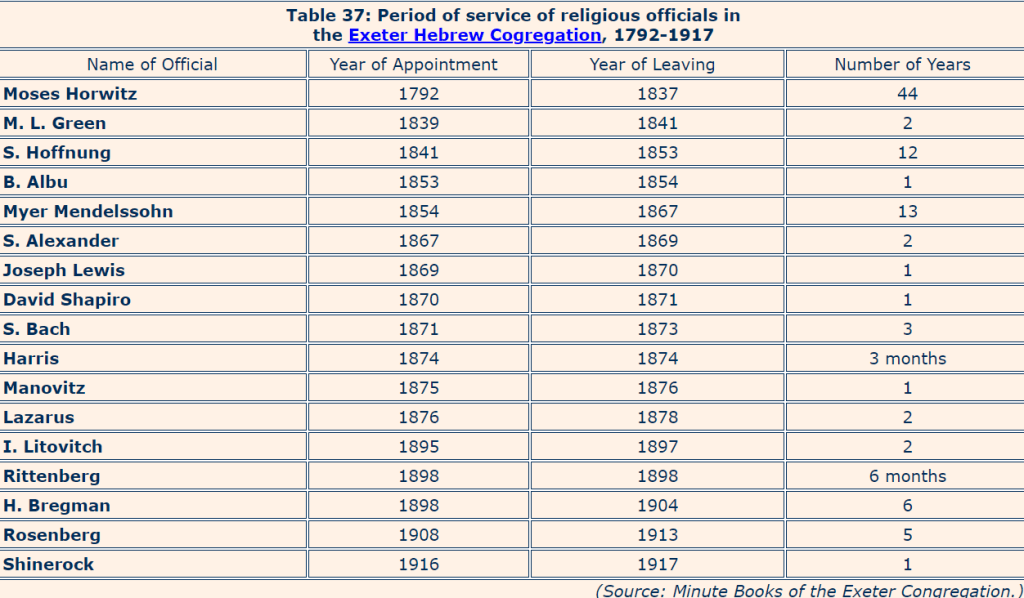
As my outline began unfolding, I found that I quite liked the town of Exeter for the Isaacs family. The obvious problem was that I knew next to nothing about Devonshire as it related to Jews. Imagine my delight when I came across the wealth of information located here and here. Actually, there are pages and pages of data relating to the Jewish history in this particular county. I not only discovered the location of Exeter’s synagogue, but its officiant as well. Naturally, I had to showcase Abigail’s relationship with her rabbi and her place of worship.

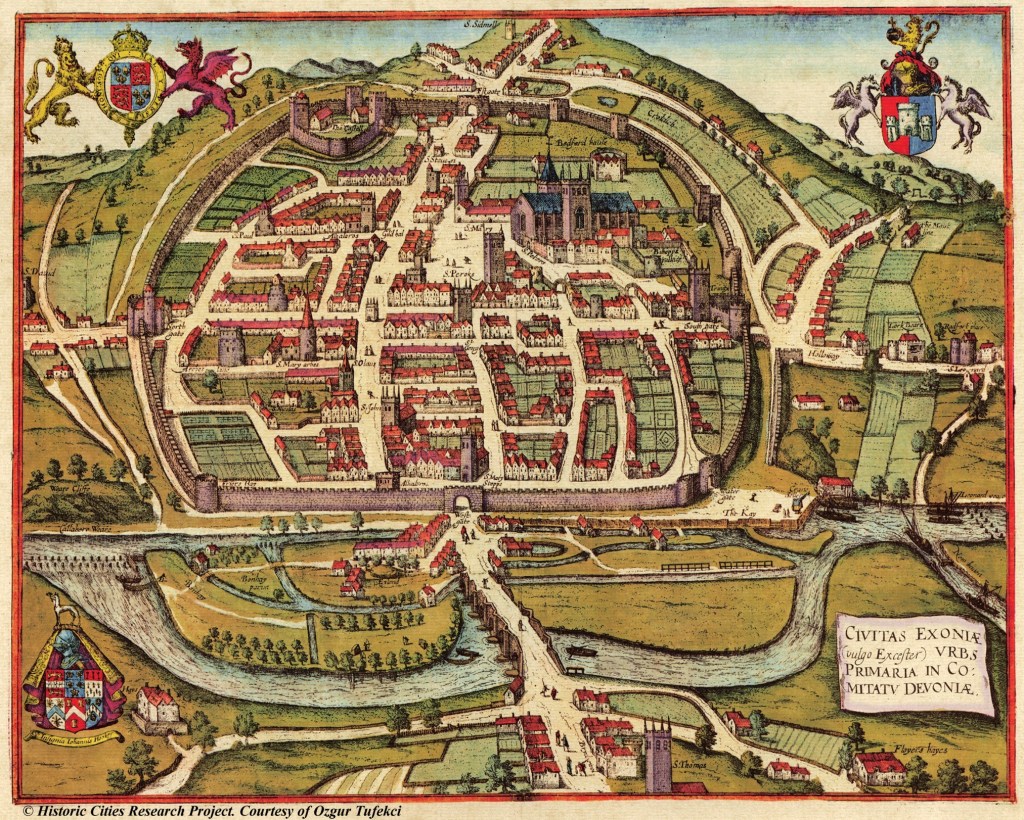
In addition, this map created by Braun & Hogenberg in 1617 helped me visualize the Isaacs hometown.

Approaching the mile mark, she passed St. Thomas’s chapel and the many farms that dotted Byrd’s Lane. Abigail was flooded with bittersweet memories and recalled walking toward the synagogue, her small hand held by her mother, while Jonathan raced ahead and her father followed behind at a leisurely pace. They would meet friends along the way, and the adults would catch up on the weekly gossip before entering the house of worship. Ezekiel and Kitty Jacobs, her parents’ closest friends, had been amongst the founders of the synagogue, for they applied to St. Mary Arches Church to lease the ground for its erection. Whenever Jonathan would complain of the rabbi’s lengthy sermons, Mr. Jacobs would tell the story of the synagogue’s consecration.

Lastly, I wanted my story to lay the foundation for the establishment of the Jewish Colonization Association. Headed by financier and renown philanthropist, Baron Maurice von Hirsch and his wife, Baroness Clara, this organization was created decades after Argentina’s declared independence. However, had it not been for such forward thinking individuals such Wilhelm Loewenthal, a Romanian doctor conducting research in the area, Rabbi Zadoc Kahn, Chief Rabbi of Paris, or my fictional Lieutenant Gabay with his pipe dreams, who is to say if the seeds of change would have come to fruition.

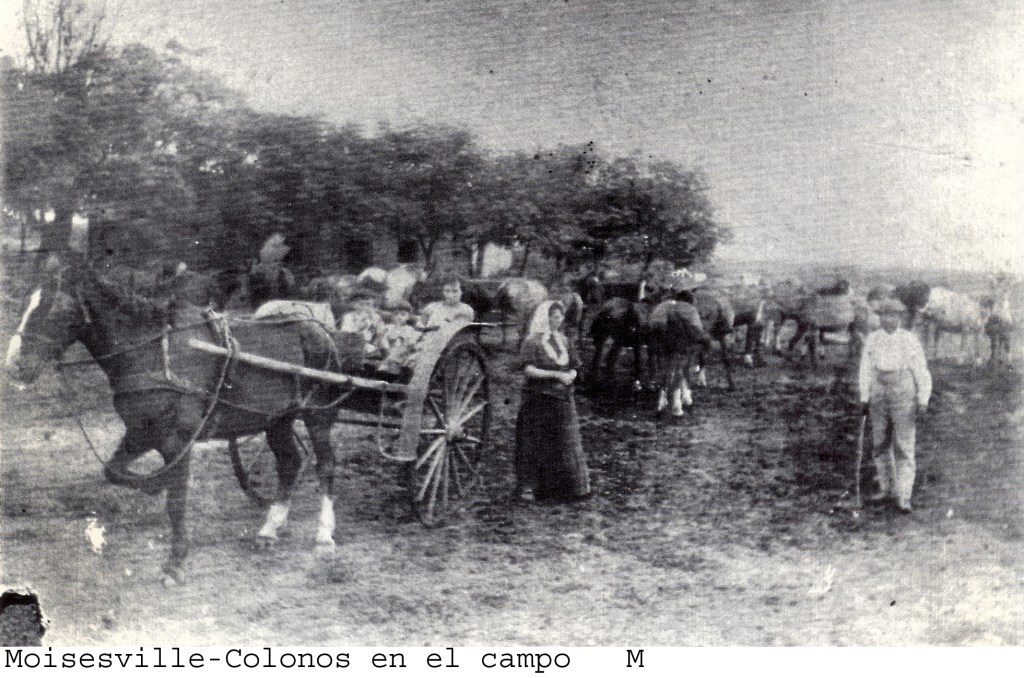
The Battle of San Lorenzo took place in 1813 in the province of Santa Fe. A little over 70 years later, a group of Jews escaping pogroms and persecution in Imperial Russia settled in a town about three hours away from that battlefield. They named their new home Kiryat Moshe, or Town of Moses, to honor Maurice Hirsch. The land agent, who may or may not have been of French origin, registered the name to his own liking and the town became known as Moisés Ville. The inhabitants, these so-called Jewish gauchos, were the first to create a Jewish agricultural colony in Argentina. Of course, my characters had no notion of what was to come, but they had hope.

Captain Wentworth, my last piece of news may be the greatest surprise of all. Mr. Gabay and I shall not reside in Buenos Aires for long. When the fight for independence has been won, my Mr. Gabay—who never intended to make the military his career—will resign his commission. We shall repair to my father’s property in Rosario, where I will be at liberty to continue my research and Mr. Gabay will begin his work in helping the Jewish communities of the Russian Empire. Santa Fe is a wide and open land. Refugees of all faiths and backgrounds may surely make this place their new homeland and dwell in peace without persecution. Praise God, everything does indeed happen for a reason.

Thanks for stopping by. I hope you enjoyed the post!

Until next time,

New Post

The Association of Jewish Libraries

The Association of Jewish Libraries (AJL) has launched a new podcast entitled, “Nice Jewish Books.” A leading authority on Judaica librarianship, this AJL series focuses on adult Jewish fiction.

Host, Sheryl Stahl is the director of the Frances-Henry Library on the Jack H. Skirball campus  of the Hebrew Union College-Jewish Institute of Religion. She is an avid reader herself; and after serving the AJL in various capacities, she has now taken on the role of Podcaster. Stahl’s background comes into play as she interacts with authors and provides a platform to discuss their work. The premise for the show is to talk about Jewish literature, although her preference is not to include books based on war, political thrillers or Holocaust-related works. That, of course, was what drew my attention! Here— at long last— was a place to discuss my passion for Jewish historical fiction.

Do me a favor, won’t you?

Make yourself a nice cup of tea and tune in!

I am honored and delighted to announce that I was a guest author on the program. Please follow the link and listen in. Leave a comment on the website for Sheryl and the AJL community of readers and bibliophiles. I’d be so proud to know you stopped by. Happy reading (and listening)!

New Post

Jane Austen & Jewish Themes Part V~ Delving into Diversity

I’ve been addressing Jane Austen’s work and the correlating themes found in Judaic text. The reason for this exercise stems from my desire to find historical fiction or historical romance novels that contain a modicum of Judaica. Of course, Austen’s work isn’t considered historical fiction. Her stories were contemporary; her readers would have recognized their world amongst the backdrop of her settings. But that’s not my point. Sorry!

While I have scoured endless book titles and conducted mind numbing Internet searches in the hopes of finding some hidden gem, I have very little to show for my effort. That was the impetus to take pen in hand, so to speak, and to write my own fanfiction. And why not? Jane Austen’s work continues to inspire and entertain a diverse, world-wide audience. We are presented with modern interpretations of her classics novels, time-travel storylines, and narratives that focus on any number of ethnicities and cultures. Evidently, our thirst for new and tantalizing Austenesque plots and themes is not so easily quenched! And for this particular reader, it seemed only logical that the Jewish community be represented in Austen’s fandom.

That being said, I am not an advocate of racelifting. By that I mean, I have no need to replace a character’s Anglican faith for Judaism. I am satisfied with the introduction of Jewish protagonists and themes that are a true reflection of our community as a whole. For other authors and readers, I understand that it is imperative to see a Jewish character cast in the original role. And that’s okay. That’s the magic of fanfiction. In The Meyersons of Meryton, I introduce a rabbi and his family to Austen’s fictional town in Hertfordshire. In Celestial Persuasion, I create a friendship in-between Captain Wentworth and the Isaacs siblings that stretches far beyond England’s shores. With Destiny by Design~ Leah’s Journey, I showcase a story that is loosely based on my ancestors’ experiences. Although this novel is not a J.A.F.F. (Jane Austen Fan Fiction), there is a definite nod to the author and her work. These novels, along with my first title, Becoming Malka, are my small contribution to the lesser known genres of Jewish Historical Fiction and Jewish Historical Romance.

As we are now officially in the “holiday season,” there is an opportunity to address diversity and Jewish characters in other forms of entertainment. For example, Hallmark has attempted to incorporate Jewish storylines and characters in their holiday lineup. These shows are a bit cringe-worthy, I’ll admit it, but at least they’re trying. I’d encourage them to try a little harder. While I do want to see Jewish representation in these soapy movies, I do not want to see Hanukkah downgraded to a Christmas-wanna-be. The whole point of the Maccabean revolt was not to assimilate to the dominating culture. It is a fine line, I understand. Hallmark can do better.

Over at Disney, we were introduced to a Jewish heroine for one episode of Elena of Avalor. The character is supposed to be a Sephardic princess, but she uses Yiddish terminology and speaks of Ashkenazi traditions. And, I’m sorry to say, the princess is not very attractive. Like the folks over at Hallmark, the imagineers could have put forth more effort. This piece needed a little more research into the character’s cultural background and a lot more generosity in developing her aesthetic. Perhaps they could have taken a page from the variety of diverse characters showing up in other animation, comics, and television series and given the Jewish community a proper heroine.

And speaking of television, did you hear the collective “oy!” when fans of Downton Abbey found out that Lady Crawley’s father was Jewish? The writers did not stop there. The series also introduced a Jewish family of the upper echelons of society. Apparently, Lord Sinderby’s family had fled the pogroms and persecution of Imperial Russia some sixty years ago. Sparks fly when his son, Ephraim (he goes by his second name, Atticus) meets and falls in love with Lady Rose…who is not Jewish. This all-too-familiar predicament, as well as other issues of anti-Semitism in Edwardian England, are brought to the forefront. While I was not entirely pleased with the outcome, I was glad that at least our community’s presence was addressed.

With the success of Sanditon and Bridgerton—and the plethora of costume dramas in the world today— it seems clear we are in need of the escapism that these shows provide. We fantasize and yearn for the days of polite society and social graces. How much more pleasing is it to read a novel or watch a show that allows one to identify with a character— someone who stands to represent one’s community, one’s values, and heritage in a positive light? It is time to come out from the shadows of the likes of Heyer, Dickens, and Shakespeare. Their Jewish characters were cliché and demeaning. The Jewish community has played a proud and active role in nearly every culture around the world. We are connected to that history by a chain that spans over five thousand years.

Jane Austen certainly instilled her biblical knowledge and values into her novels. She commented on societal issues with her wit and keen power of observation. Her readers, no doubt, recognized and identified with these truths. If one of my books brings a sense of connection, a sense of community, a sense of pride to a Jewish reader, I would have fulfilled my goal. My books are a link in that ancient chain. They are another opportunity to say: Hineini —I am here. We are here. And we’re not going anywhere.

Chag Chanukah Sameach!