New Post

Publishing Day: A Revolutionary Jewish Fiction I Couldn’t Find on the Shelf~

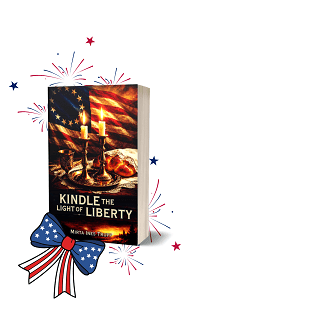
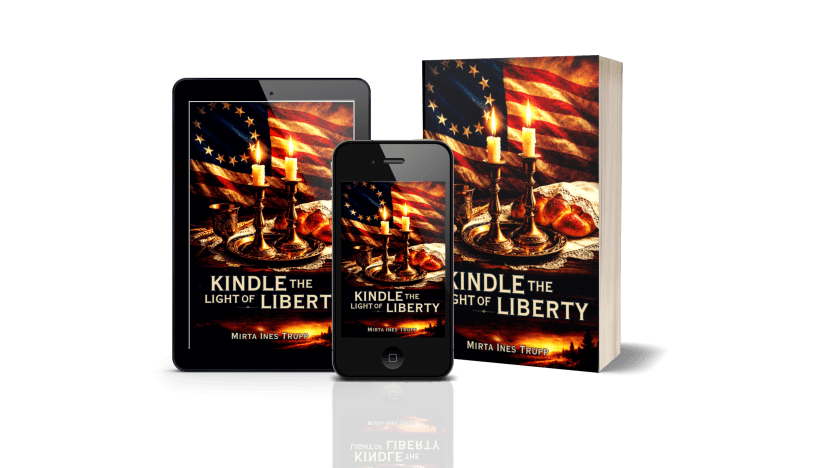
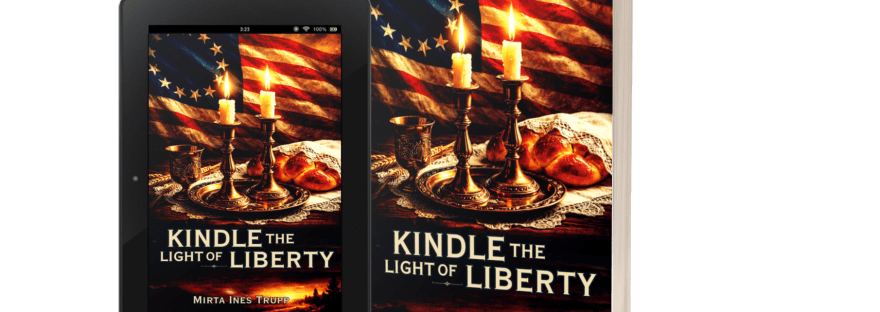
As America commemorates the 250th anniversary of its independence, I’m delighted to announce that Kindle the Light of Liberty is now available on Amazon.

Like many readers who love early American novels, I grew up surrounded by familiar stories. We know the Pilgrims. We know the Puritans and the Quakers. We know Washington, Franklin, Adams, and Jefferson. Historical fiction has given us countless perspectives on the birth of our nation. But one question kept nagging at me:

Where were the Jews?

Not because we weren’t here—but because we so rarely appear in the founding narrative.
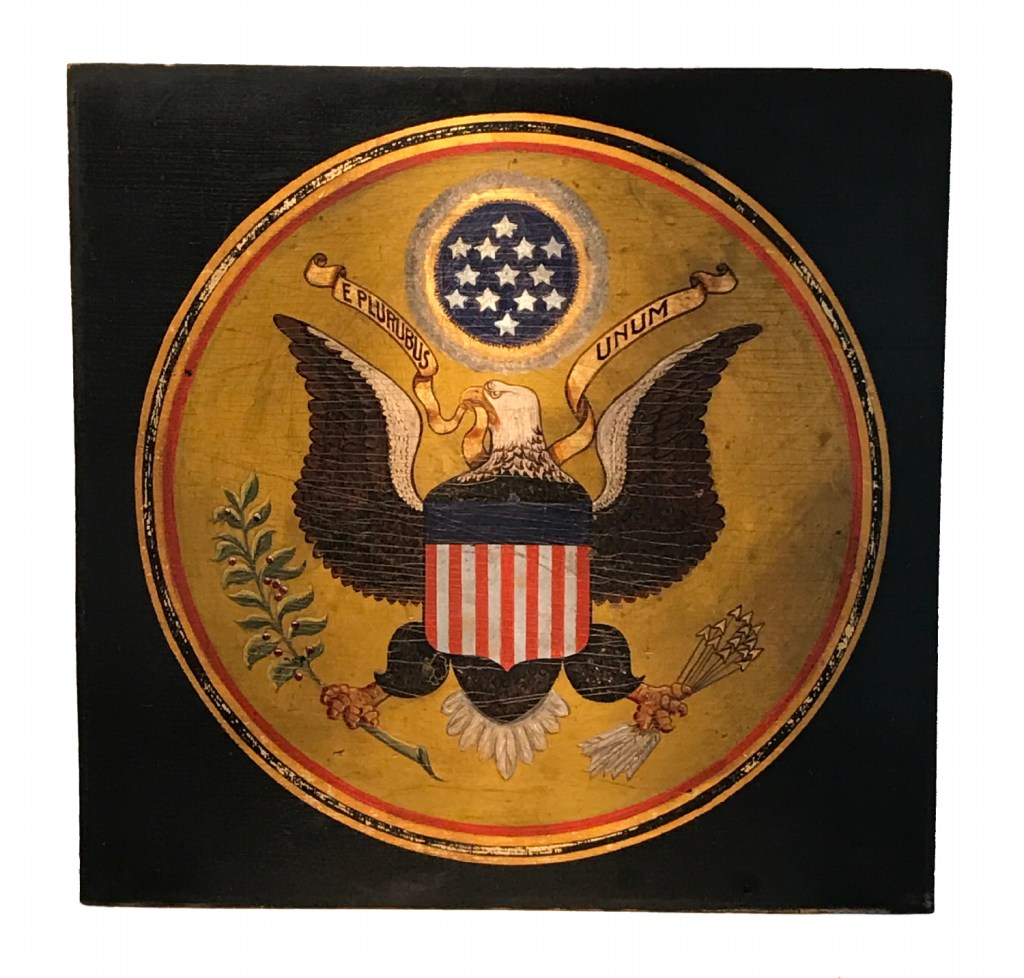
Great Seal of the United States

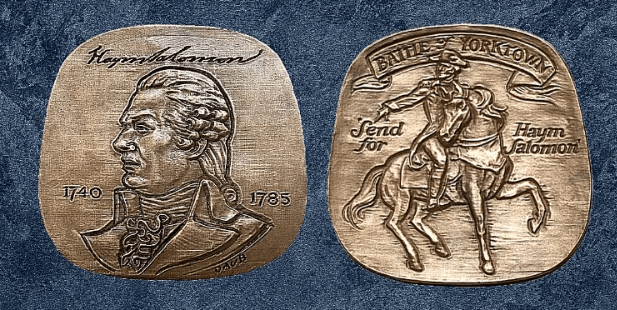
Historians have long documented the lives of America’s colonial Jewish communities. Adam Jortner’s A Promised Land: Jewish Patriots, the American Revolution, and the Birth of Religious Freedom, Oscar Reiss’s The Jew in Colonial America, and Laurens Schwartz’s Jews and the American Revolution: Haym Salomon and Others all remind us that Jewish families were very much part of the American story. They built businesses, raised children, prayed in their houses of worship, argued over politics, supported different sides of the conflict, and helped shaped an emerging nation. Yet when I looked for novels that placed Jewish families at the center of Revolutionary America, I found surprisingly few.

That absence became the beginning of Kindle the Light of Liberty.

Set in Philadelphia, the novel follows Jewish colonists wrestling with questions of identity, faith, and loyalty as their city transforms into the cradle of Revolution. The story unfolds not only in the streets and meeting houses, but around kitchen tables, inside shops, through letters, and clandestine conversations. Rose Wachsman and her family live alongside neighbors whose lives are equally shaped by uncertainty—including Betsy Ross—because history wasn’t experienced in isolated communities. It was shared.

And just as Jane Austen used drawing rooms and assemblies to critique a changing world, her sharp social commentary inspired me to view the American Revolution through the intimate, high-stakes lens of one Jewish household.

Yes, I said Jane Austen.
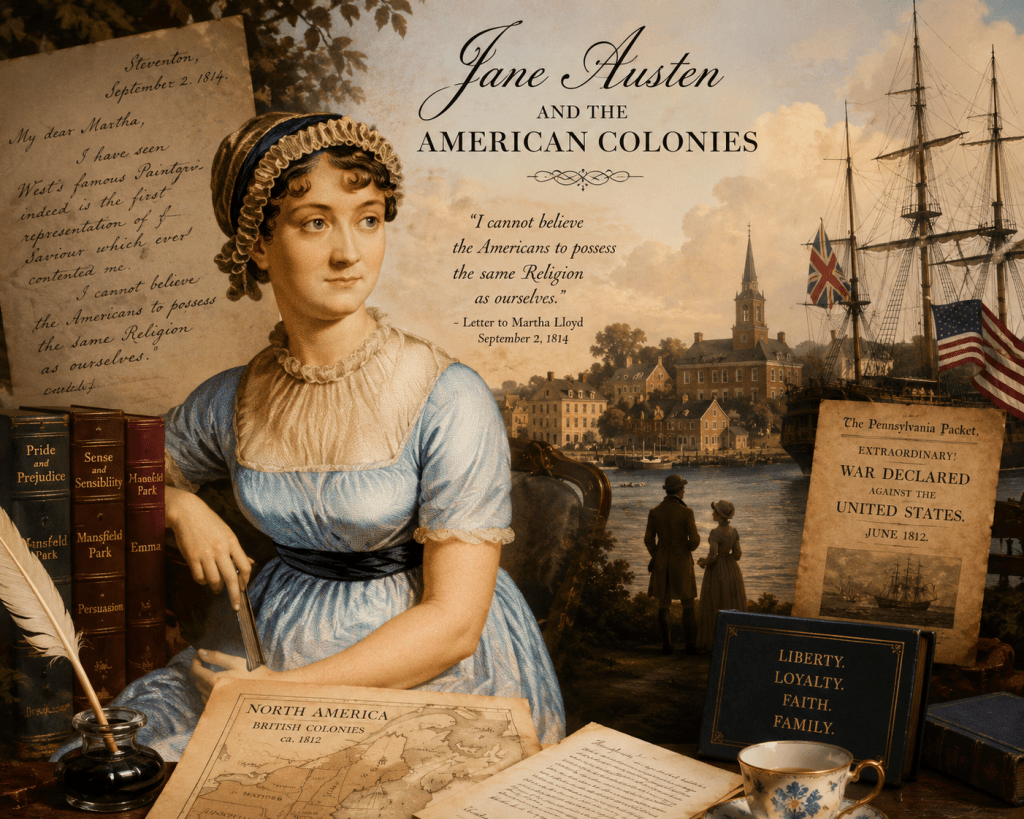
People often are surprised by my literary influences; Austen doesn’t seem to be a logical choice when contemplating a novel set in this era. At first glance, I understand that it does seem an unlikely pairing! But Austen understood something timeless about human nature: history provides the backdrop, yet stories endure because of the people who live through it. That’s her genius and the secret to her longevity. She mastered the art of the domestic canvas—showing how massive societal shifts echo through family dinner tables and neighborhood gossip.

Elizabeth Bennet taught generations of readers that first impressions can be wonderfully, painfully wrong. Her wit, compassion, and willingness to reexamine her assumptions helped inspire my own heroine, Rose Wachsman. And if readers catch a glimpse of Fitzwilliam Darcy in Mr. Hirsch—reserved, honorable, occasionally misunderstood—I will happily plead guilty! They may also recognize faint echoes of Caroline Bingley, Mr. Wickham, or even Lady Catherine de Bourgh. After all, every story needs its social climbers, charmers, and people whose polished exteriors conceal far less admirable motives.

That’s why Austen still captivates us more than two centuries after her birth. She reminds us that beneath every great historical event are ordinary people navigating pride, prejudice, family expectations, misunderstandings, and deeply human connections.

That’s the novel I wanted to read. And that’s the novel I wrote.

A Revolutionary story where the Jewish experience isn’t a footnote.

A love story grounded in history.

And a reminder that America’s founding was always more diverse, more interconnected, and more human than we sometimes imagine.

Sneak Peek: Read an Excerpt from Chapter Four:


Rose tallied the chandlery’s goods with a restless precision. She found her thoughts snagging on the great gamble taking place blocks away. Had the divided loyalties finally snapped the cord of their resolve?

For weeks, men dawdled at her father’s counter, stripped of their coats and their patience in equal measure. Women lingered after completing their purchases, feigning an interest in a particular scent or the quality of soap, but their voices were lowered and their eyes watchful as they spoke of those grave matters which now threatened the balance of their world. Her father maintained a most rigorous display of neutrality, attending to every wick and ledger with a public diligence intended to keep his doors unbarred—not merely for the sake of the coin, but for the quiet, folded messages that were expected to pass through his hands in the shadows of the shop.

The burden of such secrets required a mask of perfect indifference, a performance that was put to an immediate test by a most unexpected visitor. One afternoon, while the bells of Christ Church tolled noon, Mr. Hirsch entered the candle shop and found Rose and Hannah Ellicott passing the time of day.

He stood tall in the doorway, his dark coat impeccably cut, appearing remarkably untouched by the stifling heat that had caused the rest of the city to wilt. His hair, tied simply at the nape, lent him an austerity that suited his grave expression. Rose noted a sharp, discerning flare of his features—a movement so fleeting she might have imagined it had her own pulse not quickened in response. She had hoped the clean fragrance of the honeycomb and citrus peel would mask the heavy, acrid scent of the rendering kettles, but the sudden, rigid set of his jaw suggested her efforts had been in vain.

Steadying her breathing and smoothing her apron, Rose masked any flicker of concern. She cared little if a stray smudge of soot marked her cheek. Boiling berries and rendering raw comb was a messy business; it followed that it was an odorous one. The result, however—the sweet-smelling soaps and tapers born of that labor—softened the edges of their world.

Given his apparent state, Nathan Hirsch was plainly not a man given to softened edges.

Rose felt rather than saw the shift in Hannah beside her as her friend’s missive slipped swiftly into the folds of her apron. She curtailed any emotion that would give her away, although she noticed Mr. Hirsch’s eyes registered the exchange. The gentleman had not yet approached the pair. In fact, he had not greeted Rose in his usual way. The simple nod she was afforded possessed nothing of his accustomed formality. And it gave her pause.

“The mail has come early today?” he asked.

His tone was mild. Too mild for her liking. What game was he playing? Rose felt the ridge of the wax seal from within her apron’s pocket. Wax was meant to protect. It could just as easily betray. She could not trust him. The letter was bound for Savannah. If it failed to reach its destination, a family might be ruined—or worse.

“Just the butcher’s bill,” she said lightly. “Mistress Ellicott was good enough to drop it off, seeing that she had to collect her weekly order of tapers. It is a small kindness we extend to one another.”

“Yes,” Hannah quickly added. “It helps when one must tend one’s shop. Sometimes Mrs. Riley or even little Tommy comes to our aid—such a good boy, that one. Always willing to help carry our little packages or knick-knacks.”

Rose resisted the urge to reproach her friend. Mr. Hirsch’s mouth, she noticed, curved ever so faintly—not in amusement, but in something like…recognition.

“Ah,” he said softly. “How clever you are.”

His gaze lingered on Rose’s face with cool intensity, as if attempting to reconcile the woman before him with some private conclusion.

“I would encourage you,” he continued, “to be selective in choosing couriers for your… knick-knacks. You would not wish anything to fall into the wrong hands.”

Rose met his eyes steadily, though her pulse hammered against her ribs. It was a moment that required a most calculated diversion; she must lead his thoughts away from the missive he had observed—away from the dangerous reality of their schemes and into the safer, if more painful, territory of society’s parlors.

“I thank you, sir, for your concern. Pray tell me—how may I be of service?” she asked with the civil indifference of a tradesman’s daughter.

“Was there something amiss with your mother’s order,” Rose continued with practiced calm, “or perhaps you seek a gift for a young lady? For Miss Franks, perchance? I believe my cousin has a particular partiality for our lavender soaps.”

He hesitated. It was a silence of a most distressing duration, and one which frightened her more than a direct accusation would have.

“Be at ease, Miss Wachsman,” he said at last. “I have been commissioned to acquire an additional dozen of the bleached tapers, if you please.”

Though she found the request odd—she had, after all, filled his mother’s order only two days prior—Rose turned to retrieve the items at once, willing her hands not to tremble beneath his keen observation. Mr. Hirsch had not shifted from his place; his dark eyes, however, took in every detail. Every shelf and display was scrutinized. Nothing, it would appear, was too small for the gentleman’s attention. Rose set the wrapped candles upon the counter between them—a small barricade of paper and twine.

“You keep busy,” he said. “I suppose you have felt the effects of the recent blockade.

“Indeed, sir. We have felt it exceedingly,” replied Rose. “We pray that the strain does not prove too hard to bear—for ourselves and for our families.”

Mr. Hirsch nodded his understanding as he placed his payment beside the parcel Rose had presented.

Sterling! He paid in sterling.

The silver coins caught the light with a cold, indisputable authority which the paper Continental notes could never hope to mimic. Rose found her gaze anchored to them a second longer than propriety allowed, her mind racing to reconcile the gleam of the King’s metal with the man who stood so unruffled before her.

Something unreadable flickered across his face. “Is there anything… amiss?” he asked, repeating her words.

She searched his expression for accusation—or mockery—but found neither. “No, not at all, sir. I thank you for your custom.”

He inclined his head. “Then I wish you a good day, Miss Wachsman; Mistress Ellicott.”

Rose watched him make his way toward the door. The question of where his loyalties truly lay rose to her lips with such force she very nearly put it to him directly.

“Mr. Hirsch.”

He paused, his hand upon the latch. “Yes, Miss Wachsman?”

“If you would authorize me to do so, sir,” she said instead, “I shall adjust your mother’s weekly order. I would not wish to incommode your schedule.”

“I have every faith in your judgment, madam,” he replied.

The bell above the door gave a soft, indifferent chime as he departed. Rose could not help but roll her eyes at the formality of his parting salutation. Madam, indeed!

Beside her, Hannah exhaled. “He knows.”

Rose turned the letter slowly between her fingers, the parchment feeling suddenly like lead. “He suspects,” she corrected, though the distinction brought her little comfort. She could not know if she had truly diverted his scrutiny or merely confirmed it; she was not sure which might prove worse.

Nathan Hirsch moved easily between worlds that distrusted one another. He frequented the Franks’ salons—seemingly paying court to the daughter of the house—yet he stood in prayer beside her own father each Sabbath.

He spoke carefully—and watched everything.

She could not know which allegiance governed him. Rose suspected that his neutrality was not a choice of conscience, but a masterwork of convenience.

Slipping the provocative letter into the hidden compartment beneath the counter, Rose felt her pulse steady as wood and wax and ordinary commerce enfolded the message until it could be revealed. He might keep his elegant decorums and his careful speech! She cared not for them. Here, amidst the scent of rendered fat and cooling wax, there was no room for duplicity—only the hard, honest work of survival.


I hope you’ll join Rose, Mr. Hirsch, and the families of Colonial Philadelphia as they discover that liberty is kindled not only by famous speeches and battlefield victories, but by the quiet courage of ordinary people whose stories deserve to be remembered. Click here to be directed to Amazon.

Happy Birthday, America! Kol hakavod—well done—for the first 250 years! May God’s presence continue to abide among us, and may our country remain a beacon of freedom and justice for the world.

With love,

New Post

Jewish Historical Romance: A Jewish Colonial Love Story of the American Revolution

I can’t think of any author who wouldn’t appreciate the chance to talk about their new book—the research, the premise, the inspiration…well, you get my meaning. I had such an opportunity when I was asked to participate in an Author’s Q & A with Writergurlny. Click on the highlighted link to read the interview, or read a few snippets here:

Getting the full scope of history goes well beyond a generic textbook. For every well-known person, there are many others whose names and histories are lost to time. Mirta Ines Trupp’s new historical novel, Kindle the Light of Liberty, is set in Philadelphia during the American Revolution.

AB: What was the inspiration for the book?

MIT: First of all, thanks for the opportunity! I appreciate your interest in my latest book.

The inspiration for Kindle the Light of Liberty grew from three longtime passions. As a grateful naturalized citizen of this country, I wanted to contribute to the celebration of America’s 250th anniversary by exploring a lesser-known aspect of the nation’s founding—the experiences and contributions of Jewish Americans during the Revolutionary era. I am also passionate about writing Jewish protagonists in wholesome, accessible fiction. Too often, Jewish characters are absent from historical novels or appear only in stories centered on persecution. I wanted to create a compelling, “clean” read that allows Jewish characters to take their place at the heart of an engaging historical story—one filled with courage, hope, and the pursuit of liberty. Finally, as a devoted Jane Austen reader, I have long admired her ability to illuminate universal truths through the lives of ordinary people. Austen showed that questions of family, duty, love, and social belonging can be every bit as compelling as grand historical events. In Kindle the Light of Liberty, I sought to emulate that vision by placing personal relationships and moral choices against the backdrop of a transformative moment in history, allowing readers to experience the American Revolution through the hearts and minds of the people living it.

AB: Did the idea of Rose come from anyone specific?

MIT: Rose wasn’t based on any one specific person, but she was certainly influenced by a few different sources. As I mentioned, I am a longtime Austen fan. I would be hard-pressed to deny the influence of Miss Elizabeth Bennet of Pride and Prejudice fame. I’ve always admired Lizzy’s intelligence, wit, and willingness to speak her mind, even when doing so is not the easiest path. Those qualities definitely found their way into Rose’s character. At the same time, I often joke that all of my heroines are, in some sense, a blend of myself and the women who came before me. Rose reflects some of my own interests, values, and perspectives, but she is also inspired by the resilience, strength, and determination I imagine in my female ancestors.

As a historical novelist, I spend a great deal of time thinking about the lives of the women who preceded us—the challenges they faced, the choices they made, and the dreams they carried. In many ways, Rose became a way for me to honor both my own heritage and the remarkable women whose stories were never written down but whose lives helped shape the generations that followed.

AB: What made you choose the American Revolution as opposed to another time?

MIT: That’s a great question. As I mentioned earlier, one of the original inspirations for the novel was the upcoming commemoration of America’s 250th anniversary. I wanted to explore the colonial era, but through a lens that readers don’t often encounter. When most people think about Jewish involvement in the American Revolution, if they think about it at all, they tend to recall a handful of financiers and wealthy merchants. I was struck by how history reduced Jewish colonials to a single dimension. Ancient tropes and European stereotypes shouldn’t dictate how historical novel readers—Jewish or not—understand the past.

The Revolutionary period offered a fascinating opportunity to challenge those assumptions and expand the narrative. I wanted to portray Jewish characters as fully realized people—patriots, neighbors, friends, daughters, sons, and, when called upon, individuals capable of courage and sacrifice. The American Revolution was not only a struggle for independence; it was also a moment when many different groups were asking what it meant to belong in a new nation. That question felt as relevant to me as ever, and it made the Revolutionary era the perfect setting for Rose’s story.

AB: What kind of research did you do? Was it more internet-based, or did you rely on physical texts?

MIT: My research was actually conducted mostly online. One of the great advantages of not living in colonial times is that so much history is literally at our fingertips. Newspapers, letters, diaries, maps, genealogy records, academic articles, and digitized books that once required travel to specialized archives can now be accessed from home. The challenge is no longer finding information—it’s finding the time and patience to follow the trail of sources wherever they lead, and remembering to come up for air once you’ve disappeared down a research rabbit hole!

That said, online research doesn’t mean superficial research. Many of the sources I consulted were digital versions of primary documents and scholarly works. In fact, even my beloved Jane Austen was part of my online research process. Her novels are available free of charge through Project Gutenberg, which makes it easy to search passages and revisit particular scenes. Of course, I also keep a well-worn copy of Pride and Prejudice on my desk. Whether I’m reading a digitized eighteenth-century newspaper or a printed history book, the goal is always the same: reliable information. It needs to help me understand the period as accurately and vividly as possible so that readers can feel as though they have stepped back in time.

AB: The hardest part of historical fiction is melding the real people/events with the fictional ones. How do you go about it?

MIT: That’s probably the hardest—and most rewarding—part of writing historical fiction. The events themselves are often well documented, but people are much more complicated than the brief descriptions history leaves behind. When I encounter a historical figure, I try to look beyond the labels that have been attached to them. Take Rebecca Franks, for example.

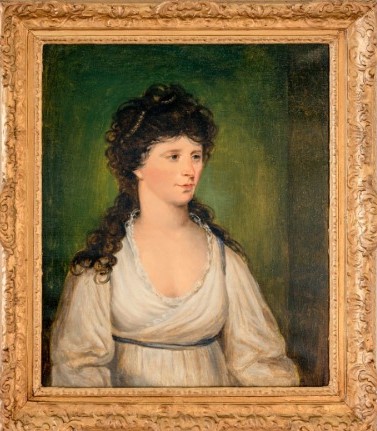
Rebecca Franks

On the surface, she can be easy to categorize. She came from a prominent Jewish family, yet she was a Loyalist. She was a known flirt, witty, and resourceful (to put it kindly). She married an Englishman and ultimately lived in Britain as part of the aristocracy. Viewed from a certain angle, she might appear to have turned her back on both her countrymen and her heritage. But I found myself asking a different question: What made her the person she became? What hopes, fears, disappointments, and demands shaped her choices? The moment you start asking those questions, a historical figure stops being a name in a book and becomes a human being.

In many ways, that approach is influenced by a central idea in Judaism. At Passover, we are instructed to see ourselves as if we personally came out of Egypt. At Shavuot, we are encouraged to imagine ourselves standing at Sinai. Jewish tradition asks us to enter the story rather than merely observe it. As a novelist, I try to do something similar. I place myself in the position of my characters—both the real historical figures and the fictional ones—and ask what the world looked like through their eyes. What would I have believed? What would I have feared? What would I have hoped for? Once I can answer those questions, the boundary between history and fiction becomes much easier to navigate. The historical record provides the framework, but empathy helps fill in the spaces between the facts. That’s where the story comes alive.

AB: Philadelphia is as much of a character as the people. Did you deliberately choose the city, or was it an organic decision?

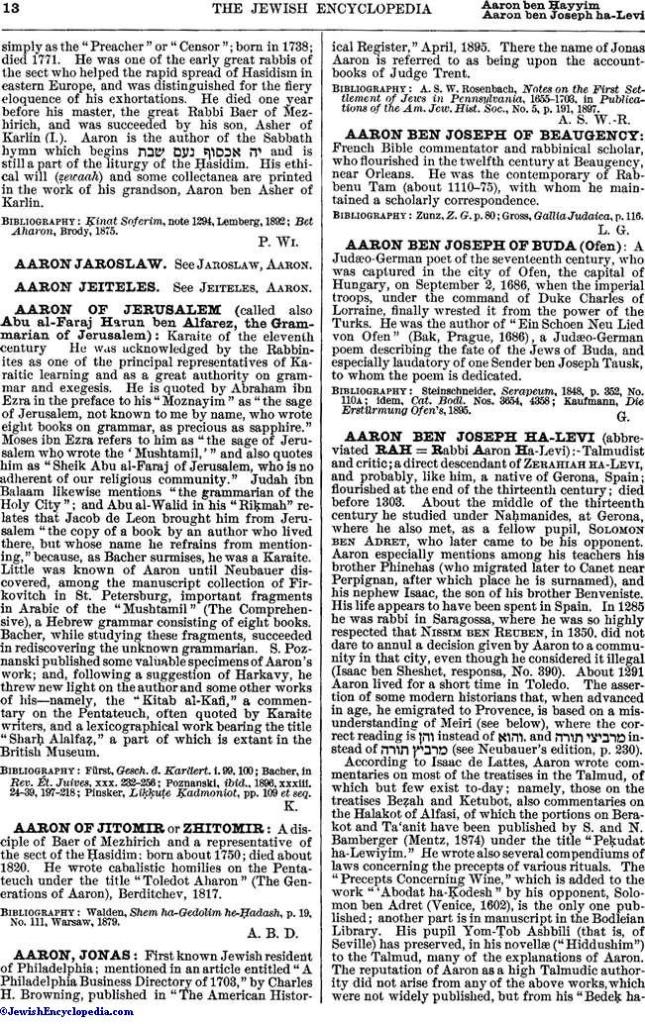
MIT: Absolutely deliberate! From the very beginning, I knew that if I was going to tell a story about Jewish life during the American Revolution, Philadelphia was the natural setting. I was drawn first to the city’s rich Jewish history. Philadelphia was home to one of the earliest and most important Jewish communities in colonial America, and many of the individuals I wanted to write about either lived there or passed through it. One figure who particularly intrigued me was Jonas Aaron, who arrived in Philadelphia in 1703 and is often considered the city’s first known Jewish resident. His presence is a reminder that Jewish history in Philadelphia stretches back long before the Revolution itself.

At the same time, Philadelphia was the political heart of the Revolution. The Continental Congress met there. Benjamin Franklin walked the streets. Betsy Ross lived and worked there. It was a city where world-changing events and ordinary daily life existed side by side. I was also fascinated by Philadelphia’s Quaker roots. William Penn’s vision created a colony that was remarkably welcoming for its time. While no eighteenth-century society was free from prejudice, Pennsylvania offered opportunities for religious minorities that were difficult to find elsewhere. Quakers, Jews, Anglicans, Presbyterians, and many others lived alongside one another, creating a vibrant and diverse community. That diversity made Philadelphia an ideal place to explore questions of identity, belonging, and citizenship during the founding of the nation.

AB: Rose and Nathan have a specific Elizabeth Bennet/Fitzwilliam Darcy energy to their relationship. Was this a deliberate choice, or did it emerge as a natural part of the writing process?

MIT: That’s a fair observation—Pride and Prejudice has been such a long-standing touchstone for me; Elizabeth and Darcy’s dynamic was always part of my creative landscape. At the same time, I didn’t want to simply recreate Austen in an American Revolutionary setting. Several of my other novels are “Austenesque” or straight-up Jane Austen fan fiction (JAFF), but I tend to introduce Jewish protagonists to the narrative, rather than portray Austen’s characters as Jews. There’s a reason for that approach.

What I’ve always found most powerful in Austen’s work is how clearly she shows the real stakes for women in her world: the very real fear of not marrying, of lacking financial security, of being labeled a spinster and therefore considered somehow “unfulfilled” or even nonessential in society. She also captures how profoundly a family’s social standing could shape the entire trajectory of a woman’s life, and how a single “wrong” choice could carry lifelong consequences. Those concerns absolutely echo through Rose and Nathan’s story, and in that sense, they do shadow Elizabeth and Darcy’s world. But as I wrote, those familiar Austen themes began to branch outward in new directions. Rose and Nathan are shaped by their Jewish identity, by a long history of displacement and persecution, and by the added weight of what it means to belong—or not belong—in a young nation trying to define itself. Their choices are not only about love, marriage, or reputation, but also about survival, continuity, and the question of whether a community that has endured centuries of exclusion can truly find a stable place in this new world. So I would say Austen gave me the emotional framework, but Rose and Nathan ultimately grew into something more layered—I hope! They are rooted in her world of social constraint and romantic tension, yet expand into broader historical and cultural realities that define their own lives.

New Post

June 11, 1776 to June 11, 2026: A Date Worth Celebrating

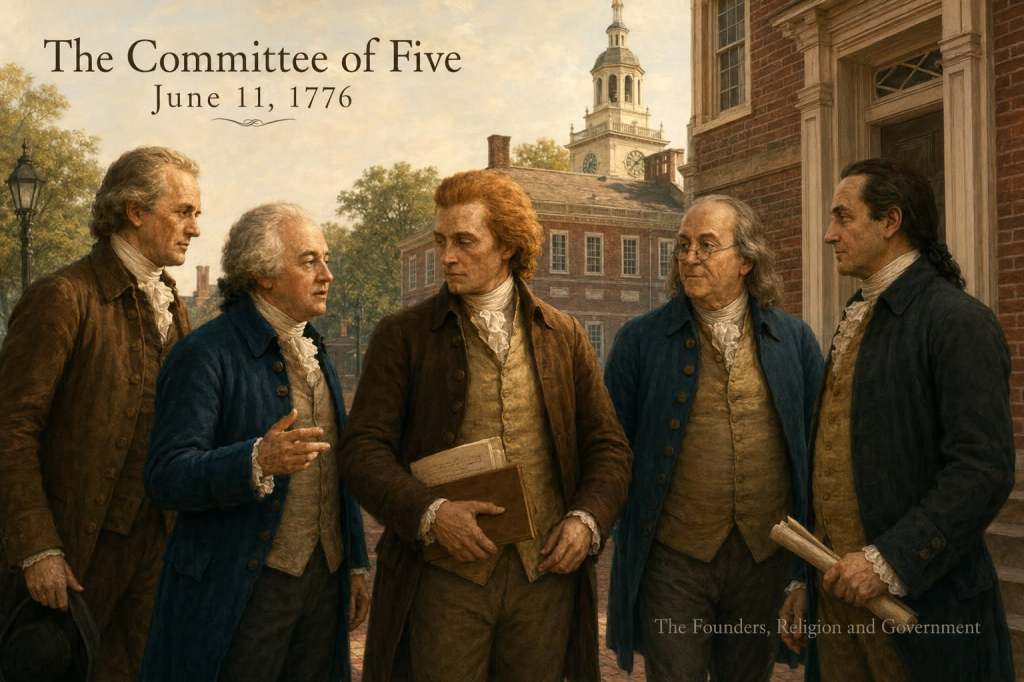
On June 11, 1776, the Second Continental Congress appointed the Committee of Five—Thomas Jefferson, John Adams, Benjamin Franklin, Roger Sherman, and Robert Livingston—to draft what would become the Declaration of Independence. Their task was nothing less than putting into words the principles upon which a new nation would be founded. Two hundred and fifty years later, on June 11, 2026, I am delighted to share a milestone of my own. The ebook pre-order for Kindle the Light of Liberty is now live on Amazon.

The timing feels especially meaningful.

My novel is set during the Revolutionary era and follows Rose, a young Jewish woman in Philadelphia, as she navigates friendship, family, faith, and the uncertain birth of a nation. Like the men charged with drafting the Declaration, my characters find themselves living through extraordinary times when the future is unwritten, and every choice carries consequences.

As I researched the period, I was struck by how often Jewish participation in the Revolution is remembered through a narrow lens, focused primarily on a handful of financiers and merchants. Kindle the Light of Liberty seeks to broaden that picture by portraying Jewish characters as fully realized people—friends, neighbors, patriots, and family members whose lives were shaped by the same hopes, fears, and sacrifices as their fellow Americans. Readers may also recognize traces of the social and emotional tensions that drew me to Jane Austen’s novels. Rose faces many of the same concerns that shaped women’s lives in Austen’s world: the importance of marriage, family expectations, financial security, and the consequences of a single ill-considered choice. Yet Rose and Nathan’s story unfolds within a different historical reality. Their lives are shaped not only by questions of love and reputation, but also by their Jewish identity and by the larger question of what it means to belong in a new nation still defining itself.

The journey toward publication has already brought wonderful opportunities to discuss the history behind the novel. On May 1, 2026, I was honored to appear as a guest author on History Imagined, where we discussed Jews in colonial America and the fascinating historical research that helped shape the story.

Early ARC (Advanced Reading Copy) readers have also begun sharing their thoughts.

From Claudia F. on Goodreads: Trupp takes the qualities I love most about Austen—witty observations, complex family relationships, social expectations, and a romance built on misunderstanding and mutual respect—and places them in Revolutionary Philadelphia…with Jewish patriots to boot! The result feels both familiar and entirely fresh.

From Judy K. on Goodreads: Trupp has done it again! As America prepares to celebrate its 250th anniversary, I can think of no better book to begin the festivities than “Kindle the Light of Liberty.”

From Mrs. W. on Goodreads: As America approaches its 250th anniversary, there seems no better time to remember that Jewish patriots were present at the nation’s founding—not standing on the sidelines, but helping to shape the course of events. 

On May 30, 2026, Writergurlny posted a thoughtful review of Kindle the Light of Liberty, highlighting the novel’s blend of historical detail, friendship, and romance. I’m also pleased to share that I’ll be returning to Writergurlny in the near future for an author interview.

There are several exciting events coming up over the next few months:

As America approaches the 250th anniversary of independence, I am grateful for the opportunity to share a story set during the nation’s founding era. Historical fiction allows us to look beyond the familiar names and dates and imagine the lives of ordinary people who experienced extraordinary events firsthand. Through Rose’s eyes, readers can explore a Revolutionary America that includes voices too often overlooked, including the small but vibrant Jewish communities that helped build the new nation.

Thank you to everyone who has supported this book, reviewed it, hosted me on your blogs, or simply shared your enthusiasm for Revolutionary-era history. I look forward to celebrating the launch of Kindle the Light of Liberty with all of you in the weeks ahead.

Happy June 11th. Two hundred and fifty years ago, a committee began drafting a document that would change history. Today, I am honored to share a story inspired by the people who lived through those extraordinary times.

With love,