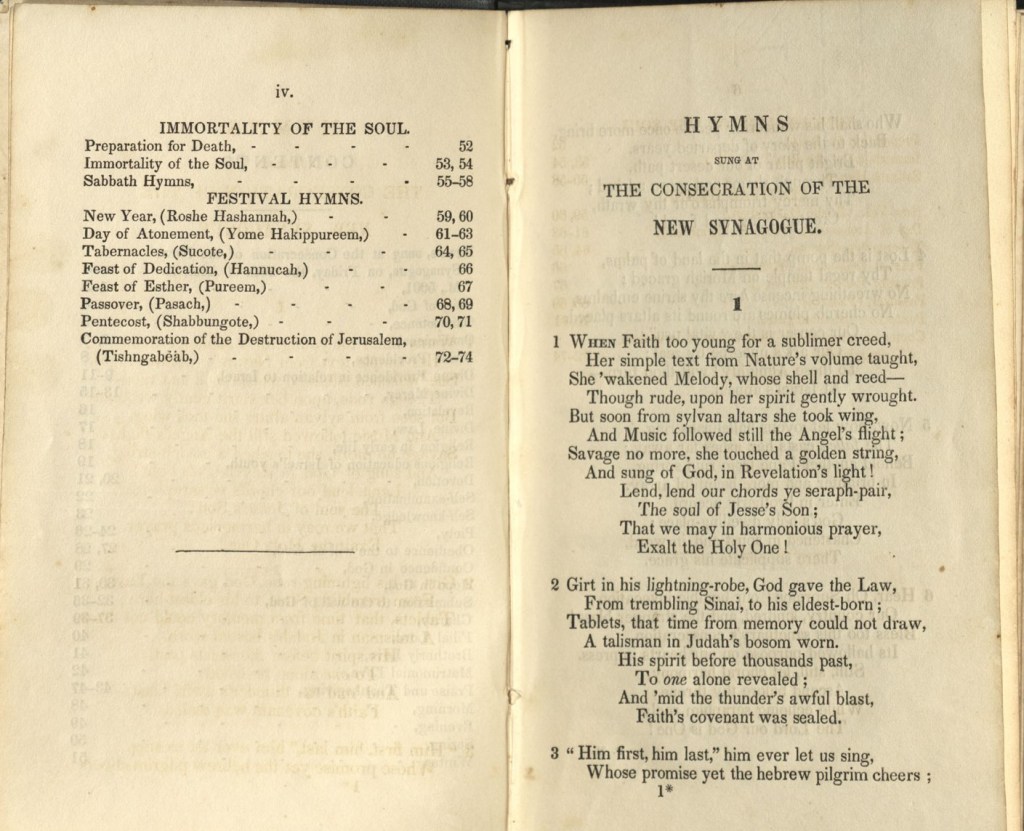
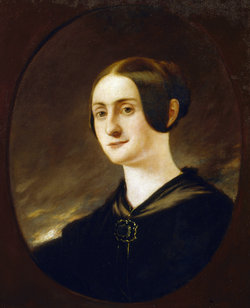
We often imagine the Founding Fathers discussing constitutions and revolutions. But sometimes they were simply husbands writing home. In June 1787, Founding Father and physician Benjamin Rush attended the Jewish wedding of Rachel Phillips and Michael Levy in Philadelphia. His wife, Mrs. Rush, was not invited. The lady, apparently, was in New Jersey. I don’t require much prompting to imagine something like this:
“My dear, I know you far too well and can imagine the conversation we should have, were I by your side—taking our final cup of tea by the fireside. You should want to know all! Not only that I was invited, but who was in attendance. How was the bride attired? What were their customs, how did they differ from our own…”
The facts, however, don’t require imagination!
We have the letter!
Even more interesting: more than two centuries after the bride and groom exchanged their vows, so much of the experience feels familiar. What details still ring true for me? I’ll tell you!
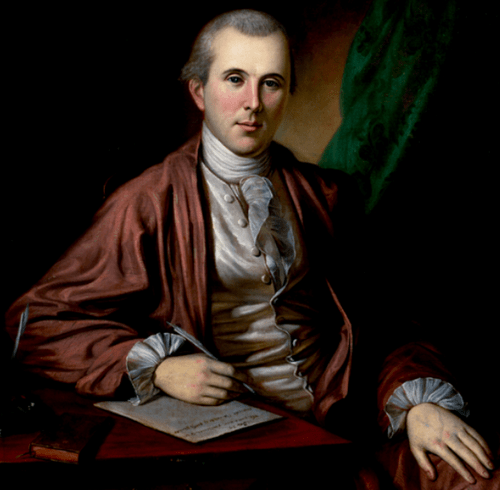
More than the ketubah (the wedding contract), the smashing of the wine cup, or the beauty of the bride—it was Rush’s observation that members of the congregation were talking while the prayers were being recited. Today, in 2026, in every congregation—in this country and across the planet—congregants are still talking through sermons, prayers and song.
In that moment, the wedding ceased to be a distant historical event and became something instantly recognizable. Before text messages, before Instagram stories, before group chats, Benjamin was writing a wonderfully detailed letter because he knew his wife, Julia, wanted the full report.
Here is his account, written just days after the wedding.
I accepted the invitation with great pleasure, for you know I love to be in the way of adding to my stock of ideas upon all subjects. At 1 o’clock the company, consisting of 30 or 40 men, assembled in Mr. [Jonas] Philips’ common parlor, which was accommodated with benches for the purpose. The ceremony began with prayers in the Hebrew language, which were chanted by an old rabbi, and in which he was followed by the whole company. As I did not understand a word except now and then an Amen or Hallelujah, my attention was directed to the haste with which they covered their heads with their hats as soon as the prayers began, and to the freedom with which some of them conversed with each other during the whole time of this part of their worship.
As soon as these prayers were ended, which took up about 20 minutes, a small piece of parchment was produced, written in Hebrew, which contained a deed of settlement and which the groom subscribed in the presence of four witnesses. In this deed, he conveyed a part of his fortune to his bride, by which she was provided for after his death in case she survived him.
This ceremony was followed by the erection of a beautiful canopy composed of white and red silk in the middle of the floor. It was supported by four young men (by means of four poles), who put on white gloves for the purpose. As soon as this canopy was fixed, the bride, accompanied with her mother, sister, and a long train of female relations, came downstairs. Her face was covered with a veil which reached halfways down her body. She was handsome at all times, but the occasion and her dress rendered her in a peculiar manner a most lovely and affecting object. I gazed with delight upon her. Innocence, modesty, fear, respect, and devotion appeared all at once in her countenance.
She was led by her two bridesmaids under the canopy. Two young men led the bridegroom after her and placed him, not by her side, but directly opposite to her. The priest now began again to chant a Hebrew prayer, in which he was followed by part of the company. After this, he gave to the groom and bride a glass full of wine, from which they each sipped about a teaspoonful. Another prayer followed this act, after which he took a ring and directed the groom to place it upon the finger of his bride in the same manner as is practised in the marriage service of the Church of England. This ceremony was followed by handing the wine to the father of the bride and then a second time to the bride and groom. The groom, after sipping the wine, took the glass in his hand and threw it upon a large pewter dish which was suddenly placed at his feet. Upon its breaking into a number of small pieces, there was a general shout of joy and a declaration that the ceremony was over. The groom now saluted his bride, and kisses and congratulations became general through the room.
I asked the meaning, after the ceremony was over, of the canopy and of the drinking of the wine and breaking of the glass. I was told by one of the company that in Europe they generally marry in the open air, and that the canopy was introduced to defend the bride and groom from the action of the sun and from rain. Their mutually partaking of the same glass of wine was intended to denote the mutuality of their goods, and the breaking of the glass at the conclusion of the business was designed to teach them the brittleness and uncertainty of human life and the certainty of death, and thereby to temper and moderate their present joys.
Mr. Phillips pressed me to stay and dine with the company, but business and [junior partner] Dr. [James] Hall’s departure, which was to take place in the afternoon, forbade it. I stayed, however, to eat some wedding cake and to drink a glass of wine with the guests. Upon going into one of the rooms upstairs to ask how Mrs. [Rebecca] Philips did, who had fainted downstairs under the pressure of the heat (for she was weak from a previous indisposition), I discovered the bride and groom supping a bowl of broth together. Mrs. Phillips apologized for them by telling me they had eaten nothing (agreeably to the custom prescribed by their religion) since the night before.
Upon my taking leave of the company, Mrs. Phillips put a large piece of cake into my pocket for you, which she begged I would present to you with her best compliments. She says you are an old New York acquaintance of hers.
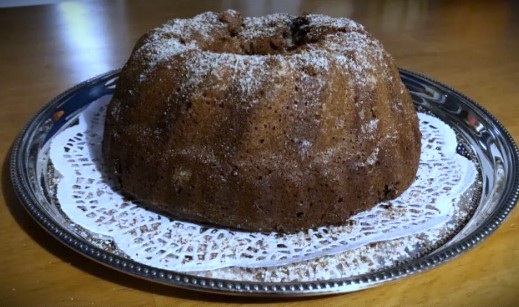
I can almost smell the broth that the newlyweds devoured. And the cake! I can’t help wondering what kind was served. Were guests given the choice of Plum Cake or Sephardic delicacies like Almond Macaroons and Marzipan? Maybe a honey—lekach—cake was served to satisfy the Ashkenazim. I can almost taste it!
What about you?
I can imagine Mrs. Phillips—a Jewish balabusta (homemaker)—preparing the pekeleh (the small bundle) for her Anglican friend, Mrs. Rush. If that isn’t the most universally recognizable act of hospitality, I don’t know what is! I can hear her saying: “Take some cake home for your wife.”
This joyful gathering was more than just a beautiful celebration; it was the literal origin story of an extraordinary American legacy. While many colonial Jews in Philadelphia were Sephardic, this marriage blended traditions. The bride’s father, Jonas Phillips, was actually an Ashkenazi immigrant from Germany who was fluent in Yiddish (so much so that when British authorities intercepted his letters during the Revolutionary War, they reportedly concluded he was writing in a secret military code)! Rachel’s mother was a Machado—a Sephardic name. The groom’s family was Sephardic as well.
Rachel and Michael Levy would eventually become the parents of Commodore Uriah P. Levy—the famous naval officer who championed the end of the cruel practice of flogging in the U.S. Navy. Just as his parents’ wedding blended into the fabric of early America, Commodore Levy fiercely defended his place in it. He famously bought and restored Thomas Jefferson’s dilapidated home, Monticello, in 1834. Having spent his own naval career being relentlessly persecuted for his faith, Levy viewed Jefferson as the ultimate architect of American religious liberty. For the Levy family, preserving Monticello wasn’t just about real estate—it was a physical defense of Jewish rights and a profound act of patriotic gratitude.
Now, let’s delve into the weeds, shall we?
As a modern reader, I found a few of Rush’s observations fascinatingly out of sync with traditional Jewish practice, revealing just how a non-Jewish observer in 1787 interpreted the rituals.
The Priest:
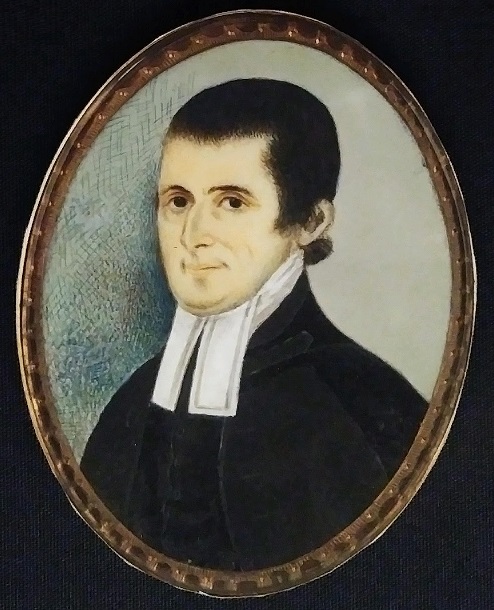
Of course, the wedding official wasn’t a priest, but he wouldn’t have been a rabbi either! Not in 1787 Philadelphia. He may have been a hazan, a cantor, or a lay ministerial person. During this period, the title “reverend” was often used even for Jewish clergy—such as in the Reverend Gershom Mendes Seixas. The first ordained rabbi in the United States of America appears to have been Rabbi Abraham Joseph Rice in 1840.
The Weatherproof Canopy:
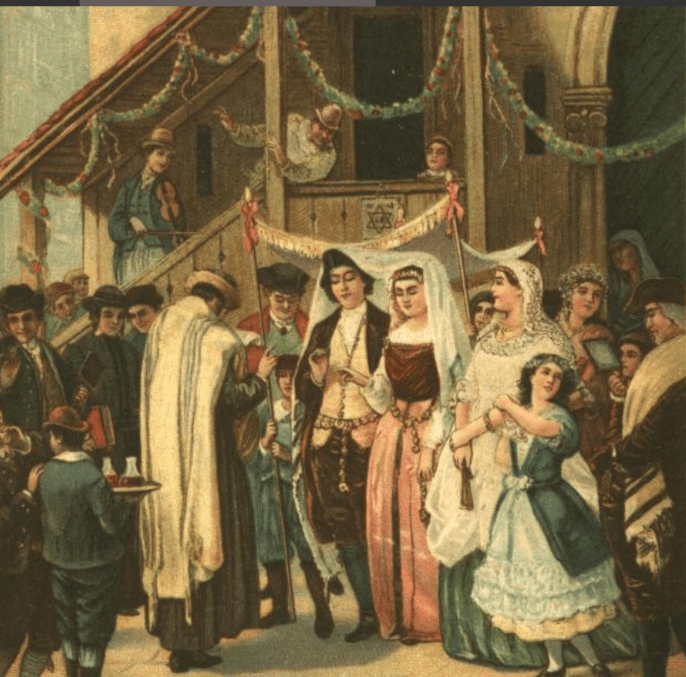
The wedding guest’s explanation regarding the chuppah (wedding canopy)—as a historical defense against the sun and rain in Europe—didn’t hold water (that’s me chuckling while writing).
My understanding has always been that the chuppah carries a deeper spiritual meaning. It typically represents the new home the couple will build together, modeled after Abraham and Sarah’s hospitable tent. It also traditionally symbolizes Divine Protection—such as the Canopy of Peace (Sukkat Shlomecha) that hovered over the Israelites at Mount Sinai.
Don’t Point—It’s not polite:
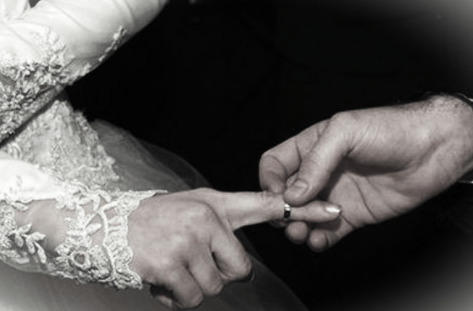
Rush noted that the ring was placed “in the same manner as is practised in the marriage service of the Church of England.” In an Anglican wedding, the ring goes on the fourth finger of the left hand to trace the vena amoris (the vein of love) directly to the heart. But in a traditional Jewish ceremony, the ring is actually placed on the right index finger. This is a strict legal requirement; the pointing finger is the easiest to hold upright, ensuring the two mandatory witnesses can clearly see the ring exchange as it happens. Most modern brides simply move the band to the left hand after the ceremony.

From Benjamin Rush’s affectionate letter to his wife to a young couple breaking a glass in a crowded Philadelphia parlor, early American history is paved with these vibrant, deeply human moments of faith and freedom. But these families didn’t just witness the birth of a nation—they helped build its foundation. To discover more incredible, untold stories of the individuals who fought for faith and freedom in the early Republic, look out for my new book, Kindle the Light of Liberty, releasing this Independence Day on July 4, 2026.
With love,