New Post

A Thanksgiving Sermon for the Ages: A Jewish Leader’s Vision of America in 1789

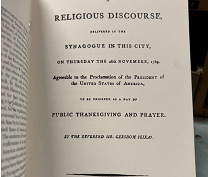
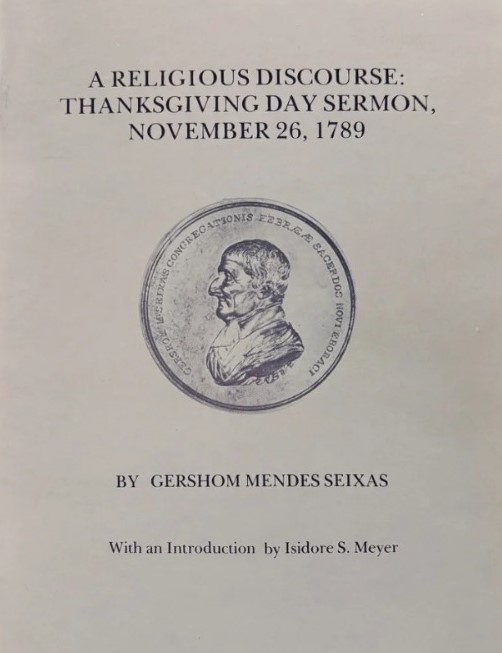
On November 26, 1789, America celebrated its first presidentially proclaimed Thanksgiving Day under the new Constitution. In New York City, a remarkable Thanksgiving service took place at Congregation Shearith Israel, led by its spiritual leader, Gershom Mendes Seixas. His message was extraordinary—not simply because of the occasion, but because of what it represented.

This story is especially meaningful to me because it reflects a larger chapter of American history that I explore in my book, Kindle the Light of Liberty, which tells the stories of Jewish American Patriots and their contributions to the founding of our nation. Seixas represents an important part of that story: a man whose Jewish identity and commitment to religious tradition went hand in hand with his devotion to American independence and the ideals of liberty.
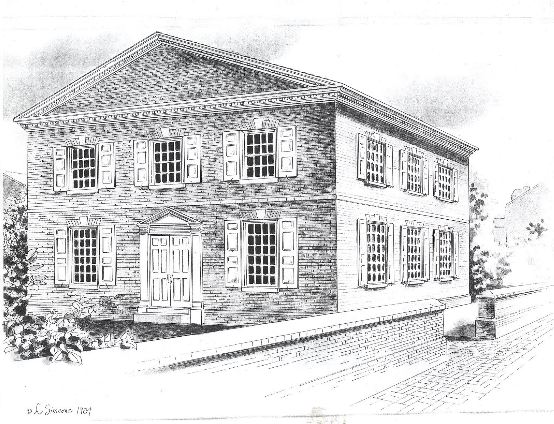
Congregation Mikveh Israel, the “Synagogue of the American Revolution” met in rented rooms on Third & Cherry Street.

Seixas was the spiritual leader of New York City’s only synagogue during the Revolutionary era. A committed Patriot, he had urged his congregation to leave New York ahead of the British occupation in 1776. He led members of the congregation first to Stratford, Connecticut, and later to Philadelphia, carrying the synagogue’s sacred Torah scrolls with him. That act became a powerful symbol of the determination to preserve Jewish faith and identity even in the midst of war and displacement.

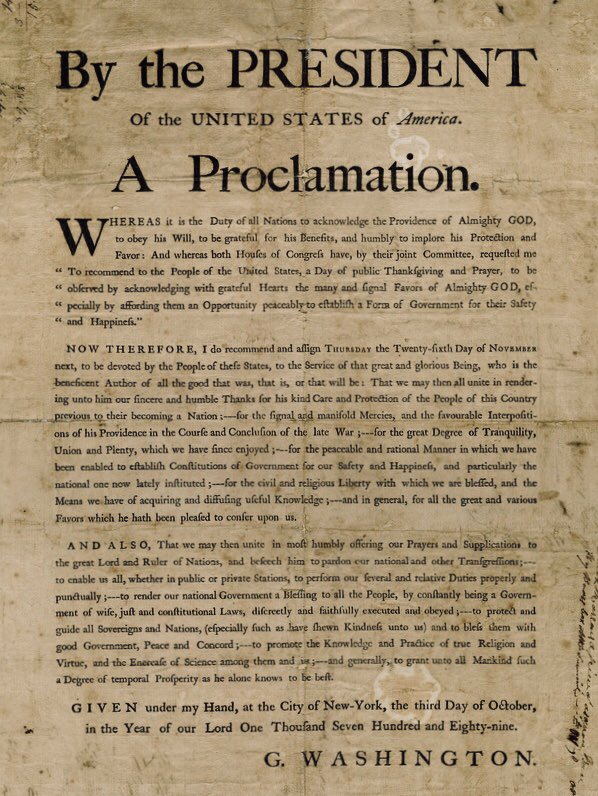
After the British evacuated New York in 1783, Seixas returned to lead his congregation. By then, the newly independent state of New York had already granted Jews equal civil rights under its 1777 Constitution. This was a remarkable development in a world where Jews had long experienced legal restrictions and exclusion. Just months before the Thanksgiving service, when George Washington was inaugurated as the first President of the United States in New York City on April 30, 1789, Seixas was one of fourteen clergymen invited to participate in the inaugural ceremonies—the only Jewish religious leader among them. So when President Washington proclaimed a national day of thanksgiving that November, Seixas had a deeply personal reason to celebrate.
The Revolutionary War was over, religious liberty had advanced, and a new Constitution had been adopted. For a small Jewish community that had endured centuries of persecution and exile, the promise of American freedom was especially meaningful. But Seixas’s Thanksgiving sermon was about far more than gratitude for political independence.

Drawing upon Jewish text, particularly Psalm 100, he reminded his congregation that genuine thanksgiving begins with acknowledging God and living according to His commandments. And what does God require? Not simply prayer or expressions of faith, but righteous conduct, compassion, humility, and justice. He emphasized that faith must be demonstrated through actions. Citing the prophets, he reminded his listeners that they were called to “do justice, execute judgment, and walk humbly before the Lord.”

Then he made a remarkable connection between religious responsibility and citizenship. Seixas urged his fellow Jews to support the new American government, respect its laws, and contribute to the welfare of the broader community. He recognized that the Constitution offered them something previous generations could scarcely have imagined: an opportunity to participate as equal citizens in the political life of their country. He declared that it was their duty to support a government founded upon “the strictest principles of equal liberty and justice.”
And he did not stop there. He called upon his congregation to work together, setting aside prejudice and personal differences, and to unite in promoting the public good. His words were especially meaningful because America’s Jewish population was still remarkably small. Seixas drew upon the long history of the Jewish people, whose experiences of exile, persecution, and hope for restoration gave them a particular understanding of what it meant to find a place of refuge. He believed that the Jewish community had a special responsibility to demonstrate through its conduct what a faithful and righteous people could contribute to society.

His closing appeal was both deeply Jewish and profoundly American. He urged his congregation to live in brotherhood and harmony, to put aside their prejudices, to seek peace, and to pursue it. In doing so, they would become examples to the nations around them.

A Thanksgiving Message That Still Speaks to Us

There is something particularly moving about imagining this scene in November 1789: a Jewish congregation, in a young and still-fragile American republic, gathering to give thanks for the blessings of liberty. And its spiritual leader was not simply celebrating what America had given them.

He was reminding them of what they owed in return.
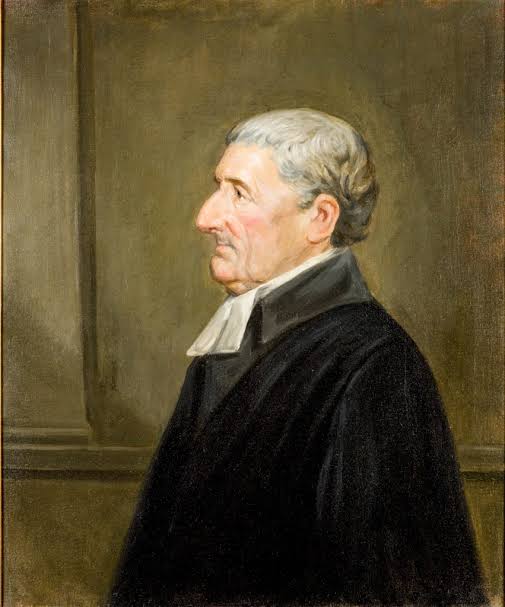
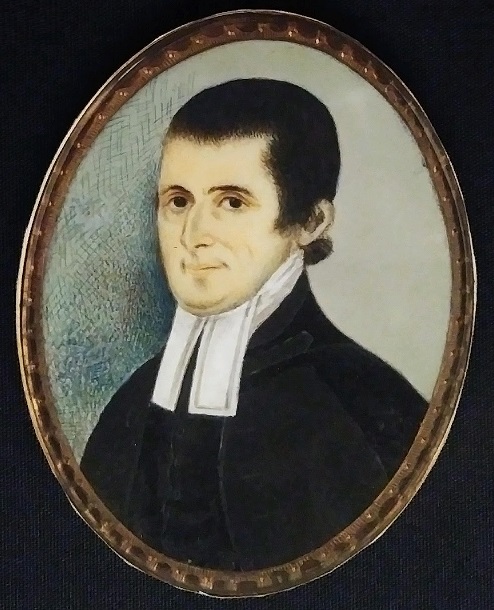
Gershom Mendes Seixas

His message was that freedom is not merely something to receive and enjoy. It is something to protect; it is something to honor through our conduct. A just government requires responsible citizens. And gratitude must lead to action.

In many ways, Seixas’s message echoes the famous words of the Puritan leader John Winthrop, who had earlier urged his fellow settlers in Massachusetts to live as a community whose example would be watched by the world—a “city upon a hill.”

Seixas, speaking from an entirely different religious tradition, was drawing upon an even older biblical mandate: the prophetic call for Israel to be Or LaGoyim—”a light unto the nations.”

Both men expressed a remarkably similar vision: that a community’s character is revealed not only by what it professes to believe, but by how it lives. More than two centuries later, his Thanksgiving sermon remains a powerful reminder of the principles upon which a free and diverse society depends: faith, gratitude, justice, mutual respect, and a shared commitment to the common good. Perhaps that is a message worth remembering every Thanksgiving.

I wish you a meaningful yontif with your family and friends.

With love,


Historical source: Gershom Mendes Seixas, “A Religious Discourse: Thanksgiving Day Sermon, November 26, 1789,” edited with an introduction by Isidore S. Meyer (Jewish Historical Society of New York, 1977). The historical account and sermon are available through the Religion in America History Project.

New Post

Tradition! Tradition! Gossip, Cake, and a Relatable Glimpse into Early America

We often imagine the Founding Fathers discussing constitutions and revolutions. But sometimes they were simply husbands writing home. In June 1787, Founding Father and physician Benjamin Rush attended the Jewish wedding of Rachel Phillips and Michael Levy in Philadelphia. His wife, Mrs. Rush, was not invited. The lady, apparently, was in New Jersey. I don’t require much prompting to imagine something like this:

“My dear, I know you far too well and can imagine the conversation we should have, were I by your side—taking our final cup of tea by the fireside. You should want to know all! Not only that I was invited, but who was in attendance. How was the bride attired? What were their customs, how did they differ from our own…”

The facts, however, don’t require imagination!

We have the letter!

Even more interesting: more than two centuries after the bride and groom exchanged their vows, so much of the experience feels familiar. What details still ring true for me? I’ll tell you!

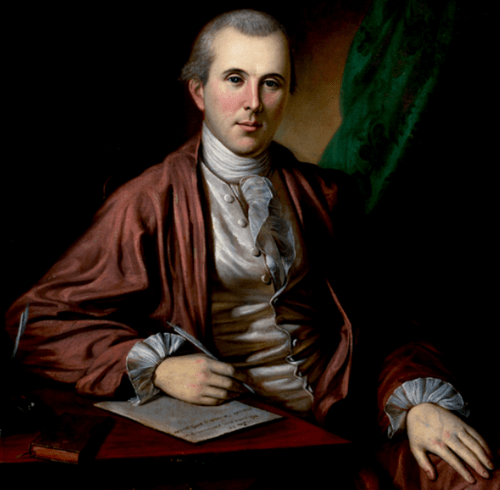
Dr. Benjamin Rush

More than the ketubah (the wedding contract), the smashing of the wine cup, or the beauty of the bride—it was Rush’s observation that members of the congregation were talking while the prayers were being recited. Today, in 2026, in every congregation—in this country and across the planet—congregants are still talking through sermons, prayers and song.

In that moment, the wedding ceased to be a distant historical event and became something instantly recognizable. Before text messages, before Instagram stories, before group chats, Benjamin was writing a wonderfully detailed letter because he knew his wife, Julia, wanted the full report.

Here is his account, written just days after the wedding.

I accepted the invitation with great pleasure, for you know I love to be in the way of adding to my stock of ideas upon all subjects. At 1 o’clock the company, consisting of 30 or 40 men, assembled in Mr. [Jonas] Philips’ common parlor, which was accommodated with benches for the purpose. The ceremony began with prayers in the Hebrew language, which were chanted by an old rabbi, and in which he was followed by the whole company. As I did not understand a word except now and then an Amen or Hallelujah, my attention was directed to the haste with which they covered their heads with their hats as soon as the prayers began, and to the freedom with which some of them conversed with each other during the whole time of this part of their worship.

As soon as these prayers were ended, which took up about 20 minutes, a small piece of parchment was produced, written in Hebrew, which contained a deed of settlement and which the groom subscribed in the presence of four witnesses. In this deed, he conveyed a part of his fortune to his bride, by which she was provided for after his death in case she survived him.

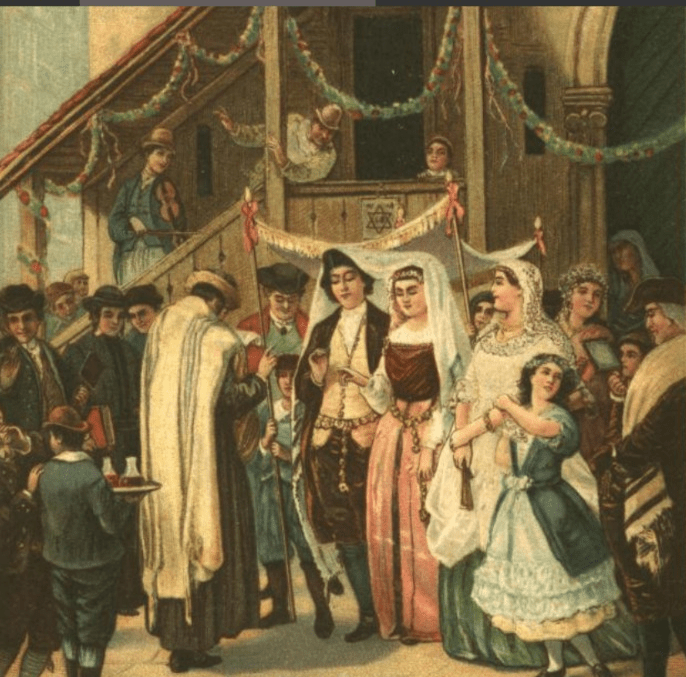
This ceremony was followed by the erection of a beautiful canopy composed of white and red silk in the middle of the floor. It was supported by four young men (by means of four poles), who put on white gloves for the purpose. As soon as this canopy was fixed, the bride, accompanied with her mother, sister, and a long train of female relations, came downstairs. Her face was covered with a veil which reached halfways down her body. She was handsome at all times, but the occasion and her dress rendered her in a peculiar manner a most lovely and affecting object. I gazed with delight upon her. Innocence, modesty, fear, respect, and devotion appeared all at once in her countenance.

She was led by her two bridesmaids under the canopy. Two young men led the bridegroom after her and placed him, not by her side, but directly opposite to her. The priest now began again to chant a Hebrew prayer, in which he was followed by part of the company. After this, he gave to the groom and bride a glass full of wine, from which they each sipped about a teaspoonful. Another prayer followed this act, after which he took a ring and directed the groom to place it upon the finger of his bride in the same manner as is practised in the marriage service of the Church of England. This ceremony was followed by handing the wine to the father of the bride and then a second time to the bride and groom. The groom, after sipping the wine, took the glass in his hand and threw it upon a large pewter dish which was suddenly placed at his feet. Upon its breaking into a number of small pieces, there was a general shout of joy and a declaration that the ceremony was over. The groom now saluted his bride, and kisses and congratulations became general through the room.

I asked the meaning, after the ceremony was over, of the canopy and of the drinking of the wine and breaking of the glass. I was told by one of the company that in Europe they generally marry in the open air, and that the canopy was introduced to defend the bride and groom from the action of the sun and from rain. Their mutually partaking of the same glass of wine was intended to denote the mutuality of their goods, and the breaking of the glass at the conclusion of the business was designed to teach them the brittleness and uncertainty of human life and the certainty of death, and thereby to temper and moderate their present joys.

Mr. Phillips pressed me to stay and dine with the company, but business and [junior partner] Dr. [James] Hall’s departure, which was to take place in the afternoon, forbade it. I stayed, however, to eat some wedding cake and to drink a glass of wine with the guests. Upon going into one of the rooms upstairs to ask how Mrs. [Rebecca] Philips did, who had fainted downstairs under the pressure of the heat (for she was weak from a previous indisposition), I discovered the bride and groom supping a bowl of broth together. Mrs. Phillips apologized for them by telling me they had eaten nothing (agreeably to the custom prescribed by their religion) since the night before.

Upon my taking leave of the company, Mrs. Phillips put a large piece of cake into my pocket for you, which she begged I would present to you with her best compliments. She says you are an old New York acquaintance of hers.

I can almost smell the broth that the newlyweds devoured. And the cake! I can’t help wondering what kind was served. Were guests given the choice of  Plum Cake or Sephardic delicacies like Almond Macaroons and Marzipan? Maybe a honey—lekach—cake was served to satisfy the Ashkenazim.  I can almost taste it!

What about you?

I can imagine Mrs. Phillips—a Jewish balabusta (homemaker)—preparing the pekeleh (the small bundle) for her Anglican friend, Mrs. Rush. If that isn’t the most universally recognizable act of hospitality, I don’t know what is! I can hear her saying:  “Take some cake home for your wife.”

This joyful gathering was more than just a beautiful celebration; it was the literal origin story of an extraordinary American legacy. While many colonial Jews in Philadelphia were Sephardic, this marriage blended traditions. The bride’s father, Jonas Phillips, was actually an Ashkenazi immigrant from Germany who was fluent in Yiddish (so much so that when British authorities intercepted his letters during the Revolutionary War, they reportedly concluded he was writing in a secret military code)! Rachel’s mother was a Machado—a Sephardic name. The groom’s family was Sephardic as well.

Rachel and Michael Levy would eventually become the parents of Commodore Uriah P. Levy—the famous naval officer who championed the end of the cruel practice of flogging in the U.S. Navy. Just as his parents’ wedding blended into the fabric of early America, Commodore Levy fiercely defended his place in it. He famously bought and restored Thomas Jefferson’s dilapidated home, Monticello, in 1834. Having spent his own naval career being relentlessly persecuted for his faith, Levy viewed Jefferson as the ultimate architect of American religious liberty. For the Levy family, preserving Monticello wasn’t just about real estate—it was a physical defense of Jewish rights and a profound act of patriotic gratitude.

Now, let’s delve into the weeds, shall we?  

As a modern reader, I found a few of Rush’s observations fascinatingly out of sync with traditional Jewish practice, revealing just how a non-Jewish observer in 1787 interpreted the rituals.

The Priest:

Reverend Seixas

Of course, the wedding official wasn’t a priest, but he wouldn’t have been a rabbi either! Not in 1787 Philadelphia. He may have been a hazan, a cantor, or a lay ministerial person. During this period, the title “reverend” was often used even for Jewish clergy—such as in the Reverend Gershom Mendes Seixas. The first ordained rabbi in the United States of America appears to have been Rabbi Abraham Joseph Rice in 1840.

The Weatherproof Canopy:

The wedding guest’s explanation regarding the chuppah (wedding canopy)—as a historical defense against the sun and rain in Europe—didn’t hold water (that’s me chuckling while writing).

My understanding has always been that the chuppah carries a deeper spiritual meaning. It typically represents the new home the couple will build together, modeled after Abraham and Sarah’s hospitable tent. It also traditionally symbolizes Divine Protection—such as the Canopy of Peace (Sukkat Shlomecha) that hovered over the Israelites at Mount Sinai.

Don’t Point—It’s not polite:

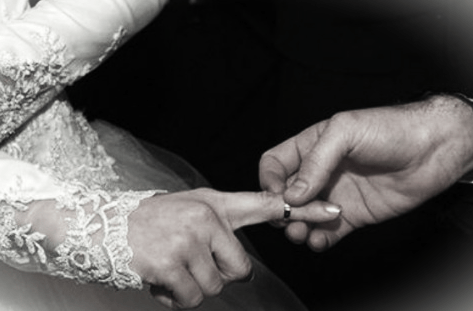
Rush noted that the ring was placed “in the same manner as is practised in the marriage service of the Church of England.” In an Anglican wedding, the ring goes on the fourth finger of the left hand to trace the vena amoris (the vein of love) directly to the heart. But in a traditional Jewish ceremony, the ring is actually placed on the right index finger. This is a strict legal requirement; the pointing finger is the easiest to hold upright, ensuring the two mandatory witnesses can clearly see the ring exchange as it happens. Most modern brides simply move the band to the left hand after the ceremony.

From Benjamin Rush’s affectionate letter to his wife to a young couple breaking a glass in a crowded Philadelphia parlor, early American history is paved with these vibrant, deeply human moments of faith and freedom. But these families didn’t just witness the birth of a nation—they helped build its foundation. To discover more incredible, untold stories of the individuals who fought for faith and freedom in the early Republic, look out for my new book, Kindle the Light of Liberty, releasing this Independence Day on July 4, 2026.

With love,

New Post

In Honor of the 250th Anniversary of This Great Nation’s Independence: Let’s Discuss Jewish American Colonists

A candle to one is a candle to many ~ Talmud, Shabbos 23b

I am thrilled to share a first look at my new novel, Kindle the Light of Liberty, arriving on July 4, 2026! As we approach the 250th anniversary of this nation’s Independence, I wanted to write a tribute to the diverse, complex voices of the Revolutionary period—especially the Jewish colonists who fought for a home in the new Republic.

While my characters, Rose Wachsman and Nathan Hirsch, are definitely influenced by the sharp, social wit of Jane Austen, this story isn’t just about parlors and assemblies; it’s about the hidden sparks of rebellion carried by those whom history often overlooks.

Remarkable figures navigated quiet alliances and treacherous loyalties before and after 1776. People such as: Frances Sheftall, Mordecai Sheftall, Haym Solomon, Issac Franks, The Gratz Family, Abigail Minis, Gerhom Mendes Seixas, Jonas Phillips, Moses Michael Hayes, Solomon Bush, and many more! We often focus on the muskets and battles, but liberty was also won in the shadows by men and women of profound faith and courage.

I’ve called this an American Revolution Love Story. I suppose you can interpret that in different ways. There is a familiar Pride and Prejudice trope, certainly, but as Jane Austen wrote, “there are as many forms of love as there are moments in time.” I can think of a few: Love of Country. Love of Heritage. Love of Liberty. 

It is such an honor to celebrate these unsung patriots as we prepare for this massive milestone in our nation’s history! Please look for the book on Amazon this July!

They had no voice. They held no power. Yet they helped decide the fate of a nation.

In the bustling streets of Philadelphia, Rose Wachsman has no time for the rigid expectations of her community—and even less for the infuriatingly reserved Nathan Hirsch.

She is a woman of the hearth, sharp-witted and fiercely loyal to the cause of liberty; he is a man of business and tradition, seemingly more concerned with ledgers than the fires of revolution.

But as the war moves from a tradesman’s chandlery to the parlors of the elite, Rose and Nathan find themselves forced into a dangerous game of intelligence and alliance. In a world that would rather forget their names, they must overcome their own prejudices to discover that their greatest adversary might be their only hope.