New Post

The Musings of an Austenesque Novelist~ Following the Crumbs: Part I

In The Jews of Donwell Abbey: An Emma Vagary, I weave a unique backstory into Jane Austen’s novel and allow Miss Harriet Smith to come to the forefront. Austen gives us a glimpse at this secondary character, this “natural daughter of nobody knows whom.” Readers must form their own conclusions—until the very end, when Austen provides a sentence or two in an attempt to wrap things up. But does she attempt to satisfy our curiosity—or does she mean to tease? In the famous Grimm’s fairy tale, Hansel and Gretel drop crumbs along their trail, leaving a path for others to follow. Can you guess where I’m going with this? Naturally, I had to follow the crumbs Austen left behind. There was another story to tell—I was sure of it—one with new characters and a Jewish storyline.

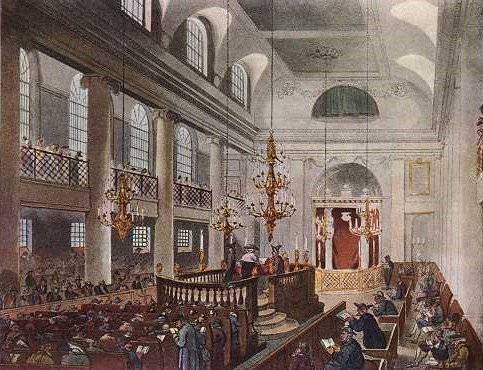
Austen provides a scenario in “Emma” that set my creative wheels in motion. I don’t want to reveal too much; but, for those of you who have read the original novel, the chapter that sends Mr. Elton off to London with Miss Smith’s portrait in hand provided my first crumb. A plot unfolded easily enough in my mind. The challenge was to ensure that historical events matched Austen’s timeline. You see, in other novels, I’ve used my own family’s immigrant experience to authenticate my protagonist’s journey. However, the exodus from Imperial Russia did not coincide with the Jewish population in Regency England. I had to look elsewhere. The timeframe allowed for a population of a majority of Sephardic Jews and a smattering of Ashkenazim of German descent.

This second crumb sent me whirling further down the rabbit hole until the Weiss family was created and I placed them in London. They were an immigrant family; their original home, I decided, was in the Judengassin—the Jewish ghetto in Frankfurt. I had to find the impetus for their migration, something catastrophic that opened the ghetto gates and allowed for their freedom. And here is the conundrum that all authors face. A plot is conceived, the players are named, but the story cries out for historical accuracy. It may only be a few sentences; but, as any author will tell you, that sense of time and place requires hours and hours of research. And that was precisely what happened to me.

Without batting an eye, I could tell you about the Jewish Colonization Association and the immigration from Imperial Russia to Argentina. I could describe the lives of Jewish gauchos or the “cuentaniks” of Buenos Aires. What I can’t—or couldn’t—do is explain how immigrants fleeing Germany’s infamous Judengasse (Jewish Street) found their way into an Austenesque novel.

Research, my dear reader, research

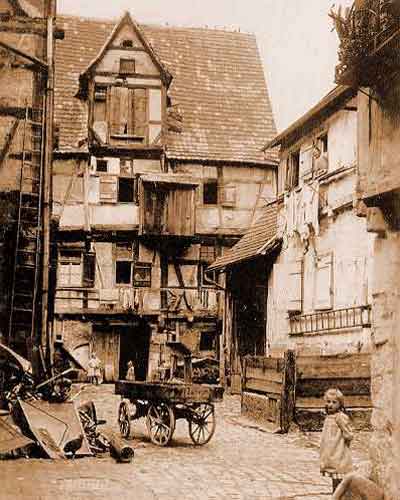
In Heinrich Heine’s book, “The Rabbi of Bacherach,” the narrative unfolds in the 15th century where Kaiser Friedrich III and Pope Pius II demand that twenty Jewish families be removed from their homes and resettled in the Judengasse. By the year 1500, approximately 100 people live in the area nicknamed, “The New Egypt.” One hundred people in 14 houses. By 1600, there were 3,000 people living in 197 houses, wooden structures that were crammed together, story upon story until they blocked out the sun, reduced air flow, and created hazards that resulted in massive fires—three of historic consequence in 1711, 1721, and 1774.

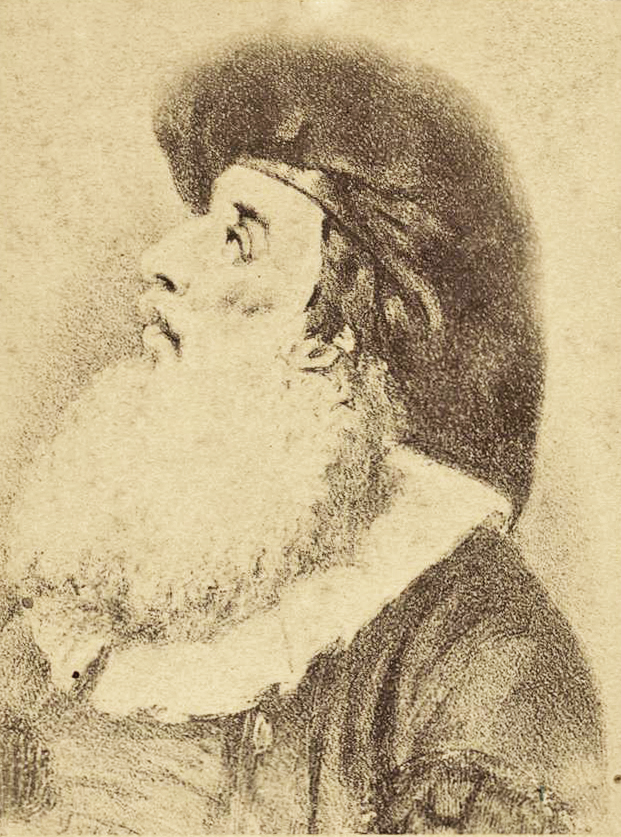
Rabbi Naphtali Cohen

Rabbi Naphtali Cohen was called to Frankfurt am Main after his house was destroyed on January 14, 1711. Summoned to testify before the court, it was noted that the fire consumed the entire Jewish ghetto, but the rabbi—known for his Kabbalistic practice—had had the audacity to survive. Not only did he survive, the kabbalist was accused of “preventing the extinguishing of the fire by ordinary means.” The rabbi was accused of witchcraft and summarily thrown into prison. He was set free by renouncing his title and practice.

Juda Low Baruch, otherwise known as the poet, Ludwig Borne, lived in the ghetto during the late 1700s. His memories are bleak, to say the least. “The highly celebrated light of the eighteenth century has not yet been able to penetrate [the Judengasse].” His writings expressed disgust, anger, despair—futility. “If one were to consider play in childhood as the model for the reality of life, then the cradle of these children must be the grave of every encouragement, every exuberance, every friendship, every joy in life. Are you afraid that these towering houses will collapse over us? O fear nothing! They are thoroughly reinforced, the cages of clipped birds, resting on the cornerstone of eternal ill-will, well walled up by the industrious hands of greed, and mortared with the sweat of tortured slaves. Do not hesitate. They stand firm and will never fall.”

Adolf von Knigge, a German author, blamed the horrific living conditions on his Christian brethren. In his work entitled, “The Story of My Life”, he reminds his audience that these Jewish families were once “craftsmen, wine-growers and gardeners.” They once lived freely and contributed to society; however, “ecclesiastical ordinances” reduced them to peddling and to “practices of usury.” The very people who condemned this once-proud society to live in squalor, were the first to criticize and ridicule. For Knigge, these actions were the very antithesis of an enlightened society. His work was known to speak out against “aristocratic courtly culture as [being] superficial, immoderate, and wholly lacking in inner values.”

In his novel, “Labyrinth,” Jens Baggesen describes the inhuman living conditions he witnessed in the Judengassin of Frankfurt. This Danish-German author advocated for German Jews, locked behind ghetto gates night after night, not to mention Sundays and on all Christian holidays. How could an enlightened society allow such a thing? They were denied the pleasure of open air, of walks in the parks and plazas. They couldn’t patronize restaurants or coffee shops, or “walk more than two abreast in the street.” Baggesen leant his voice to the growing movement for civil rights and Jewish emancipation.

Many people have heard the name Rothschild. Mayer Amschel Rothschild and his descendants are very likely the most famous people to have lived in the Judengasse. Their surname evokes images of great wealth and power. For some, the name inspires thoughts of moxie and resourcefulness. For others, it inspires thoughts of greed and manipulation. What is the truth?

By 1560, Mayer’s ancestor, Isak, was confined to living in the ghetto. It was common for residents to be known by their address, so the family surname was most likely taken from the red shield (zum roten schild) that hung at their front door. Isak and his family were known to be pious and relatively successful cloth merchants. By the time Isak died in 1585, he had accumulated an income of 2,700 gulden. His great grandson, Kalman, had an income more than twice as large, and his son, Moses—Mayer Amschel’s grandfather—continued to prosper by not only dealing with silks and other costly materials, but with rare and foreign coins. This was not an unusual practice; Frankfurt was centrally located and was popular with businessmen from various neighboring towns and countries—not to mention noblemen and politicians.

Mayer’s father, successful merchant and patriarch, continued to live in a modest home with his family. It had been designed to suit their business needs, with an office on the ground floor, a kitchen on the first floor, and bedrooms on the top level. Mayer was allowed to attend rabbinical school at Furth, although he later was known to have said that he “only studied his religion in order to be a good Jew.” When both his parents succumbed to an unknown, but inevitable, epidemic that attacked ghetto inhabitants, Mayer’s studies came to end. He returned home for a brief time, before being sent to Hanover to apprentice with his father’s associate, Wolf Jakob Oppenheim.

Mayer was just twelve years of age when his journey into the privileged and elite world began. He learned what it meant to be a “court Jew,” garnering knowledge from Oppenheim’s family, court agents to the Austrian Emperor and the Bishop of Cologne. He learned how to work with aristocrats who were always in the business of buying and selling rare coins, jewels, and medals. In this manner, Mayer returned to Frankfurt, somewhere around 1764, a prosperous and renown businessman. In 1769, he was granted the title of court agent. In August of 1770, at the age of twenty-six, he married his beloved, Gutle, the sixteen-year-old daughter of Wolf Salomon Schnapper, court agent to the Prince of Saxe-Meiningen. All this success, and yet, he and his wife were confined to the ghetto.

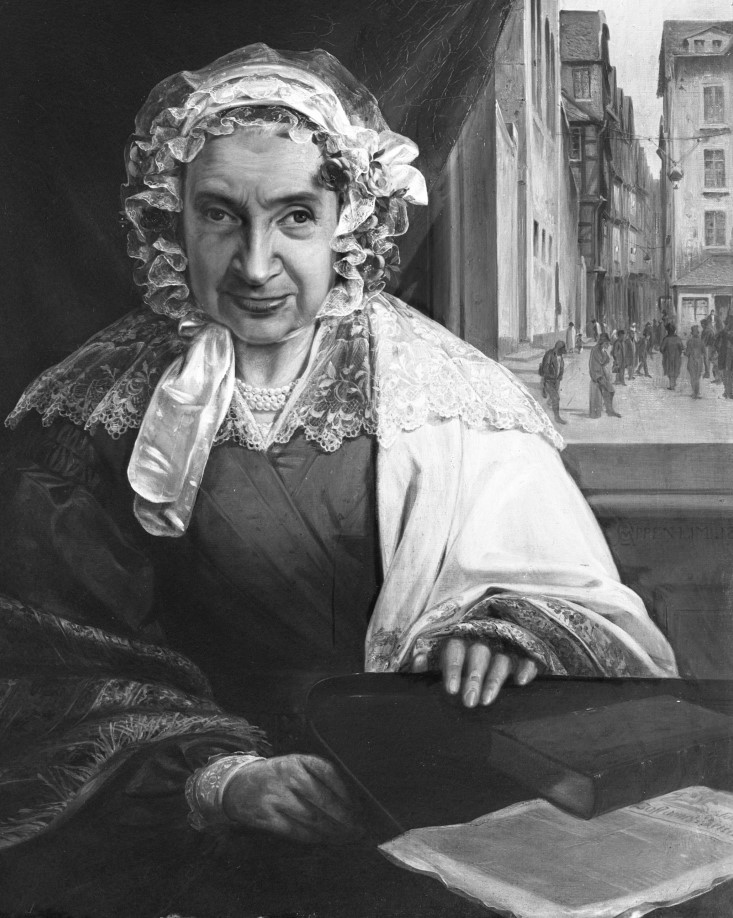
Gutle Rothschild

Mayer and Gutle went on to have a large family; nineteen children were born, ten survived. While Gutle managed home and hearth, Mayer continued to grow more prosperous. By the mid-1780s, the Rothschilds had accumulated approximately 150,000 gulden and were able to move into a new home—substantially larger, yet still behind the ghetto gates. The new house, known as “the green shield” (zum grunen schild—they didn’t change their name at this point), was approximately fourteen feet wide. The rooms were narrow and cramped. The children all slept together in the attic. Still, it was considered to be a desirable residence. It had its own water pump! The lavatory was outside in a small courtyard. From these humble beginnings, a powerful and philanthropic family emerged.

Rothschild Coat of Arms 1817

To this day, the Rothschilds are criticized, judged, and maligned. Everyone has an opinion on their legacy. Perhaps, like Rabbi Naphtali Cohen, it would have been better if they had succumbed to their wretched circumstances. Perhaps they should have had the decency to fail miserably. Perhaps it is envy that is behind the contempt for the Jew.

The antisemitism we are living today does not differ much from what we have seen in the past. But that’s why understanding our own history, even in the form of “light” historical fiction or so-called, “Chick Lit” is vital. The past may reveal many injustices, but it also reveals our courage and our determination to survive—and to thrive.

Dignity is a powerful thing. We shall use it to break through the walls of the ghetto and set ourselves free.” – Sara Aharoni

I set out to show you how one simple thought can lead to hours and hours of research. And that, I have done.

I needed to piece together the whys and wherefores in order to bring my fictional Weiss family to London, England. And that, I have done.

I didn’t realize that this post was going to end up being some sort of call to arms. If I have encouraged you to be proud of your heritage, to advocate for justice, to look to your non-Jewish friends for support, to fulfill your dreams and destiny; then, I am glad to say: that I have done! I suppose that’s what happens when you follow one little crumb.

That being said, the original point of this post was to show how all. that. research. led to this short excerpt. I hope you enjoy!


It was September 1794. Hannah Weiss, a young woman who had not yet reached her majority and had no real knowledge of the world beyond the four corners that united her neighborhood, believed herself to be in love with Yaacov Kupperman.

Left quite unrestrained by parents who were otherwise engaged in rebuilding their lives in a foreign land, Hannah and Yaacov’s childhood friendship blossomed. They shared the love of the written word and the love of adventure. Stolen moments were spent sharing tidbits of knowledge, whether acquired from the streets teeming with intriguing activity or from passages within a tattered book. Whispered promises and fanciful dreams became woven into their very existence. It seemed so natural a thing. They spoke of their future lives with the same assurance that their mothers would bake sweet challah for the Sabbath and their fathers would sleep through the rabbi’s sermon the following day. It was inevitable. It was bashert—it was meant to be.

On a cool, temperate evening, unencumbered by chaperones or naysayers alike, the besotted pair anticipated their wedding vows. Yaacov murmured his pledge to be Hannah’s knight in shining armor, such as the men from days of yore. He vowed to protect her, to provide for her. There would be no more talk of the Judengasse, of poverty, or fear. They were English now, and their lives would be the stuff of fairytales.

“You will speak with my papa?” Hannah whispered. “You will come by us for Shabbes?”

Yaacov gently tugged on a golden curl. “Do not speak in that foreign manner, my sweet one. Instead, you should say: Will you come to our house for the Sabbath? We are native Londoners, even if our parents were born in Frankfurt. Let us not speak as if we were still in the ghetto.”

“You would admonish me now?” she bristled. “After we—after just—”

“You are such a little girl! See how you blush!” Bringing her closer, Yaacov whispered, “Never fear, my dear heart. I will speak with your papa and should be pleased to share the Sabbath meal with your family. How else will I earn my mother-in-law’s favor?”

Hannah smiled at his teasing but persisted with her train of thought. “What of your papa? Oughtn’t you speak with him first? Perhaps now, you may become his partner!”

“Perhaps,” he chuckled. “My father certainly has high hopes for the family business. I will speak with him on the morrow after he has broken his fast. Rest assured, my love. We shall be wed before Chanukah.”

Later that evening, Hannah peeked out her window and gazed into the heavens. She sent up a prayer asking for forgiveness. She was not so ill-bred that her earlier actions did not cause her some shame. Perhaps they ought to have waited until after the words had been spoken—after they had stood under the wedding canopy and the rituals had been commemorated.

I shall be married soon enough, and all will be well!

Hannah murmured another grateful prayer, for her dreams would soon be fulfilled. By December, she would recite the blessings over the chanukkiah, the precious heirloom that had been in the family for generations. It would soon be passed on to the newest bride.

September went by in a flurry. October and November, although bathed in vibrant hues of red and gold, foreshadowed the bitterness that was yet to come. Hannah could not take pleasure in the riot of colors that fell upon the city, not when her eyes were clouded with remorse. Yaacov had not come for Shabbes that Friday evening. Indeed, he had not been seen for many months past.

Hannah considered asking for him at synagogue after services or when she encountered Mrs. Kupperman at the butcher, but the unspoken words stayed upon her lips. How would she respond if they questioned her? It was not becoming for a young, unmarried girl to ask after a young man, even if they had been friends and neighbors throughout their youth. People were certain to talk. To be sure, in this matter, there was no distinction between the ghetto of Frankfurt and the streets of London.


See what people are saying about “The Jews of Donwell Abbey: An Emma Vagary” and get your copy today!

With love,

New Post

My latest scribblings: A New Jewish Regency Romance

Today’s the day! I had planned for a different release date, but KDP (the publishing house for Amazon) works in mysterious ways…who am I to argue with their algorithms and stratagems? I’m happy to release the book on a Tuesday. As I mentioned in a previous post, Tuesdays are special in Jewish tradition. I will take all the extra blessings and positive vibes I can get!

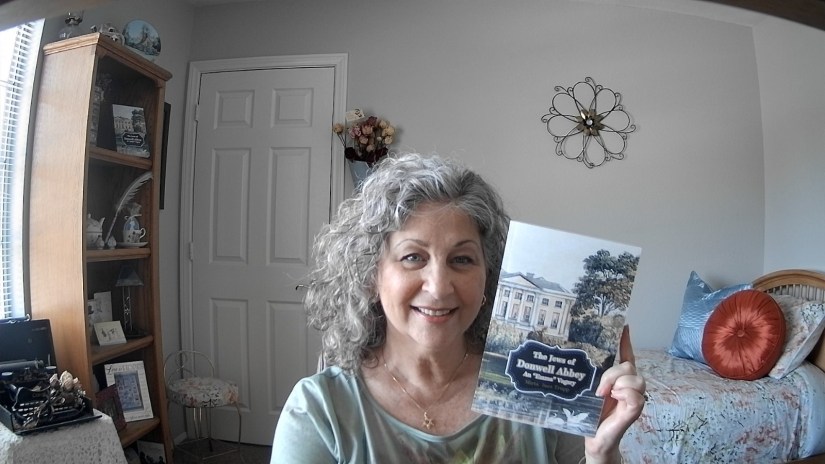
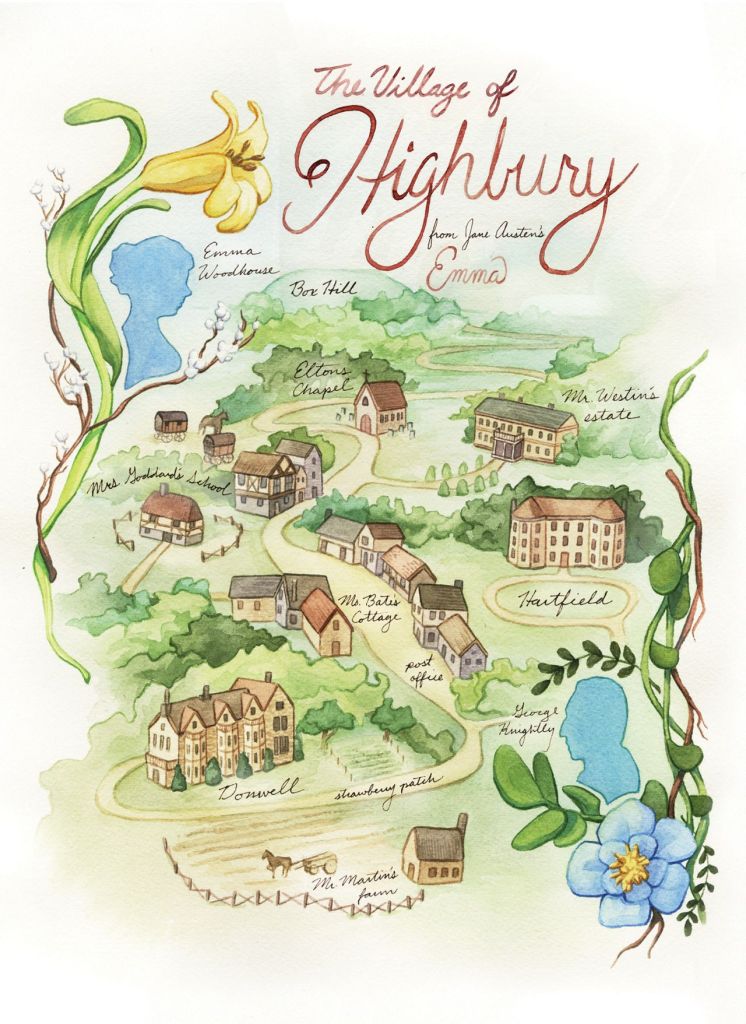
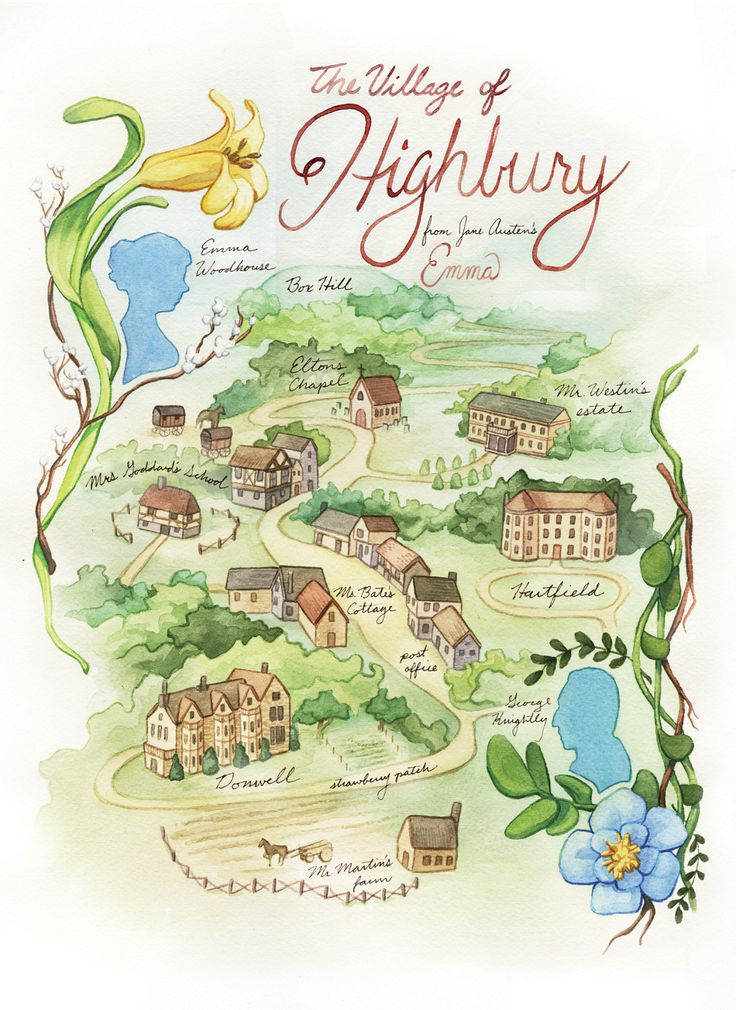
The Jews of Donwell Abbey is a retelling of Austen’s Emma. For those of you not familiar with the original text, allow me to fill in some of the blanks. The novel was first published in December 1815 and is set in the fictional country village of Highbury in England. Austen provided for two principal estates, namely Hartfield—where Emma Woodhouse resides with her father—and Donwell Abbey, the home of Mr. Knightley.

There are, of course, various friends and family members that enliven the story. The Westons, Mrs. and Miss Bates, Miss Fairfax, Mr. Churchill and Mr. Elton are members of the gentility and are all acquainted with Miss Emma Woodhouse, the main heroine of the story. Mrs. Goddard, the Cox family, and the Martins are not of the same social sphere, however they too are showcased in varying degrees. And then there is Miss Harriet Smith.

Harriet Smith is “the natural daughter of nobody knows whom”—a phrase that tells us instantly that this beautiful, yet unsophisticated girl, was born out of wedlock. She is raised in Mrs. Goddard’s school; and, when she completes her studies, Harriet becomes a parlor boarder. That is to say, she remains at the school and helps supervise and teach the younger pupils. Miss Emma Woodhouse takes notice of the charming young lady and takes Harriet under her wing—believing in her heart of hearts, that the girl must be the daughter of a gentleman; and therefore, in need of some guidance.

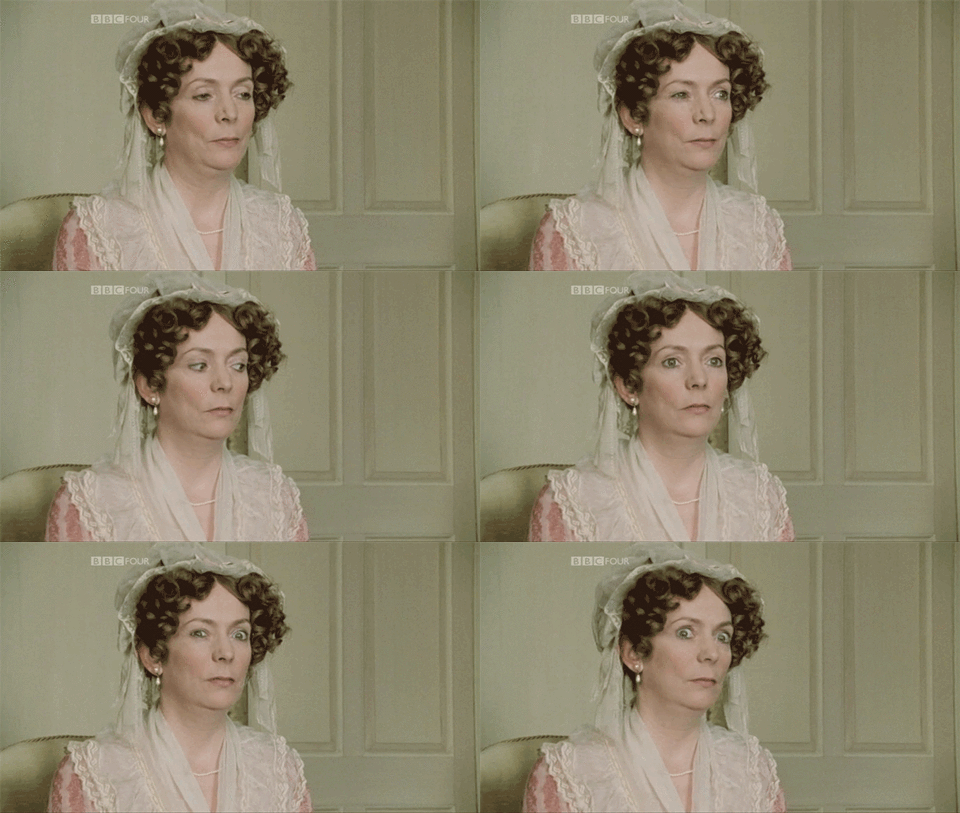
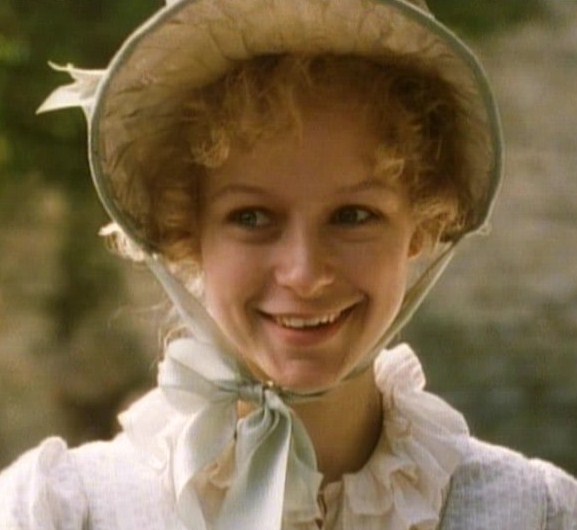
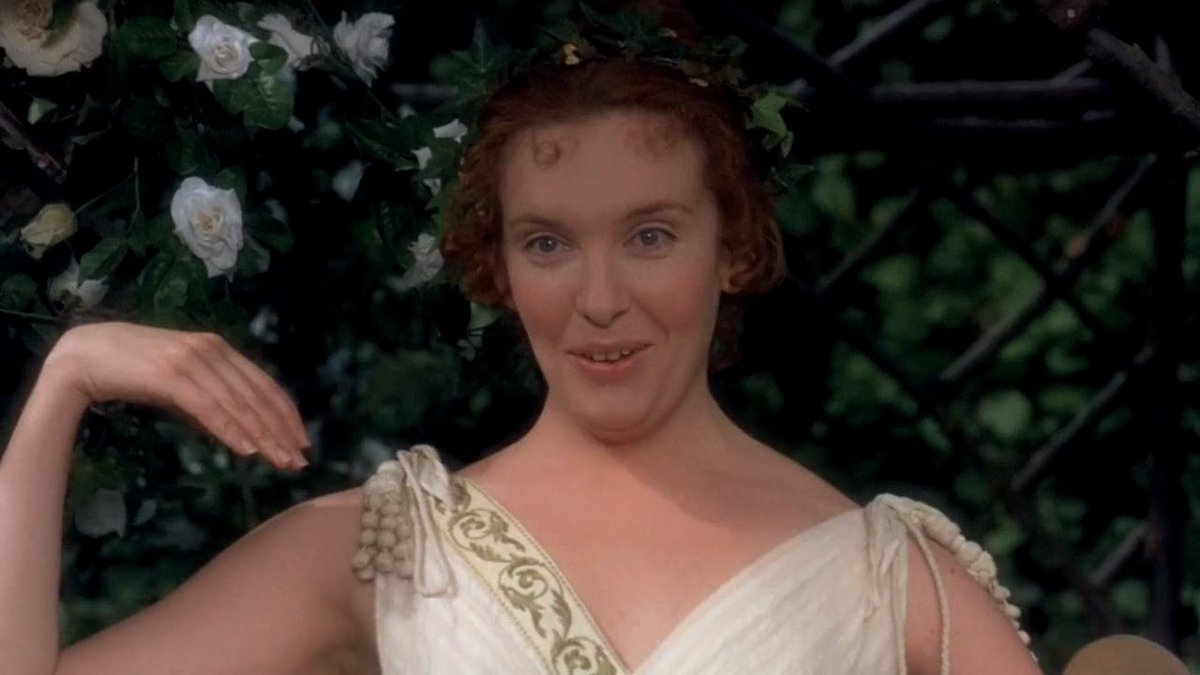
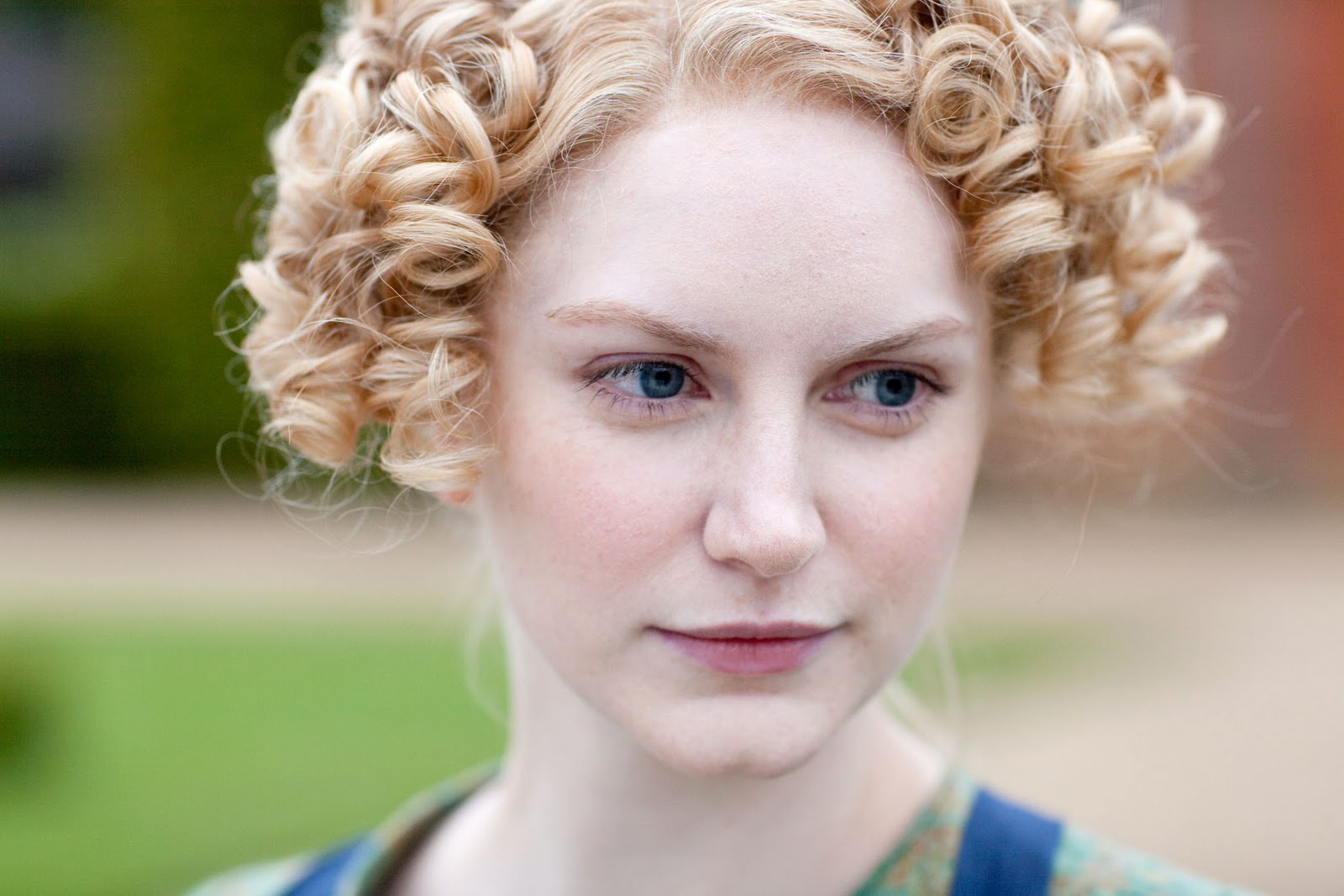
Which actress portrayed her best?

At the conclusion of her novel, Jane Austen reveals the truth about Harriet’s heritage, albeit the details are brief and wanting. However, in her usual— brilliant—style, the author gently nudges readers to address the many topics that concerned Georgian (Regency) society. Austen explores genteel poverty and elegant economy, such as what the Bates women must experience. The thin line of respectability and acceptance within the social spheres is showcased with the Cox, the Coles, and the Martins. The desperation to marry, and to marry well, is underscored by the ever-looming threat of becoming a governess or worse, yet, a spinster!

As in the past, Austen helped me spin a tale of my own. Harriet’s story, meant to be secondary in nature, moved to the forefront in my mind. The vague commentary about Harriet’s true parentage was thought-provoking to say the least! I couldn’t walk away from the opportunity! The end result is a novel that continues to address taboo subjects, such as the responsibility of caring and raising foster children, the enduring effects of post traumatic stress disorder, religious intolerance, spiritual growth…

Don’t worry! The story continues to be a light and entertaining read. I hope to have mimicked Austen’s touch—you will have to let me know. See what others have been saying here…

With love,

New Post

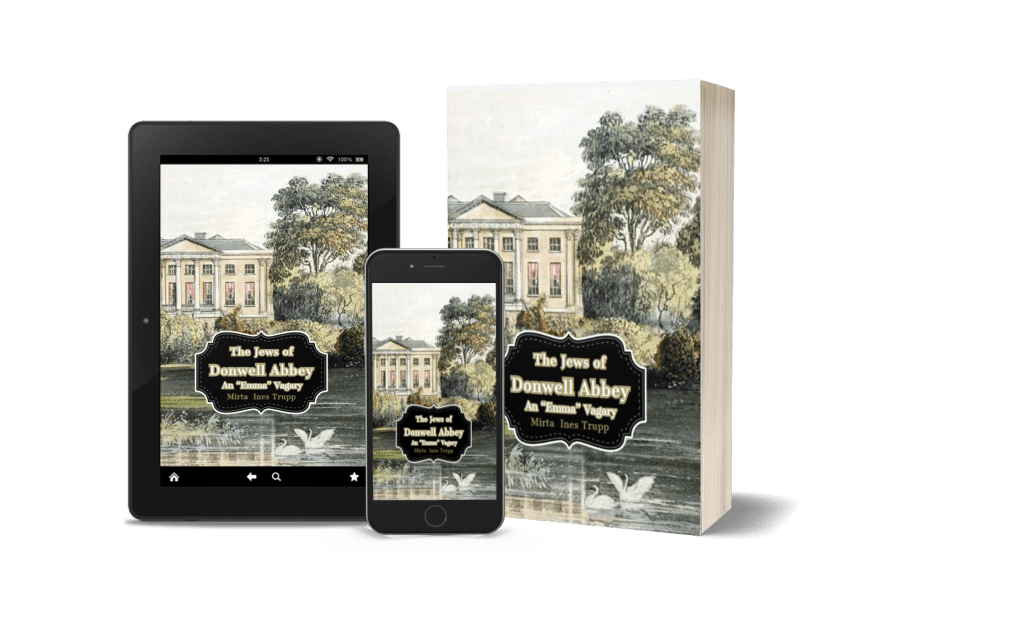
The Jews of Donwell Abbey: An “Emma” Vagary

It all started—as these things often do—with a “what if…?” Over two years ago, a story plot came to mind for my least favorite Austen novel: Emma. I know I might ruffle some feathers, but I’m not alone in my feelings towards this novel.

I am going to take a heroine whom no one but myself will much like.” ~ Jane Austen

Miss Emma Woodhouse is said to be handsome, clever, and rich, with a comfortable home and happy disposition. She is twenty-one years of age and has lived with very little to distress or vex her. In other words, she comes across as a spoiled brat. She is a snob.

Emma is used to getting her own way, in particular with her father, her governess—actually, with everyone who acknowledges her station in life. She has too much time on her hands and becomes quite a “yachne“—a meddlesome, gossiping busybody (I know you’re thinking of the word “yente,” but that’s a misnomer).

In any event, Austen provides sufficient fodder for her character to evolve and grow. Like other Austenesque protagonists, Emma becomes relatable and, yes, even inspiring. But one question remains: Is Emma Woodhouse the true heroine in this story?

The “what if…?” I contemplated was complicated and required too much thought at a time when I was still fully engaged at my “day job.” Like they say nowadays: I didn’t have the bandwidth to handle another project, so I tucked away my idea for another day. The mind is a funny thing, however—at least, mine is!

Once the idea presents itself, I start visualizing how the story will unfold. I hear the dialogue, I imagine scenes and settings. Of course, this usually takes place at 3:00 in the morning when I’m trying to sleep. It’s exhausting. It’s unrelenting. It doesn’t stop until I start putting my thoughts down on paper.

And so began this latest novel: The Jews of Donwell Abbey: An “Emma” Vagary.

Editorial reviews are hard to come by, especially for an indie author who self-publishes. I have been blessed by an army of beta-readers and volunteers, and by a few generous professionals who provided the following testimonials:

  • “A creative, heartwarming take on a beloved story, The Jews of Donwell finally gives Harriet Smith her due.” ~ Caroline Warfield, author of An Open Heart, The Entitled Gentlemen series, The Ashmead Heirs series, Children of the Empire series, et cetera

  • “Trupp has written a charming and entertaining novel with The Jews of Donwell Abbey. A captivating read!” ~ Meryl Ain, author of Shadows We Carry and The Takeaway Men
  • “Blending Emma with a Jewish story line is an ingenious idea! Fans of Austen, and those who crave Jewish Regency stories rich in Jewish content, will find The Jews of Donwell Abbey an extremely satisfying read. L’ chaim!” ~ Rabbi Jo David (aka Nola Saint James, author of Regency Romances)
  • “The Jews of Donwell Abbey introduces a colorful dimension of minority identities in Jane Austen’s Emma. Trupp’s orchestration of history and mystery enriches the ongoing collection of stimulating rewrites of classical novels. A gift to Austen fans, it will interest all readers curious about the hidden facets of “proper” social intercourse in Georgian England.” ~ Yael Halevi-Wise, author of Interactive Fictions: Scenes of Storytelling in the Novel, Professor of Jewish Studies and English Literature
  • “Who could have guessed that under the genteel veneer of Jane Austen’s Regency England lurked secrets beyond what could have been openly addressed at the time? In The Jews of Donwell Abbey, Trupp brings sidekick Harriet Smith to the forefront, her mysterious origins are explained, and her ultimate happy ending turned into a lesson about tolerance, acceptance, and the miracles hidden within mundane lives. The perfect companion piece!” ~ Alina Adams, author of The Fictitious Marquis, Romance Writers of America’s first #OwnVoices Jewish Regency Romance

The book is scheduled to be released on Tuesday, November 5, 2024. Look for it on Amazon! I look forward to hearing (or reading) your thoughts!

With love,

New Post

Jewish Austen Fan Fiction~ Cover Reveal Day!

Drum roll please…

Surrey, England

August, 1812

Harriet Smith looked around the room she had shared with Miss Martin for these months past. She had been invited to spend the summer holiday with her schoolmates and was made to feel quite at home. Such a simple, yet evocative word. Home. It was the one thing she truly did not have of her own. It affected her keenly to leave just now, especially after the warm reception she had received; however, the circumstances surrounding her abrupt leave-taking were not of her doing. Harriet would have given anything to have remained for the three months complete, but it was a sorrowful event that had brought the visit to an end. The Martins had been thrown into a period of mourning.

Harriet had been roused from her slumber by foreign sounds, having grown accustomed to the natural cacophony of Abbey-Mill Farm. A messenger from the abbey had knocked upon the door, even before the family’s favorite rooster crowed his first morning’s call.

Wiping the sleep from her eyes, Harriet sat up and turned to her bedmate who had been awoken by the persistent rapping as well. Elizabeth bade her to be silent as they heard her brother’s footsteps pass their chamber and down the stairs. The youngest family member, Judith, thankfully remained asleep. She would have caused a great commotion, as was her wont, and they would have been unable to keep their awakened state—and curiosity—unknown.

As it happened, the girls were unable to make out anything of interest, for only a mumbled exchange could be perceived. Elizabeth removed the counterpane and edged her way to the door, placing her ear against the thick wood in the attempt to hear below. Harriet waited abed, holding little hope that her friend’s action would provide any clues. It was only when the messenger took his leave, and the front door was shut closed, that Mr. Robert Martin made his way back up the stairs.

Elizabeth scurried back to Harriet’s side, and pulling the bedlinens back into place, the girls awaited for news of what was amiss. They shared a moment of disappointment when they heard Mr. Martin knock upon his mother’s door. In truth, Harriet was more relieved than disappointed. She would have burned with embarrassment had Mr. Martin seen her in such a state—in her night rail and her hair rolled up in curling paper.

Elizabeth crept up against the door once again. The ploy proved more successful this time as her mother’s chamber was down the hall, and the voices were easily discerned.

Baruch Dayan Emet,” Elizabeth heard her mother utter.

“Blessed is the Judge of Truth,” Elizabeth and her sister repeated quietly.

“What is it?” Harriet whispered. “What has happened?”

Elizabeth brought her finger to her lips as she pried opened the door, and motioned for the girls to come forward. Huddled together, they peered through the opening and watched Mrs. Martin reach for a sewing kit that had been thoughtlessly discarded atop a chest of drawers.

Withdrawing a pair of scissors from its cover, Mrs. Martin took hold of her son’s shirt collar and made a deep cut. Taking hold of the fabric, Robert deepened the cut with his own hands.

“A time to rend and a time to sew…do you know the verse, Harriet?”

“Yes, of course, I know it. It is from Ecclesiastes, but what does it signify?”

“Someone has died,” cried Judith.

“It could only be one person for Robert to perform such an act,” Elizabeth offered. “Grandpapa…”

Touched by this pronouncement, Harriet moved to embrace her friends, but Mrs. Martin caught sight of her daughters and called them hither.

“Mr. Knightley has sent word this morning,” she began. “Your grandpapa, peace be upon him, is no longer with us—now, now girls—” Mrs. Martin tightened her embrace, “we have been prepared for this eventuality. I beg you, be calm. Grandpapa, no doubt, has been reunited with his son, your own dear father, and your grandmama.”

Mrs. Martin brought a handkerchief to her lips and paused but for a moment. “We must dress and prepare the house. The rabbi will, no doubt, be visiting shortly.”

The family dispersed, each quietly seeing to their morning ablutions. Once dressed, the girls made their way downstairs and looked to their mother for direction. Harriet wished to be of service, though she knew her best efforts would only cause her friends additional work.

During her six-week visit, Harriet had learned that the Martin household was like no other of her acquaintance. The pantry and cupboards, indeed, all kitchen matters, were governed by a particular set of rules. Food preparation was of the utmost importance, as was the observance of the Sabbath, which began on Friday evenings and lasted through dusk the following day.

Unable to control herself, Harriet had asked the girls to explain this strange practice. She smiled now, recalling how Judy had rolled her eyes upon hearing yet another question, but it could not be helped. Harriet had always been a curious creature.

“Mysteries are the bane of my existence!” she had declared on more than one occasion. How she came to live at Mrs. Goddard’s school, she understood, was a mystery that could never be resolved. Therefore, at a very young age, Harriet determined that asking questions was her right—even if impertinent Miss! was often applied to her name.

Today, however, was another matter entirely. The household was in an uproar; the Martins were clearly distressed. Harriet would not add to their discomfort for the world, and so she sat quietly with her cup of tea and waited to be of service, and not a hinderance.

The cottage was not a grand home, not by any means, but Mrs. Martin had made it comfortable and had added feminine touches throughout. A framed mirror of respectable size had been placed by the front door where one could adjust one’s wrap or bonnet. Nonetheless, this instrument of vanity was the first to be draped with linen. The girls covered their hand-held mirrors and placed them face down upon their dressing tables. One’s toilette was not of importance on this sad day.

Mrs. Martin directed her son to gather as many small stools from around the farm that could be found while she swept the better of her two parlors. As mourners, the family would be seated low to the ground; those coming to condole would be offered the finer furniture—the upholstered chairs usually reserved to receive honored guests such as Mr. Knightley or his steward.

At length, Elizabeth put her friend to work, handing over a basket full of fresh eggs.

“Pray, set these to boil in the appropriate pot,” she instructed. “You know which one by now, dear Harriet.”

Before quitting the room, Elizabeth grabbed hold of her friend’s hand. “I know you are bursting with the need to ask your questions, but now is not the time. I promise I will explain it all—perhaps you will not find it that much different from your own family’s mourning rituals.”

These words, no doubt, were kindly meant; nonetheless, Harriet could not help but feel her shame even more profoundly. Whatever was Elizabeth thinking?

Family rituals? She did not have a family—other than Mrs. Goddard and the girls at school. In truth, she was all alone in the world. But it was not her custom to be petulant or dreary, and certainly not when her friends were in crisis.

Harriet gently placed the eggs to boil and was quite pleased, knowing she had chosen the proper pot. Indeed, Mrs. Martin had instructed her upon her first day at Abbey-Mill. The kitchen had been carefully prepared to house two separate sections: one for dairy products and preparation, and another for meat. Explanations as to why had not followed, and Harriet had to tuck her questions away for another time. She had collected a great list of questions during her visit, and it would take another six weeks to address each and every one!

Harriet overheard voices from the parlor as Mrs. Martin sent Judith to find a small table to set outside the door. Elizabeth was to follow with a bowl and pitcher of water. The girls were heard scurrying about, when Harriet heard yet another knock upon the front door. Checking on her pot of boiling water, she wiped her hands on a borrowed apron and peered into the foyer as Mrs. Martin welcomed the visitor.

The gentleman was unknown to Harriet, having never made his acquaintance in Highbury. In truth, upon further inspection, she found him to be oddly fascinating.

Dressed in unrelieved black, his long coat reached down to his calves. His pointed beard, peppered with gray, reminded Harriet of the Martin’s billy goat, and she nearly embarrassed herself by laughing aloud at the thought. She was unable to see the color of his hair, or if he had any at all, for he would not remove his hat—though he was in the presence of ladies. It was altogether strange to note that the man appeared to have ringlets on either side of his face!

Whatever could he be about?

Elizabeth and her sister had taken a seat by their mother’s side and signaled Harriet to join them in the parlor. While Mr. Martin offered the guest their most comfortable chair, Harriet quietly crept in, standing behind the girls in silent solidarity. The man opened a book he had withdrawn from his coat pocket and, speaking in the language that Harriet had grown accustomed to hearing in weeks past, began chanting a mournful prayer.

“Thank you for coming to us so quickly, Rabbi Kolman,” said Mrs. Martin after the family pronounced their amens. “We only just learned the news—you find us in quite a state.”

“One is never sufficiently prepared for these events, Mrs. Martin. Pray, do not make yourself anxious. Doctor Martsinkovsky, of blessed memory, would not burden his family and friends by being ill-prepared—even for his own funeral.” The rabbi allowed himself a slight chortle at his attempt at levity.

“My grandfather was known for his meticulous attention to detail,” said Mr. Martin. “He was the best of men.”

“Indeed. You will find that everything is in order, Mrs. Martin. The burial will take place this afternoon at three o’clock; our small congregation will accompany you during your seven days of mourning.”

“What?” gasped Harriet. “So soon?”

Elizabeth glared at her friend, who immediately understood her blunder. Bowing her head, Harriet silently vowed to say no more.

“Robert,” the rabbi continued, “you will want to unbolt the front door. It will be incommodious to be interrupted by visitors while at evening prayers. Whoever wishes to condole with the family will wash their hands before entering and come in quietly thereafter.”

“Yes, Rabbi Kolman,” replied Robert Martin. “I will see to it.”

“And girls,” the man said, addressing the Martin daughters, “make sure your dear mama does not tire herself with cooking and baking. The women of our congregation will fill the house with enough food to feed an army—certainly enough to last the week of mourning.”

The rabbi rose and shook hands with the man of the house and made for the door. “Remember to exchange your leather boots for other footwear. The weather has been relatively pleasant of late. I doubt you will be plagued with mud or muck. And one more thing! There is to be no shaving nor hair cutting—you young men today seem to have a penchant for fashion rather than following our traditions—for the whole of the week, mind!”

He gave a short bow to one and all before declaring: “May the Almighty comfort you among the mourners of Zion and Jerusalem.”

Taking to her feet upon the rabbi’s departure, Mrs. Martin clapped her hands to rouse the party from their melancholy. “That’s it, then,” said she. “Let us finish preparing ourselves…”

Another knock upon the door, however, interrupted Mrs. Martin’s directive. Harriet hoped whomever it was came bearing good news. She watched as Mr. Martin made for the door once again and was astonished to see Miss Emily Bickerton, her classmate, standing there. Sitting atop the pony trap was Peter, Mrs. Goddard’s manservant.

“Why, Emily!” cried Harriet. “Whatever do you do here?’

The young lady, known to Elizabeth and Judith Martin, for the foursome were at school together, was asked to enter and offered a glass of cool lemonade. This she was tempted to accept—the morning sun had taken its toll, even on the short ride—however, Emily Bickerton had been given a task, and she meant to discharge it with alacrity.

“Begging your pardon, Mrs. Martin,” she began and offered a quick bob of a curtsey. “I should be happy to take refreshment with you and my friends some other time. Mrs. Goddard has sent this note for you, ma’am.”

Having made her little speech, and handing over the missive, Emily turned to her classmates and took hold of their hands. “Harriet is to return with me,” said she. “Word was received that the doctor had passed—Oh! Please accept my condolences—Mrs. G. thought it best that Harriet return home.”

“Oh, no!” cried Elizabeth, her sister joining in unison. Even Mr. Martin seemed disappointed as his shoulders drooped even further, though he did not give voice to his objection.

Harriet felt herself blush. How kind they were to make such a fuss on her behalf. But she felt it only right to pack her things and return to school. Surely, she would only be in the way, and the family ought to have some privacy at such a time.

“Miss Smith,” said Mrs. Martin, as Harriet made for the staircase, “our present circumstances must draw your visit to a close, but you are such a sweet, unassuming girl, I know you will understand.”

“Pray, ma’am, be at ease. Naturally, I understand and should not wish to inconvenience you at such a time.”

“Our tradition requires us to observe certain practices, my dear, beginning with the full state of mourning for a week complete. Perhaps, after the following thirty-day period, when our restrictions are lessened, you girls may make arrangements to meet—certainly, you shall see each on Market Day or a visit to Ford’s.”

“Robert, now you must say something,” Judith decreed. “Lest Harriet feel she is not welcome by the whole family!”

Mr. Martin, it seemed, had no notion that he, too, was expected to add his farewell remarks. Caught unaware, he mumbled, “Miss Smith is always welcome at Abbey-Mill.”

Coming soon on November 5, 2024!

New Post

“The Mother of Chanukah”~ A Jewish Historical Fiction Author Looks at an American Icon

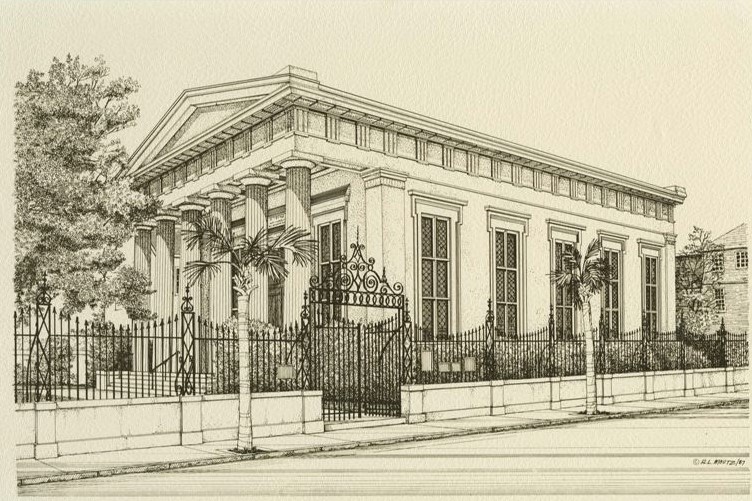
In my attempt to discover Jewish heroines, both real and fictional, I’ve come across Penina Moïse, a teacher, author and proponent of Judaism in early American history. She was born on April 23, 1797 in Charleston, South Carolina. Her parents, both immigrants, met and married on the island of St. Eustace. They arrived to Charleston in 1791 and set up a home for their nine children.

Although the family came from affluence, like many immigrants, they had to rebuild their lives upon setting foot on American soil. However, their path was not an easy one. Penina was only twelve years old when she lost her father. She was taken out of school to help manage the household and to support the family budget with her needlework. In addition, her mother was frequently ill and needed caring, as did her brother Isaac, who suffered from asthma.

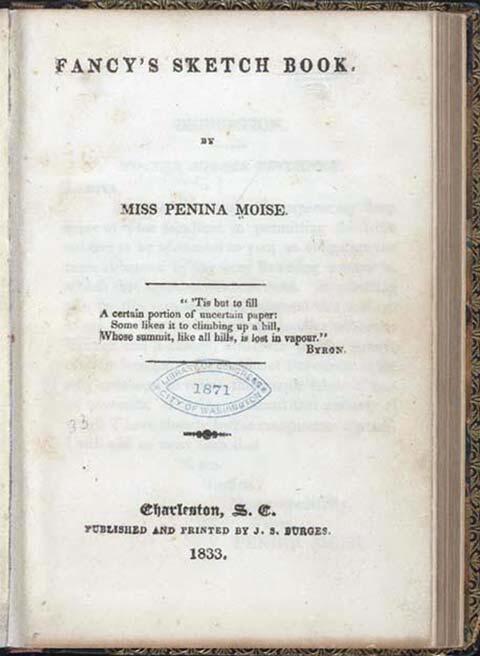
Still and all, Penina managed to continue to read and write—a beloved past time. Siblings, Rachel and Jacob encouraged this passion and great gift. No doubt, it was this enduring familial support that helped Penina see her first poem published in 1819.  She began writing for newspapers and magazines throughout the country. Fancy’s Sketch Book, a collection of poems, was published in 1833—the first by a Jewish American woman. Her poetry covered diverse topics including local and current events, women’s interests, politics, and yes—Judaism.

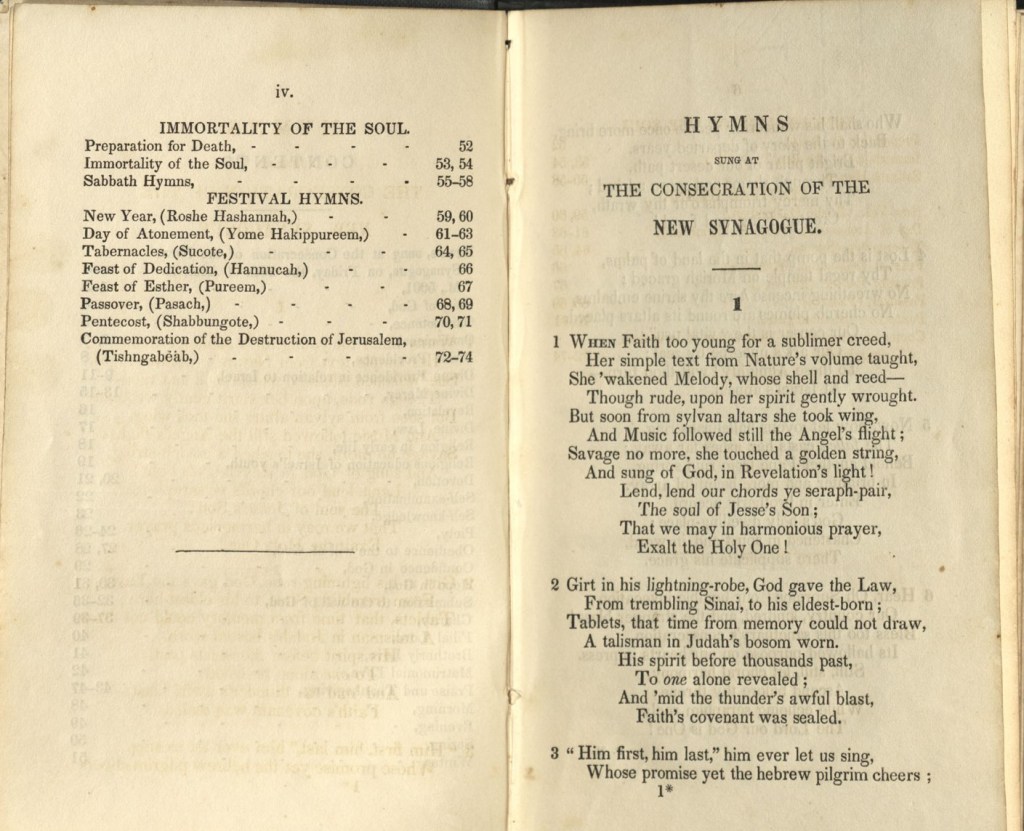
The Moïse family were founders of the Hebrew Orphan Society and active members of Charleston’s Kahal Kadosh Beth Elohim synagogue. By 1841, however, Penina’s brother, Abraham, began a campaign to introduce Reform Judaism to this staunch, traditional setting. His committee went so far as to commission Penina to write the new hymnal for the congregation. She took on this work, spirited on by the desire to encourage fidelity to Judaism and to promote the celebration of religious life. With their backing, she went on to compose most of the American Reform Jewish hymnal. This was no small feat for a woman or a Jew in the Protestant South.

It is estimated that there were less than 250,000 Jews in the entire country at this time. Basic items such as a prayer books, candles, or kosher foods were hard to find. And as such, commemorating holidays—let alone Shabbat—called for careful planning and commitment. Needless to say, following such events as Pesach, Sukkot, or Yom Kippur, Chanukah was a minor festival at best. It would have been easy to let the holiday slip by unnoticed, particularly amongst their evangelical Christian neighbors who actively encouraged the community to join their ranks—especially during the Christmastide.  

At the behest of her brother and the leaders of the congregation, Penina composed a hymn entitled, “Feast of Lights” at the onset of a holiday season in 1842.  As powerful reminder of the importance of remaining faithful despite the onslaught of challenges, the hymn extoled the ancient Israelites as they fought to recover and rededicate their temple. Great Arbiter of Human Fate! was written in a contemporary style and expressed a common feeling among many Jews living as a minority.

Penina’s words were meant to inspire pride amongst the congregation and she used every instrument in her toolbelt to make the holiday resplendent and noteworthy. In keeping with the formal style of the Old South and Charleston’s sense of refinement, she insisted that the first night of Chanukah be celebrated in grand style. The chanukkiah was to be lit with pomp and a choir was organized to sing new hymns. Chanukah, The Festival of Lights, become entrenched in Charleston’s holiday season. Penina Moïse, in many ways, became the “Mother of Chanukah.”

The Civil War forced Penina to leave her post as superintendent of the religious school. They sought refuge in Sumter, South Carolina until hostilities ceased. After the war, she returned to her home in what only can be termed reduced circumstances. She, along with her widowed sister and niece, conducted a Sunday school in order to support themselves. Penina never married nor had children of her own. She was a Southerner and a supporter of the Confederacy. However without this woman, American Jews—and very likely, the world at large—would not celebrate the Jewish holiday of Chanukah in the same light (pun intended). The festivities, the importance of family and community, the games, and other traditions all stem from this spinster who championed a cause near and dear to her heart.

Towards the end of her life, Penina’s poor eyesight began deteriorating and she suffered from debilitating headaches. However, during these trying times when she was confined at home, she wrote some of her best work, “rejoicing in God’s mercy and thanking him for his goodness.” Penina died on September 13, 1880 in Charleston. She was the first Jewish American woman to contribute to the worship service, writing 190 hymns for Congregation Beth Elohim. The Reform movement’s 1932 Union Hymnal still contained thirteen of her hymns.


Great Arbiter of human fate!

Whose glory ne’er decays;

To thee alone we dedicate,

The song and soul of praise.

Thy presence Judah’s host inspired,

On danger’s post to rush;

By thee the Maccabee was fired,

Idolatry to crush.

Amid the ruins of their land,

(In Salem’s sad decline,)

Stood forth a brave but scanty band,

To battle for their shrine.

In bitterness of soul they wept,

Without the temple-wall;

For weeds around its courts had crept,

And foes its priests inthral.

Not long to vain regrets they yield,

But for their cherished fane,

Nerved by true faith they take the field,

And victory obtain.

But whose the power, whose the hand,

Which thus to triumph led,

That slender but heroic band,

From which blasphemers fled?

‘Twas thine, oh everlasting king,

And universal Lord!

Whose wonder still thy servants sing,

Whose mercies they record.

The priest of God his robe resumed,

When Israel’s warlike guide

The sanctuary’s lamp relumed,

Its altar purified.

Oh! thus shall mercy’s hand delight

To cleanse the blemished heart;

Rekindle virtue’s waning light,

And peace and truth impart.


The courage and vision of these women never ceases to amaze me. Like Jane Austen, this brilliant writer composed poetry and other written material that spoke to the world around her. She used her wit and her intelligence to get her point across. She was an immigrant, like me. She was a Jew, like me. She was passionate and stubborn and loyal—like me. We may not have agreed on many points, but on this particular topic there can be no doubt. Am Israel Chai! The people of Israel live! And it is in no small part thanks to the wonderous deeds performed for our ancestors in days of old at this season. Chag Chanukah Sameach! Happy Chanukah! A Gut Yontif! Feliz Januca! ! חג חנוכה

New Post

Author’s Interview with Alina Adams

Alina Adams joins us today. Alina is a New York Times best-selling author, romance and mystery writer, soap opera industry insider, and a pioneer in online storytelling and continuing drama. She received her B.A. and M.A. in broadcast communications at San Francisco State University and firmly established herself in the world of television.

Throughout her career, she has worked as a television writer, researcher, website producer, content producer, and creative director. To say that I am in awe of the scope of her work is putting it lightly!

What an honor to welcome such a talented and inspiring author! Let’s get right to it, shall we?

Host: Alina, I was delighted when you contacted me and am thrilled to have you on the blog today. Please tell us about your latest project.

Guest: Thanks so much for having me, Mirta! My last historical fiction novel, The Nesting Dolls, took place in three time periods, 1930s Odessa, USSR during The Great Terror, 1970s USSR during the Jewish Refusnik movement, and present-day Brighton Beach, Brooklyn. (Well, 2019 Brighton Beach, Brooklyn, which means we got in just under the wire and didn’t have to address the pandemic.) So many of the emails I received and the reviews on Goodreads, etc… focused on the first part, 1930s Odessa (a Southern Ukrainian city that people have heard a lot more about now than they had when I first wrote The Nesting Dolls).

Readers told me they had no idea of what was going on in the USSR under Stalin, how repressive, paranoid, and dangerous it was to speak your mind – or even be accused of having done so. As a result, I decided to set my next book primarily in the same time period, but in a place few ever heard of: Birobidzhan, the first Jewish independent state of the 20th century, located on the border between Russia and China.

Host: I read The Nesting Dolls and can highly recommend it, although Part One resonated with me the most. My father’s side of the family lived in and around Odessa. Thankfully, they were able to immigrate prior to the Russian Revolution. Tell us, what intrigued you specifically about this time period?

Guest: Most of the historical fiction/romance set in Europe in the 1930s and 1940s focuses on World War II and the hideous war-crimes and crimes against humanity that took place there. Little attention is paid to what Josef Stalin was doing to his own people during the same time period. Modern estimates suggest he may have been responsible for as many as 9 million deaths, most of them people he designated as “enemies of the state.”

Yes, the USSR defeated Hitler – at the cost of a staggering 24 million people, including soldiers and civilians – but the country they were defending was, in many ways, no better.

Arriving in New York City

I was born in Odessa, USSR, and grew up hearing stories not just of the war against the Fascists, but also what the Communists did, starting with the revolution, going through the deliberate starvation of the Ukraine (between 3 and 7 million deaths), to Stalin’s accusation that Jewish doctors were poisoning the local populace, knows as “The Doctor’s Plot,” right up until the country’s  collapse in 1991.

In 1988, right after Gorbachev first came to power and perestroika made it possible for former Soviet citizens to go back and visit the country they’d fled, my mother and I traveled to Moscow and Odessa. That trip informs the one my characters take, also in 1988, as they go back to look for those they left behind.

Host: I agree with your assessment wholeheartedly. Novels focusing on that time period fail to consider what was going on in the rest of the world. My own family’s history living under Peron, or men of his ilk, is often overlooked. I applaud your efforts and strongly believe it is important sharing our stories. Why do you think Jewish Historical Fiction is an important, stand-alone, genre?

Guest: Just when it feels like we’ve told all the stories there are to tell, new ones pop up. Since “The Nesting Dolls” came out in July 2020, smack in the middle of the pandemic, I’ve been doing dozens of Zoom Book Club talks.

At nearly every single one, I ask, “What was the first Jewish independent state of the 20th century?” Nearly everyone says, “Israel.” When I tell them about Birobidzhan predating Israel by about 20 years, they’re amazed. Even the most educated Jews have never heard of it!

Host: I admit it. I’ve never heard of Birobidzhan. Kudos to you for highlighting this important piece of history. The Jewish community is a diverse and unique culture; yet—here in America—we tend to focus on two narratives: The Holocaust and Fiddler on the Roof-type themes. As you have pointed out, there is so much more to talk about! As an immigrant, would you care to share your thoughts on this topic?

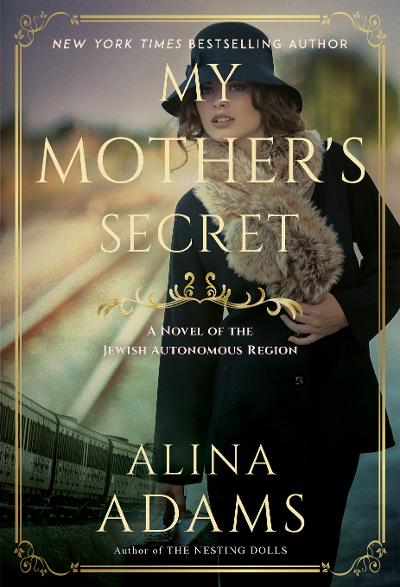
Guest: Yes, absolutely! One of the reasons I wrote both “The Nesting Dolls” and “My Mother’s Secret: A Novel of the Jewish Autonomous Region” was because I was tired of seeing only Fiddler and the Holocaust as the alpha and the omega of the Jewish experience, especially in Europe. It is so much broader than that.

My son calls it “Azhkanzie-normative,” but it goes even further than that. It’s Ashkanazie Jews in a very particular time and place, as though that were all there was.

Host: I like how you’ve put it: These subjects are not “the alpha and omega” of the Jewish experience. That has been my entire POV (point of view) when writing about Jewish Argentina. Our collective experience is much broader than these topics allow. Do you remember your first Jewish fiction that was non-Holocaust related?

Guest: I loved “Flowers in the Blood” by Gay Courter, about a wealthy Indian Jewish family.

Host: I have just researched the title. It sounds fascinating! Courter presents a unique story about Calcutta’s tight-knit Jewish community—something I don’t know much about. I appreciate authors who weave accurate history throughout the storyline. While doing your research, did anything come as a surprise?

Guest: My mother told me about a propaganda movie in Yiddish and Russian that she remembered being made to convince all the Jews of the world to move to Birobidzhan. We were able to find it on YouTube and watch it together. I don’t know what was worse, the clichés or the outright lies. You can see it too.

Host: Thanks for the suggestion! With your unique heritage and considerable education, you certainly have plenty of material to share. How long have you been writing? When did you consider yourself an author?

Guest: I’ve wanted to be a writer since before I even knew that was a job. My parents claim my first words were “pencil” and “paper.” I started sending out novels to publishers – and collecting rejections – when I was 17, a senior in high-school.

I finally sold my first book when I was 25, to Avon. It was a Regency romance, “The Fictitious Marquis,” which, believe it or not, actually had a Jewish woman as the heroine! Yes, it was possible, but she was also hiding her “tainted blood.” Years later, the Romance Writers of America named it the first #OwnVoices Jewish historical! Who knew?

Host: I’ve read “The Fictitious Marquis” and have included it on my Goodreads list! As a Janeite and a previous blogger for Austen Authors, I’m always happy to spread the word regarding Jewish Regency Romance.

Alina, I want to thank you for this fascinating and thought-provoking interview. I know you’ve touched many people with your stories—this audience included. Please let us know where we can find you online.
Guest: Thank you so much for hosting me, today. I can’t wait to hear what people think of “My Mother’s Secret: A Novel of the Jewish Autonomous Region,” and I’d love to answer any questions your readers might have about it, the USSR, writing in general or really pretty much anything!

You can visit me here and find my latest book here or at Barnes and Noble

New Post

Jewish Regency Romance~ An Author’s View of the World

As a writer of Jewish Regency Romance and Jewish Austen Fan Fiction (JAFF), I can relate with the desire of wanting representation of my culture in a period piece; but my need goes as far as introducing new characters into Austen’s world. For me, it is enough to envision the diversity in the background, such as with the introduction of Rabbi and Mrs. Meyerson in The Meyersons of Merytonor in the forefront with Miss Abigail Isaacs and Lieutenant Gabay taking the lead roles in Celestial Persuasion.  Some would argue that Austen’s worldview was restricted and insular—that she never met a Jew—and that I’m missing the point.

I am at a loss to understand why people hold Miss Austen’s novels at so high a rate, which seem to me vulgar in tone, sterile in artistic invention, imprisoned in their wretched conventions of English society, without genius, wit, or knowledge of the world. Never was life so pinched and narrow.”

Ralph Waldo Emerson

In a letter dated December 17, 1816, Jane Austen describes her work to her sister, Cassandra, as “the little bit (two inches wide) of ivory on which I work with so fine a brush, as produces little effect after much labour.” Is it possible that even the author doubted her talent? In my view, Austen was very much present and interested in the world. She was well read and acquainted with the work of her contemporaries, however, Jane Austen transcended these novels that so often demanded and preached by creating her own nuanced style.  It is precisely her iconic wit and sardonic commentary of society that is quintessential Austen.

Austen’s contributions have been so widely adopted and adapted by other authors, it can be easy to forget how groundbreaking her work really was.”

Elizabeth Wilder, Stanford University

In a thesis presented at Leiden University, it is postulated that “Austen’s notion of realism stems from the detailed portrayals of her characters’ emotions and the social environment of the landed gentry.” This paper goes on to address what we Janeites already knew. Jane Austen was well aware of the French Revolution, the American Revolution, the Napoleonic wars, socio-economic, and socio-political issues. The issues of the day were a given—she didn’t need to beleaguer the point. Austen provided just enough of a backdrop for her audience to lose themselves in the fiction, yet feel completely ensconced in realistic scenarios.  

Bath Royal Theatre

Jane Austen may have lived a relatively quiet life as a parson’s daughter, but she was not without culture. She enjoyed books, plays, and operas written by foreign artists and compatriots alike. In fact, much has been written regarding a certain German author and his influence on Austen’s work. August von Kotzebue was tremendously popular during the Regency era. Over 170 editions of his plays were published, translated, and performed throughout Britain. While living in Bath, Jane attended a performance of one of his plays, Die Versöhnung (The Birthday) on June 19, 1799. It is very possible that she returned to watch another performance of the same play at the Bath Theatre Royal on May 21, 1803.

The Austen family had been keen exponents of amateur drama, and Jane herself was a discerning theatergoer.”

Joan Rees, author of Jane Austen: Woman and Writer

We don’t know what Austen thought of these performances; however, there is evidence that the play influenced her writing—specifically with Emma and Mansfield Park. Readers will recall that while the patriarch, Sir Thomas, is away from home, the Bertrams and Crawfords decide to try their hand at an amateur theatrical. They settle on the lascivious, Lovers’ Vows—an adaptation of Kotzebue’s Das Kind der Liebe.

Austen doesn’t specify the play’s author (or translator in this case) in her book. Just as she has done in other works, Austen trusts her audience is enlightened and up to speed on current trends. However, by using Kotzebue’s play as a plot device—with its open flirtation and seduction—Austen cleverly address the changing social mores (or lack thereof) in British culture. She also proves that she was in touch with the world around her and not “imprisoned in her wretched conventions of English society.”

For my purposes, I prefer to leave Austen’s characters as she would have imagined them in her own mind’s eye and add my cultural influence to the periphery. There were Jews in England in Austen’s day and they lived in various social spheres throughout the land. By not imposing this fact or truism upon beloved, fictional characters, I hope to follow Austen’s example. I’m simply adding another layer of dimension in the Regency world.

Just as Austen looked to Kotzebue for inspiration, I have looked to others to emulate. One such author was not Jane’s contemporary. Kate Emanuel was born to a family of German immigrants. Her grandfather had been a merchant and a goldsmith; however, by the time of Kate’s birth in 1844, the family was well established in Portsmouth and well known within the Jewish community. At the age of seventeen, Kate was a Sunday School teacher and devoted much of her free time to reading and writing.

It has been suggested that Kate delayed getting married—afraid that she wouldn’t be afforded the opportunity to write. Does that remind you of someone? Unlike Jane Austen, however, Kate was fortunate in her choice. She married her second cousin, Philip Magnus in 1870; and happily, her fears were unfounded. Her husband’s position as a teacher and rabbi at West London Synagogue allowed Kate the time, energy, and focus to become successful in her own right. She published The Outlines of Jewish History in 1880 and later Jewish Portraits, a series of essays on Heinrich Heine, George Eliot’s Daniel Deronda, and Moses Mendelssohn, amongst other subjects. In 1886, Philip was elevated to the peerage for his work in reforming national educational policy and the couple’s place among society was secured.

Lady Magnus speaks in the easy, cultured persona of the educated upper-class Englishwoman, often using irony and sarcasm…”

Cynthia Scheinberg, literary scholar

Again, I am reminded of that “other” British authoress. And much like Jane Austen, Kate Magnus did not underestimate her audience. She wrote as she saw, but didn’t impose her understanding of contemporary issues on others.

Lady Magnus

In 1906, The Jewish Encyclopedia compiled a list of over three hundred British citizens who, from 1700 on, “distinguished themselves in service, the arts and sciences, government, finance, and education.” Among these are fifteen women writers, including Kate Emanuel, Lady Magnus.

In dedication to her works, her son, Laurie, wrote: “Readers of Lady Magnus’s books, who knew the author, will know how steadfastly she practiced many of the virtues which she praised in the heroes of her religion. All her lifelong, she never omitted to spread the white cloth and light the candles in honor of Sabbath. From the beginning, her life and her writing were proudly Jewish.”

Austen and Magnus: two women who continue to influence my writing with their wit and understanding of the world. Who knows? Perhaps—”after a bit of labour”—I will find that my “bit of ivory” will also produce some effect.” Stay tuned and we shall see!

New Post

Shabbat Shalom~ Commentary from a Jewish Regency Romance Author on Celebrating Independence Day

Here in the United States of America, we will soon celebrate the 246th anniversary of our independence. And as a grateful immigrant, I will soon be celebrating my 60th year in this great nation. The blessings are boundless; a deep sense of pride and patriotism continues to fill my heart.

I come from a long line of immigrants. I wish I could trace my lineage with some level of accuracy beyond that which I know: Russian Jews that settled in Argentina thanks to Baron Hirsch and the Jewish Colonization Association. My family later immigrated to the U.S. and I’ve spent a life time explaining, to all who ask, why there are blue-eyed Jews that speak Spanish.  I try to explain the diaspora. I try to explain the complex history of our immigration. I try to explain that there have been Jews in South America since 1492… “when Columbus sailed the ocean blue.” Quite often, this fact is met with shock. Quite often, this fact only brings up the next question:

How long have Jews been in the good ol’ USA?

As a history buff and a great fan of historical fiction, these questions—for the most part—please me. It is a subject near and dear to my heart! But it is for that very reason, that these questions are also bittersweet. Most people have some understanding, or knowledge, of the massive wave of immigration in the early 20th century. Stories of Ellis Island have been made popular and encompass the history of many peoples that came to these shores. But the story of Jewish immigration doesn’t begin with familiar scenes from “Fiddler on the Roof” or “Yentl.” Here’s a fact for you: Jews have been in both North and South America since the fifteenth century. They found their way here escaping the Spanish Inquisition; however, there is documented proof of observant Jews in colonial America. In fact, it is estimated that there were approximately 2,000 Jews living here and at least seven Sephardic (Iberian Peninsula Jews) congregations. Congregation Shearith Israel was founded in New York City in 1655. Rhode Island’s Yeshuat Israel in Newport began 1658. Congregation Mickve Israel served the people of Savannah, Georgia as early as 1733.

These Jews were from all across Europe. Their list of reasons for leaving hearth and home were the very same that other immigrants could enumerate. They sought freedom. They sought prosperity. They sought peace of mind. And when the colonies united against England, these Jewish immigrants answered the call in some form or fashion.

Haym Salomon rendered immeasurable service to the Revolution by providing financial support in desperate times. His service to this nation should be heralded by all. Aaron Lopez of Newport and Isaac Moses of Philadelphia also had the means to assist the cause. Risking their source of revenue, as well as their lives, these merchants sailed their own ships past British blockades and brought clothing, guns, and food to deprived soldiers. Many other Jewish patriots took up arms. In South Carolina, for example, one troop had so many Jewish soldiers, they were dubbed the “Jews’ Company.” In 1776, Francis Salvador, the first Jewish State Legislator of South Carolina, was killed fighting against Loyalists and their Cherokee allies.  In 1777, Lieutenant Solomon Bush discovered a spy in George Washington’s headquarters. The lieutenant was taken prisoner by the British, although he was later released.

Needless to say, women also supported the cause. Abigail Minis was a prominent businesswoman in Georgia during the American Revolutionary War. Left a widow at a young age, she took charge of the family finances. A patriot, Minis also put her hospitality and resources to good use— earning fame and admiration amongst the troops. Legend has it that Mrs. Minis met George Washington in 1791 when he visited her tavern in Savannah. Unfortunately, that can’t be confirmed. Her daughter, Leah, however did meet with the president years later. Mrs. Minis was 91 years of age at the time. She was surely kvelling at that honor, as any mother would!

The Mill Street synagogue was a central anchor for the Jewish community in the city of New York since its founding in 1730. In 1766, Gershom Mendes Seixas became the hazzan, or cantor, of the congregation. Although he was not an ordained rabbi, he lead the Jewish community and encouraged their integration into their new society. He was an ardent patriot and supported the cause; and when the British captured New York, Mendes Seixas led the congregation to its temporary home in Philadelphia.  

In the Post-Revolutionary period, Mendes Seixas strived to undergird the patriotism felt by the Jewish community. To reinforce their significance in the American tapestry, he wrote President Washington and asked for a statement of recognition—and reassurance—from the new government.

Deprived as we heretofore have been of the invaluable rights of free Citizens, we now (with a deep sense of gratitude to the Almighty disposer of all events) behold a Government, erected by the Majesty of the People—a Government, which to bigotry gives no sanction, to persecution no assistance—but generously affording to All liberty of conscience, and immunities of Citizenship: deeming every one, of whatever Nation, tongue, or language, equal parts of the great governmental Machine

In probably one of the most important presidential letters in American history, Washington wrote back.

It is now no more that toleration is spoken of as if it were the indulgence of one class of people that another enjoyed the exercise of their inherent natural rights, for, happily, the Government of the United States, which gives to bigotry no sanction, to persecution no assistance, requires only that they who live under its protection should demean themselves as good citizens in giving it on all occasions their effectual support. . .

May the children of the stock of Abraham who dwell in this land continue to merit and enjoy the good will of the other inhabitants—while everyone shall sit in safety under his own vine and fig tree and there shall be none to make him afraid.

May the father of all mercies scatter light, and not darkness, upon our paths, and make us all in our several vocations useful here, and in His own due time and way everlastingly happy...”

This message highlights an extraordinary moment in history and for American Jewry. Here, in this great country, we were given freedom of speech, freedom of religion, freedom of enterprise. And as an immigrant, I know that freedom is rare and fragile. On this Shabbat, and on this anniversary of independence, I simply wanted to acknowledge that fact and say thank you. God Bless America!

God bless America,
land that I love.
Stand beside her
and guide her,
through the night with a light from above.
From the mountains
to the prairies
to the oceans white with foam,
God bless America,
my home sweet home,
God bless America,
my home sweet home.

גאָט בּענטש אַמעריקע,
לאַנד װאָס איך ליבּ,
שטײזע בּײַ איר,
מַדְרִיךְ זײַ איר
איבּראל לײַכט א שטראל אונז צוליבּ
פון די בּערג בּיז
צו די פּרײריעס
בּיז די יאמן װײַס מיט שױם
גאָט בּענטש אַמעריקע,
מײַן זיסע הײם
גאָט בּענטש אַמעריקע,
מײַן זיסע הײם

New Post

Mazal Tov! Celebrating a Jewish Regency Romance novel~

Welcome June and mazal tov to all! Most likely, you know this common Hebrew phrase. We usually say mazal tov in place of “congratulations” or “best wishes,” but are you familiar with its other esoteric meaning? The word mazal means “drip from above” and it relates to the zodiac signs which are called mazalot. In Jewish tradition, the constellations direct our destinies; therefore, one could say that mazal drips down from the stars.

All of this, of course, is in keeping with my book; and to commemorate the anniversary of Celestial Persuasion, I will be hosting giveaways and participating in book tours throughout the month. Keep your eye on the lovely reviews! It’s all happening on Instagram. Readers across the globe are discovering Jewish Regency Romance and (lucky for me) they’re loving it!

Such is the life of an indie author. Writing a novel is one thing; promoting the book is on another level! Join me in getting the word out, won’t you? Here’s what’s up for grabs:

💙 Signed copy of Celestial Persuasion

Or

💙 Gift from a “Jane Austen” Etsy shop (value $15.00)

Or

💙 Free eBook copy of “Celestial Persuasion”

Or

💙 Amazon gift card (value $15.00)

To enter:

1) If you haven’t already done so, sign up to receive this blog

2) Add Celestial Persuasion to your Goodreads “Want to Read” list

3) Like and share the Instagram post. Use #JewishRegencyRomance and don’t forget to tag me!

The rules of this giveaway are as follows:

1) Must be over the age of 18 to enter
2) US and Canadian residents only 3) This giveaway is not sponsored by Instagram, Goodreads, or any of their affiliates
4) Giveaway ends on 6/30/22 at 11:59 pm EST.

Best of luck & thanks for participating!

New Post

A Salute to Mothers~ With Love, a Jewish Regency Author

It’s been a while since I’ve added to the blog. I thought long and hard on what I could present to this group of well-informed and clever people. In keeping with my modus operandi, I knew that I needed to combine my cultural heritage with my love for all things Austen; and so, I looked to the calendar and found my mark.

It’s May, and here in the United States, we just celebrated Mother’s Day—but not so in other parts of the world. Let me persuade you to take a turn about the globe with me. It’s so refreshing!

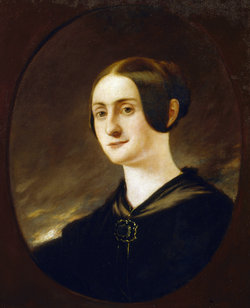
Cassandra Leigh Austen

Naturally, I will begin in England! Jane Austen would have been familiar with the festive occasion known as Mothering Sunday. Usually occurring during the season of Lent, it was a day for church, as well as acknowledging one’s matriarch. Even servants were given the day off, so that they could visit with their own mothers and perhaps share a token of their love. I did a little research on Jane Austen’s mother and found that Mrs. Austen was considered witty and quite talented herself with a quill and a bit of foolscap. It is generally acknowledged that the Rev. Austen supported his daughter’s love for reading and writing. However, it appears that Jane might have inherited her talents from her mother. I can easily imagine Mothering Sunday in the Austen household. After church, our dear girl would very likely read from her latest scribblings to honor her mother. Then perhaps, they would have tea with iced cakes or some such. They certainly didn’t head out for brunch or to the nearest salon for a mani-pedi!

In the United States of America, Mother’s Day is celebrated on the second Sunday in May. It is considered a secular holiday; but when first established by Anna Jarvis on May 10, 1908, it was celebrated during church services—at St. Andrew’s Methodist Church in Grafton, West Virginia, to be exact. I read that Jarvis was critical of the commercialization that quickly took over the occasion and continued to encourage all to reflect upon and honor the important contributions of mothers.

In my native country of Argentina—where Catholicism is the State religion—Mother’s Day originally coincided with the Feast of the Maternity of the Blessed Virgin Mary, celebrated in October. The feast day was later moved to January, which coincided with summer picnics and family gatherings at the beach. Argentines, however, decided that Mother’s Day would continue to be celebrated on the third Sunday of October. Needless to say, there is a plethora of spring flowers, cards and gifts to help celebrate the occasion.

In Israel, the commemoration of Mother’s Day came along with its own brand of controversy. It all began when the newly founded country couldn’t decide on which day to celebrate the occasion! The Ezra Society, headed by Sarah Herzog, the mother of then-president Chaim Herzog, established the first Mother’s Day on April 6, 1947. However, the city of Haifa initiated its own version when the mayor proposed that the day be linked to the Maccabean matriarch, Hannah. The mayor’s wife was also named Hannah. Hmm? In any event, Haifa celebrated Mother’s Day for many years during the Hanukkah season. Towards the end of 1951, the newspaper Ha’aretz Shelanu declared its own Mother’s Day initiative—perhaps hoping to settle the issue definitively. The editors asked its young readers to suggest a date to honor all Israeli mothers.

Side Note: Sorry! My mind took an unexpected detour. I was suddenly reminded of two other times when young writers responded to newspaper editorials. In October 1860, eleven-year-old Grace Bedell of Westfield, New York, wrote to presidential candidate, Abraham Lincoln. She urged Mr. Lincoln to grow a beard because “all the ladies like whiskers” and believed he would have a better chance at winning the election! In 1897, eight-year-old, Virginia O’Hanlon wrote to The Sun and asked whether Santa Claus was real. The newspaper’s response was published anonymously in September of that year. Due to its popularity, it was republished every year during the Christmas season until 1950, when the paper ceased publication. Now back to my story in Israel…

Eleven-year-old Nechama Frankel, responded to the newspaper query and suggested a date to honor the memory of Henrietta Szold, founder of Hadassah. Although childless, Szold had run an organization that rescued 30,000 Jewish children from Nazi Europe. The suggestion was easily accepted; but on a final note, Mother’s Day recently became known as Family Day. At 72 years of age, Nechama Frankel (now Biedermann) didn’t appreciate the change in the name and wrote her local newspaper—again! She asked that the “lost dignity of Mother’s Day be restored.” Sounds very much like her American counterpart, Anna Jarvis, don’t you think?

Me and my beautiful mom

All these meanderings have brought me to this point: Words have the power to effect change, to stir passions, and to alter the paths of women and men who otherwise might not take action. The importance of a well-written missive is not lost on us Janeites, whether it comes from a loved one across the ocean or a gentleman across the room.

My own mother, of blessed memory, wrote more letters than I can recall. They crossed back and forth from Argentina to our home here in the United States. They were filled with every possible emotion, from the simplest piece of gossip to the greatest despair. But these letters kept us united with our family half way around the world and that was her life-long goal. I am grateful to my mother for the many lessons she taught me. I miss her, and think of her, every. single. day.

In my novel, Celestial Persuasion, Miss Abigail Isaacs also receives a life-altering communication. I hope you enjoy the following excerpt.


“Might you share the letter?” Mrs. Dashwood enquired. Long accustomed to having her young friend’s housekeeper-cum-companion present in times such as these, she handed Mrs. Frankel some tea and cake.

Abigail nodded slowly and proceeded to read her letter aloud. She had no wish to hide the contents of Captain Wentworth’s message; and in fact, she was curious to hear the ladies’ opinions. “And there you have it. Papa and Jonathan are gone from this world.”

“Whatever shall you do?” Mrs. Dashwood asked.

“I am a woman alone, with little means of support and head full of impractical aspirations. In truth, I have no idea at present.”

“You might do well to follow Jonathan’s example,” murmured Mrs. Frankel, setting down her plate of seed cake. “You might apply to the Royal Navy.”

“Never say so!” Mrs. Dashwood cried. “Has the Crown gone through all our fine men and boys, that we are now enlisting young ladies to battle the French?”

“No, no.” Abigail shook her head in gentle reproach. Mrs. Frankel ought to have known better than to mention such a radical scheme.

“For some time now, Miss Isaacs and I have been following the news of an extraordinary woman by the name of Mary Edwards,” Mrs. Frankel, now a little recovered, continued unabashed. “The London paper had a full story on her work as a computor for the British Nautical Almanac. She is one of a very few women paid by the Board of Longitude.”

“But what is her work?” insisted Mrs. Dashwood.

“It is rather intriguing,” supplied the housekeeper. “With her mathematical talent and computational skills, she is tasked to calculate the position of the sun, moon, and planets at various times of day. I have no doubt that our dear girl could do the same.”

“Whatever for? I am sure I have never heard of such a thing!”

However sensible Abigail was to her own sad mental state, it did not follow that the dear lady ought to be left to feel bewildered, so she provided further explanation.

“They use the information for nautical almanacs, Mrs. Dashwood. According to The Times, Mr. Edwards took on piecework to supplement the family’s income. After his death, it was revealed that Mrs. Edwards had done most of the calculations. It all came out into the open when she asked that they continue supplying her with work. She had to support herself and her daughters, you see, and they happily complied. This is what Mrs. Frankel was referring to when she suggested that I apply to the Royal Navy.” Abigail saw at once that her friend was aghast at the mere suggestion and waited patiently for her reply.

“I have always thought your education seemed rather …excessive,” offered Mrs. Dashwood. “As your poor mother was no longer with us and able to voice her concerns, I daresay your father was pleased to provide you any pleasure.”

Abigail smiled at the memory of her father’s affection and shrugged her acquiescence.

“You were the light of his life, and I told him so many a time. He was quite amused at my observations and went so far as to explain that your name, Avigail, means a father’s joy in the language of your ancestors. I must say, my dear, they chose your name wisely.”

“Avigail Yehudit—such noble names!” Mrs. Frankel exclaimed. “Such fine examples of female wisdom and valor.”

“Papa prevailed with his first choice,” said Abigail, “but Mama was appeased with the second. Judith was her favorite biblical heroine— or so I have been told. But it was all for naught, for Jonathan had wished for a brother and thought the names too feminine! I simply became Avi to him. But it is of no consequence. Whichever name I choose, be it the English version or that of my ancestors, Isaacs will remain the same.”

Mrs. Dashwood would not have any of it. “But my dear, you are young yet. Might you not consider marriage? Mr. Green has shown great interest in you…”

“Mr. Green, ma’am, is a widower with three children. His only interest in me is knowing that I would make a proper physician’s wife, and I have begun to believe that I am not meant for love. I am intelligent and have received an excellent education, thanks to my doting father and my…my brother’s enthusiasm.” Abigail paused and sipped her now-tepid tea while she attempted to compose herself.

“You might apply to Sarah Guppy and ask for her advice,” Mrs. Frankel insisted. “She too has worked for the Royal Navy. You have yourself informed me of her numerous creations and inventions. Of course, the patents were secured through her husband—”

“My dear…” Mrs. Dashwood set down her tea things with trembling hands.

“Pray forgive Mrs. Frankel. I believe she is merely attempting to call my attention to various alternatives, unconventional though they might be,” Abigail quickly added. “In truth, ma’am, the day’s events have taken their toll. I am pained knowing that Jonathan will not return to us. He was my beloved brother, but he was also my partner, my teacher and confidant. My friends, I am lost. I am drifting at sea without the North Star to guide me.”

“Might you not receive a pension for your poor brother’s service? What would your good mother have thought?”


I’ll sign off now with an amended version of my mother’s famous salutation: With Love, A Jewish Regency Author~